
Angular Momentum Angular Momentum Movement Spin around a

- Slides: 17
Angular Momentum
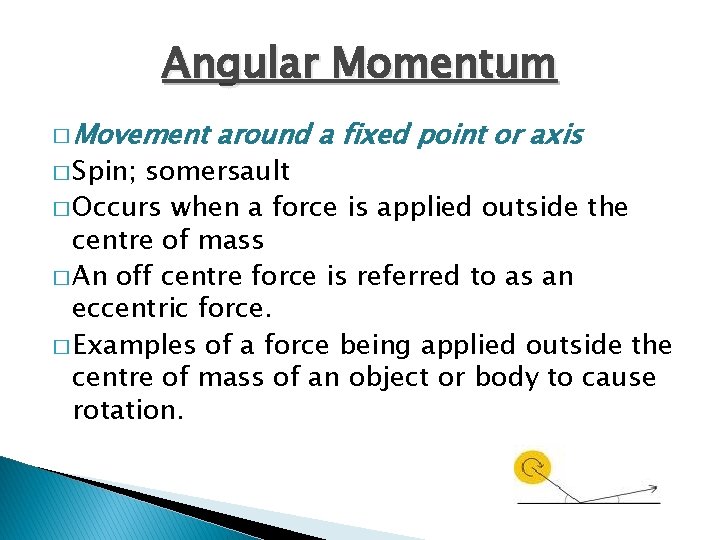
Angular Momentum � Movement � Spin; around a fixed point or axis somersault � Occurs when a force is applied outside the centre of mass � An off centre force is referred to as an eccentric force. � Examples of a force being applied outside the centre of mass of an object or body to cause rotation.
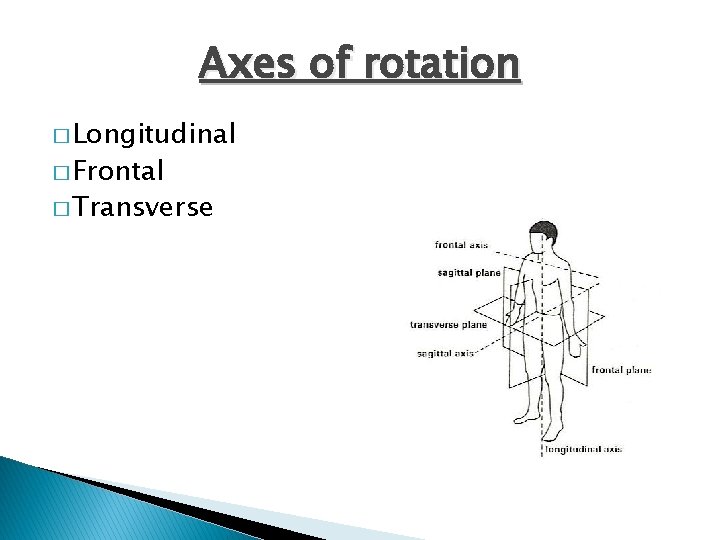
Axes of rotation � Longitudinal � Frontal � Transverse
Quantities used in Angular motion � Torque- rotation force (moment) � Causes an object to rotate about its axis Moment of force/ torque=force x distance from fulcrum Angular distance-angle of distance rotated about an axis when moving form one potion to another 1 Radian= 57. 3 degrees
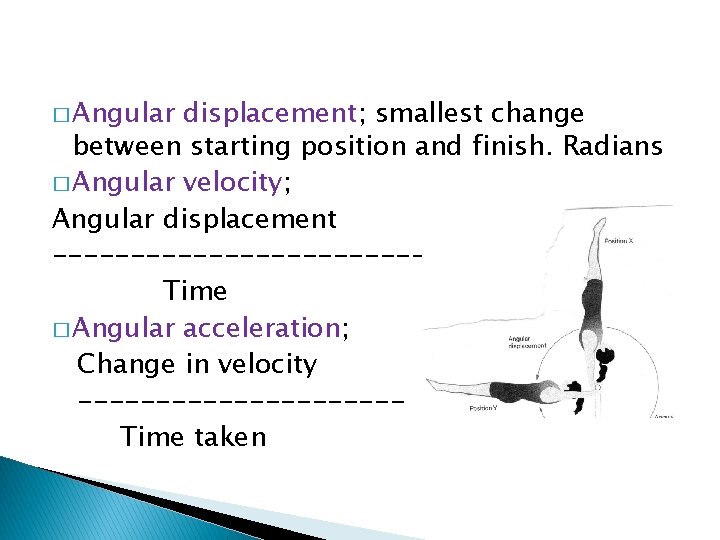
� Angular displacement; smallest change between starting position and finish. Radians � Angular velocity; Angular displacement ------------Time � Angular acceleration; Change in velocity ----------Time taken
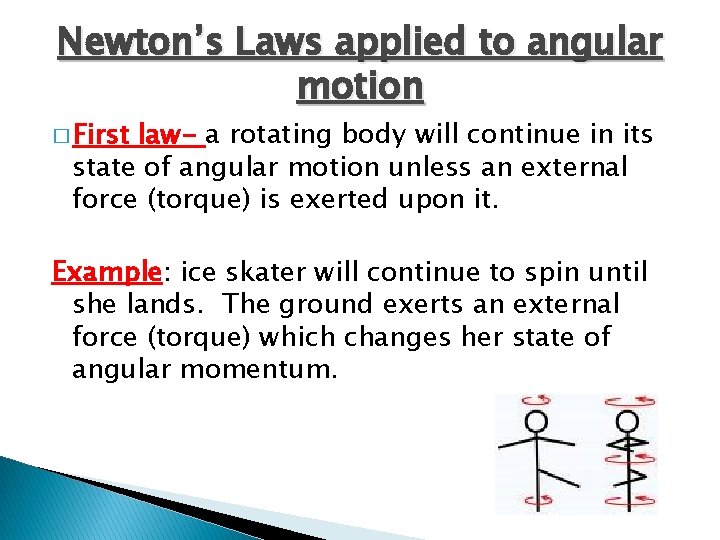
Newton’s Laws applied to angular motion � First law- a rotating body will continue in its state of angular motion unless an external force (torque) is exerted upon it. Example: ice skater will continue to spin until she lands. The ground exerts an external force (torque) which changes her state of angular momentum.
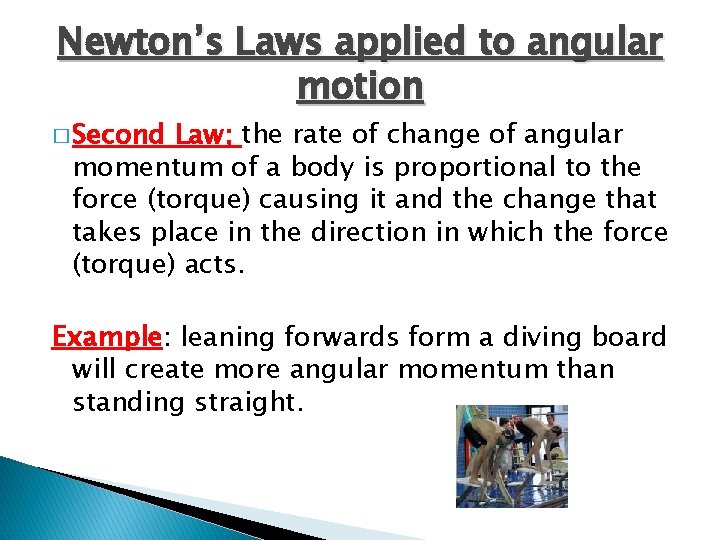
Newton’s Laws applied to angular motion � Second Law; the rate of change of angular momentum of a body is proportional to the force (torque) causing it and the change that takes place in the direction in which the force (torque) acts. Example: leaning forwards form a diving board will create more angular momentum than standing straight.
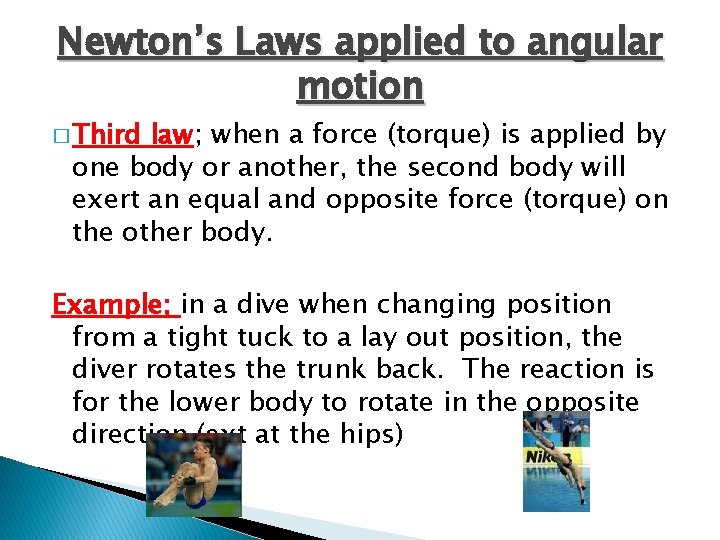
Newton’s Laws applied to angular motion � Third law; when a force (torque) is applied by one body or another, the second body will exert an equal and opposite force (torque) on the other body. Example; in a dive when changing position from a tight tuck to a lay out position, the diver rotates the trunk back. The reaction is for the lower body to rotate in the opposite direction (ext at the hips)
Moment of Inertia � Resistance �So to change in motion it is the resistance of a body to angular motion (rotation) � It depends on the mass of the body and the distribution of mass around the axis.
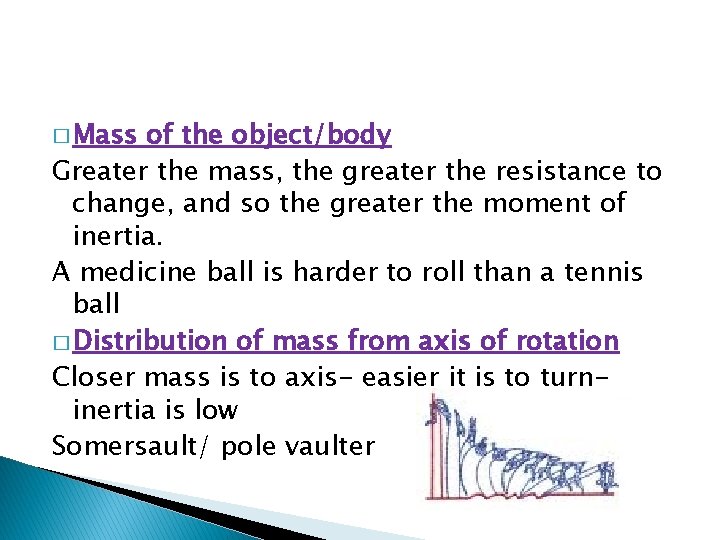
� Mass of the object/body Greater the mass, the greater the resistance to change, and so the greater the moment of inertia. A medicine ball is harder to roll than a tennis ball � Distribution of mass from axis of rotation Closer mass is to axis- easier it is to turninertia is low Somersault/ pole vaulter
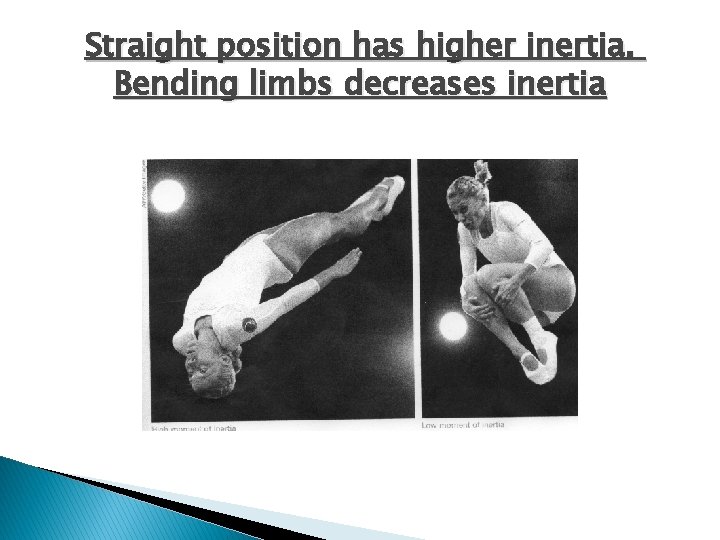
Straight position has higher inertia. Bending limbs decreases inertia
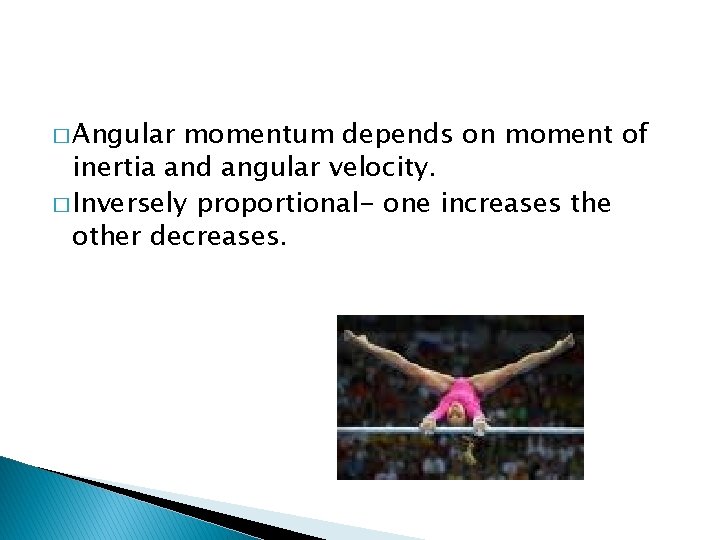
� Angular momentum depends on moment of inertia and angular velocity. � Inversely proportional- one increases the other decreases.
� Can Conservation of angular momentum be conserved- it stays constant unless an external force acts upon it (first law) � Ice skater executes a spin there is no change in angular momentum until they use their blades to slow down. � Ice is friction free surface so no resistance to movement. � Skater spins on longitudinal axis � Only the skater can manipulate the moment of inertia and speed up or slow down the spin.
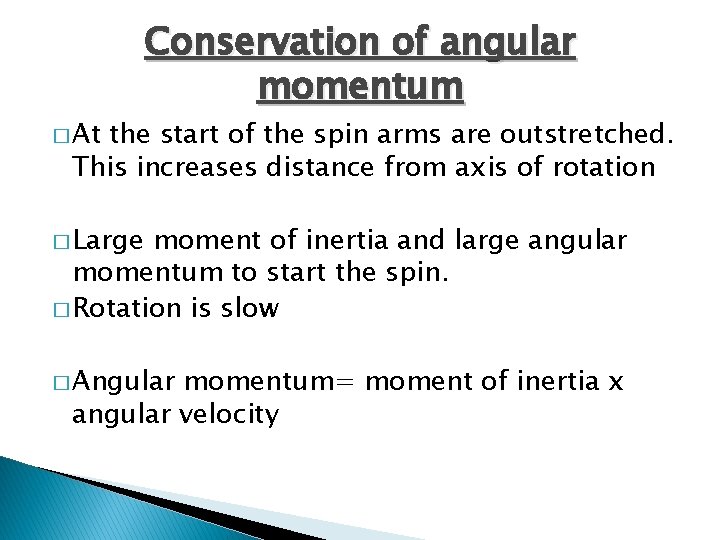
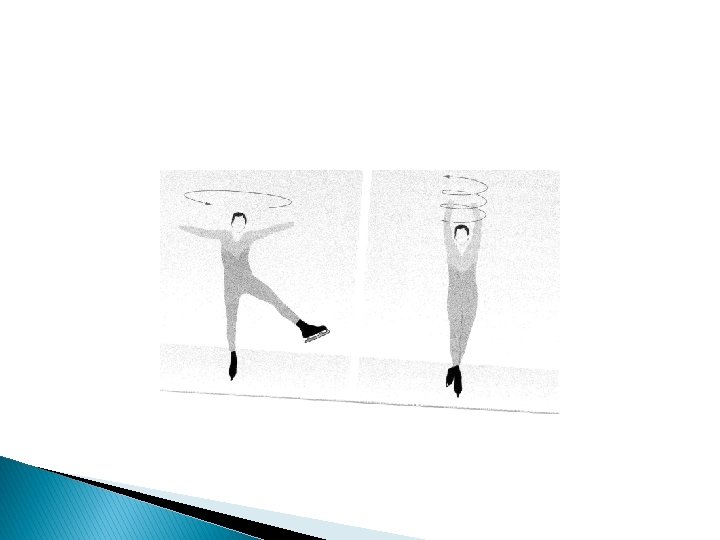
� At Conservation of angular momentum the start of the spin arms are outstretched. This increases distance from axis of rotation � Large moment of inertia and large angular momentum to start the spin. � Rotation is slow � Angular momentum= moment of inertia x angular velocity
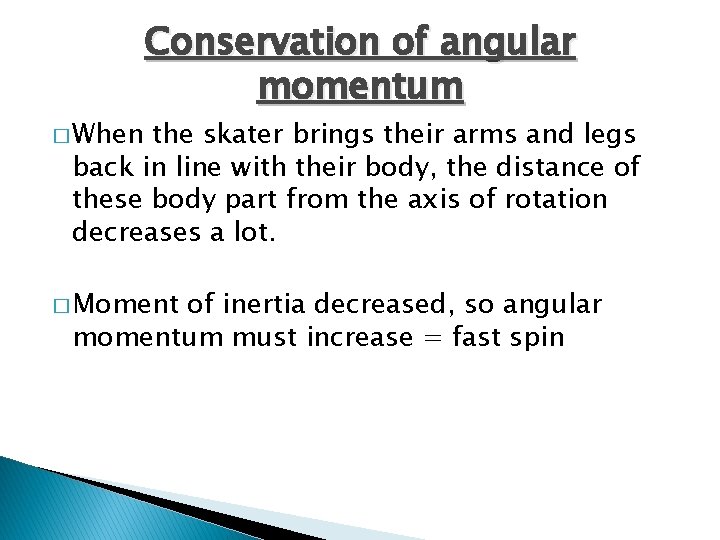
� When Conservation of angular momentum the skater brings their arms and legs back in line with their body, the distance of these body part from the axis of rotation decreases a lot. � Moment of inertia decreased, so angular momentum must increase = fast spin
Question � Explain why an ice skater is able to alter her speed of rotation by changing her body shape whilst spinning (6)