
Angular correlations of g rays from 206 Tl

- Slides: 15
Angular correlations of g rays from 206 Tl produced in thermal neutron capture Natalia Cieplicka-Oryńczak Institute of Nuclear Physics, Polish Academy of Sciences, Kraków, Poland Shapes and Symmetries in Nuclei: from Experiment to Theory , 6 -10 November 2017, Gif-sur-Yvette, France
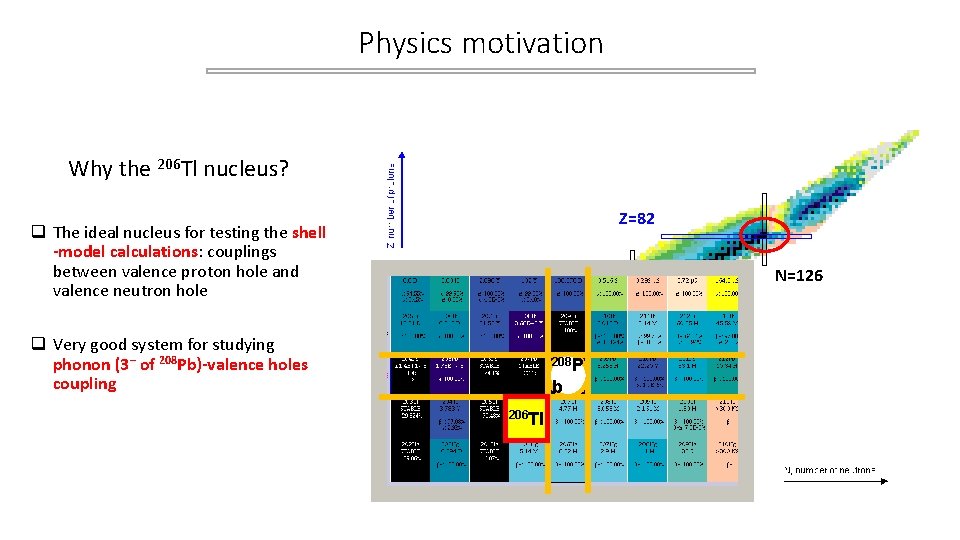
Physics motivation Why the 206 Tl nucleus? Z=82 q The ideal nucleus for testing the shell -model calculations: couplings between valence proton hole and valence neutron hole N=126 q Very good system for studying phonon (3– of 208 Pb)-valence holes coupling 208 P b 206 Tl
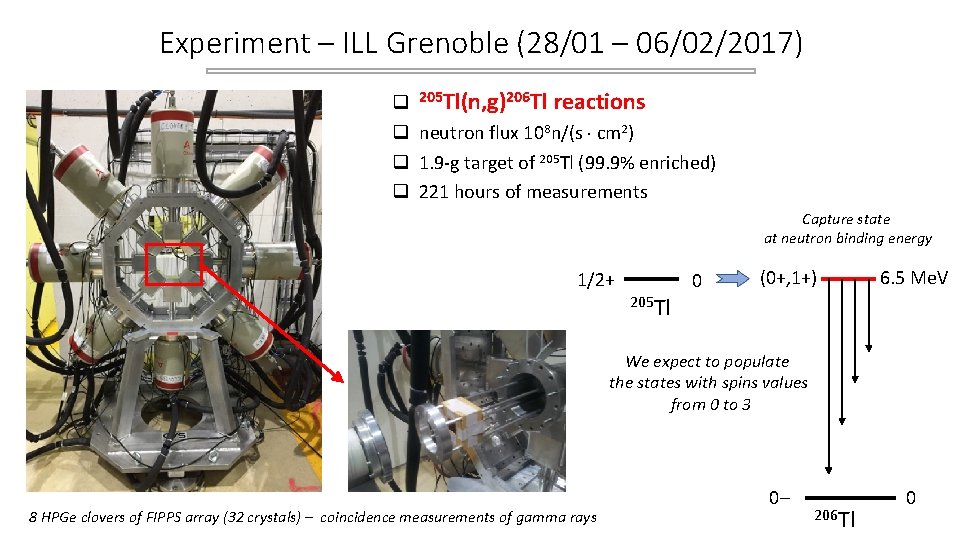
Experiment – ILL Grenoble (28/01 – 06/02/2017) q 205 Tl(n, g)206 Tl reactions q neutron flux 108 n/(s cm 2) q 1. 9 -g target of 205 Tl (99. 9% enriched) q 221 hours of measurements Capture state at neutron binding energy 1/2+ 205 Tl 0 (0+, 1+) 6. 5 Me. V We expect to populate the states with spins values from 0 to 3 8 HPGe clovers of FIPPS array (32 crystals) – coincidence measurements of gamma rays 0– 206 Tl 0
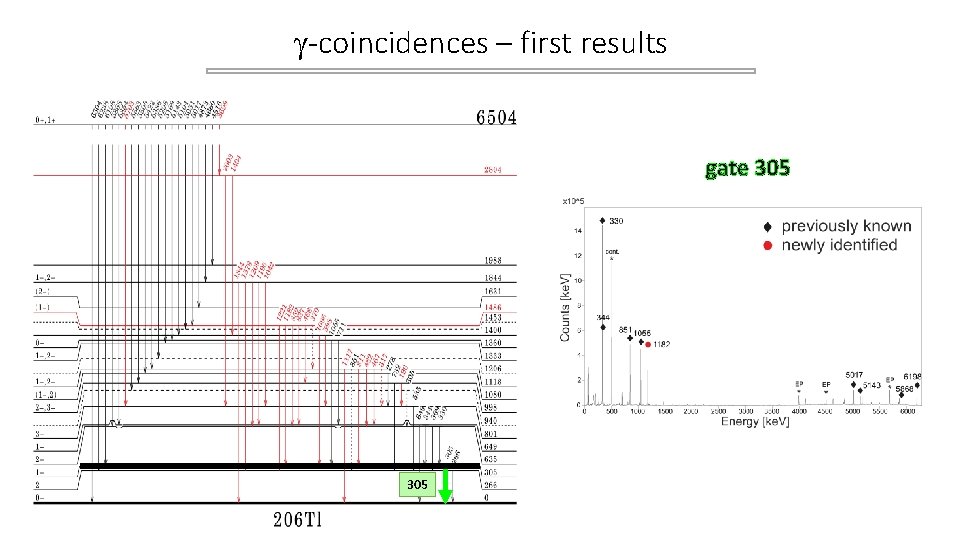
-coincidences – first results gate 305
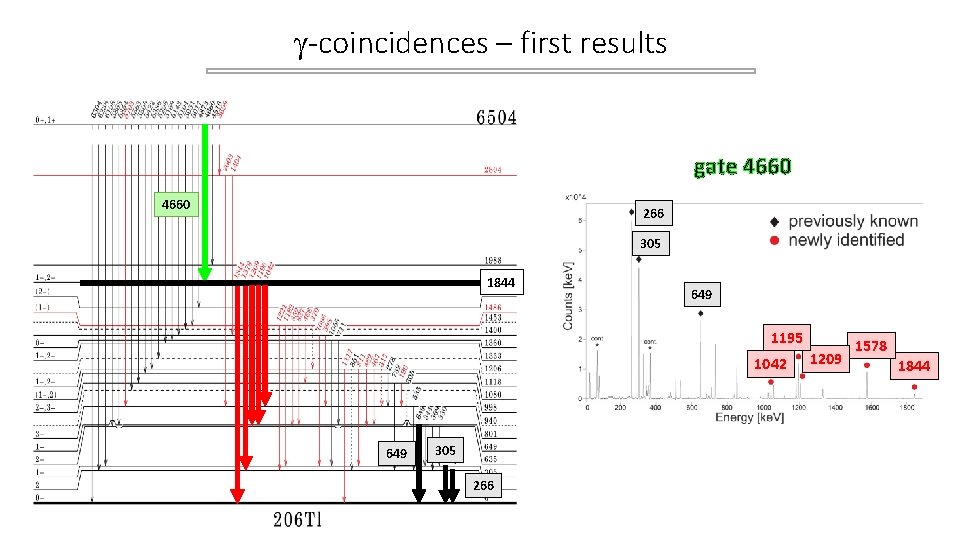
-coincidences – first results gate 4660 266 305 1844 649 1195 1042 649 305 266 1209 1578 1844
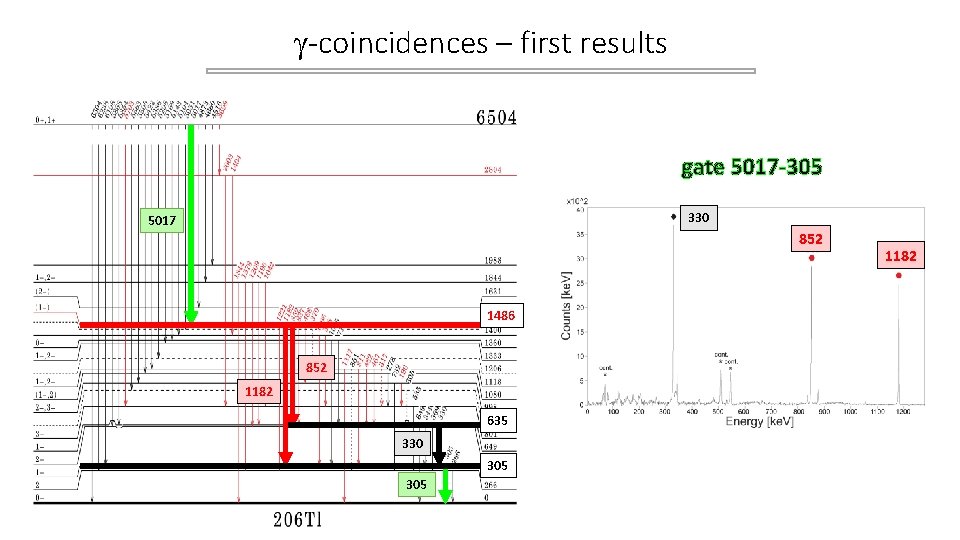
-coincidences – first results gate 5017 -305 330 5017 852 1486 852 1182 635 330 305 1182
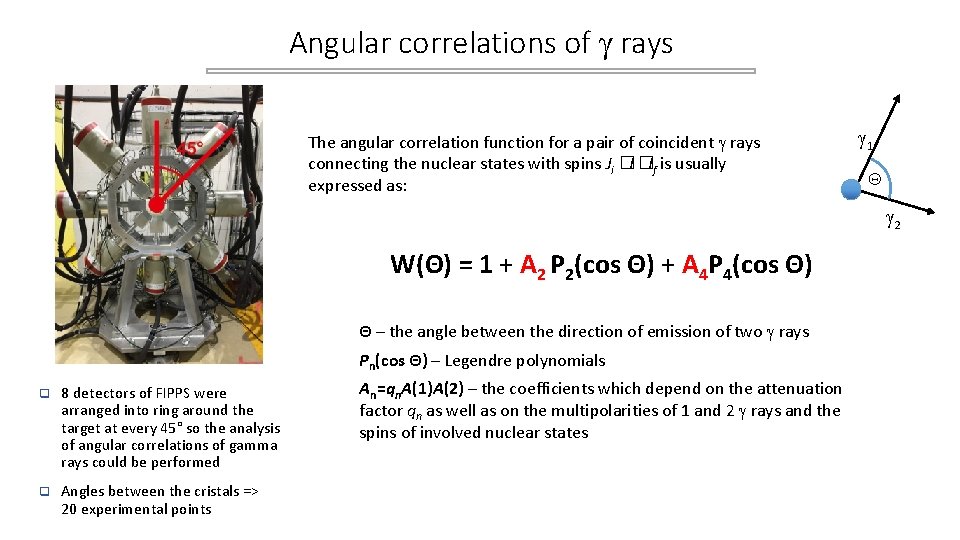
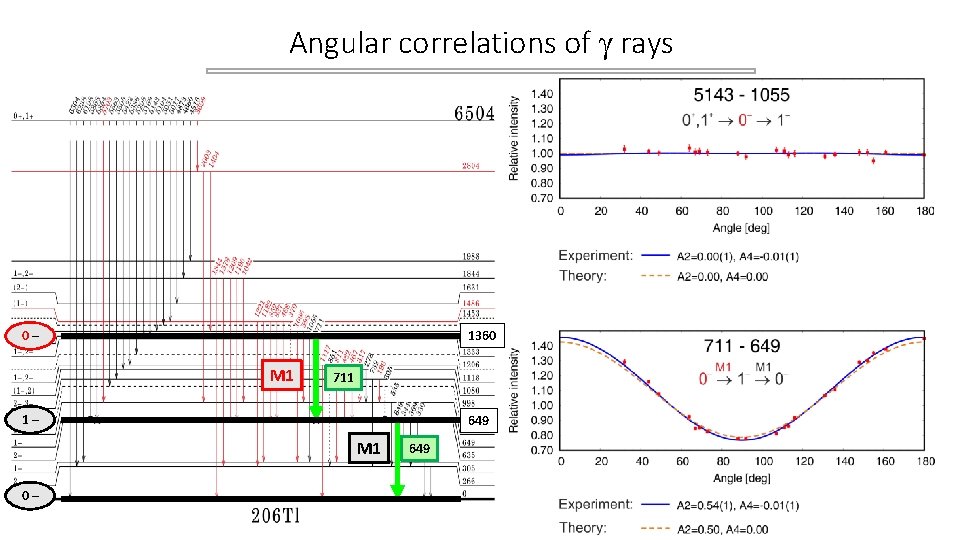
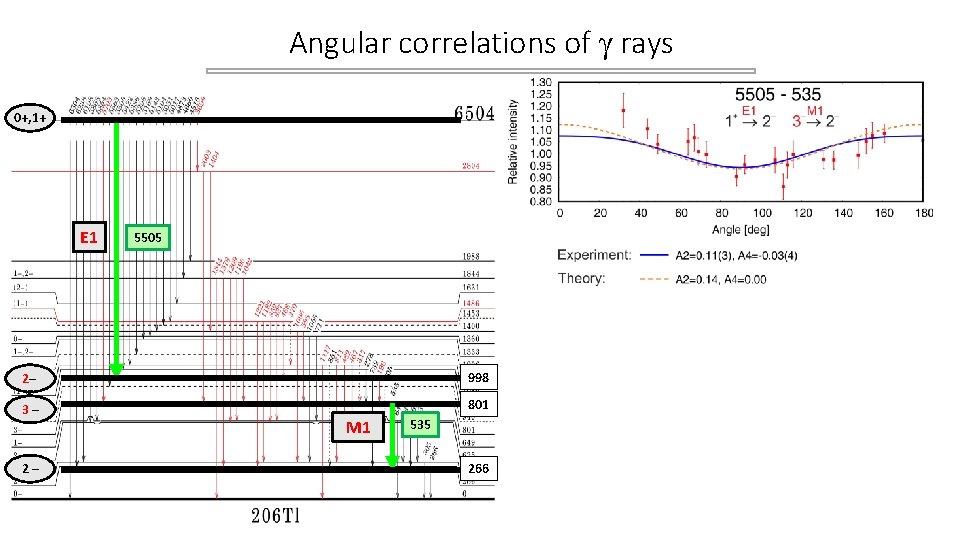
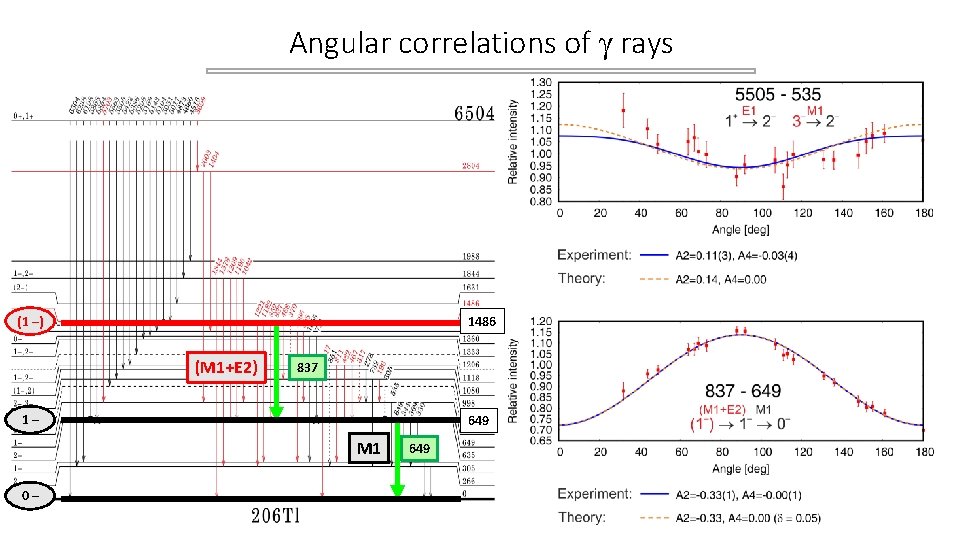
Angular correlations of rays The angular correlation function for a pair of coincident rays connecting the nuclear states with spins Ji �J �Jf is usually expressed as: 1 2 W(Θ) = 1 + A 2 P 2(cos Θ) + A 4 P 4(cos Θ) Θ – the angle between the direction of emission of two rays Pn(cos Θ) – Legendre polynomials q 8 detectors of FIPPS were arranged into ring around the target at every 45° so the analysis of angular correlations of gamma rays could be performed q Angles between the cristals => 20 experimental points An=qn. A(1)A(2) – the coefficients which depend on the attenuation factor qn as well as on the multipolarities of 1 and 2 rays and the spins of involved nuclear states
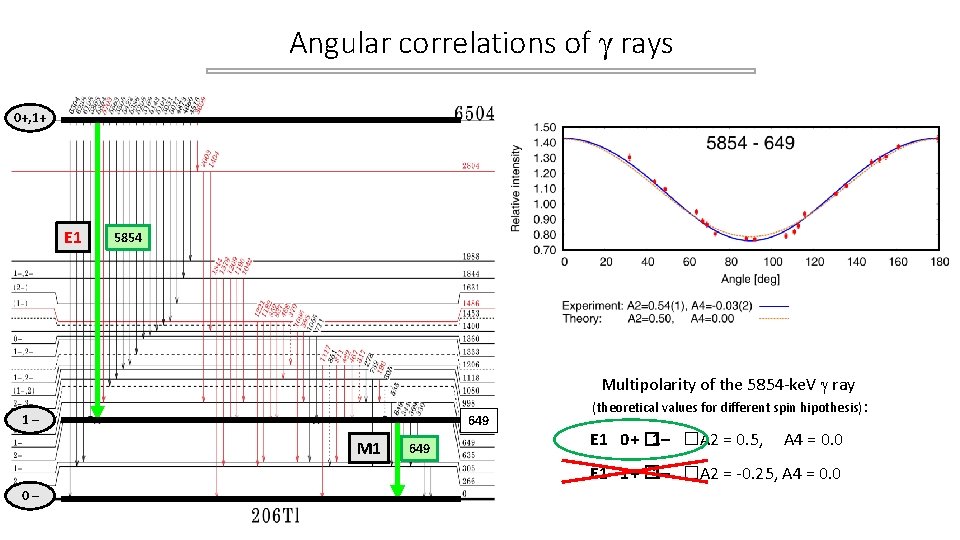
Angular correlations of rays 0+, 1+ E 1 ? 5854 Multipolarity of the 5854 -ke. V ray 1– 649 M 1 649 (theoretical values for different spin hipothesis): E 1 0+ � 1– �A 2 = 0. 5, A 4 = 0. 0 E 1 1+ � 1– �A 2 = -0. 25, A 4 = 0. 0 0–
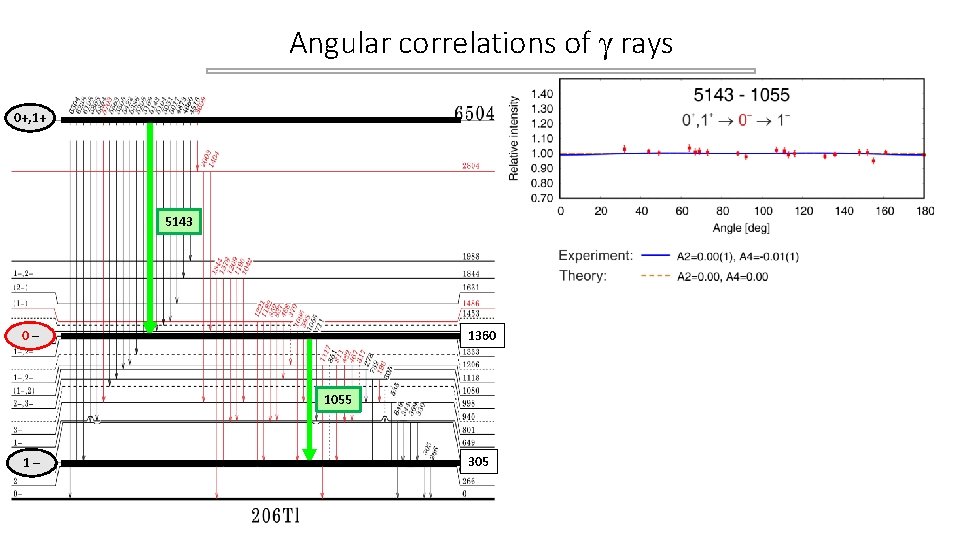
Angular correlations of rays 0+, 1+ 5143 1360 (0, 1, 2)– 0– 1055 1– 305
Angular correlations of rays 1360 0– M 1 711 1– 649 M 1 0– 649
Angular correlations of rays 0+, 1+ E 1 5505 (2, 3)– 2– 998 3 –– (3) 801 2– (M 1) M 1 535 266
Angular correlations of rays 1486 (1 –) (M 1+E 2) 837 1– 649 M 1 0– 649
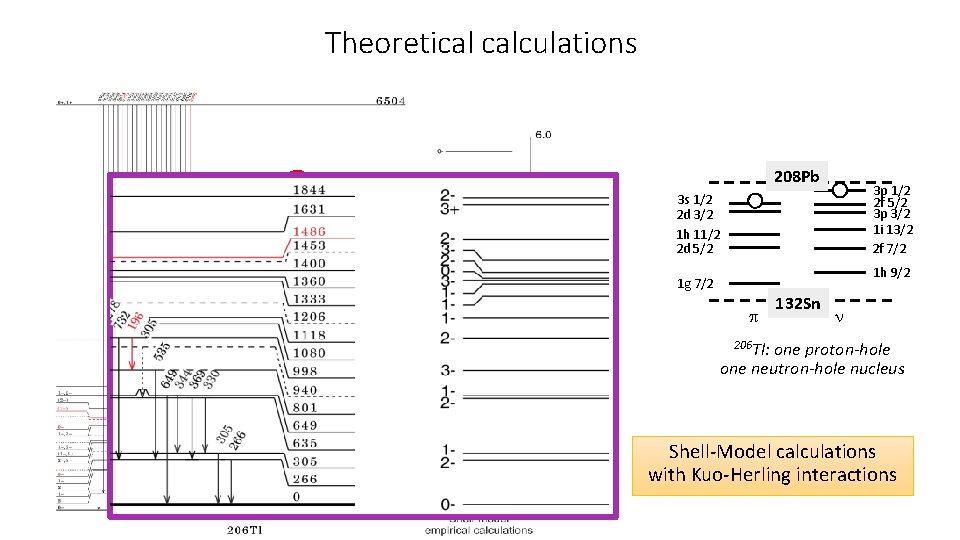
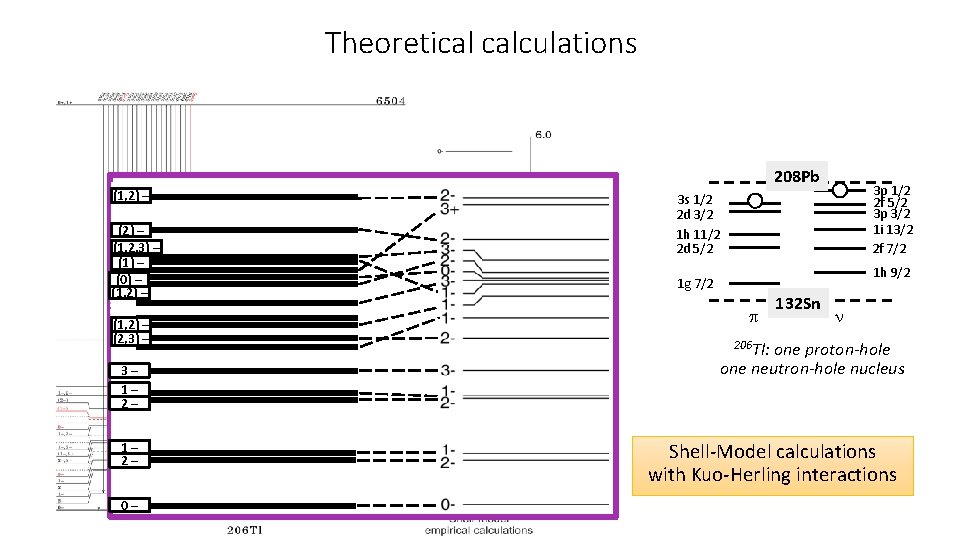
Theoretical calculations ? 208 Pb 3 p 1/2 2 f 5/2 3 p 3/2 1 i 13/2 2 f 7/2 3 s 1/2 2 d 3/2 1 h 11/2 2 d 5/2 1 h 9/2 1 g 7/2 p 132 Sn n 206 Tl: one proton-hole one neutron-hole nucleus Shell-Model calculations with Kuo-Herling interactions
Theoretical calculations 208 Pb (1, 2) – (1, 2, 3) – (1) – (0) – (1, 2) – (2, 3) – 3– 1– 2– 0– 3 p 1/2 2 f 5/2 3 p 3/2 1 i 13/2 2 f 7/2 3 s 1/2 2 d 3/2 1 h 11/2 2 d 5/2 1 h 9/2 1 g 7/2 p 132 Sn n 206 Tl: one proton-hole one neutron-hole nucleus Shell-Model calculations with Kuo-Herling interactions
Summary The new data from 205 Tl(n, )206 Tl experiment at FIPPS will allow to extend the level scheme of 206 Tl. q q Angular correlations of gamma rays will help with spin assignments to the excited states. q The level structure of 206 Tl investigated in neutron-capture reactions is very good testing ground for the future theoretical calculations around the 208 Pb core.