
AngloSaxon Literature An Introduction Literature l Characteristics l

- Slides: 29
Anglo-Saxon Literature: An Introduction
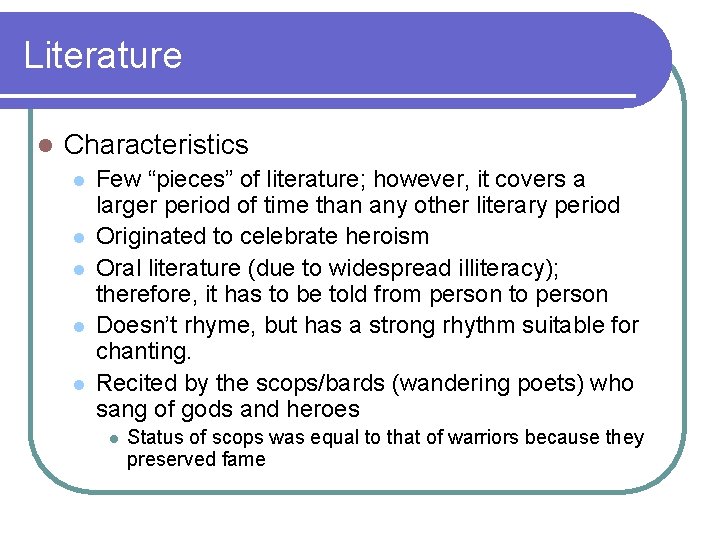
Literature l Characteristics l l l Few “pieces” of literature; however, it covers a larger period of time than any other literary period Originated to celebrate heroism Oral literature (due to widespread illiteracy); therefore, it has to be told from person to person Doesn’t rhyme, but has a strong rhythm suitable for chanting. Recited by the scops/bards (wandering poets) who sang of gods and heroes l Status of scops was equal to that of warriors because they preserved fame
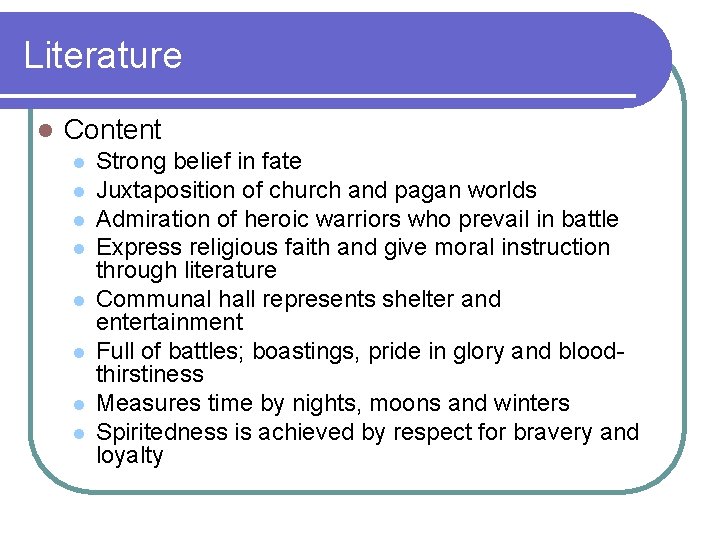
Literature l Content l l l l Strong belief in fate Juxtaposition of church and pagan worlds Admiration of heroic warriors who prevail in battle Express religious faith and give moral instruction through literature Communal hall represents shelter and entertainment Full of battles; boastings, pride in glory and bloodthirstiness Measures time by nights, moons and winters Spiritedness is achieved by respect for bravery and loyalty
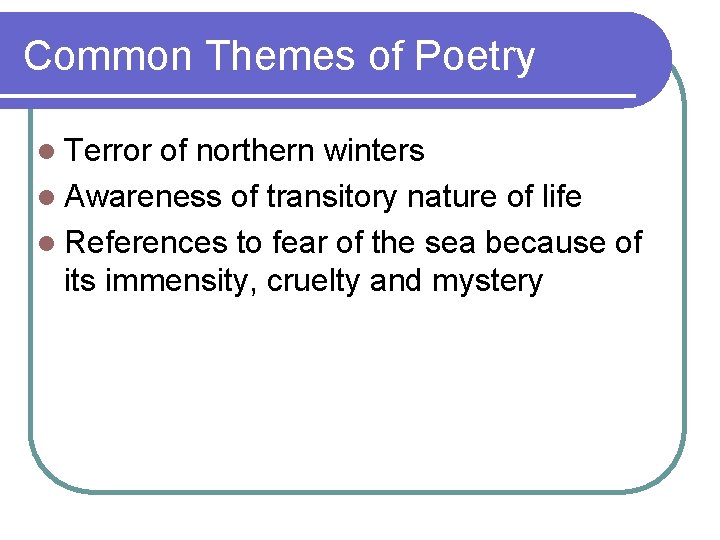
Common Themes of Poetry l Terror of northern winters l Awareness of transitory nature of life l References to fear of the sea because of its immensity, cruelty and mystery
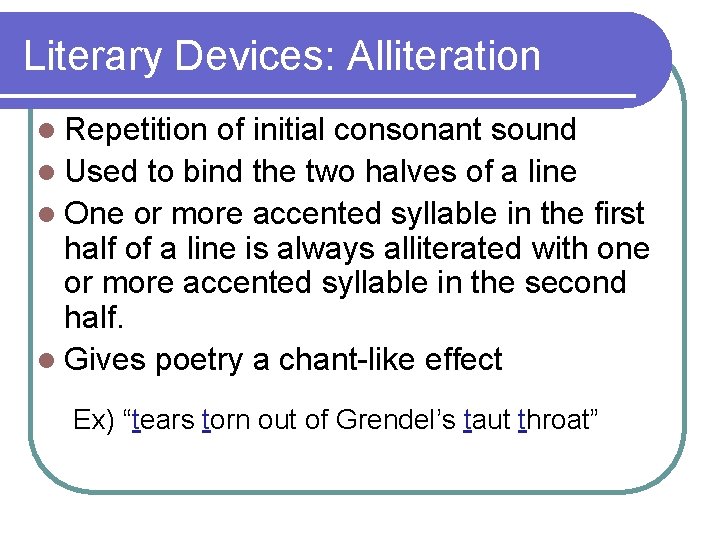
Literary Devices: Alliteration l Repetition of initial consonant sound l Used to bind the two halves of a line l One or more accented syllable in the first half of a line is always alliterated with one or more accented syllable in the second half. l Gives poetry a chant-like effect Ex) “tears torn out of Grendel’s taut throat”
Literary Devices: Homily l Literally "sermon", or any serious talk, speech, or lecture providing moral or spiritual advice. l A passage in a work that gives stern solemn advice on how to live and is mostly concerned with morals and conduct.
Literary Devices: Caesura l “Every nice ear, must, I believe, have observed that in any smooth English verse of ten syllables, there is naturally a pause either at the fourth, fifth, or sixth syllable. ” – Alexander Pope
Literary Devices: Caesura l. A natural pause or break dividing a FOOT between two words, usually near the middle of a line with two major stressed syllables in each part l A FOOT is a unit of rhythm in verse l Found in typical Anglo-Saxon verse l Literally: “a cutting” Old English, cennan – to declare l Old Norse, kenna – to know or name l
Literary Devices: Caesura l Examples l A prince of Geats had killed Grendel
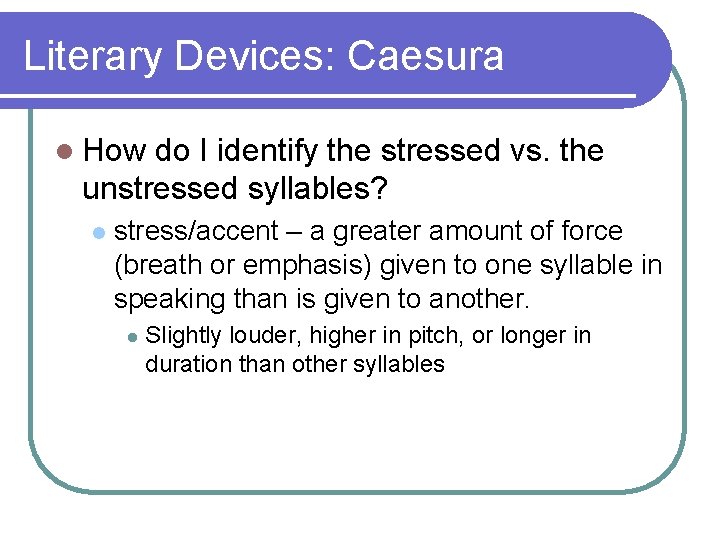
Literary Devices: Caesura l How do I identify the stressed vs. the unstressed syllables? l stress/accent – a greater amount of force (breath or emphasis) given to one syllable in speaking than is given to another. l Slightly louder, higher in pitch, or longer in duration than other syllables
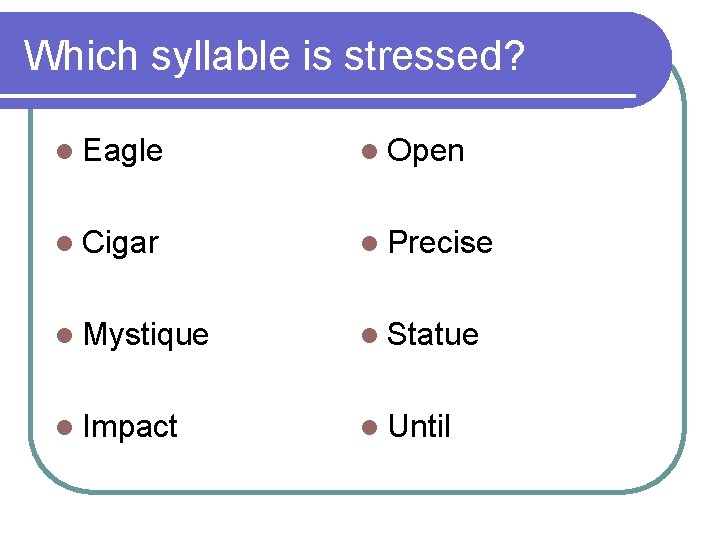
Which syllable is stressed? l Eagle l Open l Cigar l Precise l Mystique l Statue l Impact l Until
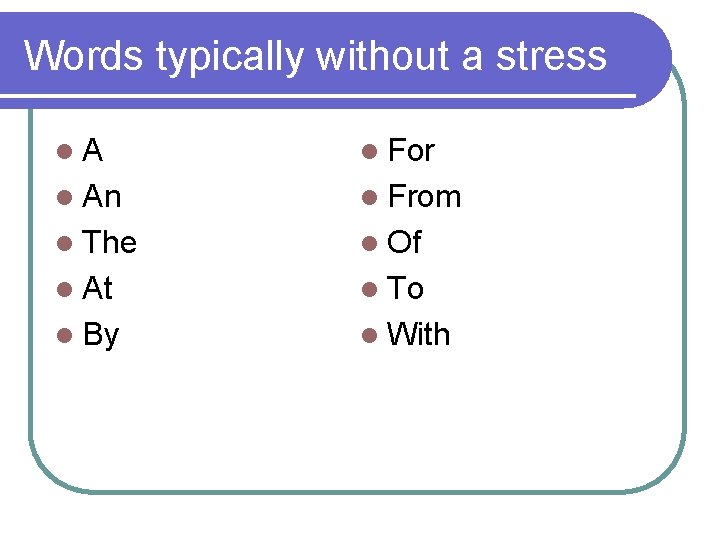
Words typically without a stress l. A l For l An l From l The l Of l At l To l By l With
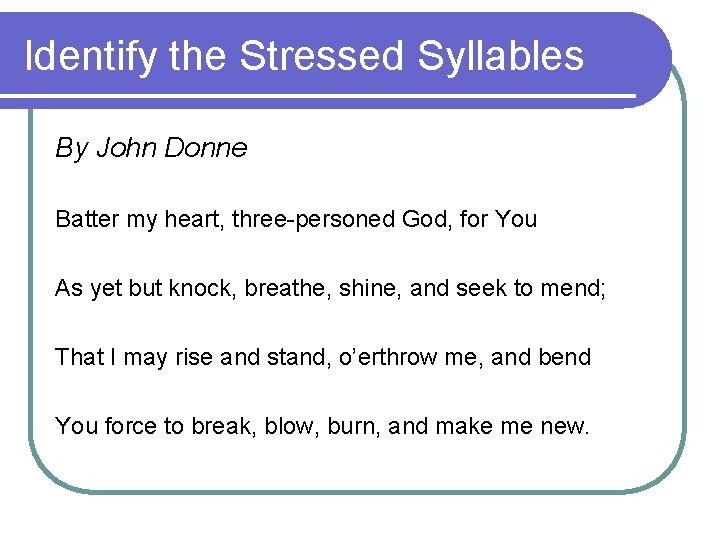
Identify the Stressed Syllables By John Donne Batter my heart, three-personed God, for You As yet but knock, breathe, shine, and seek to mend; That I may rise and stand, o’erthrow me, and bend You force to break, blow, burn, and make me new.
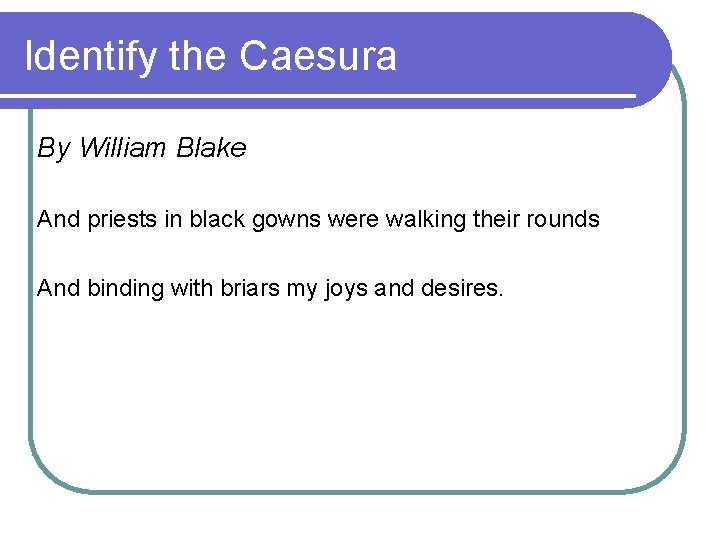
Identify the Caesura By William Blake And priests in black gowns were walking their rounds And binding with briars my joys and desires.
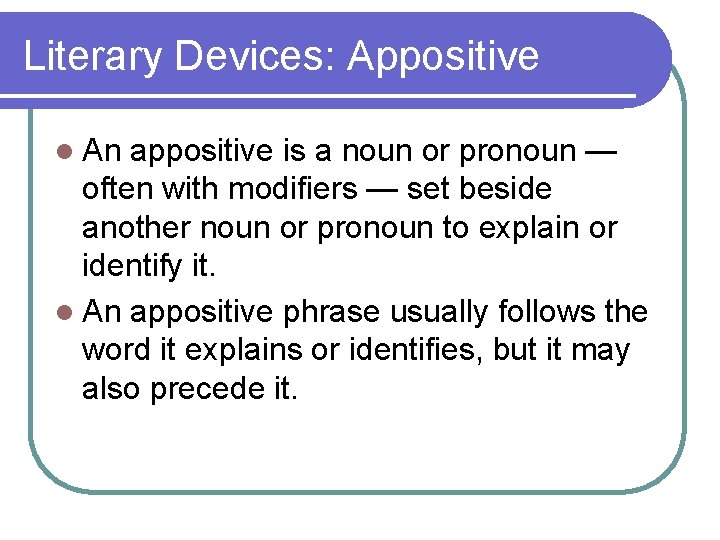
Literary Devices: Appositive l An appositive is a noun or pronoun — often with modifiers — set beside another noun or pronoun to explain or identify it. l An appositive phrase usually follows the word it explains or identifies, but it may also precede it.
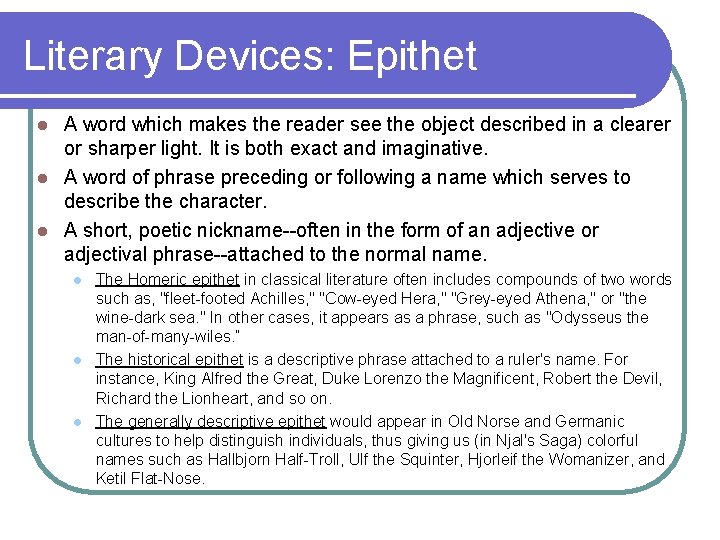
Literary Devices: Epithet A word which makes the reader see the object described in a clearer or sharper light. It is both exact and imaginative. l A word of phrase preceding or following a name which serves to describe the character. l A short, poetic nickname--often in the form of an adjective or adjectival phrase--attached to the normal name. l l The Homeric epithet in classical literature often includes compounds of two words such as, "fleet-footed Achilles, " "Cow-eyed Hera, " "Grey-eyed Athena, " or "the wine-dark sea. " In other cases, it appears as a phrase, such as "Odysseus the man-of-many-wiles. ” The historical epithet is a descriptive phrase attached to a ruler's name. For instance, King Alfred the Great, Duke Lorenzo the Magnificent, Robert the Devil, Richard the Lionheart, and so on. The generally descriptive epithet would appear in Old Norse and Germanic cultures to help distinguish individuals, thus giving us (in Njal's Saga) colorful names such as Hallbjorn Half-Troll, Ulf the Squinter, Hjorleif the Womanizer, and Ketil Flat-Nose.
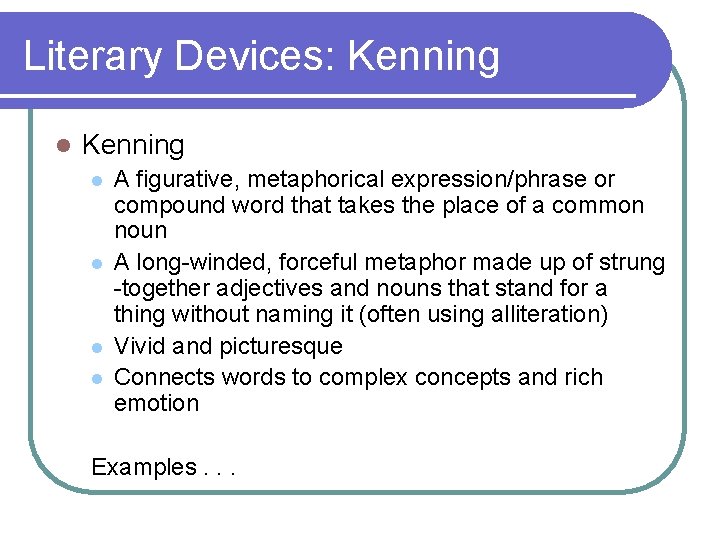
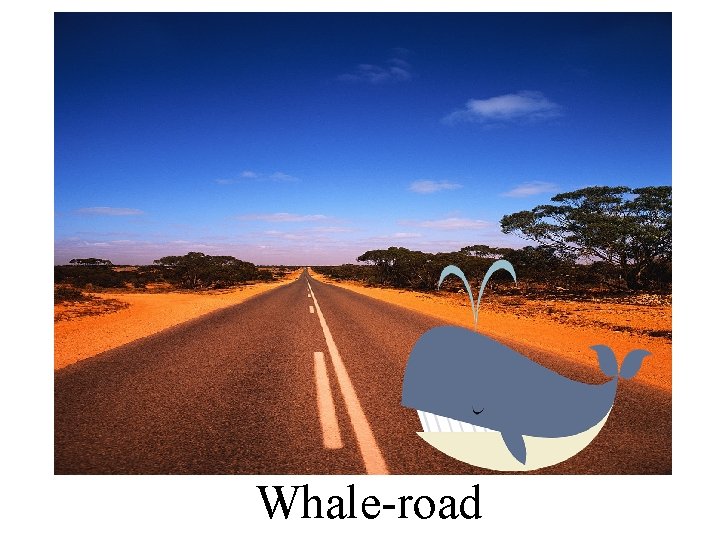
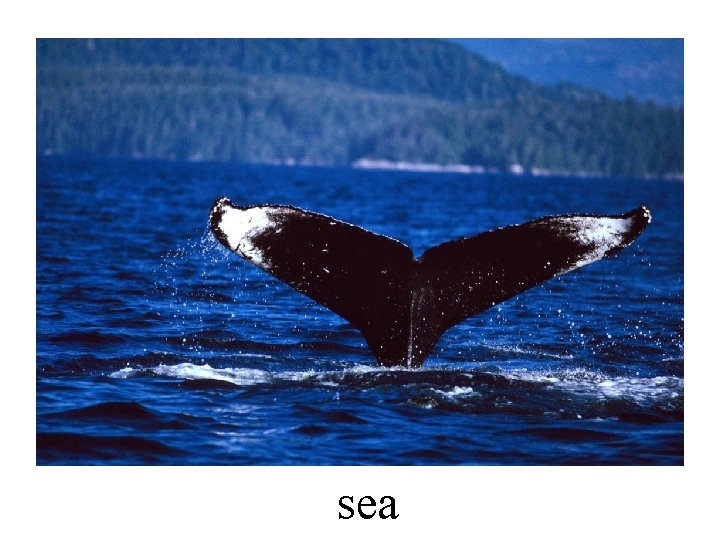
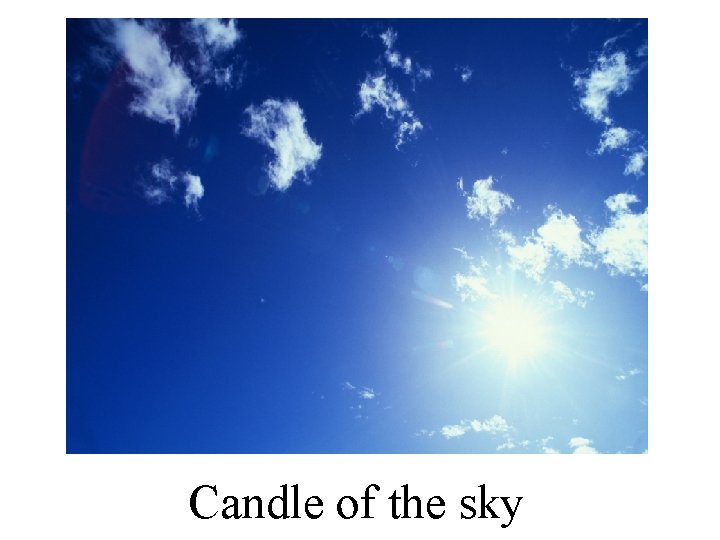
Literary Devices: Kenning l l l l A figurative, metaphorical expression/phrase or compound word that takes the place of a common noun A long-winded, forceful metaphor made up of strung -together adjectives and nouns that stand for a thing without naming it (often using alliteration) Vivid and picturesque Connects words to complex concepts and rich emotion Examples. . .
Whale-road
sea
Candle of the sky
sun
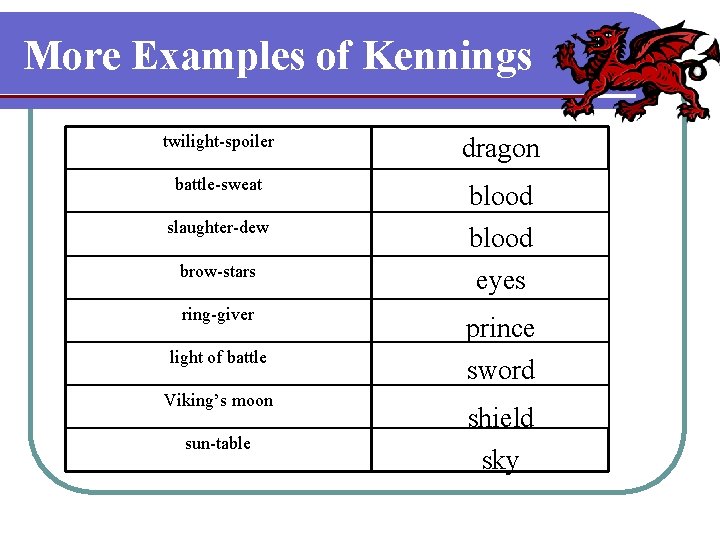
More Examples of Kennings twilight-spoiler dragon battle-sweat blood slaughter-dew brow-stars eyes ring-giver prince sword light of battle Viking’s moon sun-table shield sky
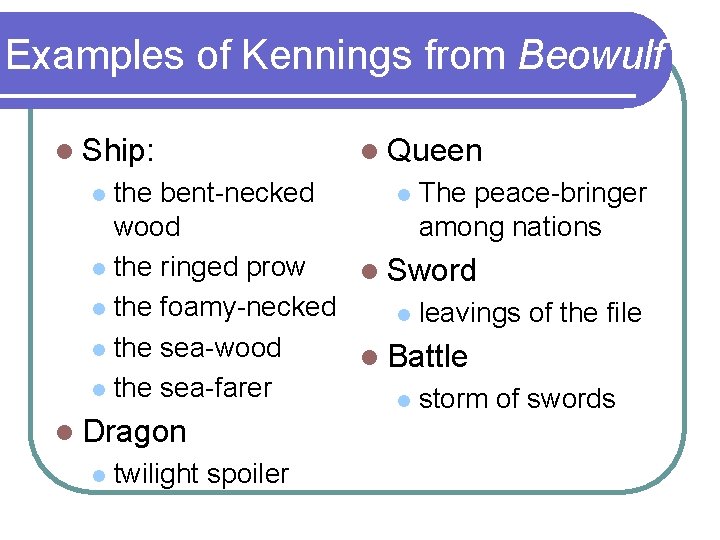
Examples of Kennings from Beowulf l Ship: l Queen l The peace-bringer the bent-necked among nations wood l the ringed prow l Sword l the foamy-necked l leavings of the file l the sea-wood l Battle l the sea-farer l storm of swords l l Dragon l twilight spoiler
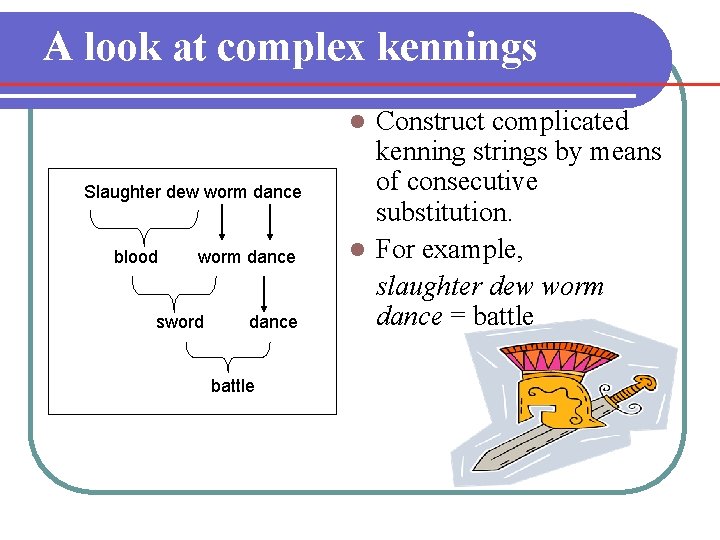
A look at complex kennings Construct complicated kenning strings by means of consecutive substitution. l For example, slaughter dew worm dance = battle l Slaughter dew worm dance blood worm dance sword dance battle
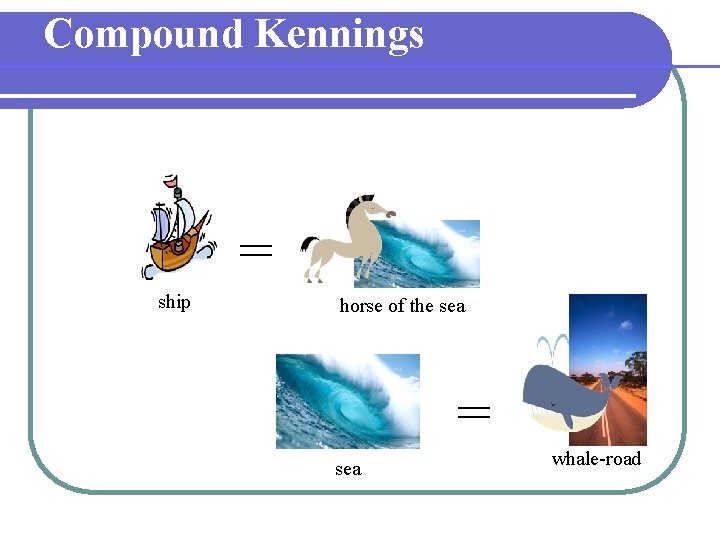
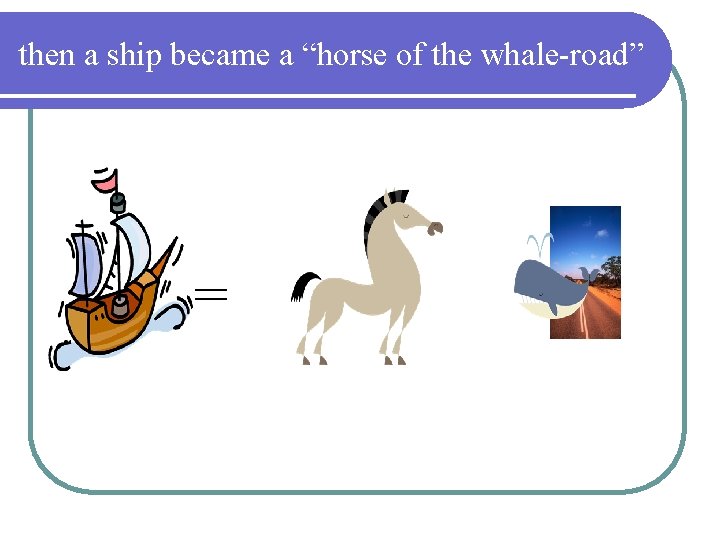
Compound Kennings = ship horse of the sea = sea whale-road
then a ship became a “horse of the whale-road” =
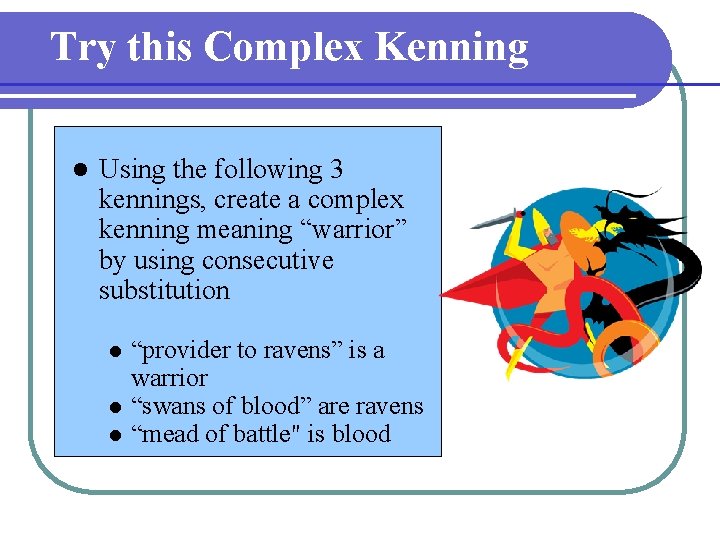
Try this Complex Kenning l Using the following 3 kennings, create a complex kenning meaning “warrior” by using consecutive substitution l l l “provider to ravens” is a warrior “swans of blood” are ravens “mead of battle" is blood
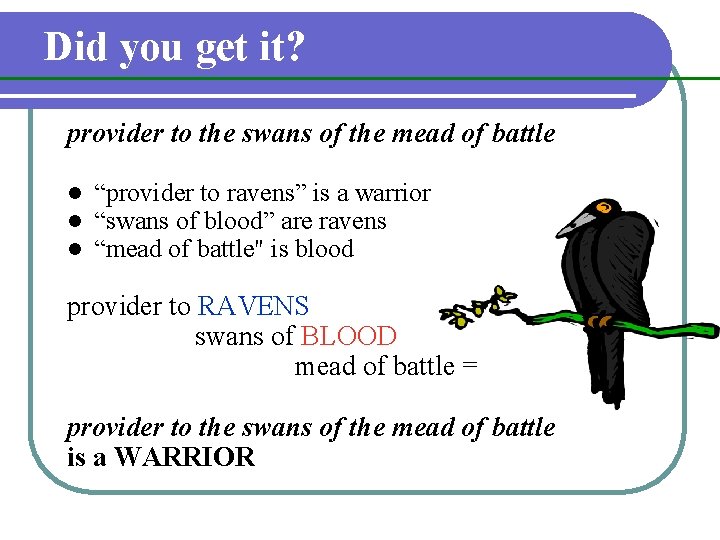
Did you get it? provider to the swans of the mead of battle l l l “provider to ravens” is a warrior “swans of blood” are ravens “mead of battle" is blood provider to RAVENS swans of BLOOD mead of battle = provider to the swans of the mead of battle is a WARRIOR
Modern Kennings l l l l l bone-house fire-water information super-highway gasoline gulper darkness destroyer sleep stopper word-eater sun smudge spinning water-spitter