
AngloSaxon England Old English Literature Beowulf AngloSaxon History
Anglo-Saxon England Old English Literature Beowulf
Anglo-Saxon History • 449 -1066 • 50 BCE: Julius Caesar arrived in Britain – Romans pushed native Celts to outskirts – Celts who remained became “Romanized” • 407 CE: Rome pulled troops from Britain – Troops needed to defend Rome against Germanic tribes – No more protection or centralized government
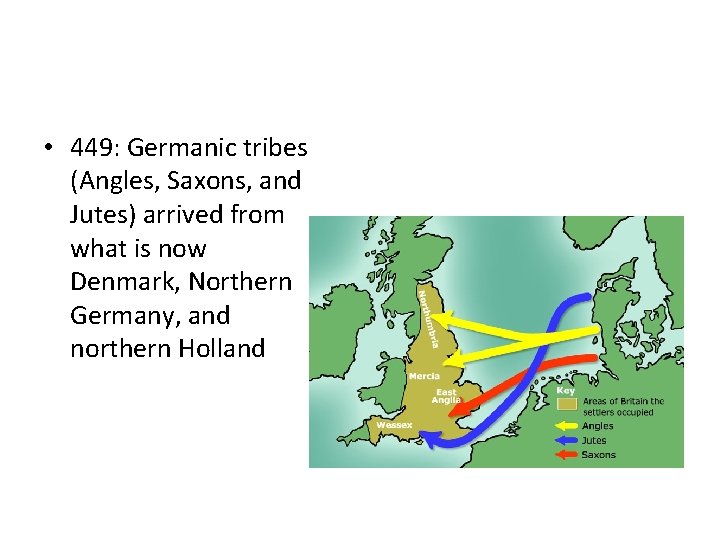
• 449: Germanic tribes (Angles, Saxons, and Jutes) arrived from what is now Denmark, Northern Germany, and northern Holland
• 597 -664: Conversion of England • 789 -878: Viking invasions • 871 -899: reign of King Alfred the Great – defended Wessex against Vikings – reorganized military – augmented navy – created law code – had Latin works translated into (Old) English
• 1042 -1066: Edward the Confessor – Remember this name! – nicknamed “the Confessor” because of his piety – unclear plan for succession • Earl Harold Godwinson? • King Harald Hardrada of Norway? • Duke William of Normandy?
• 1066: Norman Invasion and Conquest – January 5: Edward dies – January 6: Harold Godwinson crowned – September: Harald Hardrada arrives – September 25: Harald Hardrada killed – September: William of Normandy arrives – October 14: Harold Godwinson killed – December 25: William of Normandy crowned
Anglo-Saxon Culture • Buildings – Houses • Small • Wood • Danger of fires – Churches: stone – Large “mead hall” (“feasting hall”) • Mead is honey wine. • The hall provided warmth, safety, and companionship.
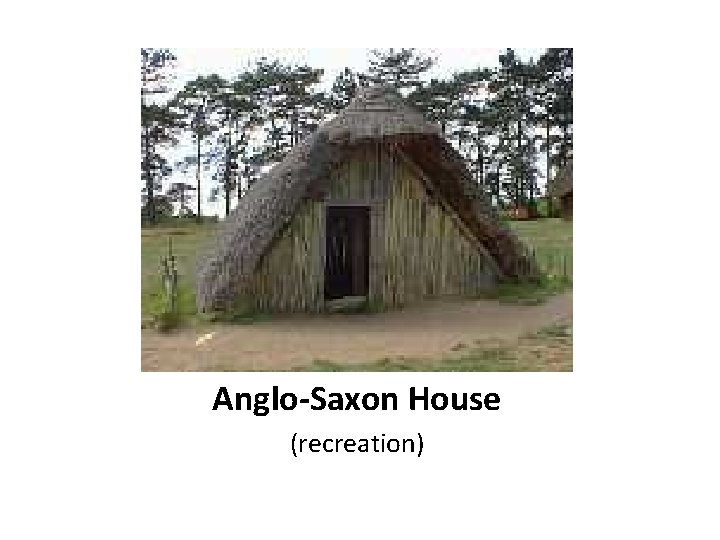
Anglo-Saxon House (recreation)
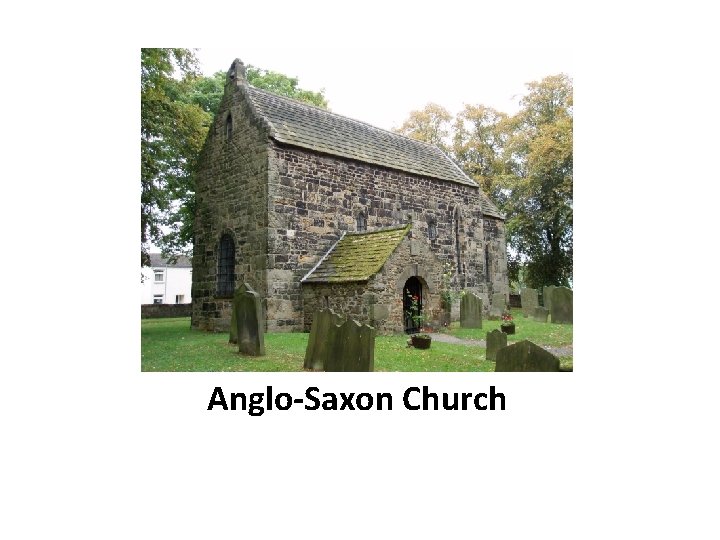
Anglo-Saxon Church
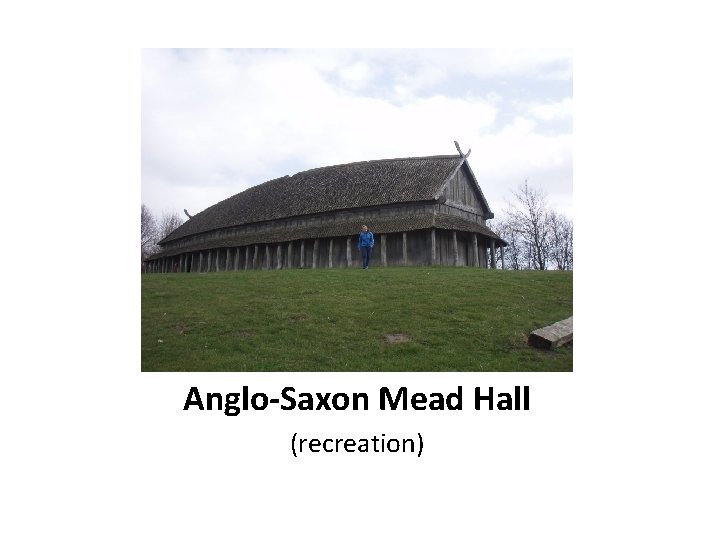
Anglo-Saxon Mead Hall (recreation)
• Political structure (early Anglo-Saxon Age) – Tribal – King—chosen by “witan” (group of advisors) – Warriors – Comitatus • Relationship between king and warriors • Warriors gave king protection. • King gave warriors gold.
• Religion – Paganism • Analogous to Norse beliefs • Týr (Tuesday), Woden (Wednesday), Thor (Thursday), Frigg (Friday) – Christianity • Full-scale conversion began in 597 • Augustine—sent by Pope Gregory • Conversion did not occur overnight; Paganism and Christianity lived side-by-side for a while
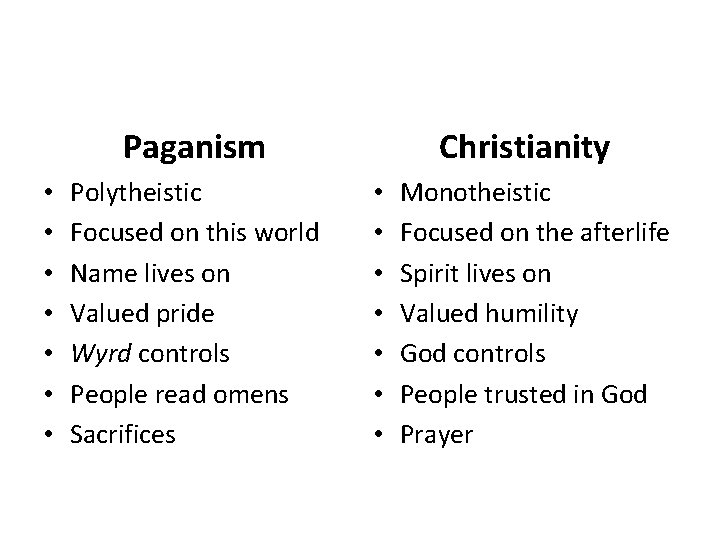
Paganism • • Polytheistic Focused on this world Name lives on Valued pride Wyrd controls People read omens Sacrifices Christianity • • Monotheistic Focused on the afterlife Spirit lives on Valued humility God controls People trusted in God Prayer
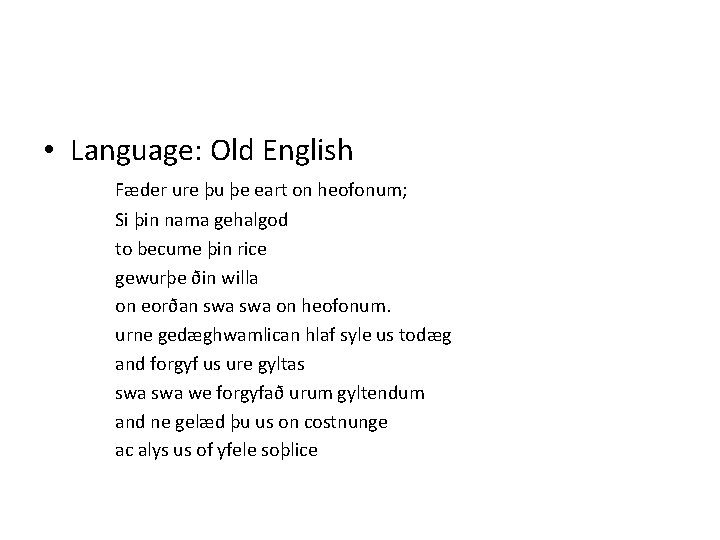
• Language: Old English Fæder ure þu þe eart on heofonum; Si þin nama gehalgod to becume þin rice gewurþe ðin willa on eorðan swa on heofonum. urne gedæghwamlican hlaf syle us todæg and forgyf us ure gyltas swa we forgyfað urum gyltendum and ne gelæd þu us on costnunge ac alys us of yfele soþlice
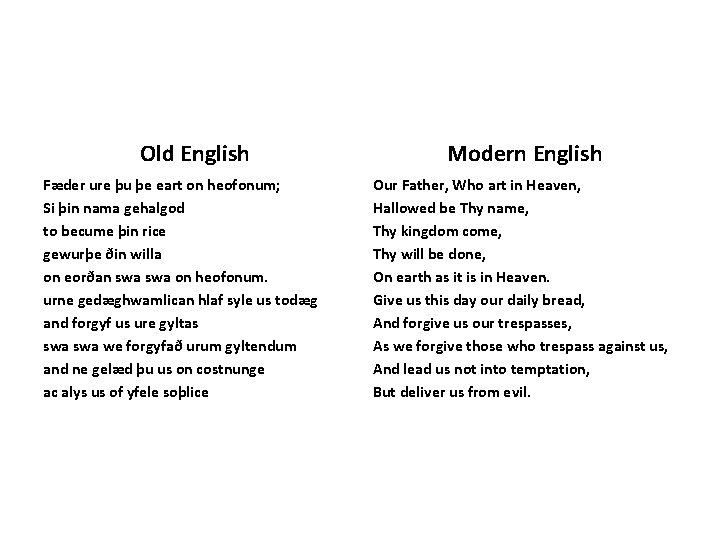
Old English Fæder ure þu þe eart on heofonum; Si þin nama gehalgod to becume þin rice gewurþe ðin willa on eorðan swa on heofonum. urne gedæghwamlican hlaf syle us todæg and forgyf us ure gyltas swa we forgyfað urum gyltendum and ne gelæd þu us on costnunge ac alys us of yfele soþlice Modern English Our Father, Who art in Heaven, Hallowed be Thy name, Thy kingdom come, Thy will be done, On earth as it is in Heaven. Give us this day our daily bread, And forgive us our trespasses, As we forgive those who trespass against us, And lead us not into temptation, But deliver us from evil.
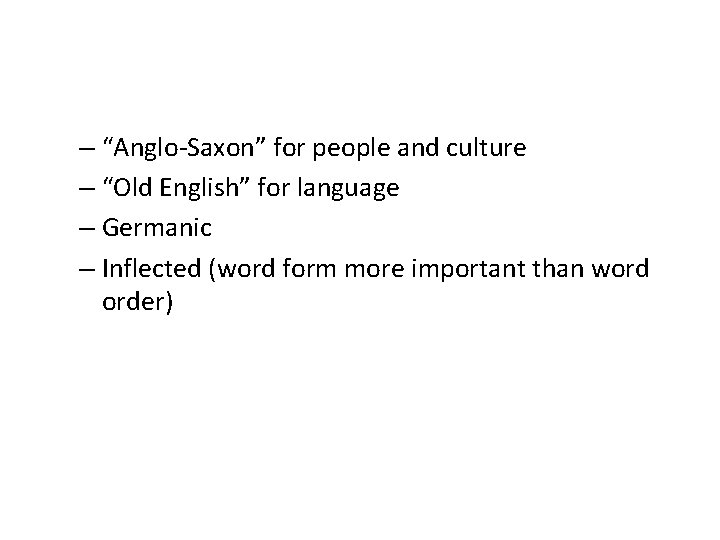
– “Anglo-Saxon” for people and culture – “Old English” for language – Germanic – Inflected (word form more important than word order)
• Literature – Only monks could write • Wrote in scriptoria • Sometimes added commentary – Poetry • Did not rhyme • Alliteration • Stressed syllables
Beowulf • • • Began in oral tradition Written down in 8 th century Preserved in one manuscript Parts damaged by fire Setting – 6 th century – What is now Denmark and Sweden
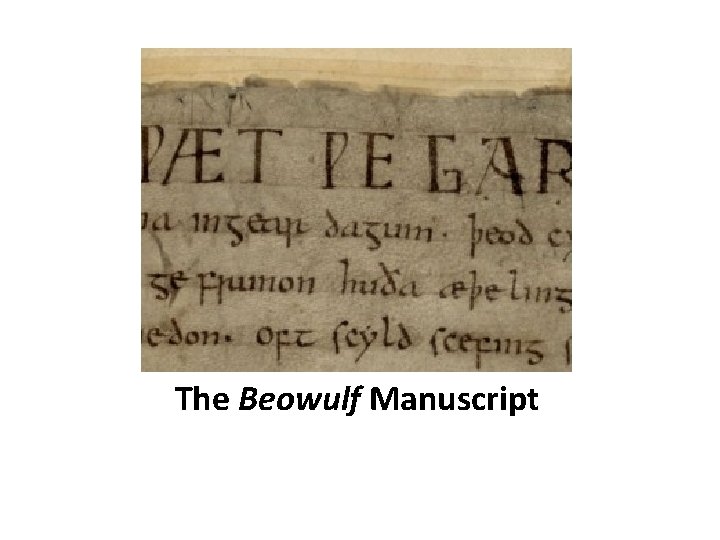
The Beowulf Manuscript
To Cite This Source In the essay: (Bernard-Roth) On the Works Cited page: Bernard-Roth, Staci. “Anglo-Saxon England. ” Central Gwinnett High School. Teachers/ Instructors: Roth, Staci. 27 June 2013. Microsoft Power. Point file. 1 October 2013.
- Slides: 20