
AngloSaxon England AngloSaxon England was born in warfare
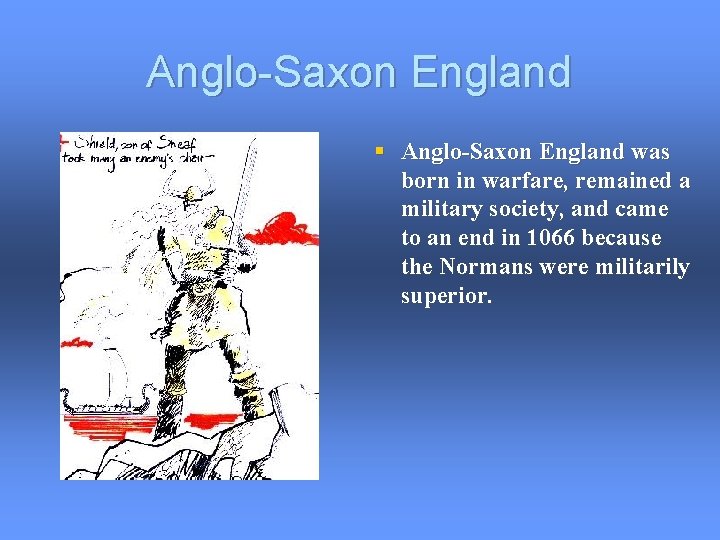
Anglo-Saxon England § Anglo-Saxon England was born in warfare, remained a military society, and came to an end in 1066 because the Normans were militarily superior.
Invasions of England This era of British history encompasses the following cultures: §Celts (800 -600 B. C. ) §Romans(55 B. C. ) §Angles, Saxons, Jutes(A. D. 449) §Vikings(A. D. 700)
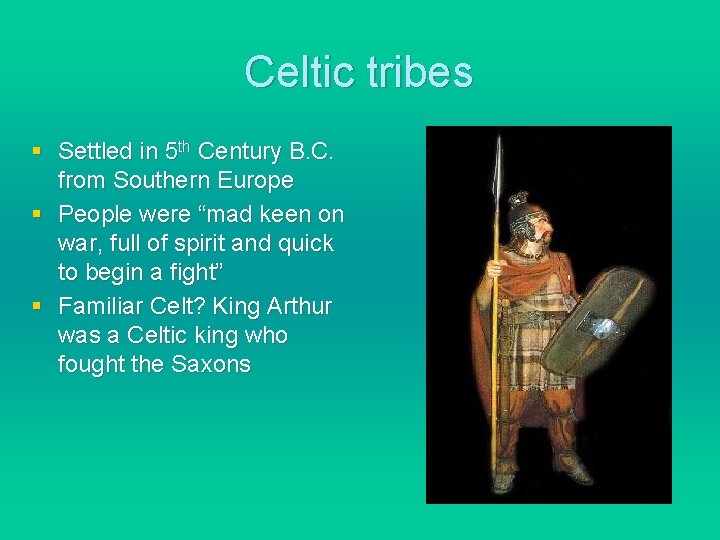
Celtic tribes § Settled in 5 th Century B. C. from Southern Europe § People were “mad keen on war, full of spirit and quick to begin a fight” § Familiar Celt? King Arthur was a Celtic king who fought the Saxons
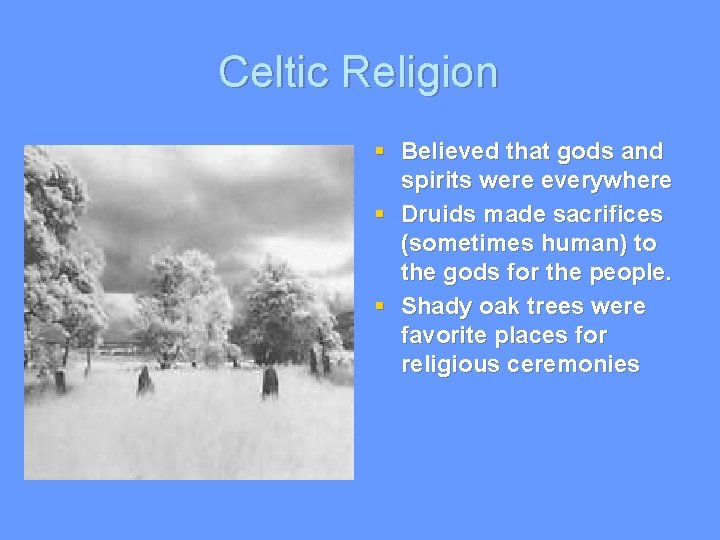
Celtic Religion § Believed that gods and spirits were everywhere § Druids made sacrifices (sometimes human) to the gods for the people. § Shady oak trees were favorite places for religious ceremonies
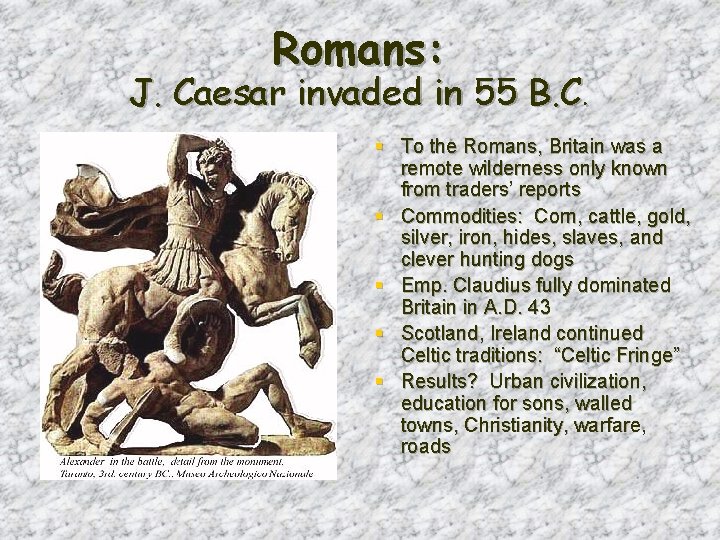
Romans: J. Caesar invaded in 55 B. C. § To the Romans, Britain was a remote wilderness only known from traders’ reports § Commodities: Corn, cattle, gold, silver, iron, hides, slaves, and clever hunting dogs § Emp. Claudius fully dominated Britain in A. D. 43 § Scotland, Ireland continued Celtic traditions: “Celtic Fringe” § Results? Urban civilization, education for sons, walled towns, Christianity, warfare, roads
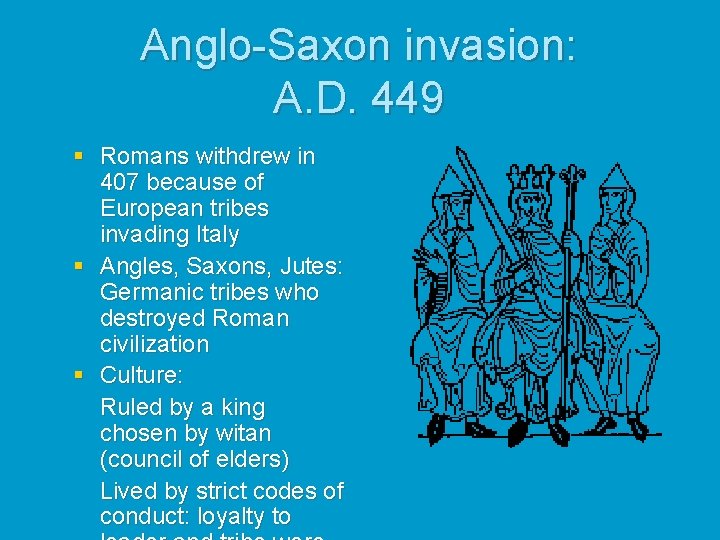
Anglo-Saxon invasion: A. D. 449 § Romans withdrew in 407 because of European tribes invading Italy § Angles, Saxons, Jutes: Germanic tribes who destroyed Roman civilization § Culture: Ruled by a king chosen by witan (council of elders) Lived by strict codes of conduct: loyalty to
Anglo-Saxon way of life § Ruler was generous with food, gold, drink, and weapons to those who were loyal § All people were aware of the shortness of life and the passing away of all things § Everything was determined by fate § The only thing that lasted was fame, so all competed for it
Anglo-Saxon Justice § Emphasis on revenge § If someone killed a member of your family, if you could, kill the slayer, or the next best thing: a member of his family § When a man committed the unpardonable offense of a crime against an actual kinsman, vengeance could be averted by payment of blood money: WERGILD
Christianity § By the year 300, a significant amount of Britons were Christians § Romans pulled out: , Christianity fell § 597 St. Augustine arrived on an order from Pope Gregory § He est. a monastery in Canterbury § Became the first Archbishop of Canterbury § The church enjoyed a revival § Christianity had to compete with Pagan rituals.
Absorption of pagan ideas into Christianity § Remember: pagan means one who is not Christian, Jewish, or Muslim (monotheistic) § Easter: Eostre was the Anglo. Saxon goddess of dawn § Rabbits and colored eggs were symbols of new life
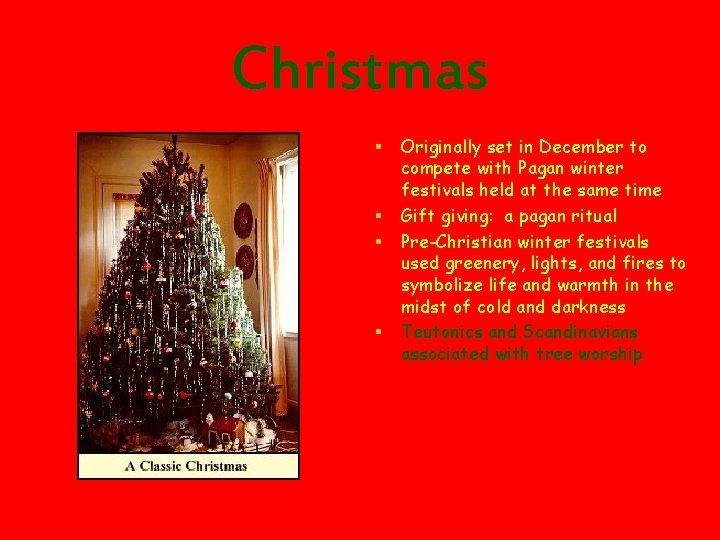
Christmas § Originally set in December to compete with Pagan winter festivals held at the same time § Gift giving: a pagan ritual § Pre-Christian winter festivals used greenery, lights, and fires to symbolize life and warmth in the midst of cold and darkness § Teutonics and Scandinavians associated with tree worship
Influences of Christianity to the Anglo-Saxon Culture § Monasteries were important centers of social, intellectual, artistic, and literary life § Monks copied books imported from other European countries § Bede: a Northumbrian monk who is considered the father of English history – Earliest historian of England – Earliest important prose writer – Venerable: in recognition of his reputation for wisdom, humility, and scholarship – Wrote History of the English Church and People
Alfred the Great (King Alfred of Wessex) 871 -899 § He united his people § Forced the Danes to the Northeast part of England § He promoted the use of written English rather than the Latin the monks copied § Encouraged original works § Wrote The Anglo-Saxon Chronicle: the first historical record kept in English § Created a code of law § Founded first English public schools
Pagan traditions § Fate § Rewards from the leader in the form of treasure (“booty”) § Fame: others will hear about your deeds § Dead bodies were burned § Code of honor: Defend your lord with your life § Belief in omens § Mead Hall: safety, fellowship, home
Types of Poetry Heroic epic: a long, narrative poem whose central character is a hero – The hero is a noble figure with great courage and superhuman abilities – Most epic heroes are important figures in a nation’s legends or history Elegiac Lyric § A single speaker expresses thoughts and feelings § Recalls the glories of the past § Solemn subjects such as death Riddles: – Composed in verse and challenged the listeners to guess their subject
Normans! 1066 Invaders from France Fall of Anglo-Saxon rule
- Slides: 16