
Anglo Saxons Vikings and Scots Top Facts Anglo
- Slides: 1
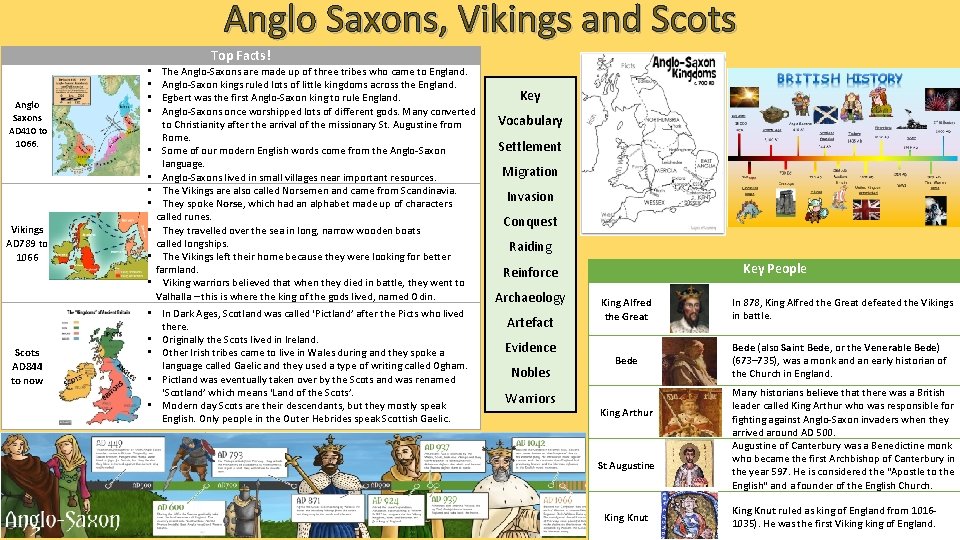
Anglo Saxons, Vikings and Scots Top Facts! Anglo Saxons AD 410 to 1066. Vikings AD 789 to 1066 Scots AD 844 to now The Anglo-Saxons are made up of three tribes who came to England. Anglo-Saxon kings ruled lots of little kingdoms across the England. Egbert was the first Anglo-Saxon king to rule England. Anglo-Saxons once worshipped lots of different gods. Many converted to Christianity after the arrival of the missionary St. Augustine from Rome. • Some of our modern English words come from the Anglo-Saxon language. • Anglo-Saxons lived in small villages near important resources. • The Vikings are also called Norsemen and came from Scandinavia. • They spoke Norse, which had an alphabet made up of characters called runes. • They travelled over the sea in long, narrow wooden boats called longships. • The Vikings left their home because they were looking for better farmland. • Viking warriors believed that when they died in battle, they went to Valhalla – this is where the king of the gods lived, named Odin. • • • In Dark Ages, Scotland was called ‘Pictland’ after the Picts who lived there. • Originally the Scots lived in Ireland. • Other Irish tribes came to live in Wales during and they spoke a language called Gaelic and they used a type of writing called Ogham. • Pictland was eventually taken over by the Scots and was renamed ‘Scotland’ which means ‘Land of the Scots’. • Modern day Scots are their descendants, but they mostly speak English. Only people in the Outer Hebrides speak Scottish Gaelic. Key Vocabulary Settlement Migration Invasion Conquest Raiding Key People Reinforce Archaeology Artefact Evidence Nobles Warriors King Alfred the Great In 878, King Alfred the Great defeated the Vikings in battle. Bede (also Saint Bede, or the Venerable Bede) (673– 735), was a monk and an early historian of the Church in England. King Arthur St Augustine King Knut Many historians believe that there was a British leader called King Arthur who was responsible for fighting against Anglo-Saxon invaders when they arrived around AD 500. Augustine of Canterbury was a Benedictine monk who became the first Archbishop of Canterbury in the year 597. He is considered the "Apostle to the English" and a founder of the English Church. King Knut ruled as king of England from 10161035). He was the first Viking of England.