
Anglo Saxon Village Life Settling Down The AngloSaxons
- Slides: 7
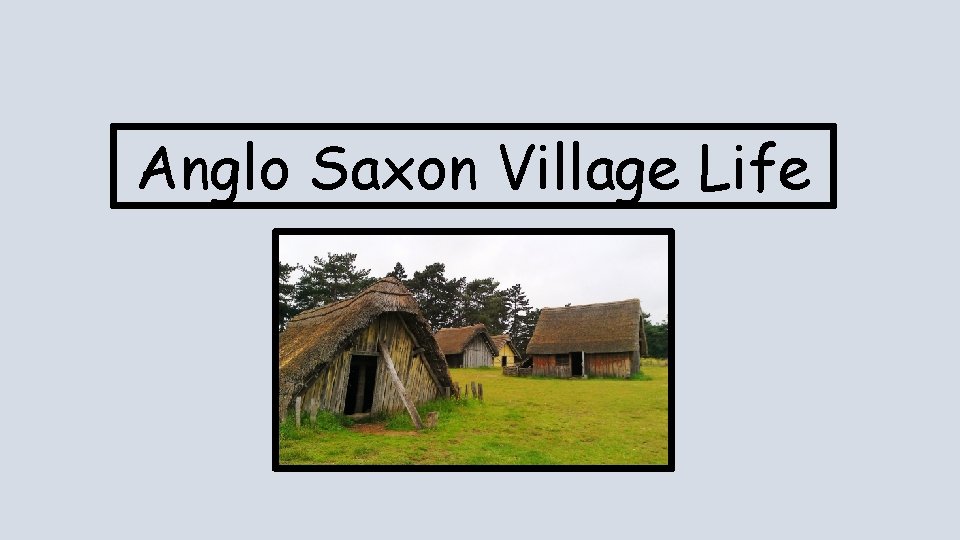
Anglo Saxon Village Life
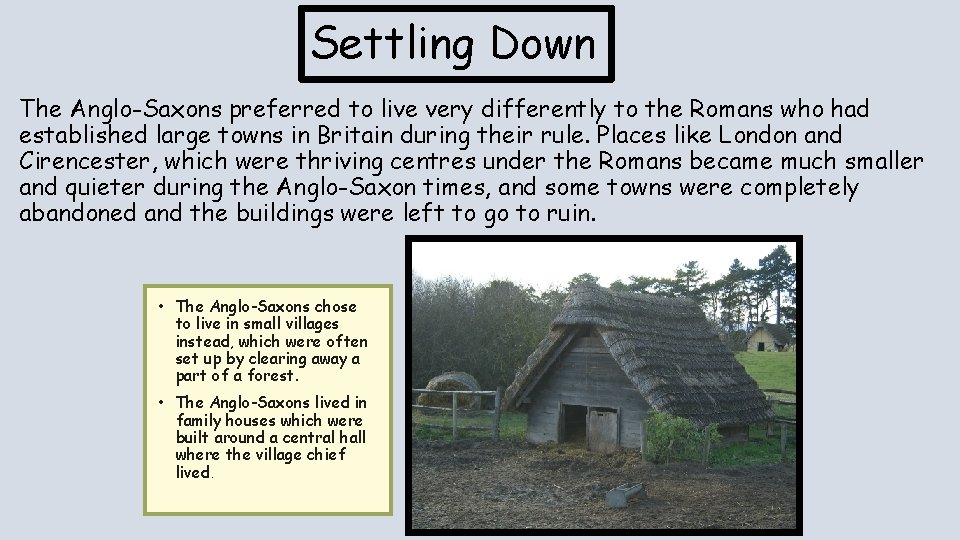
Settling Down The Anglo-Saxons preferred to live very differently to the Romans who had established large towns in Britain during their rule. Places like London and Cirencester, which were thriving centres under the Romans became much smaller and quieter during the Anglo-Saxon times, and some towns were completely abandoned and the buildings were left to go to ruin. • The Anglo-Saxons chose to live in small villages instead, which were often set up by clearing away a part of a forest. • The Anglo-Saxons lived in family houses which were built around a central hall where the village chief lived.
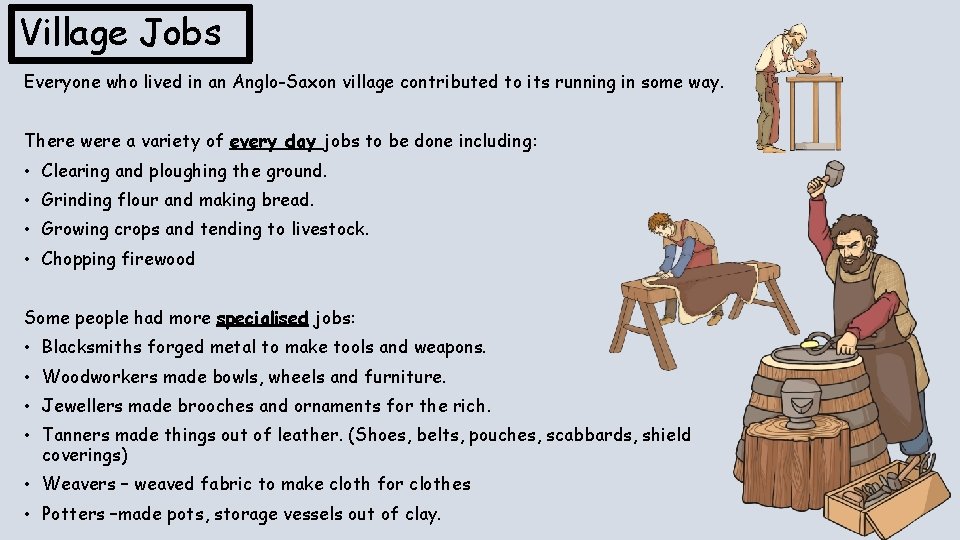
Village Jobs Everyone who lived in an Anglo-Saxon village contributed to its running in some way. There were a variety of every day jobs to be done including: • Clearing and ploughing the ground. • Grinding flour and making bread. • Growing crops and tending to livestock. • Chopping firewood Some people had more specialised jobs: • Blacksmiths forged metal to make tools and weapons. • Woodworkers made bowls, wheels and furniture. • Jewellers made brooches and ornaments for the rich. • Tanners made things out of leather. (Shoes, belts, pouches, scabbards, shield coverings) • Weavers – weaved fabric to make cloth for clothes • Potters –made pots, storage vessels out of clay.
Watch this video clip on Anglo-Saxon life and jobs • https: //www. bbc. co. uk/bitesize/clips/z 36 tsbk
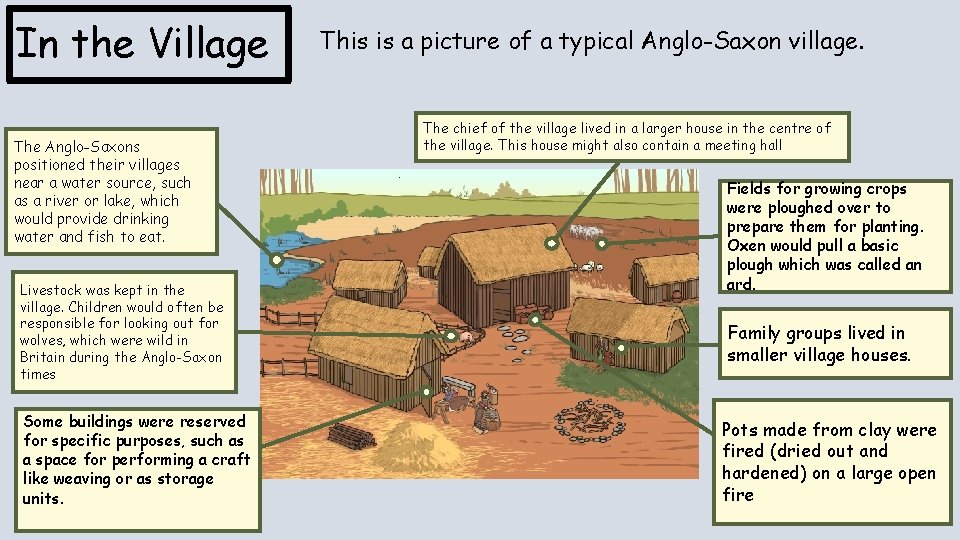
In the Village The Anglo-Saxons positioned their villages near a water source, such as a river or lake, which would provide drinking water and fish to eat. This is a picture of a typical Anglo-Saxon village. The chief of the village lived in a larger house in the centre of the village. This house might also contain a meeting hall. Fields for growing crops were ploughed over to prepare them for planting. Oxen would pull a basic plough which was called an ard. . Livestock was kept in the. village. Children would often be responsible for looking out for wolves, which were wild in Britain during the Anglo-Saxon times . Family groups lived in smaller village houses. . Some buildings were reserved for specific purposes, such as a space for performing a craft like weaving or as storage units. Pots made from clay were fired (dried out and hardened) on a large open fire
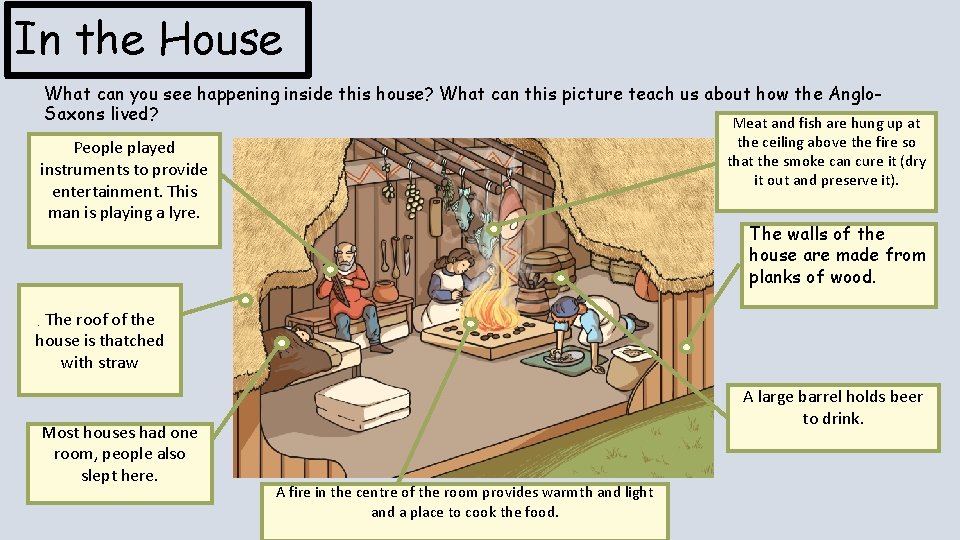
In the House What can you see happening inside this house? What can this picture teach us about how the Anglo. Saxons lived? Meat and fish are hung up at the ceiling above the fire so that the smoke can cure it (dry it out and preserve it). People played instruments to provide entertainment. This man is playing a lyre. The walls of the house are made from planks of wood. The roof of the house is thatched with straw. Most houses had one room, people also slept here. A large barrel holds beer to drink. A fire in the centre of the room provides warmth and light and a place to cook the food.
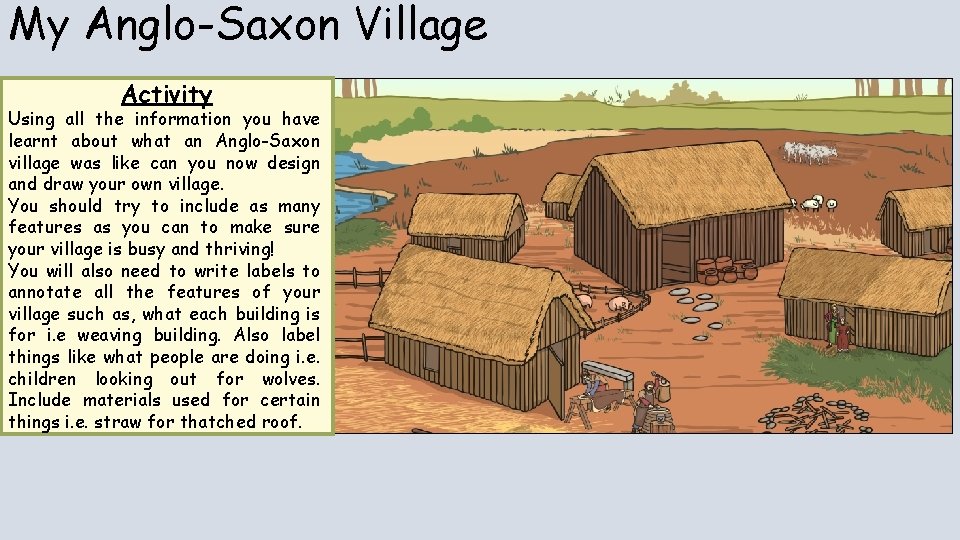
My Anglo-Saxon Village Activity Using all the information you have learnt about what an Anglo-Saxon village was like can you now design and draw your own village. You should try to include as many features as you can to make sure your village is busy and thriving! You will also need to write labels to annotate all the features of your village such as, what each building is for i. e weaving building. Also label things like what people are doing i. e. children looking out for wolves. Include materials used for certain things i. e. straw for thatched roof.