
ANGLO SAXON POETRY AND FIGURES OF SPEECH ANGLOSAXON
- Slides: 9
ANGLO SAXON POETRY AND FIGURES OF SPEECH
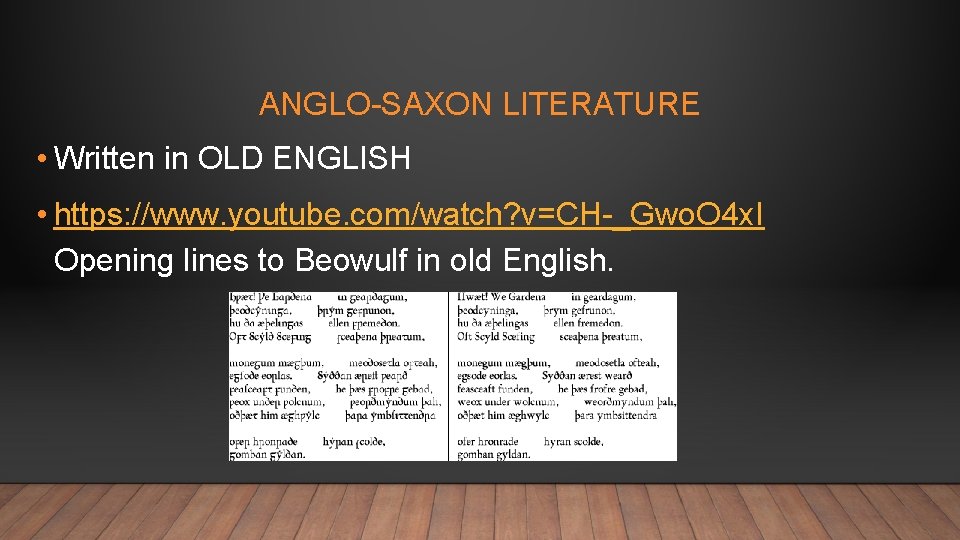
ANGLO-SAXON LITERATURE • Written in OLD ENGLISH • https: //www. youtube. com/watch? v=CH-_Gwo. O 4 x. I Opening lines to Beowulf in old English.
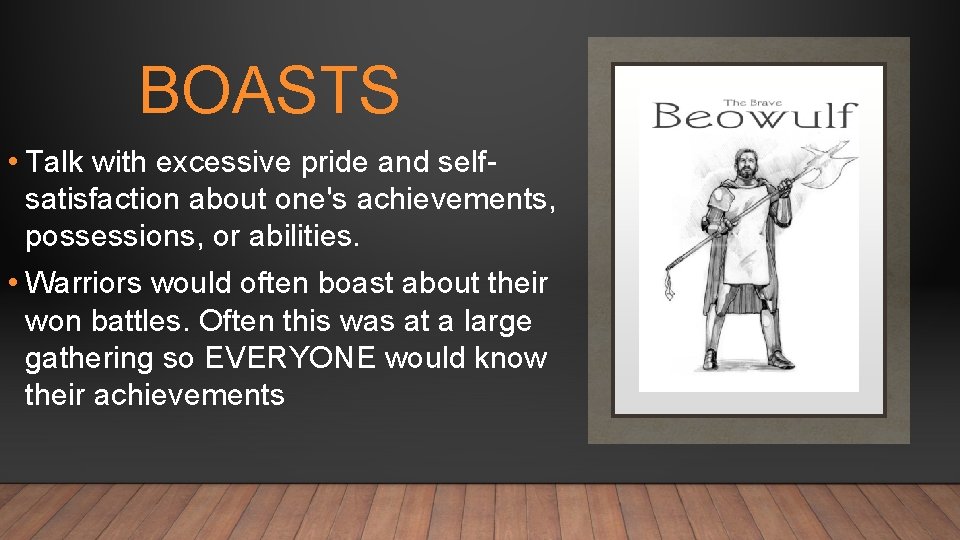
BOASTS • Talk with excessive pride and selfsatisfaction about one's achievements, possessions, or abilities. • Warriors would often boast about their won battles. Often this was at a large gathering so EVERYONE would know their achievements
THE EPIC HERO • The epic hero is the central figure in a long narrative that reflects the values the heroic ideals of a particular society. An EPIC (A heroic poem) is a quest story on a grand scale.
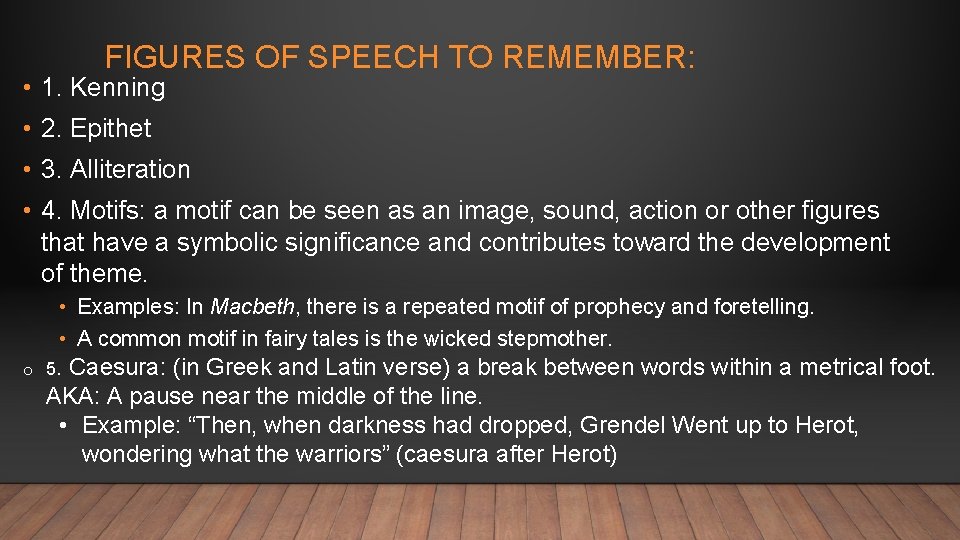
FIGURES OF SPEECH TO REMEMBER: • 1. Kenning • 2. Epithet • 3. Alliteration • 4. Motifs: a motif can be seen as an image, sound, action or other figures that have a symbolic significance and contributes toward the development of theme. • Examples: In Macbeth, there is a repeated motif of prophecy and foretelling. • A common motif in fairy tales is the wicked stepmother. o 5. Caesura: (in Greek and Latin verse) a break between words within a metrical foot. AKA: A pause near the middle of the line. • Example: “Then, when darkness had dropped, Grendel Went up to Herot, wondering what the warriors” (caesura after Herot)
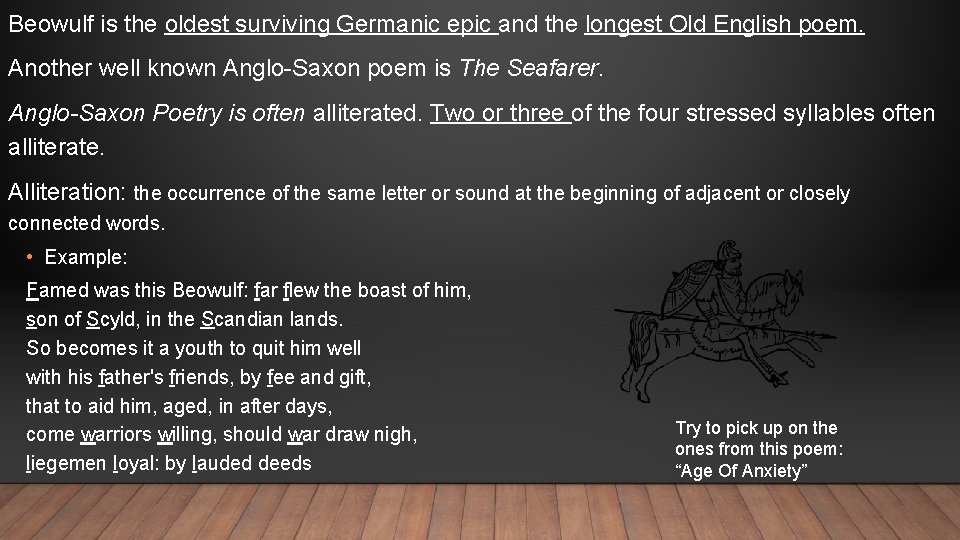
Beowulf is the oldest surviving Germanic epic and the longest Old English poem. Another well known Anglo-Saxon poem is The Seafarer. Anglo-Saxon Poetry is often alliterated. Two or three of the four stressed syllables often alliterate. Alliteration: the occurrence of the same letter or sound at the beginning of adjacent or closely connected words. • Example: Famed was this Beowulf: far flew the boast of him, son of Scyld, in the Scandian lands. So becomes it a youth to quit him well with his father's friends, by fee and gift, that to aid him, aged, in after days, come warriors willing, should war draw nigh, liegemen loyal: by lauded deeds Try to pick up on the ones from this poem: “Age Of Anxiety”
“THE SEAFARER” • On your own read through the poem “The Seafarer”. Annotate as you read. 1. Find examples of Caesuras 2. Locate moments of alliteration. 3. Locate at least one kenning 4. Underlines that lead you to theme of the poem. 5. Summarize the poem
“BREAK, BREAK” • 1. Look for alliteration and kennings, highlight the ones you find.
CANVAS • Complete the canvas assignment on the poems we just read analyzed. It is 8 questions that require you to look into the poems and locate information or analyze the poem further. Let me know if you have any questions.