
Anglo Saxon Christianity 03 02 21 and 10
- Slides: 10
Anglo Saxon Christianity 03. 02. 21 and 10. 02. 21 This is two weeks work
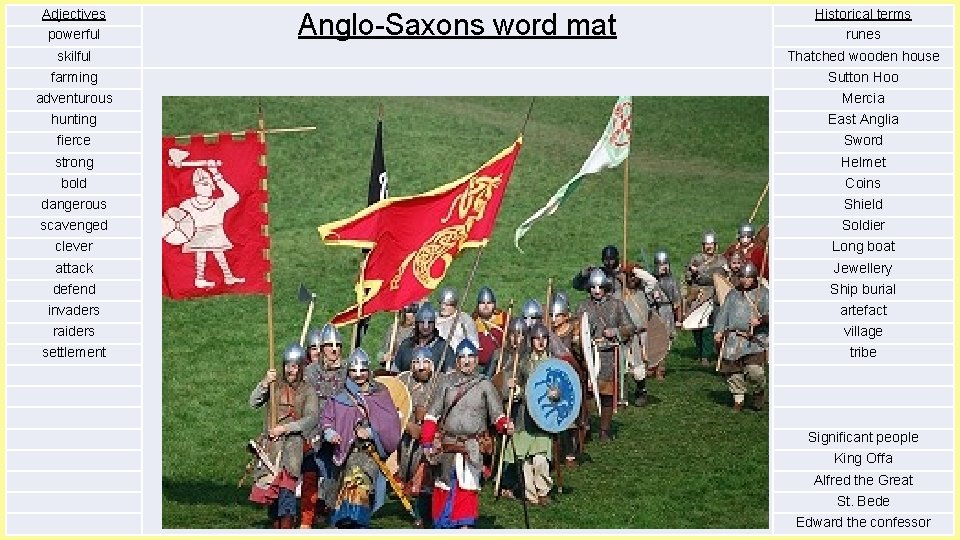
Adjectives powerful Anglo-Saxons word mat Historical terms runes skilful Thatched wooden house farming Sutton Hoo adventurous Mercia hunting East Anglia fierce Sword strong Helmet bold Coins dangerous Shield scavenged Soldier clever Long boat attack Jewellery defend Ship burial invaders artefact raiders village settlement tribe Significant people King Offa Alfred the Great St. Bede Edward the confessor
Anglo-Saxon monasteries • In AD 597 the Pope in Rome decided it was time the Anglo-Saxons in Britain heard about Christianity. • He sent a monk called Augustine to persuade the king to become a Christian. Over the next 100 years, many Anglo-Saxons turned to Christianity and new churches and monasteries were built. • Monasteries were centres of learning. Monks and nuns spent their time in prayer. They also studied and worked in fields and workshops. Monks copied out books by hand decorated the pages in beautiful colours. • Monasteries were the only schools in Anglo-Saxon England. Boys went to live there to train as monks and some girls became nuns. • https: //www. bbc. co. uk/bitesize/clips/zppg 9 qt - watch the video
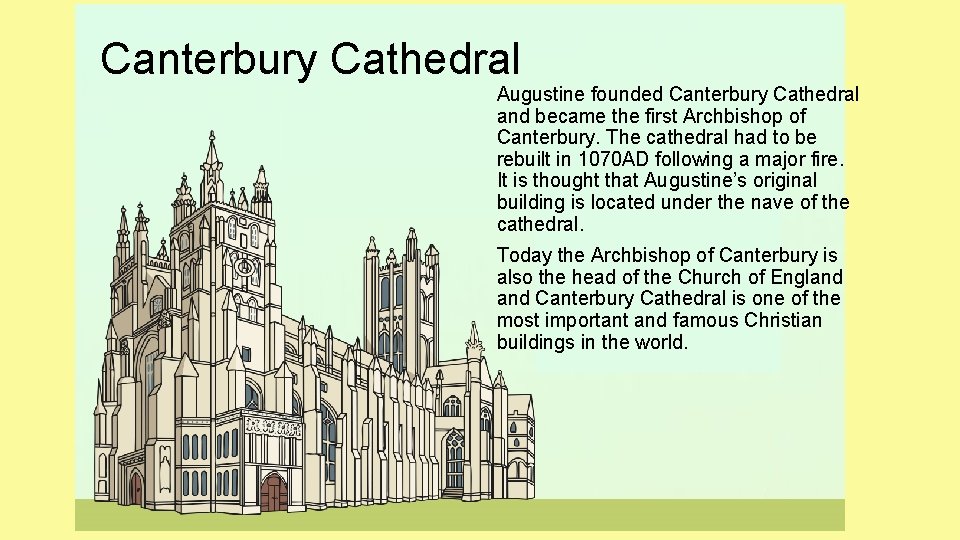
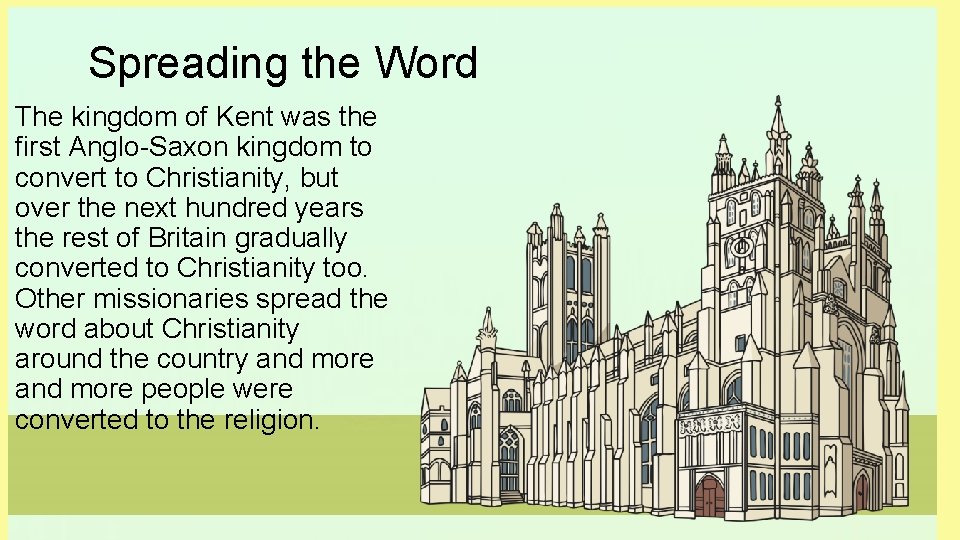
Canterbury Cathedral Augustine founded Canterbury Cathedral and became the first Archbishop of Canterbury. The cathedral had to be rebuilt in 1070 AD following a major fire. It is thought that Augustine’s original building is located under the nave of the cathedral. Today the Archbishop of Canterbury is also the head of the Church of England Canterbury Cathedral is one of the most important and famous Christian buildings in the world.
Spreading the Word The kingdom of Kent was the first Anglo-Saxon kingdom to convert to Christianity, but over the next hundred years the rest of Britain gradually converted to Christianity too. Other missionaries spread the word about Christianity around the country and more people were converted to the religion.
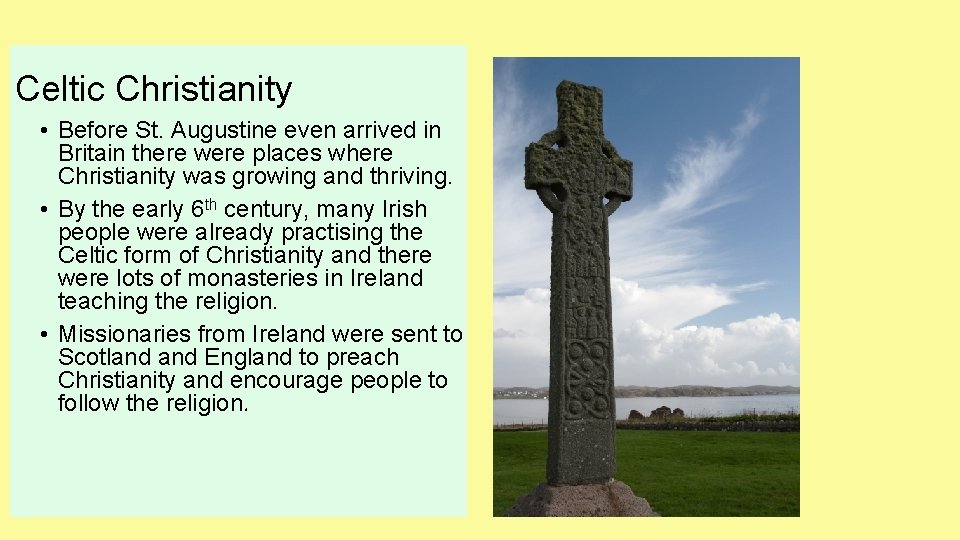
Celtic Christianity • Before St. Augustine even arrived in Britain there were places where Christianity was growing and thriving. • By the early 6 th century, many Irish people were already practising the Celtic form of Christianity and there were lots of monasteries in Ireland teaching the religion. • Missionaries from Ireland were sent to Scotland England to preach Christianity and encourage people to follow the religion.
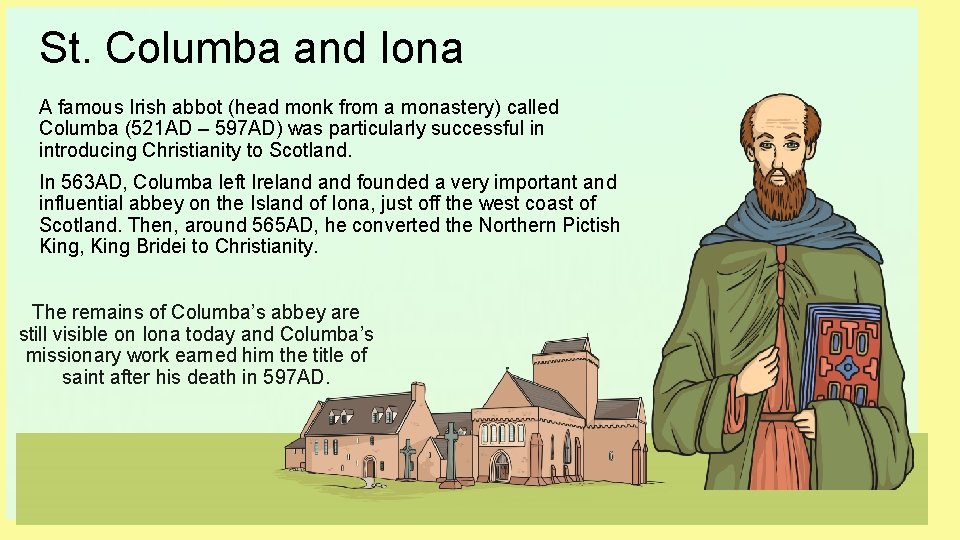
St. Columba and Iona A famous Irish abbot (head monk from a monastery) called Columba (521 AD – 597 AD) was particularly successful in introducing Christianity to Scotland. In 563 AD, Columba left Ireland founded a very important and influential abbey on the Island of Iona, just off the west coast of Scotland. Then, around 565 AD, he converted the Northern Pictish King, King Bridei to Christianity. The remains of Columba’s abbey are still visible on Iona today and Columba’s missionary work earned him the title of saint after his death in 597 AD.
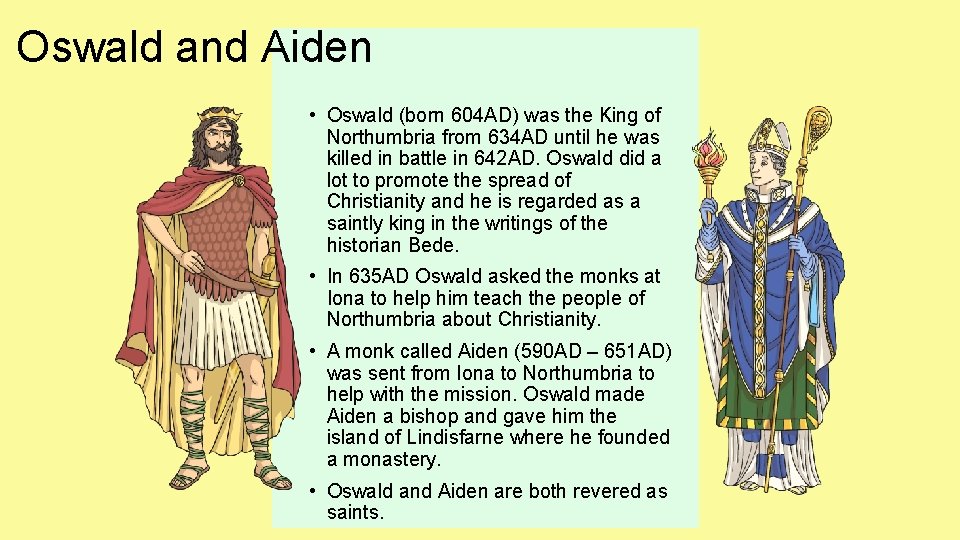
Oswald and Aiden • Oswald (born 604 AD) was the King of Northumbria from 634 AD until he was killed in battle in 642 AD. Oswald did a lot to promote the spread of Christianity and he is regarded as a saintly king in the writings of the historian Bede. • In 635 AD Oswald asked the monks at Iona to help him teach the people of Northumbria about Christianity. • A monk called Aiden (590 AD – 651 AD) was sent from Iona to Northumbria to help with the mission. Oswald made Aiden a bishop and gave him the island of Lindisfarne where he founded a monastery. • Oswald and Aiden are both revered as saints.
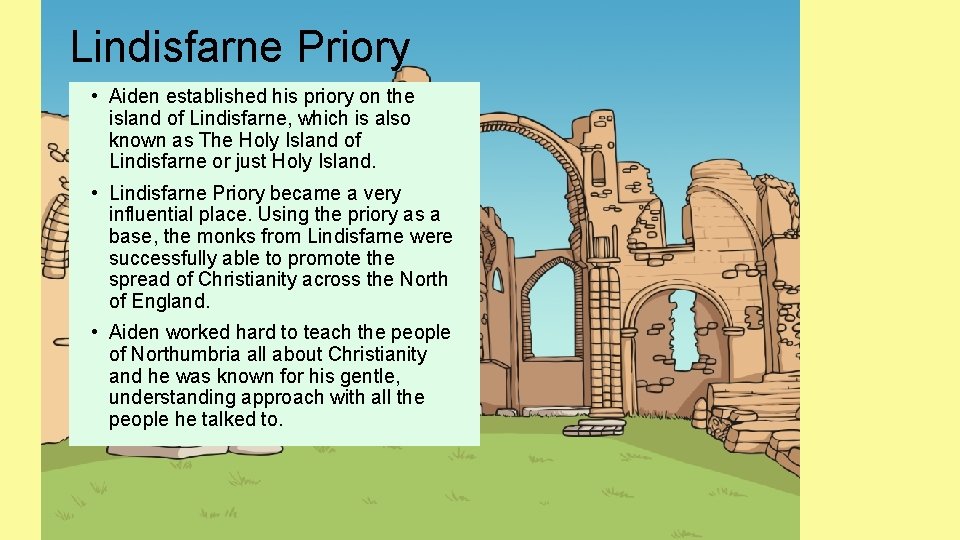
Lindisfarne Priory • Aiden established his priory on the island of Lindisfarne, which is also known as The Holy Island of Lindisfarne or just Holy Island. • Lindisfarne Priory became a very influential place. Using the priory as a base, the monks from Lindisfarne were successfully able to promote the spread of Christianity across the North of England. • Aiden worked hard to teach the people of Northumbria all about Christianity and he was known for his gentle, understanding approach with all the people he talked to.
Task this is 2 weeks work. Week one – read the powerpoint and complete task one. Week two – read the powerpoint again and complete task 2 and 3. • Today you are doing to explore Christianity in Anglo-Saxon times. • Activity 1: Fill in the table about the saints who helped to spread Christianity across Anglo-Saxon Britain from the information on the powerpoint. • Activity 2: complete the missing words in the sentences and answer the questions. • • Activity 3: research one of the following and create an information leaflet. Canterbury Cathedral Iona Abbey Lindisfarne Priory • Any problem email me: r. metcalf@worthvalleyprimary. co. uk