
Angles Measuring and Drawing Angles Our learning objectives
Angles
Measuring and Drawing Angles. . . Our learning objectives today • • To classify angles To use a protractor to measure angle
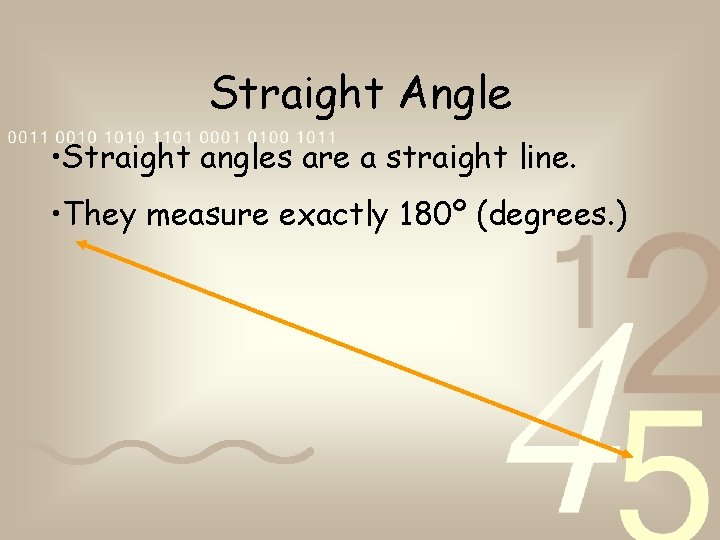
Straight Angle • Straight angles are a straight line. • They measure exactly 180º (degrees. )
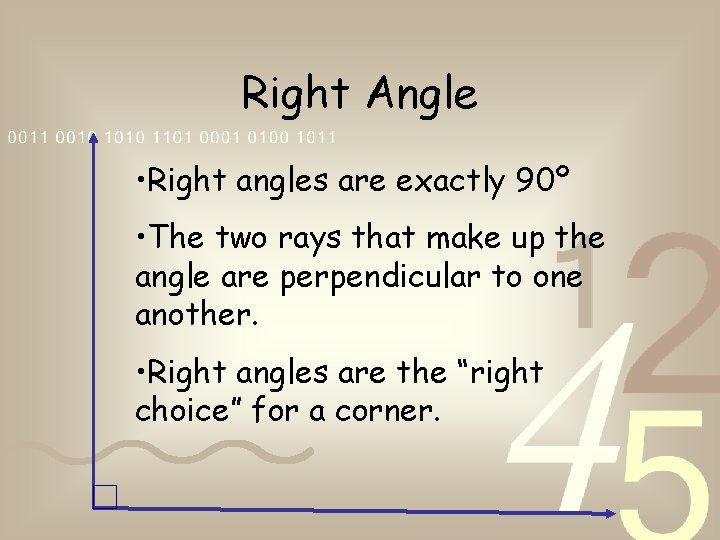
Right Angle • Right angles are exactly 90º • The two rays that make up the angle are perpendicular to one another. • Right angles are the “right choice” for a corner.
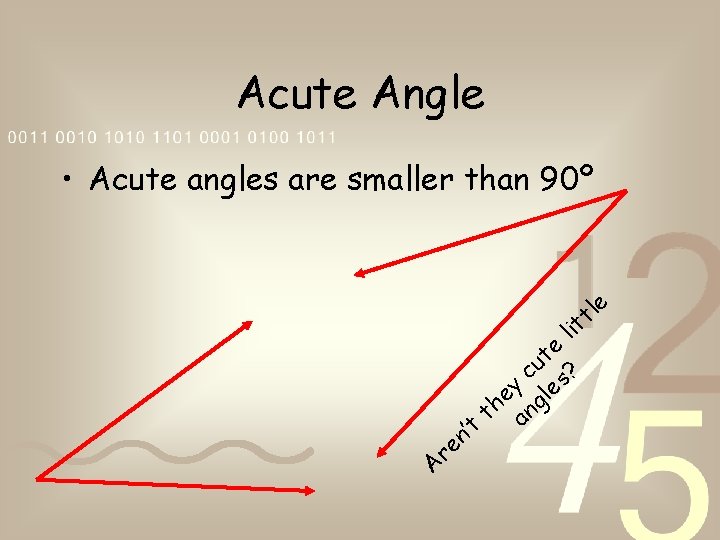
Acute Angle • Acute angles are smaller than 90º e l t il t e t cu s? y le e th ang ’t A n e r
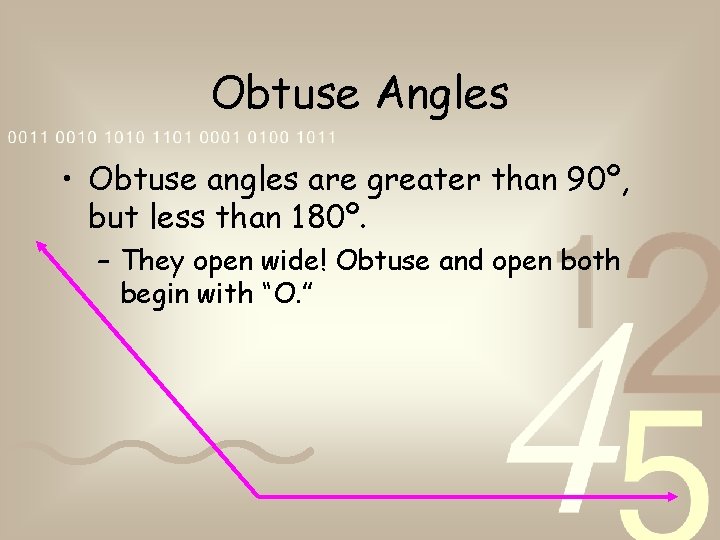
Obtuse Angles • Obtuse angles are greater than 90º, but less than 180º. – They open wide! Obtuse and open both begin with “O. ”
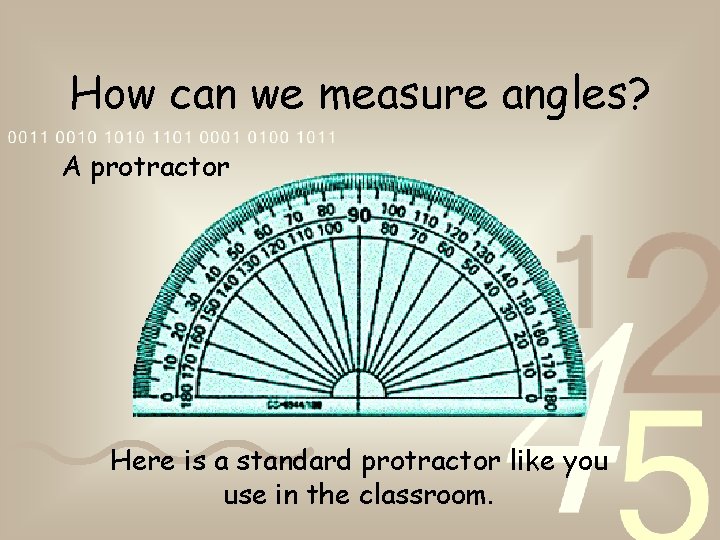
How can we measure angles? A protractor Here is a standard protractor like you use in the classroom.
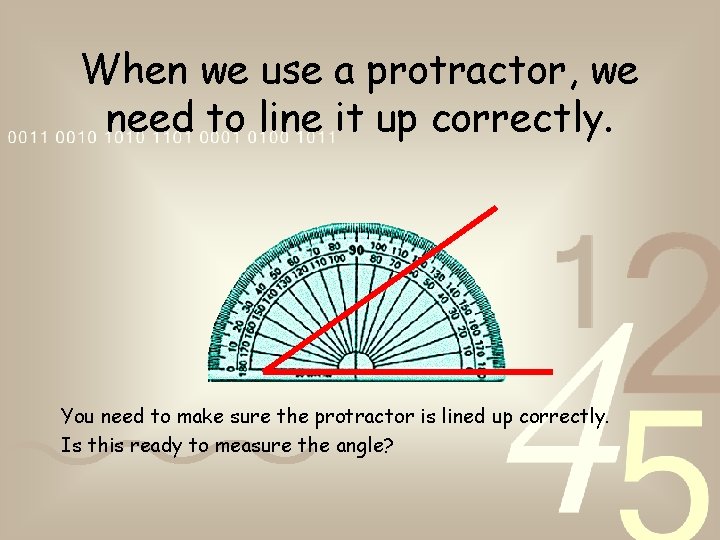
When we use a protractor, we need to line it up correctly. You need to make sure the protractor is lined up correctly. Is this ready to measure the angle?
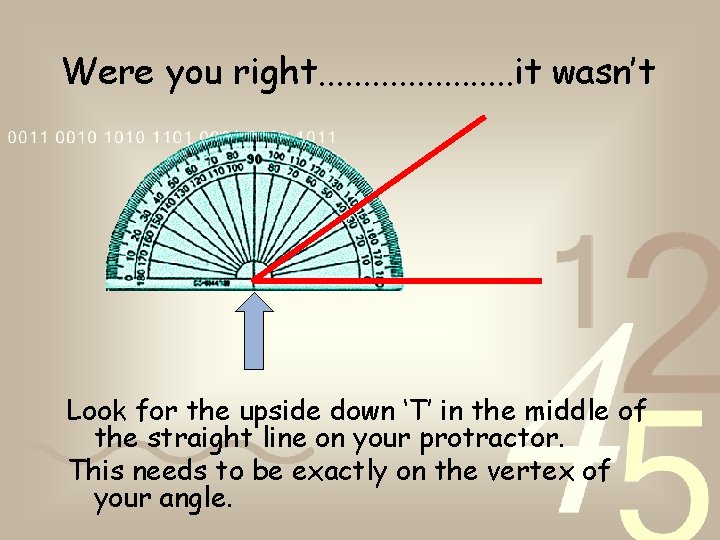
Were you right. . . . . it wasn’t Look for the upside down ‘T’ in the middle of the straight line on your protractor. This needs to be exactly on the vertex of your angle.
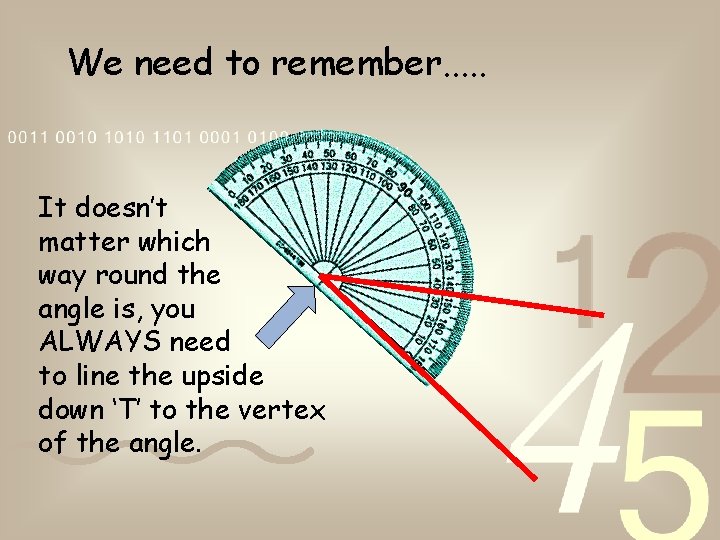
We need to remember. . . It doesn’t matter which way round the angle is, you ALWAYS need to line the upside down ‘T’ to the vertex of the angle.
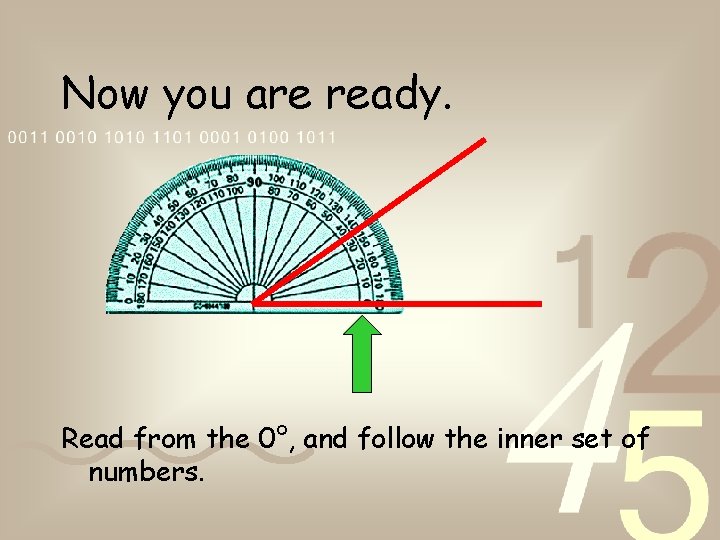
Now you are ready. Read from the 0°, and follow the inner set of numbers.
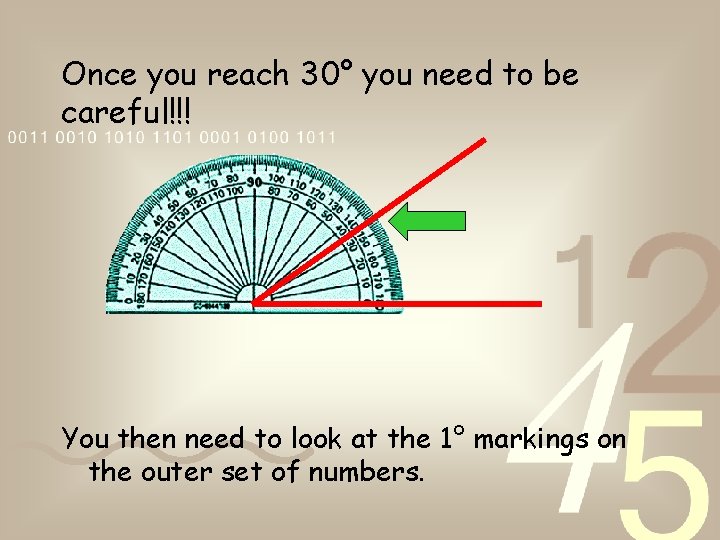
Once you reach 30° you need to be careful!!! You then need to look at the 1° markings on the outer set of numbers.
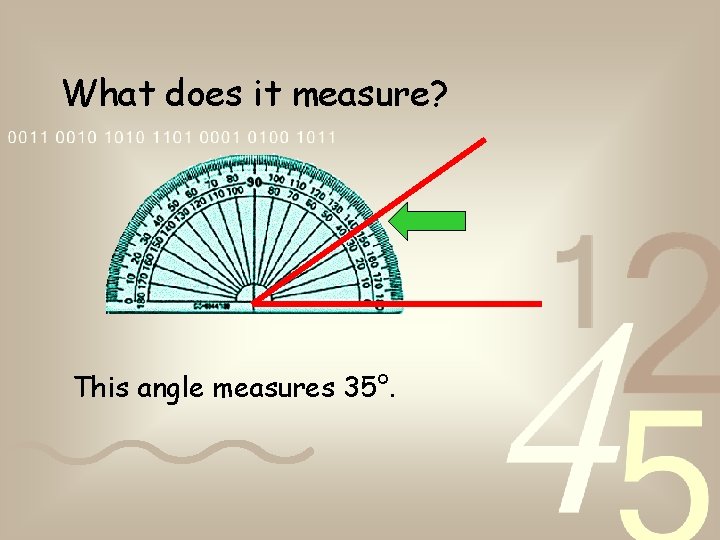
What does it measure? This angle measures 35°.
Now it’s your turn! • Get a protractor and an angle sheet from Mrs. Burt. She’ll tell you what to do next. • Also – get out your Palm handheld – she’s got a new application for you.
- Slides: 14