
Angles and their Measures Lesson 1 l As
- Slides: 42
Angles and their Measures Lesson 1
l As derived from the Greek Language, the word trigonometry means “measurement of triangles. ” l Initially, trigonometry dealt with relationships among the sides and angles of triangles and was used in the development of astronomy, navigation, and surveying.
l With the development of Calculus and the physical sciences in the 17 th Century, a different perspective arose – one that viewed the classic trigonometric relationships as functions with the set of real numbers as their domain. l Consequently the applications expanded to include physical phenomena involving rotations and vibrations, including sound waves, light rays, planetary orbits, vibrating strings, pendulums, and orbits of atomic particles.
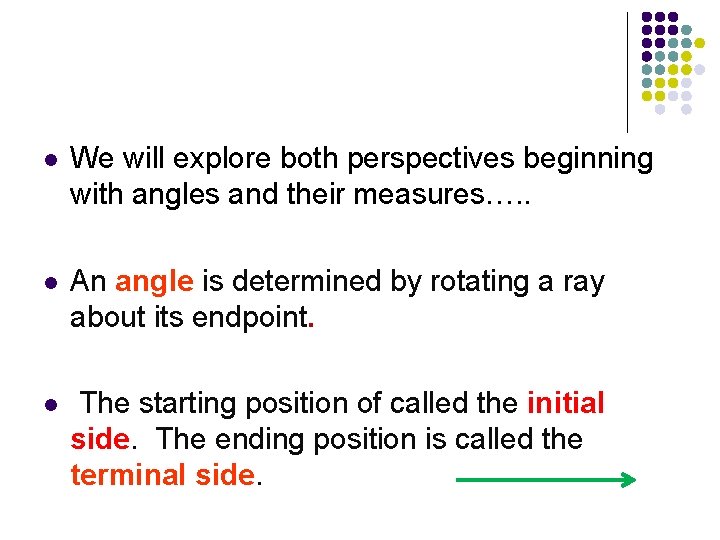
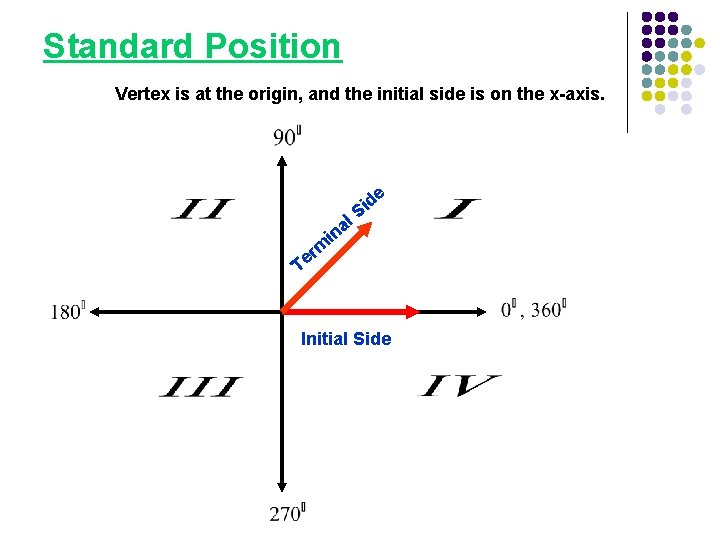
l We will explore both perspectives beginning with angles and their measures…. . l An angle is determined by rotating a ray about its endpoint. l The starting position of called the initial side. The ending position is called the terminal side.
Standard Position Vertex is at the origin, and the initial side is on the x-axis. de i S i m r e T l a n Initial Side
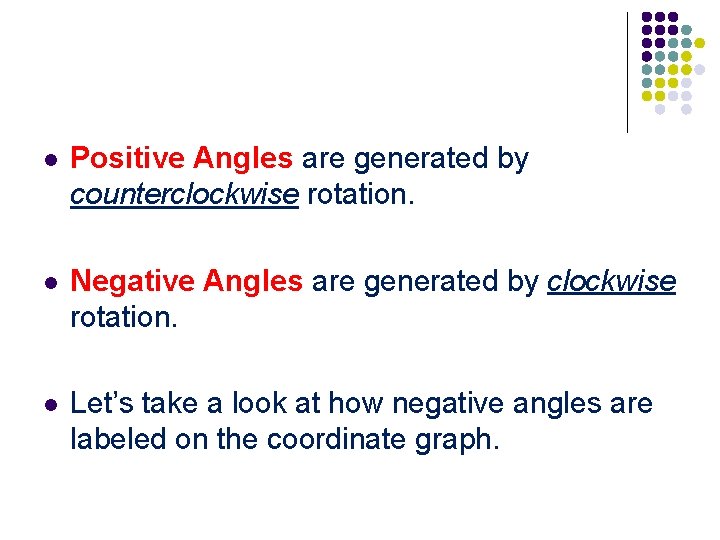
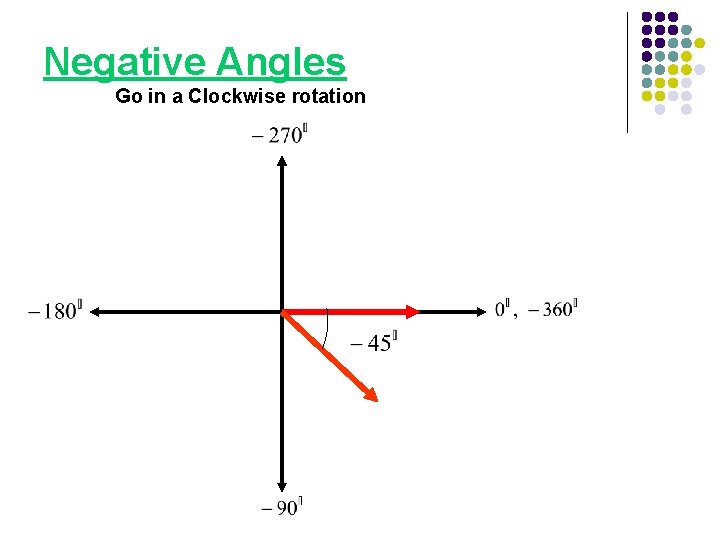
l Positive Angles are generated by counterclockwise rotation. l Negative Angles are generated by clockwise rotation. l Let’s take a look at how negative angles are labeled on the coordinate graph.
Negative Angles Go in a Clockwise rotation
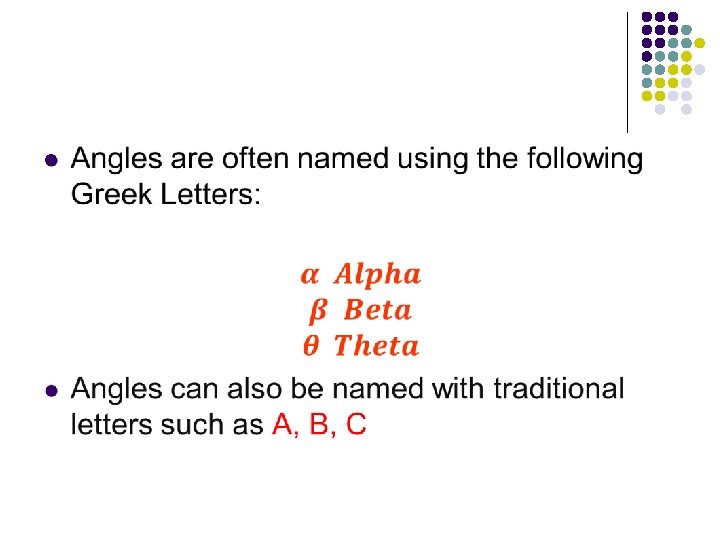
l
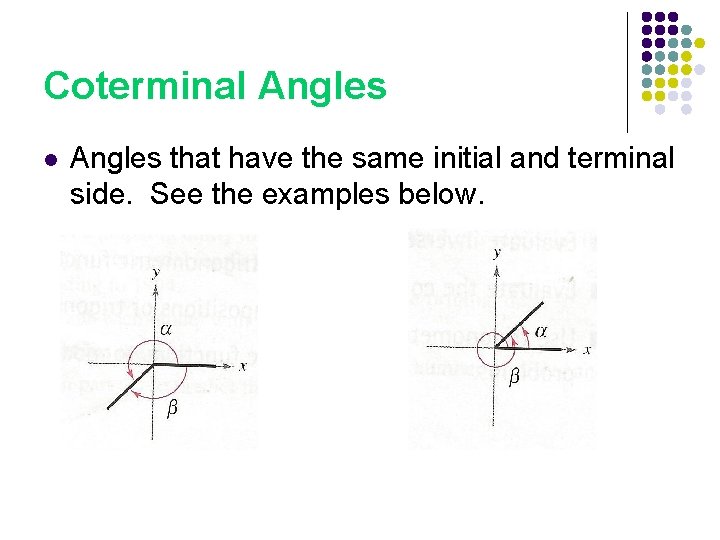
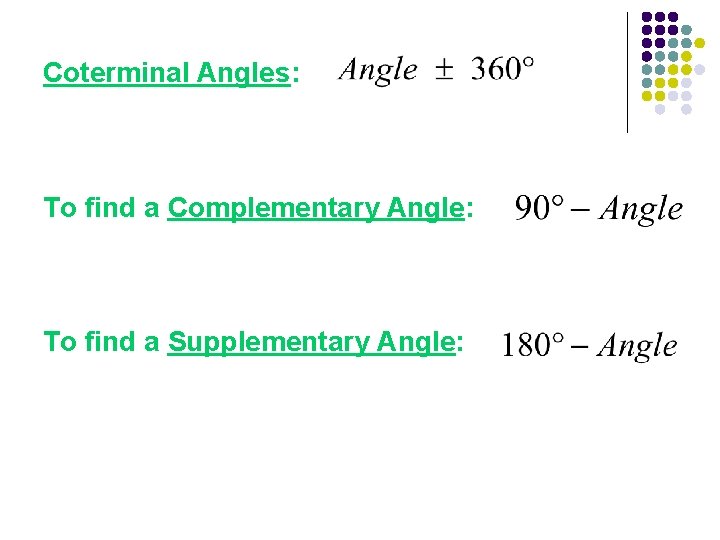
Coterminal Angles that have the same initial and terminal side. See the examples below.
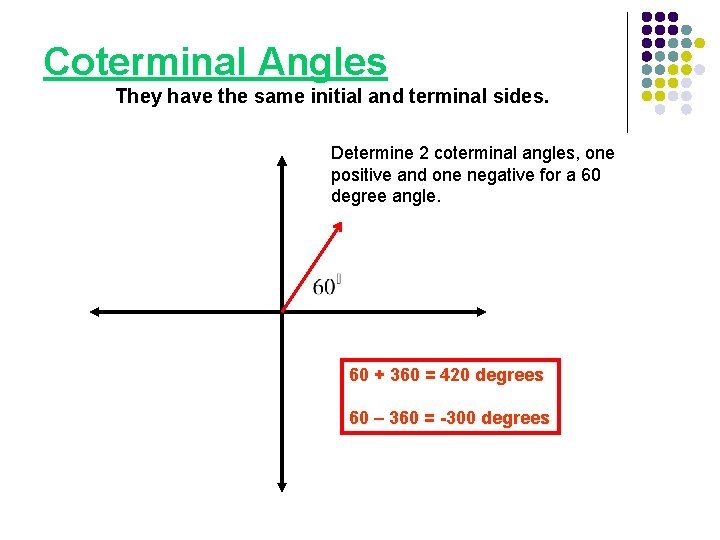
Coterminal Angles They have the same initial and terminal sides. Determine 2 coterminal angles, one positive and one negative for a 60 degree angle. 60 + 360 = 420 degrees 60 – 360 = -300 degrees
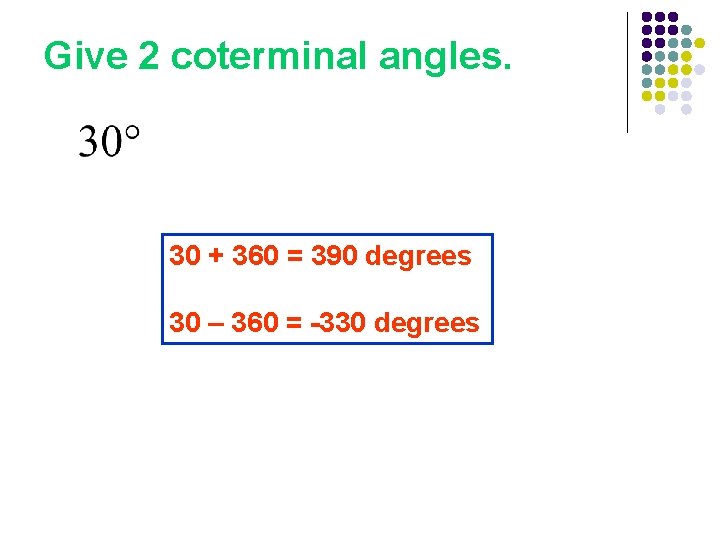
Give 2 coterminal angles. 30 + 360 = 390 degrees 30 – 360 = -330 degrees
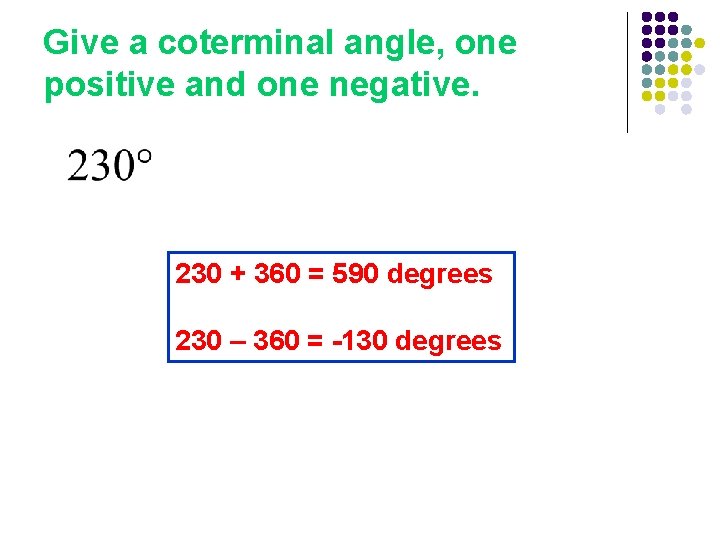
Give a coterminal angle, one positive and one negative. 230 + 360 = 590 degrees 230 – 360 = -130 degrees
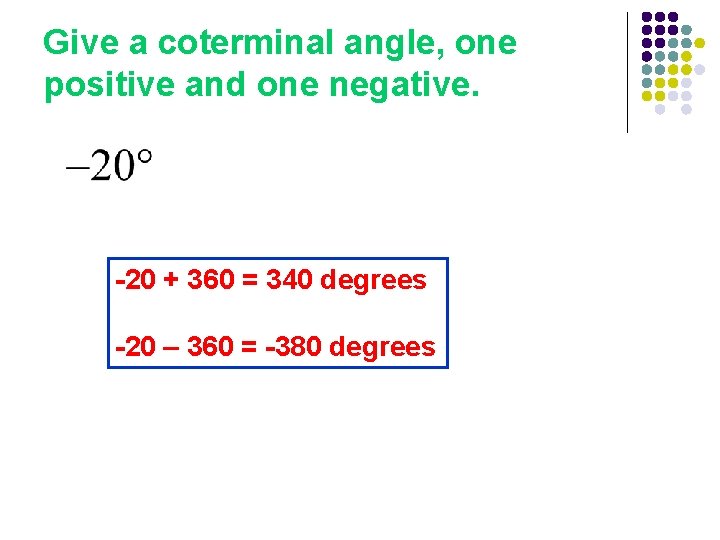
Give a coterminal angle, one positive and one negative. -20 + 360 = 340 degrees -20 – 360 = -380 degrees
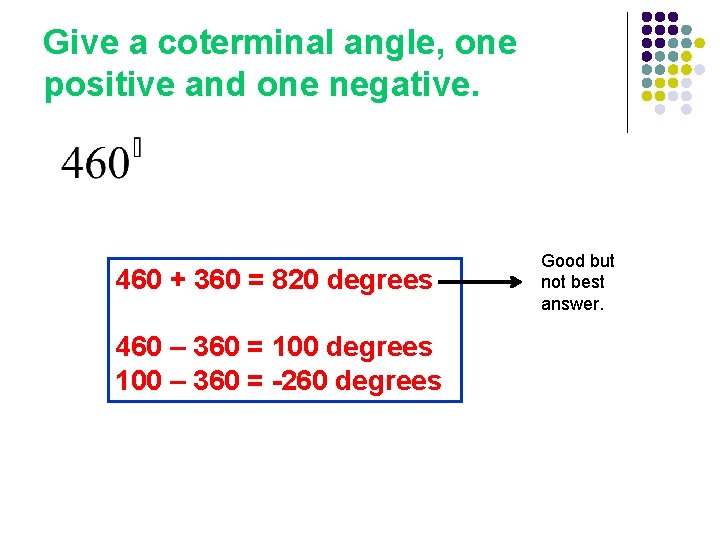
Give a coterminal angle, one positive and one negative. 460 + 360 = 820 degrees 460 – 360 = 100 degrees 100 – 360 = -260 degrees Good but not best answer.
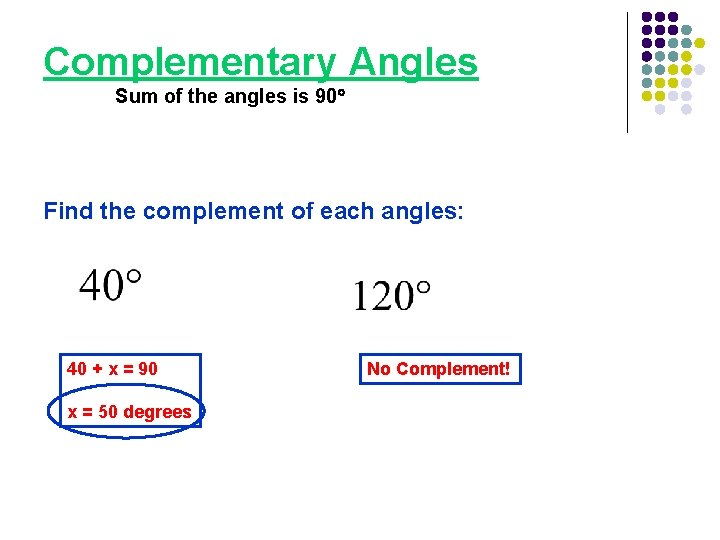
Complementary Angles Sum of the angles is 90 Find the complement of each angles: 40 + x = 90 x = 50 degrees No Complement!
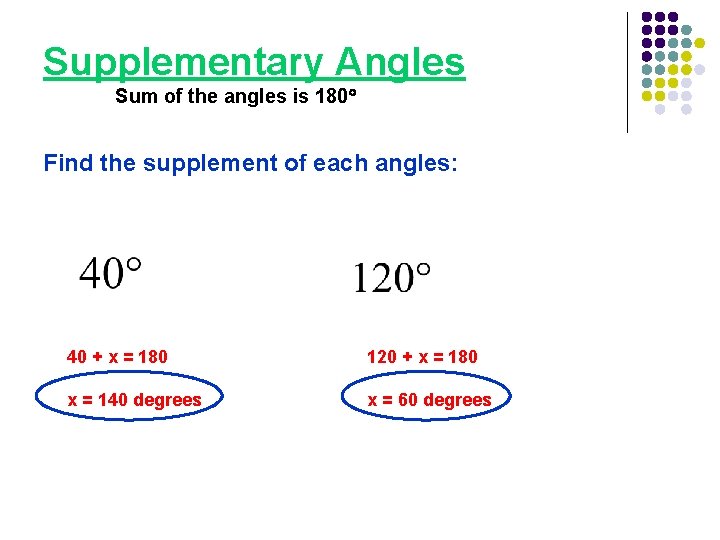
Supplementary Angles Sum of the angles is 180 Find the supplement of each angles: 40 + x = 180 120 + x = 180 x = 140 degrees x = 60 degrees
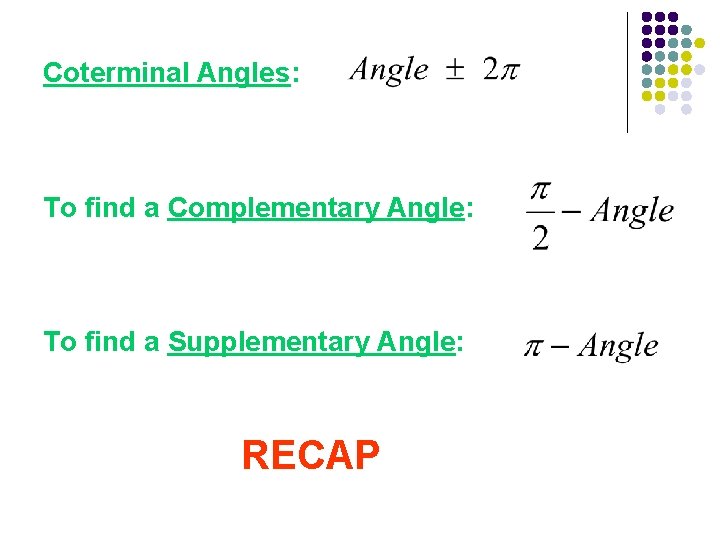
Coterminal Angles: To find a Complementary Angle: To find a Supplementary Angle:
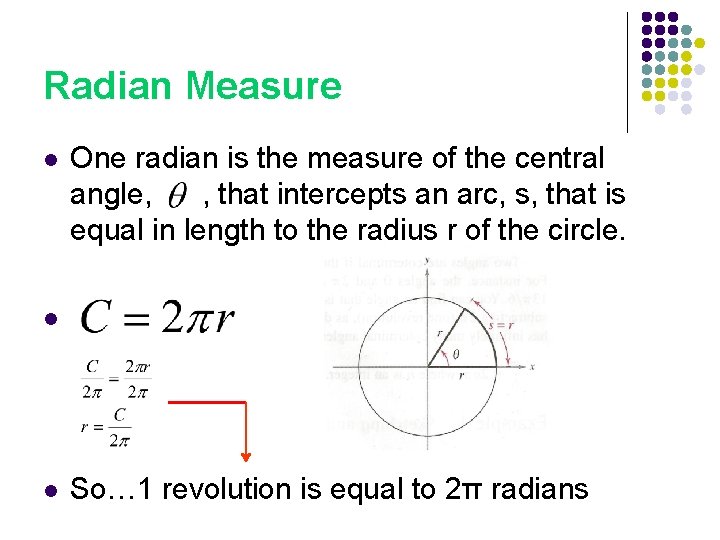
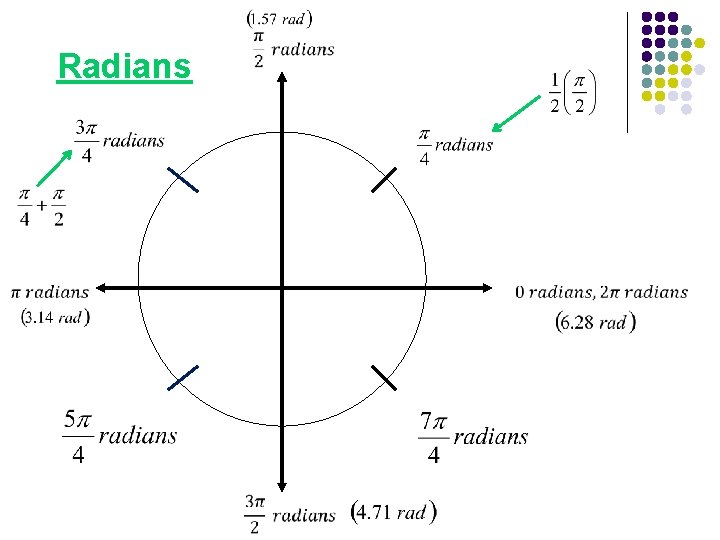
Radian Measure l One radian is the measure of the central angle, , that intercepts an arc, s, that is equal in length to the radius r of the circle. l l So… 1 revolution is equal to 2π radians
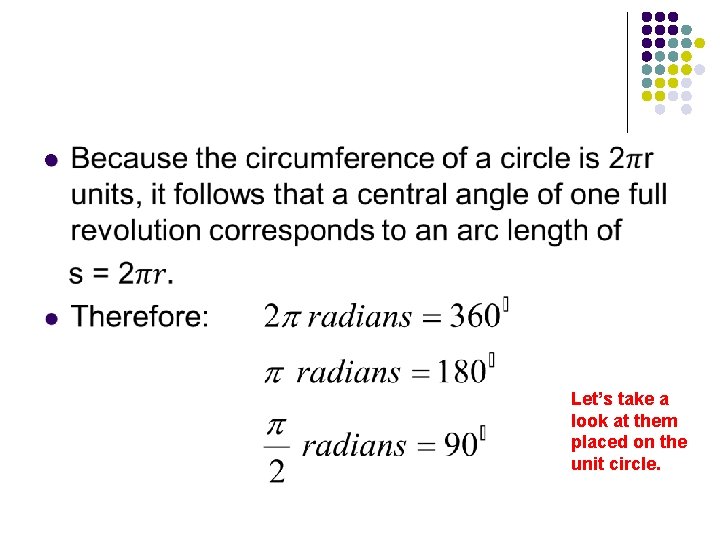
l Let’s take a look at them placed on the unit circle.
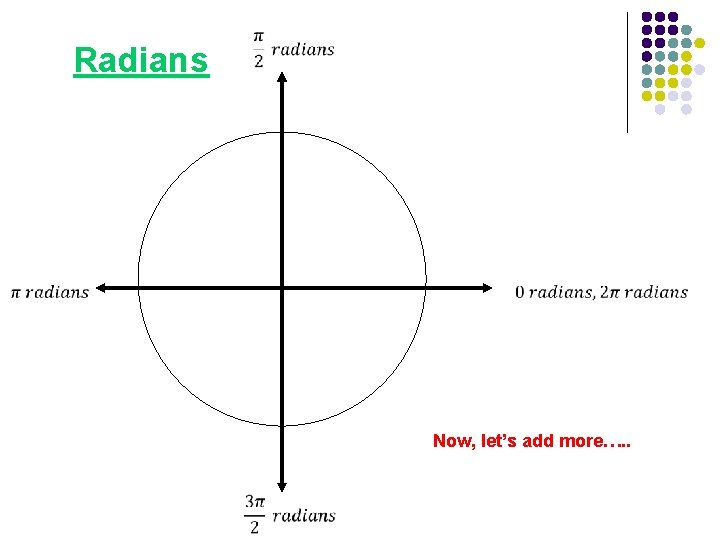
Radians Now, let’s add more…. .
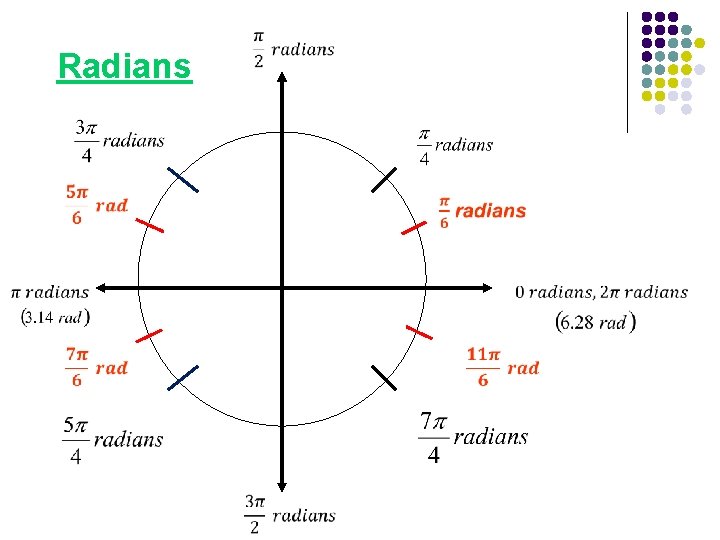
Radians
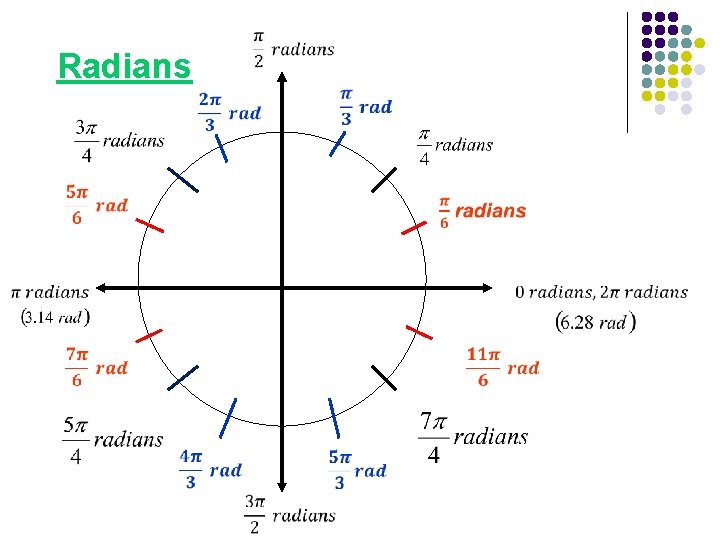
More Common Angles Let’s take a look at more common angles that are found in the unit circle.
Radians
Radians
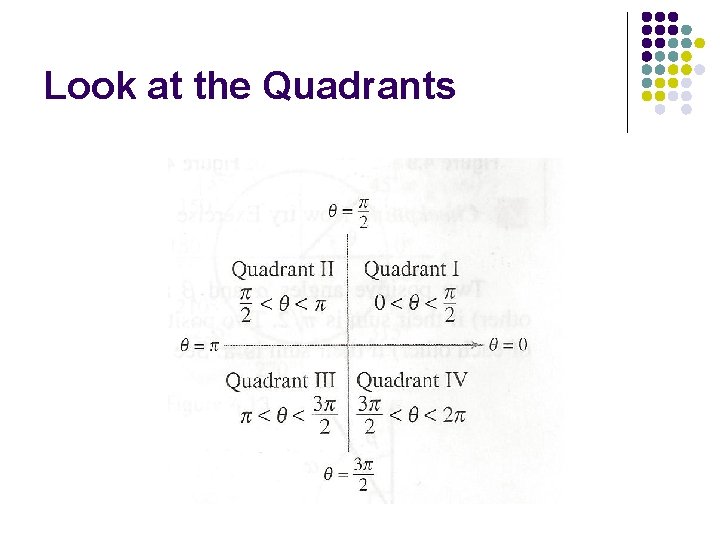
Look at the Quadrants
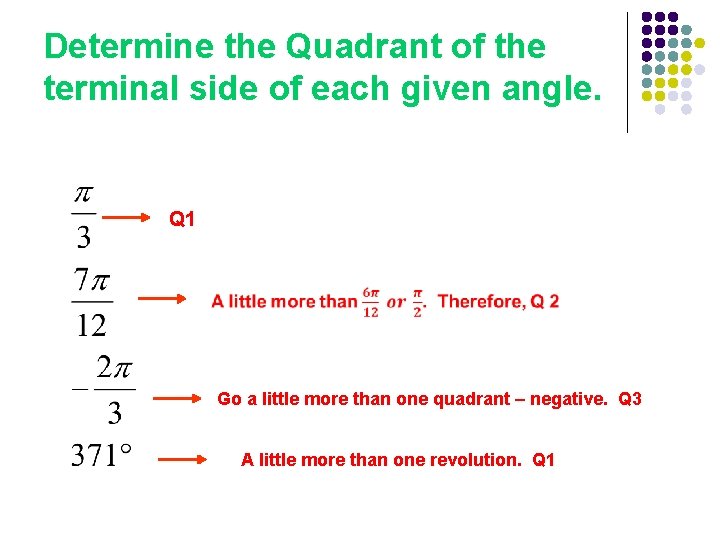
Determine the Quadrant of the terminal side of each given angle. Q 1 Go a little more than one quadrant – negative. Q 3 A little more than one revolution. Q 1
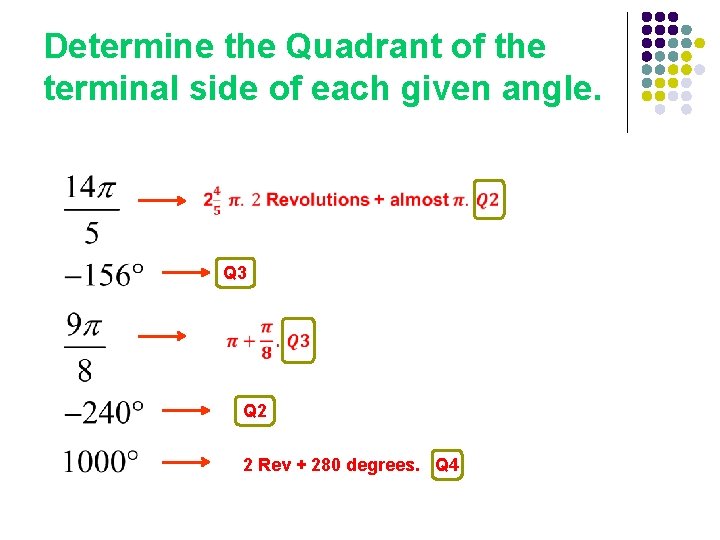
Determine the Quadrant of the terminal side of each given angle. Q 3 Q 2 2 Rev + 280 degrees. Q 4
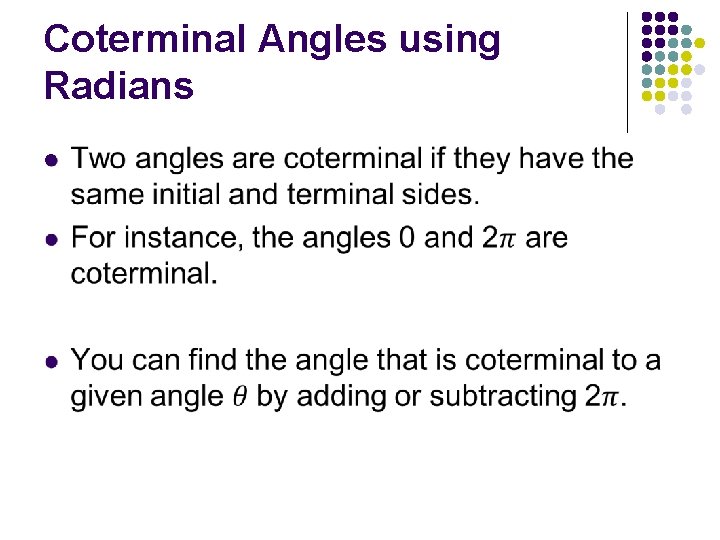
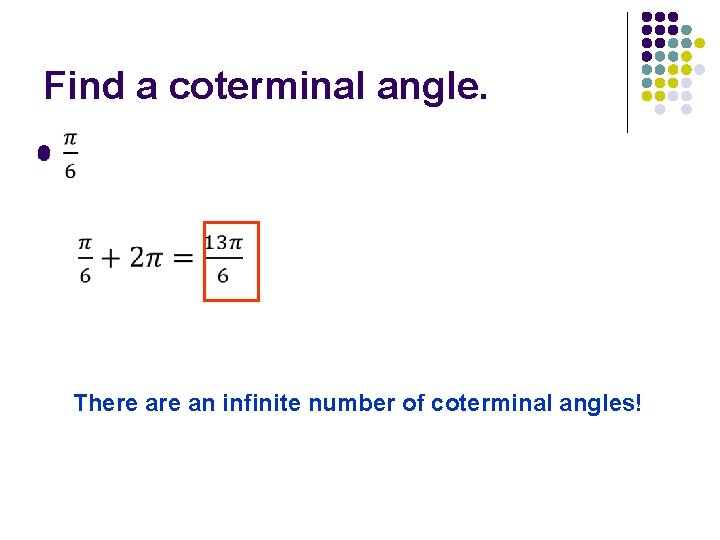
Coterminal Angles using Radians l
Find a coterminal angle. l There an infinite number of coterminal angles!
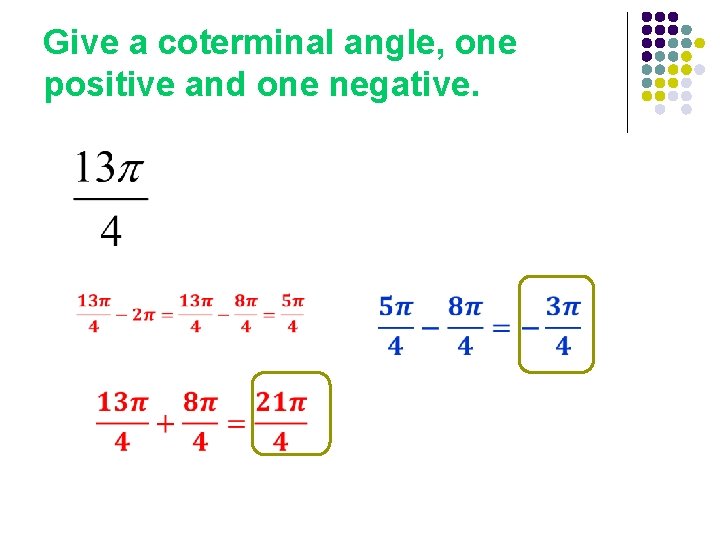
Give a coterminal angle, one positive and one negative.
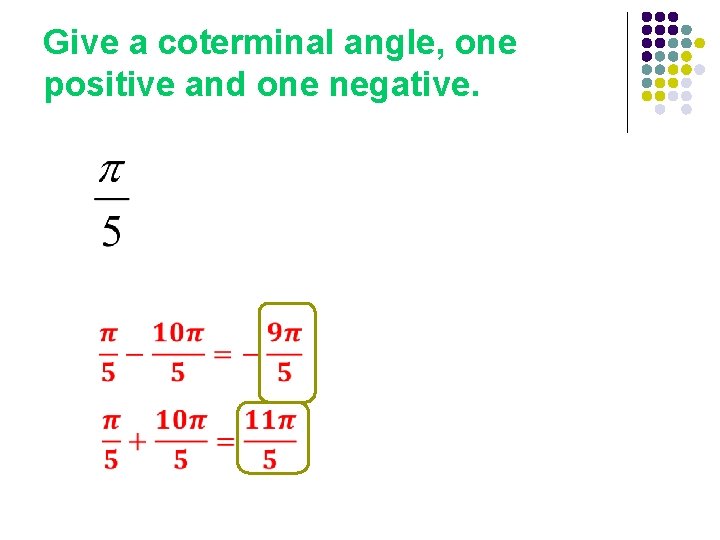
Give a coterminal angle, one positive and one negative.
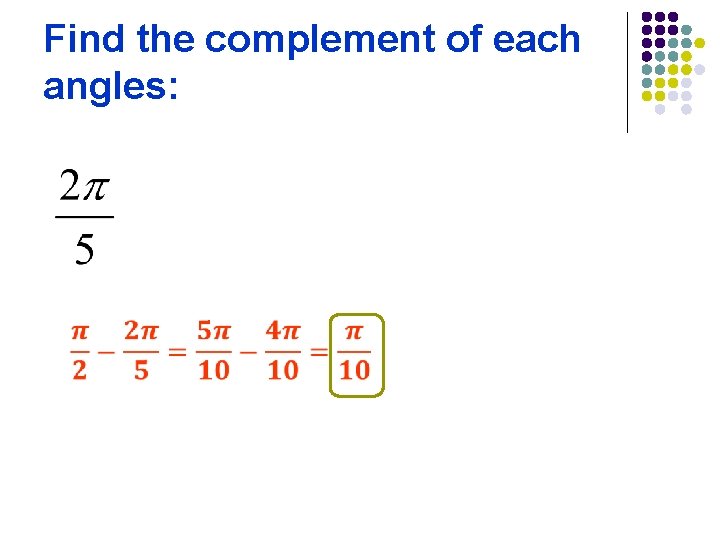
Find the complement of each angles:
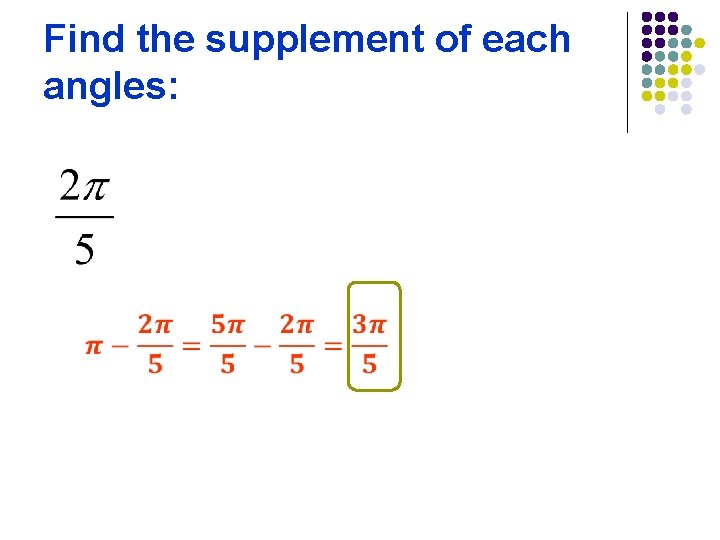
Find the supplement of each angles:
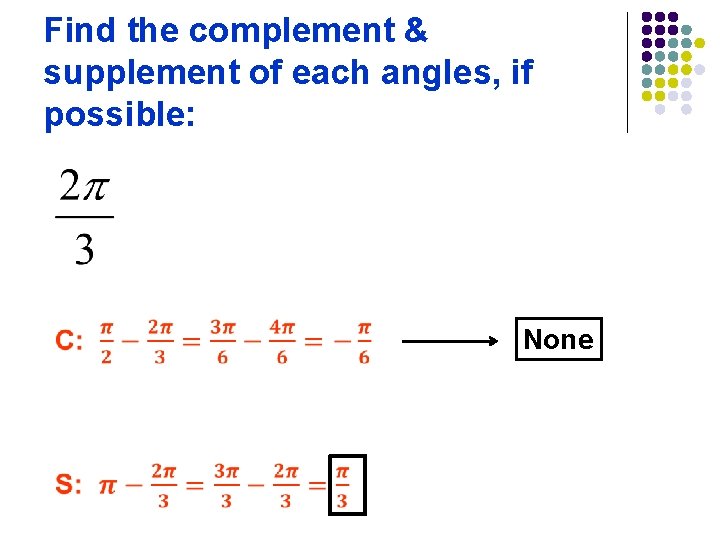
Find the complement & supplement of each angles, if possible: None
Coterminal Angles: To find a Complementary Angle: To find a Supplementary Angle: RECAP
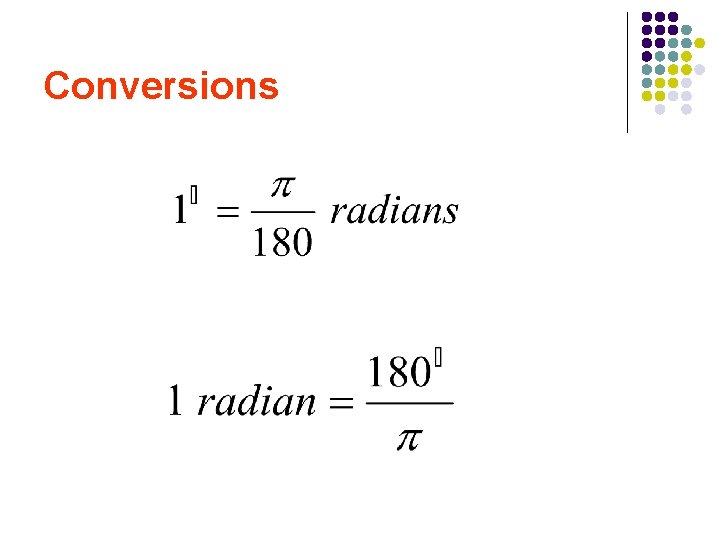
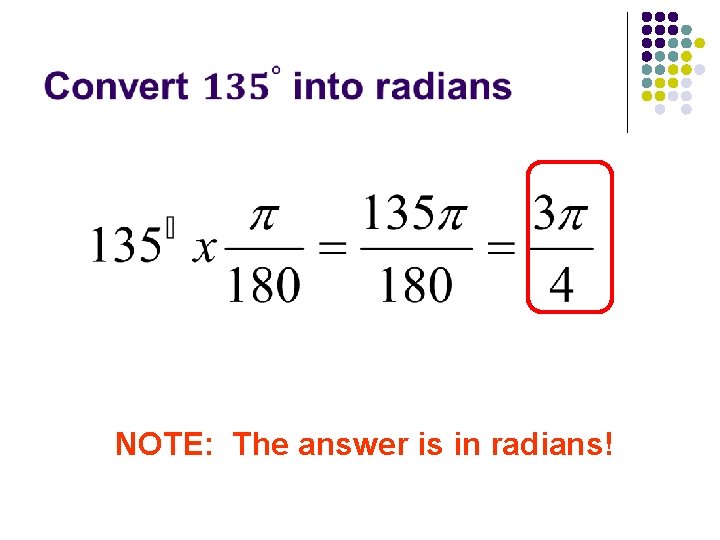
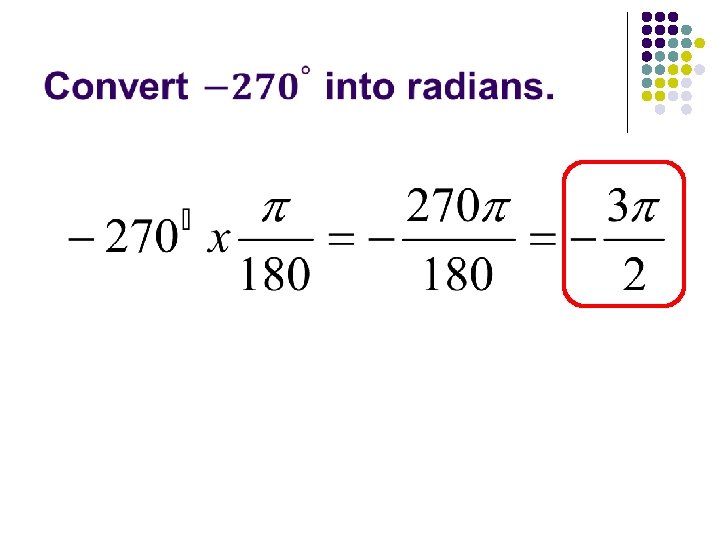
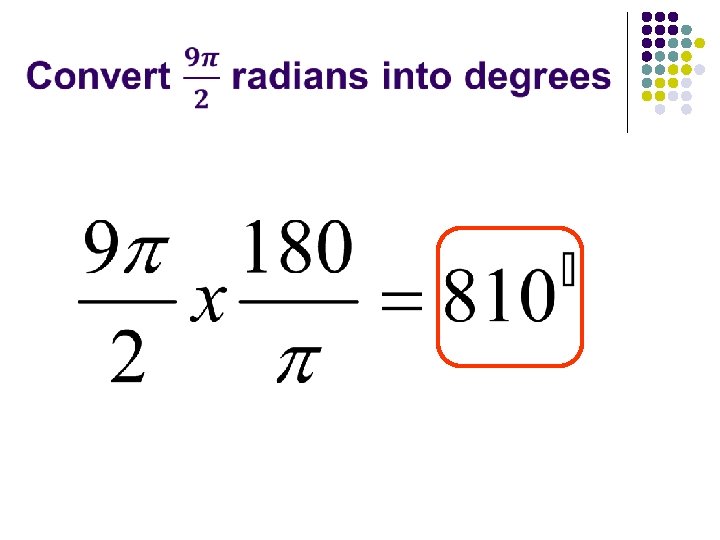
Conversions
NOTE: The answer is in radians!
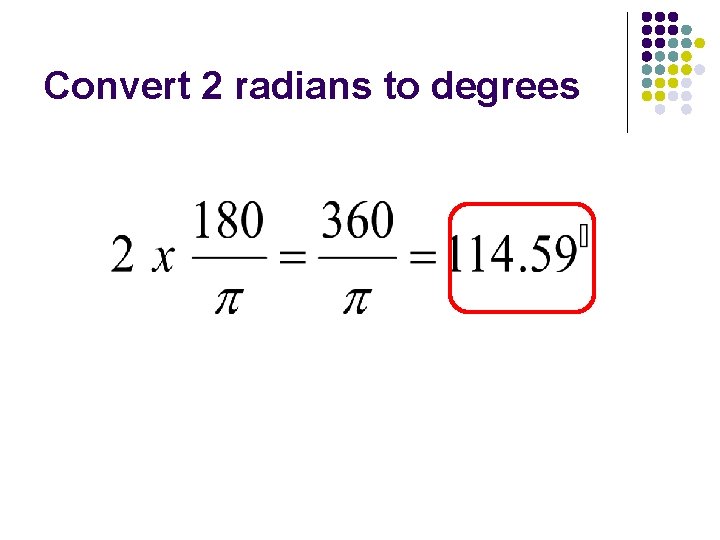
Convert 2 radians to degrees
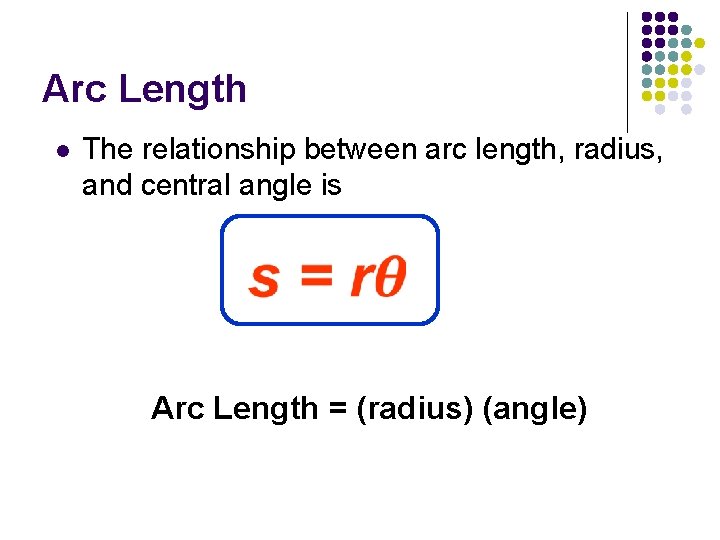
Arc Length l The relationship between arc length, radius, and central angle is Arc Length = (radius) (angle)
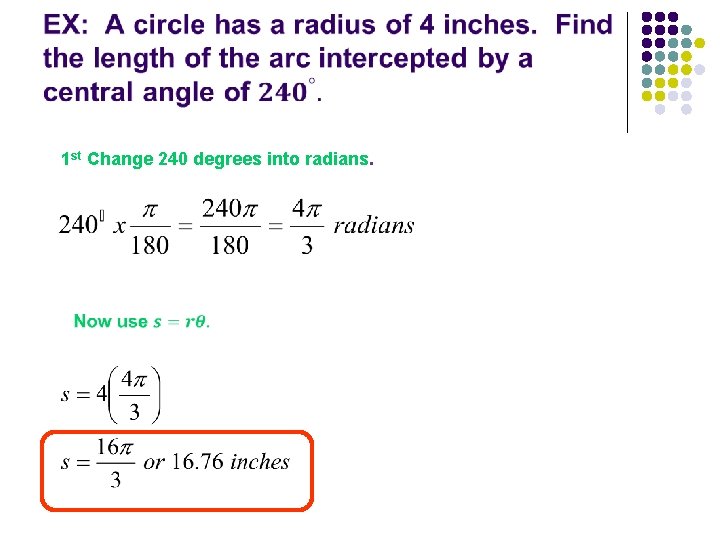
1 st Change 240 degrees into radians.