
Angiosperms Two Groupings Monocot and Dicot Based off
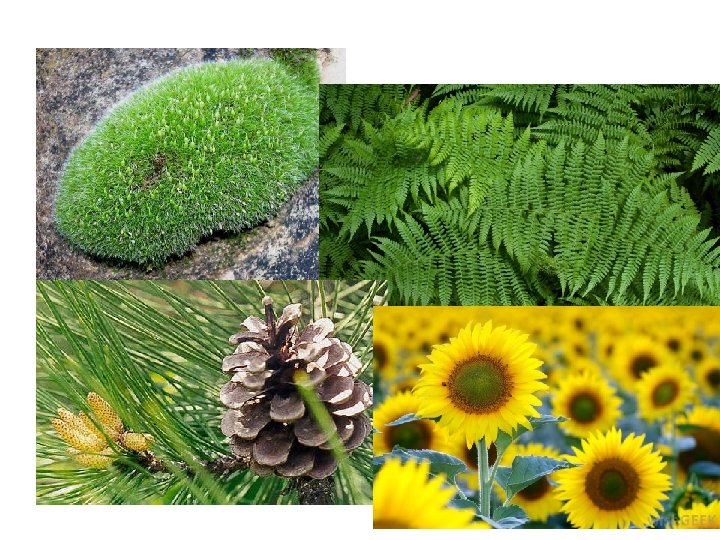
Angiosperms • Two Groupings: – Monocot and Dicot • Based off: – Morphological characteristics – DNA analysis

How does a plant flower? Light Controlled photoperiodism (is the plants response to light. ) Plants response to light involving relative lengths of day/night Controls flowering Happens in conjunction with availability of pollinators and necessary resources
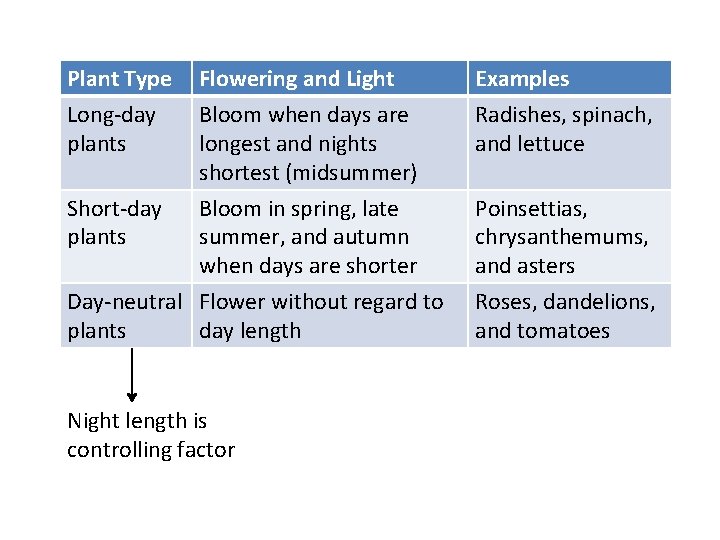
Plant Type Long-day plants Flowering and Light Bloom when days are longest and nights shortest (midsummer) Short-day plants Bloom in spring, late summer, and autumn when days are shorter Day-neutral Flower without regard to plants day length Night length is controlling factor Examples Radishes, spinach, and lettuce Poinsettias, chrysanthemums, and asters Roses, dandelions, and tomatoes

Inactive (Pr) Active (Pfr) Phytochrome red Pr Slow conversion 730 nm Pr DAY TIME 660 nm Pfr Rapid conversion Plants time dark period Inhibitor for shortday plants Pfr Phytochrome Far-red Promoter for long-day plants Activates specific genes in shoot apex Changes DNA transcription (gene expression)-allowing plants to produce flowers.
• Methods for controlling flowering: – Controlled greenhouses – Covering plants for appropriate time periods
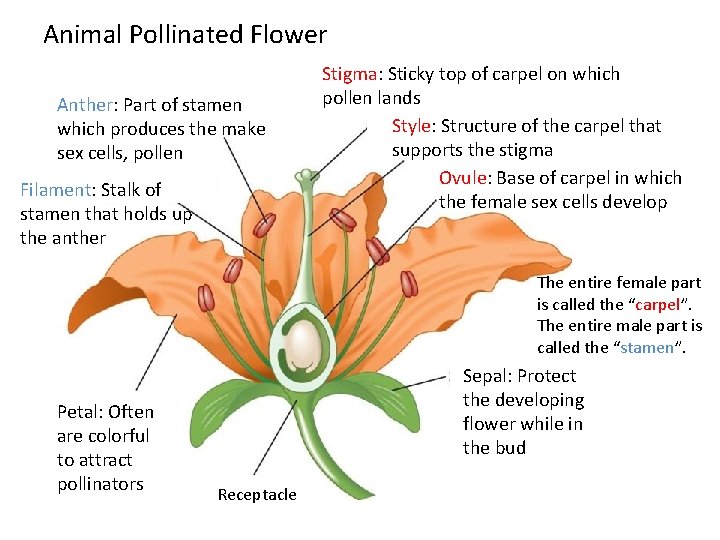
Animal Pollinated Flower Anther: Part of stamen which produces the make sex cells, pollen Filament: Stalk of stamen that holds up the anther Stigma: Sticky top of carpel on which pollen lands Style: Structure of the carpel that supports the stigma Ovule: Base of carpel in which the female sex cells develop The entire female part is called the “carpel”. The entire male part is called the “stamen”. Petal: Often are colorful to attract pollinators Sepal: Protect the developing flower while in the bud Receptacle
Complete vs Incomplete Flowers • Complete: has all 4 basic parts: sepal, petals carpel, and stamen. • Incomplete: lacks one of the 4 basic parts • Staminate flowers: only have stamens and no carpels • Carpellate flowers: only have carpels
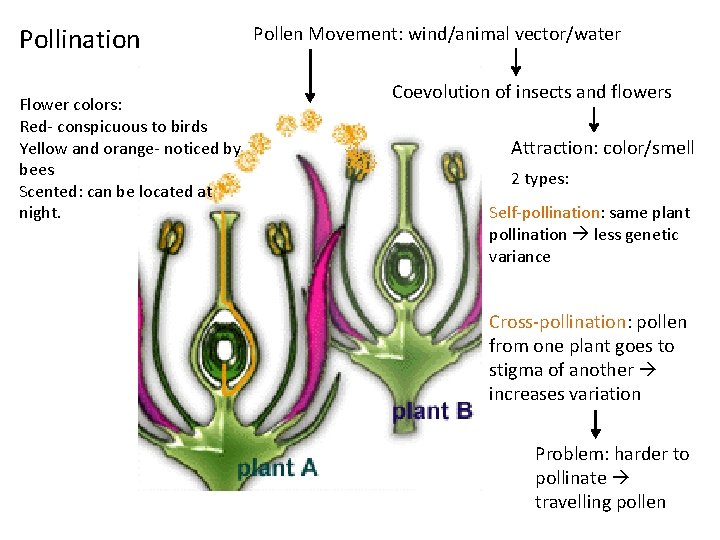
Pollination Flower colors: Red- conspicuous to birds Yellow and orange- noticed by bees Scented: can be located at night. Pollen Movement: wind/animal vector/water Coevolution of insects and flowers Attraction: color/smell 2 types: Self-pollination: same plant pollination less genetic variance Cross-pollination: pollen from one plant goes to stigma of another increases variation Problem: harder to pollinate travelling pollen

Fertilization 1. Pollen germinates to produce pollen tube 2. Pollen tube grows down style
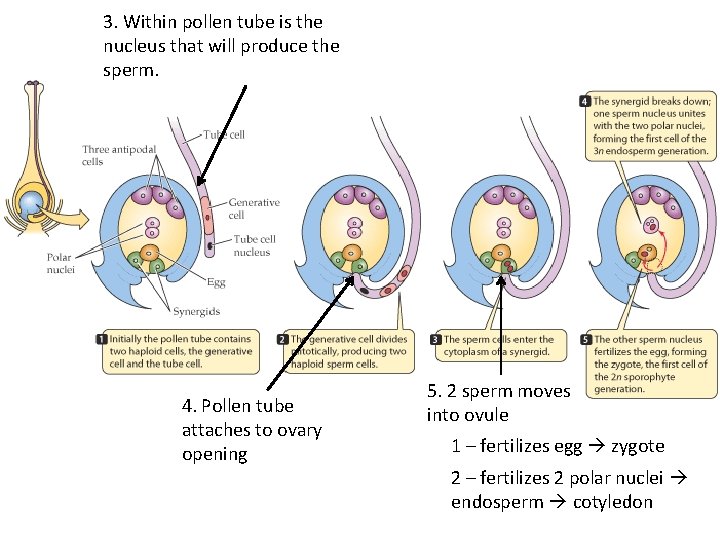
3. Within pollen tube is the nucleus that will produce the sperm. 4. Pollen tube attaches to ovary opening 5. 2 sperm moves into ovule 1 – fertilizes egg zygote 2 – fertilizes 2 polar nuclei endosperm cotyledon
Plants have 2 different generation cycles. • Gametophyte generation- which is haploid – Produces the plant gametes by mitosis • Sporophyte generation- which is diploid – Produces spores by meiosis. • These generations alternate with each other.
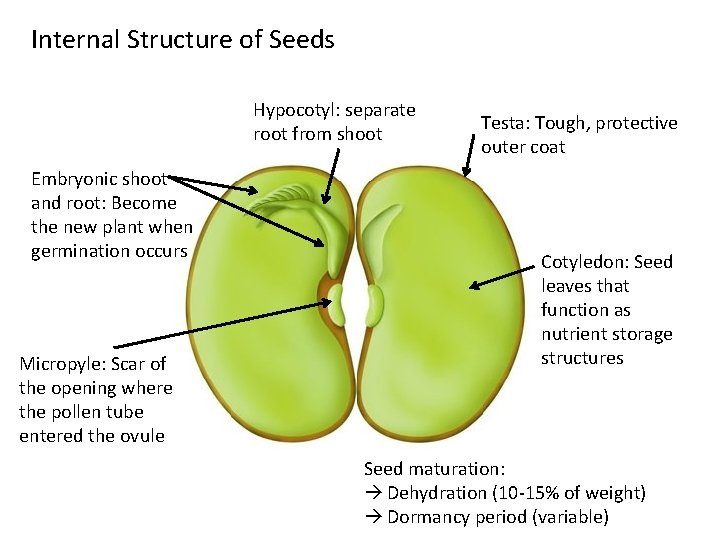
Internal Structure of Seeds Hypocotyl: separate root from shoot Embryonic shoot and root: Become the new plant when germination occurs Micropyle: Scar of the opening where the pollen tube entered the ovule Testa: Tough, protective outer coat Cotyledon: Seed leaves that function as nutrient storage structures Seed maturation: Dehydration (10 -15% of weight) Dormancy period (variable)
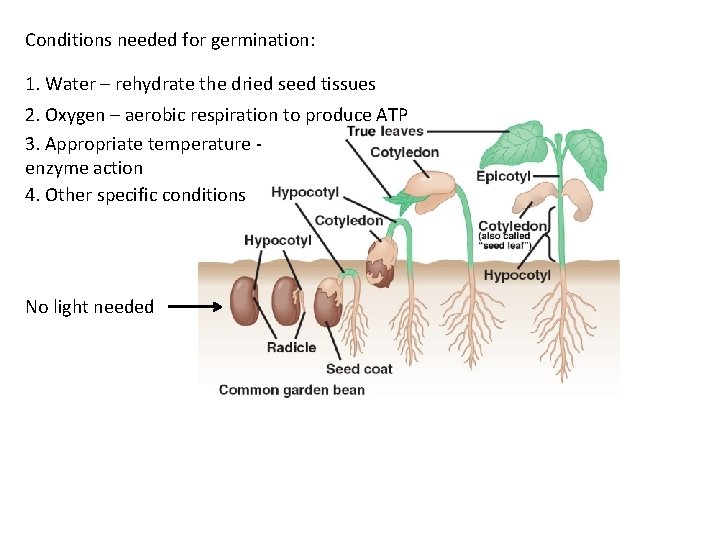
Conditions needed for germination: 1. Water – rehydrate the dried seed tissues 2. Oxygen – aerobic respiration to produce ATP 3. Appropriate temperature enzyme action 4. Other specific conditions No light needed
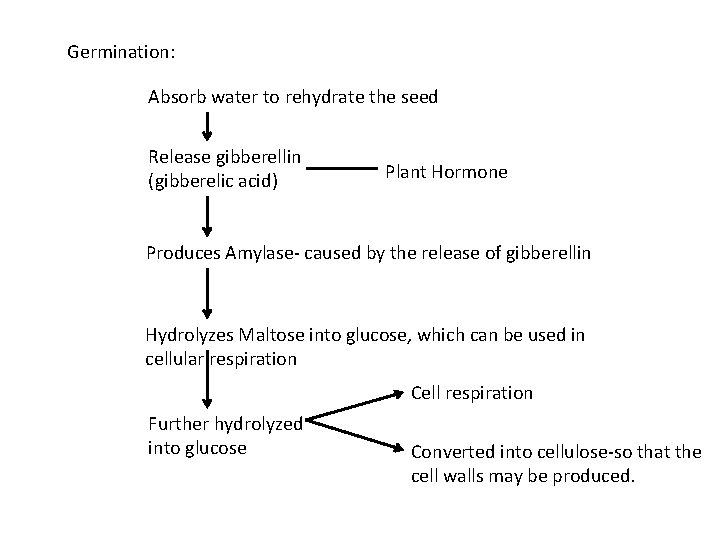
Germination: Absorb water to rehydrate the seed Release gibberellin (gibberelic acid) Plant Hormone Produces Amylase- caused by the release of gibberellin Hydrolyzes Maltose into glucose, which can be used in cellular respiration Cell respiration Further hydrolyzed into glucose Converted into cellulose-so that the cell walls may be produced.
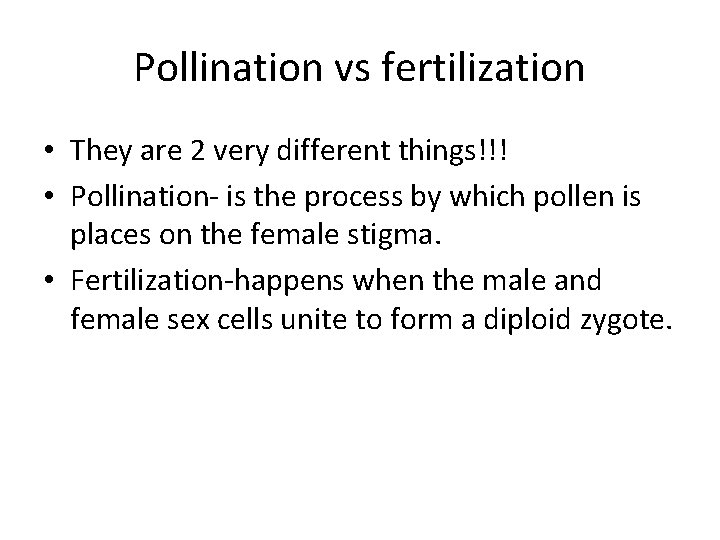
Pollination vs fertilization • They are 2 very different things!!! • Pollination- is the process by which pollen is places on the female stigma. • Fertilization-happens when the male and female sex cells unite to form a diploid zygote.
Next Class • • Quiz 9. 4 Review Plant dissection possibility Start seed germination • EXAM TUESDAY!!!
- Slides: 18