
Angiosperms Group 3 Seed producing Vascular Plants Type

- Slides: 36
Angiosperms
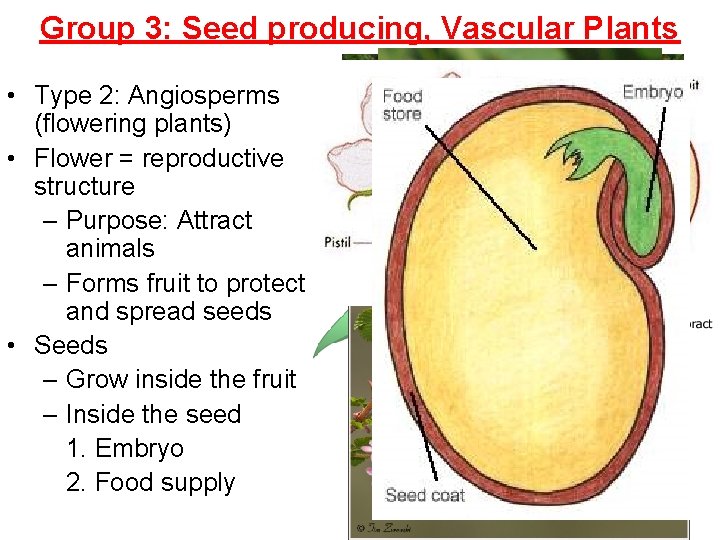
Group 3: Seed producing, Vascular Plants • Type 2: Angiosperms (flowering plants) • Flower = reproductive structure – Purpose: Attract animals – Forms fruit to protect and spread seeds • Seeds – Grow inside the fruit – Inside the seed 1. Embryo 2. Food supply
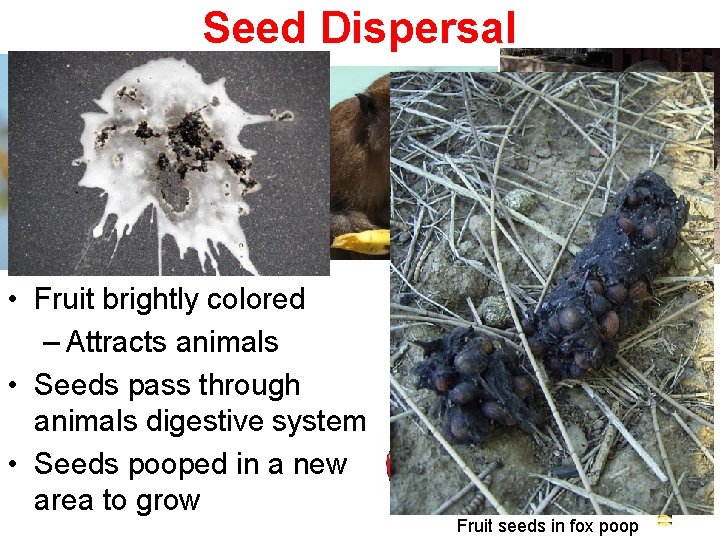
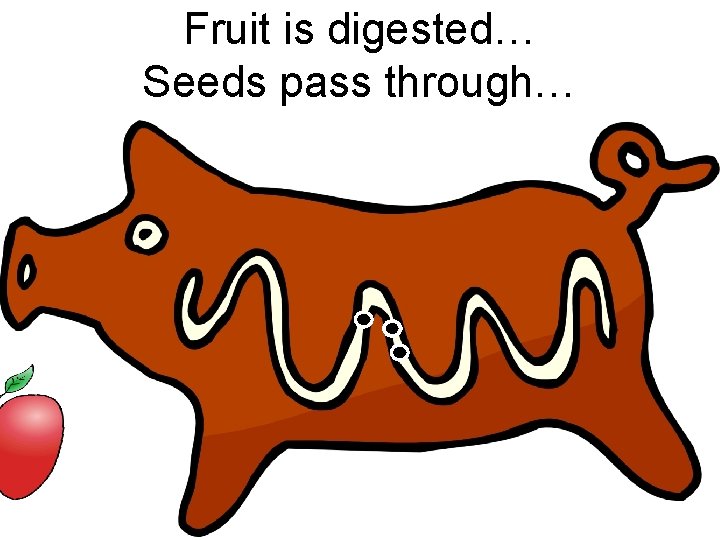
Seed Dispersal • Fruit brightly colored – Attracts animals • Seeds pass through animals digestive system • Seeds pooped in a new area to grow Fruit seeds in fox poop
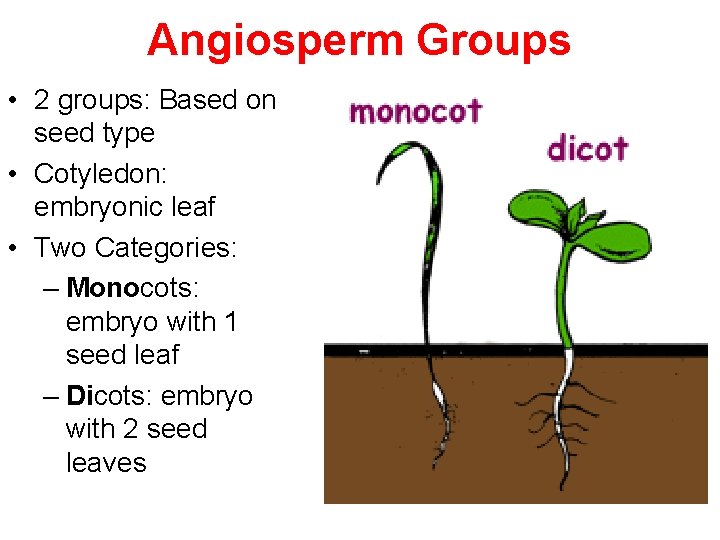
Angiosperm Groups • 2 groups: Based on seed type • Cotyledon: embryonic leaf • Two Categories: – Monocots: embryo with 1 seed leaf – Dicots: embryo with 2 seed leaves
Monocots vs. Dicots Key point
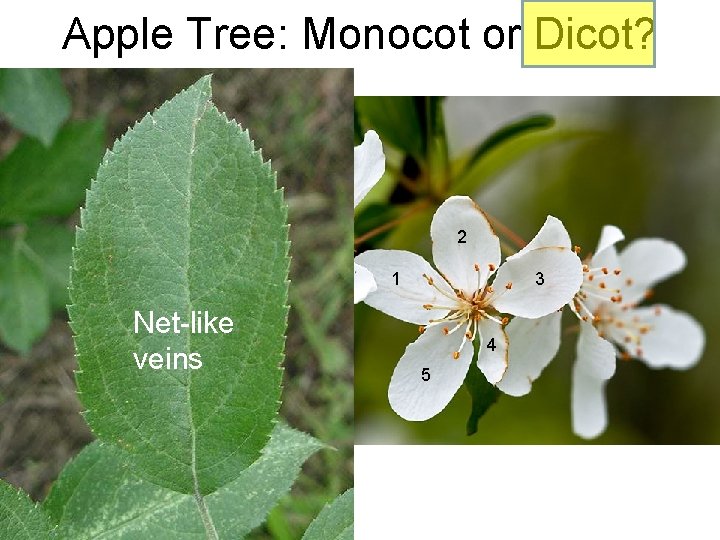
Apple Tree: Monocot or Dicot? 2 3 1 Net-like veins 4 5
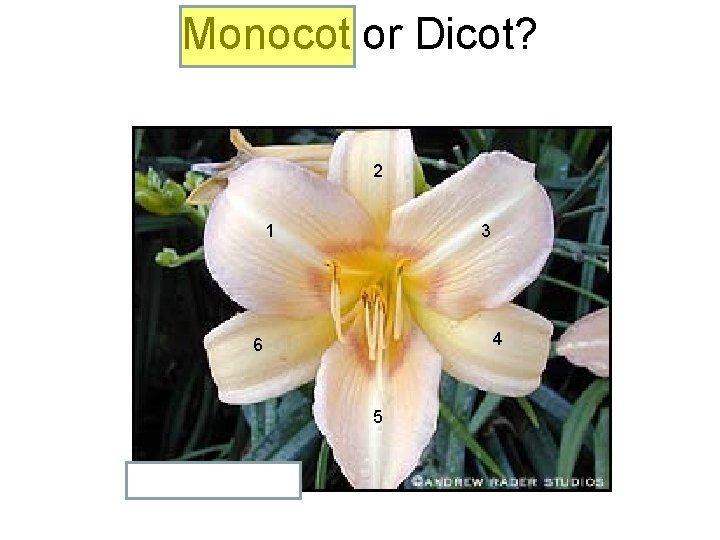
Monocot or Dicot? 2 3 1 4 6 5
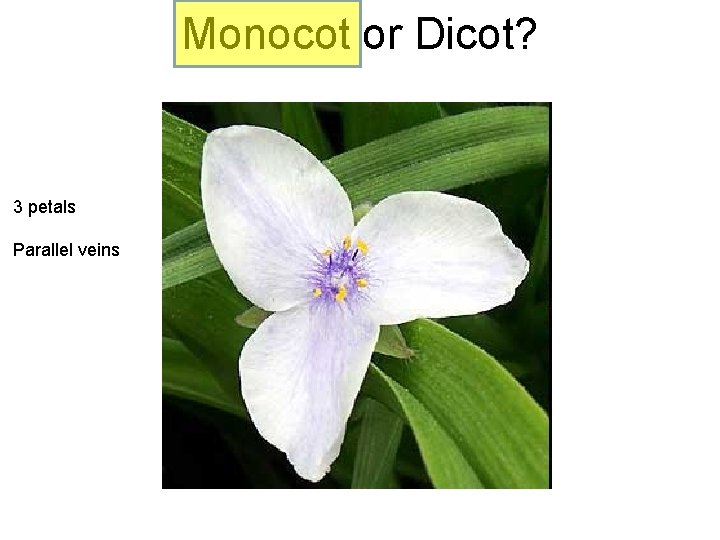
Monocot or Dicot? 3 petals Parallel veins
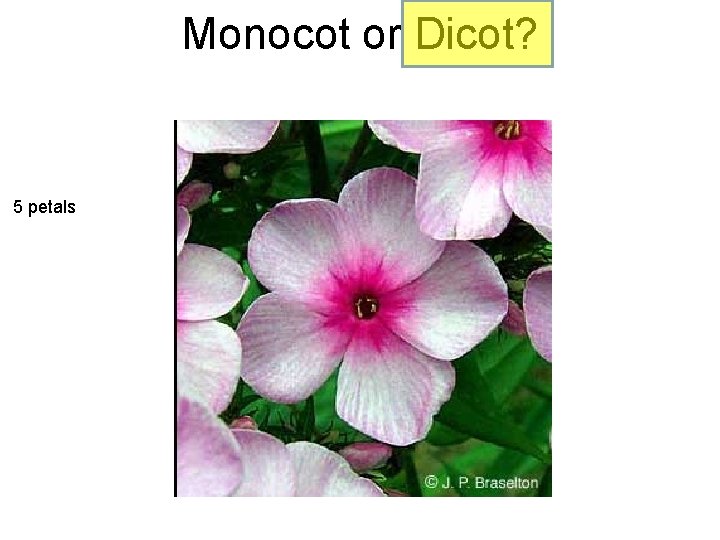
Monocot or Dicot? 5 petals
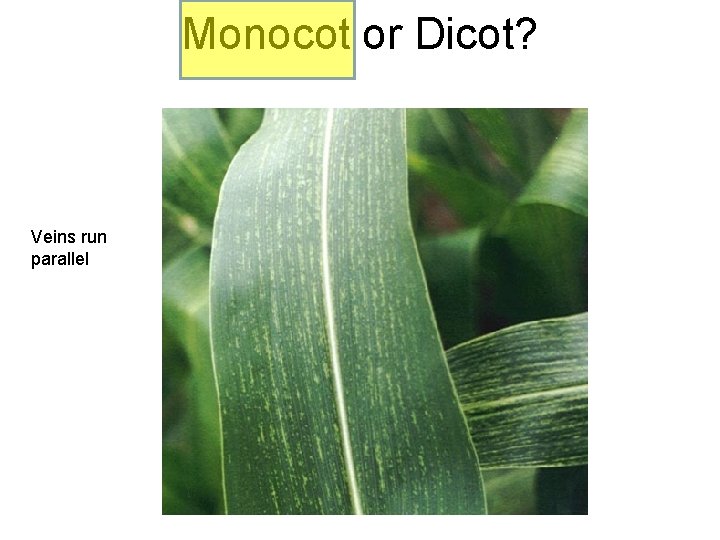
Monocot or Dicot? Veins run parallel
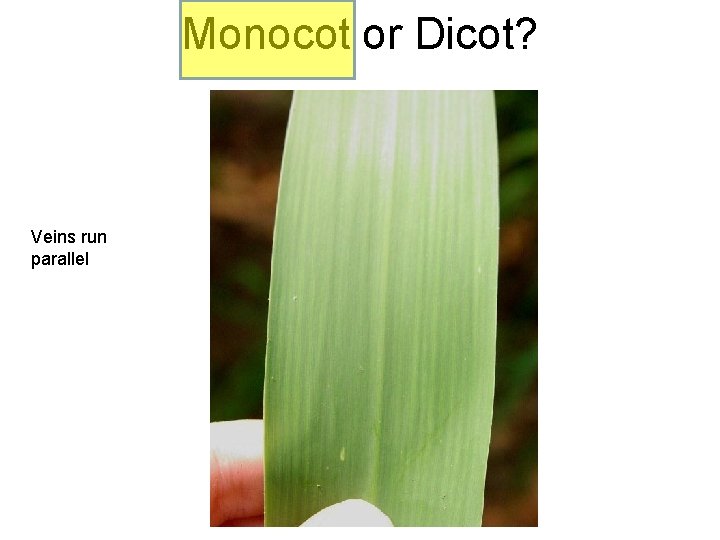
Monocot or Dicot? Veins run parallel
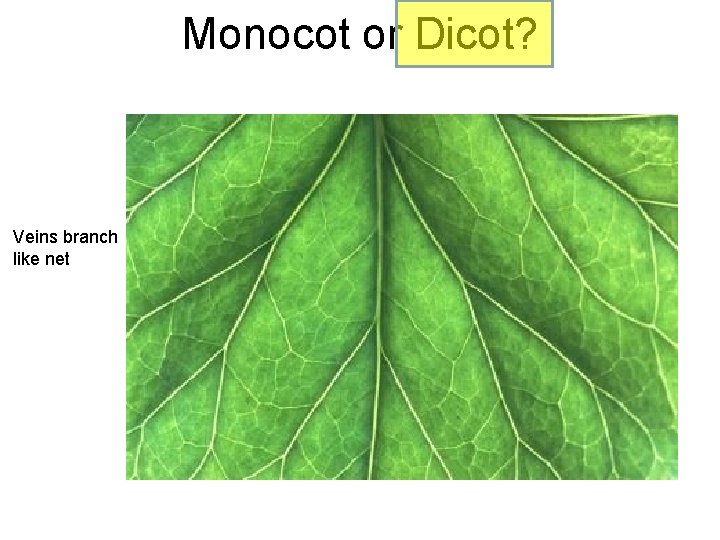
Monocot or Dicot? Veins branch like net
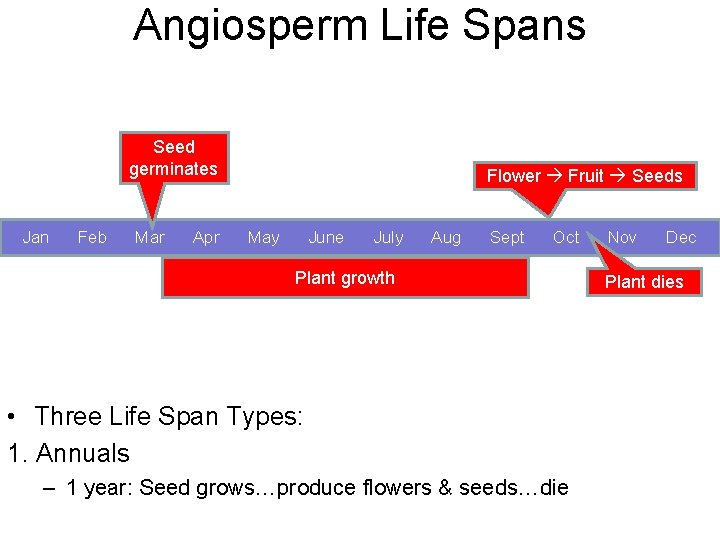
Angiosperm Life Spans Seed germinates Jan Feb Mar Apr Flower Fruit Seeds May June July Aug Sept Oct Plant growth • Three Life Span Types: 1. Annuals – 1 year: Seed grows…produce flowers & seeds…die Nov Dec Plant dies
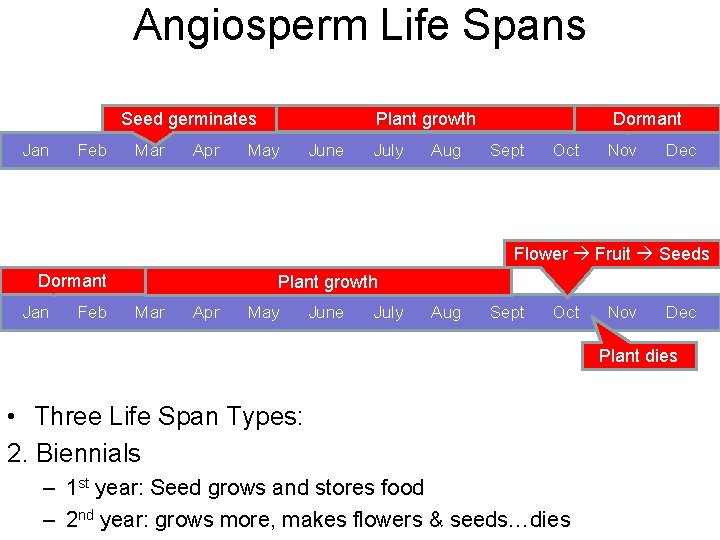
Angiosperm Life Spans Plant growth Seed germinates Jan Feb Mar Apr May June July Aug Dormant Sept Oct Nov Dec Flower Fruit Seeds Dormant Jan Feb Plant growth Mar Apr May June July Aug Sept Oct Nov Dec Plant dies • Three Life Span Types: 2. Biennials – 1 st year: Seed grows and stores food – 2 nd year: grows more, makes flowers & seeds…dies
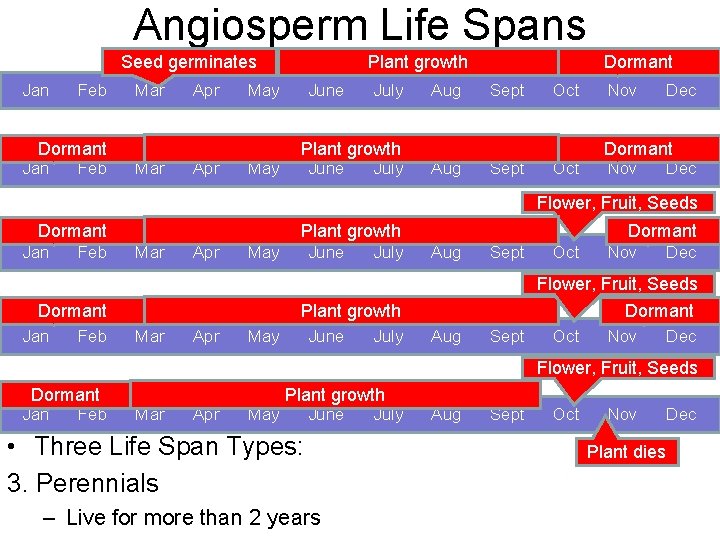
Angiosperm Life Spans Seed germinates Jan Feb Dormant Jan Feb Mar Apr Plant growth May June July Aug Dormant Sept Oct Plant growth Mar Apr May June July Aug Sept Oct Nov Dec Dormant Nov Dec Flower, Fruit, Seeds Plant growth Dormant Jan Feb Mar Apr May Feb July Aug Sept Mar Apr May June July Oct Nov Dec Flower, Fruit, Seeds Dormant Plant growth Dormant Jan June Dormant Aug Sept Oct Nov Dec Flower, Fruit, Seeds Dormant Jan Feb Plant growth Mar Apr May June • Three Life Span Types: 3. Perennials – Live for more than 2 years July Aug Sept Oct Nov Dec Plant dies
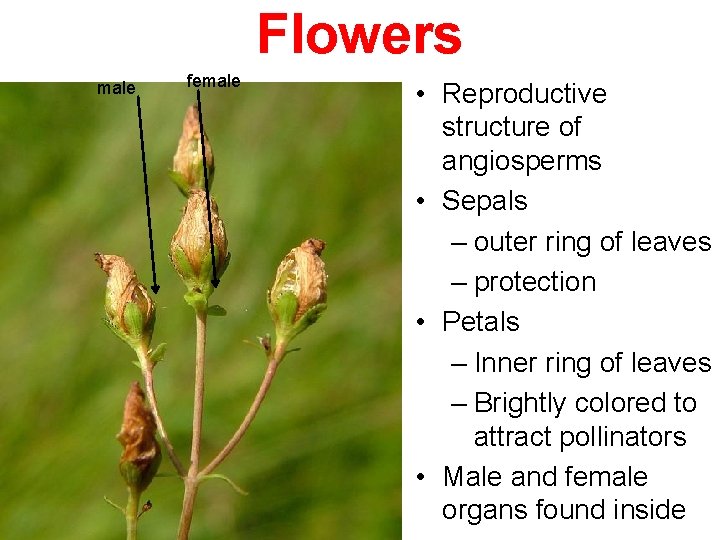
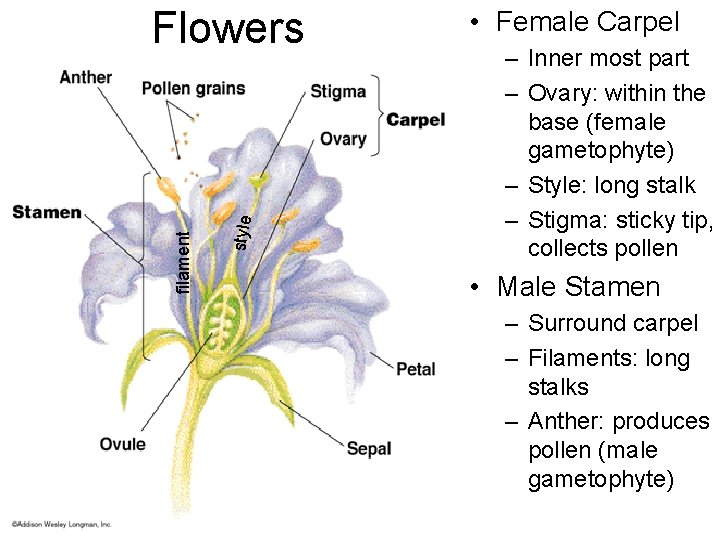
Flowers male petals sepals female • Reproductive structure of angiosperms • Sepals – outer ring of leaves – protection • Petals – Inner ring of leaves – Brightly colored to attract pollinators • Male and female organs found inside
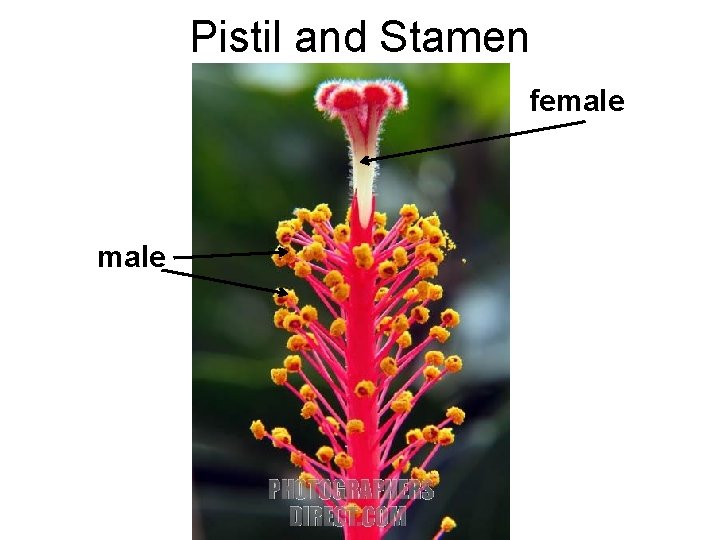
style filament Flowers • Female Carpel – Inner most part – Ovary: within the base (female gametophyte) – Style: long stalk – Stigma: sticky tip, collects pollen • Male Stamen – Surround carpel – Filaments: long stalks – Anther: produces pollen (male gametophyte)
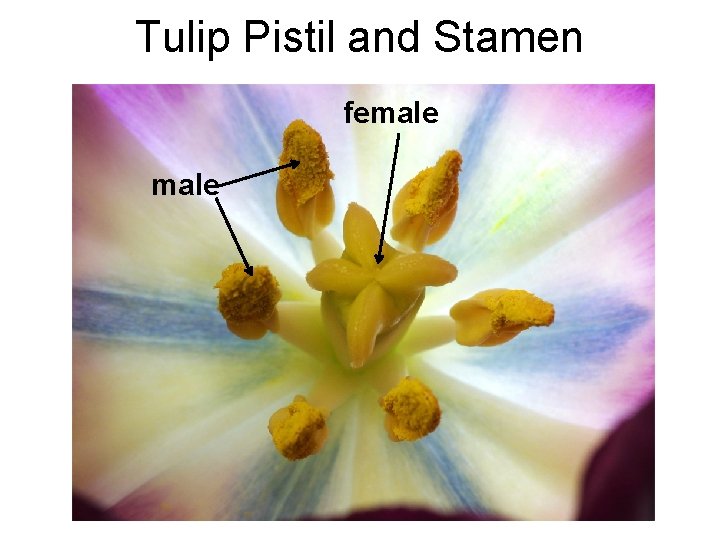
Tulip Pistil and Stamen female
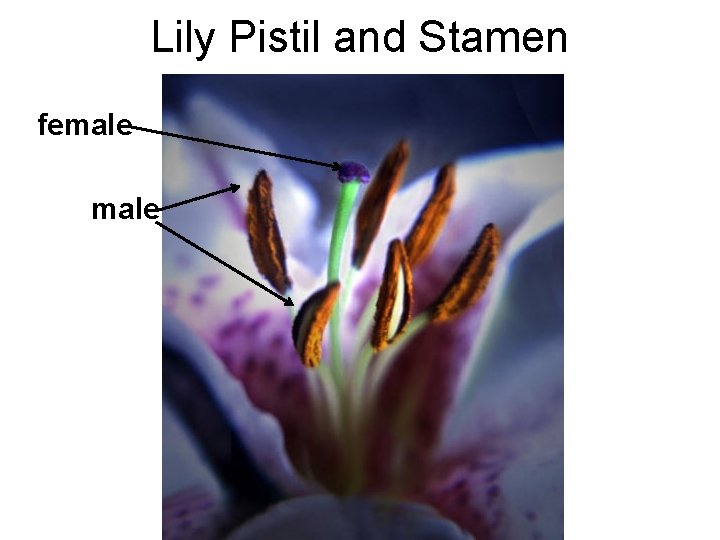
Lily Pistil and Stamen female
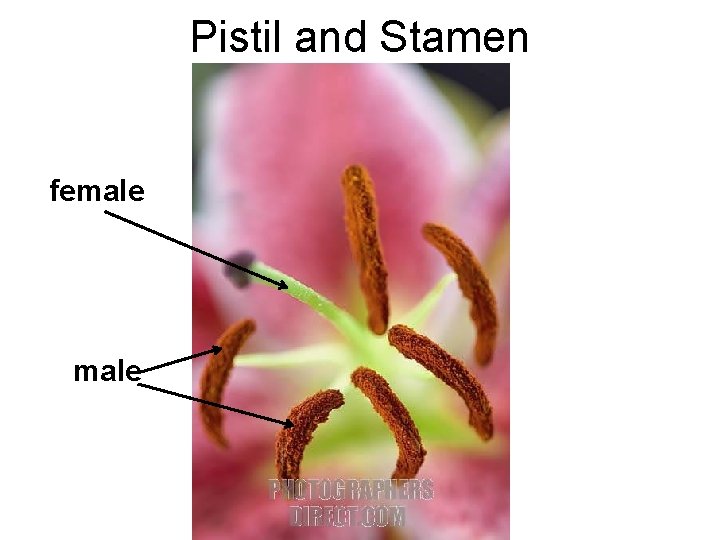
Pistil and Stamen female
Pistil and Stamen female
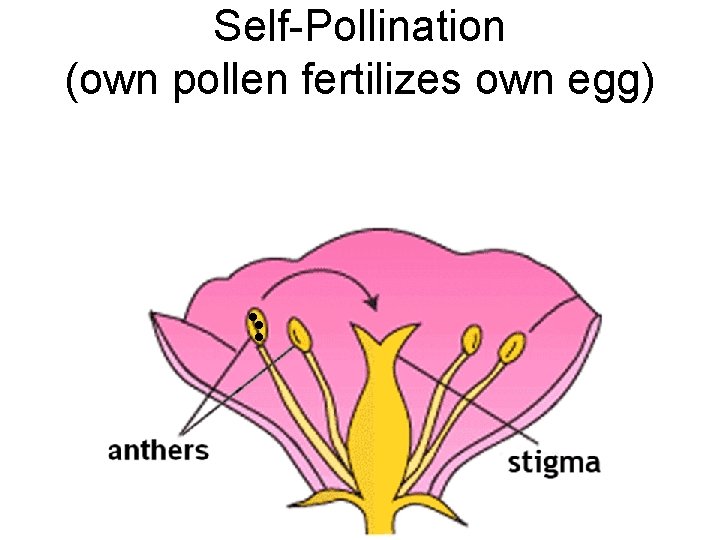
Self-Pollination (own pollen fertilizes own egg) . . .
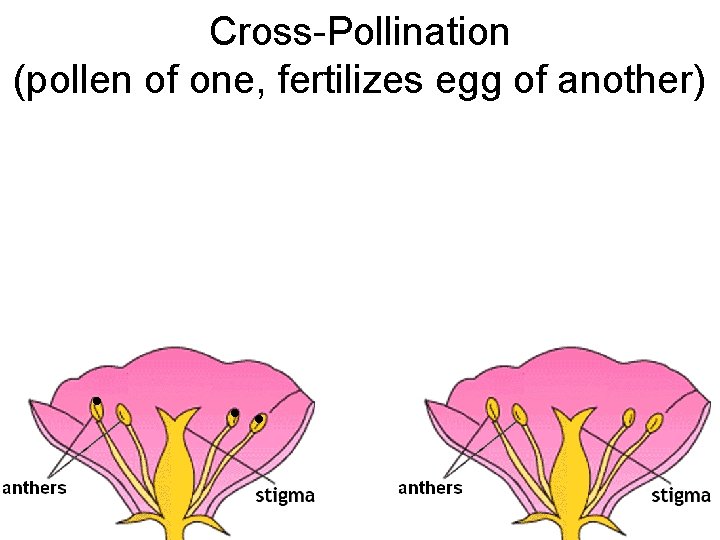
Cross-Pollination (pollen of one, fertilizes egg of another) . . .
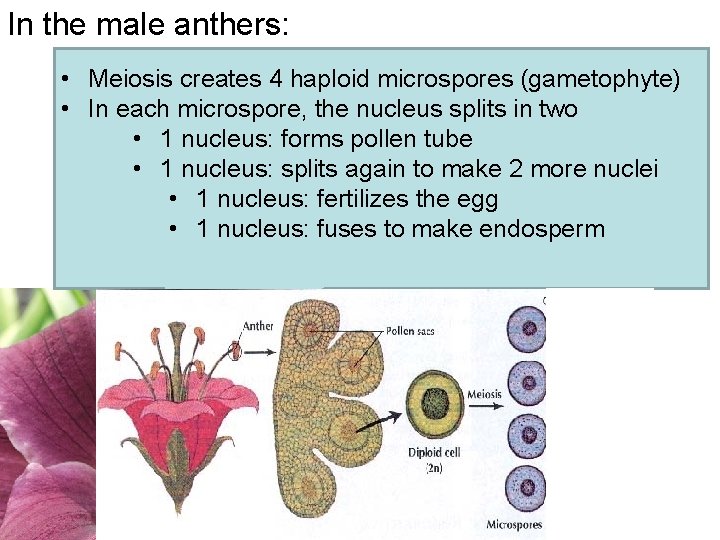
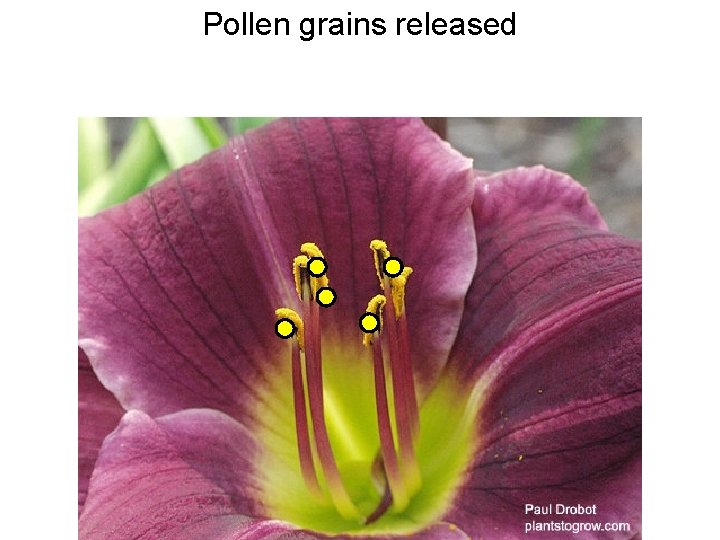
In the male anthers: • Meiosis creates 4 haploid microspores (gametophyte) • In each microspore, the nucleus splits in two • 1 nucleus: forms pollen tube • 1 nucleus: splits again to make 2 more nuclei • 1 nucleus: fertilizes the egg • 1 nucleus: fuses to make endosperm
Pollen grains released
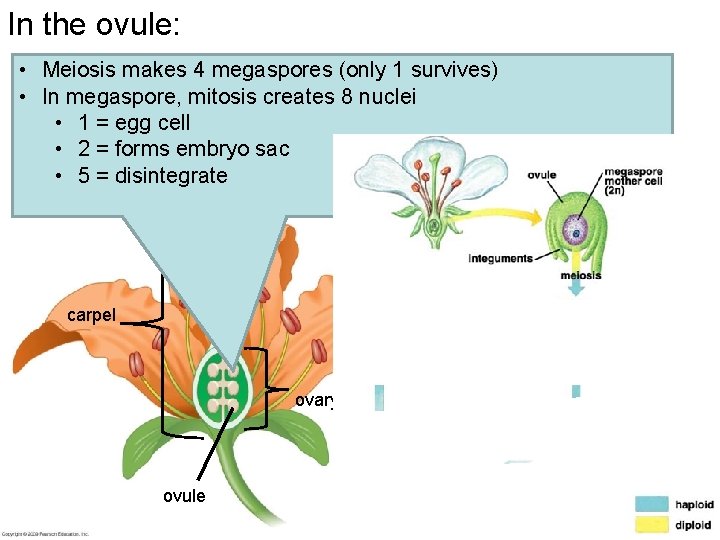
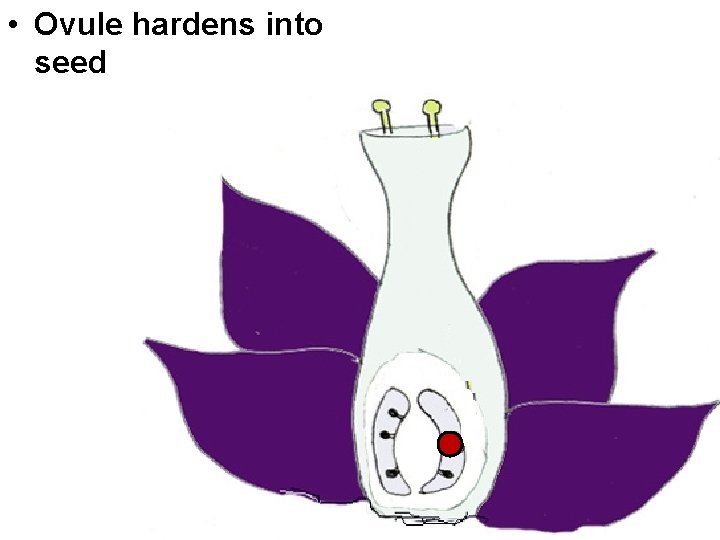
In the ovule: • Meiosis makes 4 megaspores (only 1 survives) • In megaspore, mitosis creates 8 nuclei • 1 = egg cell • 2 = forms embryo sac • 5 = disintegrate carpel ovary ovule
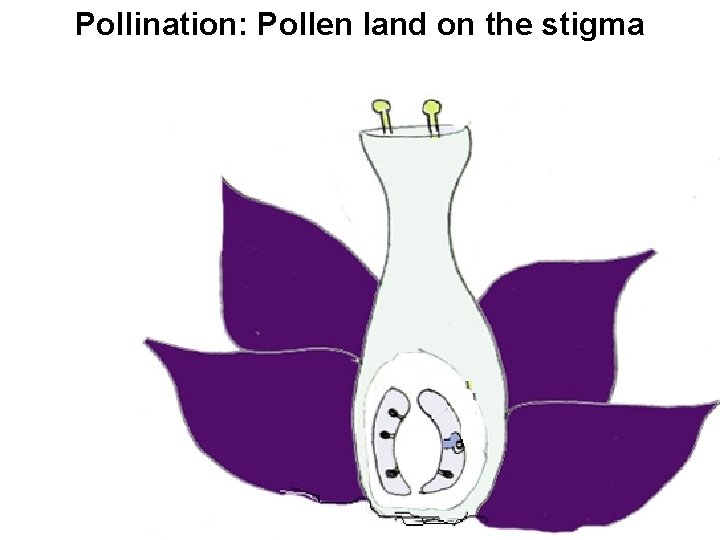
Pollination: Pollen land on the stigma
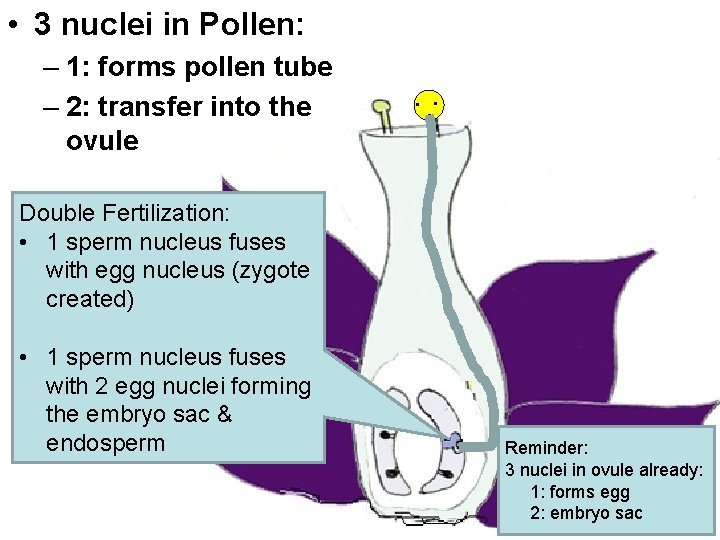
• 3 nuclei in Pollen: – 1: forms pollen tube – 2: transfer into the ovule . . . Double Fertilization: • 1 sperm nucleus fuses with egg nucleus (zygote created) • 1 sperm nucleus fuses with 2 egg nuclei forming the embryo sac & endosperm Reminder: 3 nuclei in ovule already: 1: forms egg 2: embryo sac
• Ovule hardens into seed
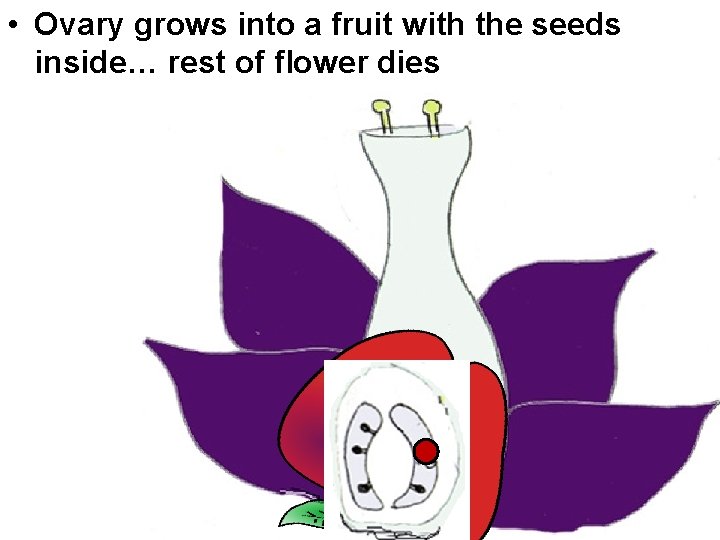
• Ovary grows into a fruit with the seeds inside… rest of flower dies
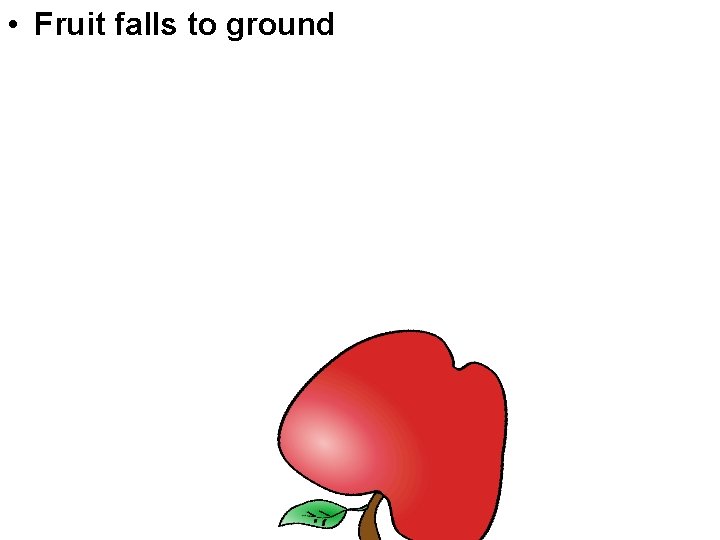
• Fruit falls to ground
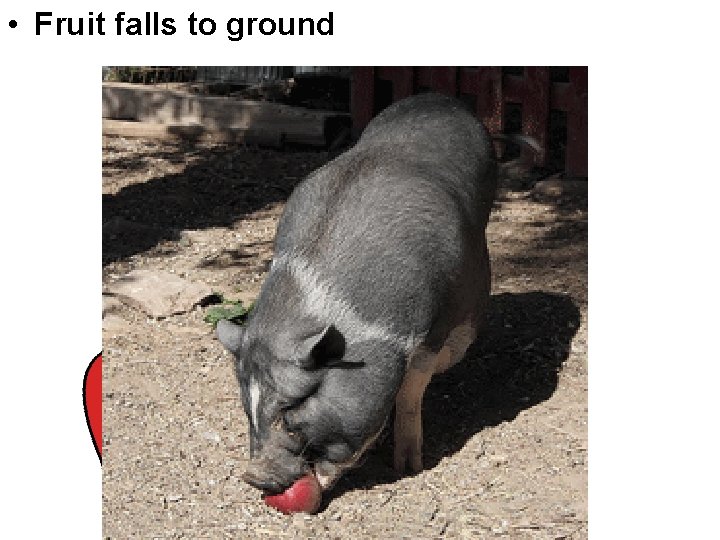
• Fruit falls to ground
Fruit is digested… Seeds pass through…
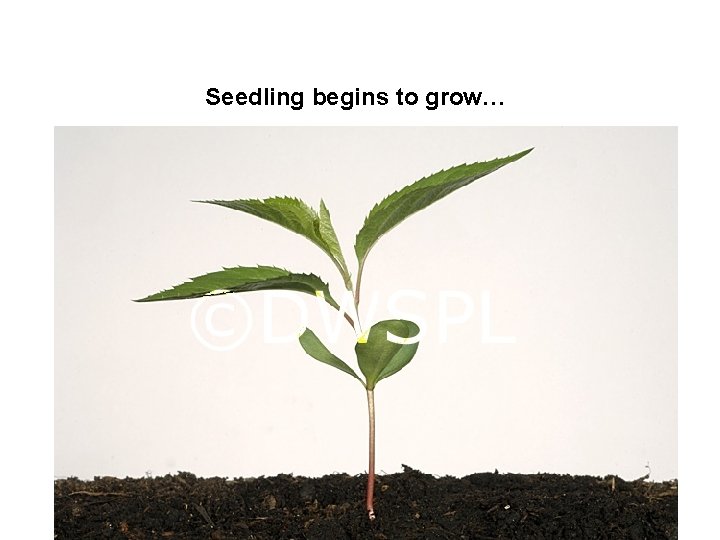
Seedling begins to grow… seed
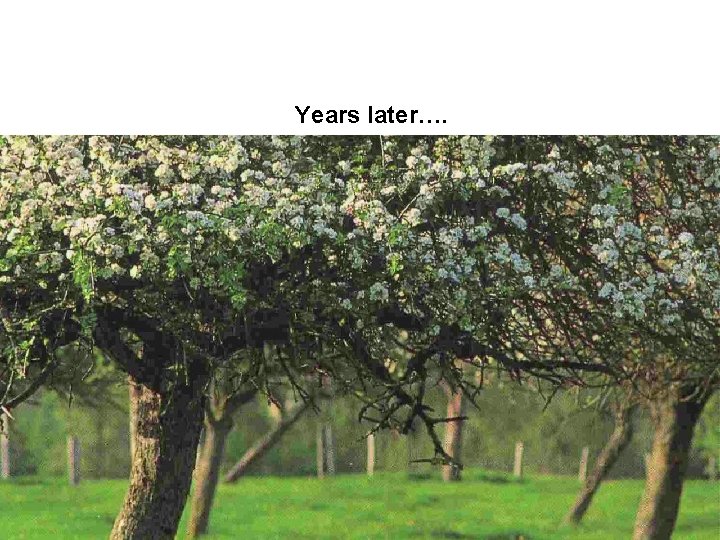
Years later….