
Angiosperm Reproduction Angiosperms reproduce sexually Their life cycle
- Slides: 7
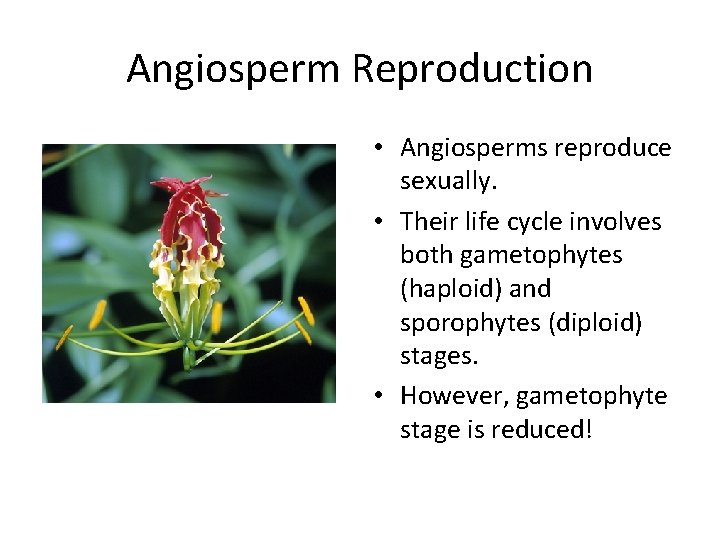
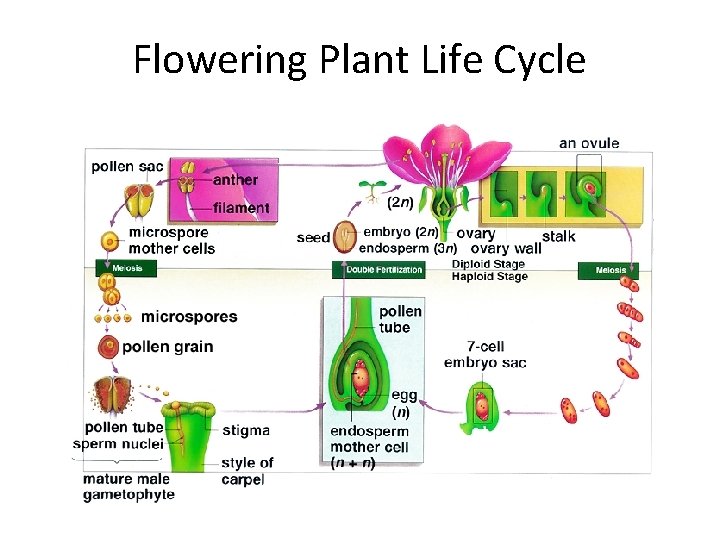
Angiosperm Reproduction • Angiosperms reproduce sexually. • Their life cycle involves both gametophytes (haploid) and sporophytes (diploid) stages. • However, gametophyte stage is reduced!
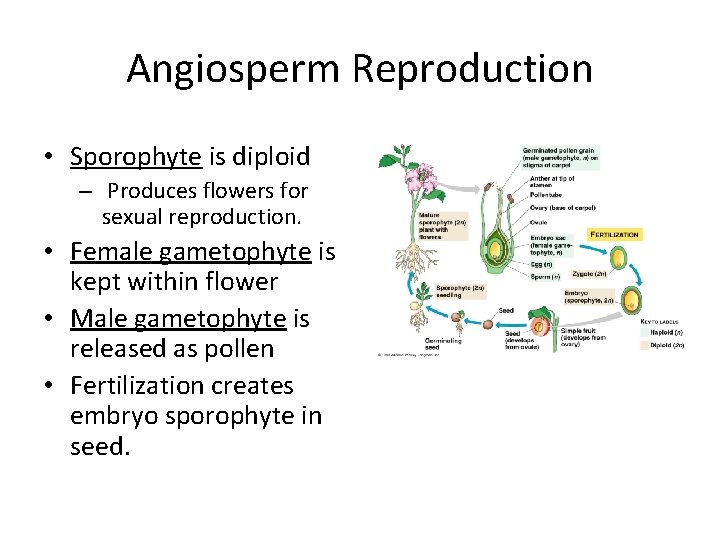
Angiosperm Reproduction • Sporophyte is diploid – Produces flowers for sexual reproduction. • Female gametophyte is kept within flower • Male gametophyte is released as pollen • Fertilization creates embryo sporophyte in seed.
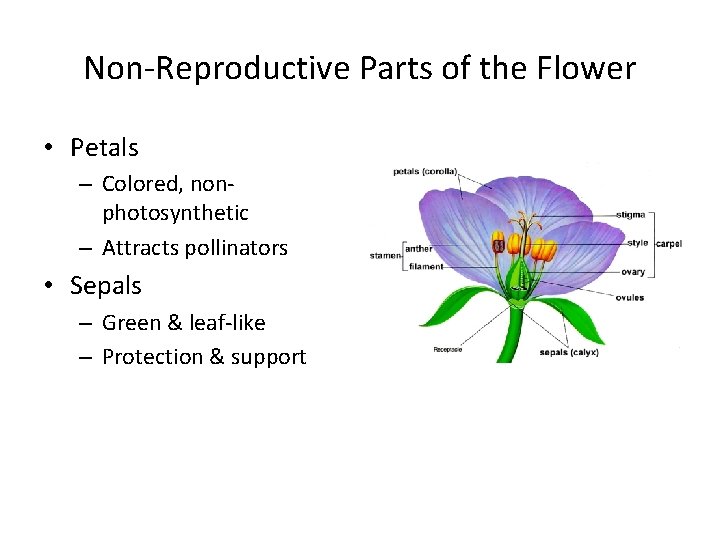
Non-Reproductive Parts of the Flower • Petals – Colored, nonphotosynthetic – Attracts pollinators • Sepals – Green & leaf-like – Protection & support
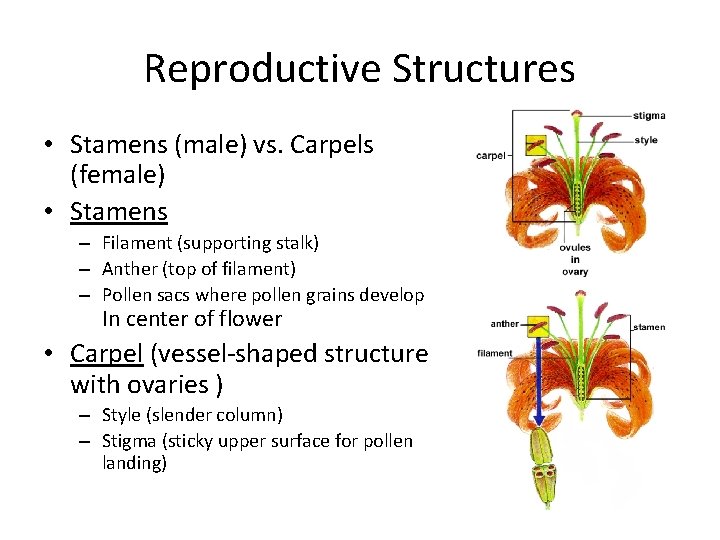
Reproductive Structures • Stamens (male) vs. Carpels (female) • Stamens – Filament (supporting stalk) – Anther (top of filament) – Pollen sacs where pollen grains develop In center of flower • Carpel (vessel-shaped structure with ovaries ) – Style (slender column) – Stigma (sticky upper surface for pollen landing)
Flowering Plant Life Cycle
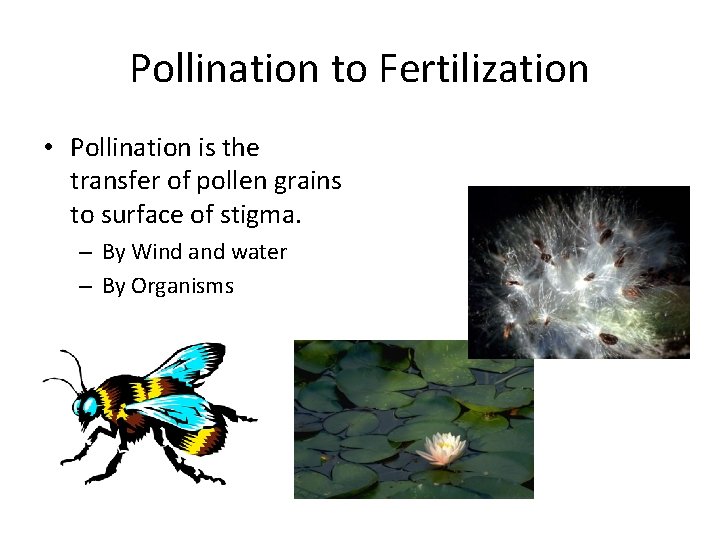
Pollination to Fertilization • Pollination is the transfer of pollen grains to surface of stigma. – By Wind and water – By Organisms
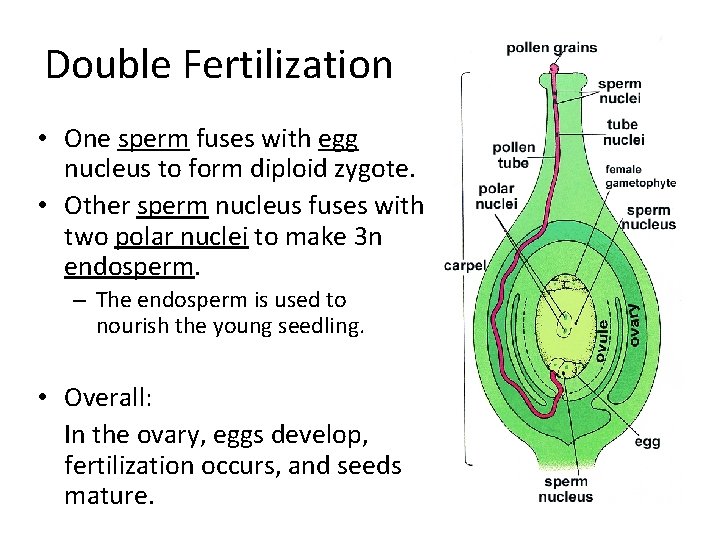
Double Fertilization • One sperm fuses with egg nucleus to form diploid zygote. • Other sperm nucleus fuses with two polar nuclei to make 3 n endosperm. – The endosperm is used to nourish the young seedling. • Overall: In the ovary, eggs develop, fertilization occurs, and seeds mature.