
ANGIOEDEMA LARYNGEAL EDEMA DIAGNOSIS AND MANAGEMENT Henriette Farkas














- Slides: 49
ANGIOEDEMA, LARYNGEAL EDEMA DIAGNOSIS AND MANAGEMENT Henriette Farkas Semmelweis University 3 rd Department of Internal Medicine Budapest, Hungary farkash@kut. sote. hu
UPPER AIRWAY OBSTRUCTION (UAO) AETIOLOGY FUNCTIONAL CAUSES MECHANICAL CAUSES LARYNGEAL EDEMA CNS depression Foreign body aspiration is a life-threatening condition characterized by acute or gradual onset with Peripheral nervous system Infections swelling of the laryngeal mucosa and neuromuscular abnormalities Laryngeal edema Haemorrhage and haematoma Trauma Burns Neoplasm Congenital Miscellaneous
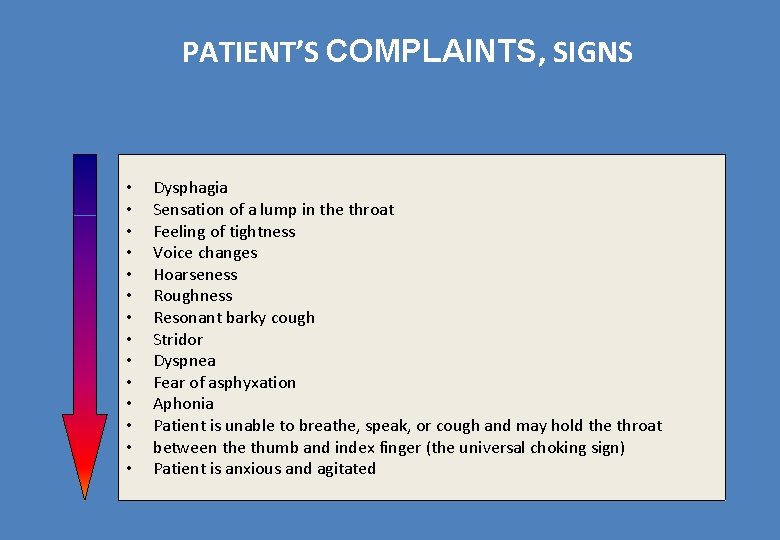
PATIENT’S COMPLAINTS, SIGNS • • • • Dysphagia Sensation of a lump in the throat Feeling of tightness Voice changes Hoarseness Roughness Resonant barky cough Stridor Dyspnea Fear of asphyxation Aphonia Patient is unable to breathe, speak, or cough and may hold the throat between the thumb and index finger (the universal choking sign) Patient is anxious and agitated
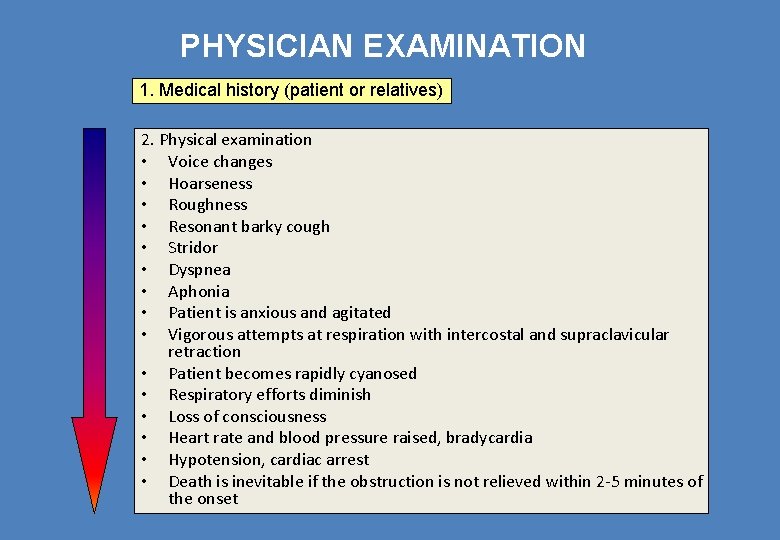
PHYSICIAN EXAMINATION 1. Medical history (patient or relatives) 2. Physical examination • Voice changes • Hoarseness • Roughness • Resonant barky cough • Stridor • Dyspnea • Aphonia • Patient is anxious and agitated • Vigorous attempts at respiration with intercostal and supraclavicular retraction • Patient becomes rapidly cyanosed • Respiratory efforts diminish • Loss of consciousness • Heart rate and blood pressure raised, bradycardia • Hypotension, cardiac arrest • Death is inevitable if the obstruction is not relieved within 2 -5 minutes of the onset
EXAMINATION IN THE HOSPITAL flexible fibreoptic laryngoscopy Indirect laryngoscopy Radiographic imaging AP and lateral plain neck radiographs, CT, MRI direct laryngoscopy
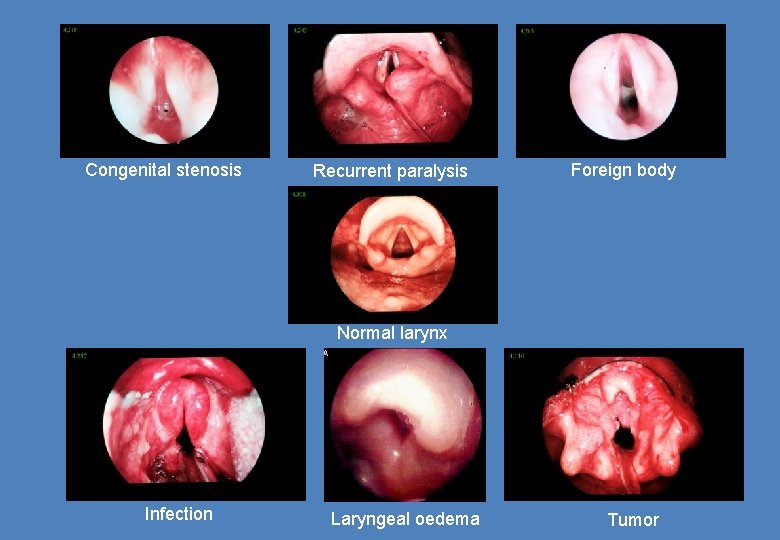
Congenital stenosis Recurrent paralysis Foreign body Normal larynx Infection Laryngeal oedema Tumor
THE EFFECT OF EDEMA ON THE CROSS SECTIONAL AREA OF THE SUBGLOTTIC LARYNX Physical status Neonate Child Adult Normal Subglottic area (mm 2) 12 48 147 Effect of 1 mm edema 3 27 108 Reduction of airway area % 75 44 27
MANAGEMENT Treatment consists of • • • immediately ensuring an adequate airway administration of oxygen intravenous fluids epinephrine, antihistamines and steroids C 1 -INH concentrate, bradykinin receptor B 2 antagonist, kallikrein inhibitor or FFP
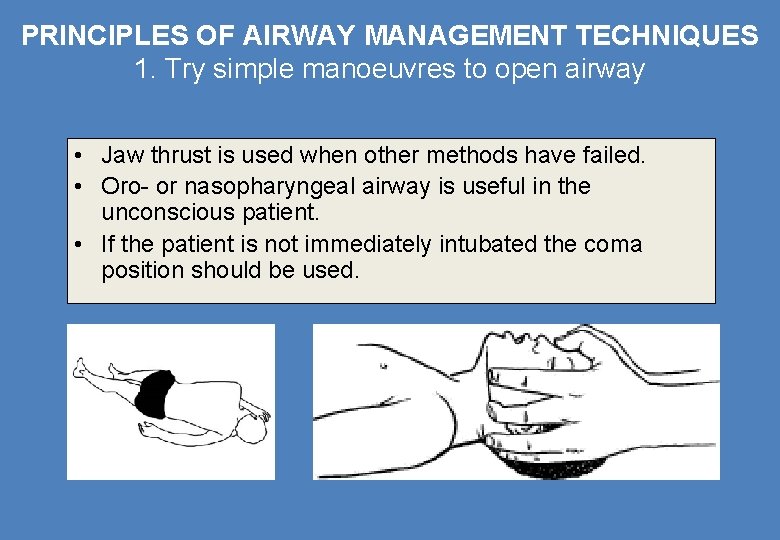
PRINCIPLES OF AIRWAY MANAGEMENT TECHNIQUES 1. Try simple manoeuvres to open airway • Jaw thrust is used when other methods have failed. • Oro- or nasopharyngeal airway is useful in the unconscious patient. • If the patient is not immediately intubated the coma position should be used.
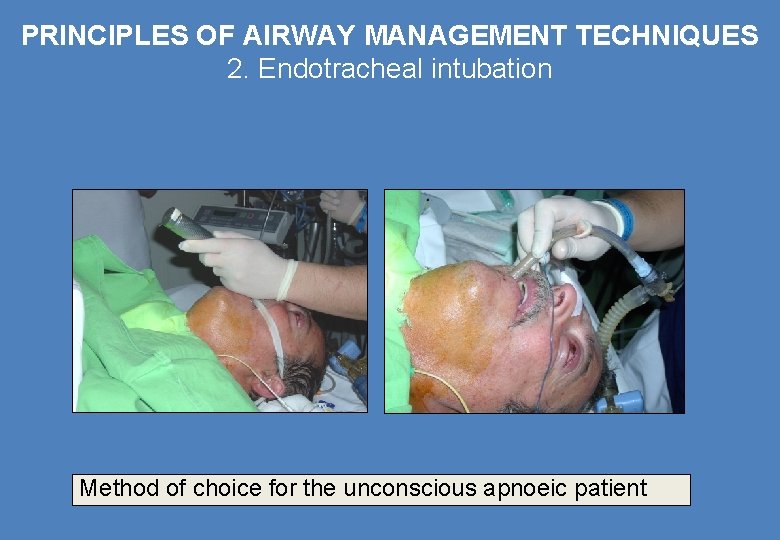
PRINCIPLES OF AIRWAY MANAGEMENT TECHNIQUES 2. Endotracheal intubation Method of choice for the unconscious apnoeic patient
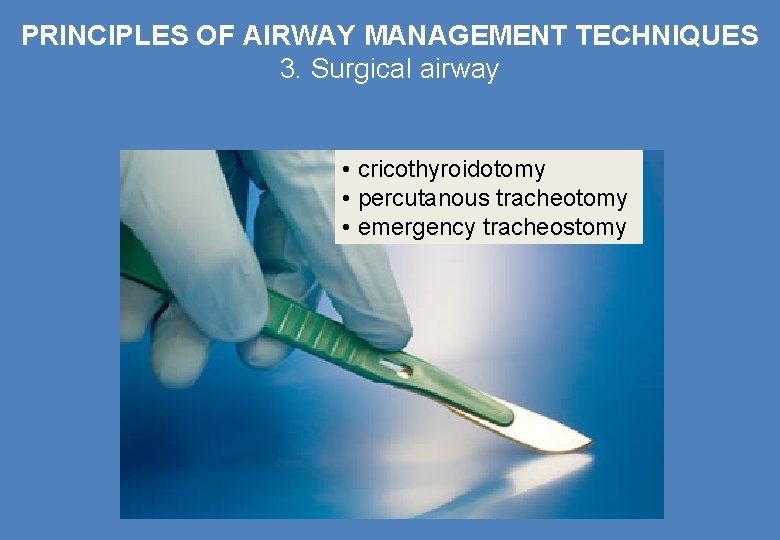
PRINCIPLES OF AIRWAY MANAGEMENT TECHNIQUES 3. Surgical airway • cricothyroidotomy • percutanous tracheotomy • emergency tracheostomy
CRICOTHYROIDOTOMY Cricothyroidotomy is an emergency procedure when intubation or tracheotomy are impossible. Relatively easy way of providing an emergency airway. (cricothyroid membrane is near the skin surface)
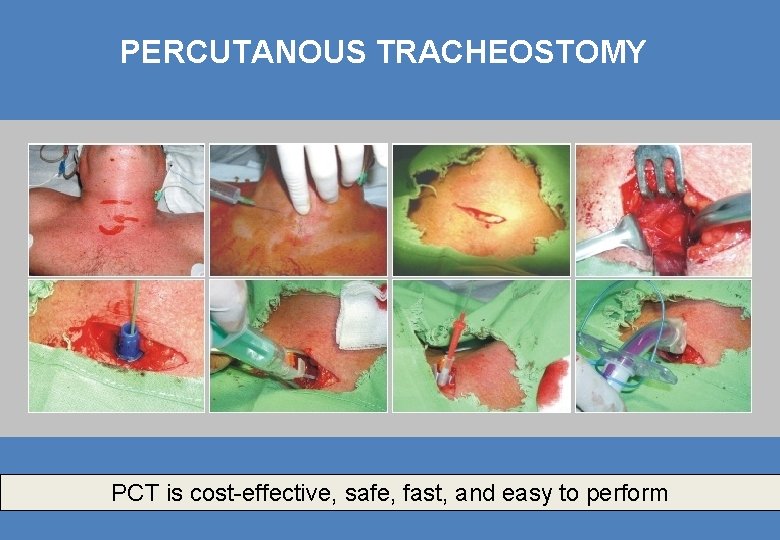
PERCUTANOUS TRACHEOSTOMY PCT is cost-effective, safe, fast, and easy to perform
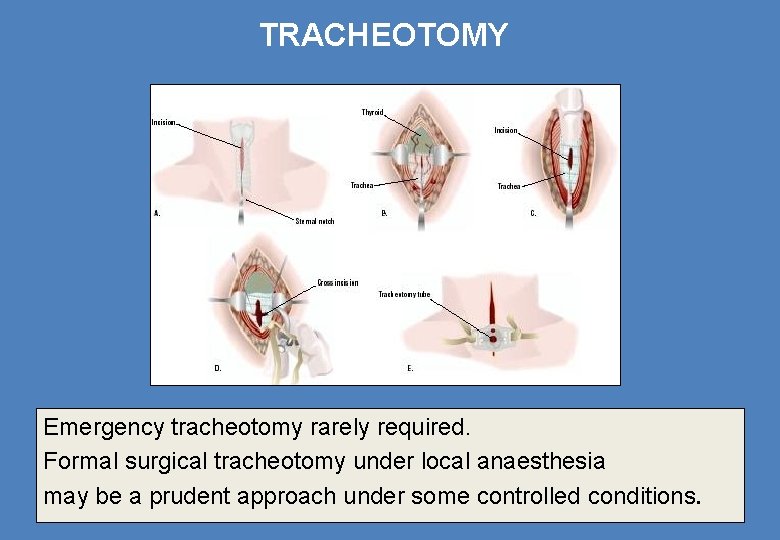
TRACHEOTOMY Emergency tracheotomy rarely required. Formal surgical tracheotomy under local anaesthesia may be a prudent approach under some controlled conditions.
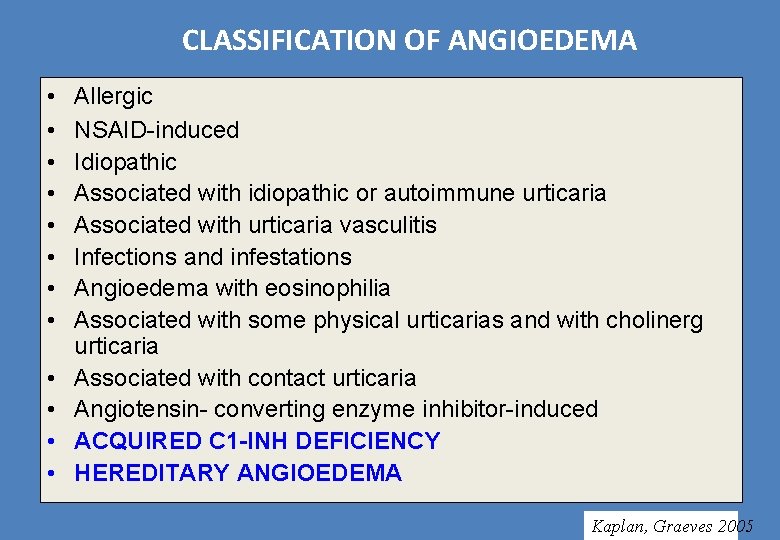
CLASSIFICATION OF ANGIOEDEMA • ALLERGIC • • • NSAID-induced Idiopathic Associated with idiopathic or autoimmune urticaria Associated with urticaria vasculitis Infections and infestations Angioedema with eosinophilia Associated with some physical urticarias and with cholinerg urticaria Associated with contact urticaria Angiotensin- converting enzyme inhibitor-induced C 1 -INH deficiency Hereditary angioedema with normal C 1 -INH Kaplan, Graeves 2005
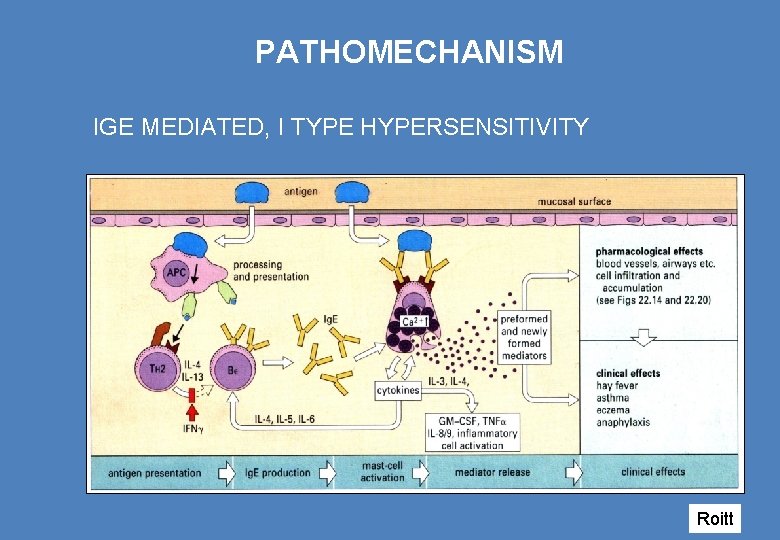
PATHOMECHANISM IGE MEDIATED, I TYPE HYPERSENSITIVITY Roitt
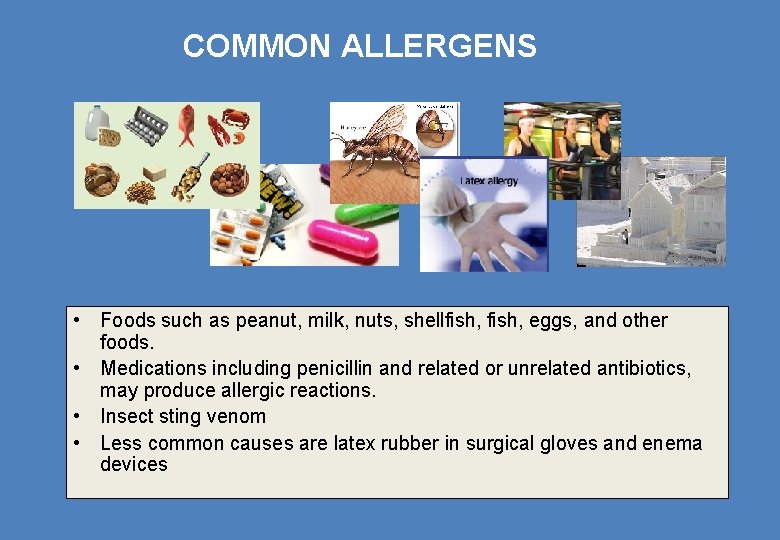
COMMON ALLERGENS • Foods such as peanut, milk, nuts, shellfish, eggs, and other foods. • Medications including penicillin and related or unrelated antibiotics, may produce allergic reactions. • Insect sting venom • Less common causes are latex rubber in surgical gloves and enema devices
SYMPTOMS May be localized or part of a systemic anaphylactic reaction • in acute allergic laryngeal edema, angioedema of the lips and supraglottis, and infraglottis results in airway obstruction • systemic reaction consists of a variable combination of urticaria (79%), bronchospasm (70%), shock, cardiovascular collapse and abdominal pain
DIAGNOSIS Prick test Specific Ig. E Use specific monoclonal antibodies against allergens
MANAGEMENT ACUTE TREATMENT CONSISTS OF • • • immediately ensuring an adequate airway and administration of oxygen, intravenous fluids, epinephrine: im, iv antihistamines and steroids NEXT STEP hyposensibilisation (bee, wasp venom)
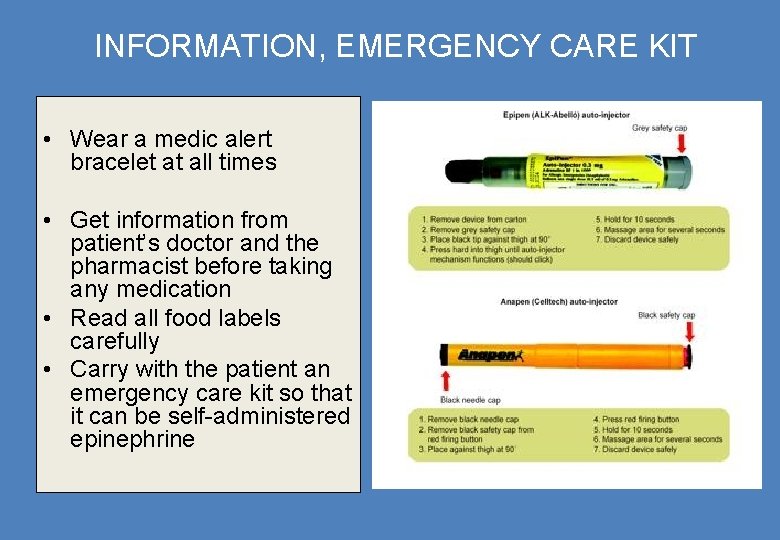
INFORMATION, EMERGENCY CARE KIT • Wear a medic alert bracelet at all times • Get information from patient’s doctor and the pharmacist before taking any medication • Read all food labels carefully • Carry with the patient an emergency care kit so that it can be self-administered epinephrine
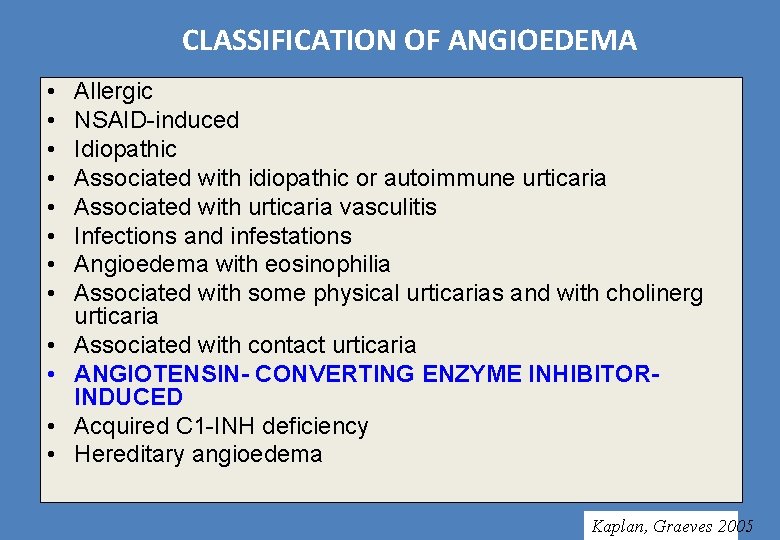
CLASSIFICATION OF ANGIOEDEMA • • • Allergic NSAID-induced Idiopathic Associated with idiopathic or autoimmune urticaria Associated with urticaria vasculitis Infections and infestations Angioedema with eosinophilia Associated with some physical urticarias and with cholinerg urticaria Associated with contact urticaria ANGIOTENSIN- CONVERTING ENZYME INHIBITORINDUCED Acquired C 1 -INH deficiency Hereditary angioedema Kaplan, Graeves 2005
KININ SYSTEM HW kininogen Angiotensinogen kallikrein Vasodilatation Increased vascular permeabity renin Angiotensin I bradykinin ACE BK metabolits Angiotensin II Vasoconstriction Vascular hypertrophy Aldosterone release
EFFECT OF ACE INHIBITORS kininogen angiotensinogen kallikrein Vasodilatation Increased vascular permeabity renin bradykinin Angiotensin I ACE inhibitor Angiotensin II BK metabolits ATII Blocker Vasoconstriction Vascular hypertrophy Aldosterone release
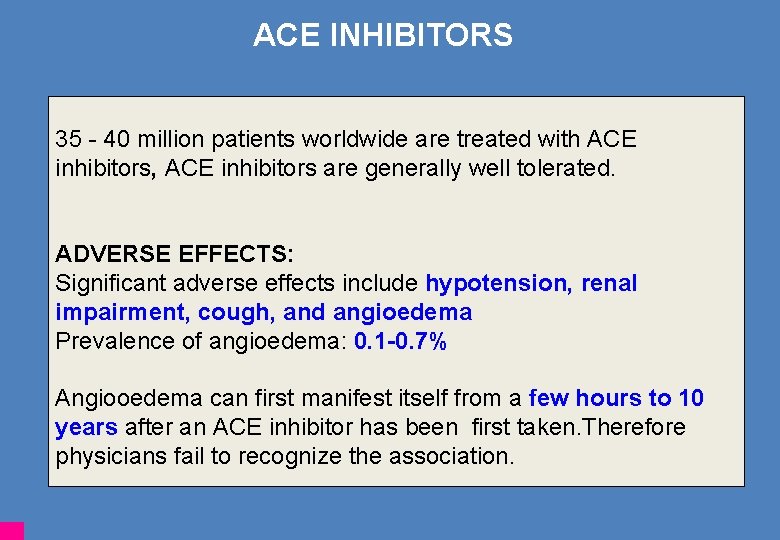
ACE INHIBITORS 35 - 40 million patients worldwide are treated with ACE inhibitors, ACE inhibitors are generally well tolerated. ADVERSE EFFECTS: Significant adverse effects include hypotension, renal impairment, cough, and angioedema Prevalence of angioedema: 0. 1 -0. 7% Angiooedema can first manifest itself from a few hours to 10 years after an ACE inhibitor has been first taken. Therefore physicians fail to recognize the association.
MANAGEMENT OF ACE INHIBITOR-INDUCED ANGIOEDEMA ACUT TREATMENT Avoid ACE inhibitors Conservative treatment antihistamines with or without steroids Tongue and upper airway are involved, intramuscular adrenaline should be used, some patients require an artificial airway C 1 inhibitor concentrate, FFP, SDP, kallikrein inhibitor or bradykinin receptor antagonist has been successfully
MANAGEMENT OF ACE INHIBITOR-INDUCED ANGIOEDEMA LONG-TERM Should not be switched to another ACE inhibitor. Calcium channel blockers and/or thiazides are appropriate as alternative antihypertensives. Beta blockers are contraindicated in the initial setting. Alternative medications: are AT II receptor blockers Several cases of angioedema associated with ATII receptor although the overall incidence appears lower than that with ACE inhibitors.
CLASSIFICATION OF ANGIOEDEMA • • • Allergic NSAID-induced Idiopathic Associated with idiopathic or autoimmune urticaria Associated with urticaria vasculitis Infections and infestations Angioedema with eosinophilia Associated with some physical urticarias and with cholinerg urticaria Associated with contact urticaria Angiotensin- converting enzyme inhibitor-induced ACQUIRED C 1 -INH DEFICIENCY HEREDITARY ANGIOEDEMA Kaplan, Graeves 2005
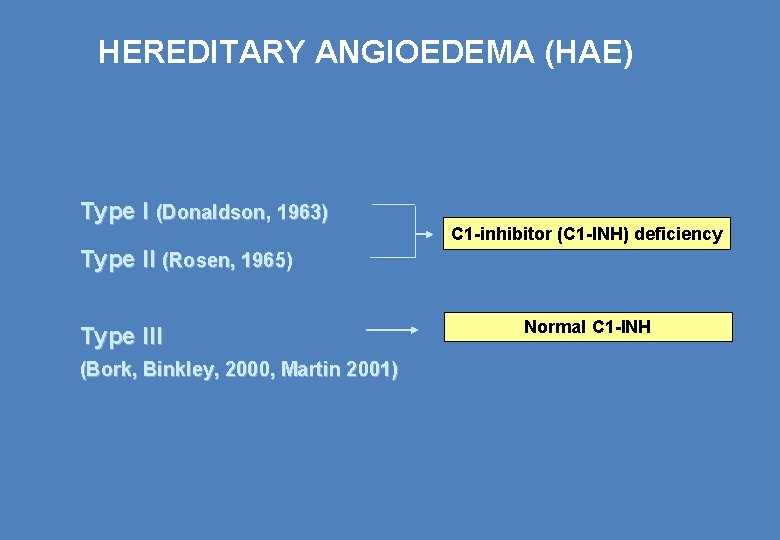
HEREDITARY ANGIOEDEMA (HAE) Type I (Donaldson, 1963) C 1 -inhibitor (C 1 -INH) deficiency Type II (Rosen, 1965) Type III (Bork, Binkley, 2000, Martin 2001) Normal C 1 -INH
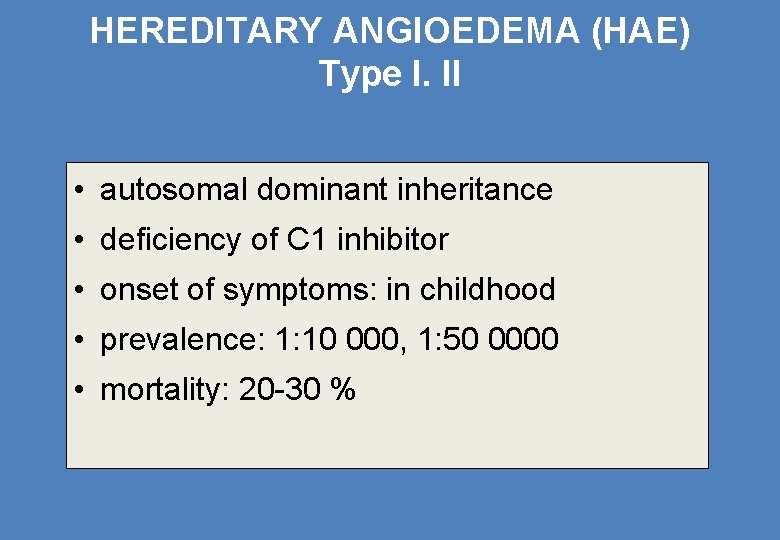
HEREDITARY ANGIOEDEMA (HAE) Type I. II • autosomal dominant inheritance • deficiency of C 1 inhibitor • onset of symptoms: in childhood • prevalence: 1: 10 000, 1: 50 0000 • mortality: 20 -30 %
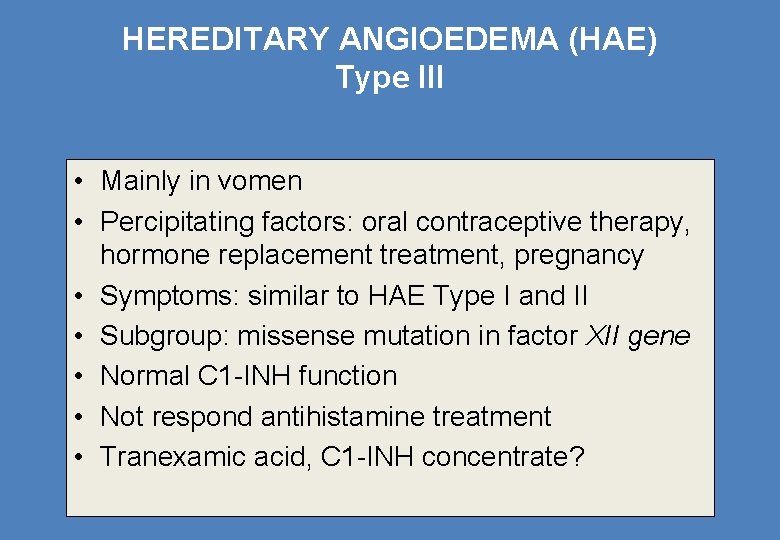
HEREDITARY ANGIOEDEMA (HAE) Type III • Mainly in vomen • Percipitating factors: oral contraceptive therapy, hormone replacement treatment, pregnancy • Symptoms: similar to HAE Type I and II • Subgroup: missense mutation in factor XII gene • Normal C 1 -INH function • Not respond antihistamine treatment • Tranexamic acid, C 1 -INH concentrate?
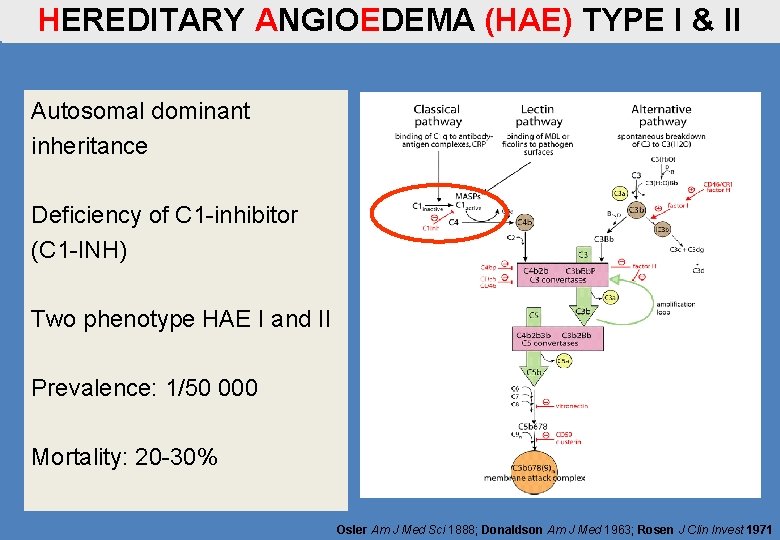
HEREDITARY ANGIOEDEMA (HAE) TYPE I & II Autosomal dominant inheritance Deficiency of C 1 -inhibitor (C 1 -INH) Two phenotype HAE I and II Prevalence: 1/50 000 Mortality: 20 -30% Osler Am J Med Sci 1888; Donaldson Am J Med 1963; Rosen J Clin Invest 1971
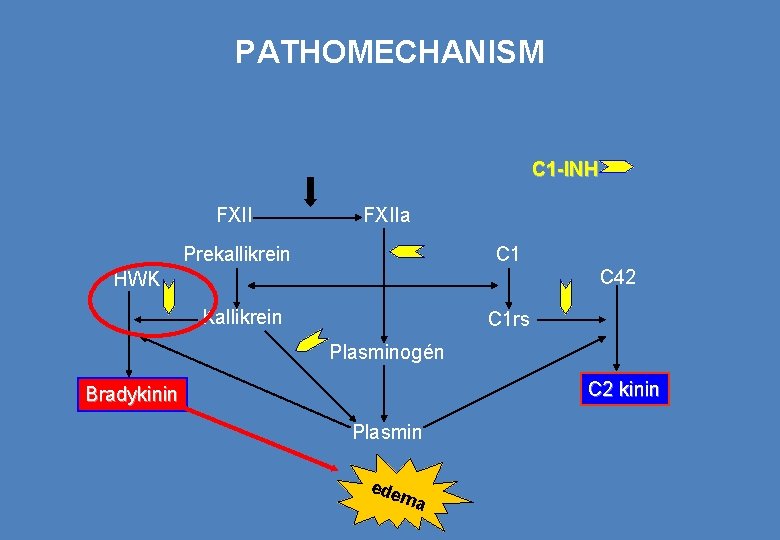
PATHOMECHANISM C 1 -INH FXIIa Prekallikrein C 1 C 42 HWK Kallikrein C 1 rs Plasminogén C 2 kinin Bradykinin Plasmin ede m a
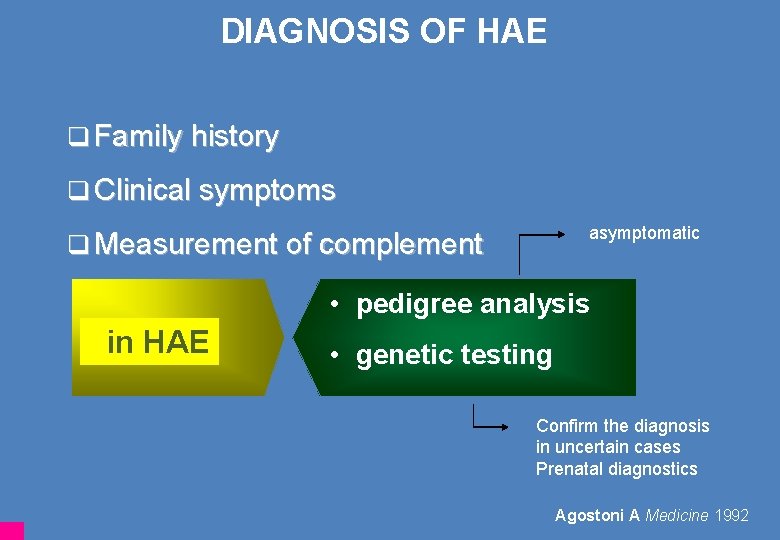
DIAGNOSIS OF HAE q Family history q Clinical symptoms asymptomatic q Measurement of complement • pedigree analysis in HAE • genetic testing Confirm the diagnosis in uncertain cases Prenatal diagnostics Agostoni A Medicine 1992
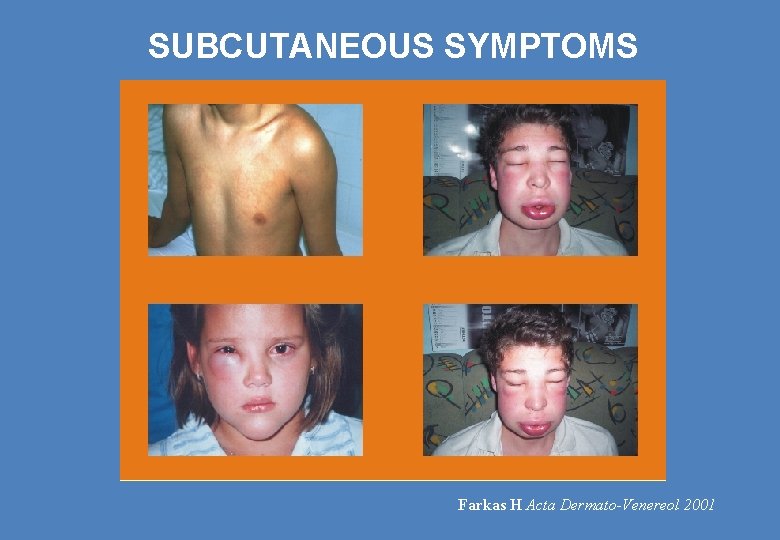
SUBCUTANEOUS SYMPTOMS Farkas H Acta Dermato-Venereol 2001
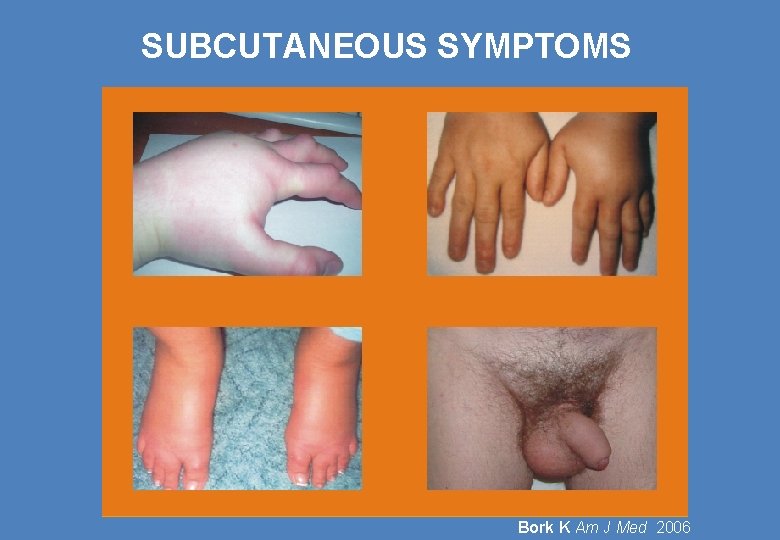
SUBCUTANEOUS SYMPTOMS Bork K Am J Med 2006
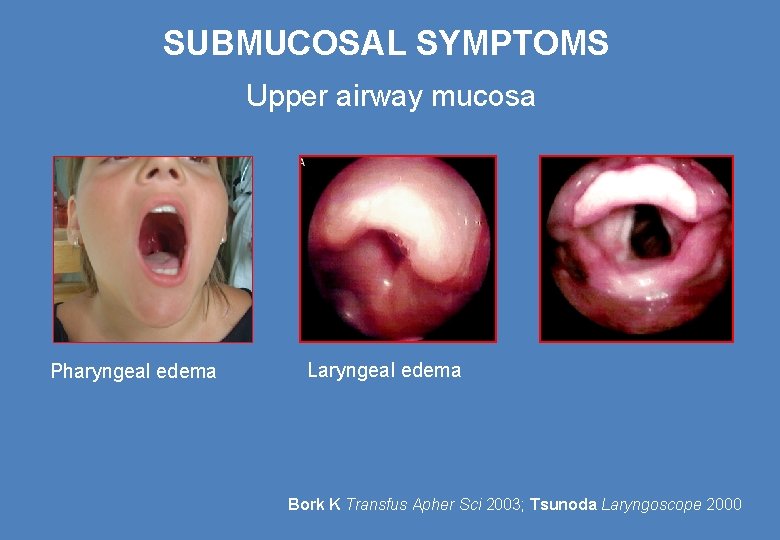
SUBMUCOSAL SYMPTOMS Upper airway mucosa Pharyngeal edema Laryngeal edema Bork K Transfus Apher Sci 2003; Tsunoda Laryngoscope 2000
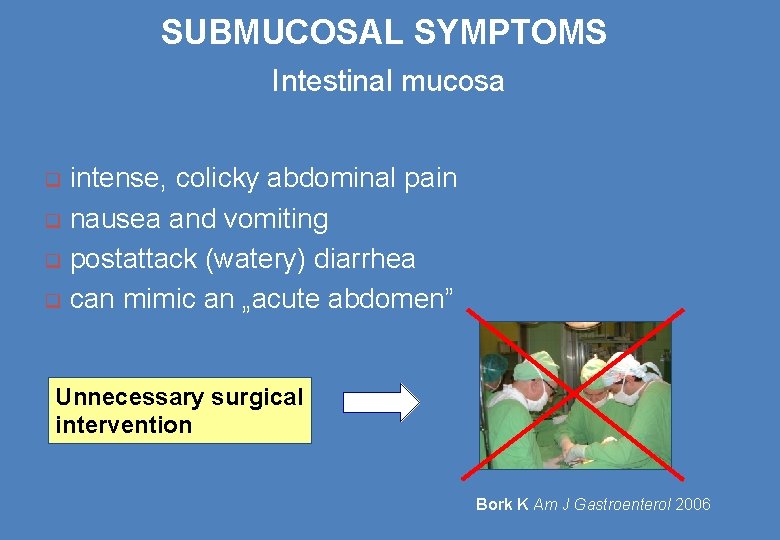
SUBMUCOSAL SYMPTOMS Intestinal mucosa intense, colicky abdominal pain q nausea and vomiting q postattack (watery) diarrhea q can mimic an „acute abdomen” q Unnecessary surgical intervention Bork K Am J Gastroenterol 2006
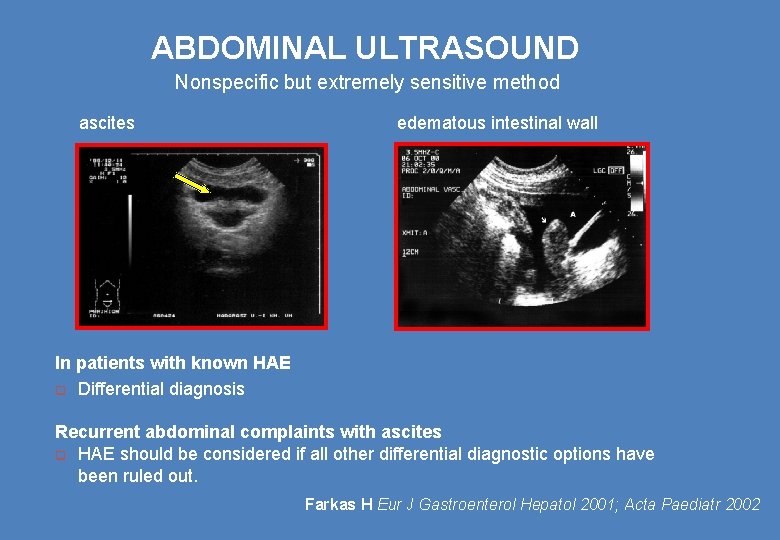
ABDOMINAL ULTRASOUND Nonspecific but extremely sensitive method ascites edematous intestinal wall In patients with known HAE q Differential diagnosis Recurrent abdominal complaints with ascites q HAE should be considered if all other differential diagnostic options have been ruled out. Farkas H Eur J Gastroenterol Hepatol 2001; Acta Paediatr 2002
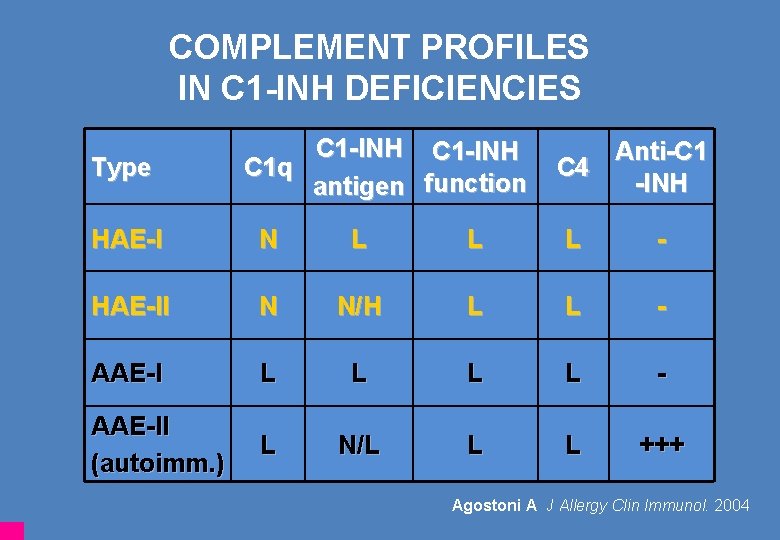
COMPLEMENT PROFILES IN C 1 -INH DEFICIENCIES Type C 1 -INH C 1 q antigen function C 4 Anti-C 1 -INH HAE-I N L L L - HAE-II N N/H L L - AAE-II (autoimm. ) L N/L L L +++ Agostoni A J Allergy Clin Immunol. 2004
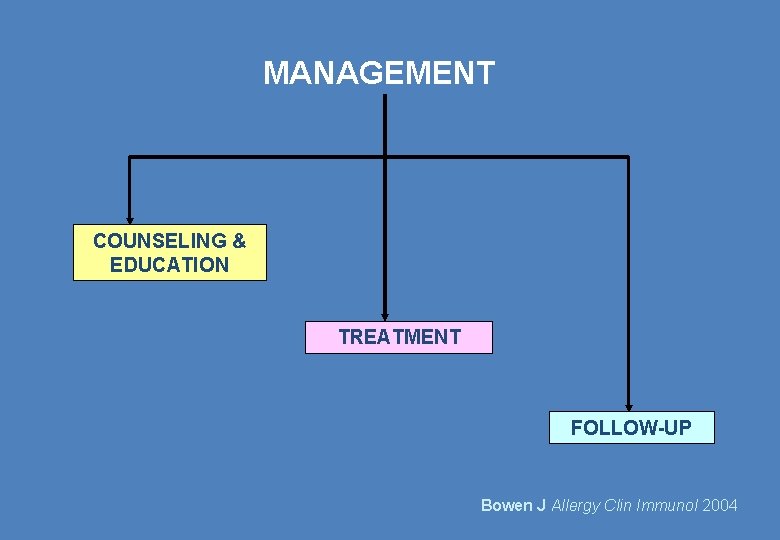
MANAGEMENT COUNSELING & EDUCATION TREATMENT FOLLOW-UP Bowen J Allergy Clin Immunol 2004
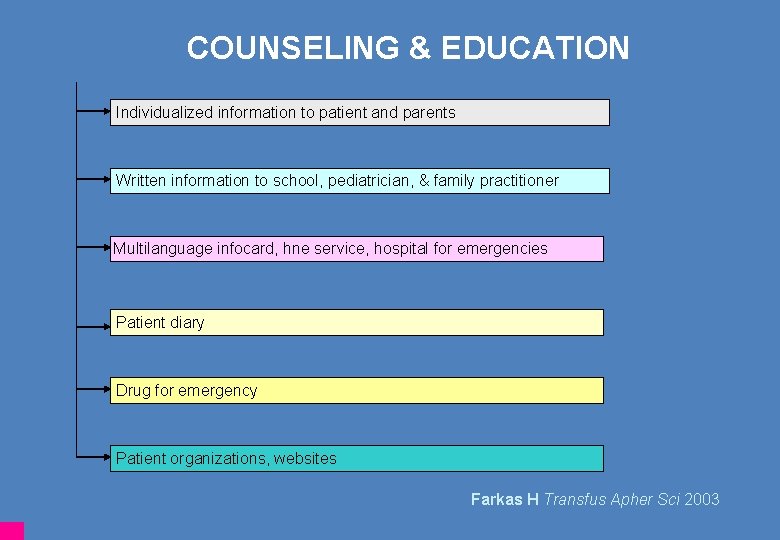
COUNSELING & EDUCATION Individualized information to patient and parents Written information to school, pediatrician, & family practitioner Multilanguage infocard, hne service, hospital for emergencies Patient diary Drug for emergency Patient organizations, websites Farkas H Transfus Apher Sci 2003
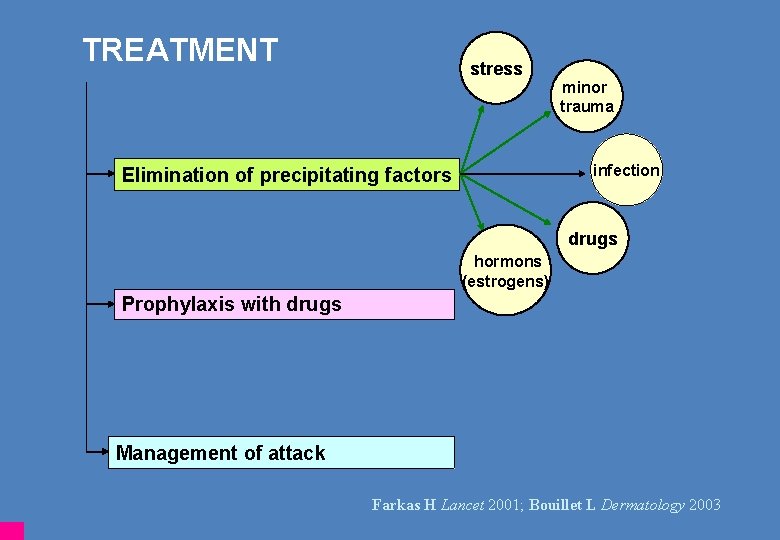
TREATMENT stress minor trauma infection Elimination of precipitating factors drugs hormons (estrogens) Prophylaxis with drugs Management of attack Farkas H Lancet 2001; Bouillet L Dermatology 2003
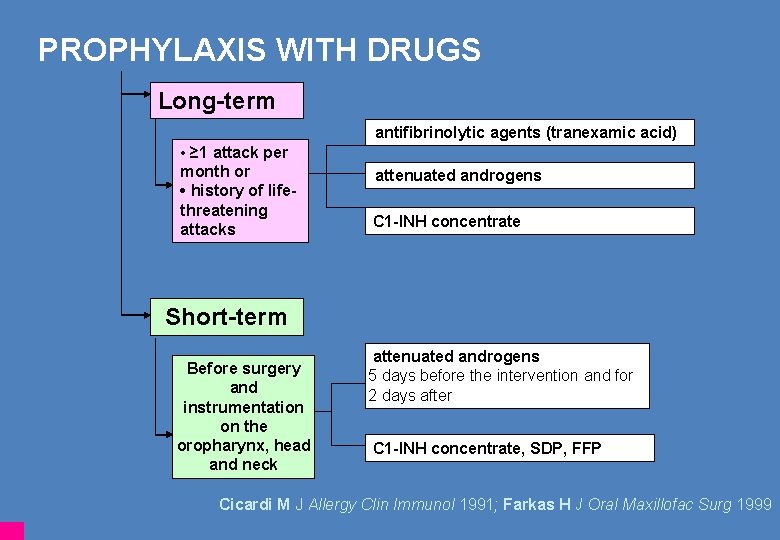
PROPHYLAXIS WITH DRUGS Long-term antifibrinolytic agents (tranexamic acid) • ≥ 1 attack per month or • history of lifethreatening attacks attenuated androgens C 1 -INH concentrate Short-term Before surgery and instrumentation on the oropharynx, head and neck attenuated androgens 5 days before the intervention and for 2 days after C 1 -INH concentrate, SDP, FFP Cicardi M J Allergy Clin Immunol 1991; Farkas H J Oral Maxillofac Surg 1999
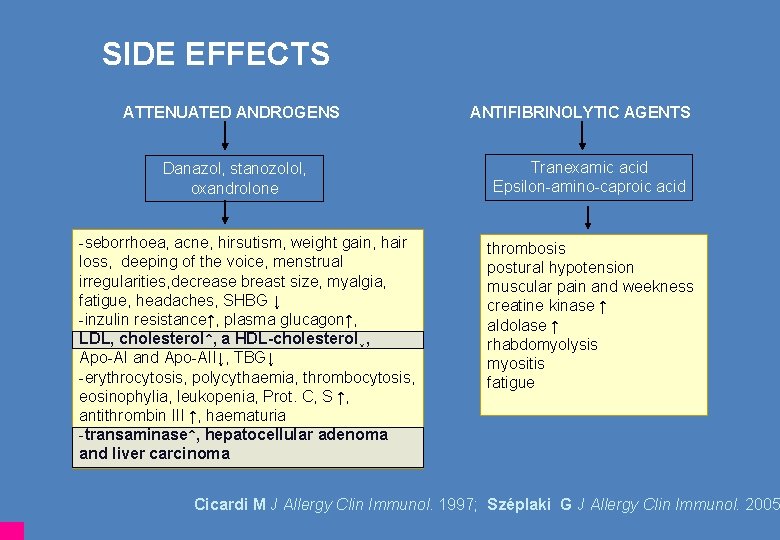
SIDE EFFECTS ATTENUATED ANDROGENS Danazol, stanozolol, oxandrolone -seborrhoea, acne, hirsutism, weight gain, hair loss, deeping of the voice, menstrual irregularities, decrease breast size, myalgia, fatigue, headaches, SHBG ↓ -inzulin resistance↑, plasma glucagon↑, LDL, cholesterol↑, a HDL-cholesterol↓, Apo-AI and Apo-AII↓, TBG↓ -erythrocytosis, polycythaemia, thrombocytosis, eosinophylia, leukopenia, Prot. C, S ↑, antithrombin III ↑, haematuria -transaminase↑, hepatocellular adenoma and liver carcinoma ANTIFIBRINOLYTIC AGENTS Tranexamic acid Epsilon-amino-caproic acid thrombosis postural hypotension muscular pain and weekness creatine kinase ↑ aldolase ↑ rhabdomyolysis myositis fatigue Cicardi M J Allergy Clin Immunol. 1997; Széplaki G J Allergy Clin Immunol. 2005
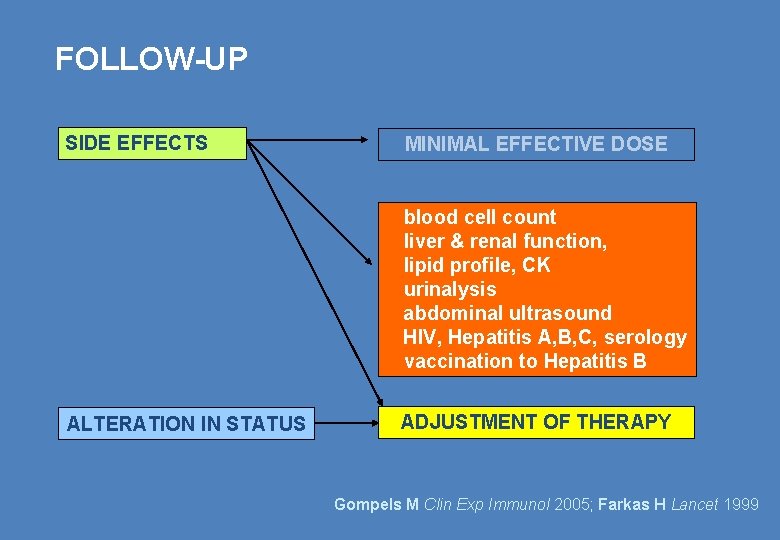
FOLLOW-UP SIDE EFFECTS MINIMAL EFFECTIVE DOSE blood cell count liver & renal function, lipid profile, CK urinalysis abdominal ultrasound HIV, Hepatitis A, B, C, serology vaccination to Hepatitis B ALTERATION IN STATUS ADJUSTMENT OF THERAPY Gompels M Clin Exp Immunol 2005; Farkas H Lancet 1999
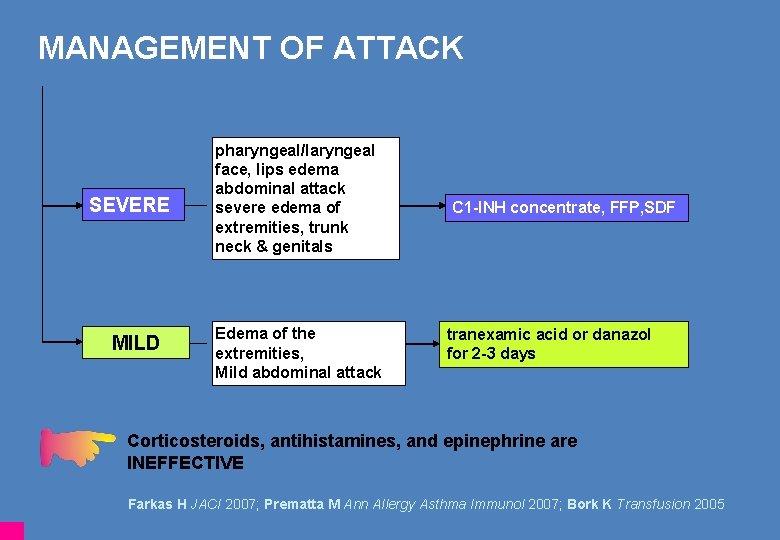
MANAGEMENT OF ATTACK SEVERE MILD pharyngeal/laryngeal face, lips edema abdominal attack severe edema of extremities, trunk neck & genitals Edema of the extremities, Mild abdominal attack C 1 -INH concentrate, FFP, SDF tranexamic acid or danazol for 2 -3 days Corticosteroids, antihistamines, and epinephrine are INEFFECTIVE Farkas H JACI 2007; Prematta M Ann Allergy Asthma Immunol 2007; Bork K Transfusion 2005
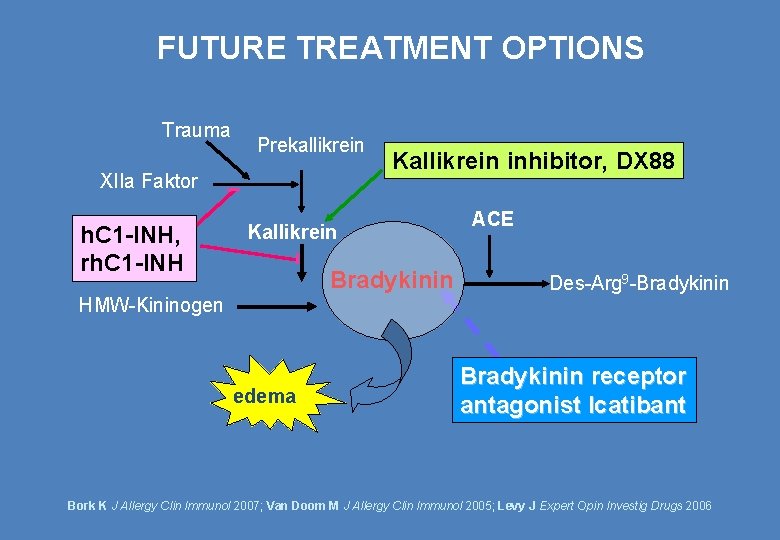
FUTURE TREATMENT OPTIONS Trauma Prekallikrein XIIa Faktor h. C 1 -INH, rh. C 1 -INH Kallikrein inhibitor, DX 88 Kallikrein Bradykinin HMW-Kininogen edema ACE Des-Arg 9 -Bradykinin receptor antagonist Icatibant Bork K J Allergy Clin Immunol 2007; Van Doom M J Allergy Clin Immunol 2005; Levy J Expert Opin Investig Drugs 2006
WWW. HAENET. HU