
Anesthetic Considerations For Scoliosis Repair in Pediatric Patients
- Slides: 34
Anesthetic Considerations For Scoliosis Repair in Pediatric Patients Jina Sinskey, MD Andrew Infosino, MD UCSF Department of Anesthesia and Perioperative Care Updated 5/2018
Disclosures None
Learning Objectives • Classify the different types of scoliosis • Identify the different treatment options for scoliosis • Summarize the preoperative assessment process for scoliosis patients • Recognize the intraoperative issues specific to scoliosis repair including neuromuscular monitoring • Review postoperative issues after scoliosis surgery
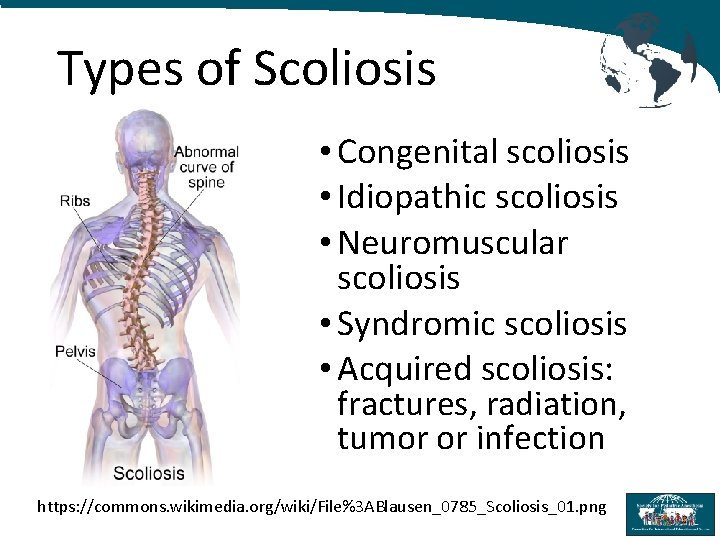
Types of Scoliosis • Congenital scoliosis • Idiopathic scoliosis • Neuromuscular scoliosis • Syndromic scoliosis • Acquired scoliosis: fractures, radiation, tumor or infection https: //commons. wikimedia. org/wiki/File%3 ABlausen_0785_Scoliosis_01. png
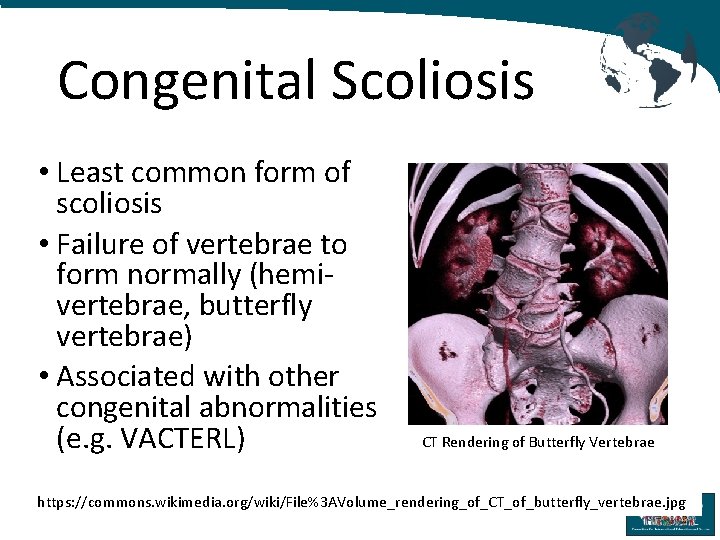
Congenital Scoliosis • Least common form of scoliosis • Failure of vertebrae to form normally (hemivertebrae, butterfly vertebrae) • Associated with other congenital abnormalities (e. g. VACTERL) CT Rendering of Butterfly Vertebrae https: //commons. wikimedia. org/wiki/File%3 AVolume_rendering_of_CT_of_butterfly_vertebrae. jpg
Idiopathic Scoliosis • Most common form of scoliosis • Affects both genders equally, but more likely to progress in females • Subdivided by age of diagnosis - Infantile: before age 4 - Juvenile: between ages of 4 - 10 - Adolescent: between ages of 10 - 18
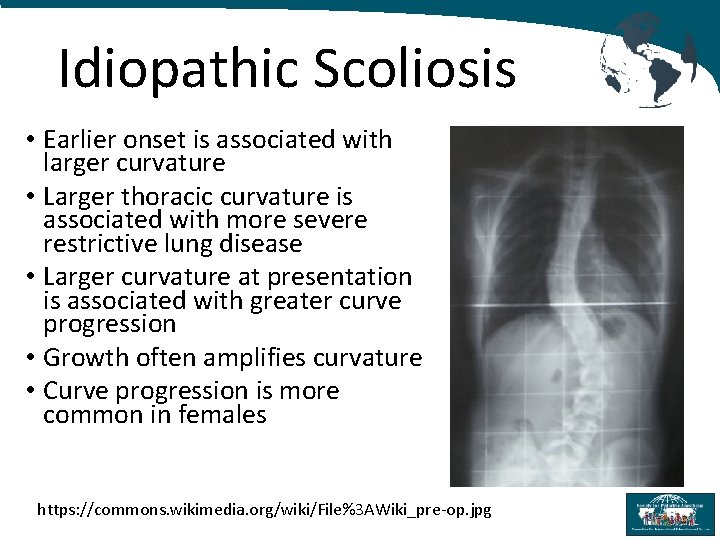
Idiopathic Scoliosis • Earlier onset is associated with larger curvature • Larger thoracic curvature is associated with more severe restrictive lung disease • Larger curvature at presentation is associated with greater curve progression • Growth often amplifies curvature • Curve progression is more common in females https: //commons. wikimedia. org/wiki/File%3 AWiki_pre-op. jpg
Neuromuscular Scoliosis • Associated with underlying nerve/muscle condition: - Neuropathies: cerebral palsy, spinal muscular atrophy, spina bifida - Myopathies: muscular dystrophies • Muscles become weak, spastic or paralyzed → unable to support the spine
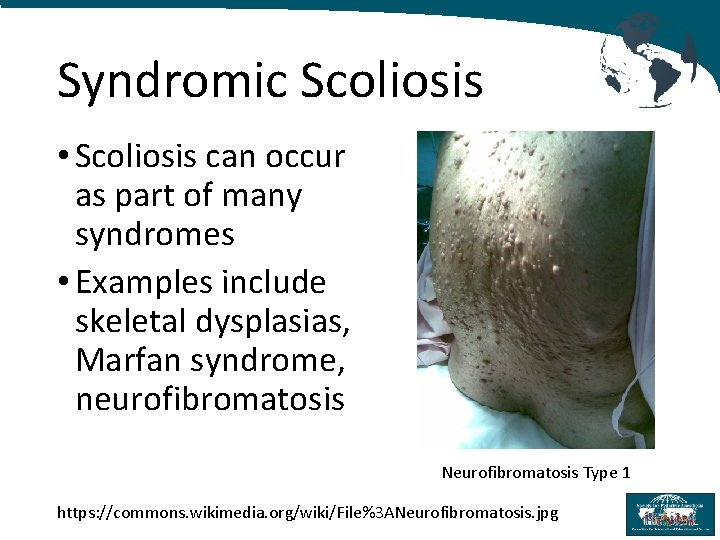
Syndromic Scoliosis • Scoliosis can occur as part of many syndromes • Examples include skeletal dysplasias, Marfan syndrome, neurofibromatosis Neurofibromatosis Type 1 https: //commons. wikimedia. org/wiki/File%3 ANeurofibromatosis. jpg
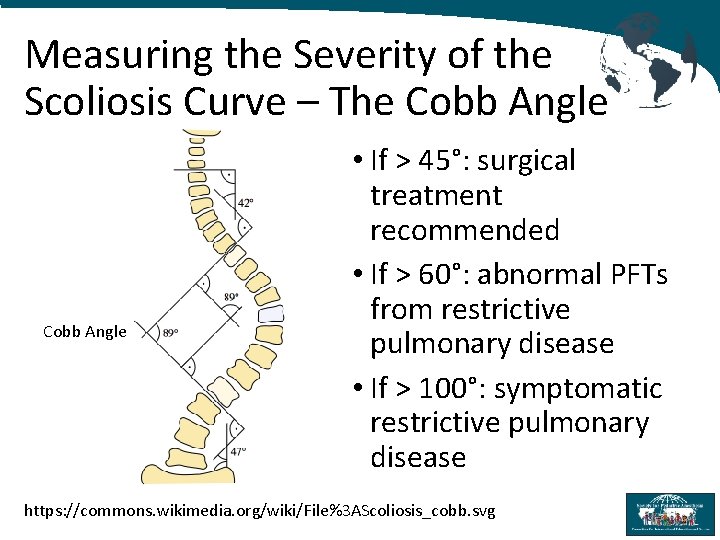
Measuring the Severity of the Scoliosis Curve – The Cobb Angle • If > 45°: surgical treatment recommended • If > 60°: abnormal PFTs from restrictive pulmonary disease • If > 100°: symptomatic restrictive pulmonary disease https: //commons. wikimedia. org/wiki/File%3 AScoliosis_cobb. svg
Natural History of Scoliosis If untreated, scoliosis may progress, especially in patients with larger curves, and lead to: • Restrictive lung disease • Back pain • Cosmetic and body image issues
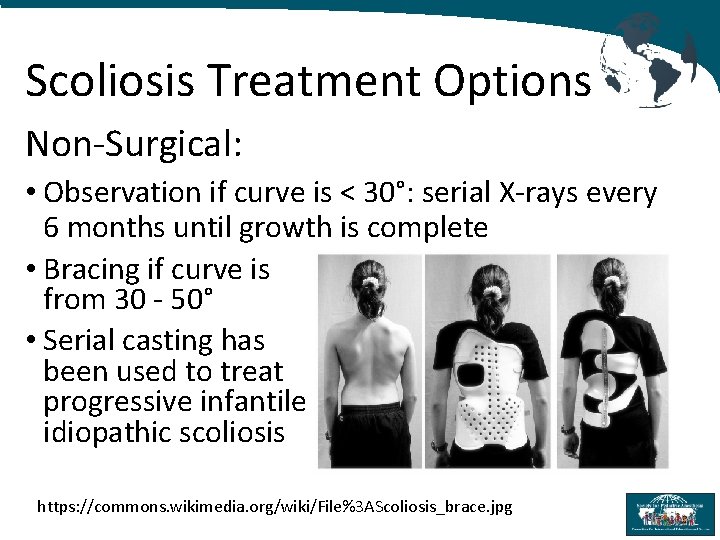
Scoliosis Treatment Options Non-Surgical: • Observation if curve is < 30°: serial X-rays every 6 months until growth is complete • Bracing if curve is from 30 - 50° • Serial casting has been used to treat progressive infantile idiopathic scoliosis https: //commons. wikimedia. org/wiki/File%3 AScoliosis_brace. jpg
Surgical Treatment of Scoliosis Traditional technique: spinal fusion with instrumentation • Posterior approach • Anterior approach • Combined posterior and anterior approach in either a single procedure or staged procedures
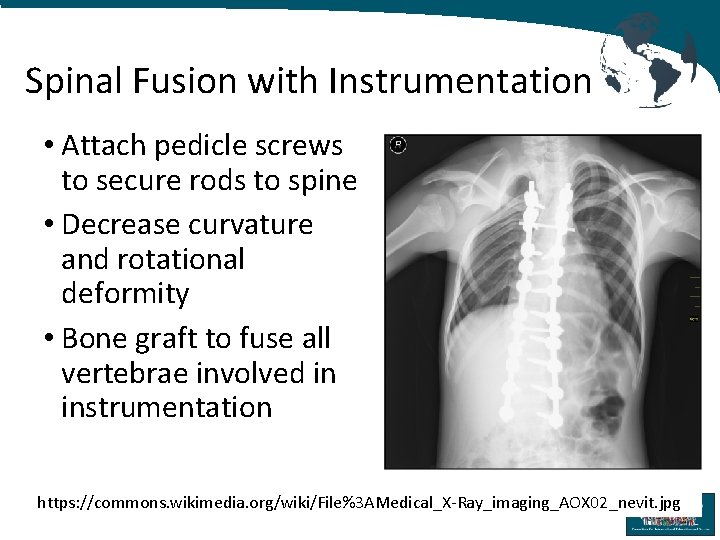
Spinal Fusion with Instrumentation • Attach pedicle screws to secure rods to spine • Decrease curvature and rotational deformity • Bone graft to fuse all vertebrae involved in instrumentation https: //commons. wikimedia. org/wiki/File%3 AMedical_X-Ray_imaging_AOX 02_nevit. jpg
Surgical Treatment of Scoliosis Growing Rods: • Performed on skeletally immature patients • Allows for continued growth of the spine • 1 -2 contoured rods are attached to the spine at the top and bottom of the curve • Serial surgeries slowly distract the spine • Followed by definitive fusion at skeletal maturity
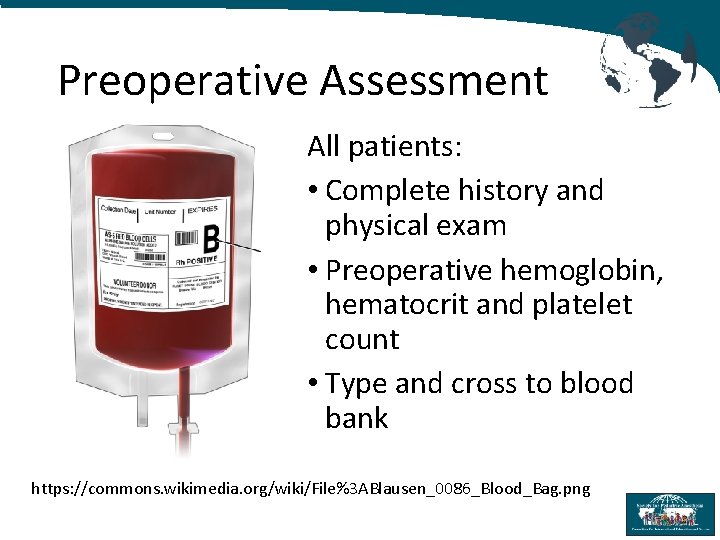
Preoperative Assessment All patients: • Complete history and physical exam • Preoperative hemoglobin, hematocrit and platelet count • Type and cross to blood bank https: //commons. wikimedia. org/wiki/File%3 ABlausen_0086_Blood_Bag. png
Preoperative Assessment If neuromuscular or syndromic may have more severe restrictive lung disease • Consider PFTs • Discuss need for possible postoperative intubation with patient and family • Plan for postoperative ICU admission
Muscular Dystrophy Patients • May have cardiomyopathy and need a preoperative echocardiogram • In cases of severe cardiomyopathy, risks may outweigh benefits of surgery • Are often weaker and may need postoperative ventilation and ICU • Avoid Succinylcholine as it is associated with life-threatening hyperkalemia https: //commons. wikimedia. org/wiki/File%3 ASuccinylcholine_1(cropped). jpg
Intraoperative Management • General endotracheal anesthesia with positive pressure ventilation • If anterior surgery will need lung isolation • At least 2 large bore intravenous catheters for volume resuscitation and for medication infusions • Consider arterial catheter for blood pressure management and blood sampling
Prone Positioning for PSF • Prone headrest to eliminate pressure on eyes and nose • Bilateral bite blocks when MEPs are used to prevent tongue injury/laceration • Neck in neutral position • Longitudinal bolsters to support trunk, minimize abdominal compression and optimize ventilation • Position arms anteriorly and minimize brachial plexus injury: shoulders abducted less than 90°
Potential Intraop Complications • Significant blood loss • Spinal cord injury including paralysis • Nerve root injury • Dural tears • Ophthalmologic injury • Brachial plexus injury • Pressure ulcers or skin damage
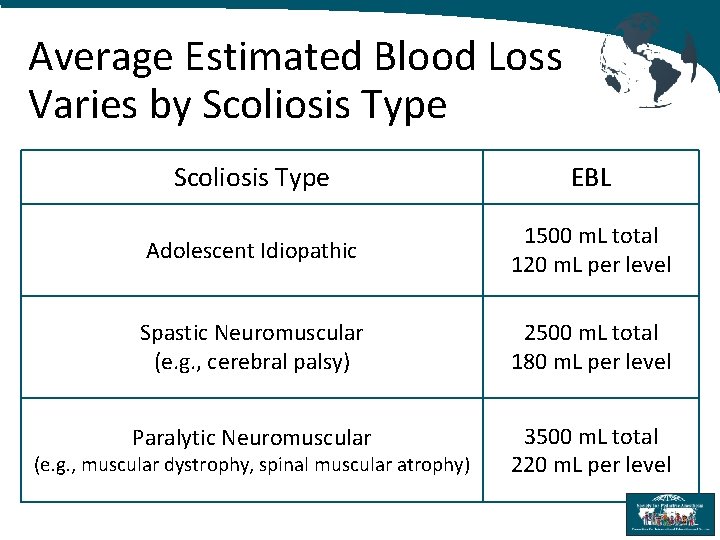
Average Estimated Blood Loss Varies by Scoliosis Type EBL Adolescent Idiopathic 1500 m. L total 120 m. L per level Spastic Neuromuscular (e. g. , cerebral palsy) 2500 m. L total 180 m. L per level Paralytic Neuromuscular 3500 m. L total 220 m. L per level (e. g. , muscular dystrophy, spinal muscular atrophy)
Perioperative Management of Blood Loss for Scoliosis Surgery • Type and cross match blood products from blood bank • Consider autologous predonation • Consider directed blood donation • Intraoperative blood salvage if available • Anti-fibrinolytic agents to minimize blood loss: aminocaproic acid or tranexamic acid
Intraoperative Neuromonitoring to Minimize Spinal Cord Injury • Detection of neurologic changes in a timely manner • Provides opportunity for prompt intraoperative intervention to reverse neurological deficits
Intraoperative Spinal Cord Injury • Accidental direct contusion of the cord from surgical instruments, hooks, wires or pedicle screws • Excessive stretch to spinal cord from a deformity correction maneuver • Reduction in spinal cord blood flow from intraoperative hypotension or accidental surgical injury to the spinal cord blood supply
Neuromonitoring Modalities for Scoliosis Surgery • Motor Evoked Potentials (MEPs): stimulate scalp electrodes and monitor muscle electrodes • Somatosensory Evoked Potentials (SSEPs): stimulate motor electrodes and monitor scalp electrodes • Evoked Electromyelograms (EMGs): check for proper pedicle screw placement • Wake-up Test: Used less commonly with the availability of MEPs, SSEPs, and EMGs
Intraoperative Management • If using MEPs, SSEPs or EMGs avoid using muscle relaxants and minimize inhalational agents. Maintain anesthesia with fentanyl and propofol infusions. • If planning wake-up test use short acting agents. Consider maintaining anesthesia with propofol and remifentanil infusions.
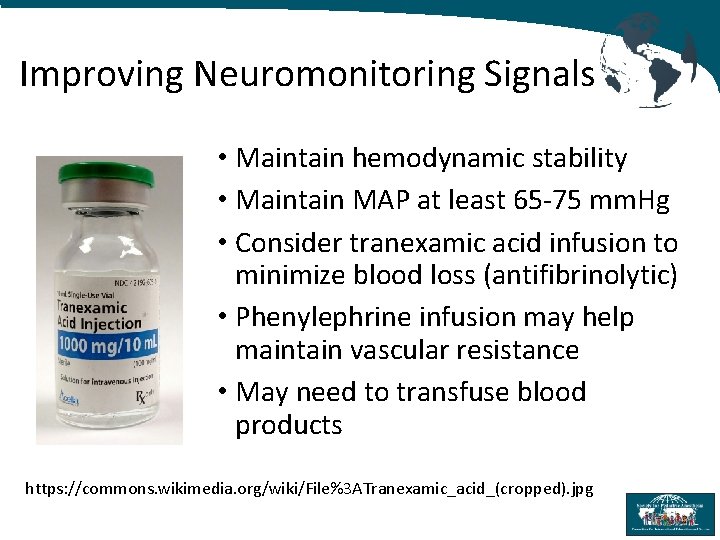
Improving Neuromonitoring Signals • Maintain hemodynamic stability • Maintain MAP at least 65 -75 mm. Hg • Consider tranexamic acid infusion to minimize blood loss (antifibrinolytic) • Phenylephrine infusion may help maintain vascular resistance • May need to transfuse blood products https: //commons. wikimedia. org/wiki/File%3 ATranexamic_acid_(cropped). jpg
Improving Neuromonitoring Signals Limit agents that suppress signals • Minimize inhaled anesthetic agents (< 0. 3 MAC) • Avoid nitrous if using SSEPs • Avoid neuromuscular blockade if using MEPs and/or EMGs Use agents that improve signals • Consider a ketamine infusion
Wake-Up Test • Rehearse with patient preoperatively • Wake patient up during and immediately after completion of scoliosis surgery • Requires two people: One person at head of bed, one person to observe lower extremities • Control: Ask patient to squeeze both hands • Test: Ask patient to move both feet • Have propofol connected to IV to re-anesthetize patient immediately after wake-up test
Postoperative Management • Monitor neurological exam: - Postoperative epidural hematoma can result in spinal cord injury - Postoperative hypotension can result in spinal cord ischemia • Pain control: consider epidural or patient controlled analgesia (PCA) with opiates as well as other non-opiate adjuncts • Give antiemetics to prevent/treat postoperative nausea and vomiting • Early ambulation
Postop Pulmonary Issues • High risk of respiratory failure requiring postop ventilation in neuromuscular scoliosis patients due to pre-existing muscle weakness • Consider noninvasive positive pressure ventilation (e. g. , Bi. PAP) or cough assist if preop FVC < 30% • FVC and FEV 1 decrease postop even in idiopathic scoliosis patients: - Up to 60% decline with nadir at 3 days Back to baseline in 1 -2 months https: //commons. wikimedia. org/wiki/File%3 AFlow-volume-loop. svg
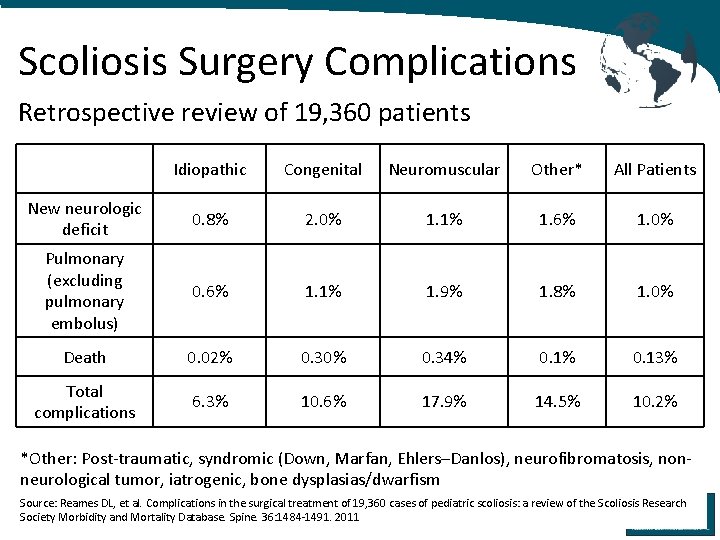
Scoliosis Surgery Complications Retrospective review of 19, 360 patients Idiopathic Congenital Neuromuscular Other* All Patients New neurologic deficit 0. 8% 2. 0% 1. 1% 1. 6% 1. 0% Pulmonary (excluding pulmonary embolus) 0. 6% 1. 1% 1. 9% 1. 8% 1. 0% Death 0. 02% 0. 30% 0. 34% 0. 13% Total complications 6. 3% 10. 6% 17. 9% 14. 5% 10. 2% *Other: Post-traumatic, syndromic (Down, Marfan, Ehlers–Danlos), neurofibromatosis, nonneurological tumor, iatrogenic, bone dysplasias/dwarfism Source: Reames DL, et al. Complications in the surgical treatment of 19, 360 cases of pediatric scoliosis: a review of the Scoliosis Research Society Morbidity and Mortality Database. Spine. 36: 1484 -1491. 2011
References 1. Murphy RF, Mooney JF. Complications following spine fusion for adolescent idiopathic scoliosis. Curr Rev Musculoskelet Med. 2016 Dec; 9(4): 462 -469. 2. Diab M, Staheli LT. (2016) Practice of Paediatric Orthopaedics. Third Edition. Philadelphia, PA: Wolters Kluwer. 3. Modi HN, et al. Intraoperative blood loss during different stages of scoliosis surgery: A prospective study. Scoliosis. 2010 Aug 7; 5: 16. 4. Yuan N, et al. The effect of scoliosis surgery on lung function in the immediate postoperative period. Spine 2005. 30: 2182 -5. 5. Reames DL, et al. Complications in the surgical treatment of 19, 360 cases of pediatric scoliosis: a review of the Scoliosis Research Society Morbidity and Mortality Database. Spine. 36: 1484 -1491. 2011