
Anesthetic Considerations for Pediatric Patients with Achondroplasia Updated

- Slides: 28
Anesthetic Considerations for Pediatric Patients with Achondroplasia Updated 10/2019 Andrew J. Costandi MD, MMM Children’s Hospital Los Angeles USC Keck School of Medicine
No Relevant Financial Disclosures 2
Learning Objectives • Describe the pathophysiology of Achondroplasia • Recognize the clinical features and comorbidities associated with achondroplasia • Discuss preoperative evaluation of pediatric patients with achondroplasia • Develop an appropriate anesthetic plan to care for pediatric patients with achondroplasia 3
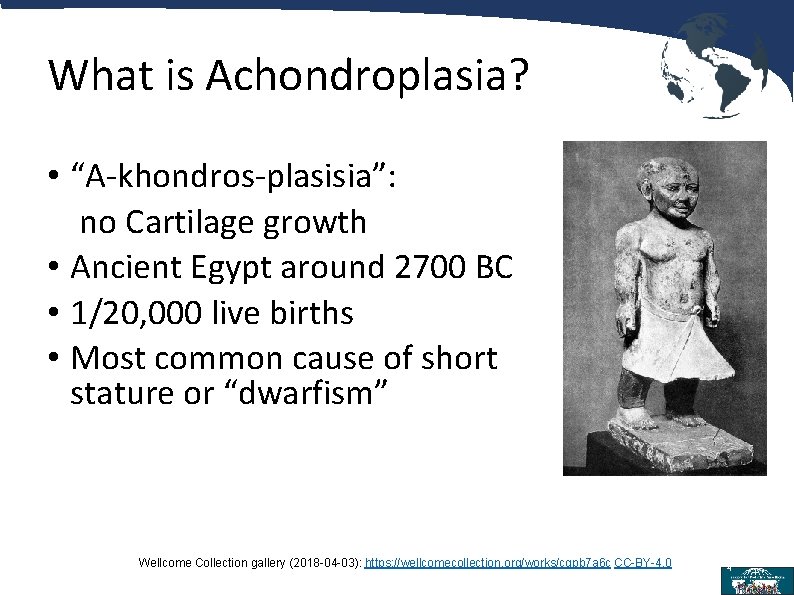
What is Achondroplasia? • “A-khondros-plasisia”: no Cartilage growth • Ancient Egypt around 2700 BC • 1/20, 000 live births • Most common cause of short stature or “dwarfism” Wellcome Collection gallery (2018 -04 -03): https: //wellcomecollection. org/works/cgpb 7 a 6 c CC-BY-4. 0 4
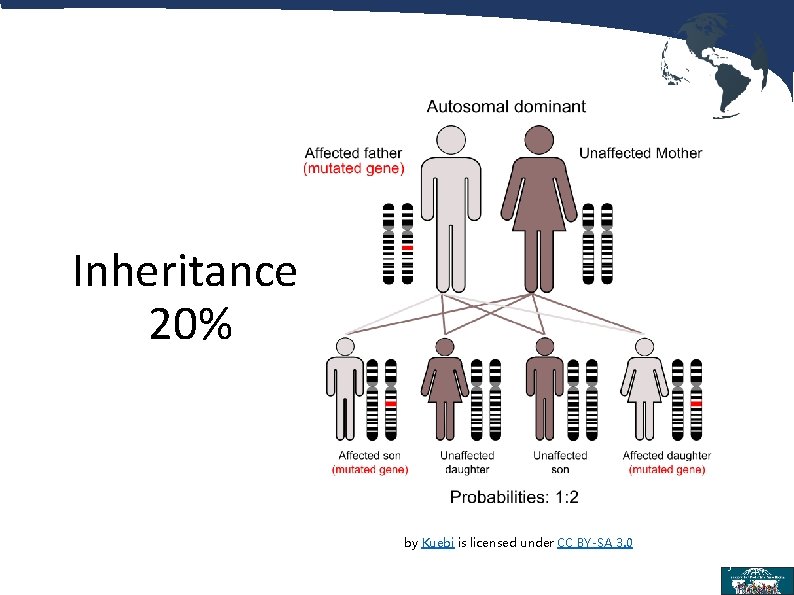
Inheritance 20% by Kuebi is licensed under CC BY-SA 3. 0 5
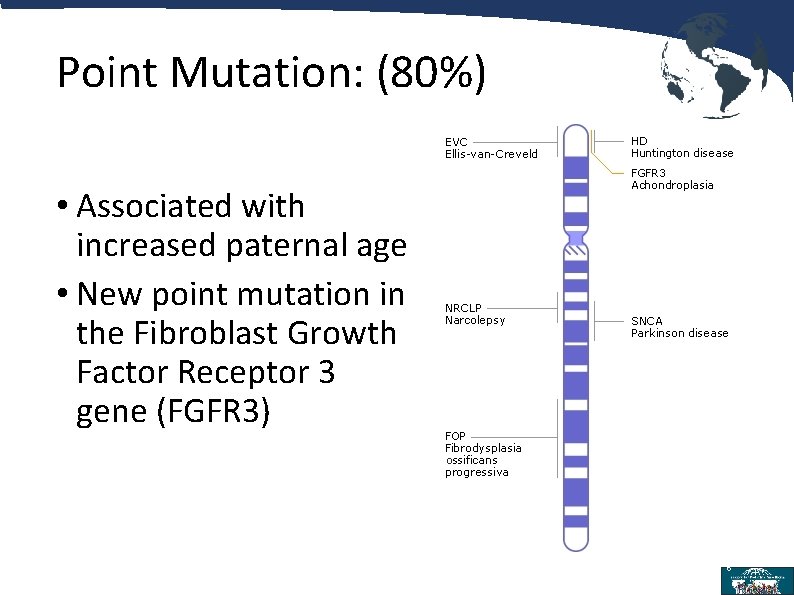
Point Mutation: (80%) • Associated with increased paternal age • New point mutation in the Fibroblast Growth Factor Receptor 3 gene (FGFR 3) 6
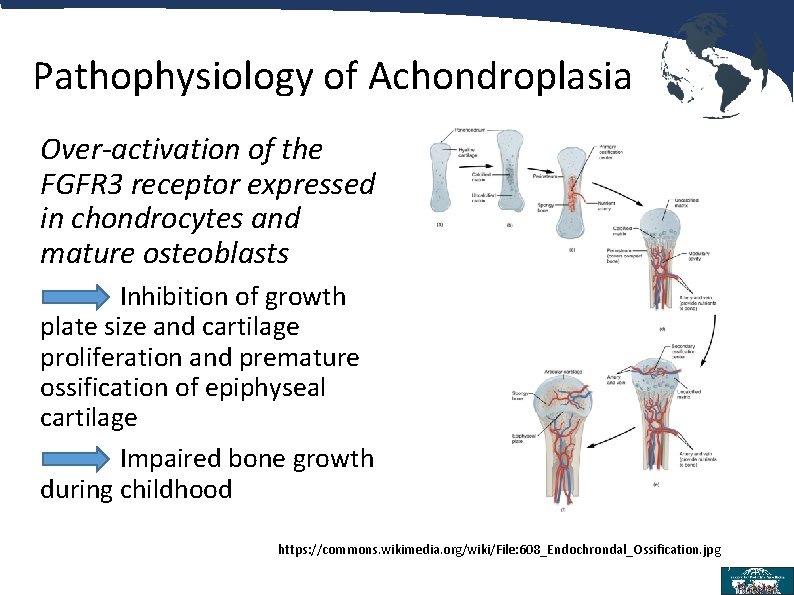
Pathophysiology of Achondroplasia Over-activation of the FGFR 3 receptor expressed in chondrocytes and mature osteoblasts Inhibition of growth plate size and cartilage proliferation and premature ossification of epiphyseal cartilage Impaired bone growth during childhood https: //commons. wikimedia. org/wiki/File: 608_Endochrondal_Ossification. jpg 7
Achondroplasia: Common Surgeries and Procedures that Require Anesthesia Magnetic Resonance Imaging of the spine and brain Decompressive sub-occipital craniectomy Cerebrospinal fluid shunting procedures Adenotonsillectomy & myringotomy tube placement • Various orthopedic procedures including limb lengthening, laminectomies, and kyphoscoliosis correction. • • 8
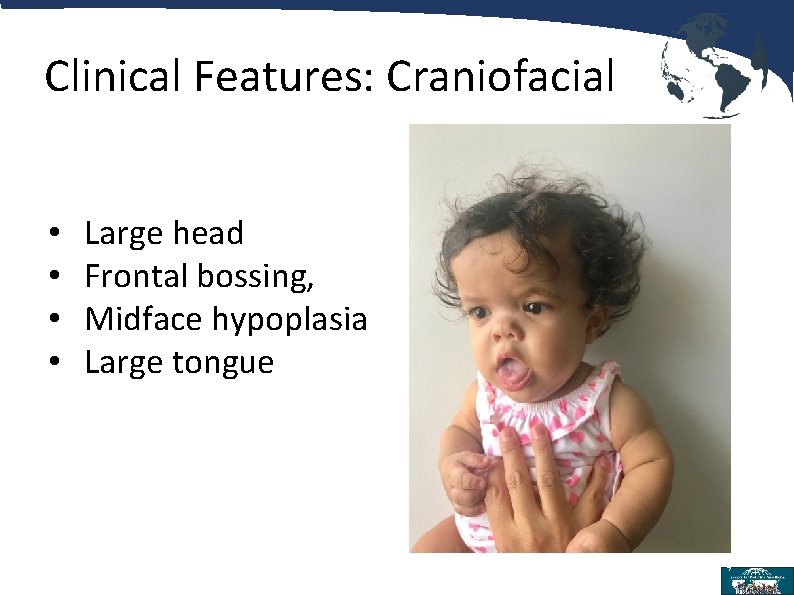
Clinical Features: Craniofacial • • Large head Frontal bossing, Midface hypoplasia Large tongue 9
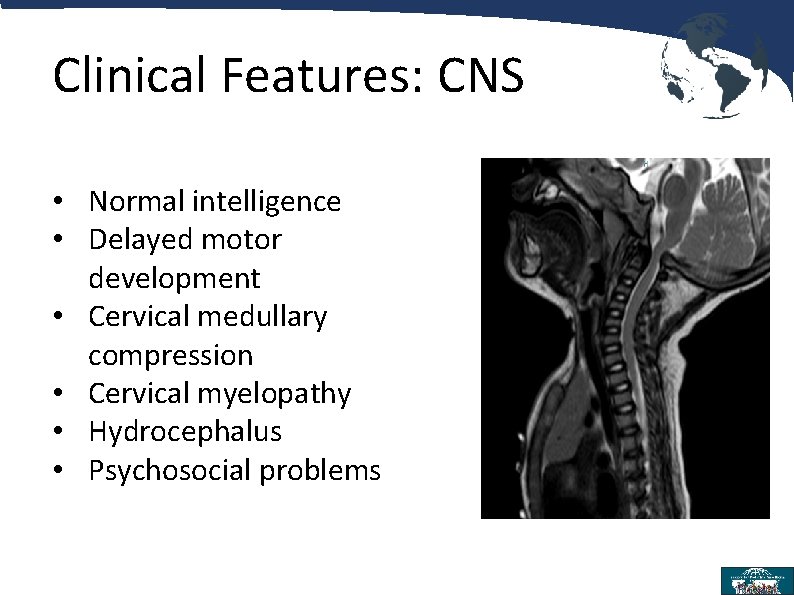
Clinical Features: CNS • Normal intelligence • Delayed motor development • Cervical medullary compression • Cervical myelopathy • Hydrocephalus • Psychosocial problems
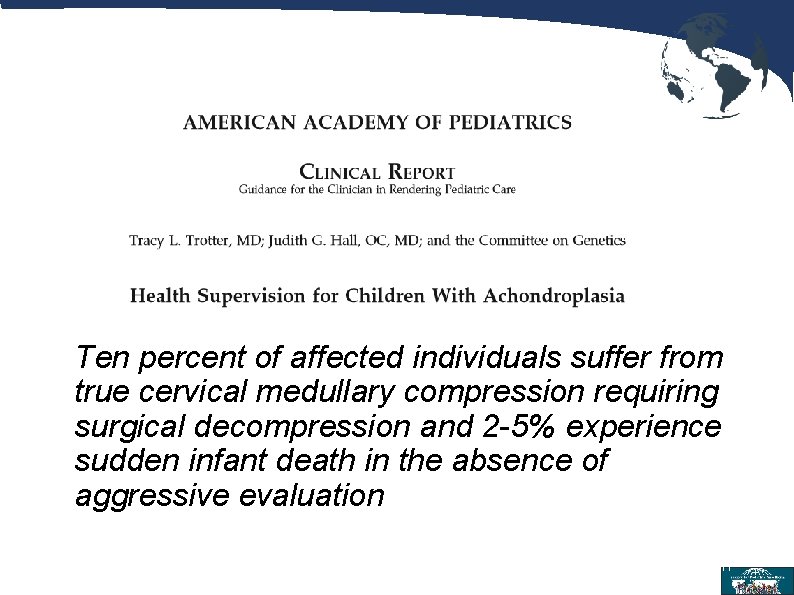
Ten percent of affected individuals suffer from true cervical medullary compression requiring surgical decompression and 2 -5% experience sudden infant death in the absence of aggressive evaluation 11
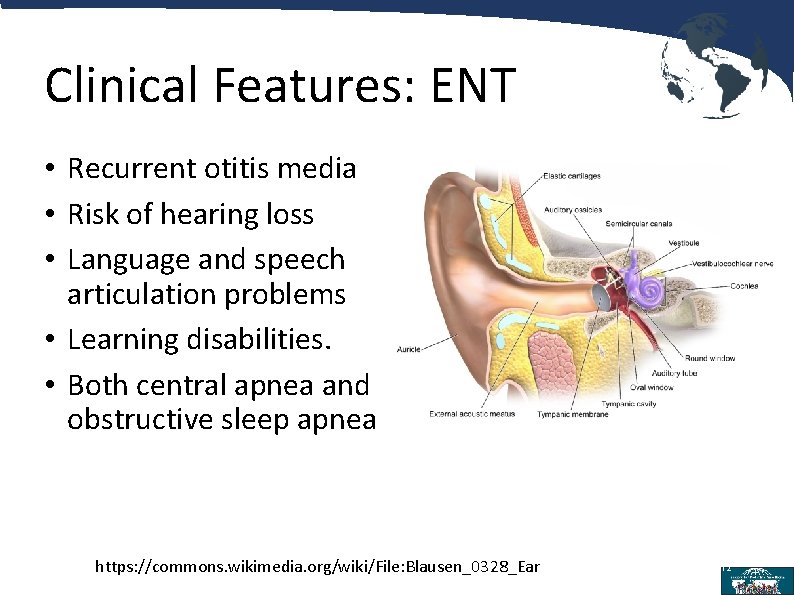
Clinical Features: ENT • Recurrent otitis media • Risk of hearing loss • Language and speech articulation problems • Learning disabilities. • Both central apnea and obstructive sleep apnea https: //commons. wikimedia. org/wiki/File: Blausen_0328_Ear 12
Sleep Disordered Breathing (SDB) Central Sleep Apnea • Medullocervical compression Obstructive Sleep Apnea • Compression of the lower motor neurons • Altered craniofacial features • Small upper airway • Physiologic adenoidal hypertrophy • Hypotonia of nasopharyngeal airway muscles Infants with achondroplasia have attenuated arousal response which could play a role in SIDS 13
Clinical Features: Cardiopulmonary • Restrictive Lung Disease • Pulmonary hypertension • Cor-pulmonale 14
Clinical Features: Gastrointestinal Children with Neuro-Respiratory Complications: • Severe Gastroesophageal Reflux (GERD) • Hyper salivation • Chronic aspirations 15
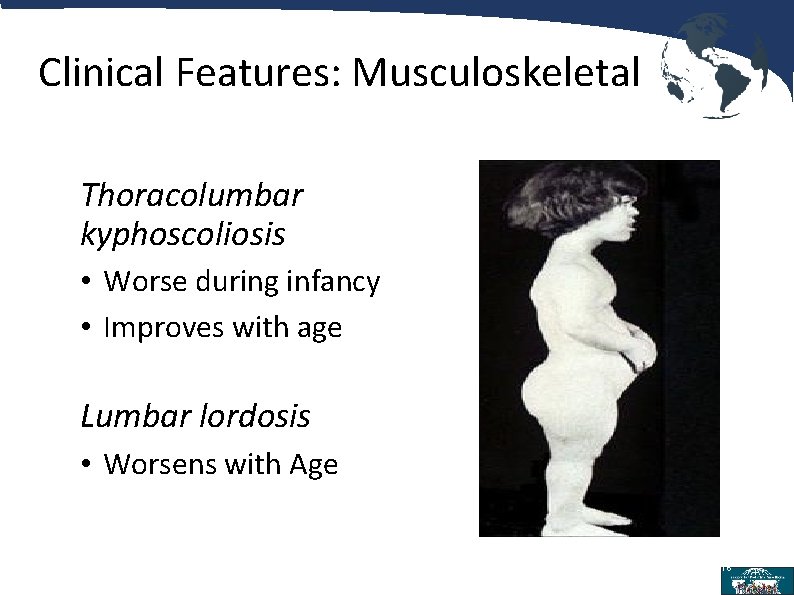
Clinical Features: Musculoskeletal Thoracolumbar kyphoscoliosis • Worse during infancy • Improves with age Lumbar lordosis • Worsens with Age 16
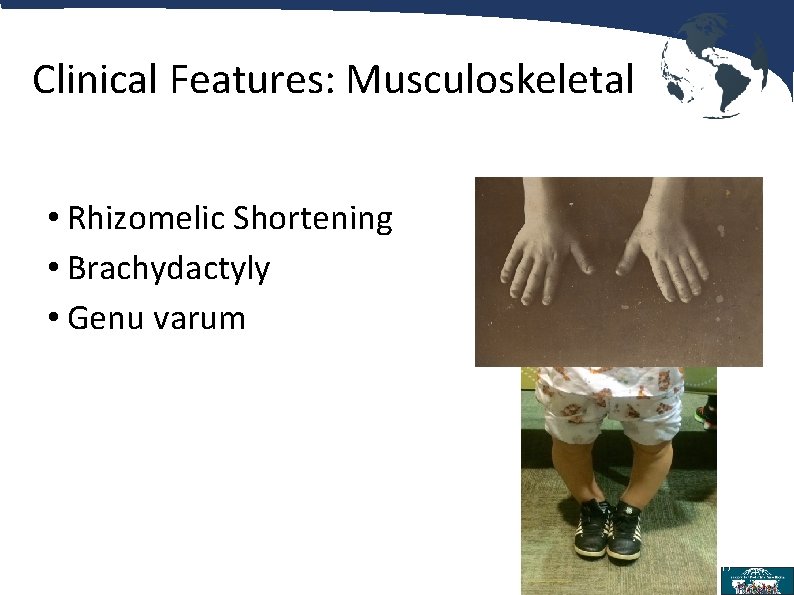
Clinical Features: Musculoskeletal • Rhizomelic Shortening • Brachydactyly • Genu varum 17
Preoperative Evaluation Preoperative history and exam should focus on: • Airway: potential difficult ventilation and intubation • Cardiopulmonary Status: - Restrictive lung diseases, - pulmonary hypertension - Cor-pulmonale • Neurological Status - Baseline neurological exam - Consider baseline neuro-imaging 18
Preoperative Medication • Anxiolytics : Emotional and Physical Stress • Anti-sialagogues : Helps with Fiberoptic intubation (FOI). • Histamine H 2 antagonists : GERD patients 19
Perioperative Management Monitors • ASA standard monitoring. • Challenging BP cuff size • Invasive monitoring: - Surgical procedure - Patient’s baseline cardiopulmonary function. 20
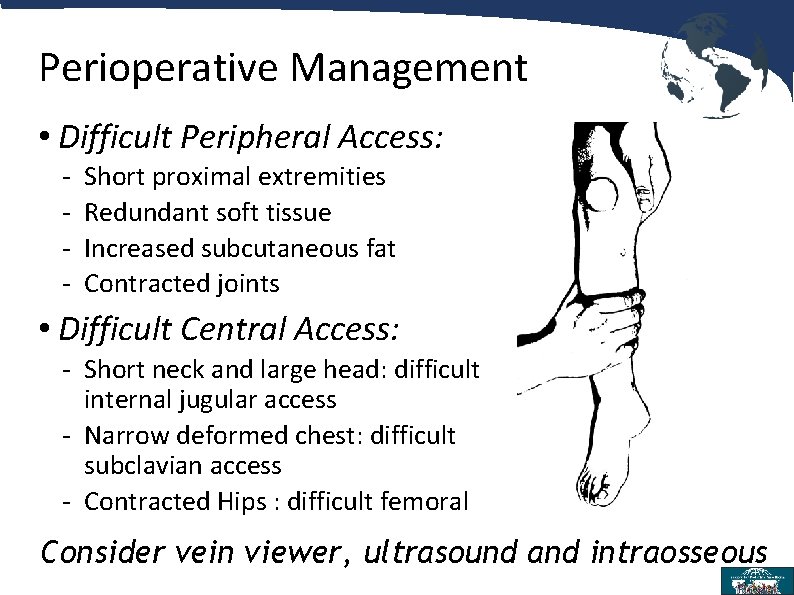
Perioperative Management • Difficult Peripheral Access: - Short proximal extremities Redundant soft tissue Increased subcutaneous fat Contracted joints • Difficult Central Access: - Short neck and large head: difficult internal jugular access - Narrow deformed chest: difficult subclavian access - Contracted Hips : difficult femoral Consider vein viewer, ultrasound and intraosseous
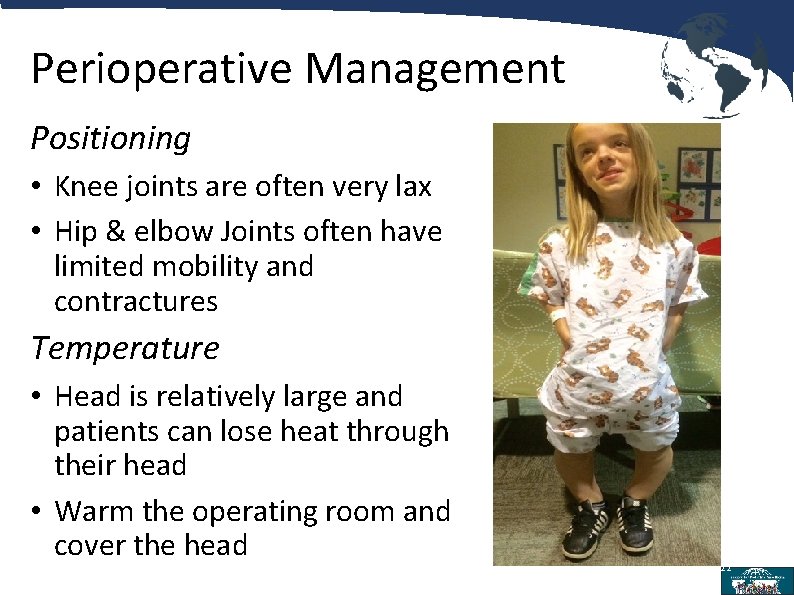
Perioperative Management Positioning • Knee joints are often very lax • Hip & elbow Joints often have limited mobility and contractures Temperature • Head is relatively large and patients can lose heat through their head • Warm the operating room and cover the head 22
Perioperative Management Pediatric patients with achondroplasia may have difficult airways to manage • Review airway management on previous anesthetic records • Maintain spontaneous ventilation if possible • Ventilatory difficulty with chronic lung disease patients • Mask ventilation may be challenging • Supraoglottic airways may not fit well and a variety of sizes and types should be available 23
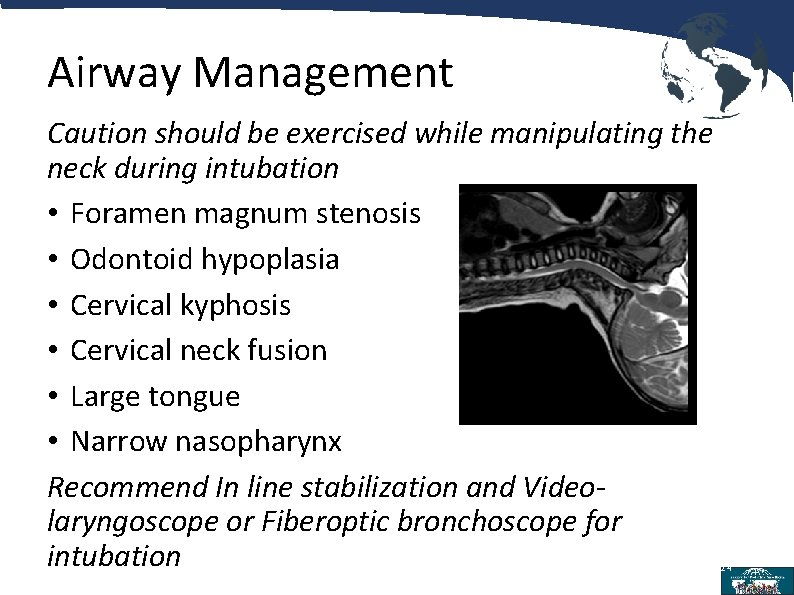
Airway Management Caution should be exercised while manipulating the neck during intubation • Foramen magnum stenosis • Odontoid hypoplasia • Cervical kyphosis • Cervical neck fusion • Large tongue • Narrow nasopharynx Recommend In line stabilization and Videolaryngoscope or Fiberoptic bronchoscope for intubation 24
Intraoperative Management • Intravenous and inhalational anesthetic agents • Medication dosages based on weight. • Multimodal analgesia with sleep apnea. • For patients with cardiopulmonary compromise: - Maintain blood pressure - Maintain adequate tidal volume - Avoid hypoxia and hypercarbia 25
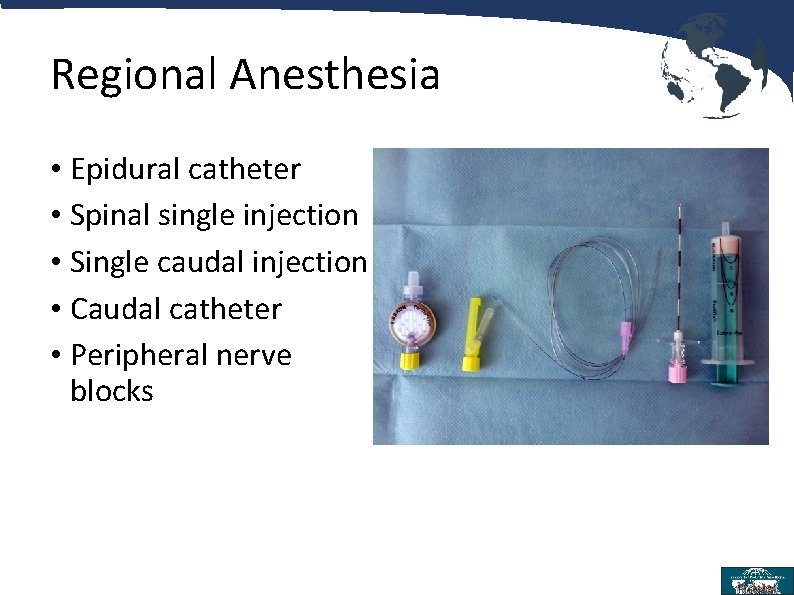
Regional Anesthesia • Epidural catheter • Spinal single injection • Single caudal injection • Caudal catheter • Peripheral nerve blocks
Conclusions • Autosomal dominant disorder caused by mutations in the fibroblast growth factor receptor 3 (FGFR 3) gene • Achondroplasia presents with unique craniofacial, short stature with disproportionate trunk to limb ratio due to rhizomelic shortening of the limbs. • Life threatening in 5 - 10% of affected individuals. • Preoperative anesthetic evaluation should focus on assessment of airway, neurological and cardiopulmonary function • With appropriate knowledge and proper care, anesthesia can be delivered safely to pediatric patients with achondroplasia 27
References • Horton WA, Hall JG, Hecht JT. Achondroplasia. Lancet. 2007; 370(9582): 162– 172. • American Academy of Pediatrics Committee on Genetics Health supervision for children with achondroplasia. Pediatrics. 1995; 95(3): 443– 451. • Sisk EA, Heatley DG, Borowski BJ, Leverson GE, Pauli RM. Obstructive sleep apnea in children with achondroplasia: Surgical and anesthetic considerations. Otolaryngol Head Neck Surg 1999; 120: 248 -54. • Jain A, Jain K, Makkar JK, Mangal K. Anaesthetic management of an achondroplastic dwarf undergoing radical nephrectomy. S Afr J Anaesthesiol Analg 2010; 16: 77 -9. • Krishnan BS, Eipe N, Korula G. Anaesthetic management of a patient with achondroplasia. Paediatr Anaesth. 2003 Jul; 13(6): 547 -9. • Kalla GN, Fening E, Obiaya MO. Anaesthetic management of achondroplasia. Br J Anaesth. 1986 Jan; 58(1): 117 -9. • Mayhew JF, Katz J, Miner M, Leiman BC, Hall ID. Anaesthesia for the achondroplastic dwarf. Can Anaesth Soc J. 1986 Mar; 33(2): 216 -21. • Di Nardo SK. Anesthetic consideration for the achondroplastic dwarf. AANA J 1988 Feb; 56(1): 4228