
Anesthesia for CPAM congenital pulmonary airway malformation Neha
- Slides: 25
Anesthesia for CPAM (congenital pulmonary airway malformation) Neha Patel, MD Andrew Costandi, MD, MMM
Objectives • Understand the diagnosis of Congenital Pulmonary Airway Malformation (CPAM) • Describe the prognosis of patients with CPAM • Outline treatment options for patients • Describe the anesthetic considerations for surgical resection of CPAM © Open. Stax Anatomy and Physiology/ Wikimedia Commons / CC-BY-4. 0
Congenital Pulmonary Airway Malformation • Incidence 1: 8, 300 to 1: 35, 000 live births • Cystic and adenomatous lesions arise from the tracheobronchial tree • Maldevelopment of terminal bronchiolar structures • Unilateral • Lower lung lobe
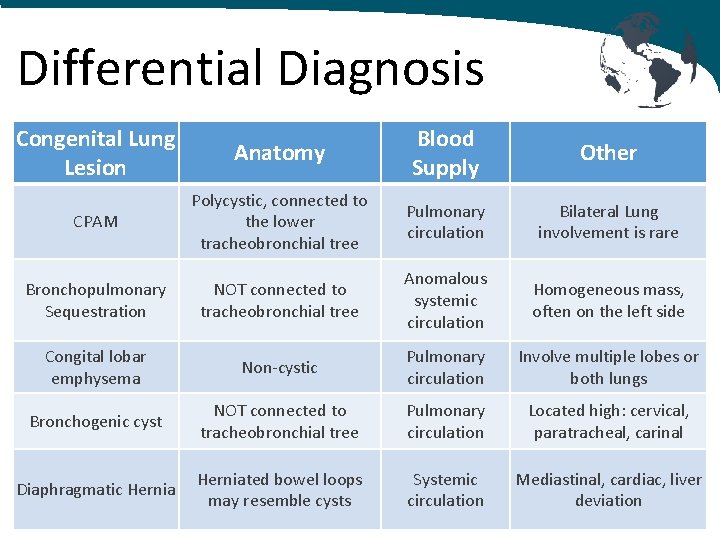
Differential Diagnosis Congenital Lung Lesion Anatomy Blood Supply Other CPAM Polycystic, connected to the lower tracheobronchial tree Pulmonary circulation Bilateral Lung involvement is rare Bronchopulmonary Sequestration NOT connected to tracheobronchial tree Anomalous systemic circulation Homogeneous mass, often on the left side Congital lobar emphysema Non-cystic Pulmonary circulation Involve multiple lobes or both lungs Bronchogenic cyst NOT connected to tracheobronchial tree Pulmonary circulation Located high: cervical, paratracheal, carinal Diaphragmatic Herniated bowel loops may resemble cysts Systemic circulation Mediastinal, cardiac, liver deviation
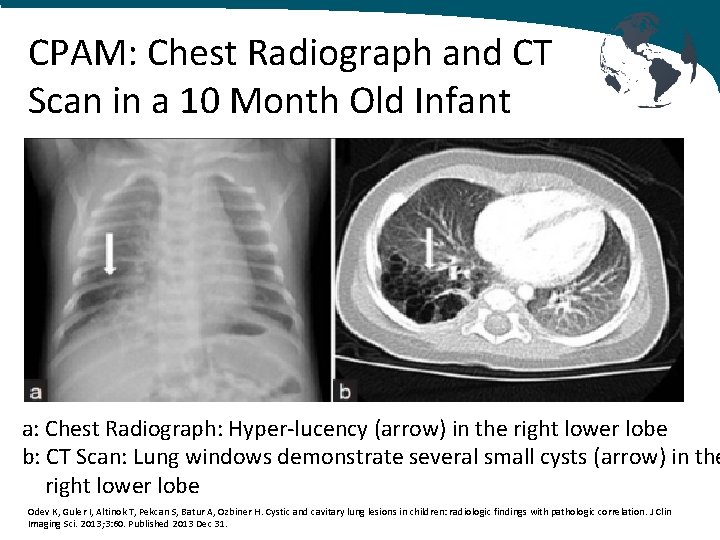
CPAM: Chest Radiograph and CT Scan in a 10 Month Old Infant a: Chest Radiograph: Hyper-lucency (arrow) in the right lower lobe b: CT Scan: Lung windows demonstrate several small cysts (arrow) in the right lower lobe Odev K, Guler I, Altinok T, Pekcan S, Batur A, Ozbiner H. Cystic and cavitary lung lesions in children: radiologic findings with pathologic correlation. J Clin Imaging Sci. 2013; 3: 60. Published 2013 Dec 31.
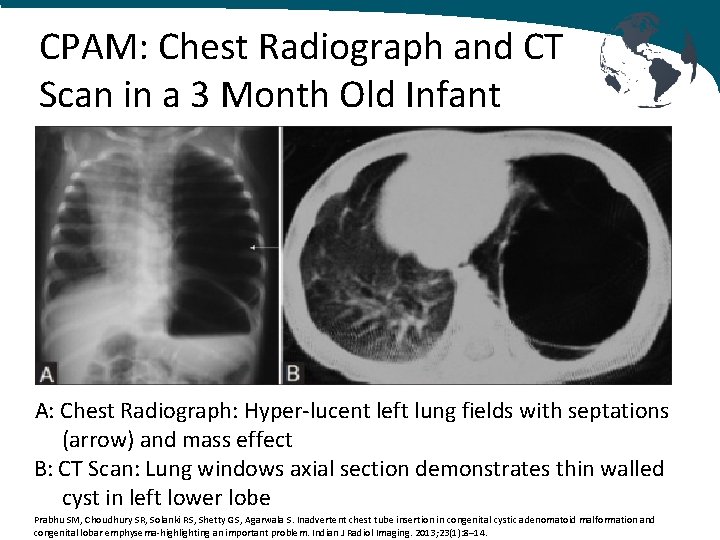
CPAM: Chest Radiograph and CT Scan in a 3 Month Old Infant A: Chest Radiograph: Hyper-lucent left lung fields with septations (arrow) and mass effect B: CT Scan: Lung windows axial section demonstrates thin walled cyst in left lower lobe Prabhu SM, Choudhury SR, Solanki RS, Shetty GS, Agarwala S. Inadvertent chest tube insertion in congenital cystic adenomatoid malformation and congenital lobar emphysema-highlighting an important problem. Indian J Radiol Imaging. 2013; 23(1): 8– 14.
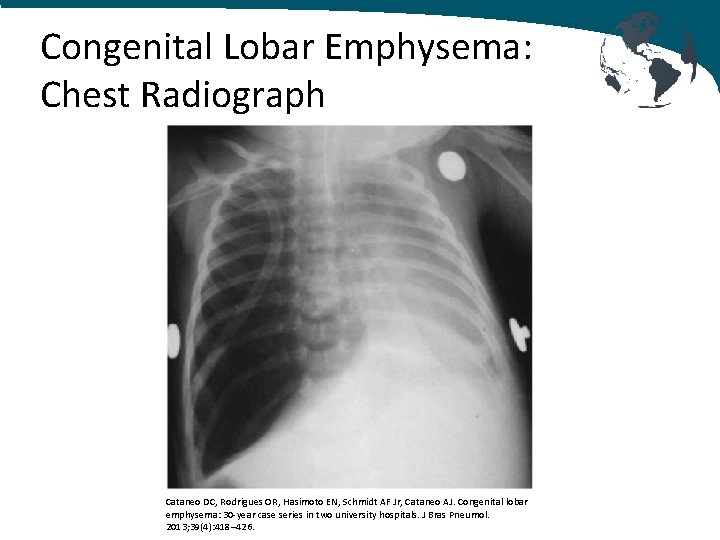
Congenital Lobar Emphysema: Chest Radiograph Cataneo DC, Rodrigues OR, Hasimoto EN, Schmidt AF Jr, Cataneo AJ. Congenital lobar emphysema: 30 -year case series in two university hospitals. J Bras Pneumol. 2013; 39(4): 418– 426.
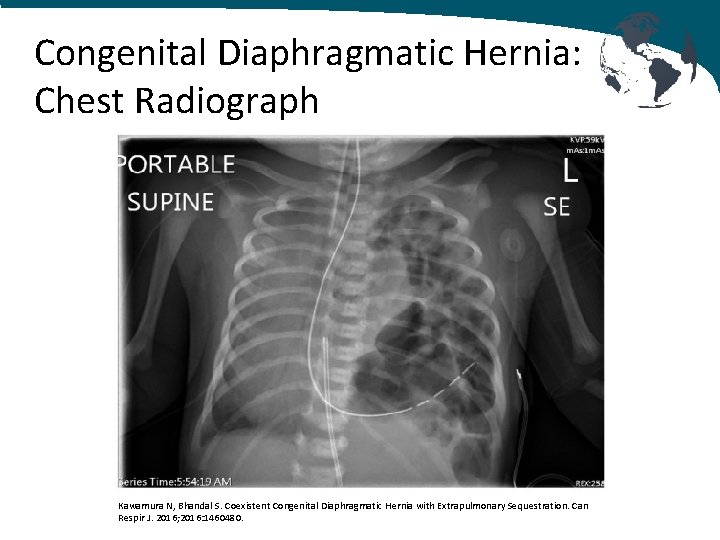
Congenital Diaphragmatic Hernia: Chest Radiograph Kawamura N, Bhandal S. Coexistent Congenital Diaphragmatic Hernia with Extrapulmonary Sequestration. Can Respir J. 2016; 2016: 1460480.
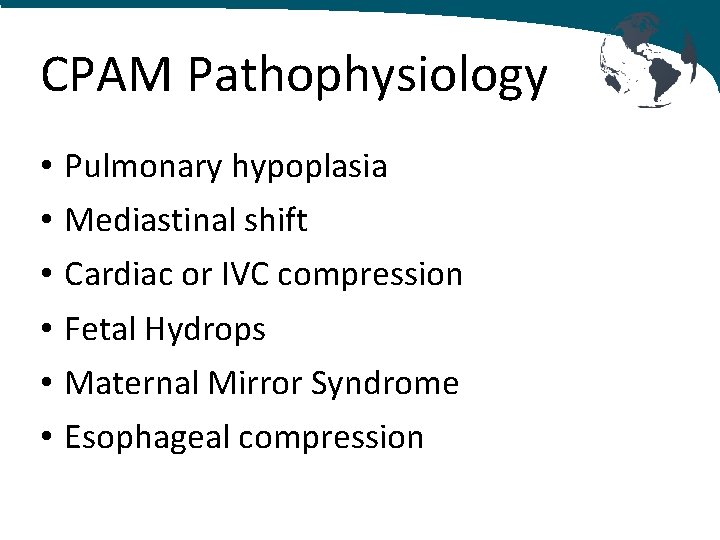
CPAM Pathophysiology • • • Pulmonary hypoplasia Mediastinal shift Cardiac or IVC compression Fetal Hydrops Maternal Mirror Syndrome Esophageal compression
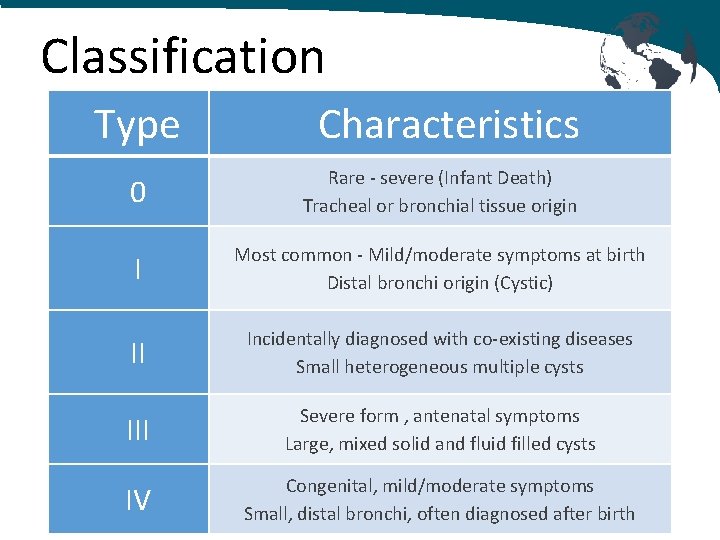
Classification Type Characteristics 0 Rare - severe (Infant Death) Tracheal or bronchial tissue origin I Most common - Mild/moderate symptoms at birth Distal bronchi origin (Cystic) II Incidentally diagnosed with co-existing diseases Small heterogeneous multiple cysts III Severe form , antenatal symptoms Large, mixed solid and fluid filled cysts IV Congenital, mild/moderate symptoms Small, distal bronchi, often diagnosed after birth
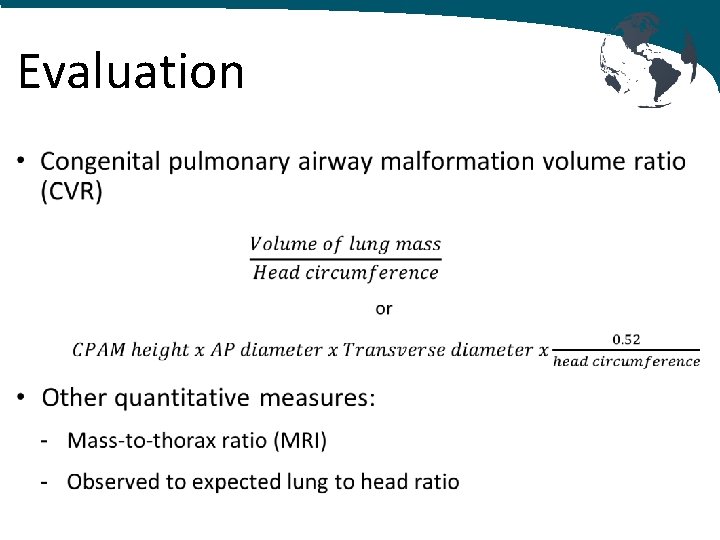
Evaluation •
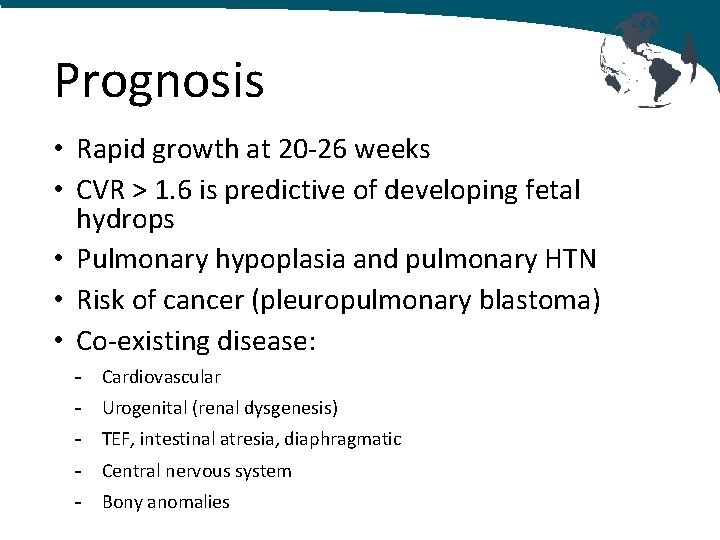
Prognosis • Rapid growth at 20 -26 weeks • CVR > 1. 6 is predictive of developing fetal hydrops • Pulmonary hypoplasia and pulmonary HTN • Risk of cancer (pleuropulmonary blastoma) • Co-existing disease: - Cardiovascular - Urogenital (renal dysgenesis) - TEF, intestinal atresia, diaphragmatic - Central nervous system - Bony anomalies
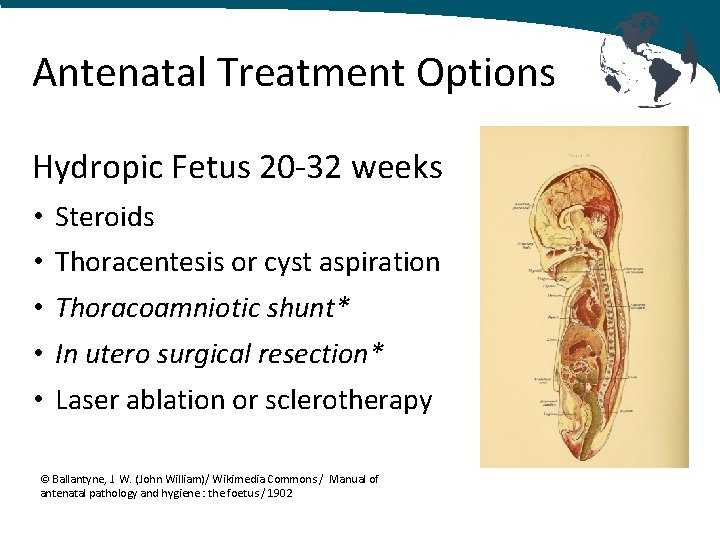
Antenatal Treatment Options Hydropic Fetus 20 -32 weeks • Steroids • Thoracentesis or cyst aspiration • Thoracoamniotic shunt* • In utero surgical resection* • Laser ablation or sclerotherapy © Ballantyne, J. W. (John William)/ Wikimedia Commons / Manual of antenatal pathology and hygiene : the foetus / 1902
Antenatal Treatment Options Hydropic Fetus 32 -34 weeks • Early delivery and immediate postnatal resection • Ex-utero intrapartum therapy (EXIT surgery)
Post-natal Surgical Candidates • Surgery is curative for symptomatic infants • Benefits of surgery for asymptomatic infants - Allows continued lung growth - Reduces infections - Prevents malignancy
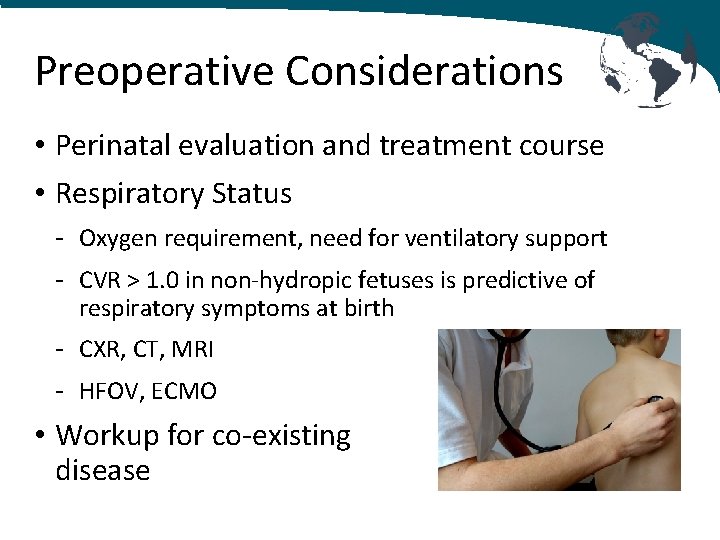
Preoperative Considerations • Perinatal evaluation and treatment course • Respiratory Status - Oxygen requirement, need for ventilatory support - CVR > 1. 0 in non-hydropic fetuses is predictive of respiratory symptoms at birth - CXR, CT, MRI - HFOV, ECMO • Workup for co-existing disease
Airway Management • Two lung ventilation for classic thoracotomy with lung retraction • One lung ventilation for Video-Assisted Thoracoscopic Surgery (VATS) - Mainstem intubation - Bronchial blocker • 3 Fr Fogarty embolectomy catheter • Balloon tipped angiography catheter • 5 Fr Pediatric bronchial blocker (Cook)
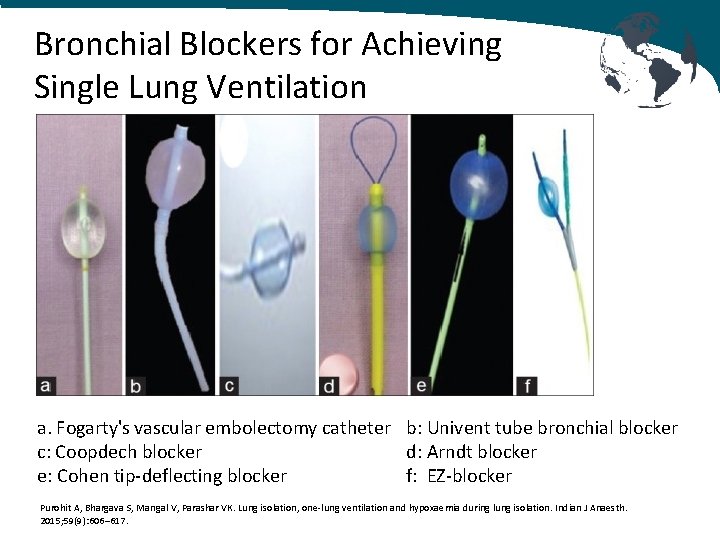
Bronchial Blockers for Achieving Single Lung Ventilation a. Fogarty's vascular embolectomy catheter b: Univent tube bronchial blocker c: Coopdech blocker d: Arndt blocker e: Cohen tip-deflecting blocker f: EZ-blocker Purohit A, Bhargava S, Mangal V, Parashar VK. Lung isolation, one-lung ventilation and hypoxaemia during lung isolation. Indian J Anaesth. 2015; 59(9): 606– 617.
Intraoperative Considerations More challenging to maintain adequate oxygenation in infants • • Higher oxygen consumption Higher V/Q mismatch Smaller functional residual capacity Smaller ETT and risk of a mucus plug
Anesthetic Technique • Adequate IV access; consider 2 nd IV • Arterial line in cases of severe cardiopulmonary disease • Ventilation strategy to minimize cyst expansion - Maintain spontaneous ventilation (ketamine, dexmedetomidine) - Ventilation strategy (to avoid cyst expansion) - Avoid nitrous oxide - Minimize positive pressure ventilation
Pain Management IV opioid nurse controlled analgesia Epidural (percutaneous vs caudal) Intercostal blocks Paravertebral blocks Erector Spinae Plane blocks • Intrapleural infusions • • •
Post-operative Management Early extubation • Utilize multimodal analgesia • Benefits include minimizing barotrauma and air leaks which allow bronchial repair to heal Consider leaving infants with severe co-existing disease or prematurity intubated
Summary • CPAM is a common neonatal congenital lung lesion • Prognosis depends on size and compression of surrounding structures • Depending on the severity of symptoms, fetal surgery maybe indicated • Anesthesia for neonatal thoracic surgery can be successfully done with a thorough understanding of the surgery, anesthetic risks and appropriate planning
References 1. Guruswamy et al. Anesthetic management of neonate with congenital cyst adenoid malformation. Br. J Ana 2001 2. Egloff et al. Prenatal diagnosis and management of congenital pulmonary airway malformation. uptodate. com 2019. 3. Oermann et al. Congenital pulmonary airway malformation. uptodate. com 2019. 4. Hammer. Pediatric Thoracic Anesthesia. Anesth Analg 2001; 92: 1449 -64. 5. Letal et al. Paediatric lung isolation. BJA Education, 17 (2): 57– 62 (2017) 6. Rahman N 1, Lakhoo K. Comparison between open and thoracoscopic resection of congenital lung lesions. J Pediatr Surg. 2009 Feb; 44(2): 333 -6. 7. Karapurkar SA 1, Borkar JD, Birmole BJ. Malformation of lung in neonates (lobectomy for congenital lobar emphysema and lung cyst). J Postgrad Med. 1993 Oct-Dec; 39(4): 224 -7. 8. Tobias. Anaesthesia for neonatal thoracic surgery. Best Pract Res Clin Anaesthesiol. 2004 Jun; 18(2): 303 -20. 9. Baird R 1, Puligandla PS 2, Laberge JM 3. Congenital lung malformations: informing best practice. Semin Pediatr Surg. 2014 Oct; 23(5): 270 -7. 10. Tsao K 1, Albanese CT, Harrison MR. Prenatal therapy for thoracic and mediastinal lesions. World J Surg. 2003 Jan; 27(1): 77 -83. 11. Kapralik J 1, Wayne C 1, Chan E 1, Nasr A 2. Surgical versus conservative management of congenital pulmonary airway malformation in children: A systematic review and meta-analysis. J Pediatr Surg. 2016 Mar; 51(3): 508 -12. Davis, Cladis, Motoyama. Smith’s Anesthesia for Infants and Children. 8 th edition. 2011.
References 13. Husler et al. Prenatally diagnosed fetal lung lesions with associated conotruncal heart defects: is there a genetic association. Prenat Diagn. 2007 Dec; 27(12): 1123 -8. AMA 14. Chiluveru SA, Dave NM, Dias RJ, Garasia MB. Congenital pulmonary airway malformation with atrial septal defect and pulmonary hypertension for lobectomy-anesthetic considerations. Ann Card Anaesth. 2016; 19(2): 372– 374. 15. Purohit A, Bhargava S, Mangal V, Parashar VK. Lung isolation, one-lung ventilation and hypoxaemia during lung isolation. Indian J Anaesth. 2015; 59(9): 606– 617. 16. Seok JH, Kim EJ, Ban JS, et al. Severe desaturation while attempting one-lung ventilation for congenital cystic adenomatoid malformation with respiratory distress syndrome in neonate -A case report-. Korean J Anesthesiol. 2013; 65(1): 80– 84. 17. Pani N, Panda CK. Anaesthetic consideration for neonatal surgical emergencies. Indian J Anaesth. 2012; 56(5): 463– 469. 18. Stock images from pixabay. com (free for commercial use)