
Anesthesia for Autonomic Hyperreflexia Case Presentation Review Mark

- Slides: 23
Anesthesia for Autonomic Hyperreflexia: Case Presentation & Review Mark Todd Wright, SRNA AVANA Conference 2013 OHSU Nurse Anesthesia Program
Disclosures • $10, 000 from AVANA
Case Presentation
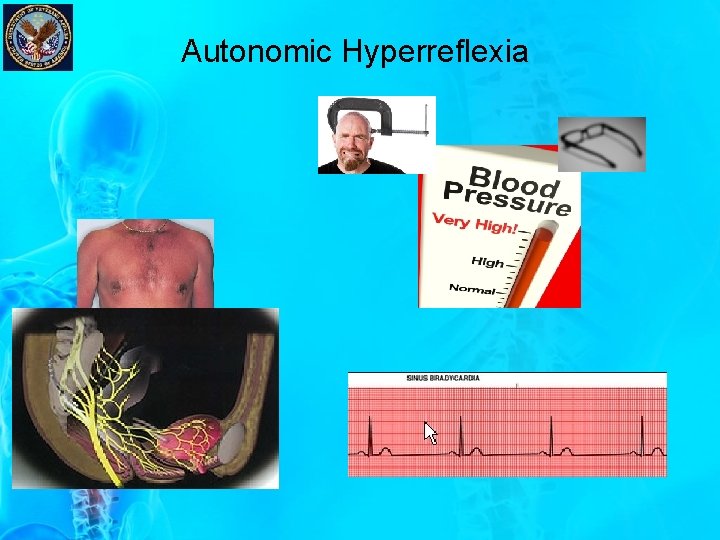
Autonomic Hyperreflexia
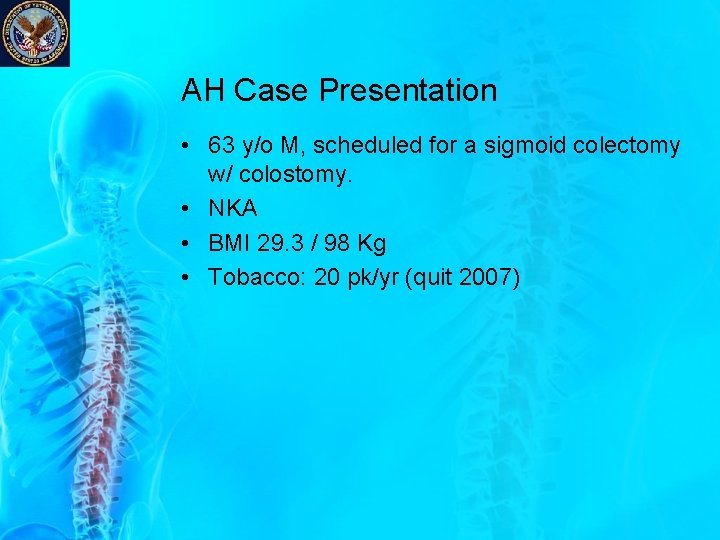
AH Case Presentation • 63 y/o M, scheduled for a sigmoid colectomy w/ colostomy. • NKA • BMI 29. 3 / 98 Kg • Tobacco: 20 pk/yr (quit 2007)
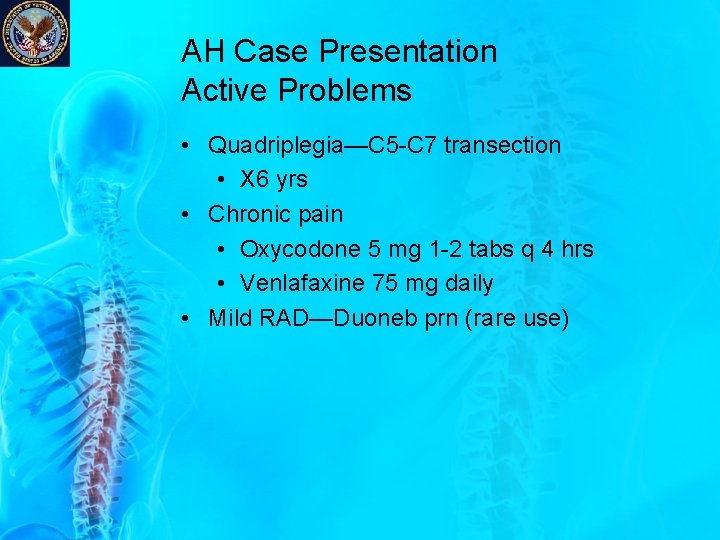
AH Case Presentation Active Problems • Quadriplegia—C 5 -C 7 transection • X 6 yrs • Chronic pain • Oxycodone 5 mg 1 -2 tabs q 4 hrs • Venlafaxine 75 mg daily • Mild RAD—Duoneb prn (rare use)
AH Case Presentation Medical History • AH during previous anesthetic • HTN-resolved
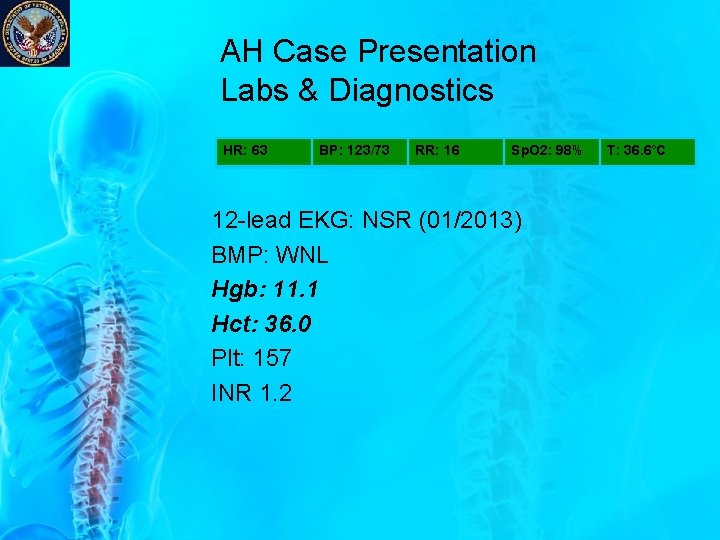
AH Case Presentation Labs & Diagnostics HR: 63 BP: 123/73 RR: 16 Sp. O 2: 98% 12 -lead EKG: NSR (01/2013) BMP: WNL Hgb: 11. 1 Hct: 36. 0 Plt: 157 INR 1. 2 T: 36. 6˚C
AH Case Presentation Airway/ROS Auscultation: RRR CTA Airway ROM: (-) Dentition: (-) Neck: (-) T→D: (-) ULBT: grade I Mouth: > 3 cm MP: 2 Anatomy palp: easy
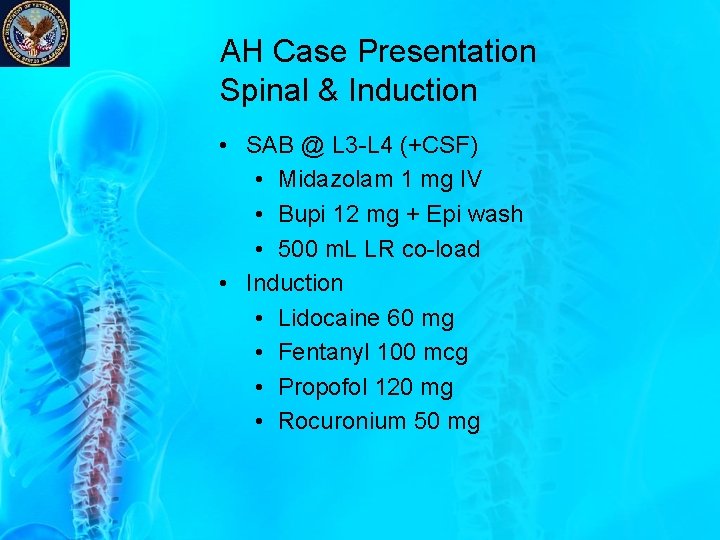
AH Case Presentation Spinal & Induction • SAB @ L 3 -L 4 (+CSF) • Midazolam 1 mg IV • Bupi 12 mg + Epi wash • 500 m. L LR co-load • Induction • Lidocaine 60 mg • Fentanyl 100 mcg • Propofol 120 mg • Rocuronium 50 mg
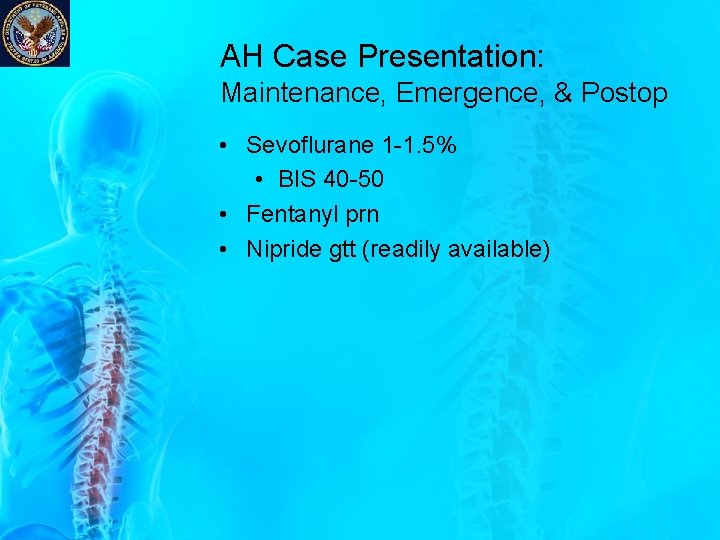
AH Case Presentation: Maintenance, Emergence, & Postop • Sevoflurane 1 -1. 5% • BIS 40 -50 • Fentanyl prn • Nipride gtt (readily available)
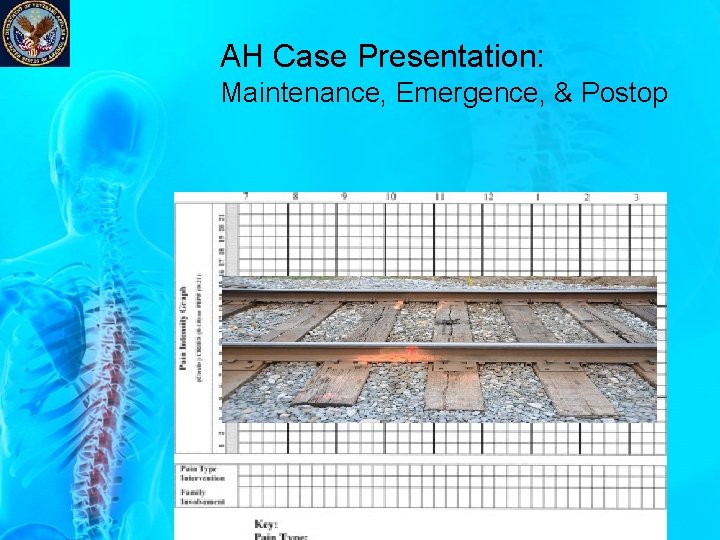
AH Case Presentation: Maintenance, Emergence, & Postop
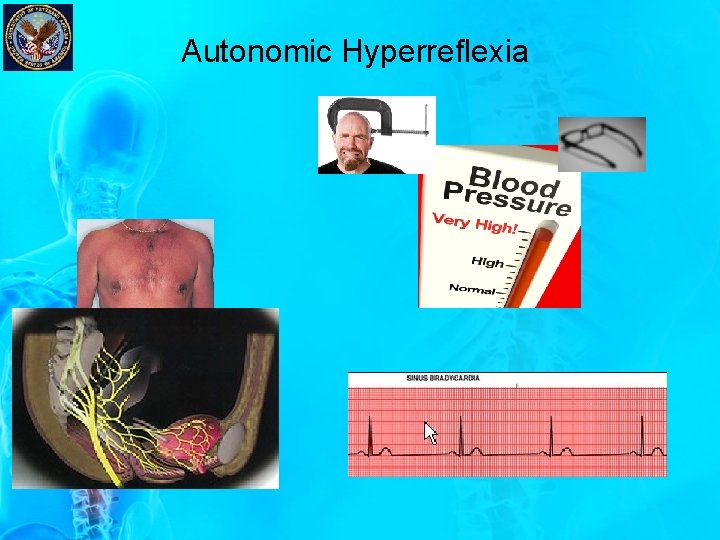
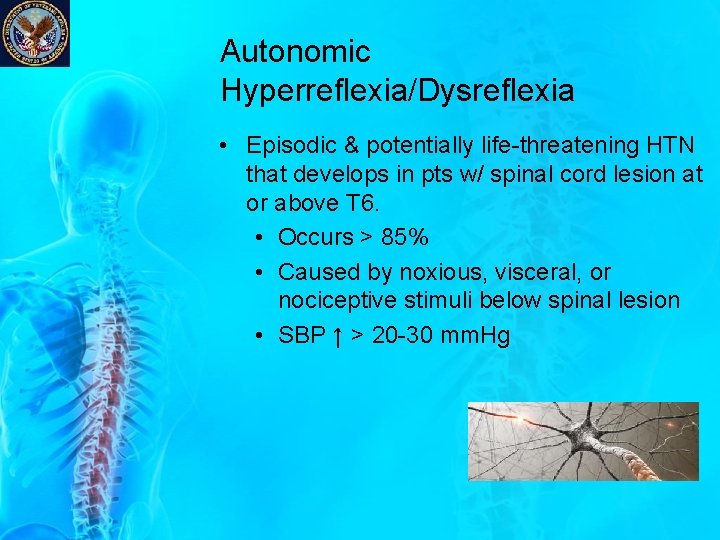
Autonomic Hyperreflexia/Dysreflexia • Episodic & potentially life-threatening HTN that develops in pts w/ spinal cord lesion at or above T 6. • Occurs > 85% • Caused by noxious, visceral, or nociceptive stimuli below spinal lesion • SBP ↑ > 20 -30 mm. Hg
VA & Spinal Cord Injury (SCI) 250, 000 Americans w/ serious SCI • 42, 000 SCI Veterans/heroes • 26, 000 (2008) • 13, 000 specialty care (2008)
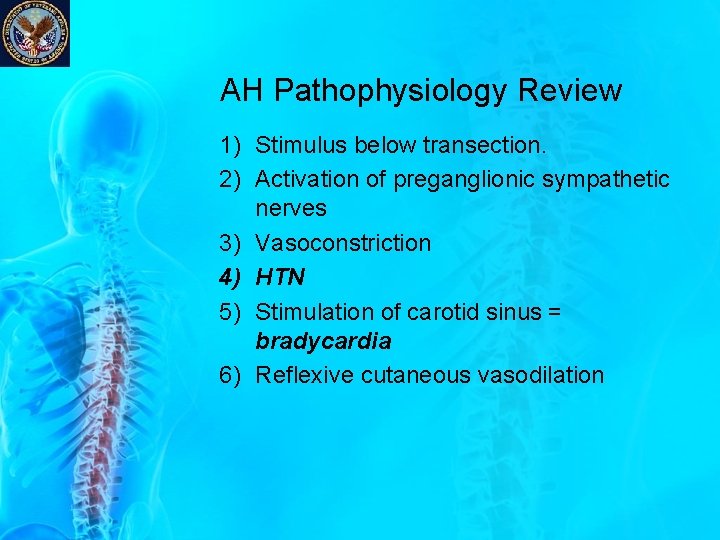
AH Pathophysiology Review 1) Stimulus below transection. 2) Activation of preganglionic sympathetic nerves 3) Vasoconstriction 4) HTN 5) Stimulation of carotid sinus = bradycardia 6) Reflexive cutaneous vasodilation
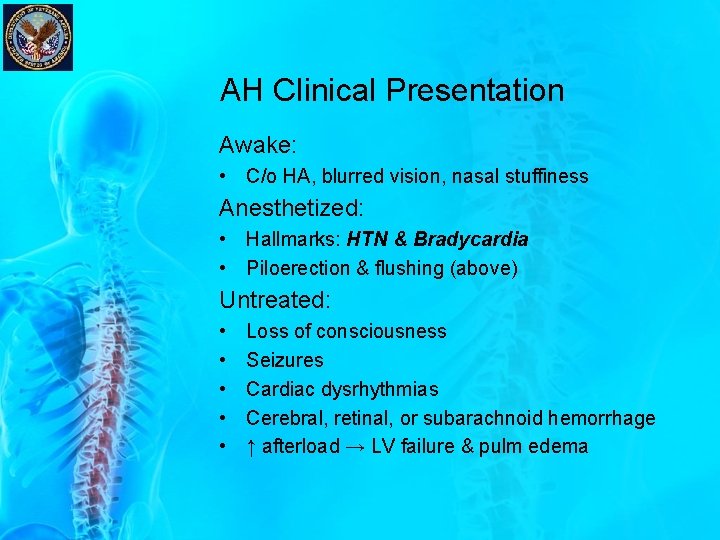
AH Clinical Presentation Awake: • C/o HA, blurred vision, nasal stuffiness Anesthetized: • Hallmarks: HTN & Bradycardia • Piloerection & flushing (above) Untreated: • • • Loss of consciousness Seizures Cardiac dysrhythmias Cerebral, retinal, or subarachnoid hemorrhage ↑ afterload → LV failure & pulm edema
Autonomic Hyperreflexia
AH Anesthetic Implications Pre-op • HEENT—↓ ROM & mouthing opening • CV—↓ BP, orthostatic hypo. TN • Pulm—↓ lung volumes, cough reflex, atelectasis • GI—atonicity, full stomach? • Renal—UTI, chronic FC • CNS—bowel & bladder dysfunction, chronic & central pain
AH Anesthetic Implications Treatment • Nifedipine or prazosin prophylaxis • STOP the stimulus (if possible) • Neuraxial block & GA • SAB > EA &/or GA > N 2 O + opioid • Vasodilators • SNP, Nicardipine • BB for tachyarrhythmias • NOTE: centrally acting hypotensive agents are not effective (clonidine)
AH Anesthetic Implications Clinical Pearls • NDNMB prn • SCh & profound hyper. K+ • Common triggers: • Irritation of urinary bladder, colon, & labor • Waning of anesthesia (post-op) • Literature is lacking for definitive treatment
References 1. 2. 3. 4. 5. Fleisher LA, Roizen MF. Essence of Anesthesia Practice. 3 rd ed. Philadelphia/Elsevier. 2011; 10. Hines RL, Marshall KE eds. Stoelting’s Anesthesia and Co-Existing Disease. 5 th ed. Philadelphia: Churchill Livingstone/Elsevier; 2008. Lagarto, F. , Pina, P. . Autonomic Dysreflexia - a clinical case: 4 AP 8 -7. Eur J Anaesthesiol. 2012; 29: 75. Cited in: Your Journals@Ovid Full Text at http: //ovidsp. ovid. com/ovidweb. cgi? T=JS&PAGE=reference&D=yrovftm&NE WS=N&AN=00003643 -201206001 -00243. Accessed April 02, 2013. Groothuis, Jan, Rongen, Gerard, Deinum, Jaap, et al. Sympathetic Nonadrenergic Transmission Contributes to Autonomic Dysreflexia in Spinal Cord-Injured Individuals. Hypertension. 2010; 55(3): 636 -643. doi: 10. 1161/HYPERTENSIONAHA. 109. 147330 Stevens, Robert, Bhardwaj, Anish, Kirsch, Jeffrey, Mirski, Marek. Critical Care and Perioperative Management in Traumatic Spinal Cord Injury. J Neurosurg Anesthesiol. 2003; 15(3): 215 -229. Cited in: Your Journals@Ovid Full Text at http: //ovidsp. ovid. com/ovidweb. cgi? T=JS&PAGE=reference&D=yrovftf&NEW S=N&AN=00008506 -200307000 -00009. Accessed April 02, 2013.
References 5. 6. BROECKER, B. , HRANOWSKY, N. , HACKLER, R. . Low Spinal Anesthesia for the Prevention of Autonomic Dysreflexia in the Spinal Cord Injury Patient. Surv. anesthesiol. . 1980; 24(3): 184. Cited in: Your Journals@Ovid Full Text at http: //ovidsp. ovid. com/ovidweb. cgi? T=JS&PAGE=reference&D=yrovfta&NE WS=N&AN=00132586 -198006000 -00050. Accessed April 02, 2013. Spinal Cord Injury Fact Sheet for Veterans: http: //www 1. va. gov/opa/publications/factsheets/fs_spinal_cord_injury. pdf