
ANESTHESIA CONSIDERATIONS INTRAOPERATIVE NURSING ROLES Jeff Worrell Ltc








- Slides: 32
ANESTHESIA CONSIDERATIONS INTRAOPERATIVE NURSING ROLES Jeff Worrell, Ltc, USAF (retired) CRNA, MSN
Steps to the Operating Room 1. Diagnosis of surgical condition Preop preparation ordered by surgeon 2. Preop assessment by perioperative nurse 3. Preop assessment by anesthesia personnel 4. Final preop assessment by intraoperative nurse Intraoperative time out Intraoperative case management 5. Handoff to PACU personnel
Factors that influence anesthetic choice � � � Patients age Patients sex Type of procedure Level of anesthesia required Inpatient vs outpatient Overall health of the patient
Preop assessment � � � � � History of present illness Past Medical History Past Surgical History including any anesthesia complications Current medications NPO status Significant Family History (MH) Social History – drugs and alcohol Focused physical exam Recent labs, x-ray, cardiac studies other radiologic studies
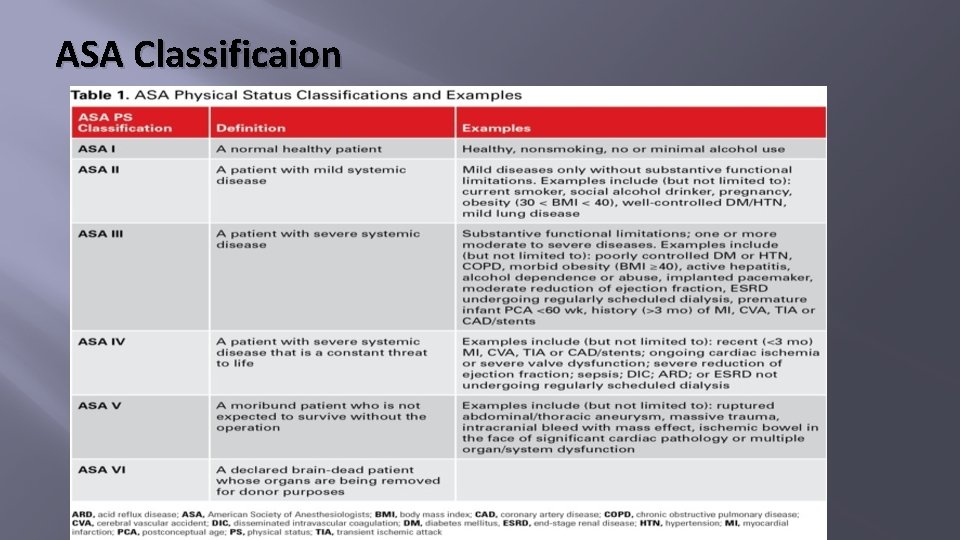
ASA Classificaion
Mallampati Classification
General Anesthesia � � General anesthesia is the induction of a state of unconsciousness with the absence of pain sensation over the entire body, through the administration of anesthetic drugs. It is used during certain medical and surgical procedures. General anesthesia has many purposes including: � pain relief (analgesia) � blocking memory of the procedure (amnesia) � producing unconsciousness � inhibiting normal body reflexes to make surgery safe and easier to perform � relaxing the muscles of the body
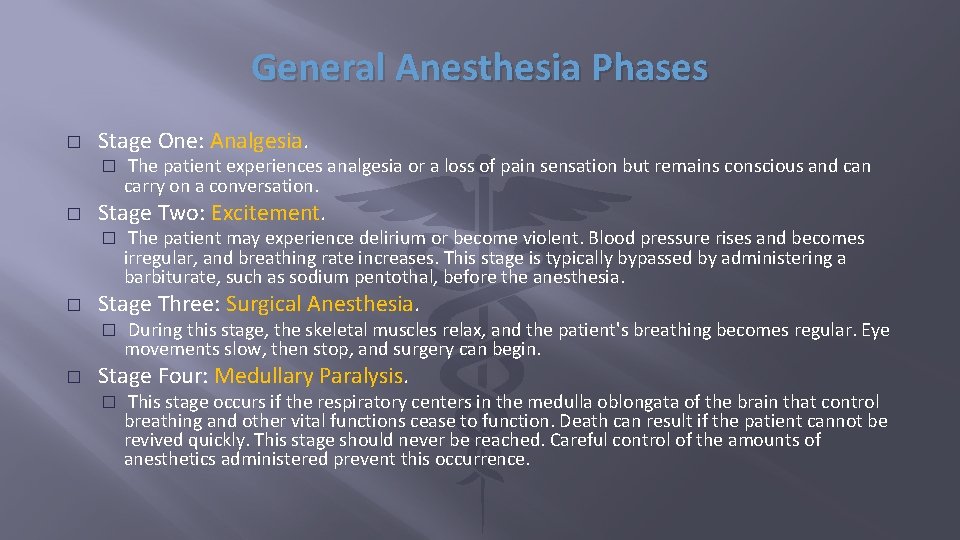
General Anesthesia Phases � Stage One: Analgesia. � � Stage Two: Excitement. � � The patient may experience delirium or become violent. Blood pressure rises and becomes irregular, and breathing rate increases. This stage is typically bypassed by administering a barbiturate, such as sodium pentothal, before the anesthesia. Stage Three: Surgical Anesthesia. � � The patient experiences analgesia or a loss of pain sensation but remains conscious and can carry on a conversation. During this stage, the skeletal muscles relax, and the patient's breathing becomes regular. Eye movements slow, then stop, and surgery can begin. Stage Four: Medullary Paralysis. � This stage occurs if the respiratory centers in the medulla oblongata of the brain that control breathing and other vital functions cease to function. Death can result if the patient cannot be revived quickly. This stage should never be reached. Careful control of the amounts of anesthetics administered prevent this occurrence.
Monitoring standards � � Qualified anesthesia personnel shall be present in the room throughout the conduct of all general anesthetics, regional anesthetics and monitored anesthesia care. During all anesthetics, the patient’s oxygenation, ventilation, circulation and temperature shall be continually evaluated
Circulators Roll Anesthesia Assistance � � � 1. Assist with position of comfort OR table 2. Assist with placing monitors 3. Be mindful of operating room environment � Cold naked patient � Uncomfortable OR table � Noise � Patient anxiety/fear ** Focused attention at induction and airway management
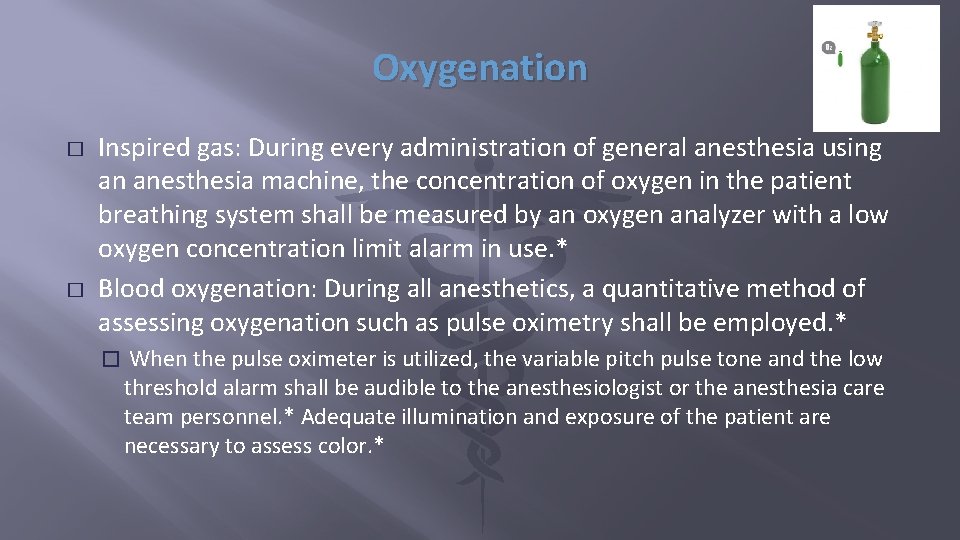
Oxygenation � � Inspired gas: During every administration of general anesthesia using an anesthesia machine, the concentration of oxygen in the patient breathing system shall be measured by an oxygen analyzer with a low oxygen concentration limit alarm in use. * Blood oxygenation: During all anesthetics, a quantitative method of assessing oxygenation such as pulse oximetry shall be employed. * � When the pulse oximeter is utilized, the variable pitch pulse tone and the low threshold alarm shall be audible to the anesthesiologist or the anesthesia care team personnel. * Adequate illumination and exposure of the patient are necessary to assess color. *
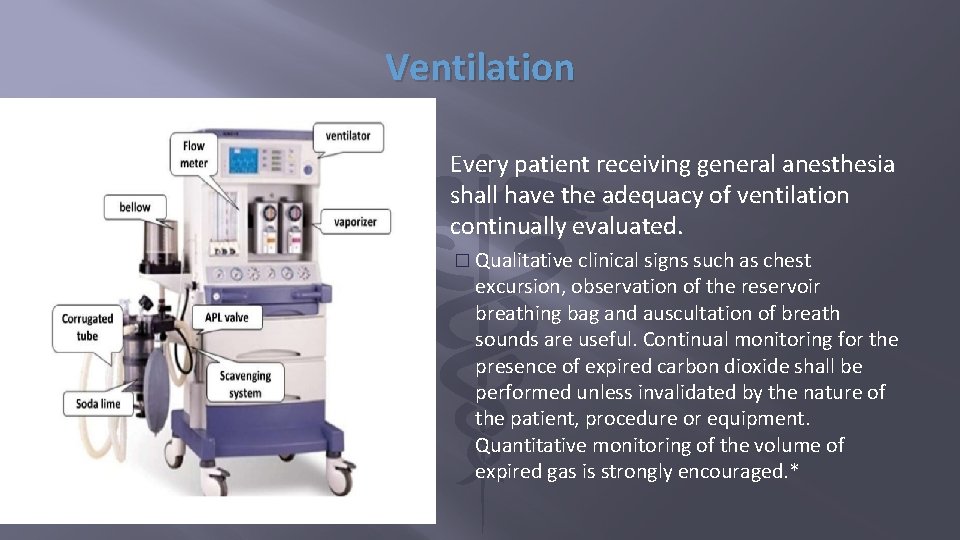
Ventilation � Every patient receiving general anesthesia shall have the adequacy of ventilation continually evaluated. � Qualitative clinical signs such as chest excursion, observation of the reservoir breathing bag and auscultation of breath sounds are useful. Continual monitoring for the presence of expired carbon dioxide shall be performed unless invalidated by the nature of the patient, procedure or equipment. Quantitative monitoring of the volume of expired gas is strongly encouraged. *
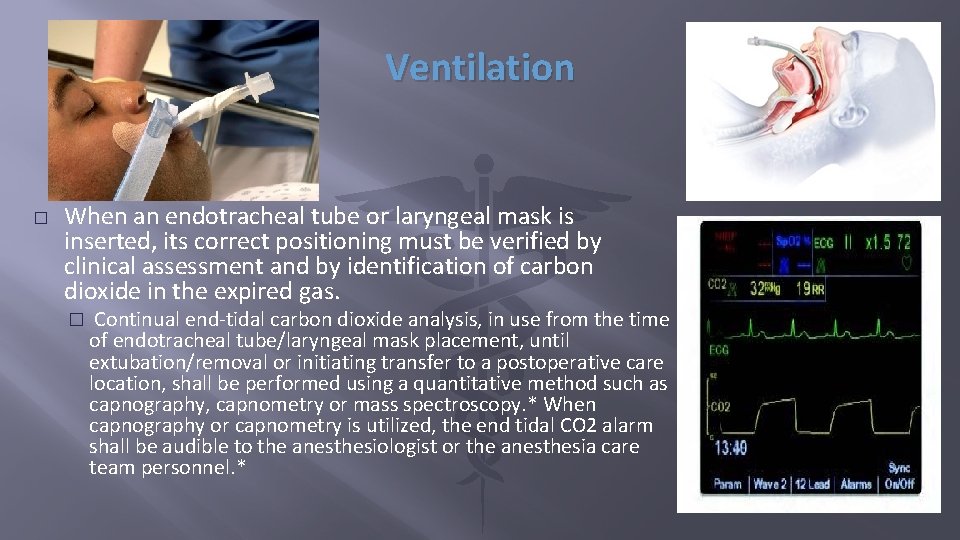
Ventilation � When an endotracheal tube or laryngeal mask is inserted, its correct positioning must be verified by clinical assessment and by identification of carbon dioxide in the expired gas. � Continual end-tidal carbon dioxide analysis, in use from the time of endotracheal tube/laryngeal mask placement, until extubation/removal or initiating transfer to a postoperative care location, shall be performed using a quantitative method such as capnography, capnometry or mass spectroscopy. * When capnography or capnometry is utilized, the end tidal CO 2 alarm shall be audible to the anesthesiologist or the anesthesia care team personnel. *
Ventilation � When ventilation is controlled by a mechanical ventilator, there shall be in continuous use a device that is capable of detecting disconnection of components of the breathing system. The device must give an audible signal when its alarm threshold is exceeded. During regional anesthesia (with no sedation) or local anesthesia (with no sedation), the adequacy of ventilation shall be evaluated by continual observation of qualitative clinical signs. During moderate or deep sedation the adequacy of ventilation shall be evaluated by continual observation of qualitative clinical signs and monitoring for the presence of exhaled carbon dioxide unless precluded or invalidated by the nature of the patient, procedure, or equipment.
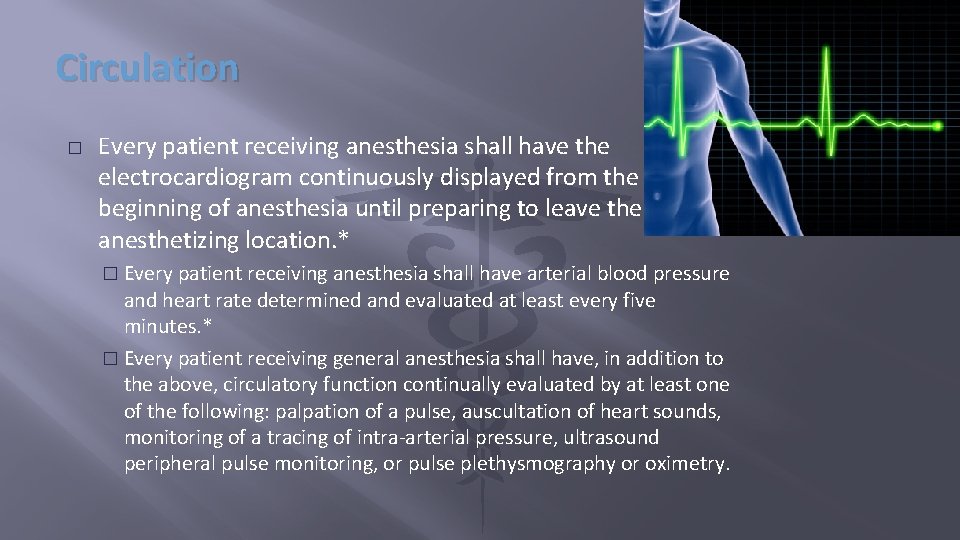
Circulation � Every patient receiving anesthesia shall have the electrocardiogram continuously displayed from the beginning of anesthesia until preparing to leave the anesthetizing location. * � Every patient receiving anesthesia shall have arterial blood pressure and heart rate determined and evaluated at least every five minutes. * � Every patient receiving general anesthesia shall have, in addition to the above, circulatory function continually evaluated by at least one of the following: palpation of a pulse, auscultation of heart sounds, monitoring of a tracing of intra-arterial pressure, ultrasound peripheral pulse monitoring, or pulse plethysmography or oximetry.
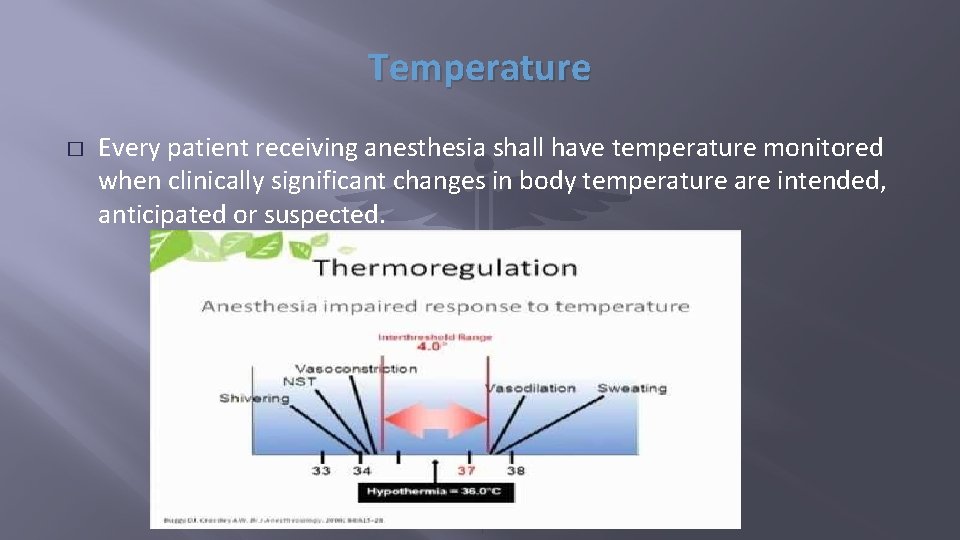
Temperature � Every patient receiving anesthesia shall have temperature monitored when clinically significant changes in body temperature are intended, anticipated or suspected.
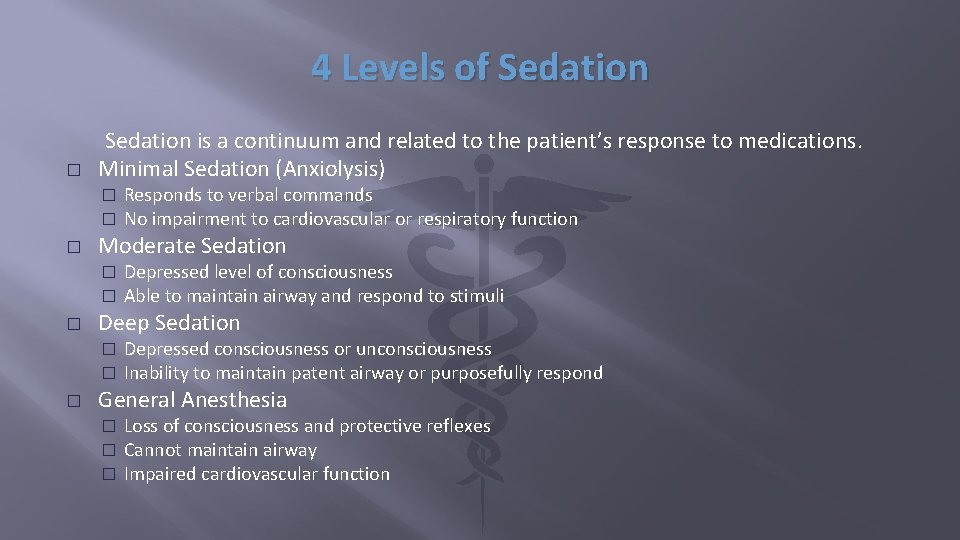
4 Levels of Sedation � Sedation is a continuum and related to the patient’s response to medications. Minimal Sedation (Anxiolysis) � � � Moderate Sedation � � � Depressed level of consciousness Able to maintain airway and respond to stimuli Deep Sedation � � � Responds to verbal commands No impairment to cardiovascular or respiratory function Depressed consciousness or unconsciousness Inability to maintain patent airway or purposefully respond General Anesthesia � � � Loss of consciousness and protective reflexes Cannot maintain airway Impaired cardiovascular function
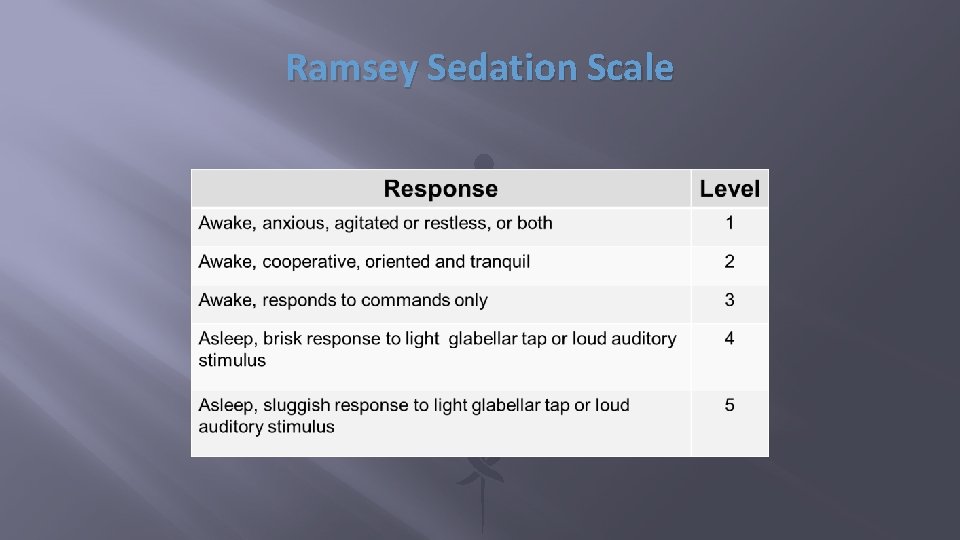
Ramsey Sedation Scale
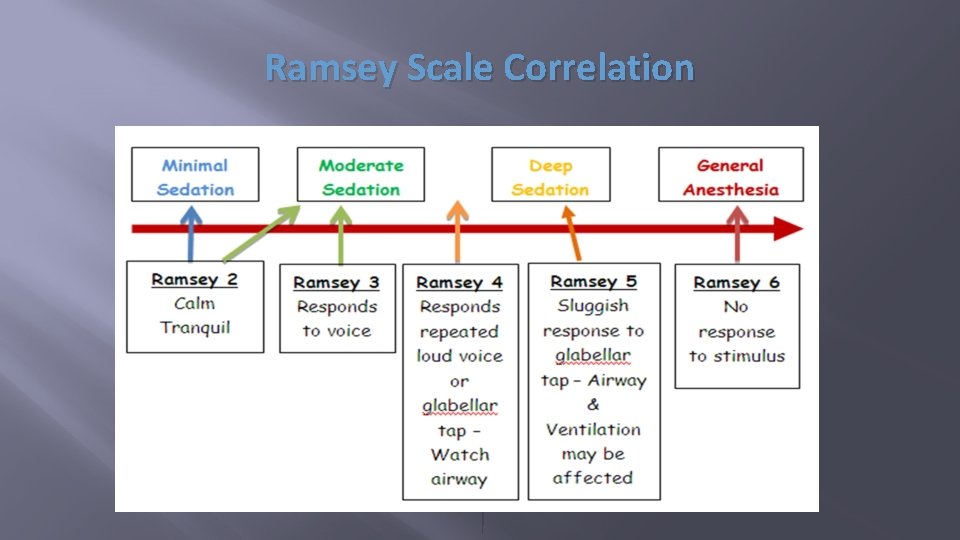
Ramsey Scale Correlation
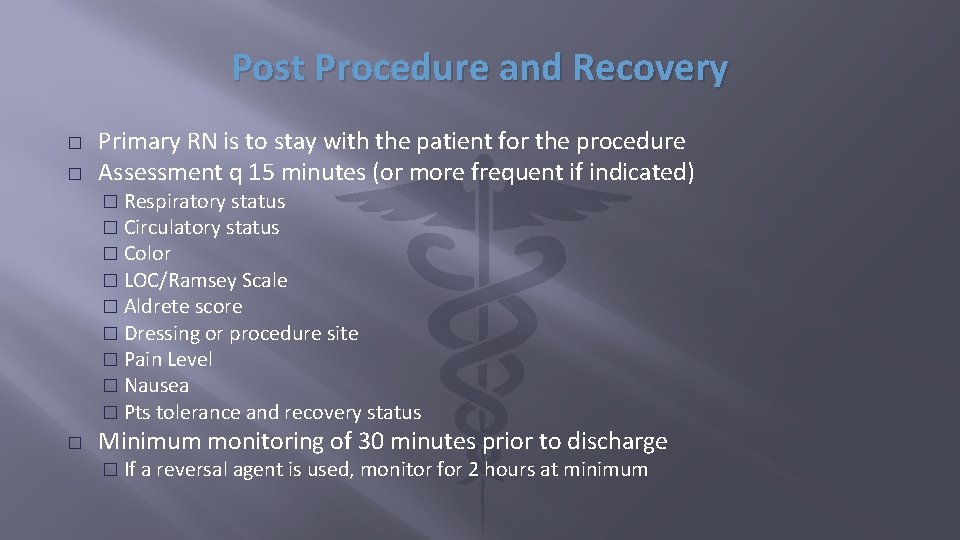
Post Procedure and Recovery � � Primary RN is to stay with the patient for the procedure Assessment q 15 minutes (or more frequent if indicated) � Respiratory status � Circulatory status � Color � LOC/Ramsey Scale � Aldrete score � Dressing or procedure site � Pain Level � Nausea � Pts tolerance and recovery status � Minimum monitoring of 30 minutes prior to discharge � If a reversal agent is used, monitor for 2 hours at minimum
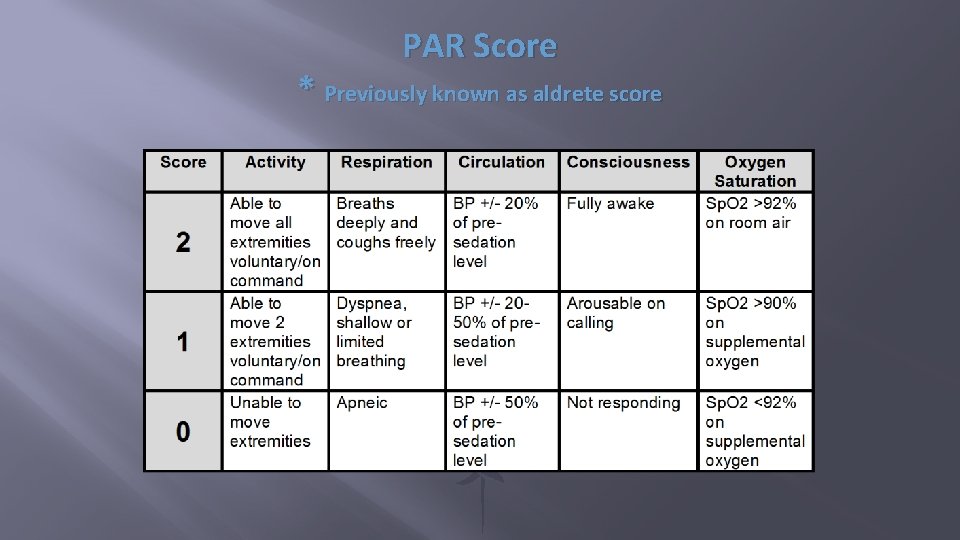
PAR Score * Previously known as aldrete score
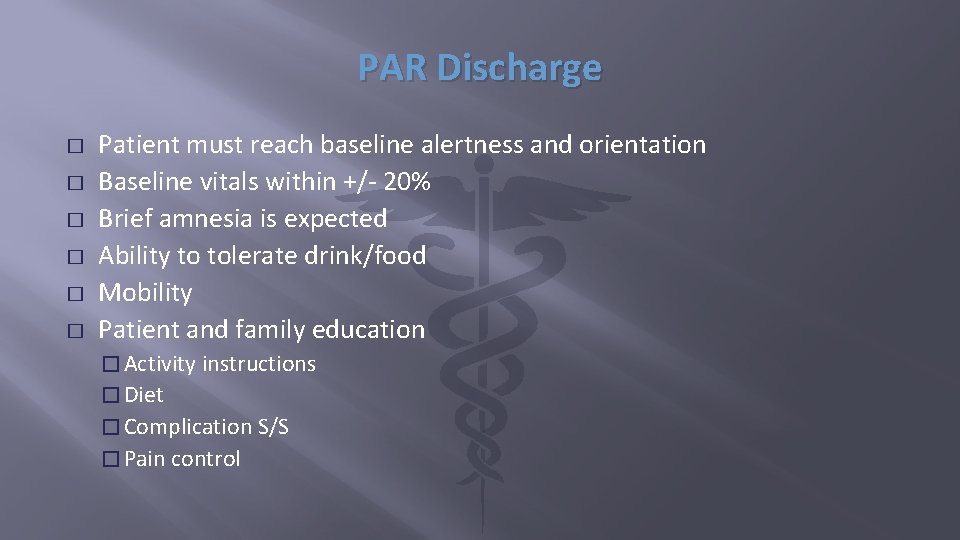
PAR Discharge � � � Patient must reach baseline alertness and orientation Baseline vitals within +/- 20% Brief amnesia is expected Ability to tolerate drink/food Mobility Patient and family education � Activity instructions � Diet � Complication S/S � Pain control
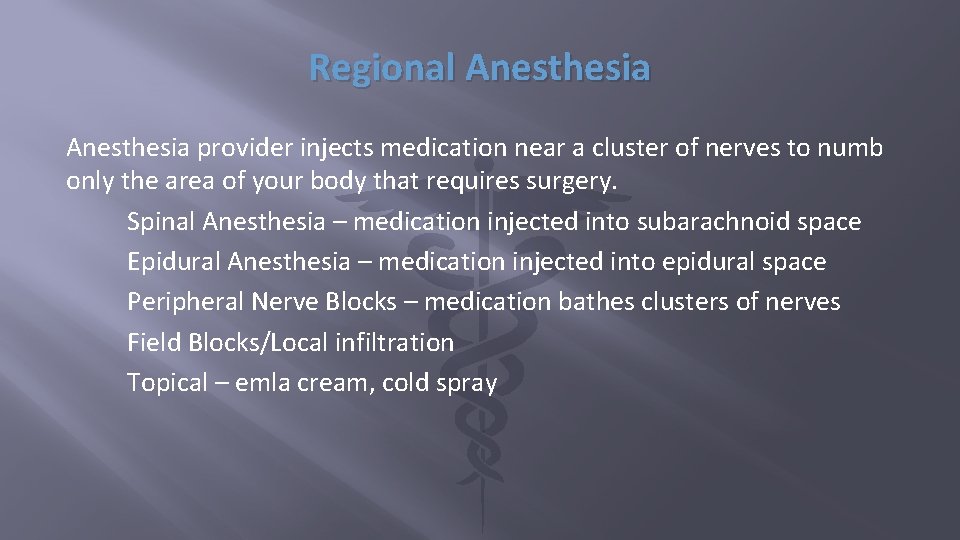
Regional Anesthesia provider injects medication near a cluster of nerves to numb only the area of your body that requires surgery. Spinal Anesthesia – medication injected into subarachnoid space Epidural Anesthesia – medication injected into epidural space Peripheral Nerve Blocks – medication bathes clusters of nerves Field Blocks/Local infiltration Topical – emla cream, cold spray
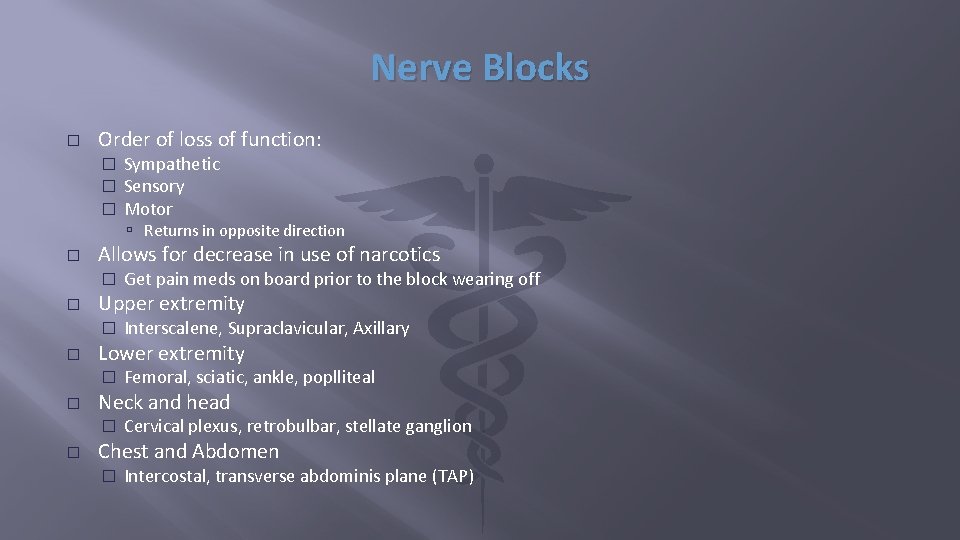
Nerve Blocks � Order of loss of function: � � � Sympathetic Sensory Motor Returns in opposite direction � Allows for decrease in use of narcotics � � Upper extremity � � Femoral, sciatic, ankle, poplliteal Neck and head � � Interscalene, Supraclavicular, Axillary Lower extremity � � Get pain meds on board prior to the block wearing off Cervical plexus, retrobulbar, stellate ganglion Chest and Abdomen � Intercostal, transverse abdominis plane (TAP)
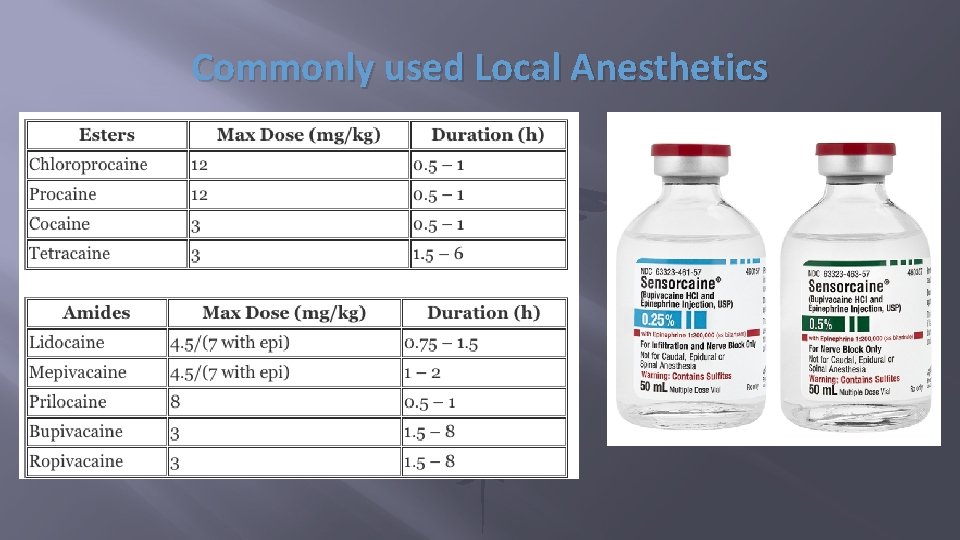
Commonly used Local Anesthetics
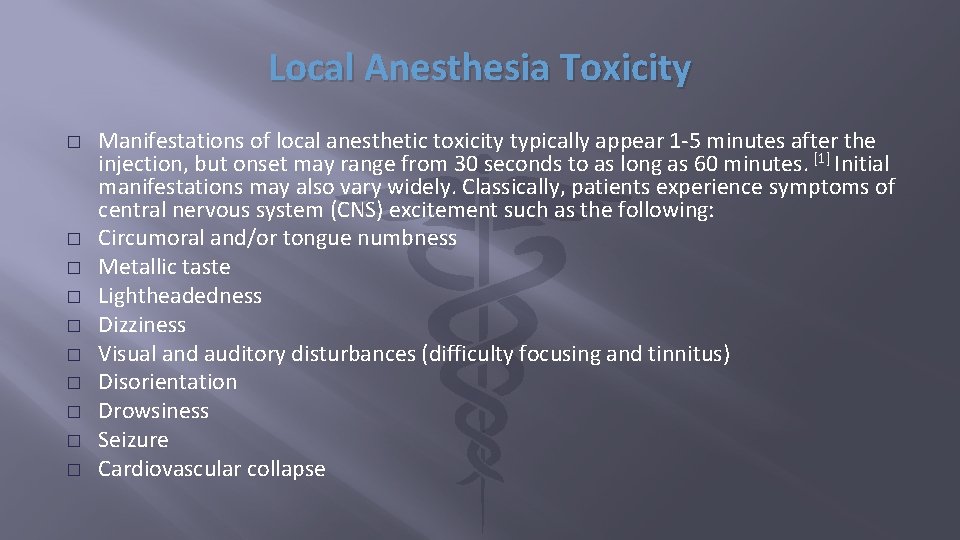
Local Anesthesia Toxicity � � � � � Manifestations of local anesthetic toxicity typically appear 1 -5 minutes after the injection, but onset may range from 30 seconds to as long as 60 minutes. [1] Initial manifestations may also vary widely. Classically, patients experience symptoms of central nervous system (CNS) excitement such as the following: Circumoral and/or tongue numbness Metallic taste Lightheadedness Dizziness Visual and auditory disturbances (difficulty focusing and tinnitus) Disorientation Drowsiness Seizure Cardiovascular collapse
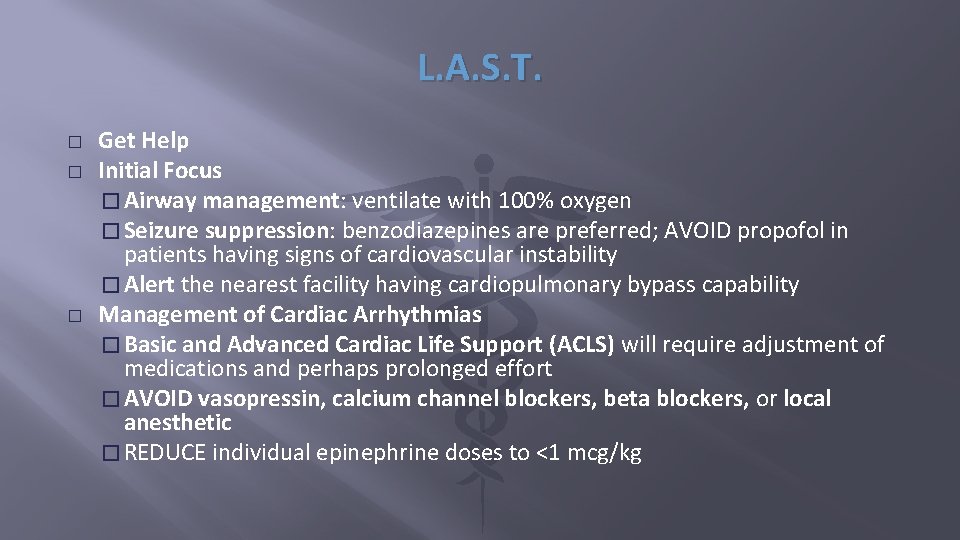
L. A. S. T. � � � Get Help Initial Focus � Airway management: ventilate with 100% oxygen � Seizure suppression: benzodiazepines are preferred; AVOID propofol in patients having signs of cardiovascular instability � Alert the nearest facility having cardiopulmonary bypass capability Management of Cardiac Arrhythmias � Basic and Advanced Cardiac Life Support (ACLS) will require adjustment of medications and perhaps prolonged effort � AVOID vasopressin, calcium channel blockers, beta blockers, or local anesthetic � REDUCE individual epinephrine doses to <1 mcg/kg
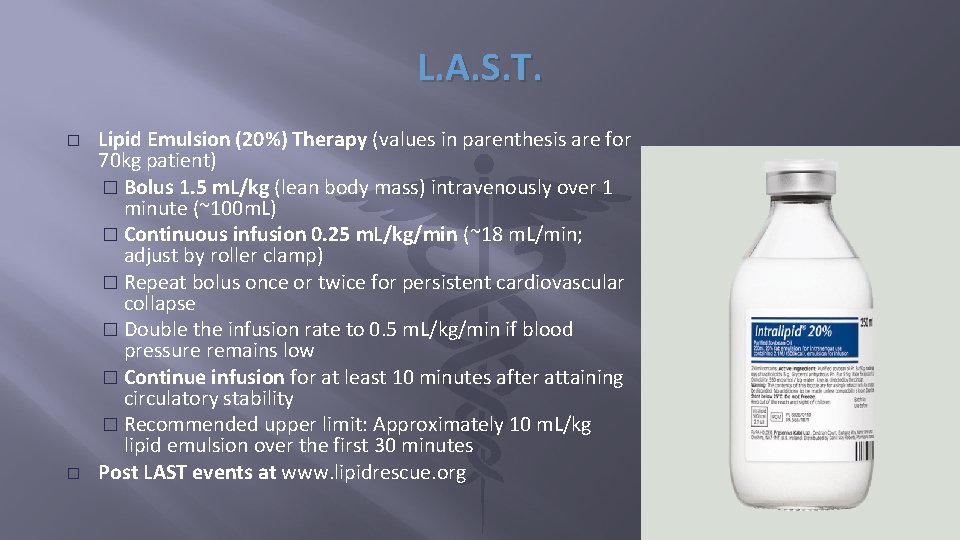
L. A. S. T. � � Lipid Emulsion (20%) Therapy (values in parenthesis are for 70 kg patient) � Bolus 1. 5 m. L/kg (lean body mass) intravenously over 1 minute (~100 m. L) � Continuous infusion 0. 25 m. L/kg/min (~18 m. L/min; adjust by roller clamp) � Repeat bolus once or twice for persistent cardiovascular collapse � Double the infusion rate to 0. 5 m. L/kg/min if blood pressure remains low � Continue infusion for at least 10 minutes after attaining circulatory stability � Recommended upper limit: Approximately 10 m. L/kg lipid emulsion over the first 30 minutes Post LAST events at www. lipidrescue. org