
Anesthesia Apparatus Checkout Recommendations These recommendations are valid
- Slides: 25
Anesthesia Apparatus Checkout Recommendations These recommendations are valid only for an anesthesia system that conforms to current and relevant standards and includes : 1)An ascending bellows ventilator 2) At least the following monitors: capnograph, pulse oximeter, oxygen analyzer, respiratory volume monitor (spirometer) 3)Breathing system pressure monitor with high- and low-pressure alarms.
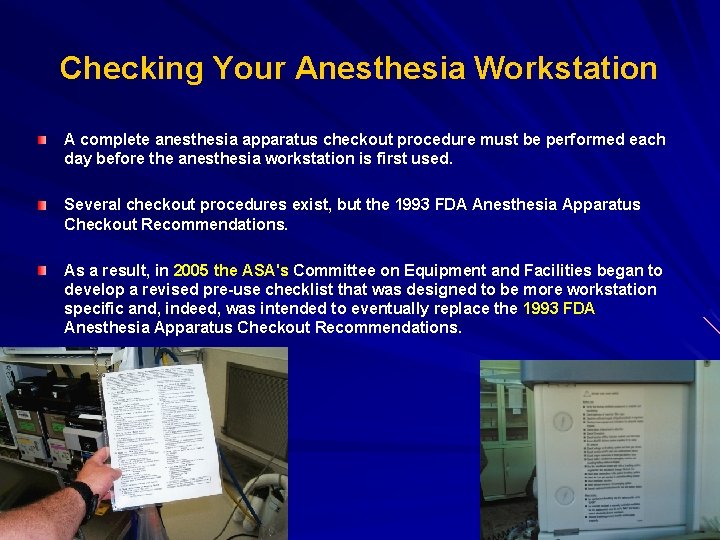
Checking Your Anesthesia Workstation A complete anesthesia apparatus checkout procedure must be performed each day before the anesthesia workstation is first used. Several checkout procedures exist, but the 1993 FDA Anesthesia Apparatus Checkout Recommendations. As a result, in 2005 the ASA's Committee on Equipment and Facilities began to develop a revised pre-use checklist that was designed to be more workstation specific and, indeed, was intended to eventually replace the 1993 FDA Anesthesia Apparatus Checkout Recommendations.
Checking Anesthesia Machines 8 Categories of check: Emergency ventilation equipment High-Pressure system Low-Pressure system Scavenging system Breathing system Manual and automatic ventilation system Monitors Final Position
Abbreviated Machine Check Out Calibrate Oxygen Monitor Check Machine for gas delivery Check Circuit for integrity Check Ventilator function Check Exhaust for function
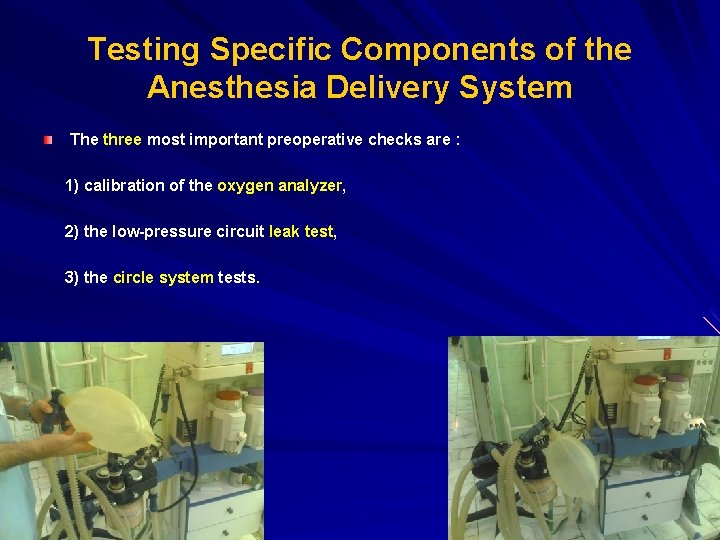
Testing Specific Components of the Anesthesia Delivery System The three most important preoperative checks are : 1) calibration of the oxygen analyzer, 2) the low-pressure circuit leak test, 3) the circle system tests.
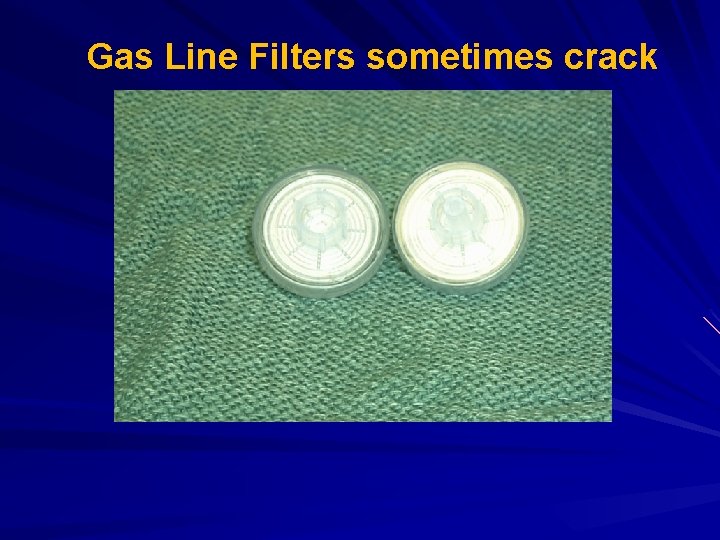
Gas Line Filters sometimes crack
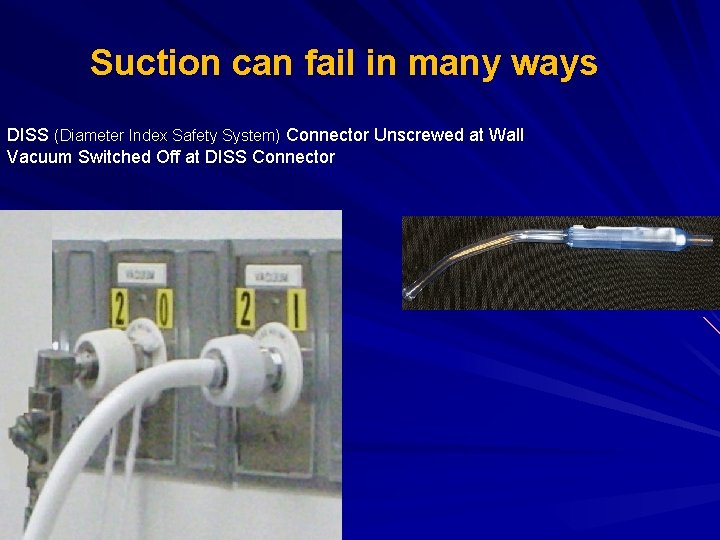
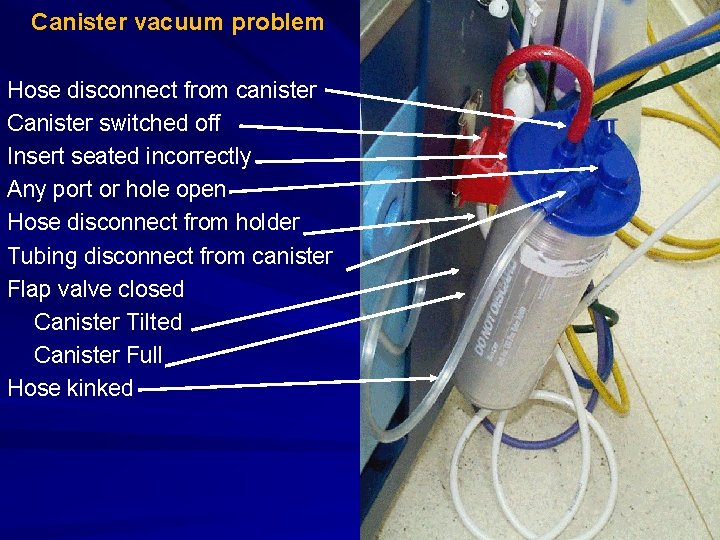
Suction can fail in many ways DISS (Diameter Index Safety System) Connector Unscrewed at Wall Vacuum Switched Off at DISS Connector
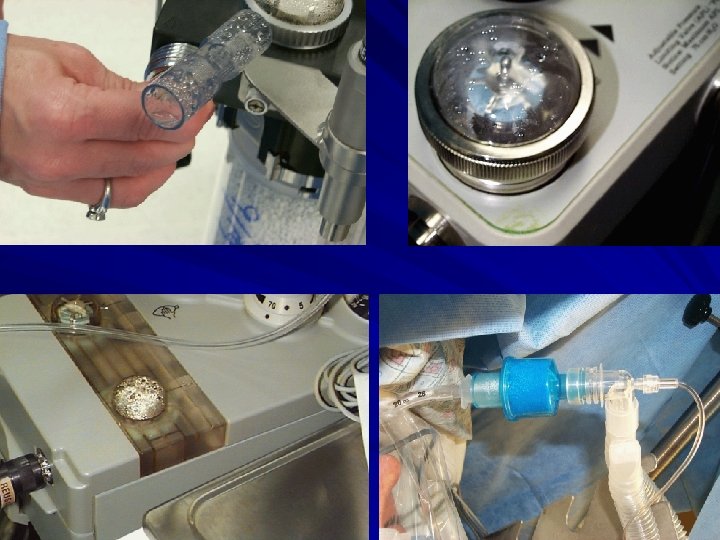
Canister vacuum problem Hose disconnect from canister Canister switched off Insert seated incorrectly Any port or hole open Hose disconnect from holder Tubing disconnect from canister Flap valve closed Canister Tilted Canister Full Hose kinked
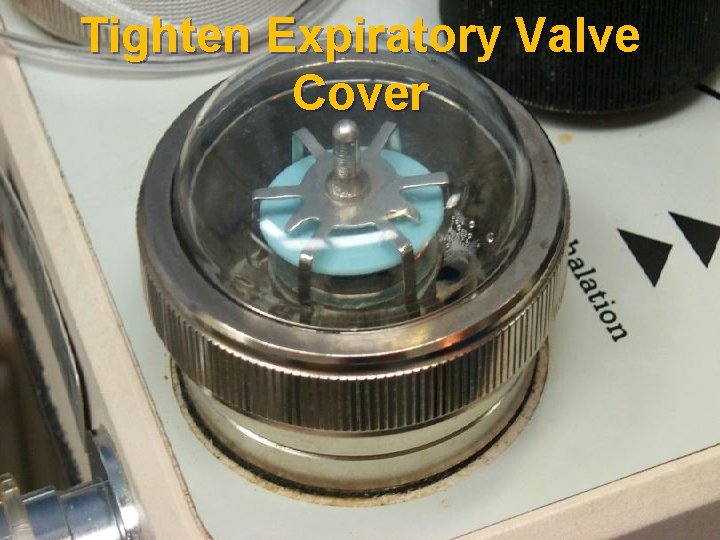
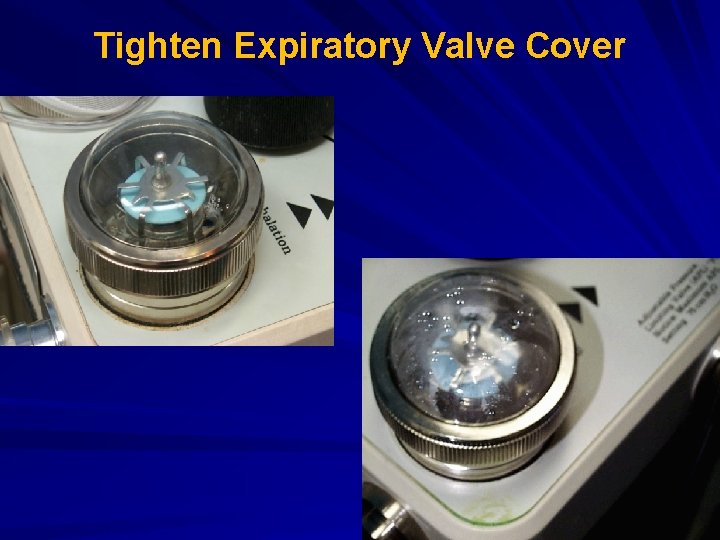
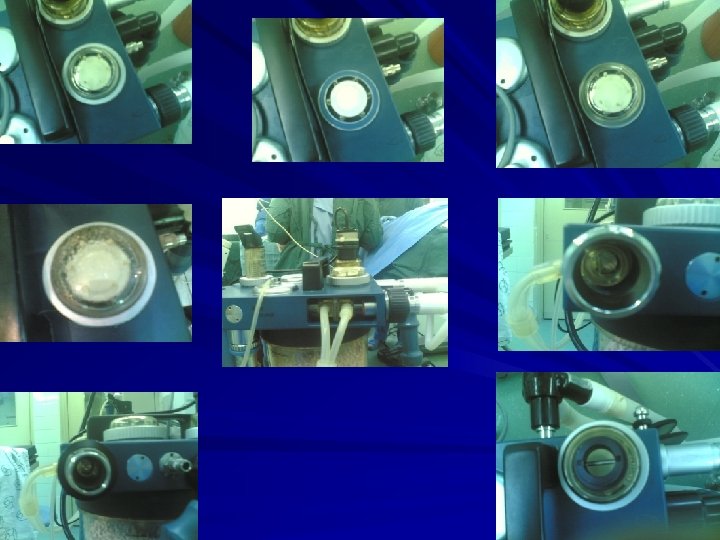
Tighten Expiratory Valve Cover
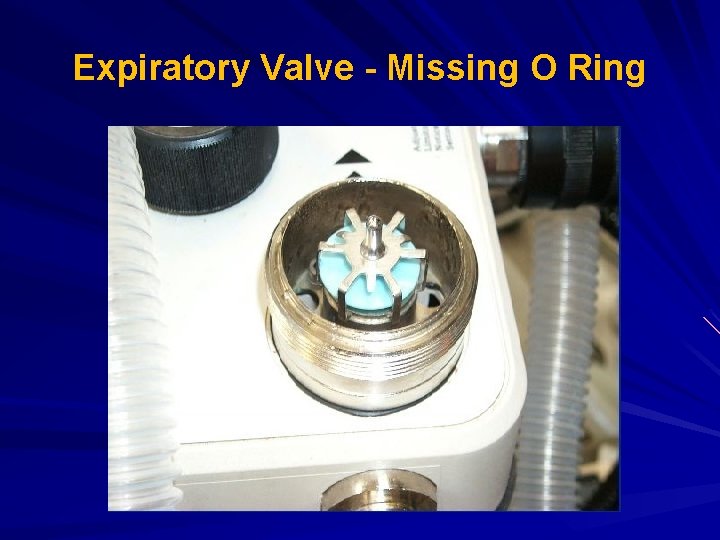
Expiratory Valve - Missing O Ring
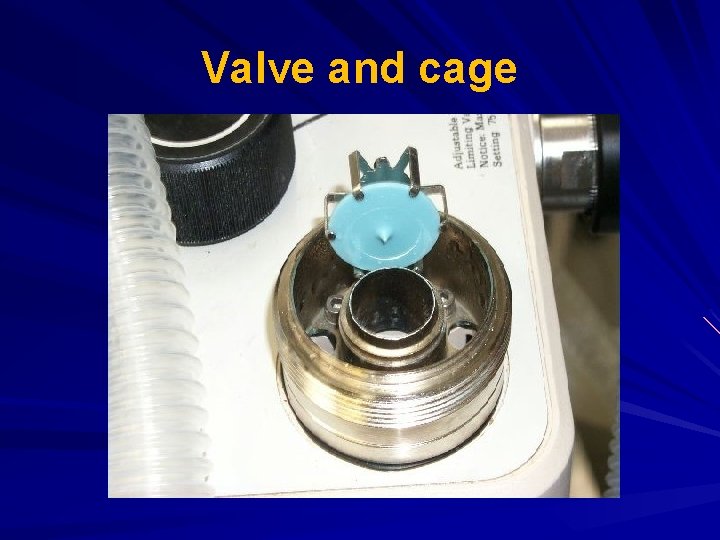
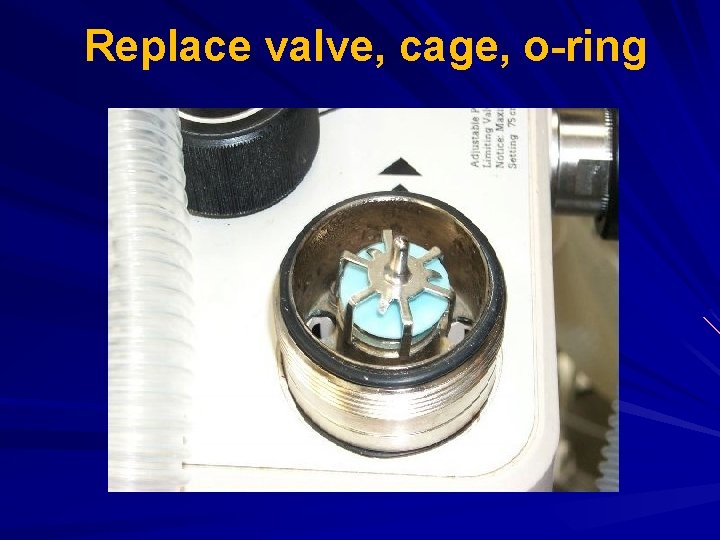
Valve and cage
Replace valve, cage, o-ring
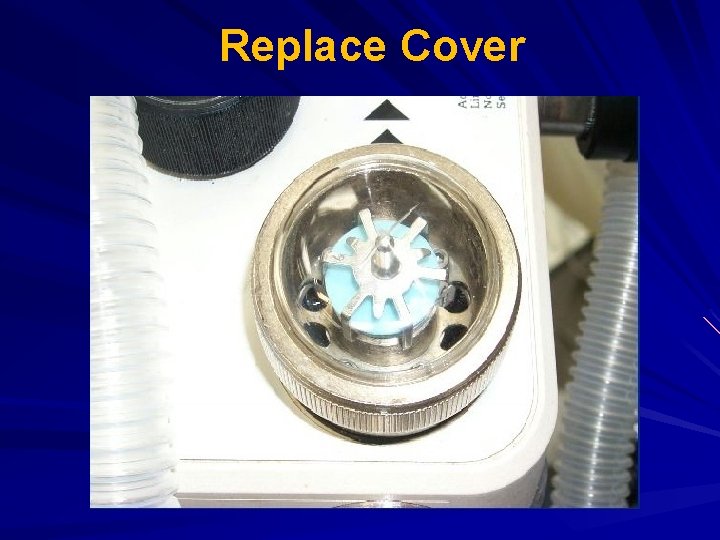
Replace Cover
Tighten Expiratory Valve Cover
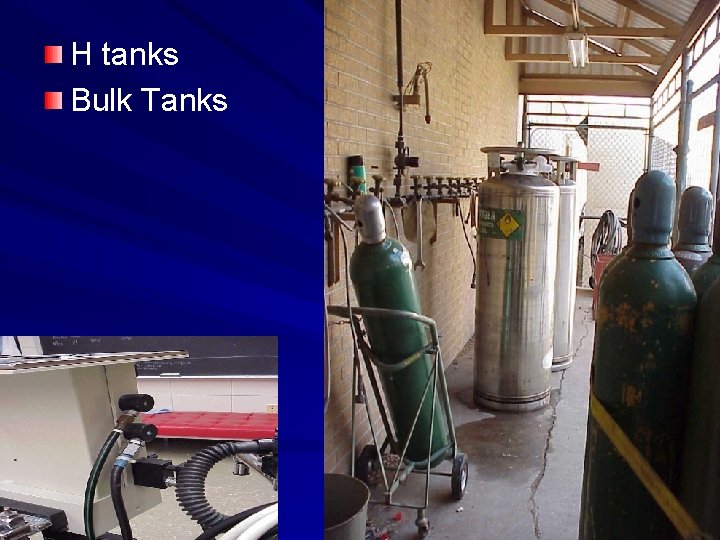
H tanks Bulk Tanks
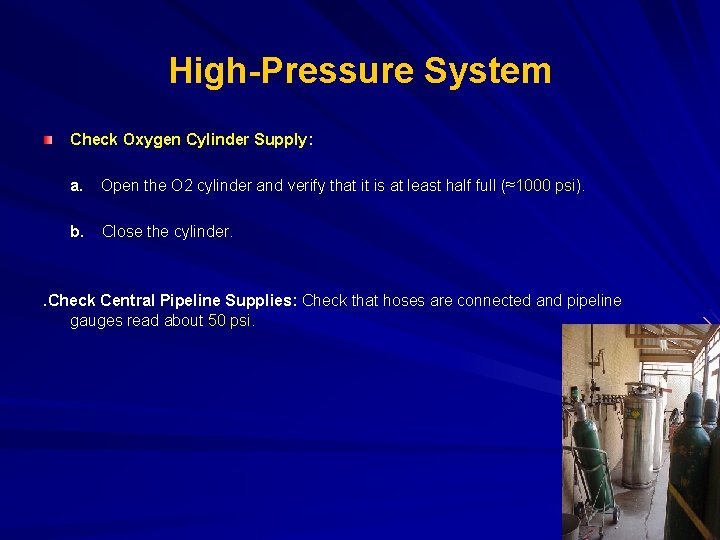
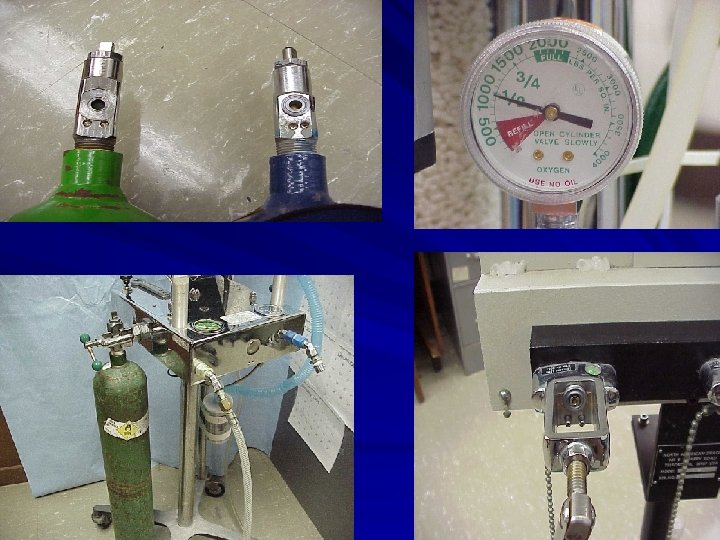
High-Pressure System Check Oxygen Cylinder Supply: a. Open the O 2 cylinder and verify that it is at least half full (≈1000 psi). b. Close the cylinder. . Check Central Pipeline Supplies: Check that hoses are connected and pipeline gauges read about 50 psi.
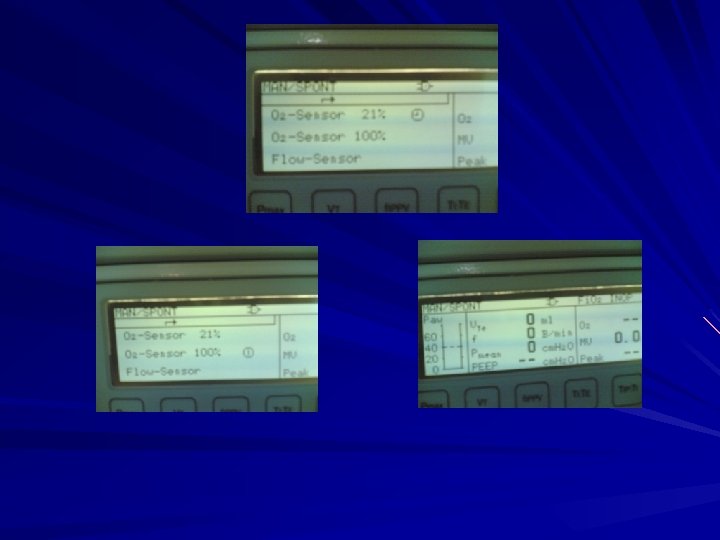
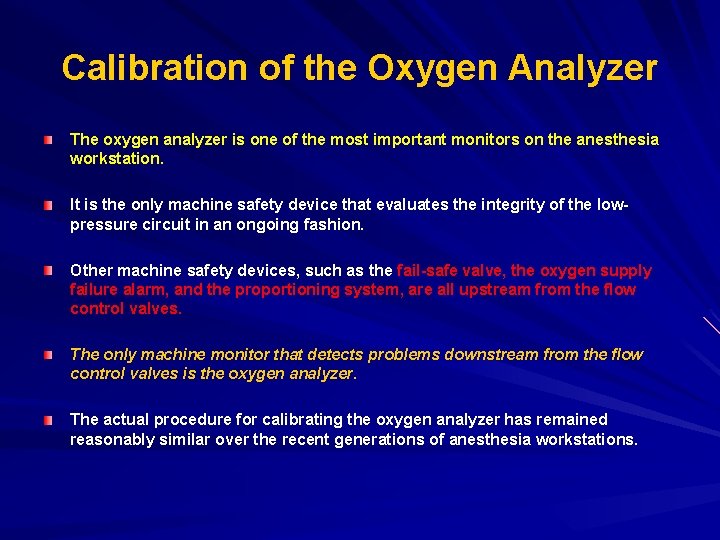
Calibration of the Oxygen Analyzer The oxygen analyzer is one of the most important monitors on the anesthesia workstation. It is the only machine safety device that evaluates the integrity of the lowpressure circuit in an ongoing fashion. Other machine safety devices, such as the fail-safe valve, the oxygen supply failure alarm, and the proportioning system, are all upstream from the flow control valves. The only machine monitor that detects problems downstream from the flow control valves is the oxygen analyzer. The actual procedure for calibrating the oxygen analyzer has remained reasonably similar over the recent generations of anesthesia workstations.
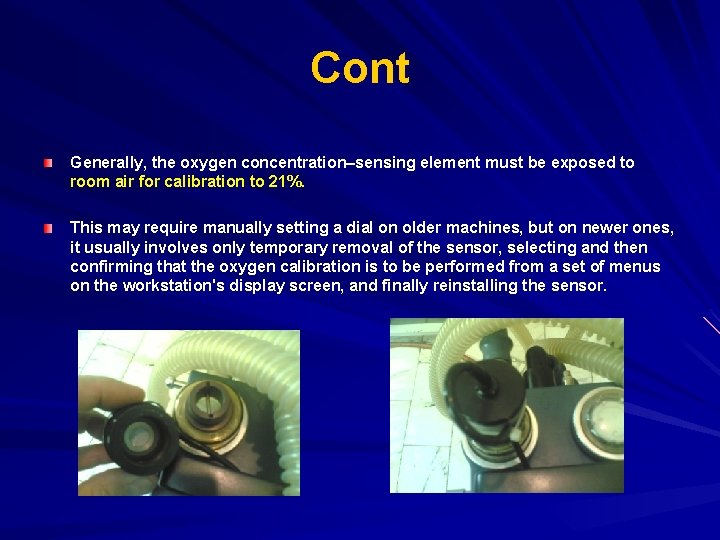
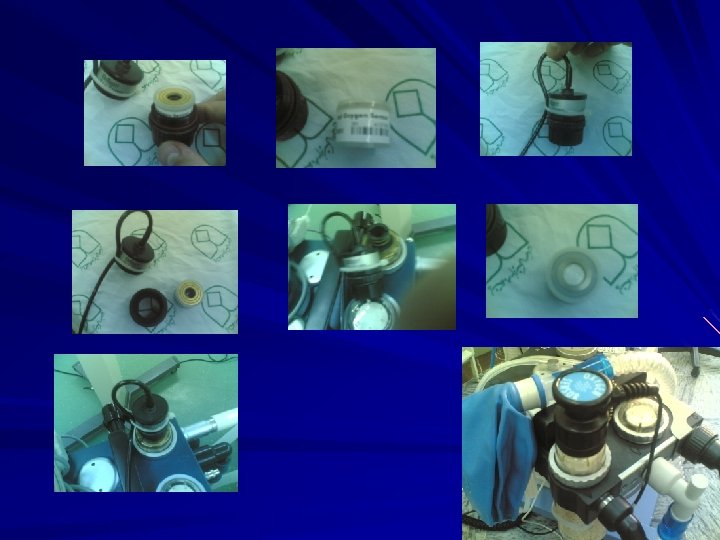
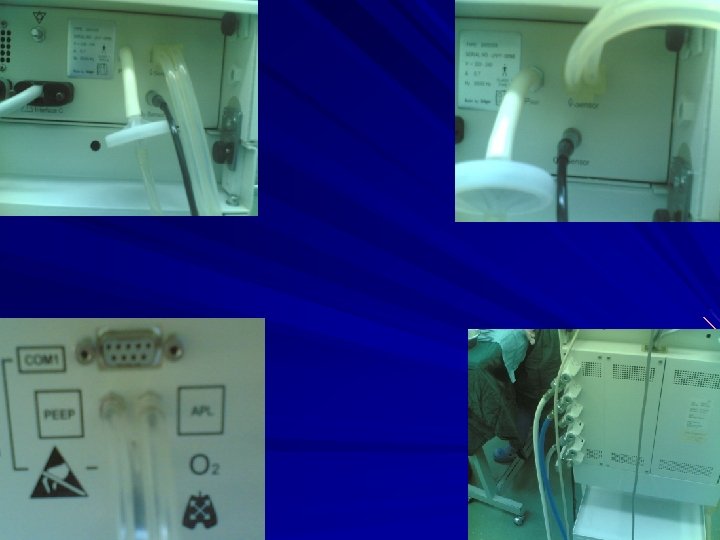
Cont Generally, the oxygen concentration–sensing element must be exposed to room air for calibration to 21%. This may require manually setting a dial on older machines, but on newer ones, it usually involves only temporary removal of the sensor, selecting and then confirming that the oxygen calibration is to be performed from a set of menus on the workstation's display screen, and finally reinstalling the sensor.
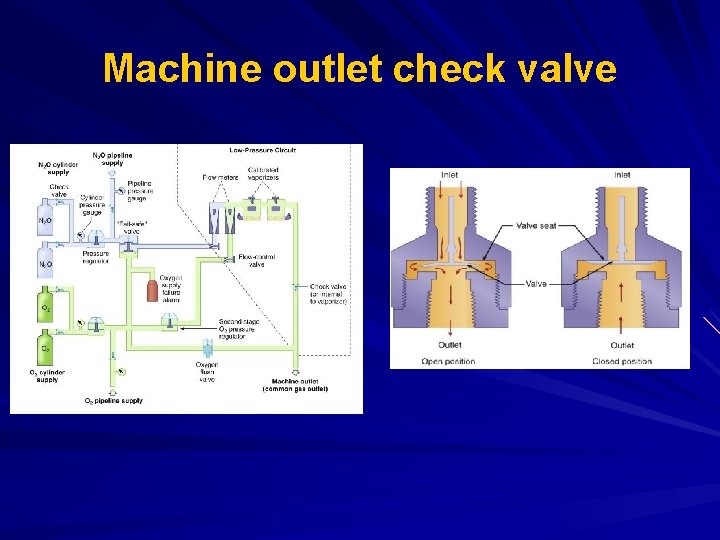
Machine outlet check valve