
Anemia Mary Ann Hudson Danny Townsend The Ohio
- Slides: 35
Anemia Mary Ann Hudson Danny Townsend The Ohio State University, College of Nursing July 26, 2010
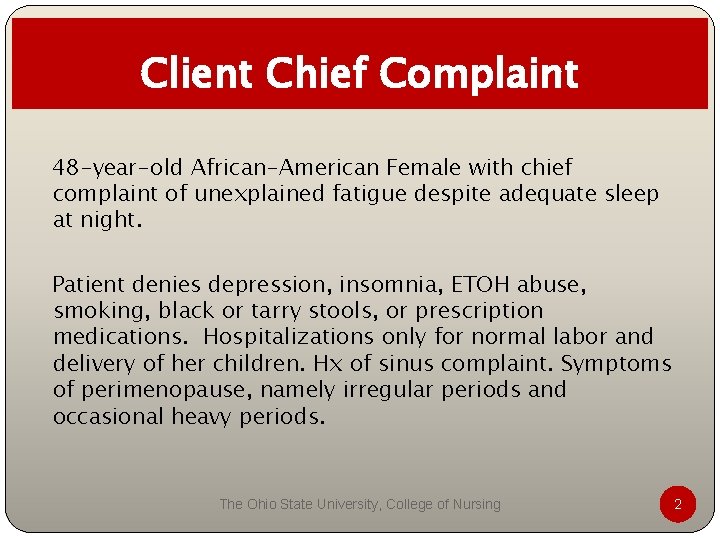
Client Chief Complaint 48 -year-old African-American Female with chief complaint of unexplained fatigue despite adequate sleep at night. Patient denies depression, insomnia, ETOH abuse, smoking, black or tarry stools, or prescription medications. Hospitalizations only for normal labor and delivery of her children. Hx of sinus complaint. Symptoms of perimenopause, namely irregular periods and occasional heavy periods. The Ohio State University, College of Nursing 2
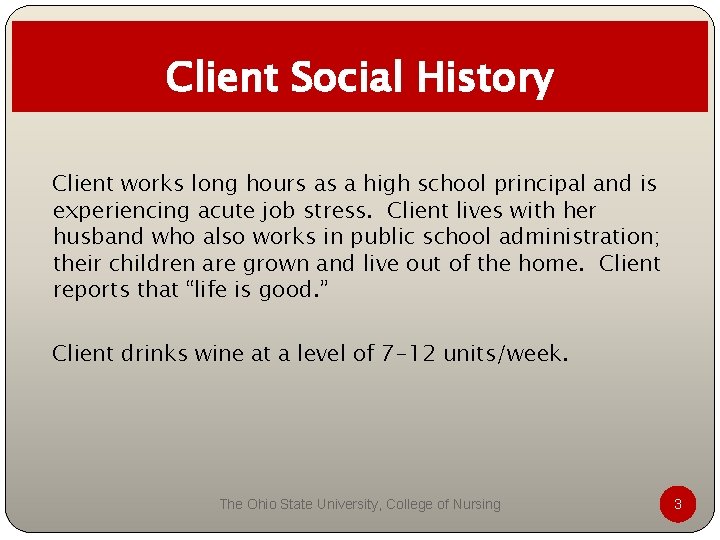
Client Social History Client works long hours as a high school principal and is experiencing acute job stress. Client lives with her husband who also works in public school administration; their children are grown and live out of the home. Client reports that “life is good. ” Client drinks wine at a level of 7 -12 units/week. The Ohio State University, College of Nursing 3
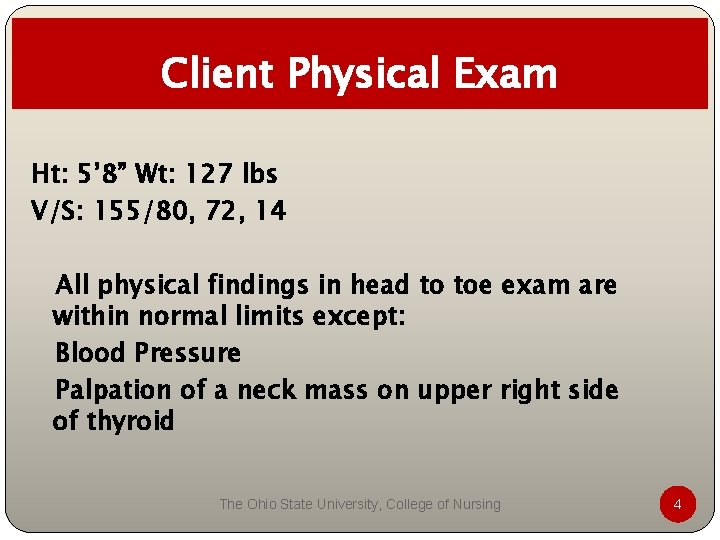
Client Physical Exam Ht: 5’ 8” Wt: 127 lbs V/S: 155/80, 72, 14 All physical findings in head to toe exam are within normal limits except: Blood Pressure Palpation of a neck mass on upper right side of thyroid The Ohio State University, College of Nursing 4
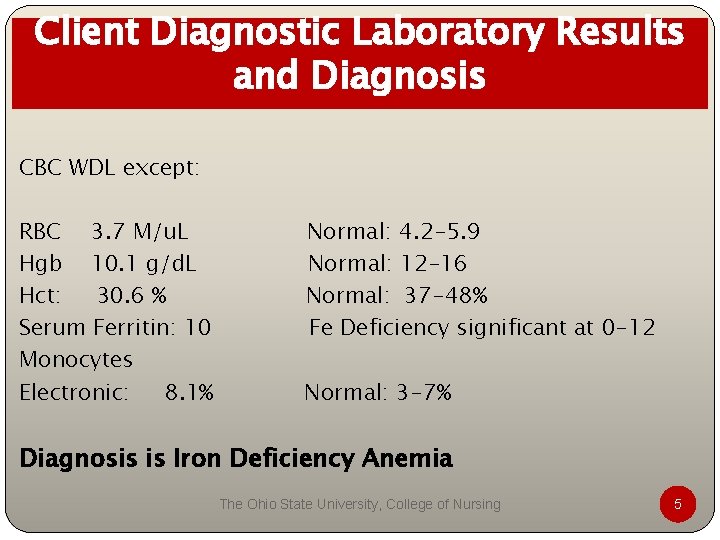
Client Diagnostic Laboratory Results and Diagnosis CBC WDL except: RBC 3. 7 M/u. L Hgb 10. 1 g/d. L Hct: 30. 6 % Serum Ferritin: 10 Monocytes Electronic: 8. 1% Normal: 4. 2 -5. 9 Normal: 12 -16 Normal: 37 -48% Fe Deficiency significant at 0 -12 Normal: 3 -7% Diagnosis is Iron Deficiency Anemia The Ohio State University, College of Nursing 5
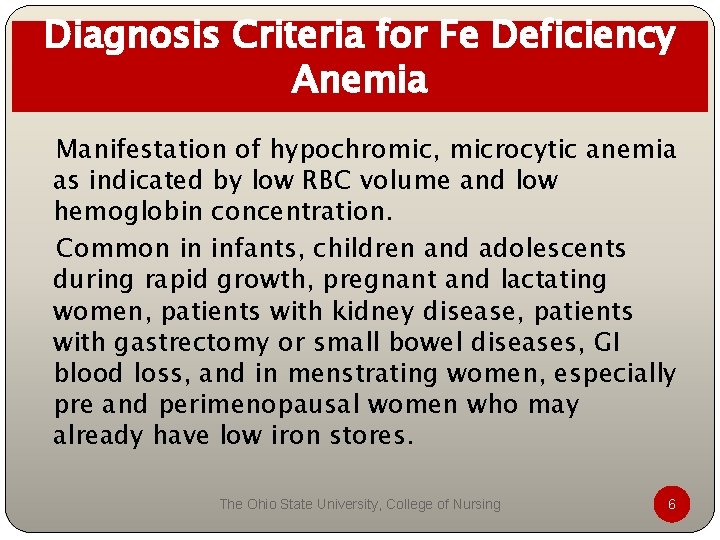
Diagnosis Criteria for Fe Deficiency Anemia Manifestation of hypochromic, microcytic anemia as indicated by low RBC volume and low hemoglobin concentration. Common in infants, children and adolescents during rapid growth, pregnant and lactating women, patients with kidney disease, patients with gastrectomy or small bowel diseases, GI blood loss, and in menstrating women, especially pre and perimenopausal women who may already have low iron stores. The Ohio State University, College of Nursing 6
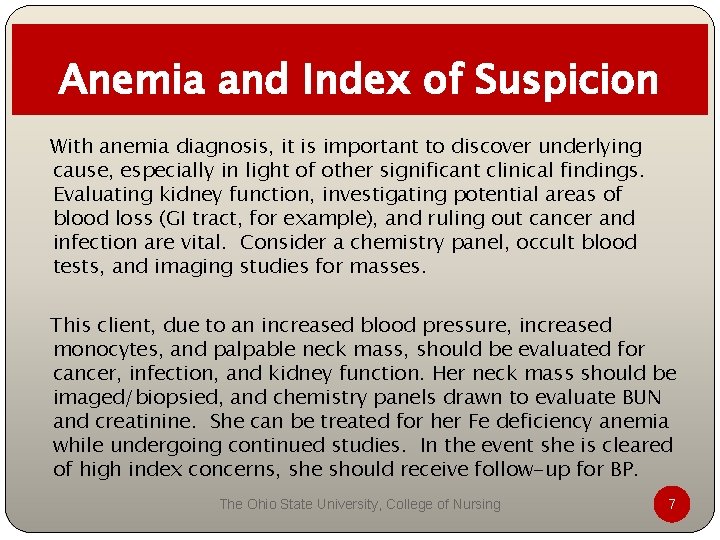
Anemia and Index of Suspicion With anemia diagnosis, it is important to discover underlying cause, especially in light of other significant clinical findings. Evaluating kidney function, investigating potential areas of blood loss (GI tract, for example), and ruling out cancer and infection are vital. Consider a chemistry panel, occult blood tests, and imaging studies for masses. This client, due to an increased blood pressure, increased monocytes, and palpable neck mass, should be evaluated for cancer, infection, and kidney function. Her neck mass should be imaged/biopsied, and chemistry panels drawn to evaluate BUN and creatinine. She can be treated for her Fe deficiency anemia while undergoing continued studies. In the event she is cleared of high index concerns, she should receive follow-up for BP. The Ohio State University, College of Nursing 7
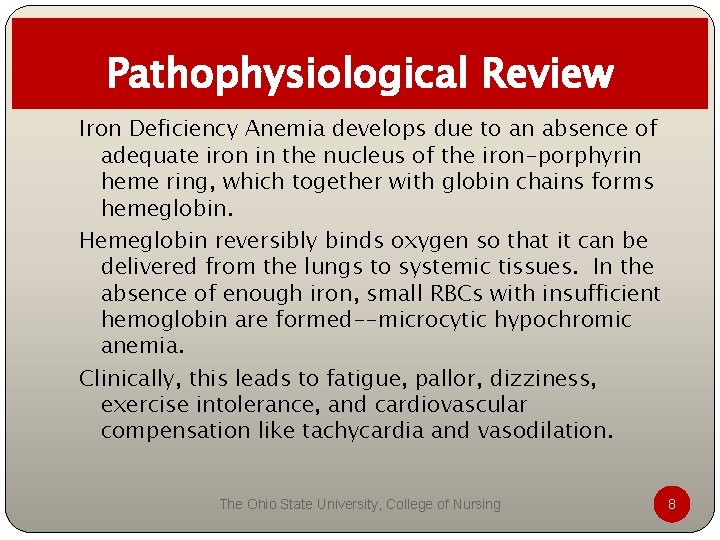
Pathophysiological Review Iron Deficiency Anemia develops due to an absence of adequate iron in the nucleus of the iron-porphyrin heme ring, which together with globin chains forms hemeglobin. Hemeglobin reversibly binds oxygen so that it can be delivered from the lungs to systemic tissues. In the absence of enough iron, small RBCs with insufficient hemoglobin are formed--microcytic hypochromic anemia. Clinically, this leads to fatigue, pallor, dizziness, exercise intolerance, and cardiovascular compensation like tachycardia and vasodilation. The Ohio State University, College of Nursing 8
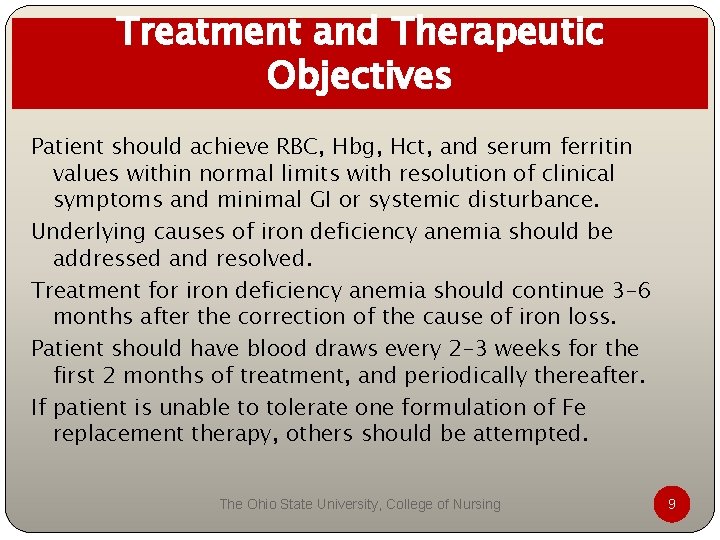
Treatment and Therapeutic Objectives Patient should achieve RBC, Hbg, Hct, and serum ferritin values within normal limits with resolution of clinical symptoms and minimal GI or systemic disturbance. Underlying causes of iron deficiency anemia should be addressed and resolved. Treatment for iron deficiency anemia should continue 3 -6 months after the correction of the cause of iron loss. Patient should have blood draws every 2 -3 weeks for the first 2 months of treatment, and periodically thereafter. If patient is unable to tolerate one formulation of Fe replacement therapy, others should be attempted. The Ohio State University, College of Nursing 9
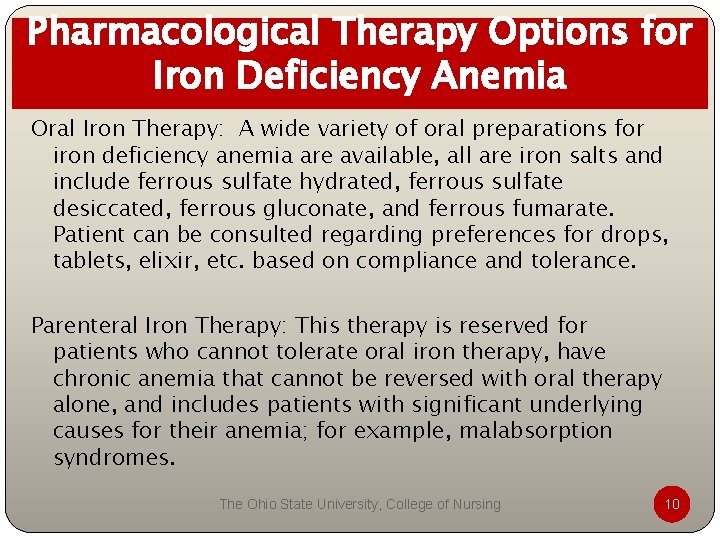
Pharmacological Therapy Options for Iron Deficiency Anemia Oral Iron Therapy: A wide variety of oral preparations for iron deficiency anemia are available, all are iron salts and include ferrous sulfate hydrated, ferrous sulfate desiccated, ferrous gluconate, and ferrous fumarate. Patient can be consulted regarding preferences for drops, tablets, elixir, etc. based on compliance and tolerance. Parenteral Iron Therapy: This therapy is reserved for patients who cannot tolerate oral iron therapy, have chronic anemia that cannot be reversed with oral therapy alone, and includes patients with significant underlying causes for their anemia; for example, malabsorption syndromes. The Ohio State University, College of Nursing 10
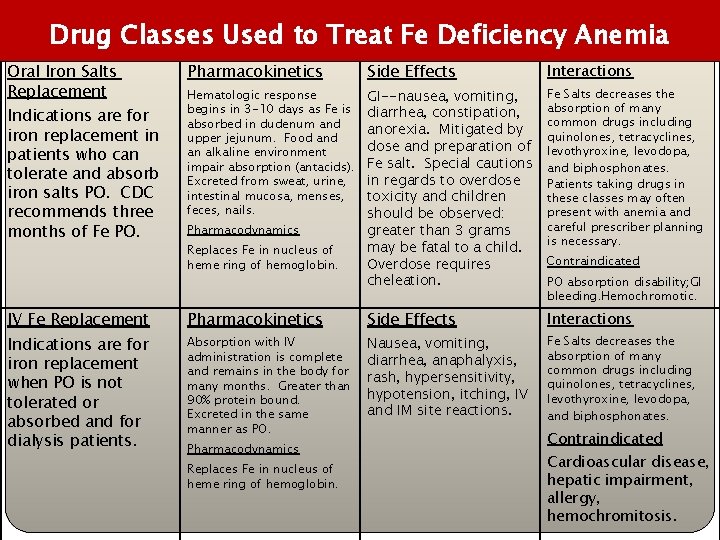
Drug Classes Used to Treat Fe Deficiency Anemia Oral Iron Salts Replacement Indications are for iron replacement in patients who can tolerate and absorb iron salts PO. CDC recommends three months of Fe PO. Pharmacokinetics Side Effects Interactions Hematologic response begins in 3 -10 days as Fe is absorbed in dudenum and upper jejunum. Food an alkaline environment impair absorption (antacids). Excreted from sweat, urine, intestinal mucosa, menses, feces, nails. GI--nausea, vomiting, diarrhea, constipation, anorexia. Mitigated by dose and preparation of Fe salt. Special cautions in regards to overdose toxicity and children should be observed: greater than 3 grams may be fatal to a child. Overdose requires cheleation. Fe Salts decreases the absorption of many common drugs including quinolones, tetracyclines, levothyroxine, levodopa, and biphosphonates. Patients taking drugs in these classes may often present with anemia and careful prescriber planning is necessary. Pharmacodynamics Replaces Fe in nucleus of heme ring of hemoglobin. Contraindicated PO absorption disability; GI bleeding. Hemochromotic. IV Fe Replacement Pharmacokinetics Side Effects Interactions Indications are for iron replacement when PO is not tolerated or absorbed and for dialysis patients. Absorption with IV administration is complete and remains in the body for many months. Greater than 90% protein bound. Excreted in the same manner as PO. Nausea, vomiting, diarrhea, anaphalyxis, rash, hypersensitivity, hypotension, itching, IV and IM site reactions. Fe Salts decreases the absorption of many common drugs including quinolones, tetracyclines, levothyroxine, levodopa, and biphosphonates. Pharmacodynamics Replaces Fe in nucleus of heme ring of hemoglobin. Contraindicated Cardioascular disease, hepatic impairment, allergy, hemochromitosis.
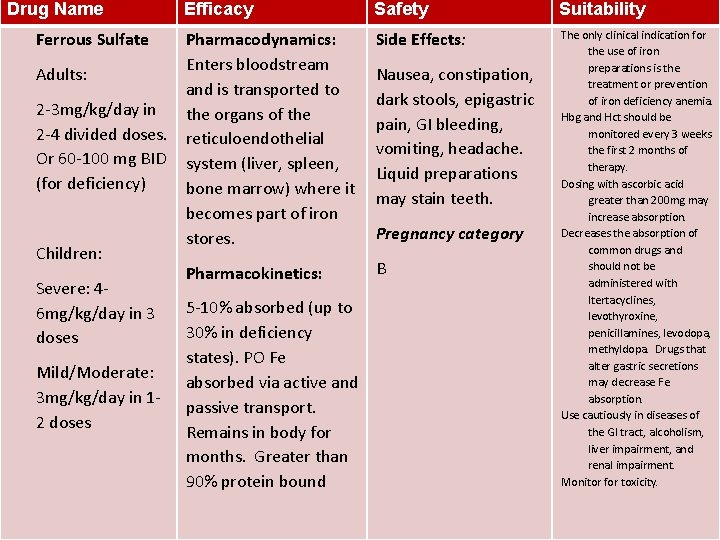
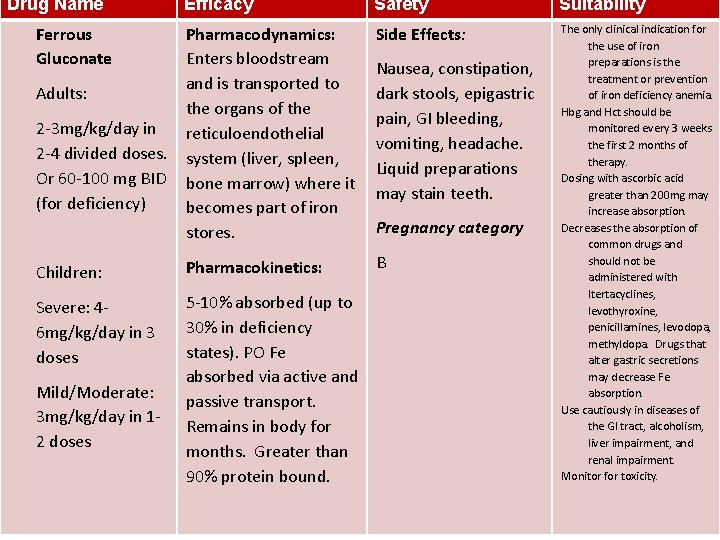
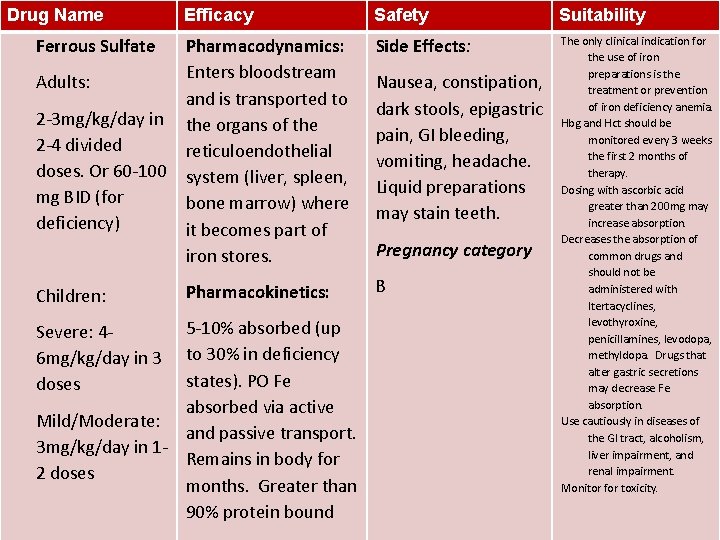
Drug Name Ferrous Sulfate Efficacy Pharmacodynamics: Enters bloodstream Adults: and is transported to 2 -3 mg/kg/day in the organs of the 2 -4 divided doses. reticuloendothelial Or 60 -100 mg BID system (liver, spleen, (for deficiency) bone marrow) where it becomes part of iron stores. Children: Pharmacokinetics: Severe: 45 -10% absorbed (up to 6 mg/kg/day in 3 30% in deficiency doses states). PO Fe Mild/Moderate: absorbed via active and 3 mg/kg/day in 1 passive transport. 2 doses Remains in body for months. Greater than 90% protein bound Safety Suitability Side Effects: The only clinical indication for the use of iron preparations is the treatment or prevention of iron deficiency anemia. Hbg and Hct should be monitored every 3 weeks the first 2 months of therapy. Dosing with ascorbic acid greater than 200 mg may increase absorption. Decreases the absorption of common drugs and should not be administered with ltertacyclines, levothyroxine, penicillamines, levodopa, methyldopa. Drugs that alter gastric secretions may decrease Fe absorption. Use cautiously in diseases of the GI tract, alcoholism, liver impairment, and renal impairment. Monitor for toxicity. Nausea, constipation, dark stools, epigastric pain, GI bleeding, vomiting, headache. Liquid preparations may stain teeth. Pregnancy category B The Ohio State University, College of Nursing 12
Drug Name Efficacy Ferrous Gluconate Pharmacodynamics: Enters bloodstream and is transported to Adults: the organs of the 2 -3 mg/kg/day in reticuloendothelial 2 -4 divided doses. system (liver, spleen, Or 60 -100 mg BID bone marrow) where it (for deficiency) becomes part of iron stores. Children: Pharmacokinetics: Severe: 46 mg/kg/day in 3 doses 5 -10% absorbed (up to 30% in deficiency states). PO Fe absorbed via active and passive transport. Remains in body for months. Greater than 90% protein bound. Mild/Moderate: 3 mg/kg/day in 12 doses Safety Suitability Side Effects: The only clinical indication for the use of iron preparations is the treatment or prevention of iron deficiency anemia. Hbg and Hct should be monitored every 3 weeks the first 2 months of therapy. Dosing with ascorbic acid greater than 200 mg may increase absorption. Decreases the absorption of common drugs and should not be administered with ltertacyclines, levothyroxine, penicillamines, levodopa, methyldopa. Drugs that alter gastric secretions may decrease Fe absorption. Use cautiously in diseases of the GI tract, alcoholism, liver impairment, and renal impairment. Monitor for toxicity. Nausea, constipation, dark stools, epigastric pain, GI bleeding, vomiting, headache. Liquid preparations may stain teeth. Pregnancy category B 13 The Ohio State University, College of Nursing
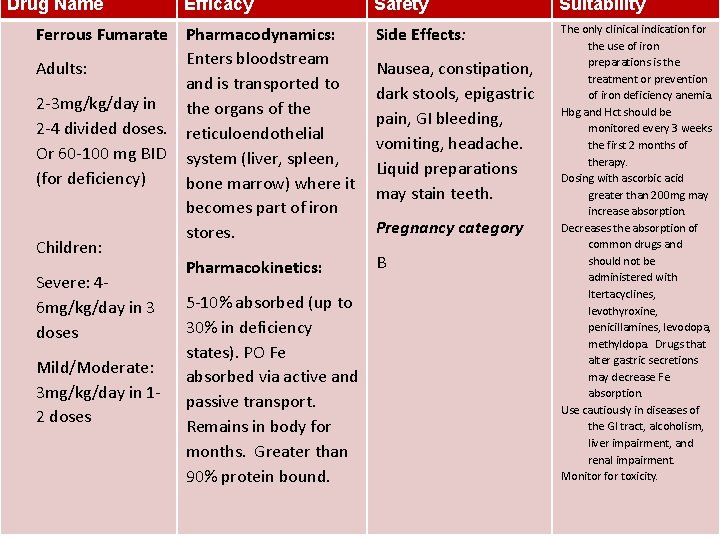
Drug Name Efficacy Ferrous Fumarate Pharmacodynamics: Enters bloodstream Adults: and is transported to 2 -3 mg/kg/day in the organs of the 2 -4 divided doses. reticuloendothelial Or 60 -100 mg BID system (liver, spleen, (for deficiency) bone marrow) where it becomes part of iron stores. Children: Pharmacokinetics: Severe: 45 -10% absorbed (up to 6 mg/kg/day in 3 30% in deficiency doses states). PO Fe Mild/Moderate: absorbed via active and 3 mg/kg/day in 1 passive transport. 2 doses Remains in body for months. Greater than 90% protein bound. Safety Suitability Side Effects: The only clinical indication for the use of iron preparations is the treatment or prevention of iron deficiency anemia. Hbg and Hct should be monitored every 3 weeks the first 2 months of therapy. Dosing with ascorbic acid greater than 200 mg may increase absorption. Decreases the absorption of common drugs and should not be administered with ltertacyclines, levothyroxine, penicillamines, levodopa, methyldopa. Drugs that alter gastric secretions may decrease Fe absorption. Use cautiously in diseases of the GI tract, alcoholism, liver impairment, and renal impairment. Monitor for toxicity. Nausea, constipation, dark stools, epigastric pain, GI bleeding, vomiting, headache. Liquid preparations may stain teeth. Pregnancy category B 14 The Ohio State University, College of Nursing
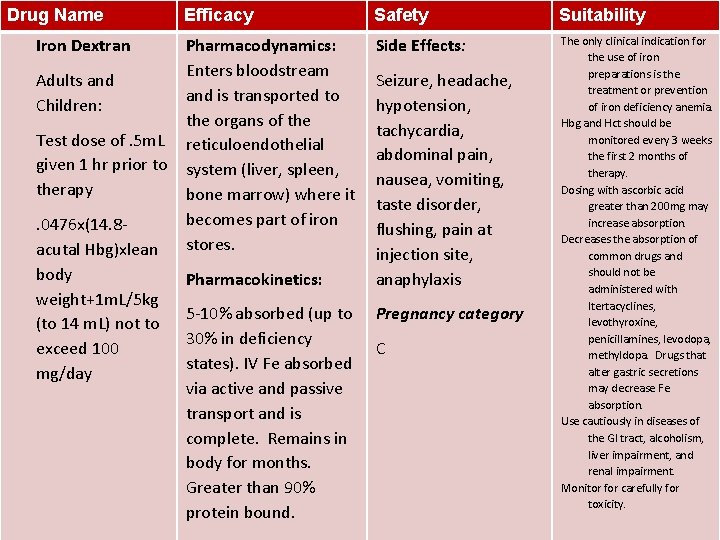
Drug Name Iron Dextran Adults and Children: Test dose of. 5 m. L given 1 hr prior to therapy. 0476 x(14. 8 acutal Hbg)xlean body weight+1 m. L/5 kg (to 14 m. L) not to exceed 100 mg/day Efficacy Safety Suitability Pharmacodynamics: Enters bloodstream and is transported to the organs of the reticuloendothelial system (liver, spleen, bone marrow) where it becomes part of iron stores. Side Effects: The only clinical indication for the use of iron preparations is the treatment or prevention of iron deficiency anemia. Hbg and Hct should be monitored every 3 weeks the first 2 months of therapy. Dosing with ascorbic acid greater than 200 mg may increase absorption. Decreases the absorption of common drugs and should not be administered with ltertacyclines, levothyroxine, penicillamines, levodopa, methyldopa. Drugs that alter gastric secretions may decrease Fe absorption. Use cautiously in diseases of the GI tract, alcoholism, liver impairment, and renal impairment. Monitor for carefully for 15 toxicity. Pharmacokinetics: 5 -10% absorbed (up to 30% in deficiency states). IV Fe absorbed via active and passive transport and is complete. Remains in body for months. Greater than 90% protein bound. Seizure, headache, hypotension, tachycardia, abdominal pain, nausea, vomiting, taste disorder, flushing, pain at injection site, anaphylaxis Pregnancy category C The Ohio State University, College of Nursing
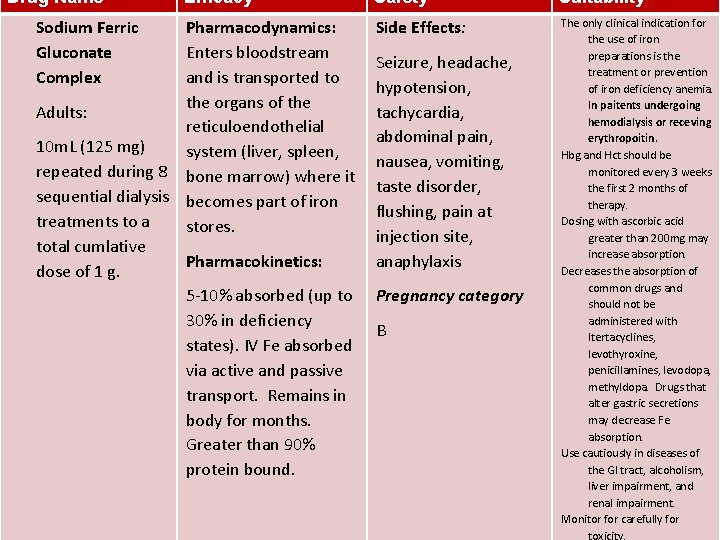
Drug Name Sodium Ferric Gluconate Complex Efficacy Pharmacodynamics: Enters bloodstream and is transported to the organs of the Adults: reticuloendothelial 10 m. L (125 mg) system (liver, spleen, repeated during 8 bone marrow) where it sequential dialysis becomes part of iron treatments to a stores. total cumlative Pharmacokinetics: dose of 1 g. 5 -10% absorbed (up to 30% in deficiency states). IV Fe absorbed via active and passive transport. Remains in body for months. Greater than 90% protein bound. Safety Suitability Side Effects: The only clinical indication for the use of iron preparations is the treatment or prevention of iron deficiency anemia. In paitents undergoing hemodialysis or receving erythropoitin. Hbg and Hct should be monitored every 3 weeks the first 2 months of therapy. Dosing with ascorbic acid greater than 200 mg may increase absorption. Decreases the absorption of common drugs and should not be administered with ltertacyclines, levothyroxine, penicillamines, levodopa, methyldopa. Drugs that alter gastric secretions may decrease Fe absorption. Use cautiously in diseases of the GI tract, alcoholism, liver impairment, and renal impairment. 16 Monitor for carefully for toxicity. Seizure, headache, hypotension, tachycardia, abdominal pain, nausea, vomiting, taste disorder, flushing, pain at injection site, anaphylaxis Pregnancy category B The Ohio State University, College of Nursing
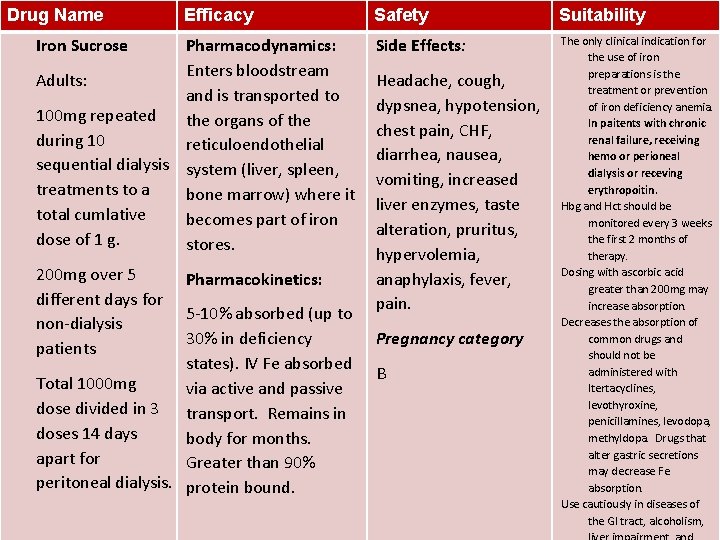
Drug Name Efficacy Iron Sucrose Pharmacodynamics: Enters bloodstream Adults: and is transported to 100 mg repeated the organs of the during 10 reticuloendothelial sequential dialysis system (liver, spleen, treatments to a bone marrow) where it total cumlative becomes part of iron dose of 1 g. stores. 200 mg over 5 different days for non-dialysis patients Pharmacokinetics: 5 -10% absorbed (up to 30% in deficiency states). IV Fe absorbed Total 1000 mg via active and passive dose divided in 3 transport. Remains in doses 14 days body for months. apart for Greater than 90% peritoneal dialysis. protein bound. Safety Suitability Side Effects: The only clinical indication for the use of iron preparations is the treatment or prevention of iron deficiency anemia. In paitents with chronic renal failure, receiving hemo or perioneal dialysis or receving erythropoitin. Hbg and Hct should be monitored every 3 weeks the first 2 months of therapy. Dosing with ascorbic acid greater than 200 mg may increase absorption. Decreases the absorption of common drugs and should not be administered with ltertacyclines, levothyroxine, penicillamines, levodopa, methyldopa. Drugs that alter gastric secretions may decrease Fe absorption. 17 of Use cautiously in diseases the GI tract, alcoholism, Headache, cough, dypsnea, hypotension, chest pain, CHF, diarrhea, nausea, vomiting, increased liver enzymes, taste alteration, pruritus, hypervolemia, anaphylaxis, fever, pain. Pregnancy category B The Ohio State University, College of Nursing
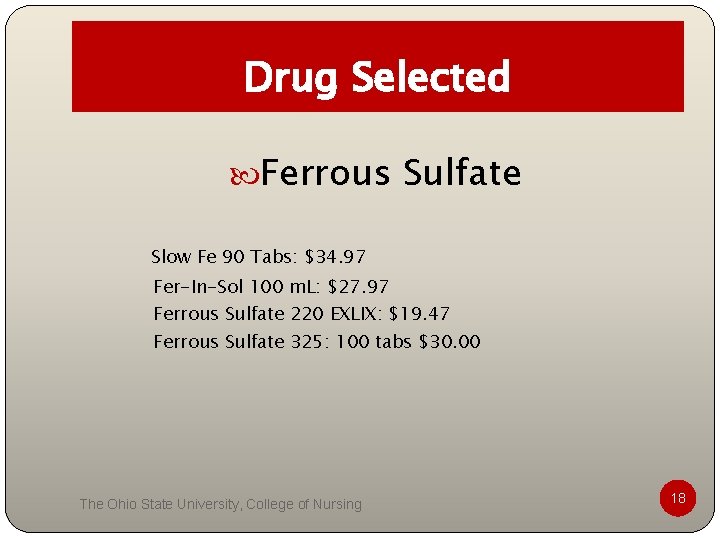
Drug Selected Ferrous Sulfate Slow Fe 90 Tabs: $34. 97 Fer-In-Sol 100 m. L: $27. 97 Ferrous Sulfate 220 EXLIX: $19. 47 Ferrous Sulfate 325: 100 tabs $30. 00 The Ohio State University, College of Nursing 18
Drug Name Ferrous Sulfate Adults: 2 -3 mg/kg/day in 2 -4 divided doses. Or 60 -100 mg BID (for deficiency) Children: Efficacy Safety Suitability Pharmacodynamics: Enters bloodstream and is transported to the organs of the reticuloendothelial system (liver, spleen, bone marrow) where it becomes part of iron stores. Side Effects: Pharmacokinetics: B The only clinical indication for the use of iron preparations is the treatment or prevention of iron deficiency anemia. Hbg and Hct should be monitored every 3 weeks the first 2 months of therapy. Dosing with ascorbic acid greater than 200 mg may increase absorption. Decreases the absorption of common drugs and should not be administered with ltertacyclines, levothyroxine, penicillamines, levodopa, methyldopa. Drugs that alter gastric secretions may decrease Fe absorption. Use cautiously in diseases of the GI tract, alcoholism, liver impairment, and renal impairment. Monitor for toxicity. 5 -10% absorbed (up to 30% in deficiency states). PO Fe absorbed via active Mild/Moderate: and passive transport. 3 mg/kg/day in 1 Remains in body for 2 doses months. Greater than 90% protein bound Severe: 46 mg/kg/day in 3 doses Nausea, constipation, dark stools, epigastric pain, GI bleeding, vomiting, headache. Liquid preparations may stain teeth. Pregnancy category
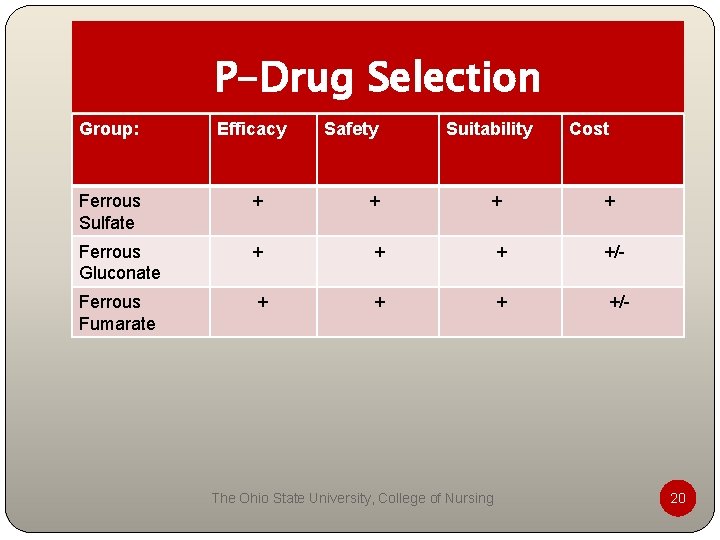
P-Drug Selection Group: Efficacy Safety Suitability Cost Ferrous Sulfate + + Ferrous Gluconate + +/- Ferrous Fumarate + +/- The Ohio State University, College of Nursing 20
P-Drug: Ferrous Sulfate Pharmacodynamics: Forms the nucleus of the iron-porphyrin heme ring which together with globin forms hemoglobin. Hemoglobin reversibly binds oxygen and provides oxygen delivery from the lungs to tissues. Pharmacokinetics: Absorption: Absorption is increased when iron stores are depleted or red blood cell production is increased. Conversely, high iron blood concentrations decrease absorption. The Ohio State University, College of Nursing 21
P-Drug: Ferrous Sulfate Metabolism: Cytochrome P 450 family(CYP 450) Excretion: No physiological system of elimination exists for iron, and it can accumulate in the body to toxic amounts; however, small amounts are lost daily in the shedding of skin, hair, and nails; and in feces, perspiration, breast milk (1. 1 to 1. 4 mg per day), menstrual blood, and urine 22 The Ohio State University, College of Nursing
P-Drug: Ferrous Sulfate Common Side Effects: Constipation; darkened or green stools; diarrhea; nausea; stomach upset. Severe allergic reactions (rash; hives; itching; difficulty breathing; tightness in the chest; swelling of the mouth, face, lips, or tongue); black, tarry stools; blood or streaks of blood in the stool; fever; vomiting with continuing sharp stomach pain Contraindications: An allergy to any iron supplement Acute hepatitis Hemosiderosis or hemochromatosis (conditions involving excess iron in body) Hemolytic anemia Had repeated blood transfusions 23 The Ohio State University, College of Nursing
Patient Provider Interaction Review foods high in iron such as liver, seafood, nuts, beans, green leafy vegetables, whole grains, and fortified foods. Review foods that block absorption of iron such as coffee, tea, egg whites. Avoid these while eating foods high in iron. Review appropriate administration and use of medications The Ohio State University, College of Nursing 24
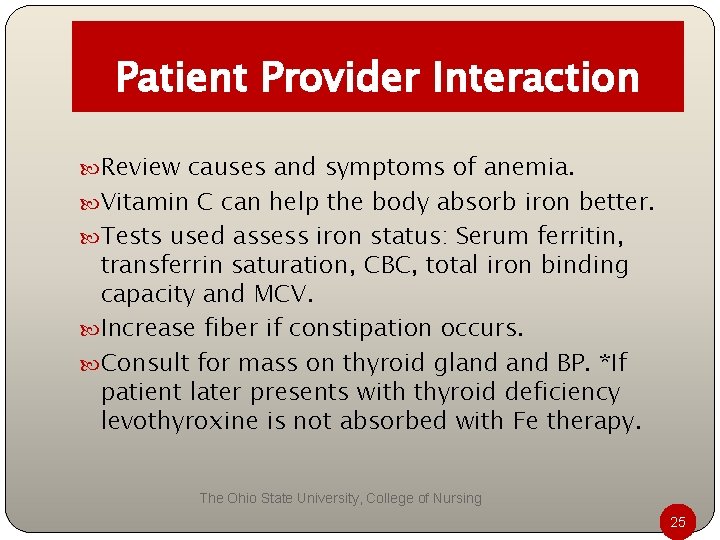
Patient Provider Interaction Review causes and symptoms of anemia. Vitamin C can help the body absorb iron better. Tests used assess iron status: Serum ferritin, transferrin saturation, CBC, total iron binding capacity and MCV. Increase fiber if constipation occurs. Consult for mass on thyroid gland BP. *If patient later presents with thyroid deficiency levothyroxine is not absorbed with Fe therapy. The Ohio State University, College of Nursing 25
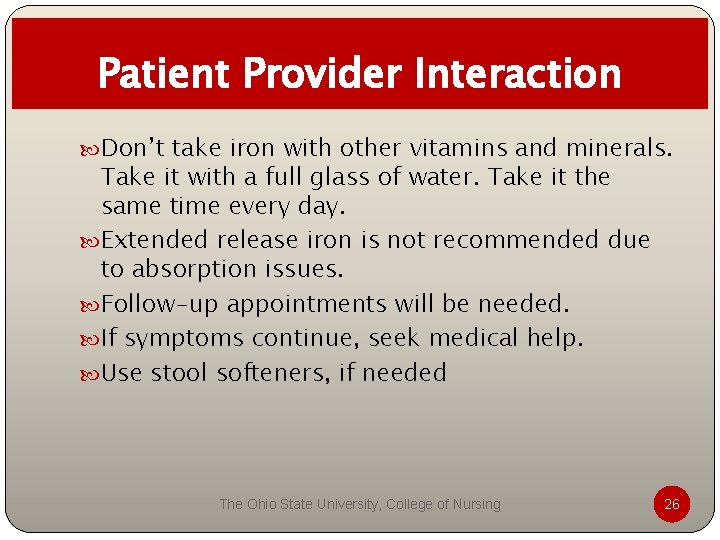
Patient Provider Interaction Don’t take iron with other vitamins and minerals. Take it with a full glass of water. Take it the same time every day. Extended release iron is not recommended due to absorption issues. Follow-up appointments will be needed. If symptoms continue, seek medical help. Use stool softeners, if needed The Ohio State University, College of Nursing 26
Board of Nursing Formulary Nutrients and Nutritional agents may be found in the formulary on page 5. CTP holders may prescribe PO vitamins and minerals such as magnesium sulfate and other trace elements to include iron. The Ohio State University, College of Nursing 27
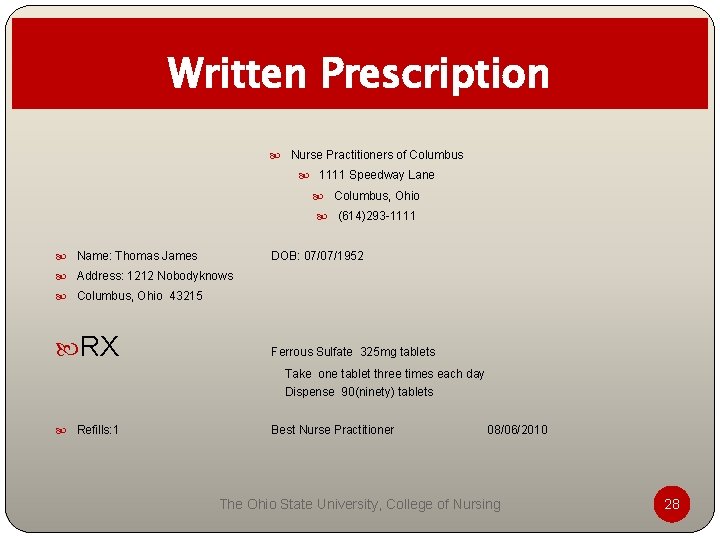
Written Prescription Nurse Practitioners of Columbus 1111 Speedway Lane Name: Thomas James Address: 1212 Nobodyknows Columbus, Ohio 43215 RX Columbus, Ohio (614)293 -1111 DOB: 07/07/1952 Ferrous Sulfate 325 mg tablets Take one tablet three times each day Dispense 90(ninety) tablets Refills: 1 Best Nurse Practitioner 08/06/2010 The Ohio State University, College of Nursing 28
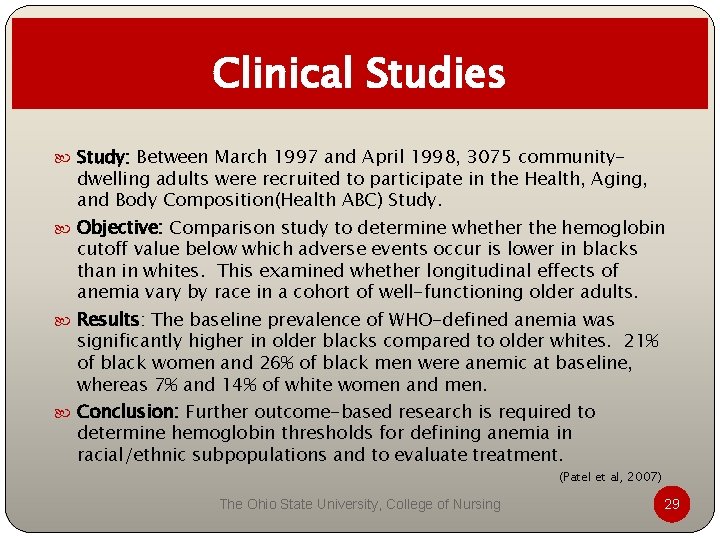
Clinical Studies Study: Between March 1997 and April 1998, 3075 community- dwelling adults were recruited to participate in the Health, Aging, and Body Composition(Health ABC) Study. Objective: Comparison study to determine whether the hemoglobin cutoff value below which adverse events occur is lower in blacks than in whites. This examined whether longitudinal effects of anemia vary by race in a cohort of well-functioning older adults. Results: The baseline prevalence of WHO-defined anemia was significantly higher in older blacks compared to older whites. 21% of black women and 26% of black men were anemic at baseline, whereas 7% and 14% of white women and men. Conclusion: Further outcome-based research is required to determine hemoglobin thresholds for defining anemia in racial/ethnic subpopulations and to evaluate treatment. (Patel et al, 2007) The Ohio State University, College of Nursing 29
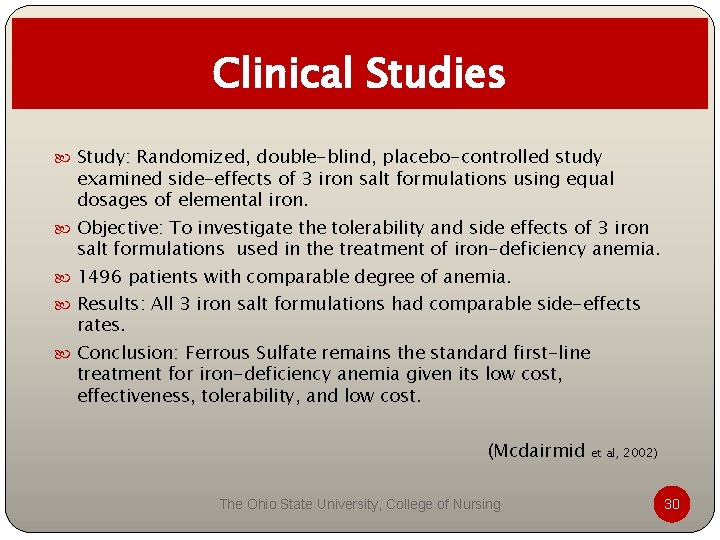
Clinical Studies Study: Randomized, double-blind, placebo-controlled study examined side-effects of 3 iron salt formulations using equal dosages of elemental iron. Objective: To investigate the tolerability and side effects of 3 iron salt formulations used in the treatment of iron-deficiency anemia. 1496 patients with comparable degree of anemia. Results: All 3 iron salt formulations had comparable side-effects rates. Conclusion: Ferrous Sulfate remains the standard first-line treatment for iron-deficiency anemia given its low cost, effectiveness, tolerability, and low cost. (Mcdairmid The Ohio State University, College of Nursing et al, 2002) 30
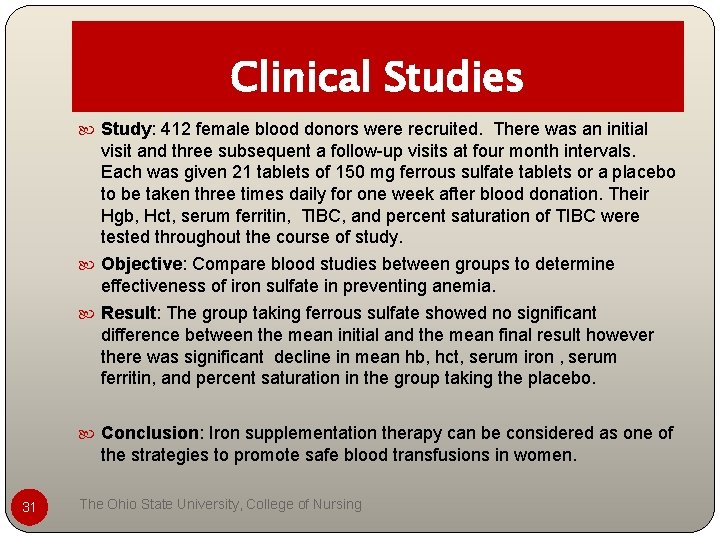
Clinical Studies Study: 412 female blood donors were recruited. There was an initial visit and three subsequent a follow-up visits at four month intervals. Each was given 21 tablets of 150 mg ferrous sulfate tablets or a placebo to be taken three times daily for one week after blood donation. Their Hgb, Hct, serum ferritin, TIBC, and percent saturation of TIBC were tested throughout the course of study. Objective: Compare blood studies between groups to determine effectiveness of iron sulfate in preventing anemia. Result: The group taking ferrous sulfate showed no significant difference between the mean initial and the mean final result however there was significant decline in mean hb, hct, serum iron , serum ferritin, and percent saturation in the group taking the placebo. Conclusion: Iron supplementation therapy can be considered as one of the strategies to promote safe blood transfusions in women. 31 The Ohio State University, College of Nursing
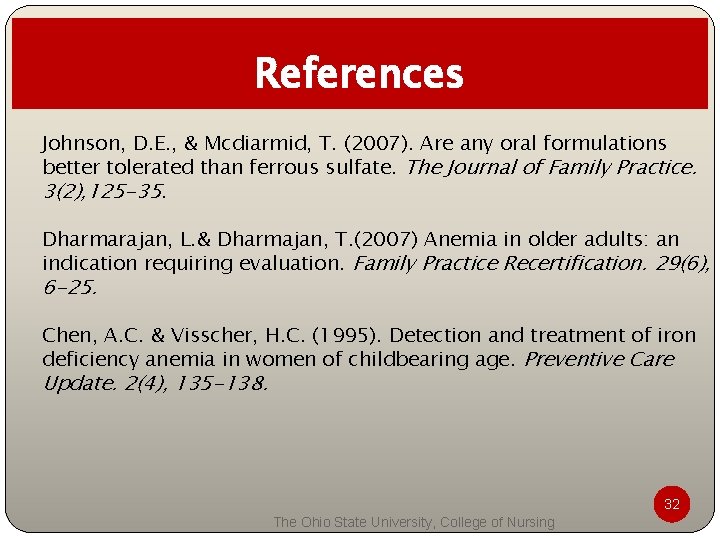
References Johnson, D. E. , & Mcdiarmid, T. (2007). Are any oral formulations better tolerated than ferrous sulfate. The Journal of Family Practice. 3(2), 125 -35. Dharmarajan, L. & Dharmajan, T. (2007) Anemia in older adults: an indication requiring evaluation. Family Practice Recertification. 29(6), 6 -25. Chen, A. C. & Visscher, H. C. (1995). Detection and treatment of iron deficiency anemia in women of childbearing age. Preventive Care Update. 2(4), 135 -138. 32 The Ohio State University, College of Nursing
References Epocrates Rx (2010). [database for PDA, Version 8. 10]. San Mateo, CA: Epocrates, Inc. Retrieved from http: //www. epocrates. com Alleyene, M. & Mcdonald, E. K. (2008). Individualized treatment for iron-deficiency anemia in adults. The American Journal of Medicine. 121(11), 943 -948. Patel et al. (2007). Racial variation in the relationship of anemia with mortality and mobility disability among alder adults. Clinical Trails and Observations. 108(11), 4663 -4670. The Ohio State University, College of Nursing 33
References (PDA) u. Central from Unbound Medicine http: //www. nlm. nih. gov/medlineplus/druginfo/natural /patient-iron. html Basic & Clinical Pharmacology, by Bertram G. Katzung: The Mc. Graw-Hill Companies, Inc. , 11 th edition, 2009. The Ohio State University, College of Nursing 34
Questions? ? ? ? The Ohio State University, College of Nursing 35