
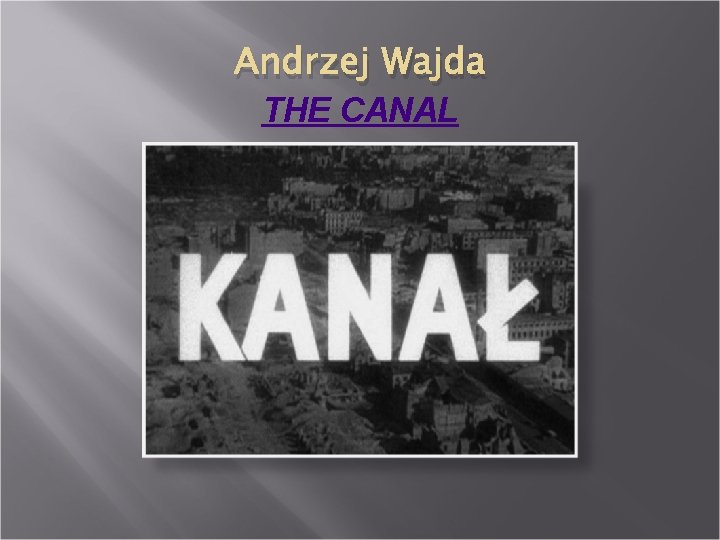
Andrzej Wajda THE CANAL The Canal Wajdas aesthetic
- Slides: 18
Andrzej Wajda THE CANAL
The Canal Wajda’s aesthetic opposition to communism with its socialist realism. The influence of Italian neo-realism. The concept of national history. “Polish romanticism. ” Realism and symbolism. Music, literature, fine arts.
Socialist Realism A Soviet aesthetic doctrine enforced in Poland in late 1940 -s by the Communist party. Principles: The adherence to the Party line; Story/history told from a Marxist perspective; The emphasis on class-based images and class struggle; Nationalism replaced by internationalism; Marxism-based moral lessons; Social optimism; No formal experimentation; The reality shown “as it should be. ”
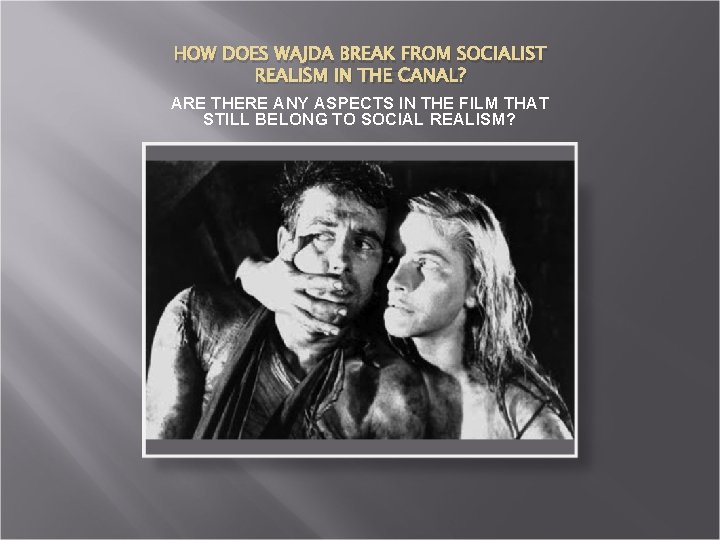
HOW DOES WAJDA BREAK FROM SOCIALIST REALISM IN THE CANAL? ARE THERE ANY ASPECTS IN THE FILM THAT STILL BELONG TO SOCIAL REALISM?
The influence of Italian Neorealism Italian neo-realism was a Post-War cinema trend, starting with Roberto Rossellini's Rome, Open City (1946). Observation-based (“see things as they are”) ; Life not sugar-coated; Use of non-professional actors, real locations; Documentary flavour; Social issues; Poor working class characters; Episodic narrative.
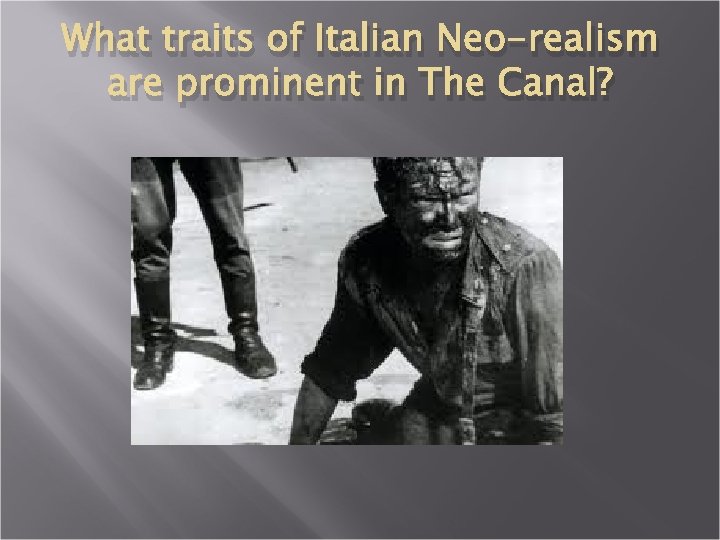
What traits of Italian Neo-realism are prominent in The Canal?
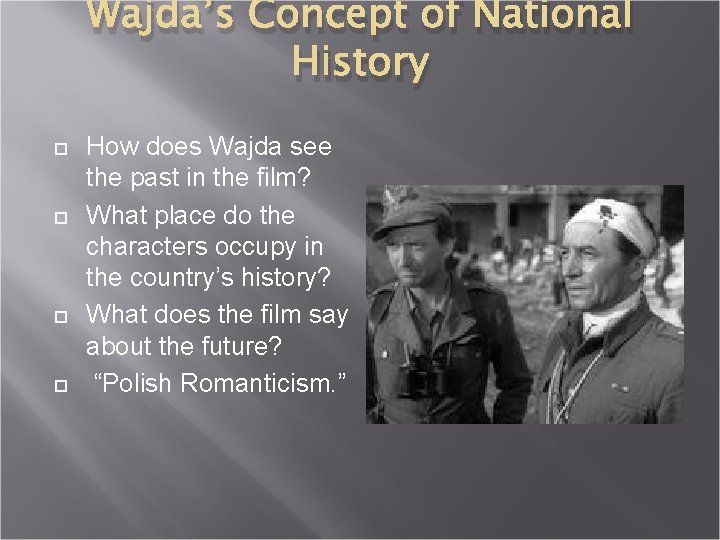
Wajda’s Concept of National History How does Wajda see the past in the film? What place do the characters occupy in the country’s history? What does the film say about the future? “Polish Romanticism. ”
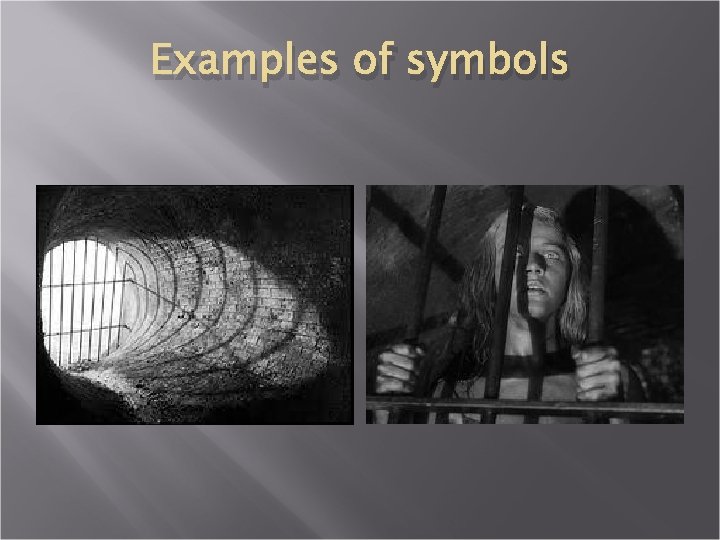
Symbolism Symbol In art, an object or image that represents another object or idea by association or similarity; usually, a material object standing for something imperceptible, especially abstract concepts. Symbols are elusive and may convey several meanings. What symbols can you find in The Canal?
Examples of symbols
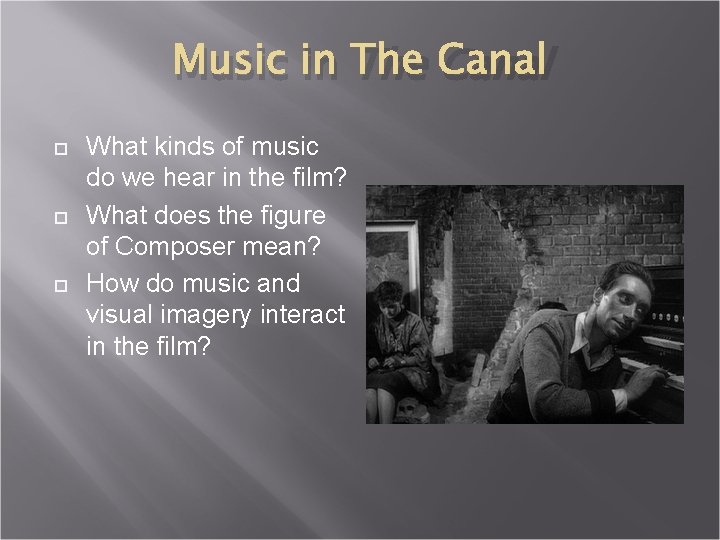
Music in The Canal What kinds of music do we hear in the film? What does the figure of Composer mean? How do music and visual imagery interact in the film?
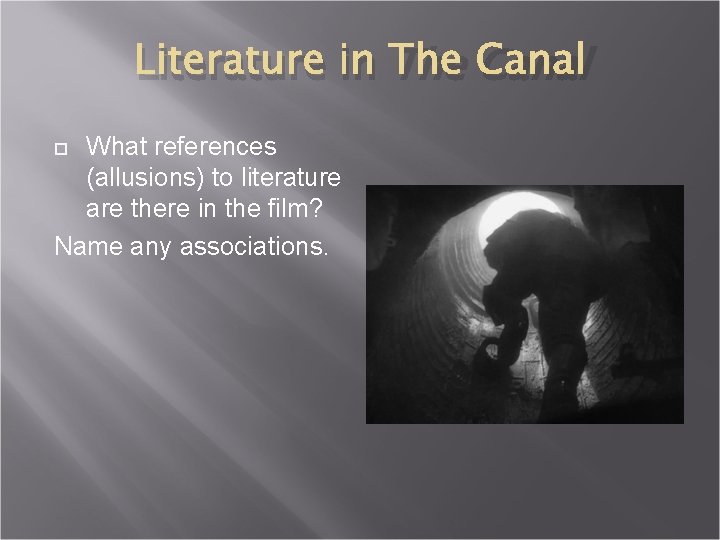
Literature in The Canal What references (allusions) to literature are there in the film? Name any associations.
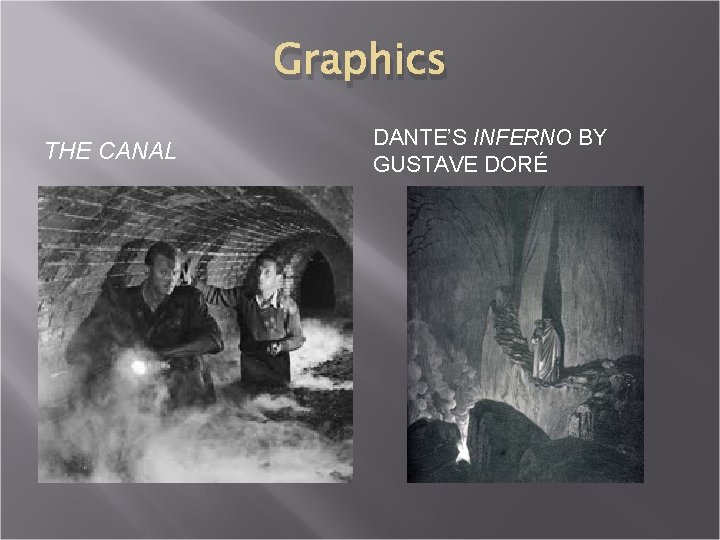
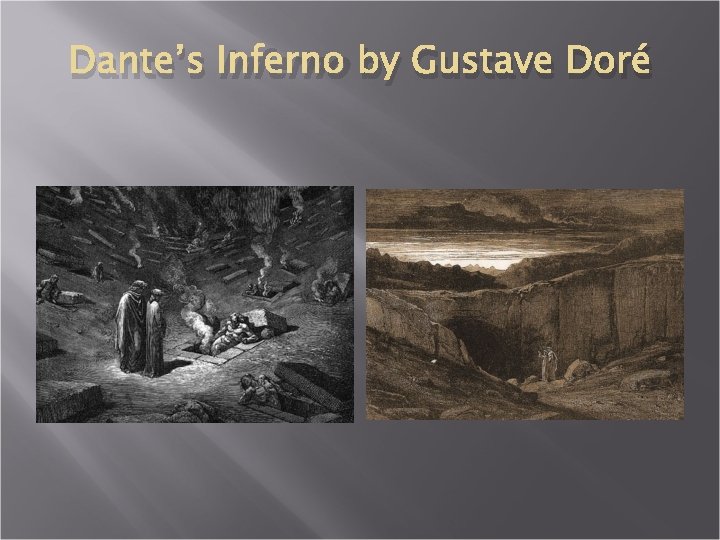
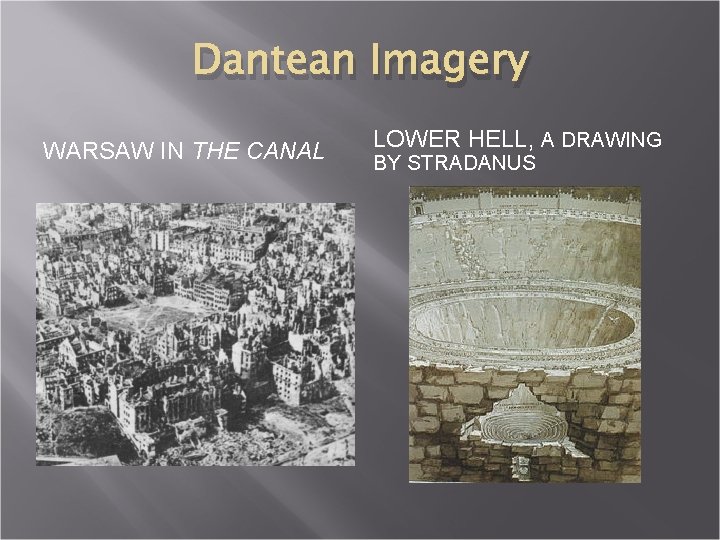
Literature in The Canal The film is based on a story by Jerzy Stawińsky. It contains allusions to classics, such as Greek tragedy (ex. , chorus, “Lethean water”), Shakespeare, and Dante’s “Inferno” from the Divine Comedy. The setting is reminiscent of an episode in Les Misérables (1862) by Victor Hugo, a novel revered by Communists for its revolutionary spirit.
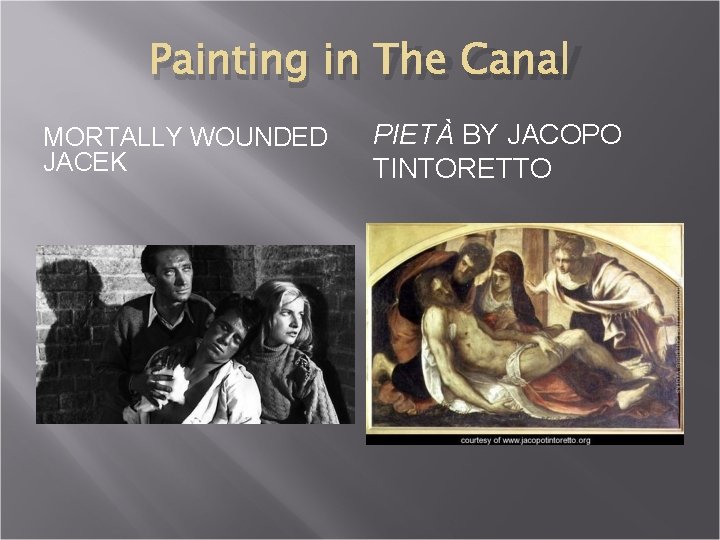
Painting in The Canal MORTALLY WOUNDED JACEK PIETÀ BY JACOPO TINTORETTO
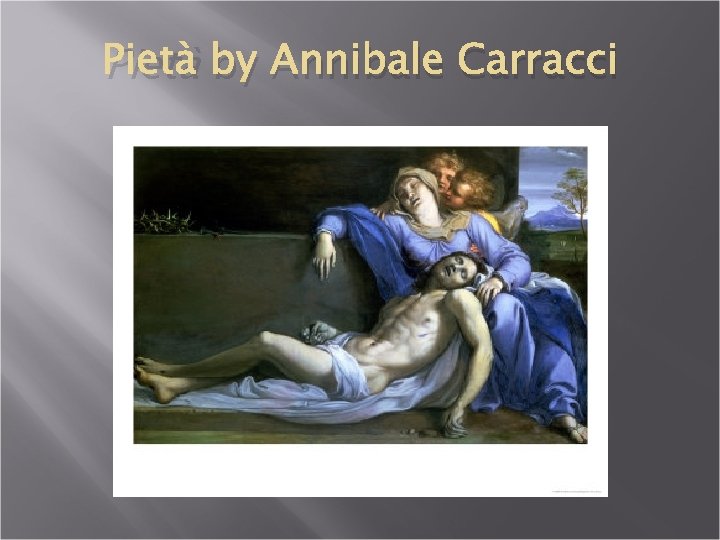
Pietà by Annibale Carracci
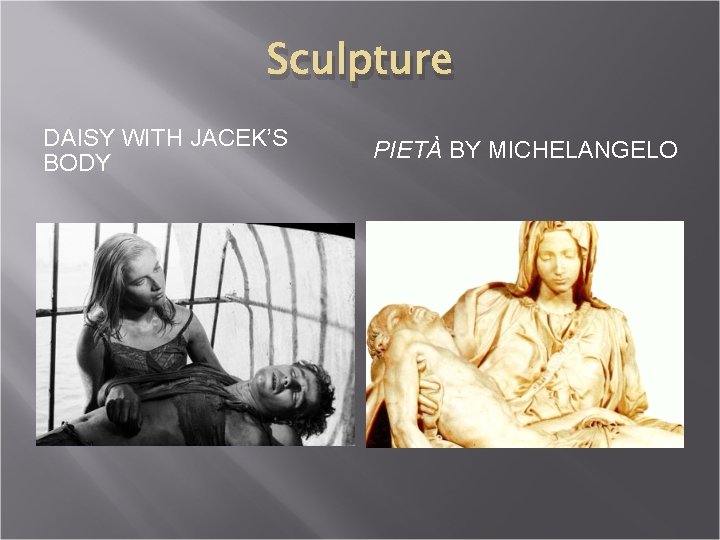
Sculpture DAISY WITH JACEK’S BODY PIETÀ BY MICHELANGELO
Graphics THE CANAL DANTE’S INFERNO BY GUSTAVE DORÉ
Dante’s Inferno by Gustave Doré
Dantean Imagery WARSAW IN THE CANAL LOWER HELL, A DRAWING BY STRADANUS