
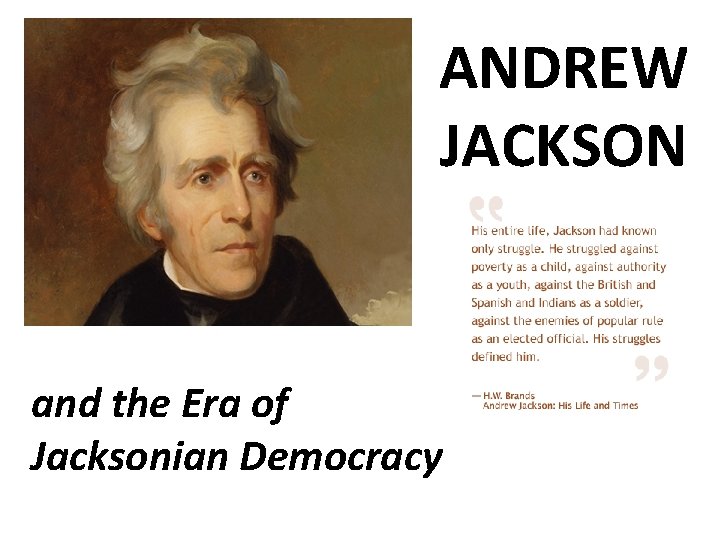
ANDREW JACKSON and the Era of Jacksonian Democracy

- Slides: 12
ANDREW JACKSON and the Era of Jacksonian Democracy
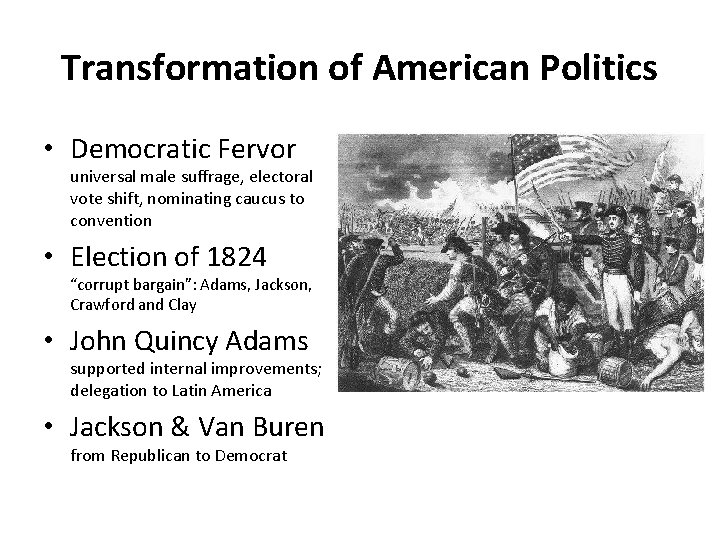
Transformation of American Politics • Democratic Fervor universal male suffrage, electoral vote shift, nominating caucus to convention • Election of 1824 “corrupt bargain”: Adams, Jackson, Crawford and Clay • John Quincy Adams supported internal improvements; delegation to Latin America • Jackson & Van Buren from Republican to Democrat
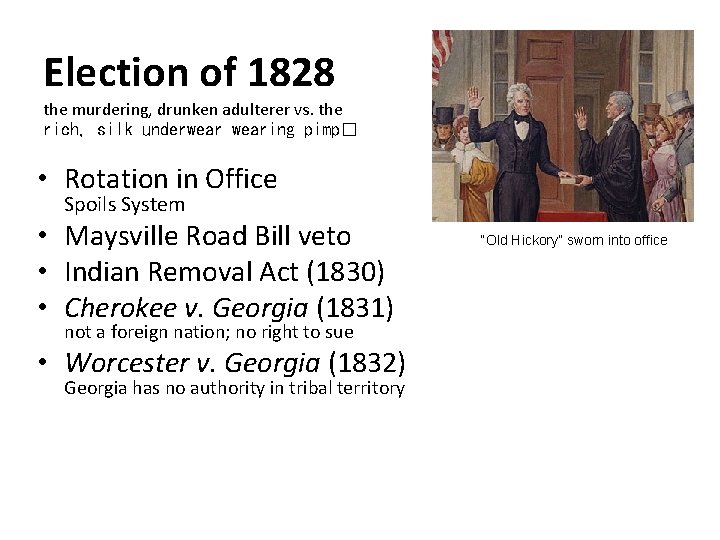
Election of 1828 the murdering, drunken adulterer vs. the rich, silk underwearing pimp� • Rotation in Office Spoils System • Maysville Road Bill veto • Indian Removal Act (1830) • Cherokee v. Georgia (1831) not a foreign nation; no right to sue • Worcester v. Georgia (1832) Georgia has no authority in tribal territory “Old Hickory” sworn into office
Jackson vs. Calhoun • Tariff of Abominations, 1828 • Nullification Crisis South Carolina Exposition and Protest , slavery • Peggy Eaton Affair • Olive Branch and the Sword: Compromise Tariff and Force Bill (1833)
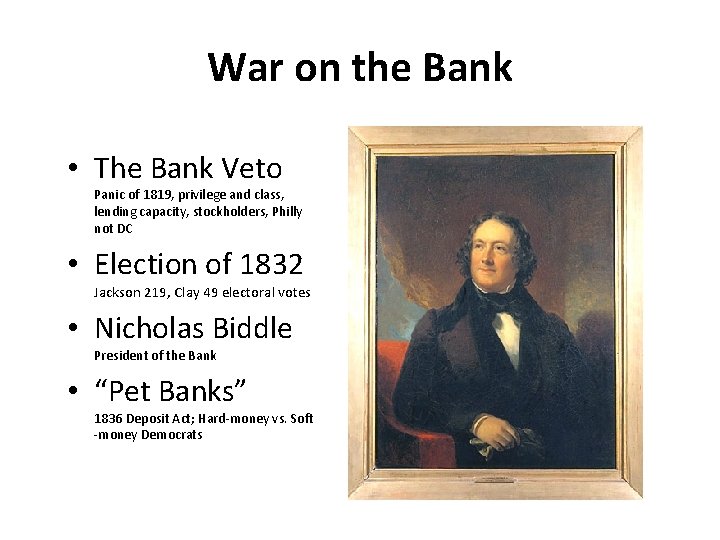
War on the Bank • The Bank Veto Panic of 1819, privilege and class, lending capacity, stockholders, Philly not DC • Election of 1832 Jackson 219, Clay 49 electoral votes • Nicholas Biddle President of the Bank • “Pet Banks” 1836 Deposit Act; Hard-money vs. Soft -money Democrats
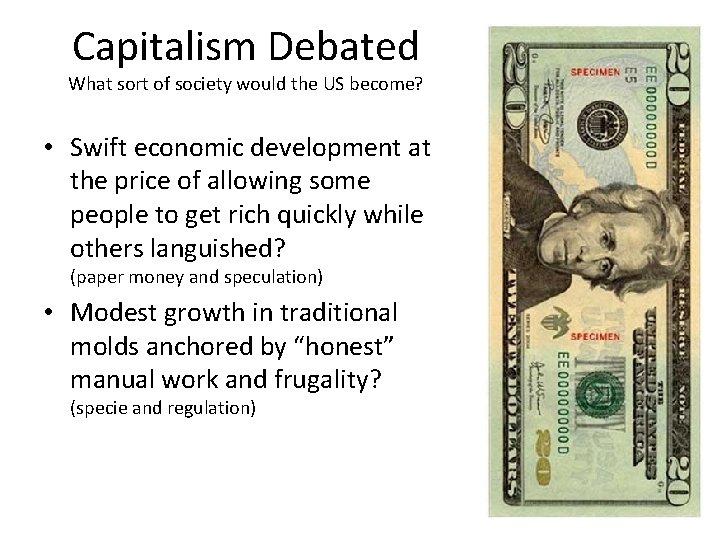
Capitalism Debated What sort of society would the US become? • Swift economic development at the price of allowing some people to get rich quickly while others languished? (paper money and speculation) • Modest growth in traditional molds anchored by “honest” manual work and frugality? (specie and regulation)
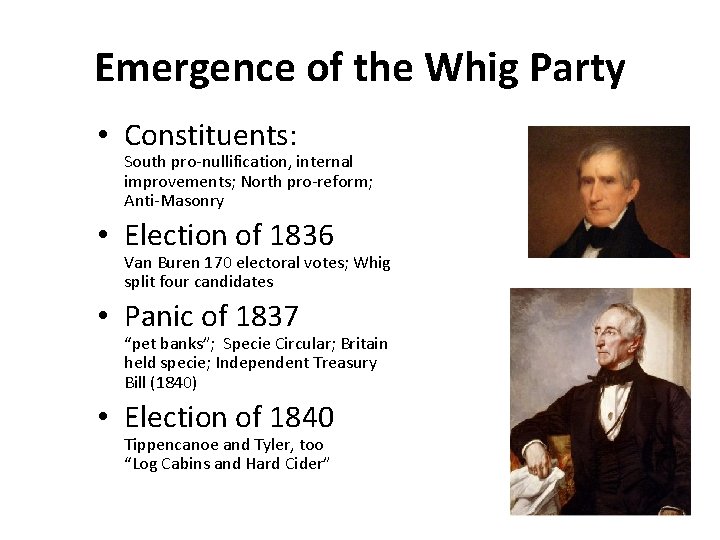
Emergence of the Whig Party • Constituents: South pro-nullification, internal improvements; North pro-reform; Anti-Masonry • Election of 1836 Van Buren 170 electoral votes; Whig split four candidates • Panic of 1837 “pet banks”; Specie Circular; Britain held specie; Independent Treasury Bill (1840) • Election of 1840 Tippencanoe and Tyler, too “Log Cabins and Hard Cider”
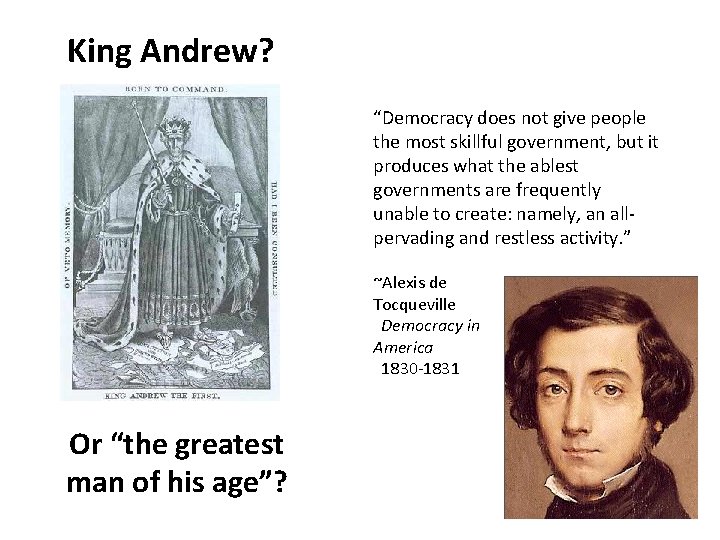
King Andrew? “Democracy does not give people the most skillful government, but it produces what the ablest governments are frequently unable to create: namely, an allpervading and restless activity. ” ~Alexis de Tocqueville Democracy in America 1830 -1831 Or “the greatest man of his age”?
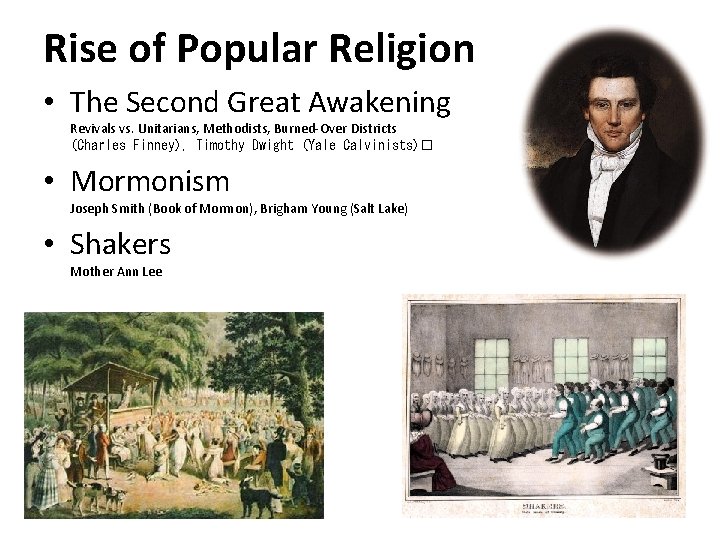
Rise of Popular Religion • The Second Great Awakening Revivals vs. Unitarians, Methodists, Burned-Over Districts (Charles Finney), Timothy Dwight (Yale Calvinists)� • Mormonism Joseph Smith (Book of Mormon), Brigham Young (Salt Lake) • Shakers Mother Ann Lee
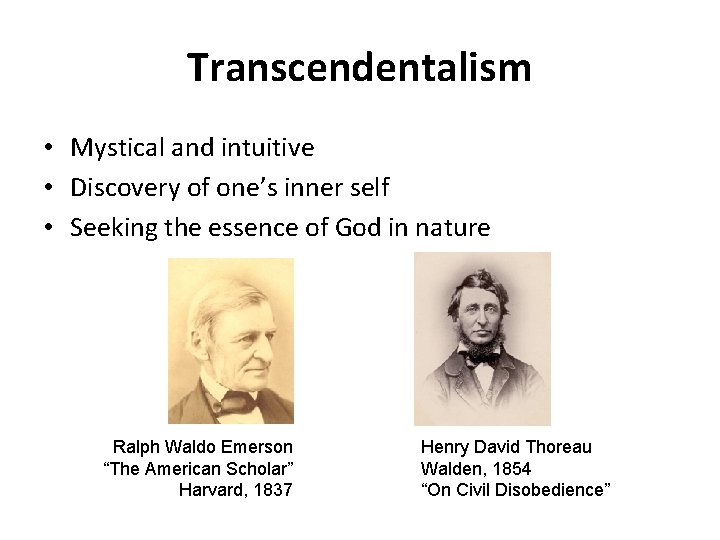
Transcendentalism • Mystical and intuitive • Discovery of one’s inner self • Seeking the essence of God in nature Ralph Waldo Emerson “The American Scholar” Harvard, 1837 Henry David Thoreau Walden, 1854 “On Civil Disobedience”
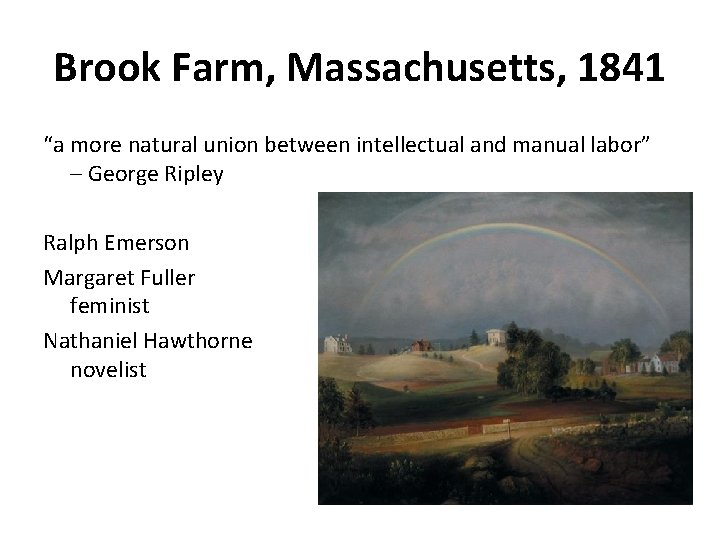
Brook Farm, Massachusetts, 1841 “a more natural union between intellectual and manual labor” – George Ripley Ralph Emerson Margaret Fuller feminist Nathaniel Hawthorne novelist
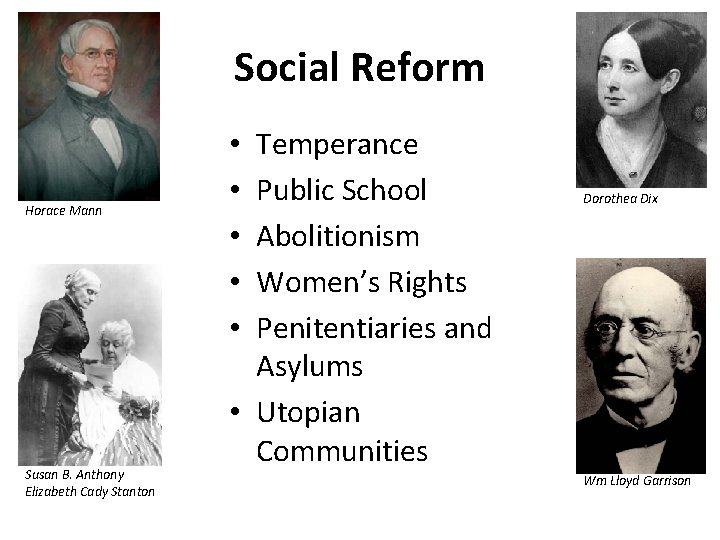
Social Reform Horace Mann Susan B. Anthony Elizabeth Cady Stanton Temperance Public School Abolitionism Women’s Rights Penitentiaries and Asylums • Utopian Communities • • • Dorothea Dix Wm Lloyd Garrison