
Andrea Musulin Faithfulness In Service 2017 Domestic Violence

- Slides: 106
Andrea Musulin Faithfulness In Service - 2017
Domestic Violence Presentation Presented by Andrea Musulin Western Australian Child Protection Society
What the presentation will cover 1. What is Domestic Violence – The Facts, The Fiction, The Dangers and The Data. 2. How should faith based organisations respond to Domestic Violence? 3. Using the Protective Behaviours Program to prevent Domestic Violence or seek out appropriate help.
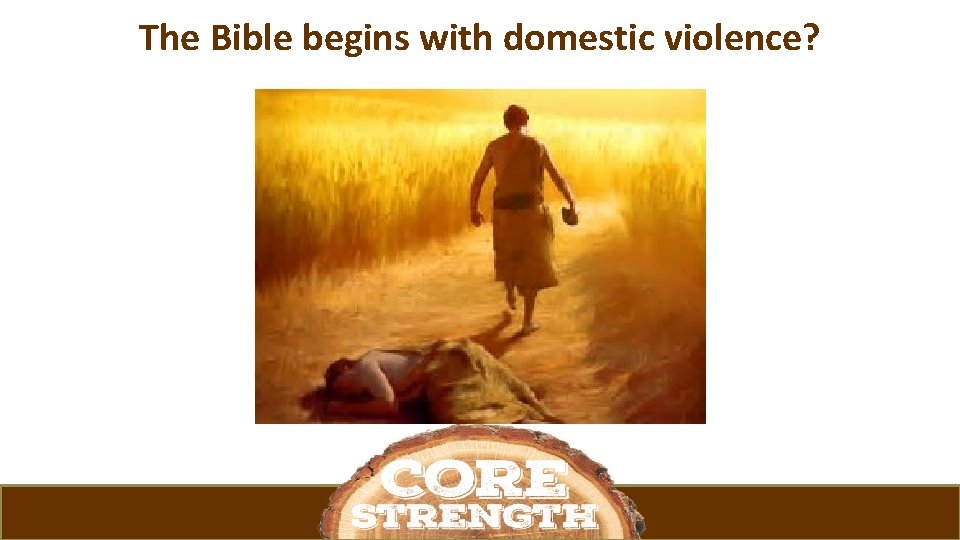
The Bible begins with domestic violence?
• It's time to act on Our Watch. mp 4
What’s the difference ? Domestic Violence V Family Violence
What is Domestic Violence ? Domestic violence can happen to anyone and can take many forms. It's a abuse of power and control that usually involves a pattern of violent, abusive or intimidating behaviour carried out by a partner, ex-partner, carer or family member to control, dominate or instill fear.
What drives Domestic Violence ? Violence against women is serious and prevalent. It is primarily driven by gender inequality, and reinforced or exacerbated by a number of other factors. Gender inequality is a situation in which women and men do not have equal power, resources or opportunities, and that their voices, ideas and work are not valued equally by society.
What drives Domestic Violence ? Gender inequality provides the underlying social conditions for violence against women. It operates at many levels – from social and cultural norms (the dominant ideas about men and women in a society), to economic structures (such as the pay gap between men and women), to organisational, community, family and relationship practices.
Why do individuals commit Domestic Violence ?
What are the signs of Domestic Violence ? Signs that someone you know is being abused; Ø Bruises or injuries that look like they came from choking, punching, or being thrown down. Black eyes, red or purple marks at the neck, and sprained wrists are common injuries in violent relationships.
What are the signs of Domestic Violence ? Ø Attempting to hide bruises with makeup or clothing. Ø Making excuses like tripping or being accident-prone or clumsy. Often the seriousness of the injury does not match up with the explanation.
What are the signs of Domestic Violence ? Ø Having few close friends and being isolated from relatives and co-workers and kept from making friends. Ø Having to ask permission to meet, talk with, or do things with other people. Ø Having little money available; may not have credit cards or even a car.
What are the signs of Domestic Violence ? Ø Having low self-esteem; being extremely apologetic and meek. Ø Referring to the partner's temper but not disclosing the extent of the abuse. Ø Having a drug or alcohol abuse problem. Ø Having symptoms of depression, such as sadness or hopelessness, or loss of interest in daily activities.
What are the signs of Domestic Violence ? Ø Talking about suicide, attempting suicide, or showing other warning signs of suicide. Ø Not being allowed to answer questions for themselves.
Types of Domestic Violence ? Domestic Violence can include the following types of abuse: ØVerbal ØPsychological ØEmotional ØSocial
Types of Domestic Violence ? ØFinancial ØPhysical ØSexual ØHarrassment and Stalking ØSpiritual
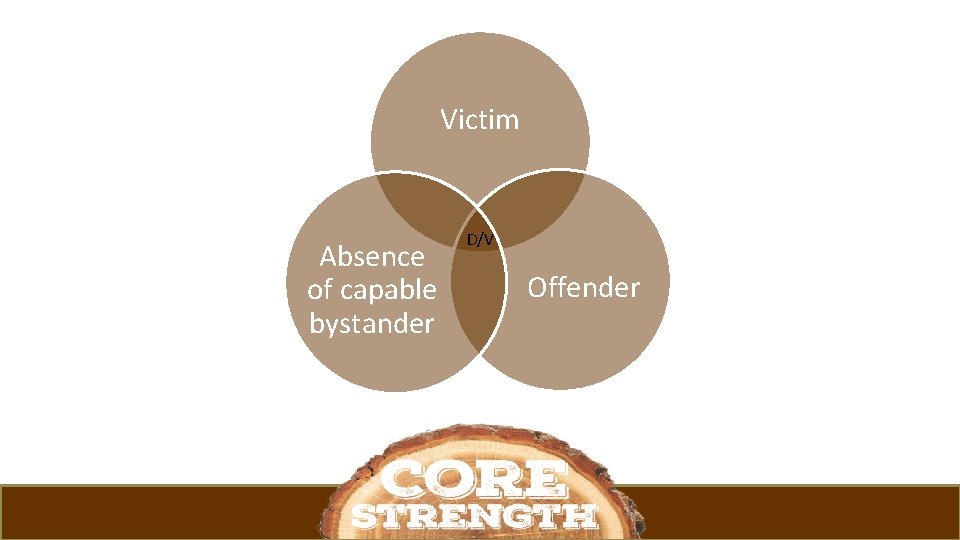
Victim Absence of capable bystander D/V Offender
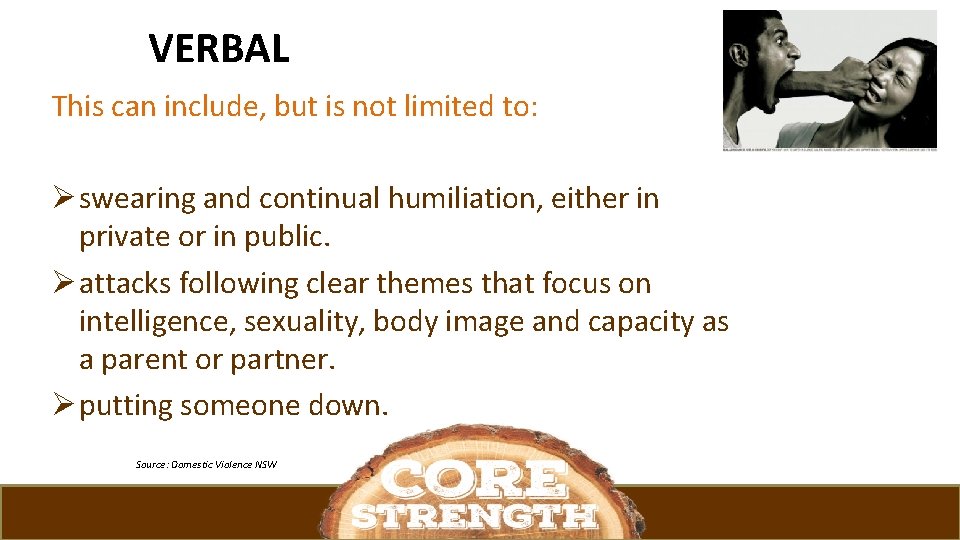
VERBAL This can include, but is not limited to: Ø swearing and continual humiliation, either in private or in public. Ø attacks following clear themes that focus on intelligence, sexuality, body image and capacity as a parent or partner. Ø putting someone down. Source: Domestic Violence NSW
PSYCHOLOGICAL This can include: Ø driving dangerously, Ø destruction of property, Ø abuse of pets in front of family members, Ø making threats regarding custody of any children, Ø asserting that the police and justice system will not assist, support or believe the victim.
EMOTIONAL This can include: Ø threatening to ‘out’ the person's sexuality. Ø blaming the victim for all problems in the relationship. Ø constantly comparing the victim with others to undermine self-esteem and self-worth, sporadic sulking.
EMOTIONAL Ø withdrawing all interest and engagement (for example weeks of silence), Ø emotional blackmail and suicidal threats, Ø threats to harm oneself, pets, children or other family members.
SOCIAL This can include: Ø systematic isolation from family and friends through techniques such as ongoing rudeness to alienate them, Ø instigating and controlling the move to a location where the victim has no established social circle or employment opportunities.
SOCIAL Ø restricting use of the car or telephone or internet, Ø forbidding or physically preventing the victim from going out and meeting people.
FINANCIAL This can include, (but is not limited to) Ø complete control of all money, Ø restricting access to bank accounts, Ø providing only an inadequate ‘allowance’, Ø not allowing someone to seek or have a job, Ø co-ercement to sign documents, take out loans or make false declarations,
FINANCIAL Ø using all wages earned by the victim for household expenses, Ø controlling the victim’s pension, Ø denying that the victim has an entitlement to joint property.
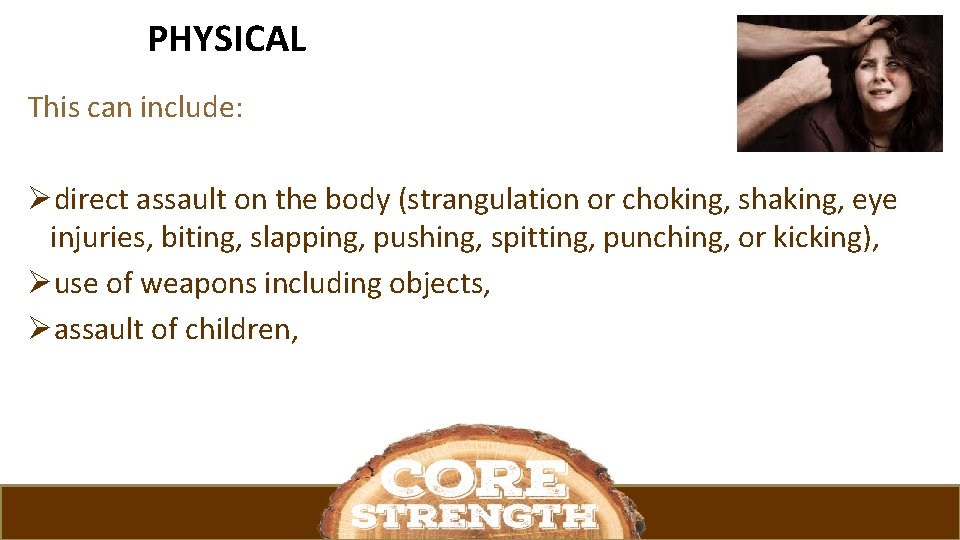
PHYSICAL This can include: Ødirect assault on the body (strangulation or choking, shaking, eye injuries, biting, slapping, pushing, spitting, punching, or kicking), Øuse of weapons including objects, Øassault of children,
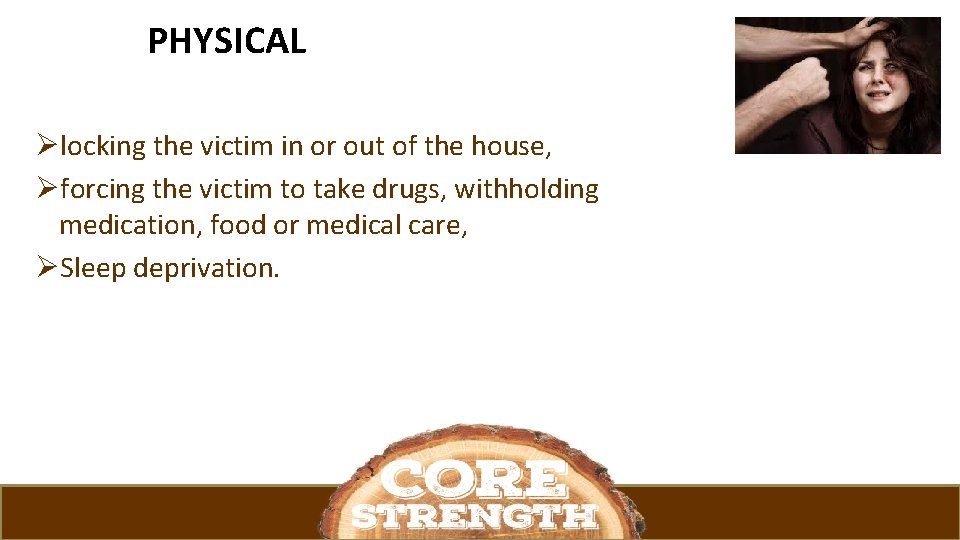
PHYSICAL Ølocking the victim in or out of the house, Øforcing the victim to take drugs, withholding medication, food or medical care, ØSleep deprivation.
SEXUAL This can include: Ø any form of pressured/unwanted sex or sexual degradation by an intimate partner or ex-partner, such as sexual activity without consent, Ø forcing someone to watch explicit material against their will, causing pain during sex, assaulting genitals, Source: Domestic Violence NSW
SEXUAL Ø coercive sex without protection against pregnancy or sexually transmitted disease, Ø making someone perform sexual acts unwillingly, Ø taking photos or distributing them without the subject's consent, Ø criticising or using sexually degrading insults. Source: Domestic Violence NSW
SPIRITUAL This can include: Ø the denial and/or misuse of religious beliefs or practices to force victims into subordinate roles, Ø misusing religious or spiritual traditions to justify physical violence or other abuse. Source: Report to Synod from Sydney Anglican Domestic Violence Task Force 2016
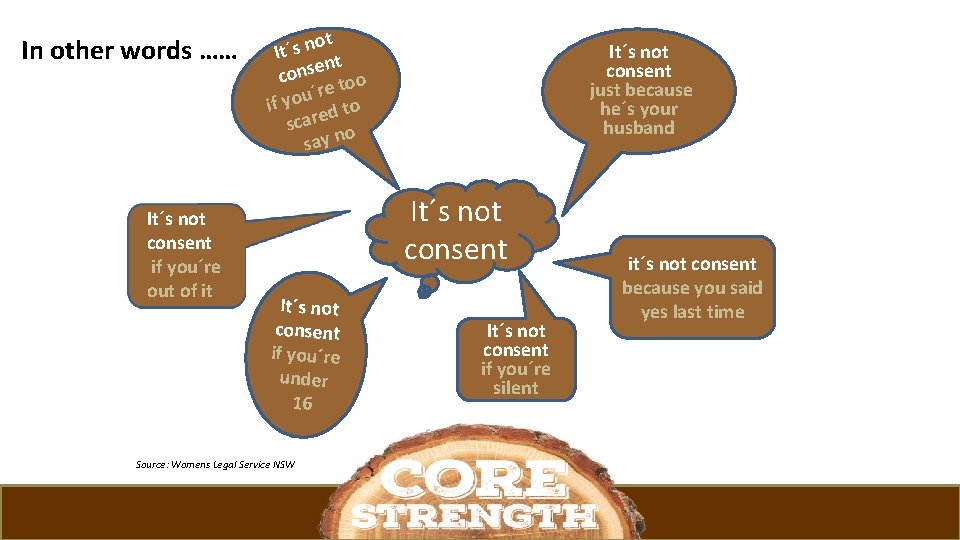
In other words …… It´s not consent if you´re out of it t o n s It´ nt e s n co o o t e ´r if you d to scare o say n It´s not consent just because he´s your husband It´s not consent if you´re under 16 Source: Womens Legal Service NSW It´s not consent if you´re silent it´s not consent because you said yes last time
HARRASSMENT OR STALKING This can include: Ø Ø following and watching, monitoring someone's movements, sending harassing text messages or getting someone else to do it, telephone and online harassment, Source: Domestic Violence NSW
HARRASSMENT OR STALKING Ø tracking with Global Positioning Systems (GPS) or through social media or online interactions, Ø being intimidating. Source: Domestic Violence NSW
Quick Facts Ø A person does not need to be married or in a current relationship for it to be considered domestic violence. Ø Aboriginal women are 35 times more likely to be the victim of DV. Ø Two women have been killed every week on average this year. Ø A woman is hospitalised every 3 hours, Source: Domestic Violence NSW , Luke Batty Foundation
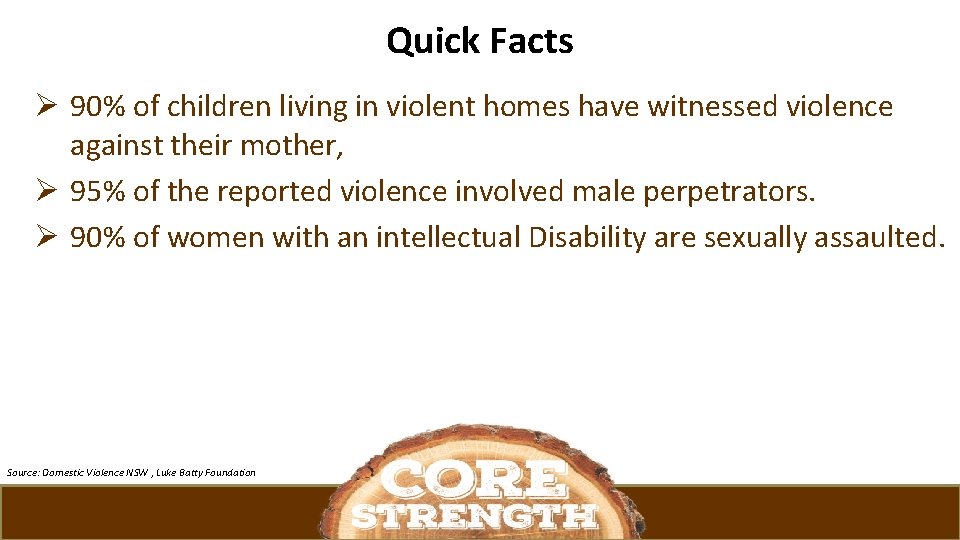
Quick Facts Ø 90% of children living in violent homes have witnessed violence against their mother, Ø 95% of the reported violence involved male perpetrators. Ø 90% of women with an intellectual Disability are sexually assaulted. Source: Domestic Violence NSW , Luke Batty Foundation
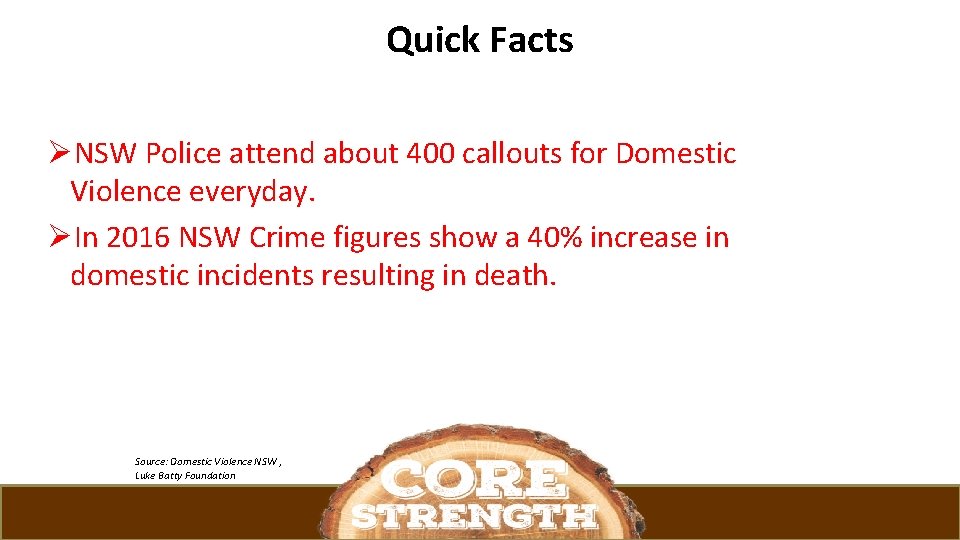
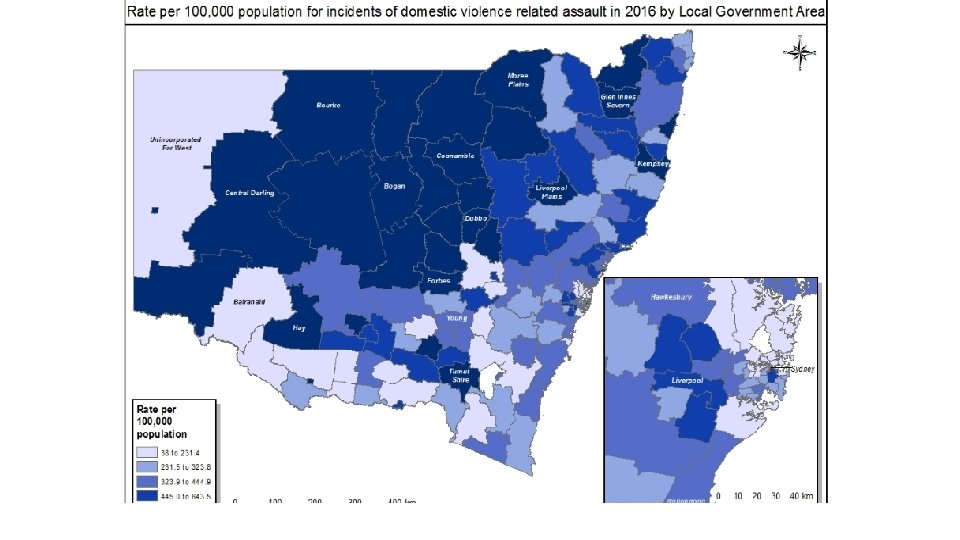
Quick Facts ØNSW Police attend about 400 callouts for Domestic Violence everyday. ØIn 2016 NSW Crime figures show a 40% increase in domestic incidents resulting in death. Source: Domestic Violence NSW , Luke Batty Foundation
The Facts
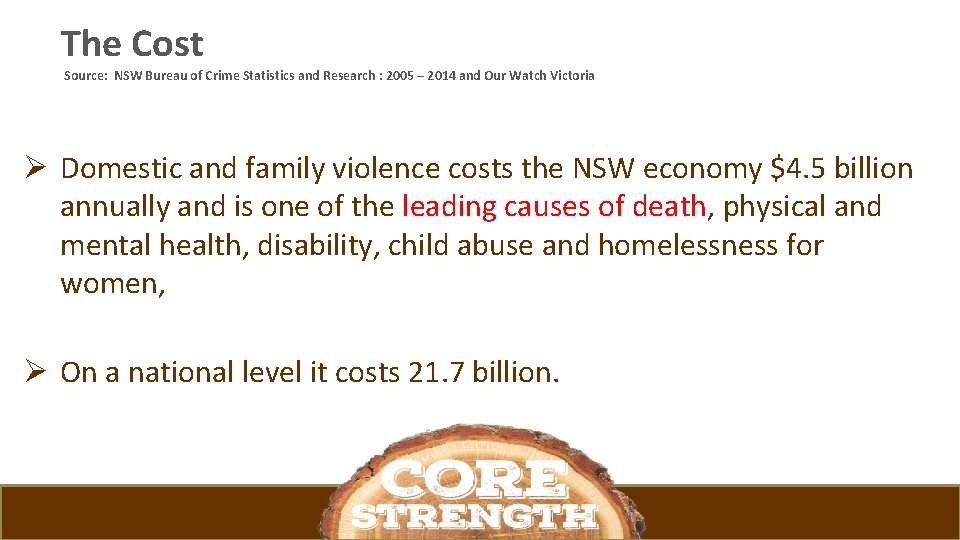
The Cost Source: NSW Bureau of Crime Statistics and Research : 2005 – 2014 and Our Watch Victoria Ø Domestic and family violence costs the NSW economy $4. 5 billion annually and is one of the leading causes of death, physical and mental health, disability, child abuse and homelessness for women, Ø On a national level it costs 21. 7 billion.
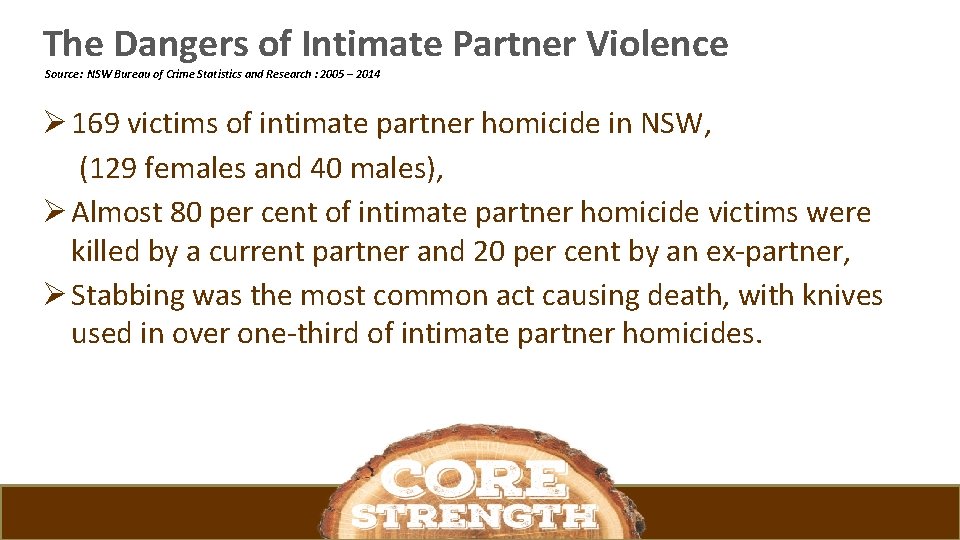
The Dangers of Intimate Partner Violence Source: NSW Bureau of Crime Statistics and Research : 2005 – 2014 Ø 169 victims of intimate partner homicide in NSW, (129 females and 40 males), Ø Almost 80 per cent of intimate partner homicide victims were killed by a current partner and 20 per cent by an ex-partner, Ø Stabbing was the most common act causing death, with knives used in over one-third of intimate partner homicides.
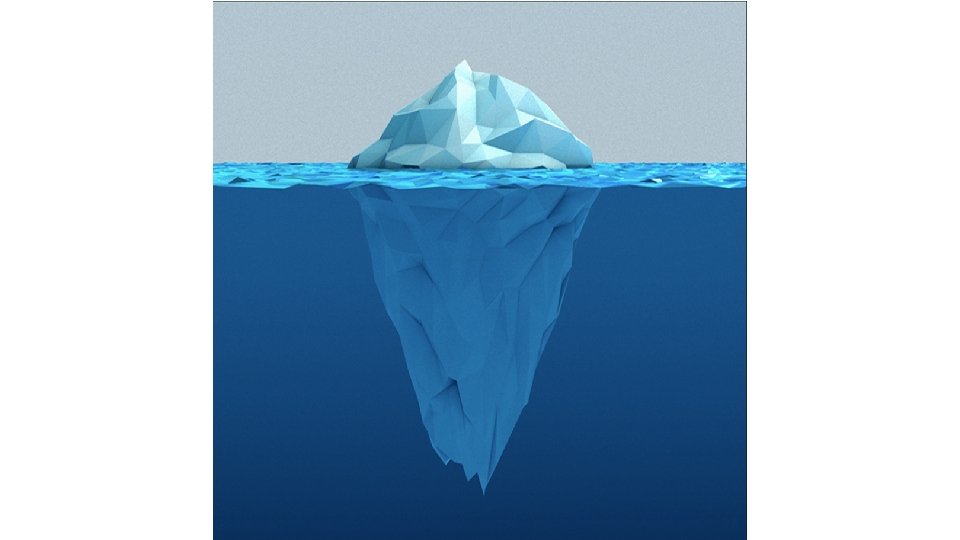
Conclusions: Overall, less than one-third of intimate partner homicide victims had any prior contact with the police as a victim of a prior violent offence or AVO where the eventual homicide offender was the person of interest.
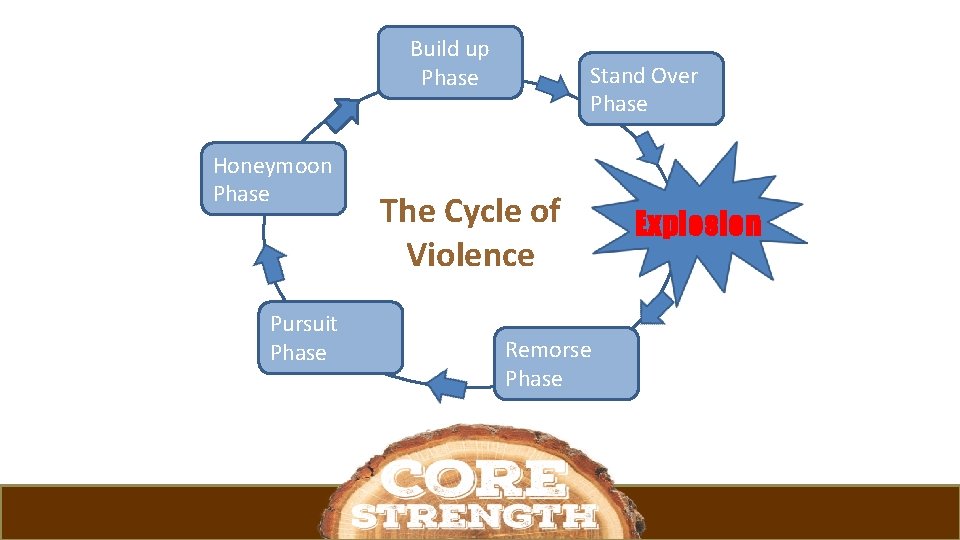
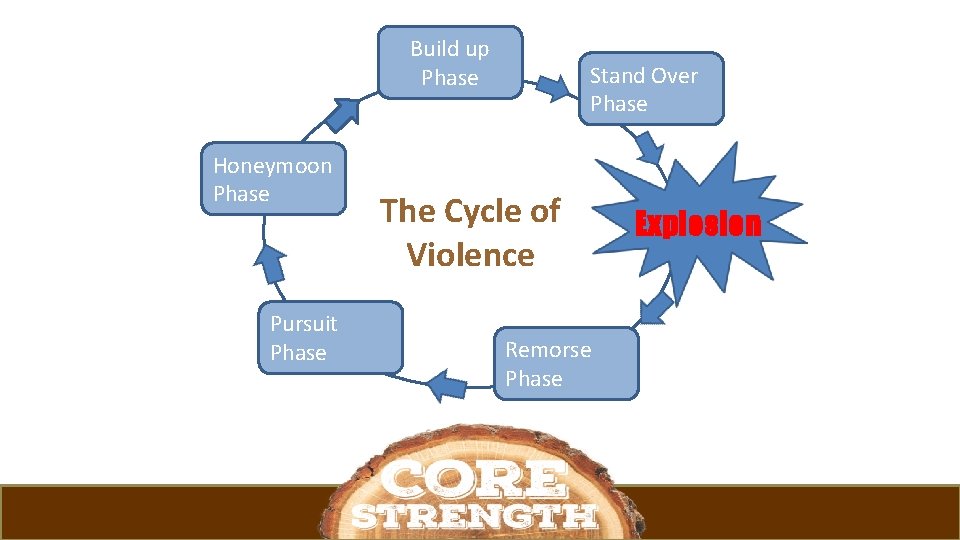
Build up Phase Honeymoon Phase Pursuit Phase Stand Over Phase The Cycle of Violence Remorse Phase Explosion
Session 1 Questions
Session 2 Domestic Violence and faith based organisations
This shows very clearly that Ø Ø The issue needs priority High levels of support are needed Prevention programs are required We all must play our part
Does Domestic Violence occur in Christian Families
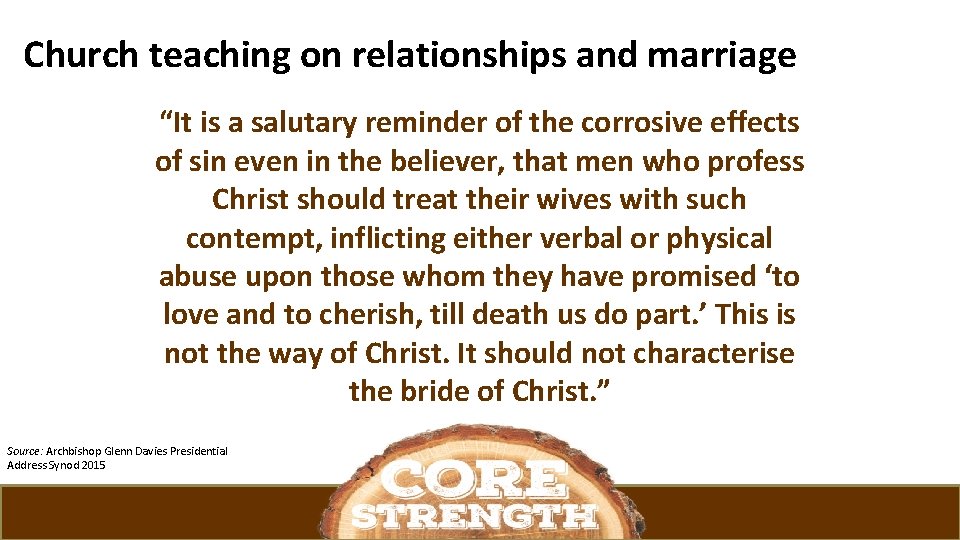
Church teaching on relationships and marriage “It is a salutary reminder of the corrosive effects of sin even in the believer, that men who profess Christ should treat their wives with such contempt, inflicting either verbal or physical abuse upon those whom they have promised ‘to love and to cherish, till death us do part. ’ This is not the way of Christ. It should not characterise the bride of Christ. ” Source: Archbishop Glenn Davies Presidential Address Synod 2015
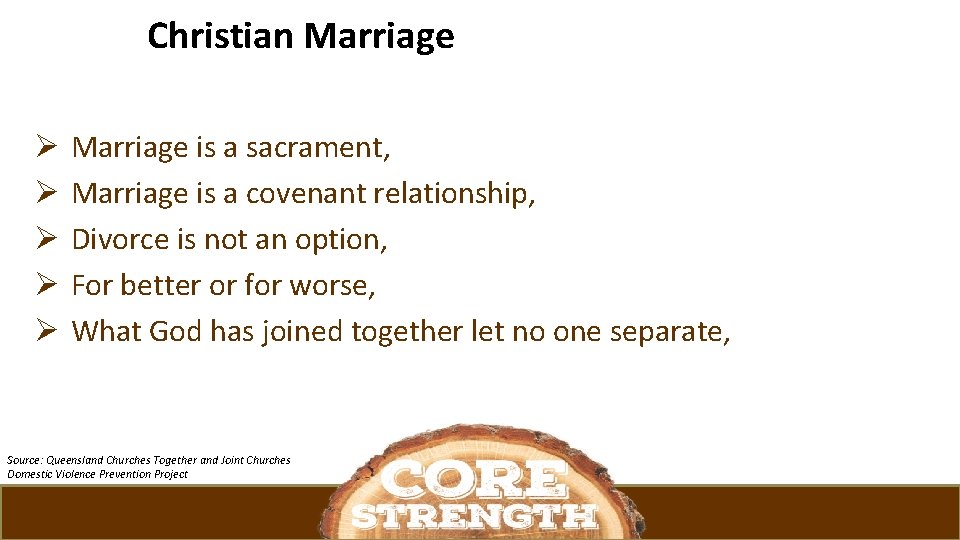
Christian Marriage Ø Ø Ø Marriage is a sacrament, Marriage is a covenant relationship, Divorce is not an option, For better or for worse, What God has joined together let no one separate, Source: Queensland Churches Together and Joint Churches Domestic Violence Prevention Project
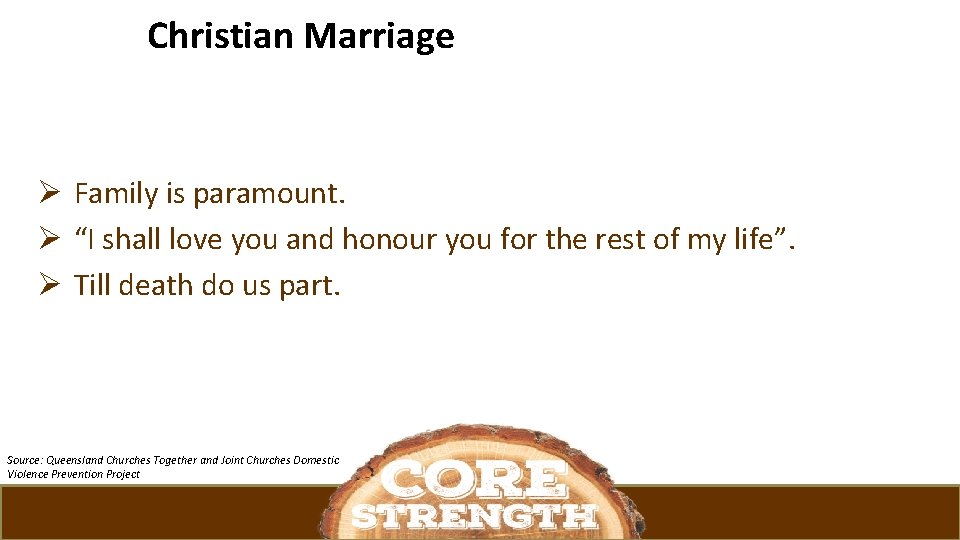
Christian Marriage Ø Family is paramount. Ø “I shall love you and honour you for the rest of my life”. Ø Till death do us part. Source: Queensland Churches Together and Joint Churches Domestic Violence Prevention Project
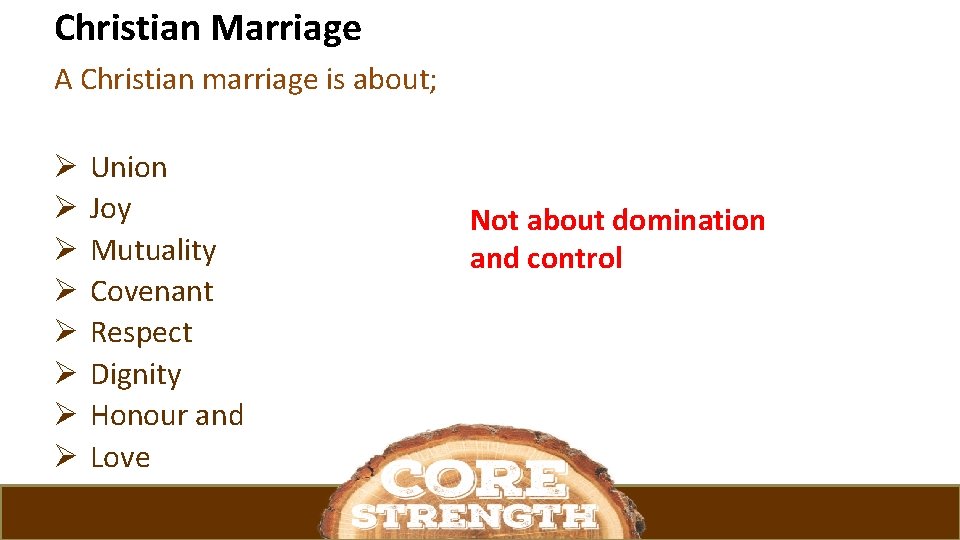
Christian Marriage A Christian marriage is about; Ø Ø Ø Ø Union Joy Mutuality Covenant Respect Dignity Honour and Love Not about domination and control
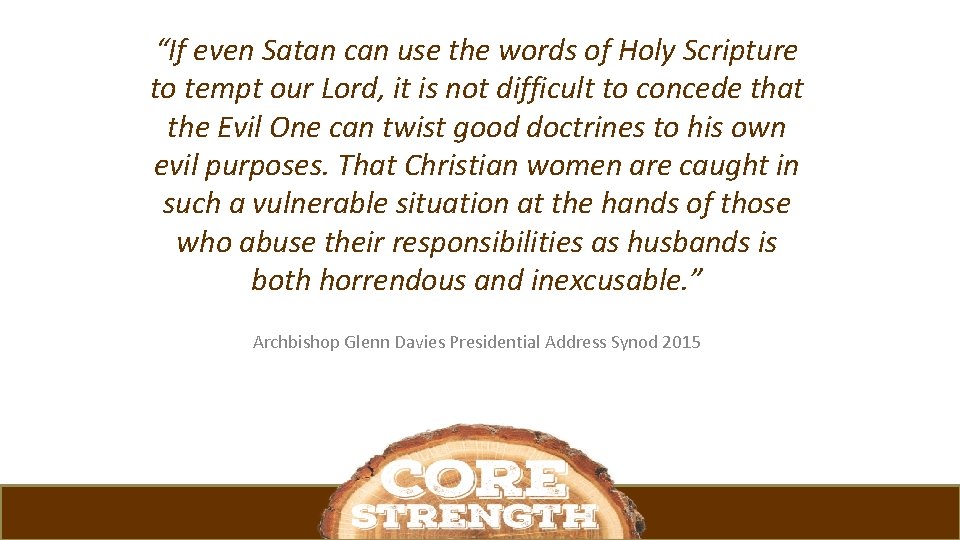
“If even Satan can use the words of Holy Scripture to tempt our Lord, it is not difficult to concede that the Evil One can twist good doctrines to his own evil purposes. That Christian women are caught in such a vulnerable situation at the hands of those who abuse their responsibilities as husbands is both horrendous and inexcusable. ” Archbishop Glenn Davies Presidential Address Synod 2015
Scripture should never be used to justify abuse or to encourage people to remain in an abusive relationship.
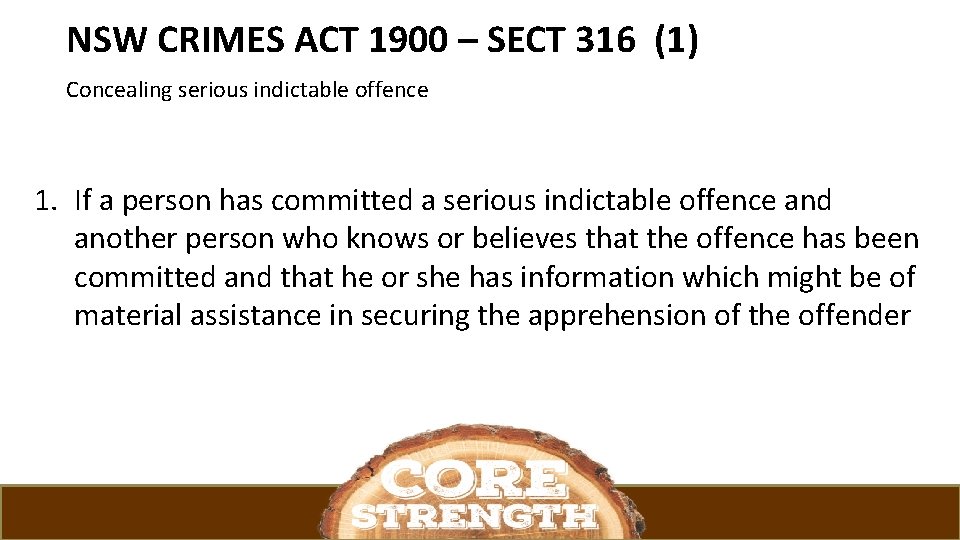
NSW CRIMES ACT 1900 – SECT 316 (1) Concealing serious indictable offence 1. If a person has committed a serious indictable offence and another person who knows or believes that the offence has been committed and that he or she has information which might be of material assistance in securing the apprehension of the offender
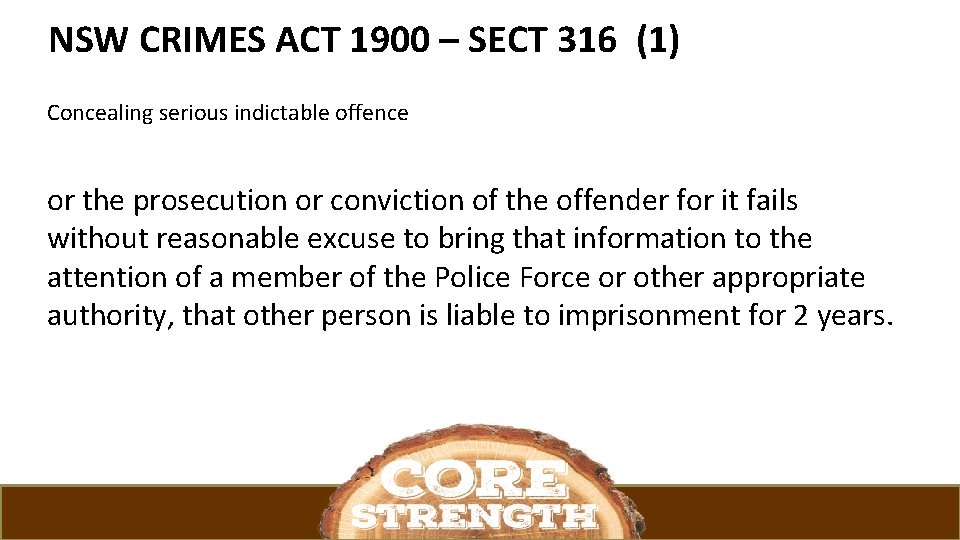
NSW CRIMES ACT 1900 – SECT 316 (1) Concealing serious indictable offence or the prosecution or conviction of the offender for it fails without reasonable excuse to bring that information to the attention of a member of the Police Force or other appropriate authority, that other person is liable to imprisonment for 2 years.
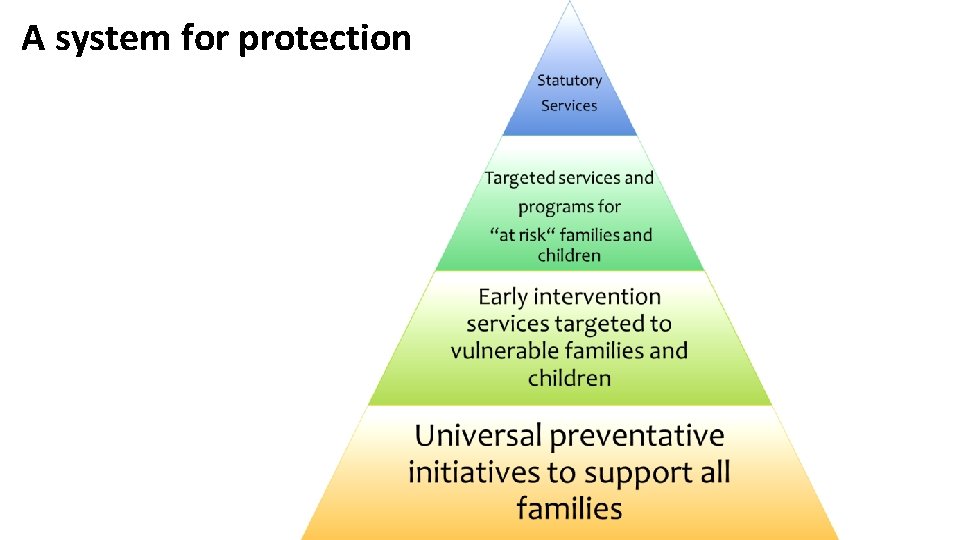
A system for protection
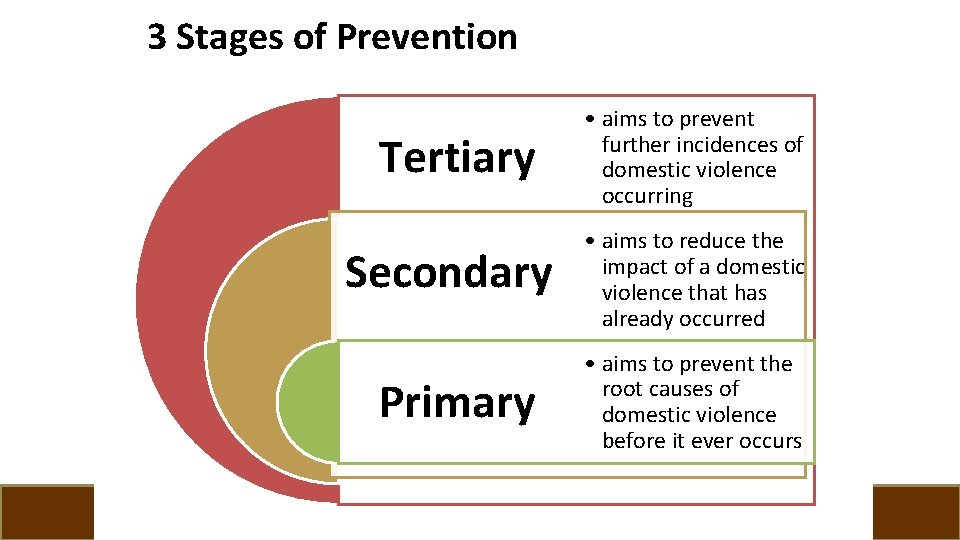
3 Stages of Prevention Tertiary Secondary Primary • aims to prevent further incidences of domestic violence occurring • aims to reduce the impact of a domestic violence that has already occurred • aims to prevent the root causes of domestic violence before it ever occurs
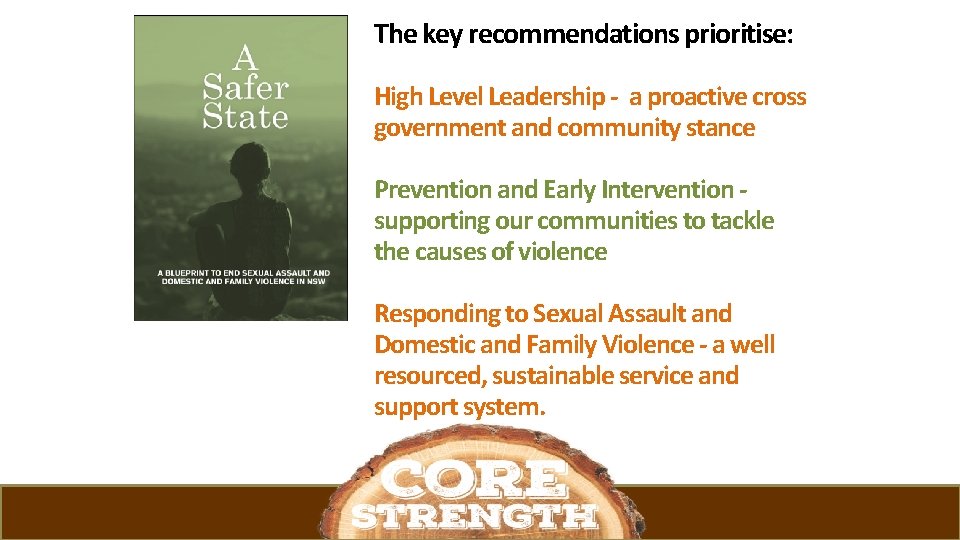
The key recommendations prioritise: High Level Leadership - a proactive cross government and community stance Prevention and Early Intervention - supporting our communities to tackle the causes of violence Responding to Sexual Assault and Domestic and Family Violence - a well resourced, sustainable service and support system.
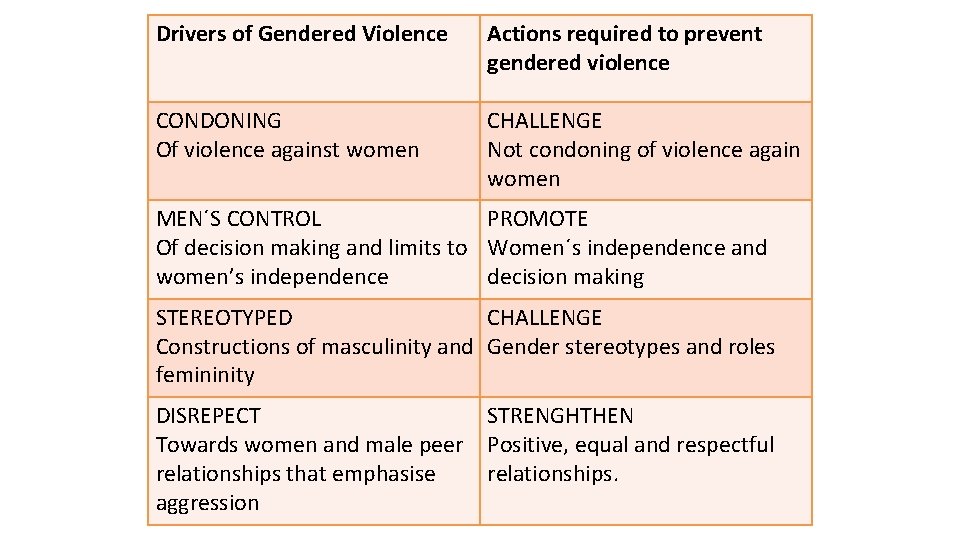
Drivers of Gendered Violence Actions required to prevent gendered violence CONDONING Of violence against women CHALLENGE Not condoning of violence again women MEN´S CONTROL PROMOTE Of decision making and limits to Women´s independence and women’s independence decision making STEREOTYPED CHALLENGE Constructions of masculinity and Gender stereotypes and roles femininity DISREPECT STRENGHTHEN Towards women and male peer Positive, equal and respectful relationships that emphasise relationships. aggression
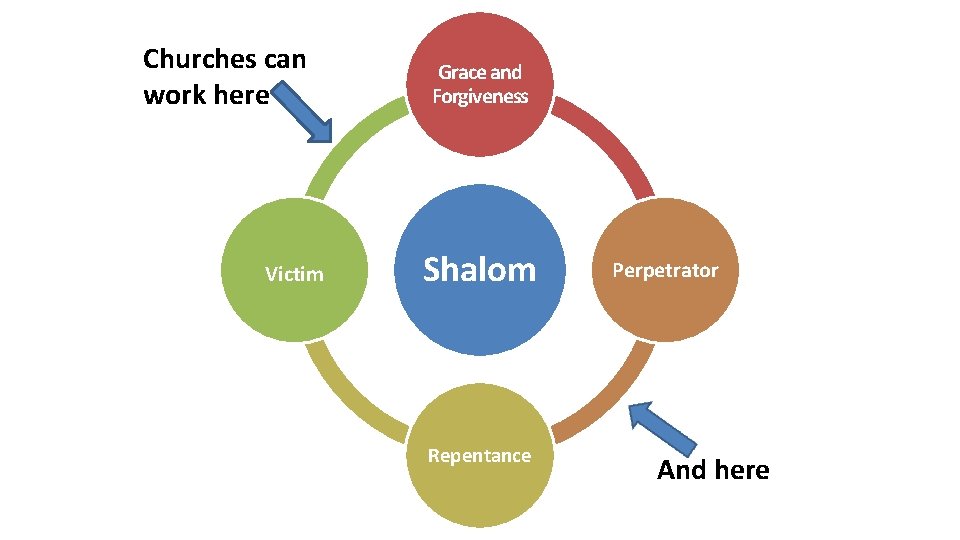
Churches can work here Victim Grace and Forgiveness Shalom Repentance Perpetrator And here
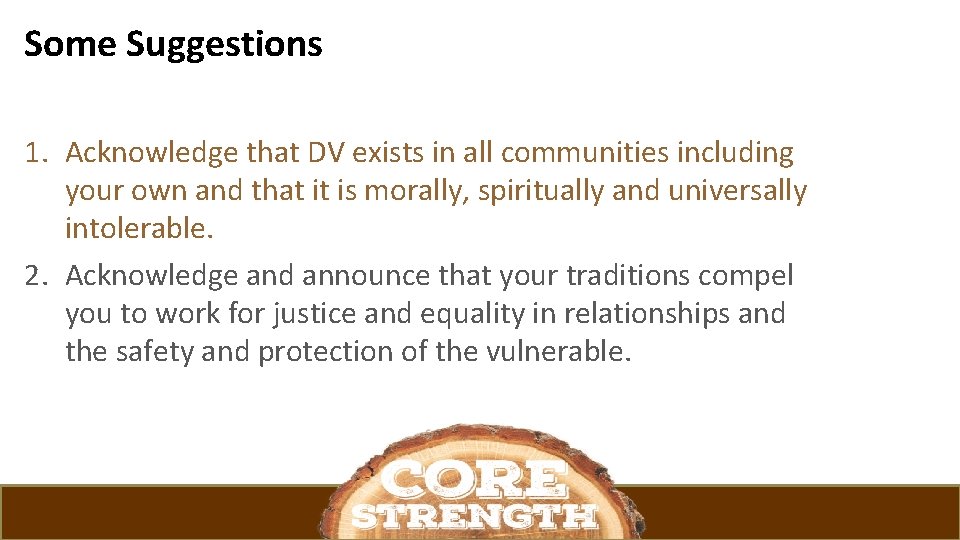
Some Suggestions 1. Acknowledge that DV exists in all communities including your own and that it is morally, spiritually and universally intolerable. 2. Acknowledge and announce that your traditions compel you to work for justice and equality in relationships and the safety and protection of the vulnerable.
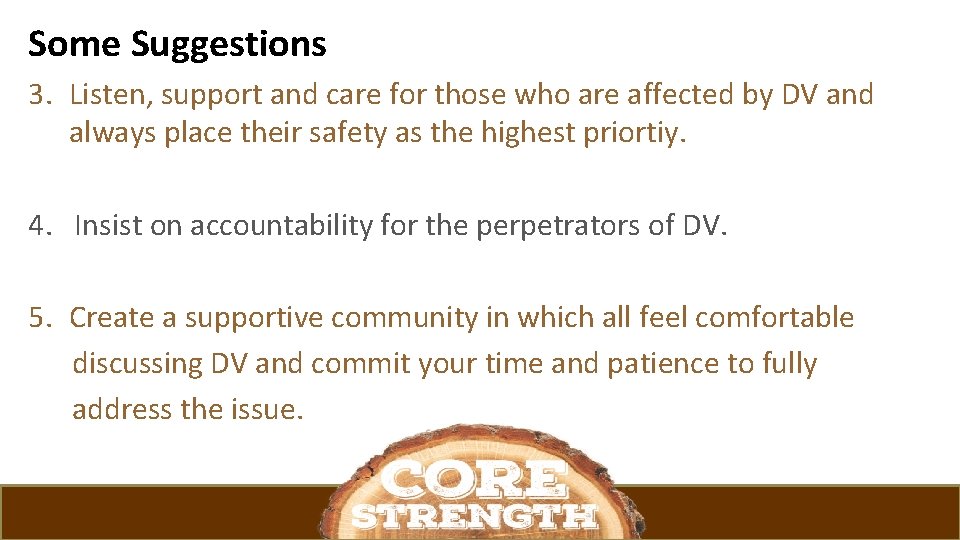
Some Suggestions 3. Listen, support and care for those who are affected by DV and always place their safety as the highest priortiy. 4. Insist on accountability for the perpetrators of DV. 5. Create a supportive community in which all feel comfortable discussing DV and commit your time and patience to fully address the issue.
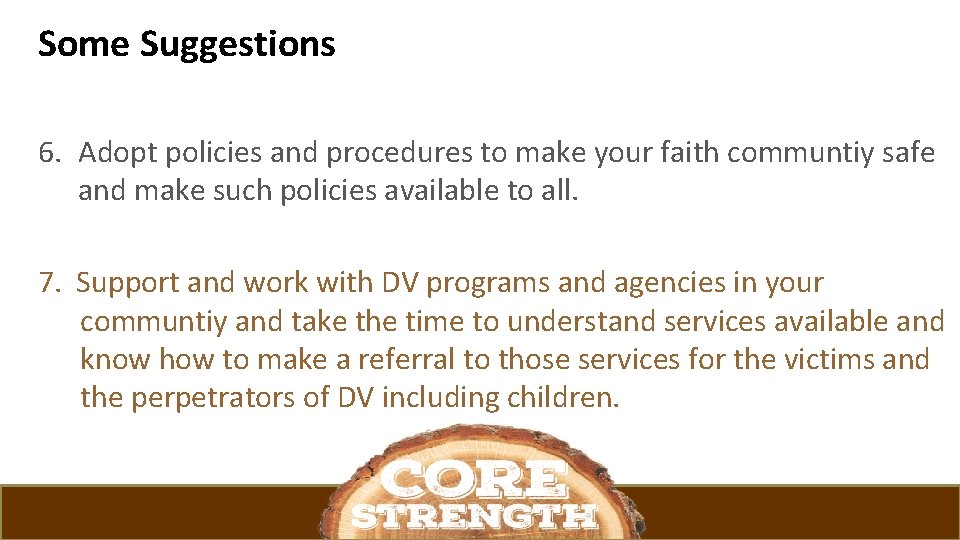
Some Suggestions 6. Adopt policies and procedures to make your faith communtiy safe and make such policies available to all. 7. Support and work with DV programs and agencies in your communtiy and take the time to understand services available and know how to make a referral to those services for the victims and the perpetrators of DV including children.
Session 2 Questions
Afternoon Tea Please be back in the auditorium promptly by 3: 25 pm Faithfulness In Service - 2017
Session 3 Using the Protective Behaviours Program to make a difference
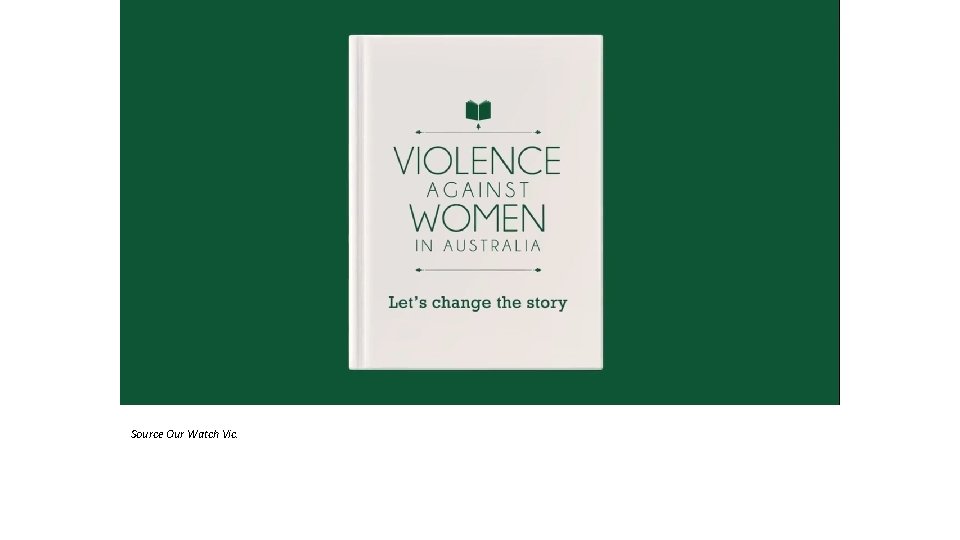
Source Our Watch Vic.
Let's change the story- Violence against women in Australia. mp 4
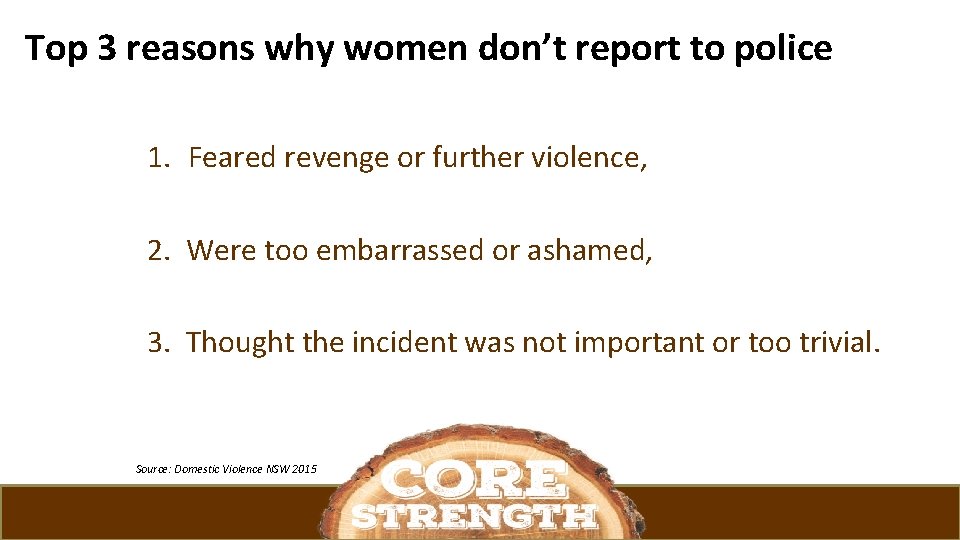
Top 3 reasons why women don’t report to police 1. Feared revenge or further violence, 2. Were too embarrassed or ashamed, 3. Thought the incident was not important or too trivial. Source: Domestic Violence NSW 2015
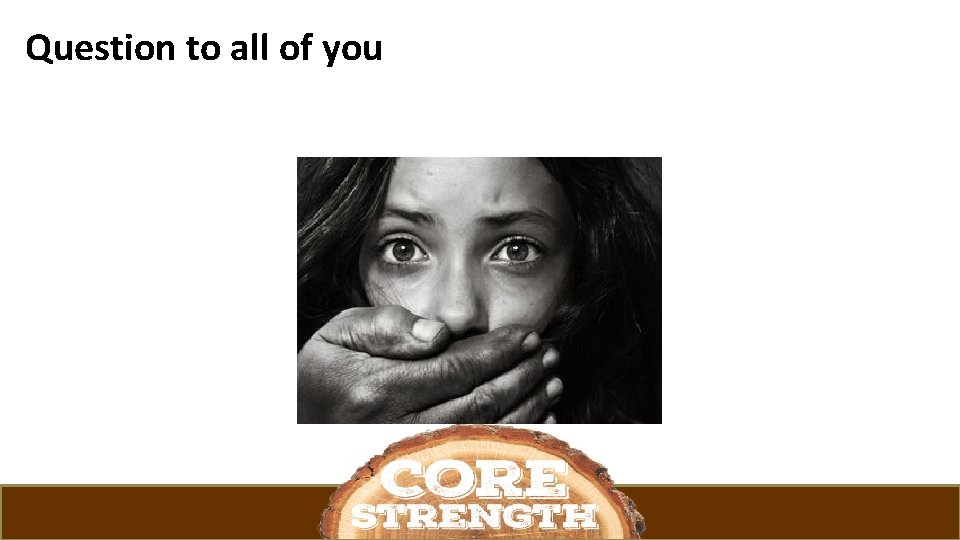
Question to all of you
4 Pre Conditions to the Occurrence of Child Sexual Abuse Sexual abuse is different to other forms of child abuse as it is usually premeditated. The abuser grooms a child and may trick, bribe, threaten or force a them to take part in sexual activity. • Motivation • Overcoming Internal Inhibitors • Overcoming External Inhibitors • Overcoming the resistance of the child David Finklehor PH. D Director, Crimes against Children Research Center Professor of Sociology, University of New Hampshire
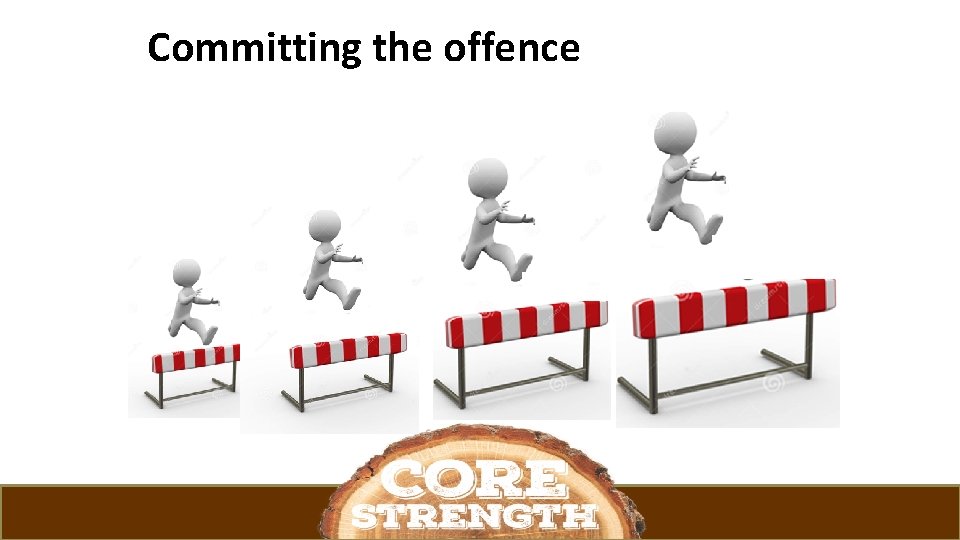
Committing the offence
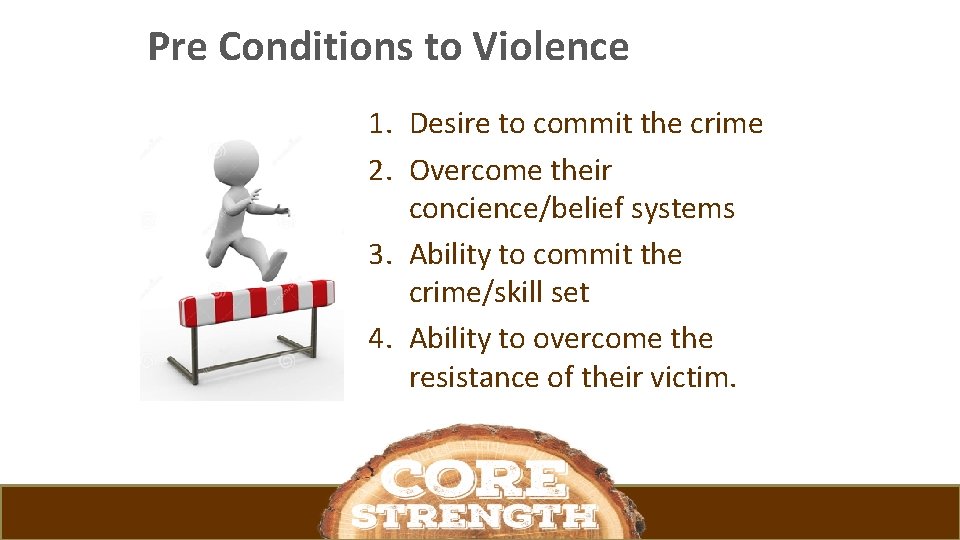
Pre Conditions to Violence 1. Desire to commit the crime 2. Overcome their concience/belief systems 3. Ability to commit the crime/skill set 4. Ability to overcome the resistance of their victim.
So what do we do ?
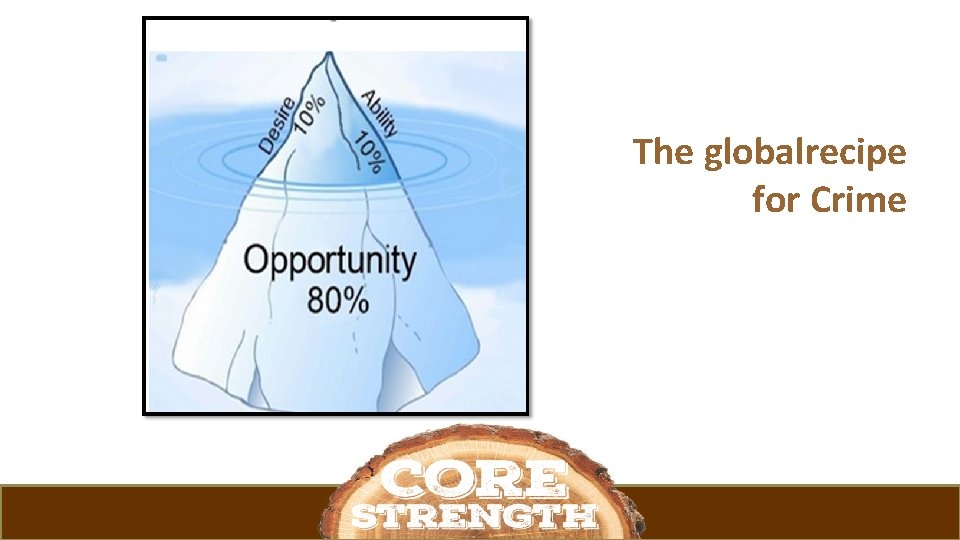
The globalrecipe for Crime
What is Protective Behaviours? Protective Behaviours is a personal safety program that can provide knowledge and teach victim skills and strategies to: v Identify unsafe situations v Respond to unsafe situations v Find help in a range of unsafe situations
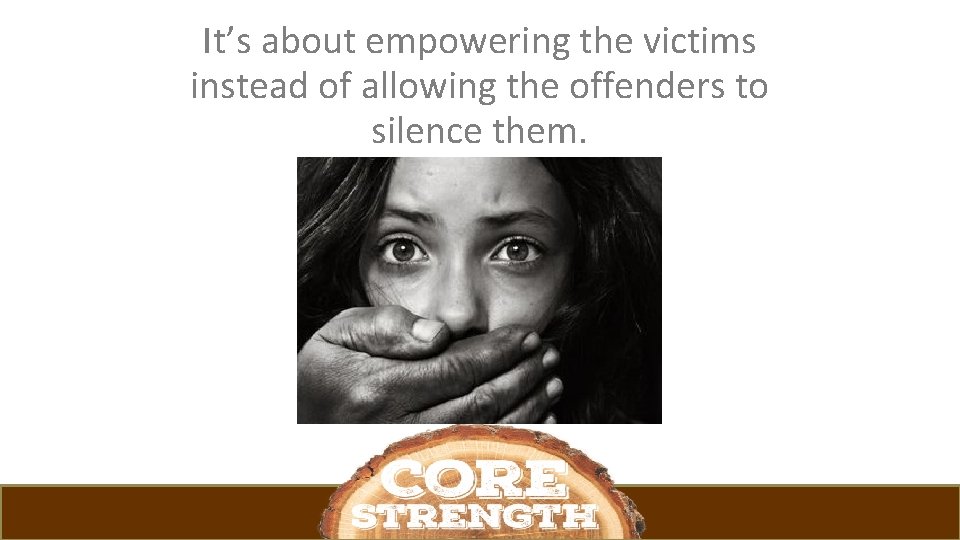
It’s about empowering the victims instead of allowing the offenders to silence them.
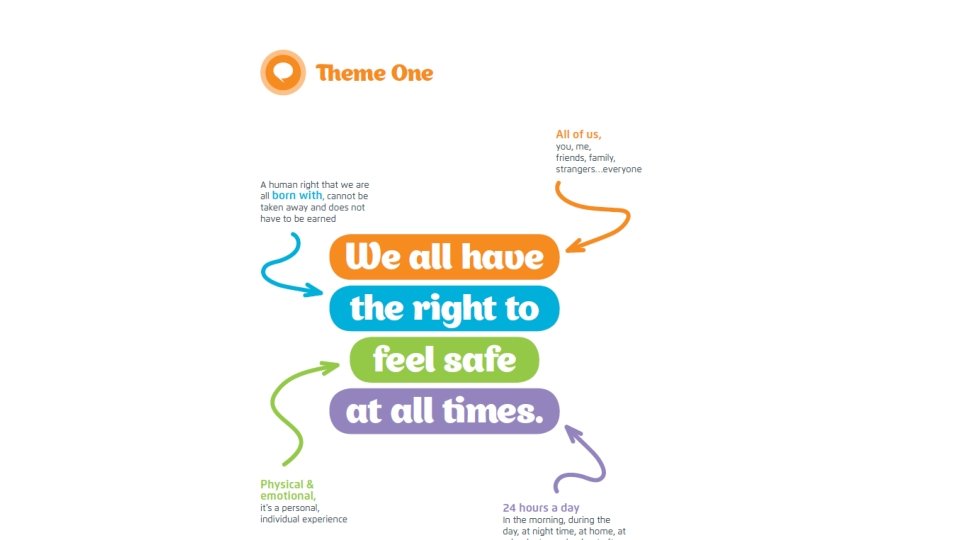
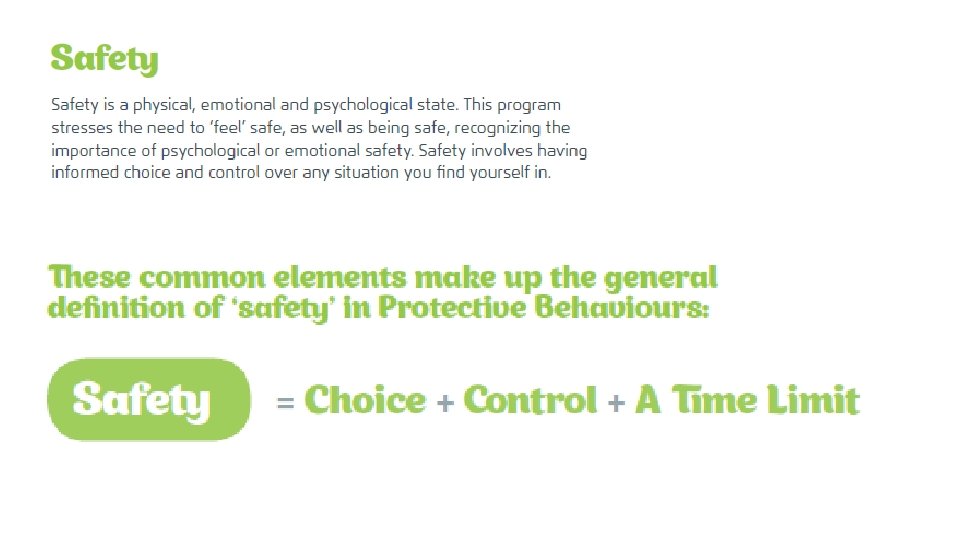
Protective Behaviours Teaching Topic 1 “We all have the right to feel safe at all times”
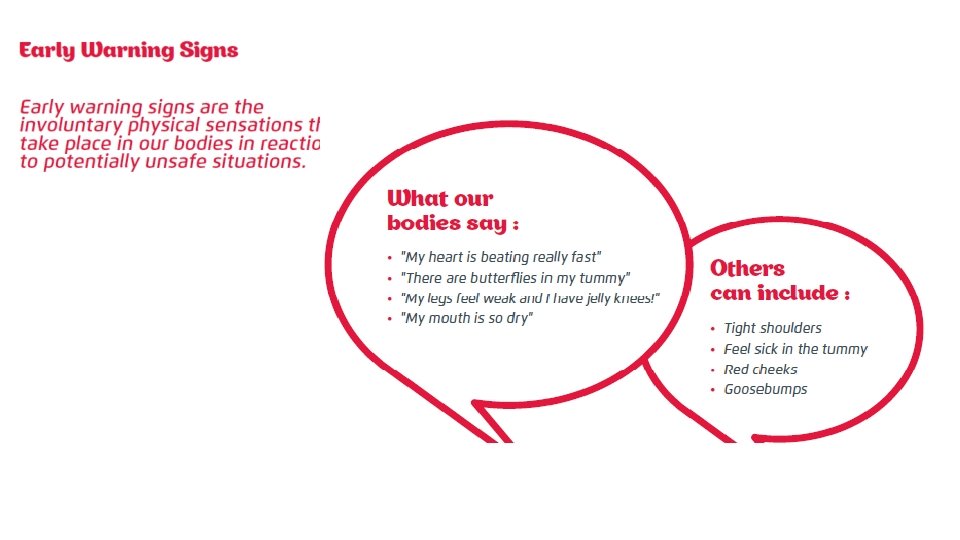
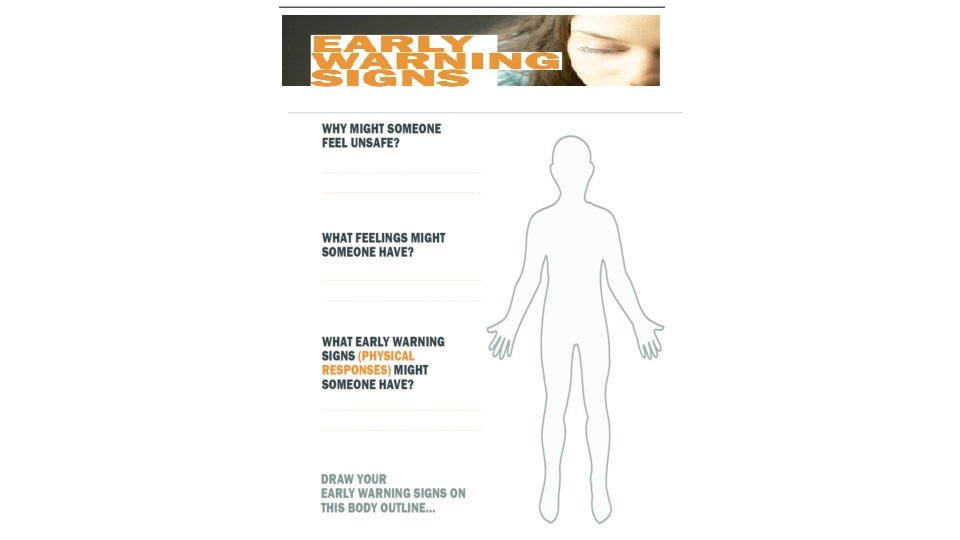
Protective Behaviours Teaching Topic 2 Early Warning Signs
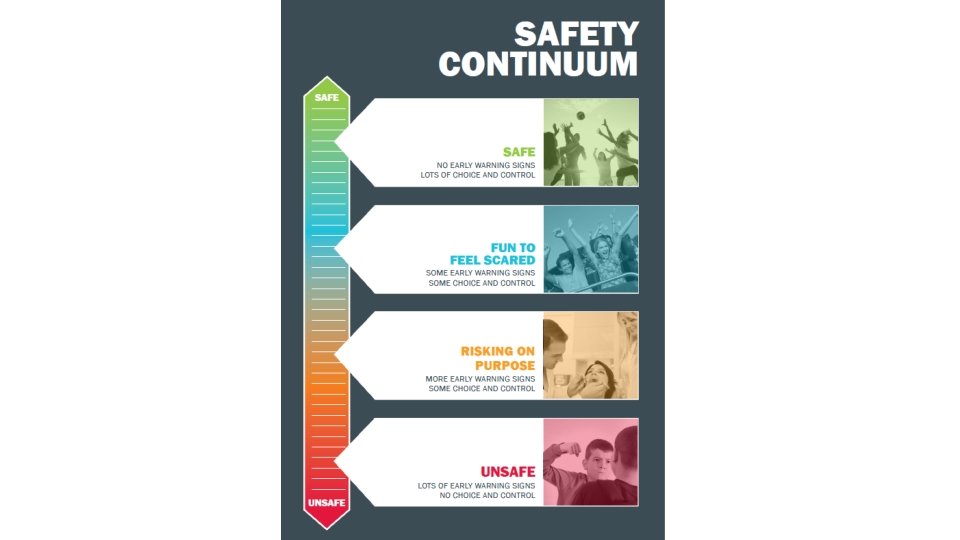
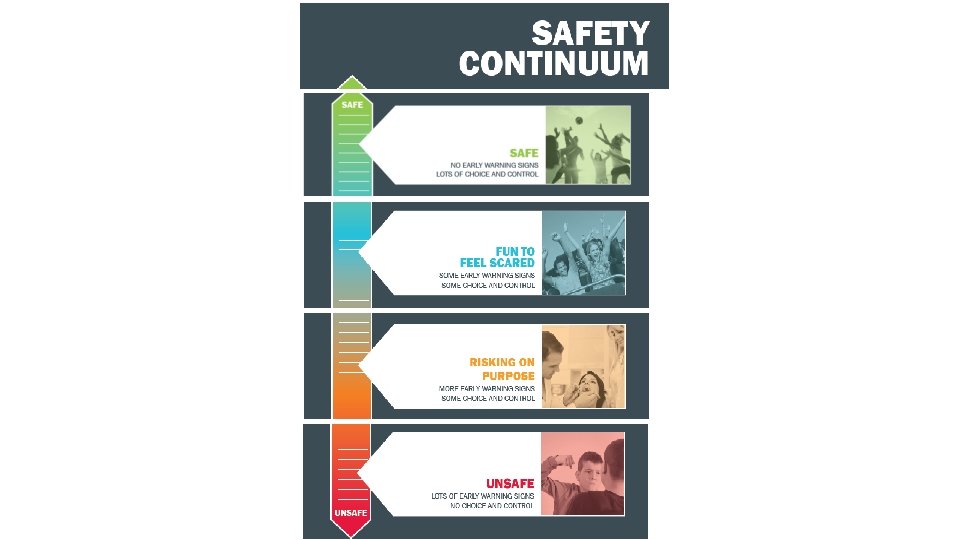
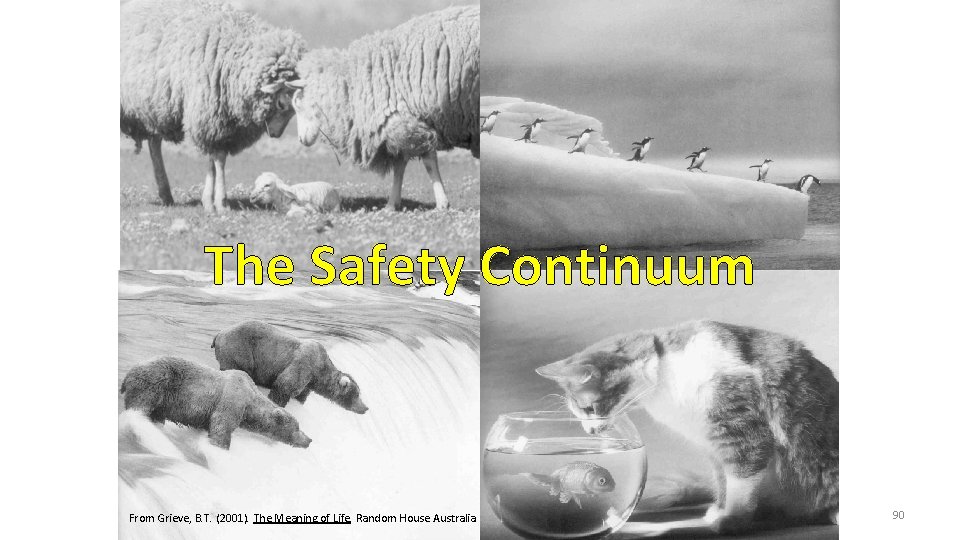
Protective Behaviours Teaching Topic 3 Safety Continuum
Build up Phase Honeymoon Phase Pursuit Phase Stand Over Phase The Cycle of Violence Remorse Phase Explosion
The Safety Continuum From Grieve, B. T. (2001). The Meaning of Life. Random House Australia 90
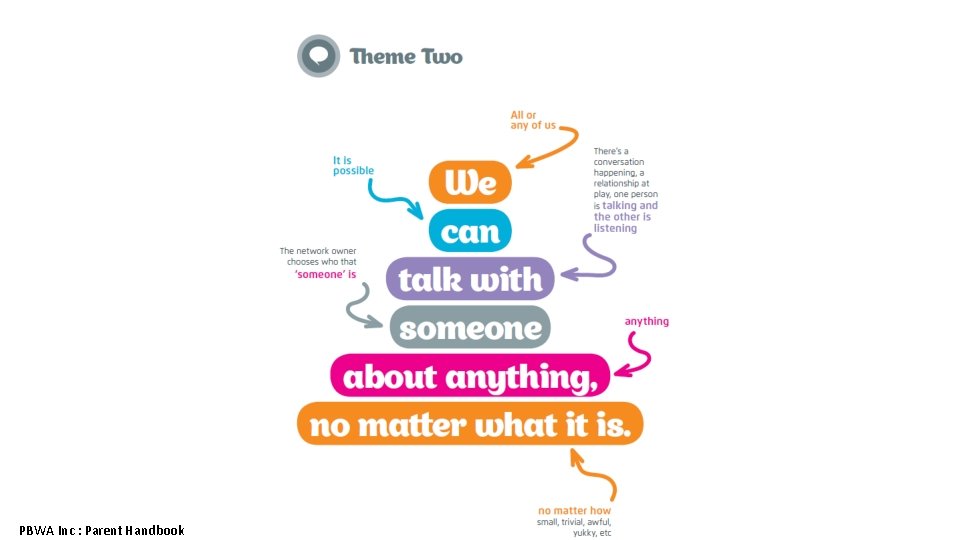
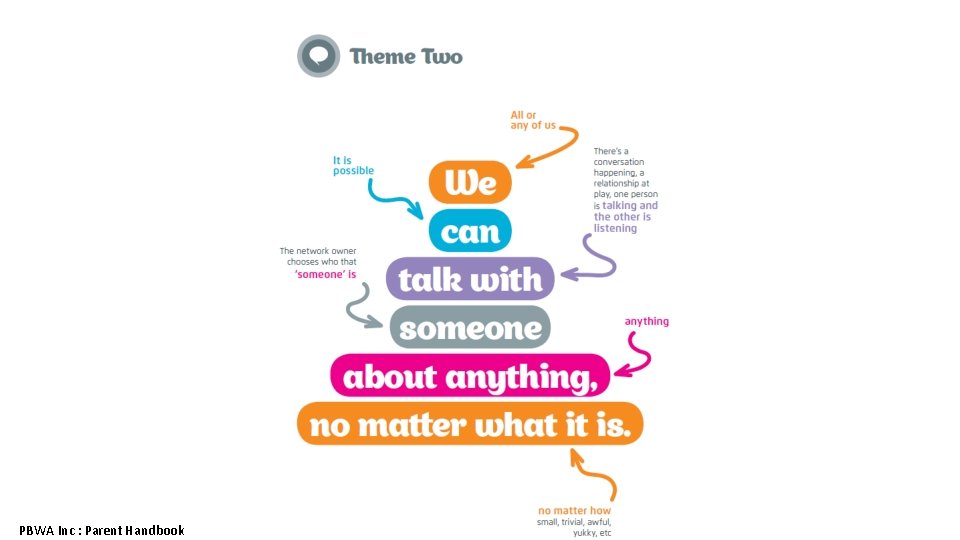
Protective Behaviours Teaching Topic 4 “We can talk with someone about anything no matter what it is”
PBWA Inc : Parent Handbook
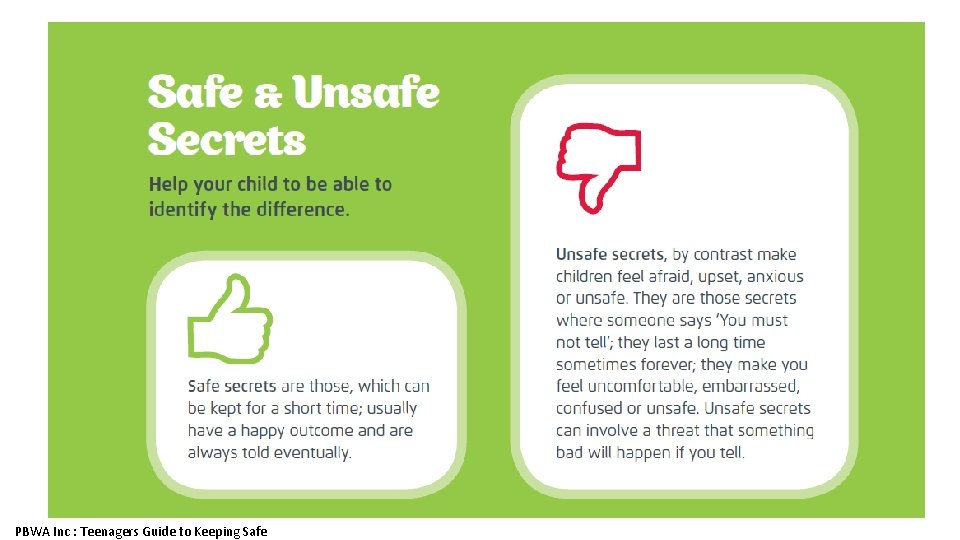
Protective Behaviours Teaching Topic 5 Some Secrets should never be kept
PBWA Inc : Teenagers Guide to Keeping Safe
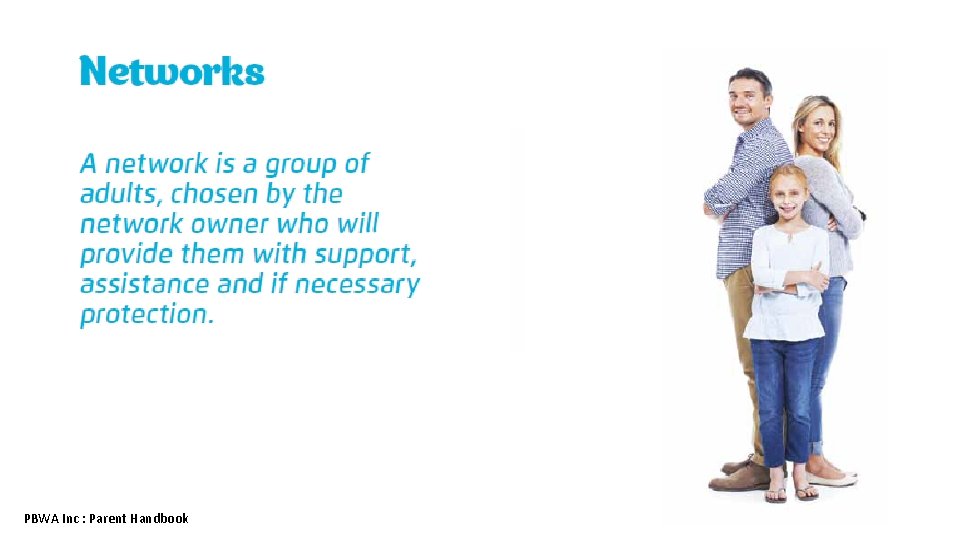
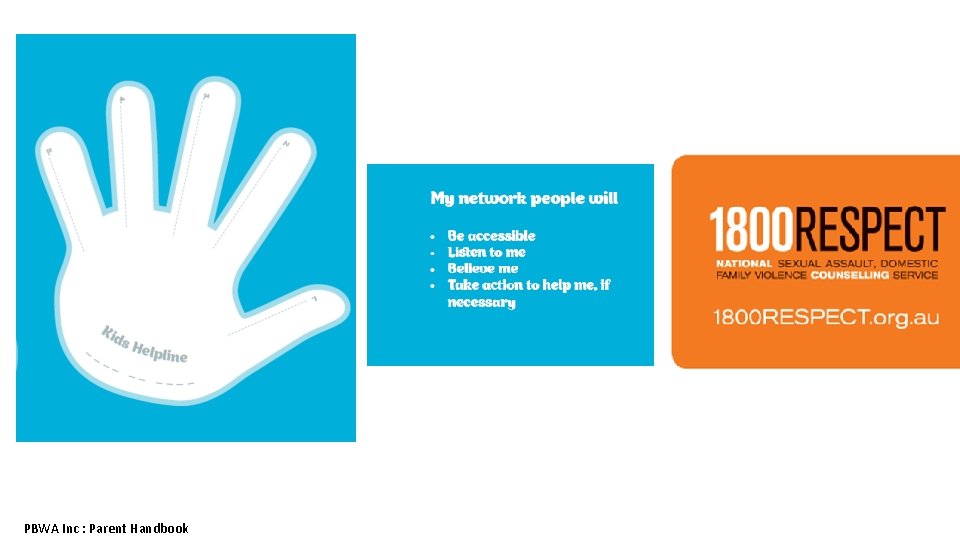
Protective Behaviours Teaching Topic 6 Networks
PBWA Inc : Parent Handbook
PBWA Inc : Parent Handbook
PBWA Inc : Parent Handbook
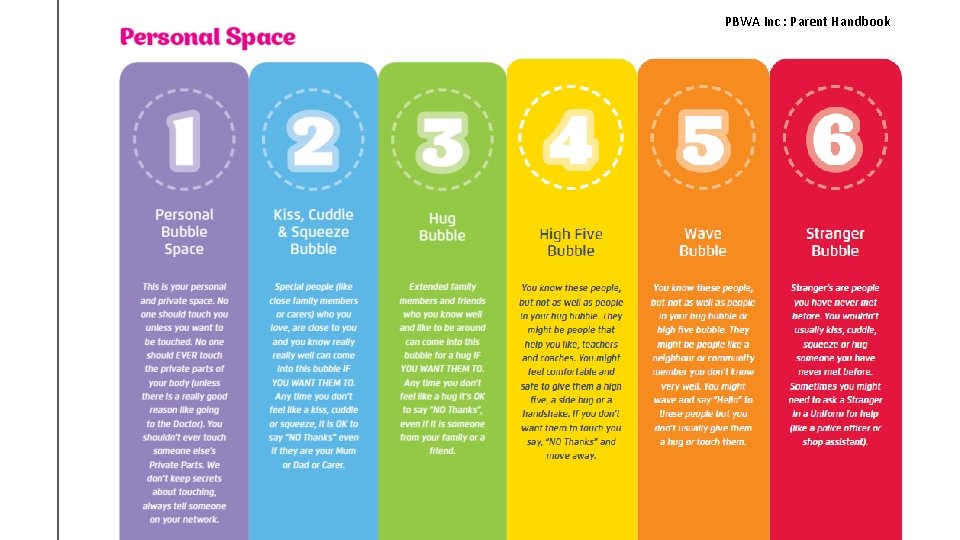
Protective Behaviours Teaching Topic 7 Personal Space
PBWA Inc : Parent Handbook
Protective Behaviours Teaching Topic 8 Persistence Expectation
Questions