
AND THE GLORY OF THE LORD HANDEL Background

AND THE GLORY OF THE LORD HANDEL
Background Information Comes from the Oratorio the ‘Messiah’ Written in 1741 First performed in Dublin in 1742 Fourth movement from 1 st section First chorus heard Traditionally performed at Easter but now at Christmas
Structure Starts with an instrumental Introduction - Ritornello 4 main musical themes – one for each line of text These contrast to add shape and character to the music Built in canon
Idea 1
Idea 2
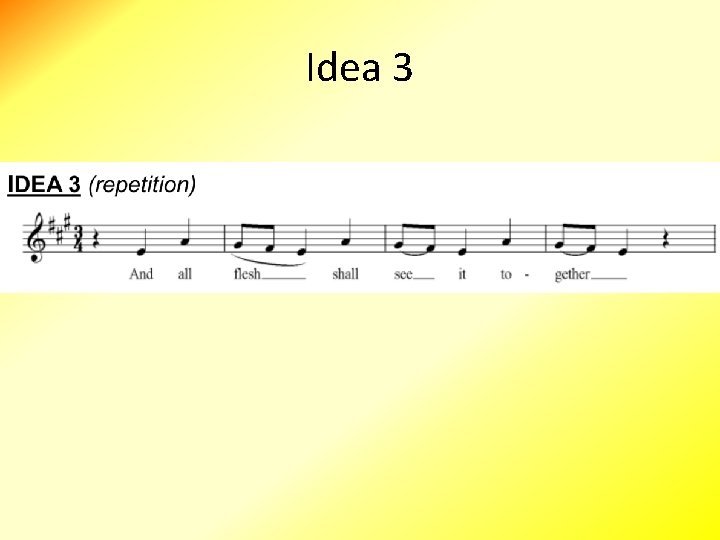
Idea 3
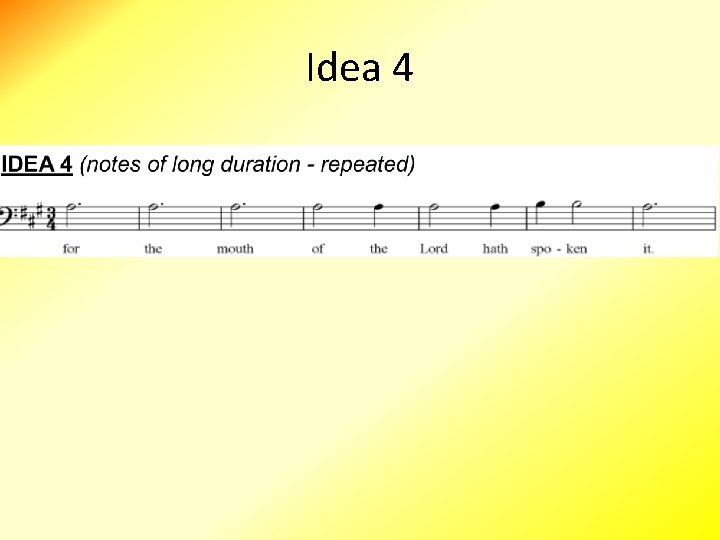
Idea 4
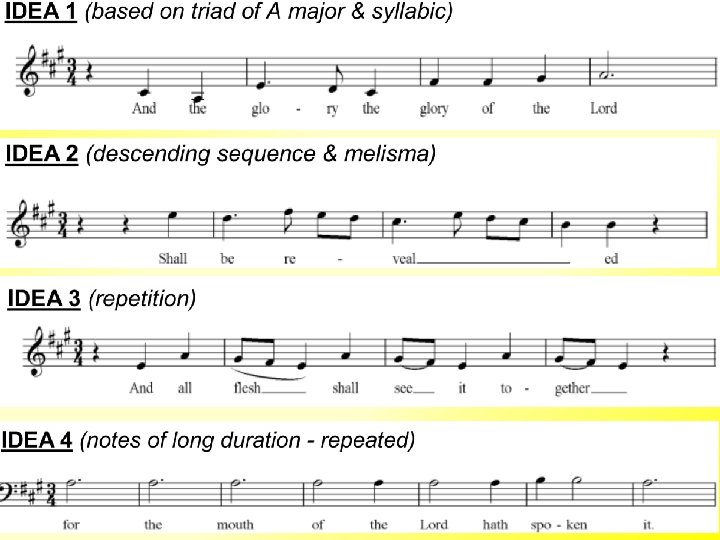
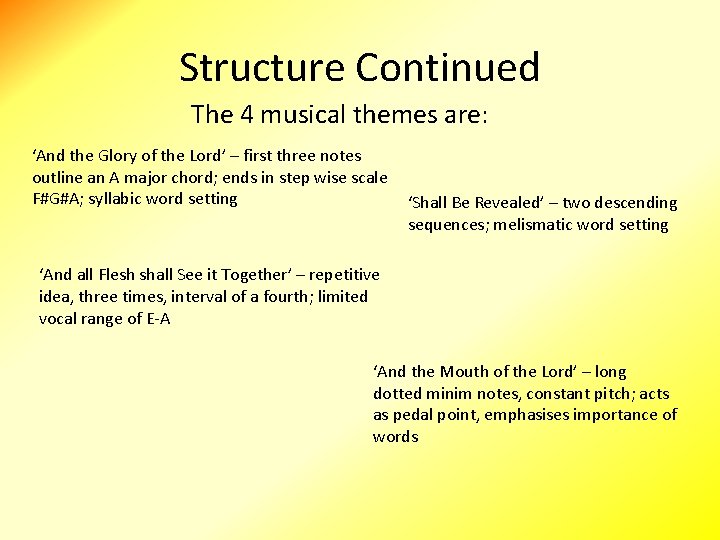
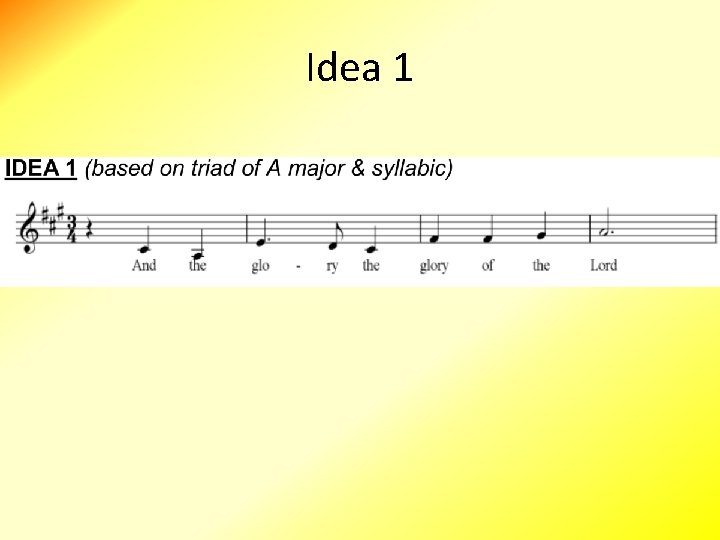
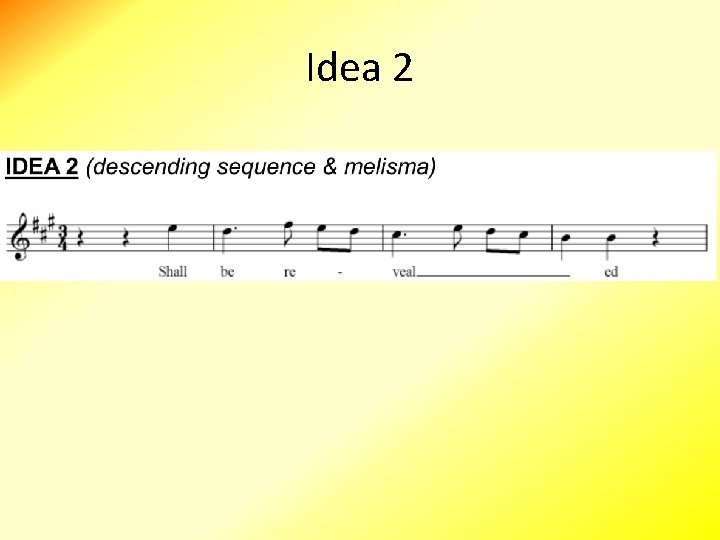
Structure Continued The 4 musical themes are: ‘And the Glory of the Lord’ – first three notes outline an A major chord; ends in step wise scale F#G#A; syllabic word setting ‘Shall Be Revealed’ – two descending sequences; melismatic word setting ‘And all Flesh shall See it Together’ – repetitive idea, three times, interval of a fourth; limited vocal range of E-A ‘And the Mouth of the Lord’ – long dotted minim notes, constant pitch; acts as pedal point, emphasises importance of words
Harmony and Tonality In A major – modulates to E major and B major Diatonic chords Mainly perfect cadences Ends in plagal cadence
Melody and Pitch Top A – Bottom G vocal range Imitation between parts
Rhythm and Tempo Triple time 3/4 Allegro Tempo Marking Hemiolas to give 2/4 feels – add to joyful and uplifting affection by giving more of a drive Dotted rhythms and crotchet syncopation Last four bars marked Adagio
Instrumentation Traditional Baroque Orchestra Basso Continuo, Strings, Trumpets and Timpani SATB Choir Traditionally 12 -24 male singers
Texture Bars 33 -38 homophonic across four part choir Opens with monophony Use of homophonic, polyphonic and monophonic textures Ends with chordal, homophonic coda
Dynamics Hardly any marked on score Those that are, are terraced Between MF and F to match the joyful mood of words and key

Handel – ‘And the Glory of the Lord’
- Slides: 16