
Ancient Rome World Studies What is the Relative






- Slides: 22
Ancient Rome World Studies
What is the Relative Location of the city of Rome? • Central Italy • On peninsula in middle of Mediterranean Sea • Upon the Tiber Rivergood transportation, protection
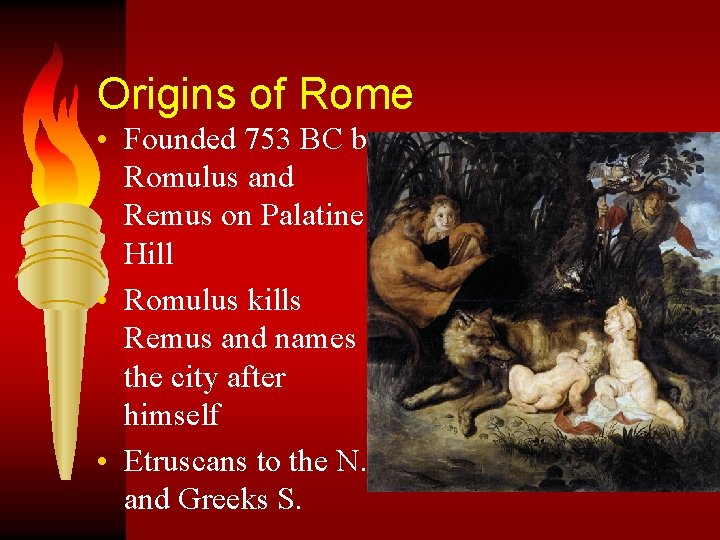
Origins of Rome • Founded 753 BC by Romulus and Remus on Palatine Hill • Romulus kills Remus and names the city after himself • Etruscans to the N. and Greeks S.
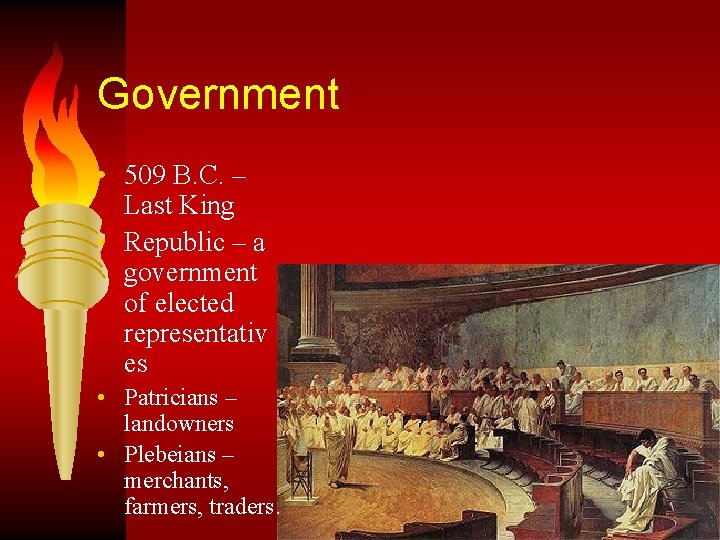
Government • 509 B. C. – Last King • Republic – a government of elected representativ es • Patricians – landowners • Plebeians – merchants, farmers, traders.
Government • Two consuls, elected for 1 year • Senate- 300 members chosen from Patricians (aristocracy), served for life • Centuriate/Tribal assemblies- plebians, members for life • Tribunes- elected by plebeians, protects their rights from patricians • Dictator- could be appointed in emergencies, absolute power for 6 months
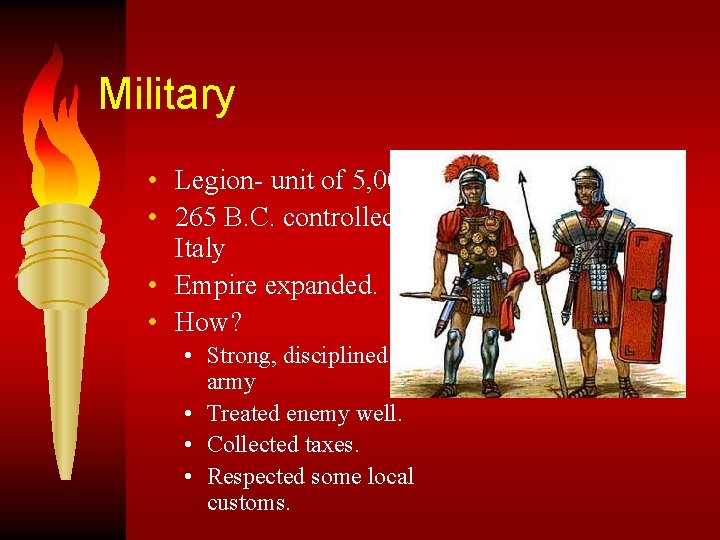
Military • Legion- unit of 5, 000 • 265 B. C. controlled Italy • Empire expanded. • How? • Strong, disciplined army • Treated enemy well. • Collected taxes. • Respected some local customs.
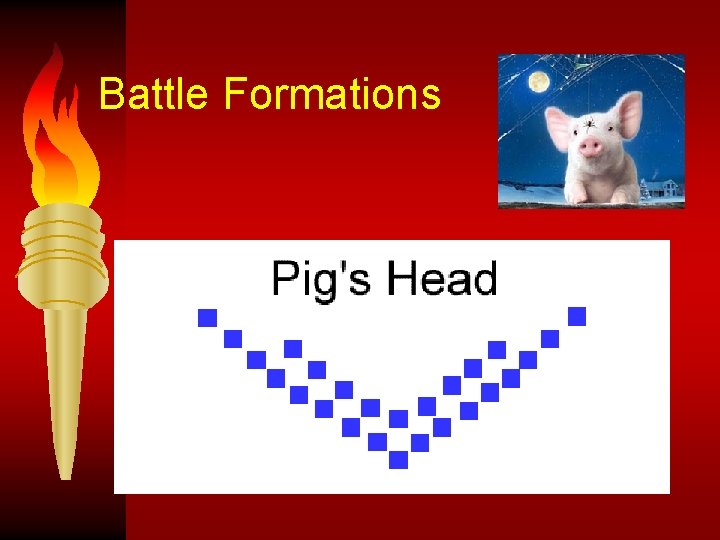
Battle Formations
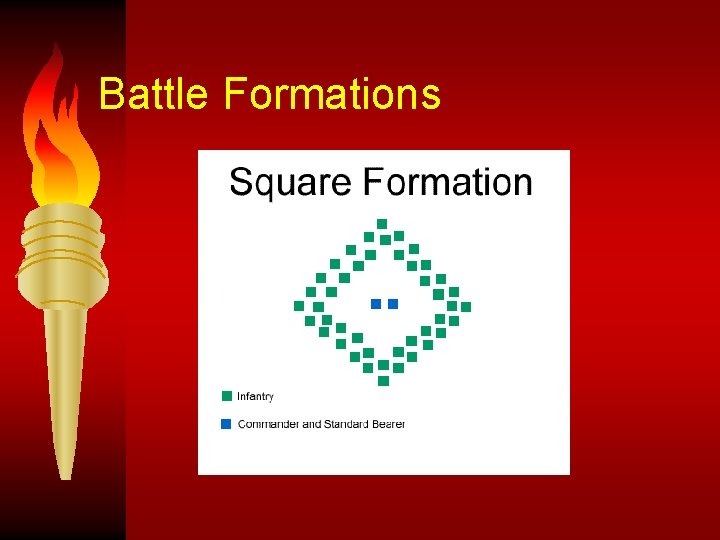
Battle Formations
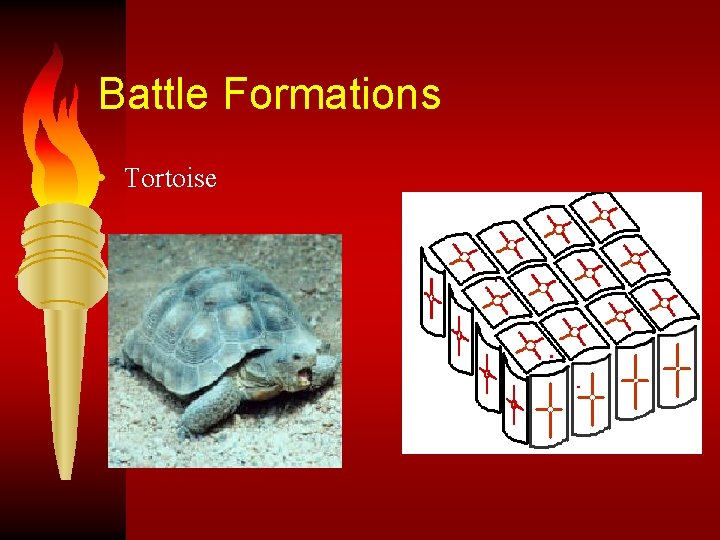
Battle Formations • Tortoise
Punic Wars • Wars with the Phoenician colony of Carthage • 1 st, 264 -241 BC for control of Sicily, W. Mediterranean • 2 nd, 218 BC
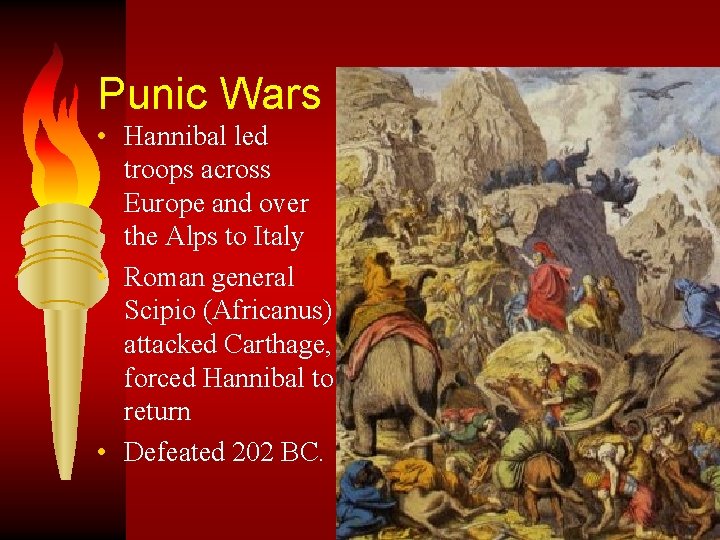
Punic Wars • Hannibal led troops across Europe and over the Alps to Italy • Roman general Scipio (Africanus) attacked Carthage, forced Hannibal to return • Defeated 202 BC.
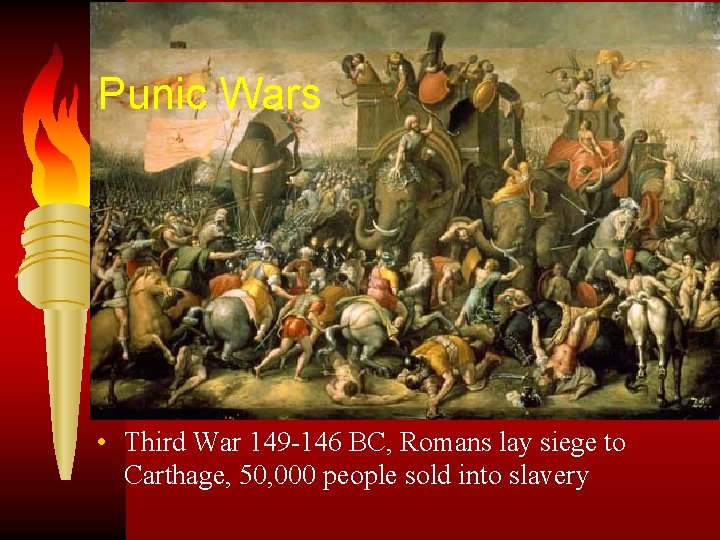
Punic Wars • Third War 149 -146 BC, Romans lay siege to Carthage, 50, 000 people sold into slavery
Republic to Empire • 1 st triumvirate- Julius Caesar- w/ Crassus and Pompey, 60 BC • Caesar conquered all of Gaul w/ troops from landless poor- loyal to Caesar, not Rome • Turned his army on Rome, Pompey fled, 1 st dictator for life, 44 BC
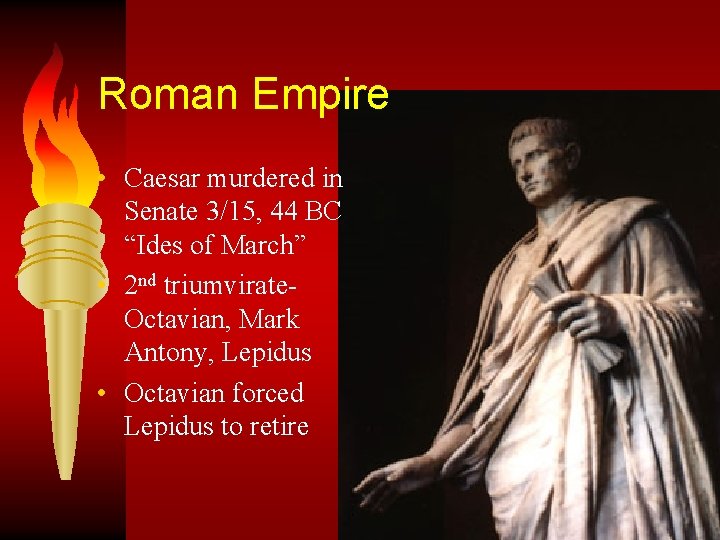
Roman Empire • Caesar murdered in Senate 3/15, 44 BC “Ides of March” • 2 nd triumvirate. Octavian, Mark Antony, Lepidus • Octavian forced Lepidus to retire
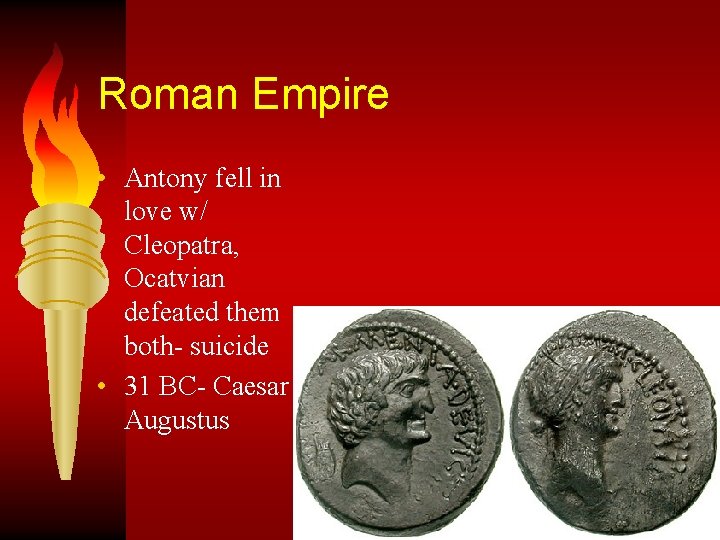
Roman Empire • Antony fell in love w/ Cleopatra, Ocatvian defeated them both- suicide • 31 BC- Caesar Augustus
Pax Romana • Means “Roman Peace” • 27 BC to 180 AD
Fall of Rome • Inflation, food shortages, end of expansion weakens empire • Diocletian- divided the empire into Greek speaking east and Latin west • Constantine reunited the empire, ended persecution of Christians, moved capital to Byzantium (Constantinople)
Fall of Rome • Germanic invasions weakened the Empire • Attila the Hun rampaged through Roman lands • 476 - West fell to Vandals • Eastern half lasts until 1453, defeated by Ottoman Turks • Greco-Roman culture- mix of Greek, Roman, Hellenistic influence
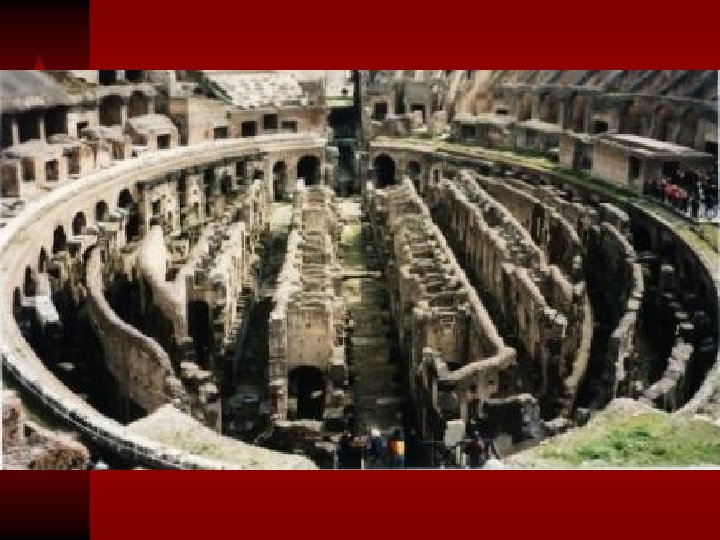
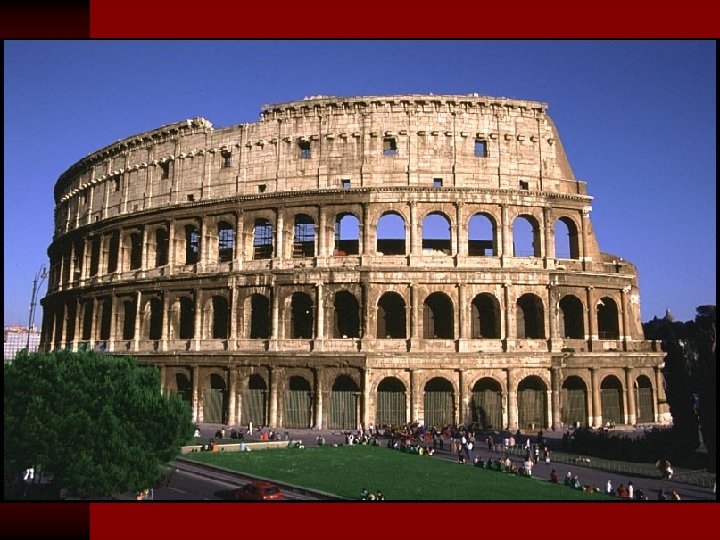
Famous Roman stuff • Virgil- wrote the Aeneid, modeled after Homer’s work • Aqueducts- built using arches, they brought fresh water to large cities • Space between chariot wheels- train tracks • Latin becomes basis for Spanish, French, Romanian, Portuguese, Italian • Colusseum- stadium where gladiators fought