
Ancient Rome Unit 2 Part 2 753 BCE
Ancient Rome Unit 2 Part 2
753 BCE: Legendary Beginnings n Origin Story from Virgil’s “Aeneid” n Trojan Hero Aeneas – Romulus and Remus: Decedents – Romulus founded Rome n Etruscans: Early Romans – Evolved from village to city
509 -27 BCE: Roman Republic n n n Overthrew the Etruscan kings to form the republic Two groups fight for political power 1. Patricians: Noble landowners 2. Plebeians: Right to vote, but little power Empire expansion – 60 s. BCE: Greece, Macedonia, Asia Minor, Syria, and Judea Conquests = civil war in Rome 46 BCE: Julius Caesar seized control of government
27 BC-AD 200: Pax Romana n “Roman Peace” n Battle of Actium – Augustus defeats Mark Antony and Cleopatra n Augustus: First Emperor of Rome n A time of prosperity and growth n Christianity grew until 64 AD – Nero began the prosecution of Christians
AD 200 -476: Fall of Rome n Series of cruel, incompetent rulers n Germanic invasions n Economic difficulties n Hordes of invaders overthrew the empire n 2 Most feared Barbarians – Alaric: Leader of the Visigoths – Attila: Leader of the Huns

People and Society
Patricians n Upper Class n Oldest and wealthiest families n Patrician = Noble blood, not wealth n Ran the early republic n Model for Roman society
Pater. Familias n Father and Head of the house n Absolute power over the family n Newborn child – Killed, sold, or welcomed n Arranged marriages n Resolved family disputes n Banishment of family members
Plebeians n Roman Citizens: Both rich and poor n 4 th century BCE: won equal political rights n Government positions n Importers, exporters, merchants, shipbuilders, etc. n Largest, most comfortable middle class of all ancient societies
Urban Poor n Farmer a soldier – Sold land n Return from war to no land slave farmers n Migrate to Rome and live on welfare in public housing
Army n Standing Army: 300, 000 men n 2 classes of Army – Legionaries: citizens – Auxiliaries: non-citizens, but given citizenship after 20 years of service n Generally enlisted for 25 years n Low pay, but great medical n Discharge: land or cash as pension.
Slaves n Captured people from war n Some specialized jobs: tutors, bookkeepers, and clerks n Harsh conditions in the country-side – 73 -71 BCE: Spartacus leads a rebellion – Brutally lost
Women n Ran the household n Managed the money n Organized the slaves n Took care of the children n Divorce was always an option n Owned Property and controlled own money

Arts and Culture
Architecture and Engineering n Adaptation of Greek Architecture n Size more important than beauty n Invented Concrete n Perfected the Arch n Aqueducts, public baths, amphitheatres, domed rotundas, and paved roads
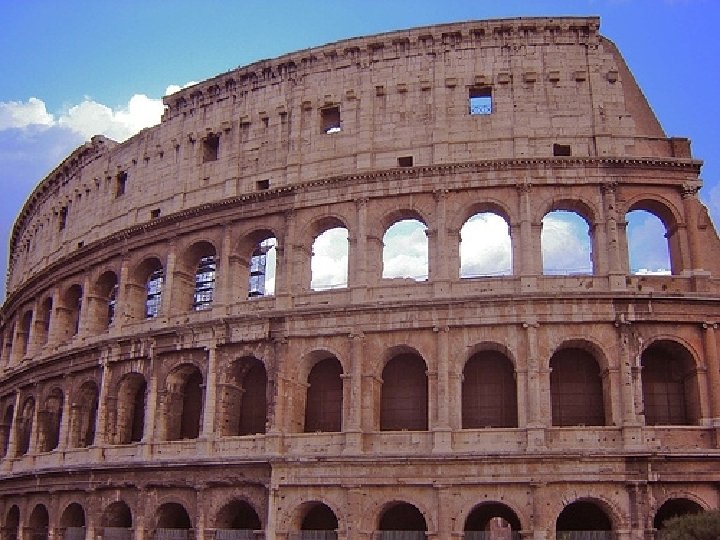
Public Entertainment n Pacify the poor n Chariot races: Circus Maximus n Violent events: Colosseum – Wild animals – Gladiator battles – Naval battles – Unarmed criminals and Christians
Law and Government System of law n All people have the right to equal treatment n A person is considered innocent until proved guilty n The burden of proof rests with the accuser rather than the accused
Art and Sculpture n Imitation of Greek models n Difference: Sternly realistic n Frescoes, bas-relief, mosaic
Religion n 300 BCE: Adaptation of Greek Gods n Continued with household gods n Would include conquered territories gods
Literature n Borrowed from Greek models – Epic, lyric, comedies, and tragedies n About being Roman n Virtues of Roman Character – Dignity, duty, integrity, discipline
Gladiator n Criminals, prisoners of war, slaves whose masters want to dispose of them, free men wanting out of debt or want glory n Could win freedom through money or praise n Wooden sword: freedom n Women began fighting under the emperor Domitian
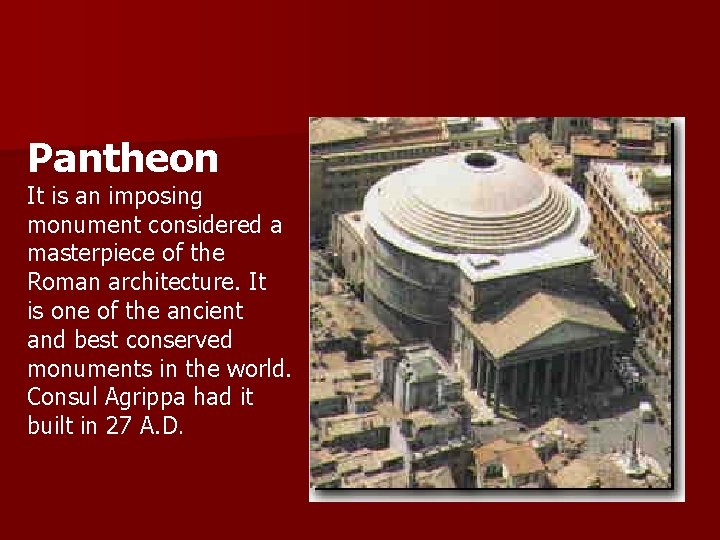
Pantheon It is an imposing monument considered a masterpiece of the Roman architecture. It is one of the ancient and best conserved monuments in the world. Consul Agrippa had it built in 27 A. D.
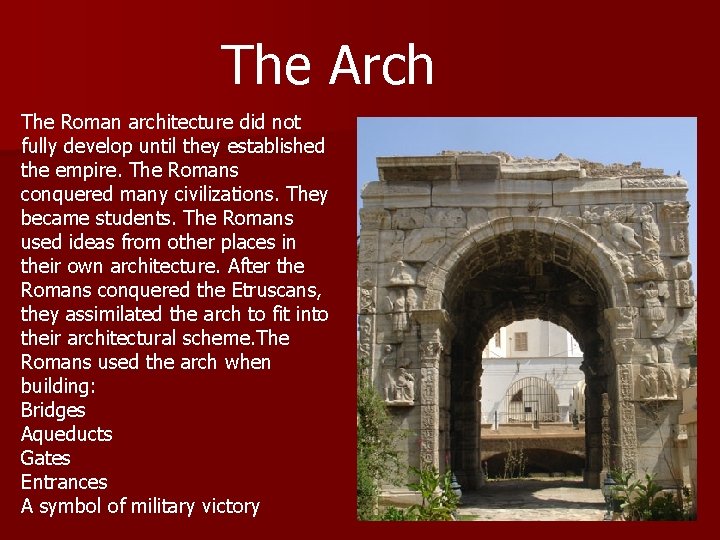
The Arch The Roman architecture did not fully develop until they established the empire. The Romans conquered many civilizations. They became students. The Romans used ideas from other places in their own architecture. After the Romans conquered the Etruscans, they assimilated the arch to fit into their architectural scheme. The Romans used the arch when building: Bridges Aqueducts Gates Entrances A symbol of military victory
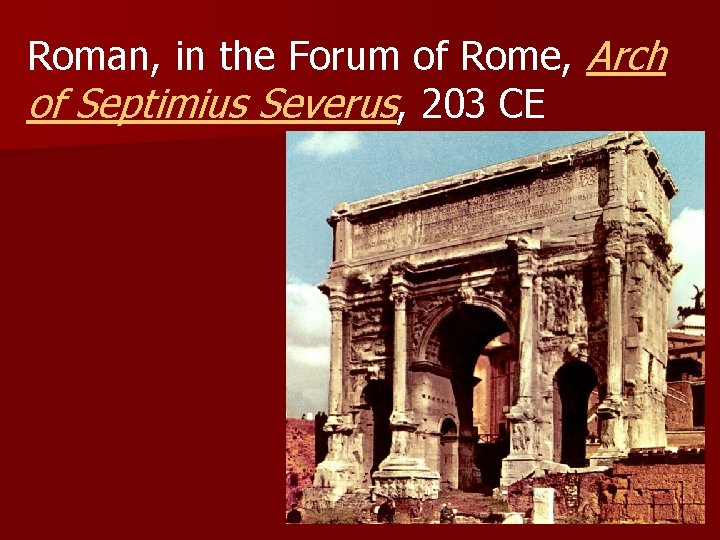
Roman, in the Forum of Rome, Arch of Septimius Severus, 203 CE
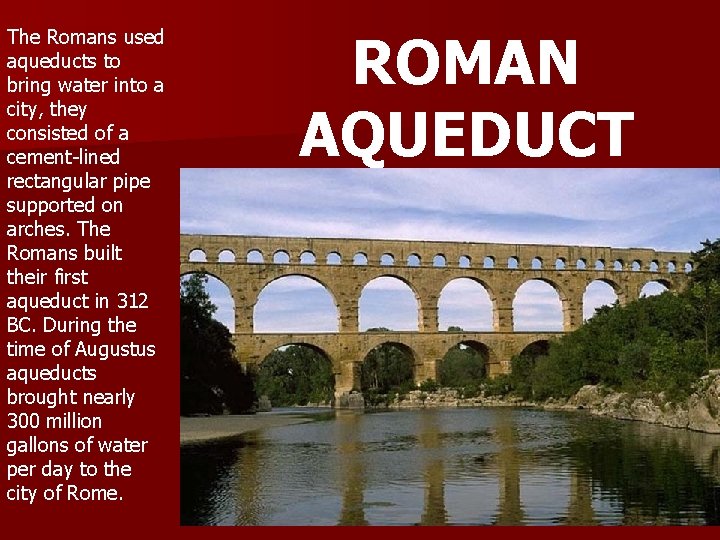
The Romans used aqueducts to bring water into a city, they consisted of a cement-lined rectangular pipe supported on arches. The Romans built their first aqueduct in 312 BC. During the time of Augustus aqueducts brought nearly 300 million gallons of water per day to the city of Rome. ROMAN AQUEDUCT

- Slides: 27