
Ancient Rome Geography The Geography of Ancient Rome
- Slides: 29
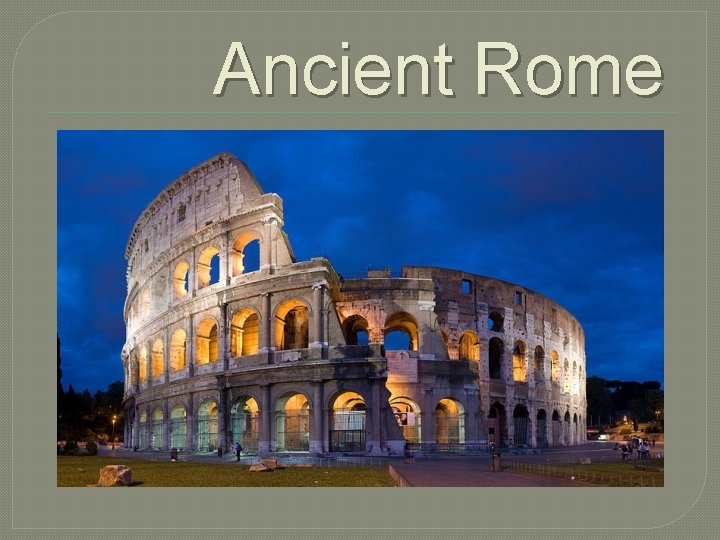
Ancient Rome
Geography � The Geography of Ancient Rome was characterized by: � * A peninsula extending about 750 miles from north to south. * Apennine Mountains, a ridge from north to south down the middle of the peninsula. * Fairly large fertile plains for farming. * Most important farm land was the PO River Valley in the north, and the plain of LATIUM, on which the city of Rome is located. * The region of Campania, to the south of Latium, also rich land. � � � * First people arrived circa 1500 – 1000 B. C. An Indo-European people who spoke Latin…little known about them. � * Greeks and ETRUSCANS arrived about 800 B. C.
Rome circa 500 B. C*****. �* The Etruscans, Greeks and Latins came to the Italian Peninsula circa 1500 -1000 BC. �* By 650 B. C. the Etruscans dominated the north and most of Latium. * By 500 B. C. , the Romans had over thrown the Etruscans, and established a Republic. This was the beginning of a new era in Roman history.
Roman Republic � The Roman Republic was the period of the ancient Roman civilization when the government operated as a republic, a government with elected representatives. � * PATRICIANS – the ruling class. * PLEBIANS – smaller landowners, merchants, farmers, artisans, etc. * CONSULS – led the Roman army into battle. * PRAETORS - in charge of civil law. * SENATE – 300 patricians who served for life…made laws for all. * COUNCIL OF THE PLEBS – so important for military, gained power beginning circa 470 B. C. Given their own assembly. * TRIBUNES OF THE PLEBS – circa 300 B. C. were chosen as military leaders. � � �
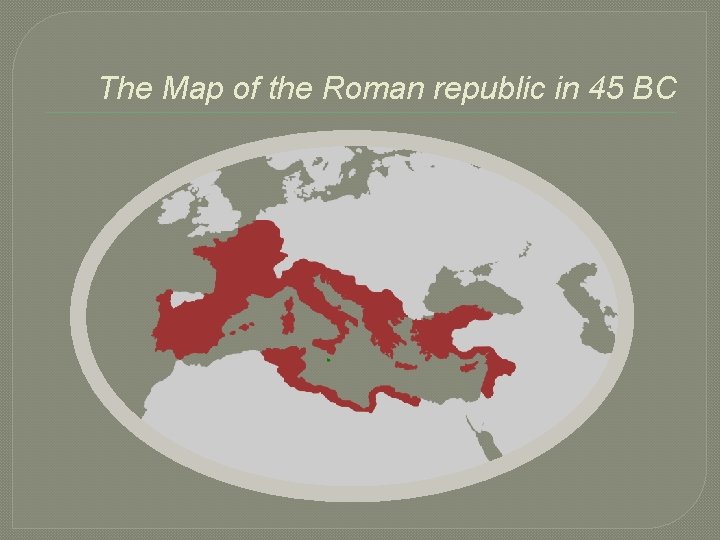
The Map of the Roman republic in 45 BC
THE PUNIC WARS 260 – 146 B. C. �* Three series of wars with Carthage, a northern African city-state. � * Punicus is Latin for “Phoenician”; Carthage interfered with Rome’s ability to freely trade in the Mediterranean. � * When Rome sent an army to Sicily, war began, with Roman navy defeating Carthaginian forces. � * Hannibal took 46, 000 men, animals (37 elephants) across the Alps in 2 nd invasion. Rome survived and took control of Spain. � * Third War ended with Carthage destroyed, and Rome major military power in Mediterranean.
The Roman Empire******* • Began with Julius Caesar’s becoming dictator for life in 45 B. C. (also known as B. C. E. – before the common era). • Members of roman Senate killed Caesar in 44 B. C. • * His heir and grandnephew, Octavian, won struggle for control of empire.
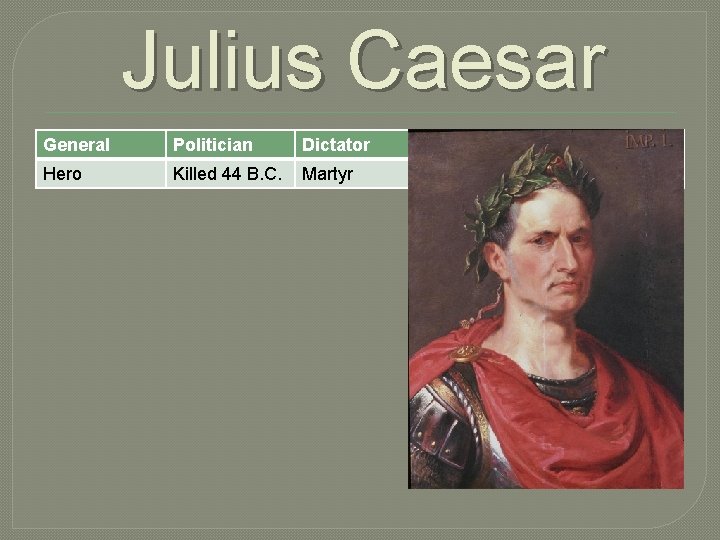
Julius Caesar General Politician Dictator Hero Killed 44 B. C. Martyr
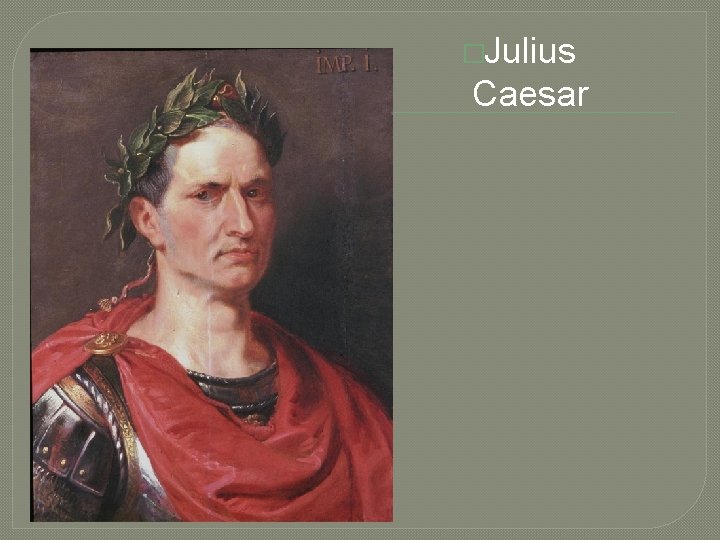
�Julius Caesar
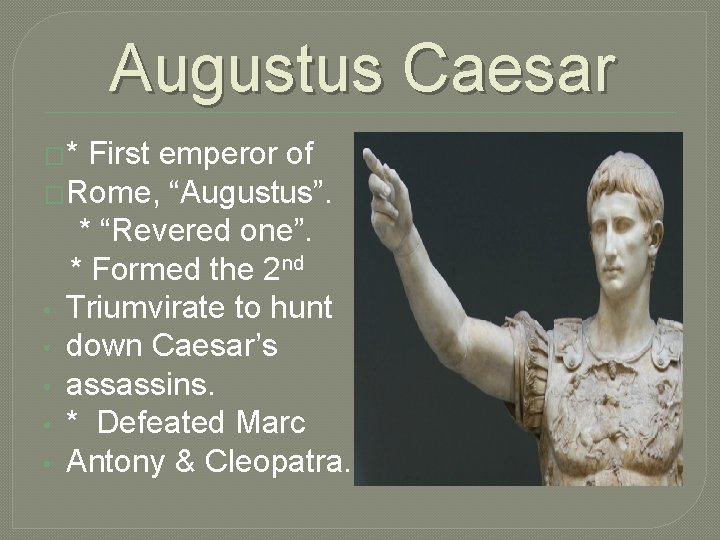
Augustus Caesar �* First emperor of �Rome, “Augustus”. * “Revered one”. * Formed the 2 nd • Triumvirate to hunt • down Caesar’s • assassins. • * Defeated Marc • Antony & Cleopatra.
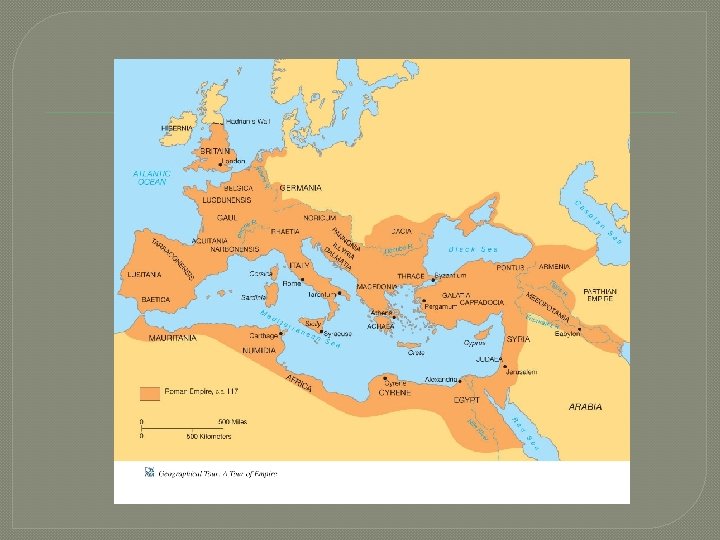
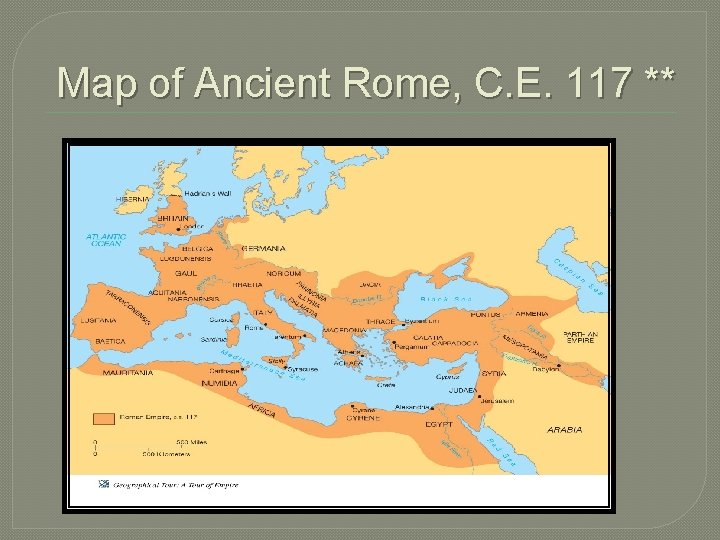
Map of Ancient Rome, C. E. 117 **
The Rise of Christianity****** Began in Rome with Peter the apostle. Believed Jesus was the “Christos” meaning Savior or Messiah.
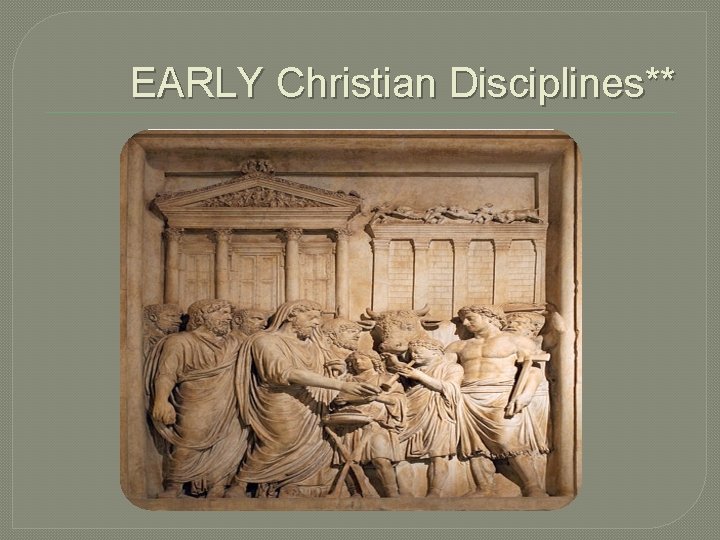
EARLY Christian Disciplines**
The Origin of Christianity*** � � � Began with Jesus, a Jew from Galilee. � Holy book is the Bible. � Two sections: Old Testament and new Testament. � *Peter went to Rome. And became the first “papi” of church. Constantine was the 1 st Christian emperor, and issued the Edict of Milan (legalized) 313 A. D. � Latin word for universal is “catholic”. Theodosius made it the official religion of Rome. � *Became known the Roman Catholic Church. Basis philosophy is by accepting Jesus as Christ, people can be saved from sin and reconciled with God.
The Christian Philosophy*** � Jesus traveled and preached throughout Judaea and neighboring Galilee as a Jewish Prophet. His message was what was important was not strict adherence to the law but you’re inner self. “ So in everything, do to others what you would have them do to you, for this sums up the Law and the Prophets. ” God’s command was to love God and one another. � The Christian movement began within Judaism and won followers in Jerusalem, Judaea, and Galilee. Prominent apostles (leaders) arose in early Christianity such as Simon Peter, and Paul. The teachings of early Christianity were passed on orally. The New Testament formed the second part of the Christian Bible. Most early Christians came from the Jews and the Greek speaking populations, however an increasing number of followers were Latin-speaking people. � The Romans first paid little attention to the Christians, considering them another sect of Judaism. This attitude started to change. The Romans came to view Christians as harmful to the state because they refused to worship the state gods and emperors. This refusal to worship was seen as treason, and punishable by death. The Roman government began persecuting Christians during the reign of Nero A. D. 54 -68. **
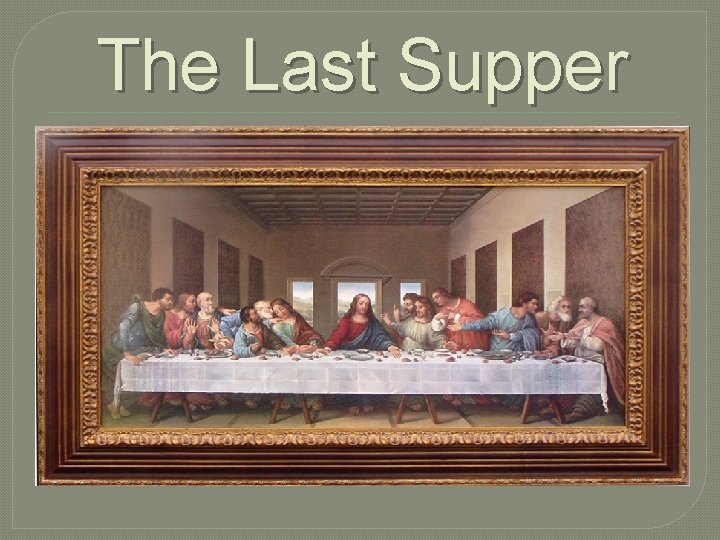
The Last Supper
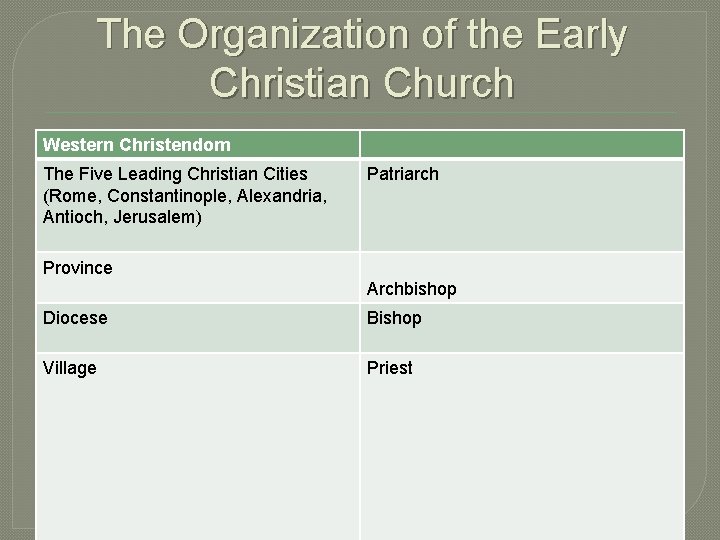
The Organization of the Early Christian Church Western Christendom The Five Leading Christian Cities (Rome, Constantinople, Alexandria, Antioch, Jerusalem) Patriarch Province Archbishop Diocese Bishop Village Priest
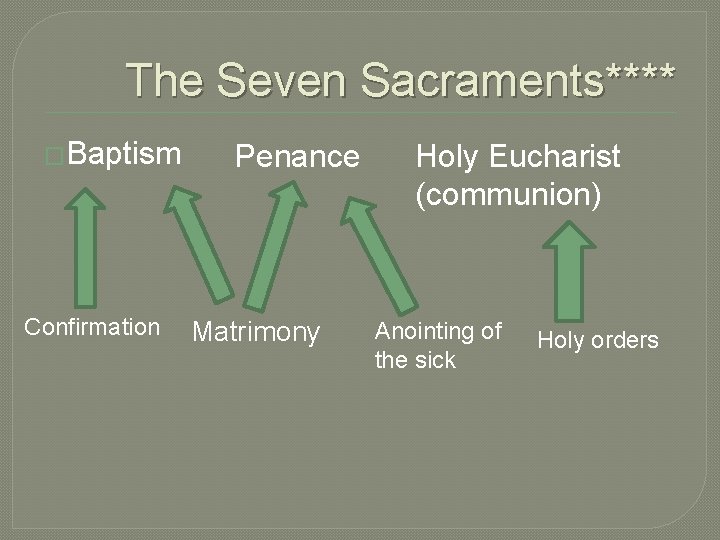
The Seven Sacraments**** �Baptism Confirmation Penance Matrimony Holy Eucharist (communion) Anointing of the sick Holy orders
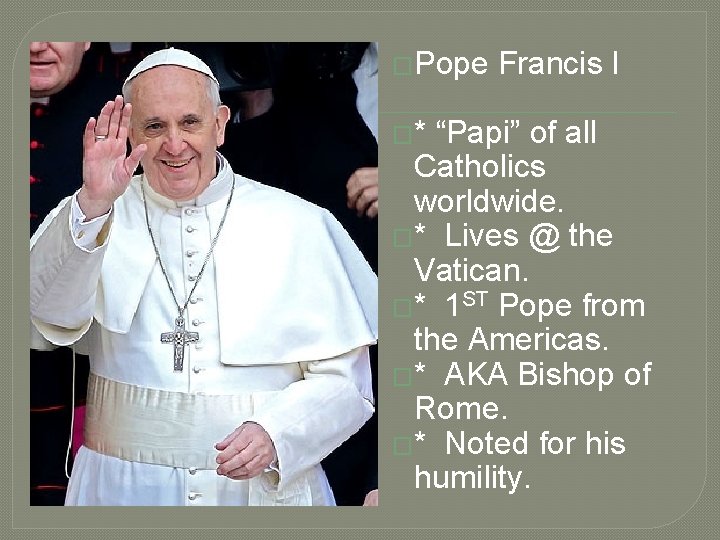
�Pope �* Francis I “Papi” of all Catholics worldwide. �* Lives @ the Vatican. �* 1 ST Pope from the Americas. �* AKA Bishop of Rome. �* Noted for his humility.
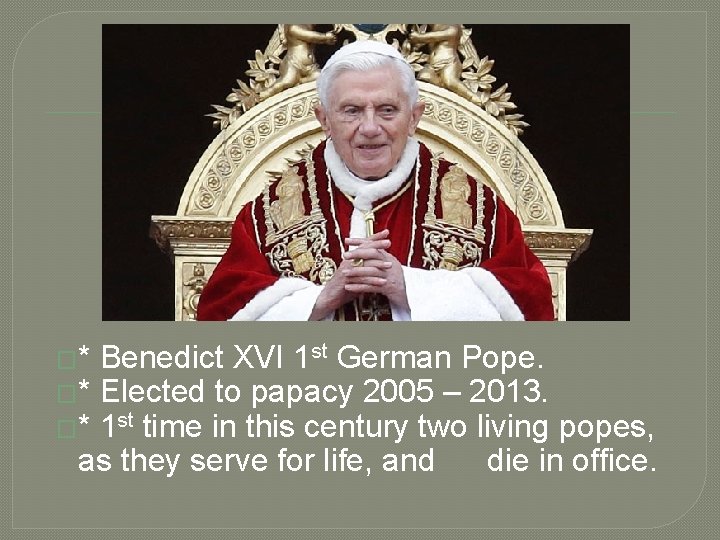
�* Benedict XVI 1 st German Pope. �* Elected to papacy 2005 – 2013. �* 1 st time in this century two living popes, as they serve for life, and die in office.
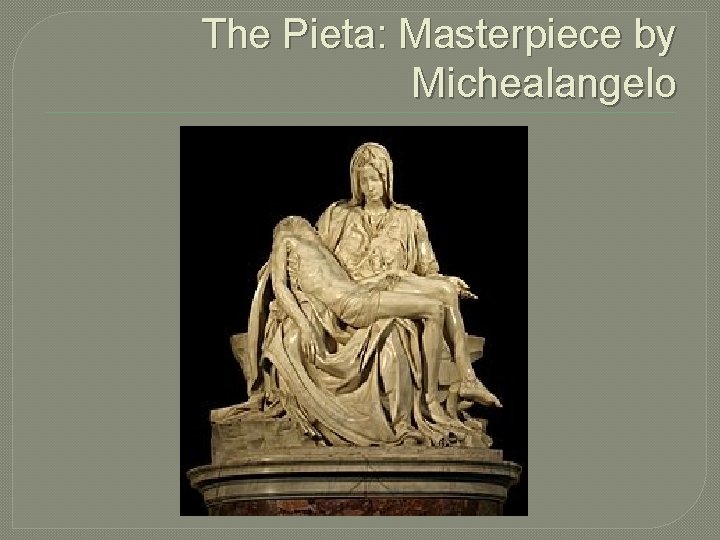
The Pieta: Masterpiece by Michealangelo
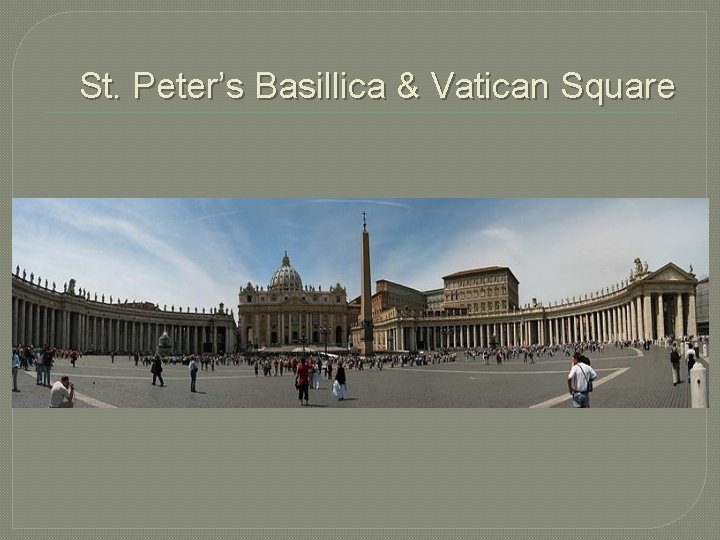
St. Peter’s Basillica & Vatican Square
The Extent Of The Roman Empire � The five “good emperors” Nerva, Trajan, Hadrian, Marcus Aurelius and � Antoninus Pius created a peace of peace and prosperity, which lasted for 100 years. � Known as the Pax Romana , “the Roman � Peace”. � The empire was so large, there were two capitals, and two emperors: • Western empire – Rome • Eastern empire- Byzantium, later e-named Constantinople (today named Istanbul).
The Decline and fall of Rome �* By the late 5 th century, Rome was too weak to fight off constant invasions (Goths, Vandals, Visigoths, the Huns). �* Reasons: invasions, civil wars, and plague came close to causing an economic collapse. �* In 476 A. D. Romulus Augusta was overthrown by the Germanic head of the military. This date ended ancient times.
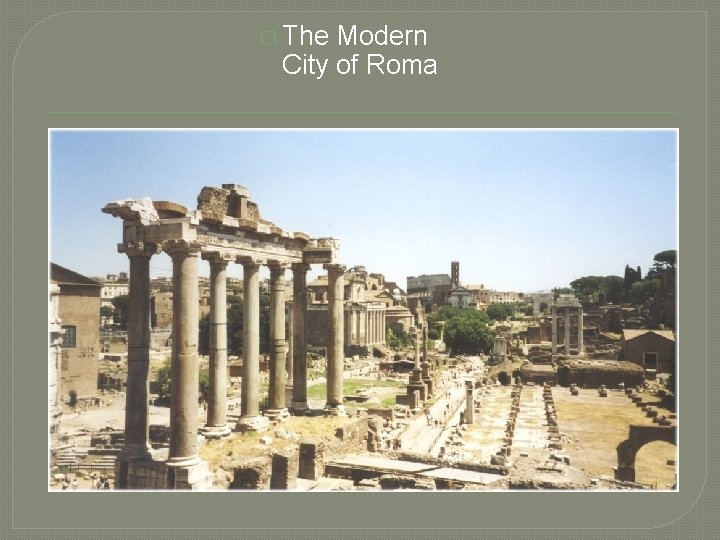
� The Modern City of Roma
The Byzantine Empire (Eastern)* • • * Even though the western Roman Empire “fell” in 476 A. D. the eastern empire continued to remain strong and powerful. * Capital was Constantinople. * Justinian re-captured land codified Roman law. * Church was the Eastern Orthodox Church headed by the Patriarch, language Greek.
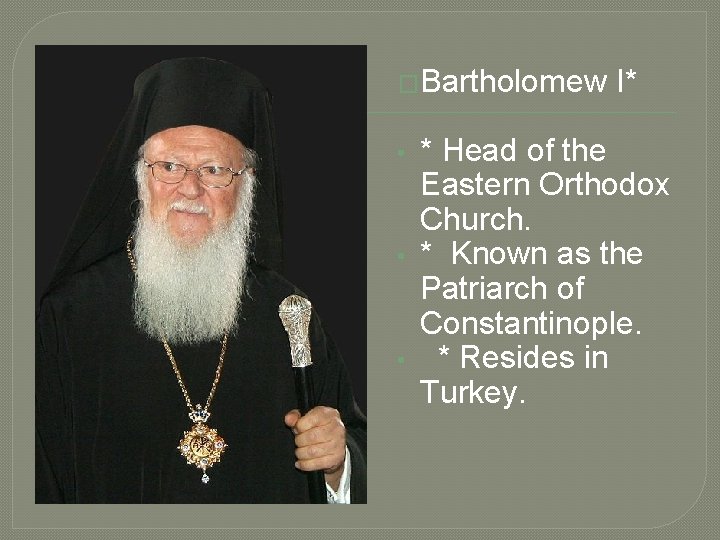
�Bartholomew • • • I* * Head of the Eastern Orthodox Church. * Known as the Patriarch of Constantinople. * Resides in Turkey.