
Ancient Rome From Republic to Empire The Geography
Ancient Rome From Republic to Empire
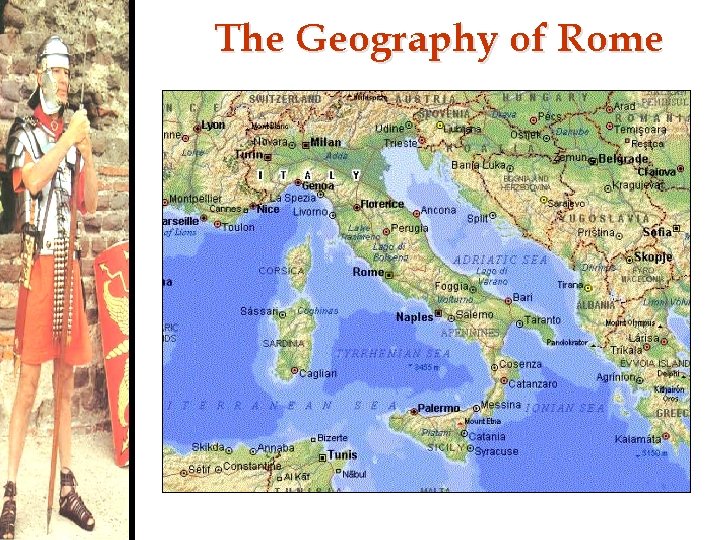
The Geography of Rome
Geography • The Sea: – Italy located in the middle of the Mediterranean Sea • Makes it a center for trade • Rely more on land than sea however for growth of civilization (unlike the Greeks) • The Land: – Mountainous terrain, but also includes many navigable rivers and fertile valleys. – Soil adept to agriculture • Wheat and grapes
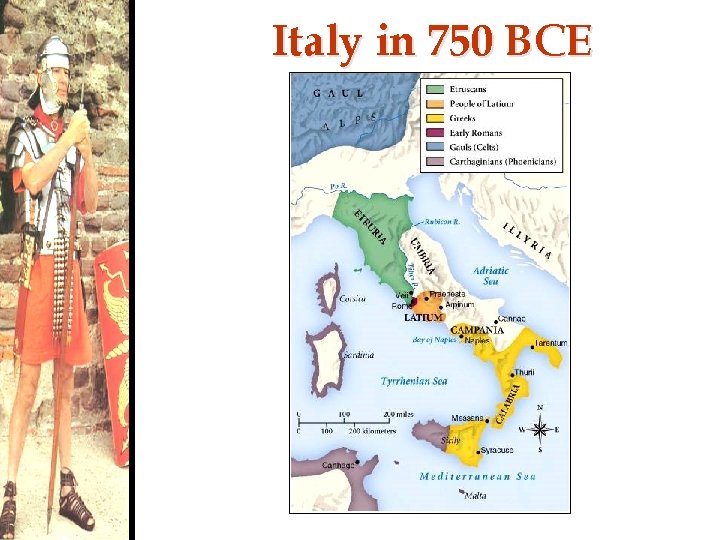
Italy in 750 BCE
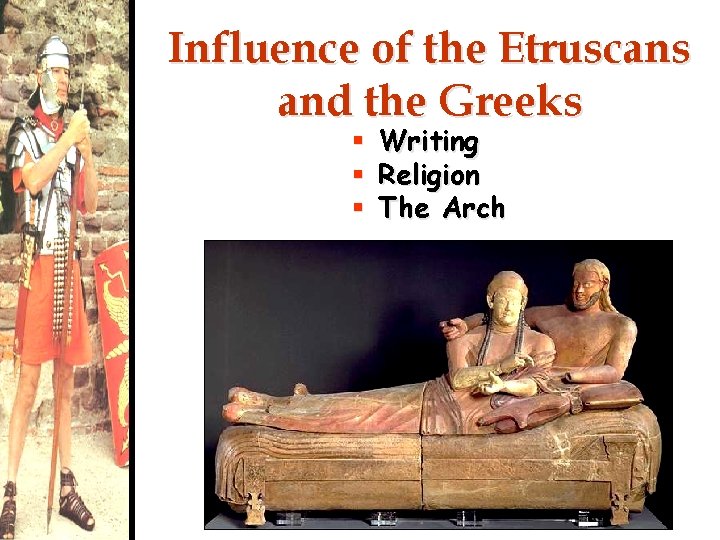
Influence of the Etruscans and the Greeks § § § Writing Religion The Arch
Roman Republic Video Topics • During the video (part one and two) take notes on the following topics: 15 total – Romulus and Remus Story – Geography of Rome – Republic Structure of Government – Roman Conquests/Soldiers – Slaves/Revolts
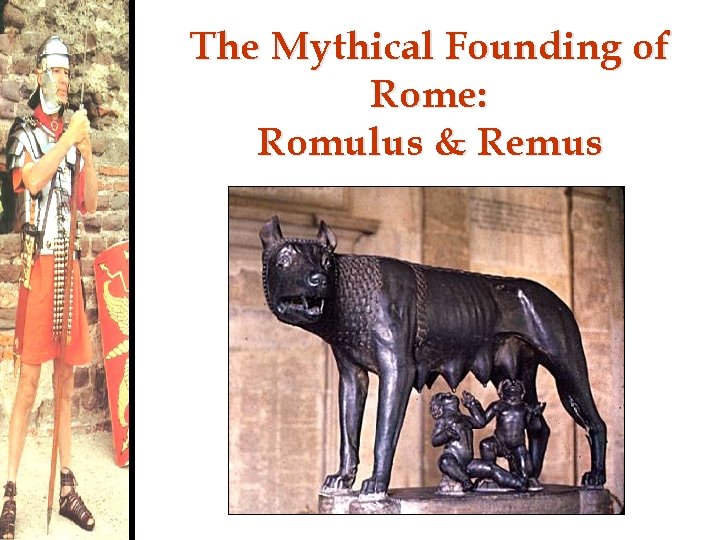
The Mythical Founding of Rome: Romulus & Remus
Republican Government • Republic: a form of government where citizens have the right to vote for their officials • Rome’s Republic: – At first dominated by the wealthy aristocratic class called the Patricians • Conflict of the Orders: – The lower class (98% of the population) called the Plebians fight for increased decision making power in the government process – Compromise: • 2 elected officials from the Plebian class called Tribunes serve as the head of the Assembly • Twelve Tables – a written code of law hung in the Forum where all citizens could read and know the laws (creates equality under the law)
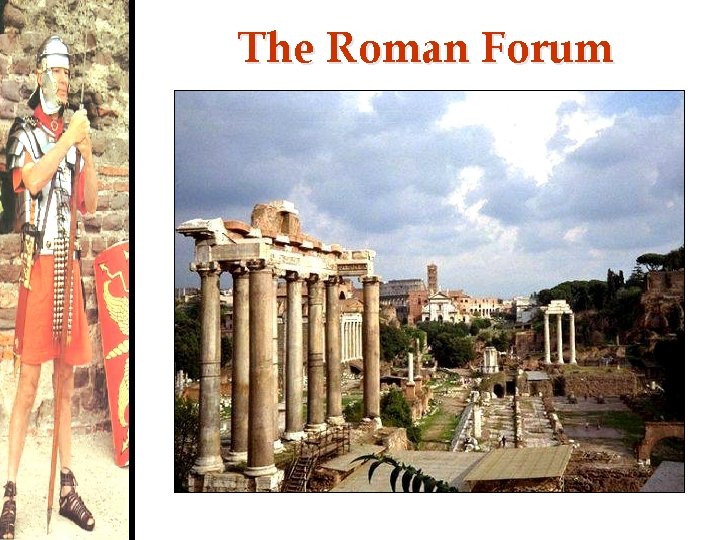
The Roman Forum
Republican Government • Branches of Rome’s Republic Government: – Consuls : 2 elected leaders of Rome who served for one year periods (in charge of overseeing the government and the army) – Senate: chosen from aristocratic class and seats often passed down from father to son – in charge of law making – Assemblies: drawn from the lower class with limited authority to propose laws or veto laws (led by Tribunes) – Dictator: one man elected in times of crisis to command thee Republic with sole authority (term limit of 6 months) – Roman Army: divided into legions and controlled by Generals. Soldiers were volunteers and professionals but must be land owners (i. e. citizens). • http: //www. youtube. com/watch? v=yhn. Wy. Rv. C 1 d. U
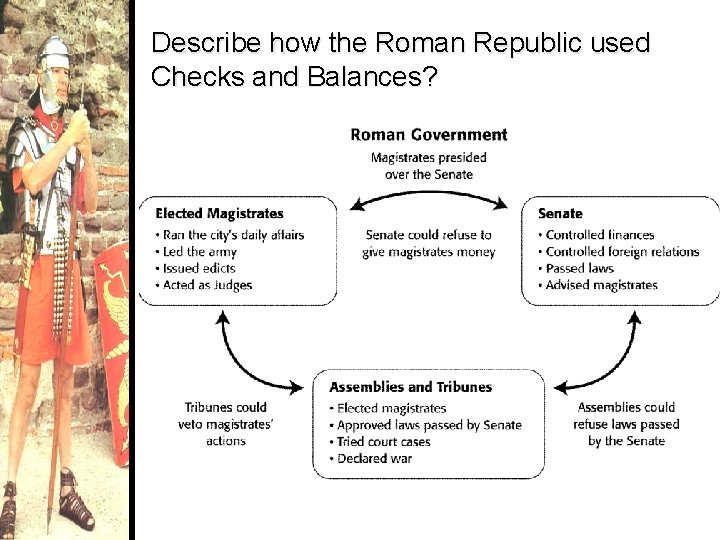
Describe how the Roman Republic used Checks and Balances?
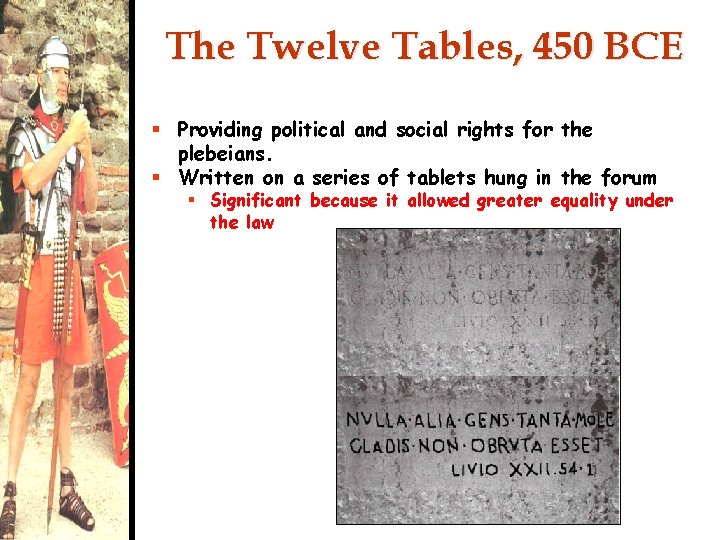
The Twelve Tables, 450 BCE § Providing political and social rights for the plebeians. § Written on a series of tablets hung in the forum § Significant because it allowed greater equality under the law
Roman Law • The Twelve Tables were an early example of the importance of written law and set a precedent for further equality guaranteed by law to all citizens: – the right to receive equal treatment under the law. – the right to be punished only for actions, not thoughts. – the right to be considered innocent until proven guilty.
Collapse of the Roman Republic • Economic: growing gap between rich and poor – Wealthy landowners increasingly used slaves which put small farmers and laborers out of work • Social Unrest: growing unemployment led to social unrest – – – Poor farmers moved into overcrowded cities Lack of jobs Shortage of grain supplies Riots Senators using violence • Military Upheaval: soldiers loyalty gradually changed from the Roman state to their generals
Collapse of the Republic Cont. – Julius Caesar: Rome’s most infamous general http: //www. youtube. com/watch? v=JO 565 z. LOQSc • Became governor of Gaul (modern day France) after his army conquered it • Republic government not able to maintain peace so Caesar and 2 other generals form a Triumvirate of rulers (3 rulers divide duties of governing Roman territories) http: //www. youtube. com/watch? v=Z 88_UTf 23 nc • Eventually Caesar marches his army into Rome and defeats that other generals and proclaims himself Dictator for life • Makes reforms, creates jobs, redistributes land to the poor • Senators assassinate him - grow weary of his ego and power trip and they conspire to him • http: //www. youtube. com/watch? v=Z 88_UTf 23 nc
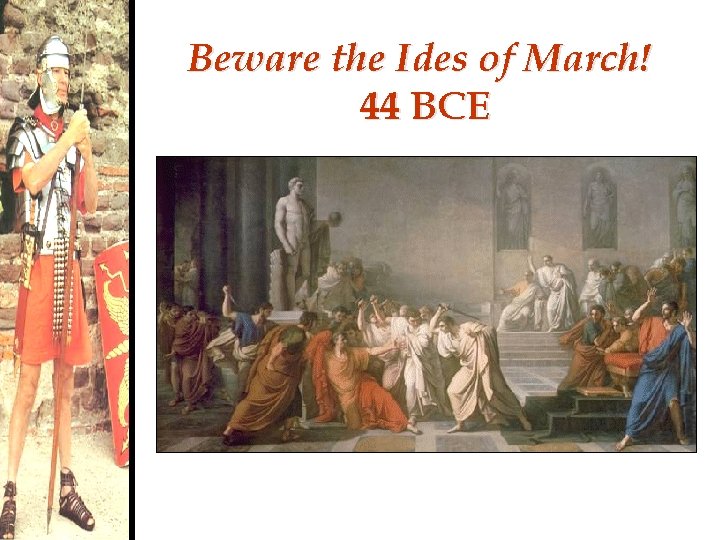
Beware the Ides of March! 44 BCE

The Roman Empire • Augustus: First Emperor of Rome – Caesar’s death kicks off a 15 year long civil war with his adopted son and nephew Octavian as the victor – Essentially dismantles the Republic and creates an Imperial government • One ruler, the Emperor, has sole authority • Senate still exists however their power is sharply decreased. – He creates the first Civil Service • He hires people from the plebian class to work for the government to help administer the Empire – His policies set off a 200 year peace within the realm which historians call the Pax Romana or Roman Peace

Augustus r. 27 BCE – 14 CE

The Roman World • Values: – Emphasized loyalty, discipline – A practical people who valued strength more than beauty and usefulness • Slaves – Important to the Roman economy, perhaps more so than in any other civilization at the time – Most were war captives (men, women and children) – Some forced to be Gladiators • Gods: – – – Polytheistic (belief in many gods) Public and private worship Took on Greek Gods
The Roman World • Culture: – Wealthy lived extravagantly while the poor barely survived relying on grain supplies from the government – Games – gladiator fights, naval battles, chariot races • http: //www. youtube. com/watch? v=xv. RWUCf. APs 0&feature=rel mfu • http: //www. youtube. com/watch? v=df. STZUEH 95 Q&feature=rel ated • http: //www. youtube. com/watch? v=CWCwnkd. PPCc&feature=r elated • http: //www. youtube. com/watch? v=s 66 z. FW 3 nog. U&feature=rel mfu – Roman Baths/Aqueducts • http: //www. pbs. org/wgbh/nova/lostempires/roman/ • http: //www. youtube. com/watch? v=6 sn. Vy. K 6 g. QCE

The Roman Colosseum
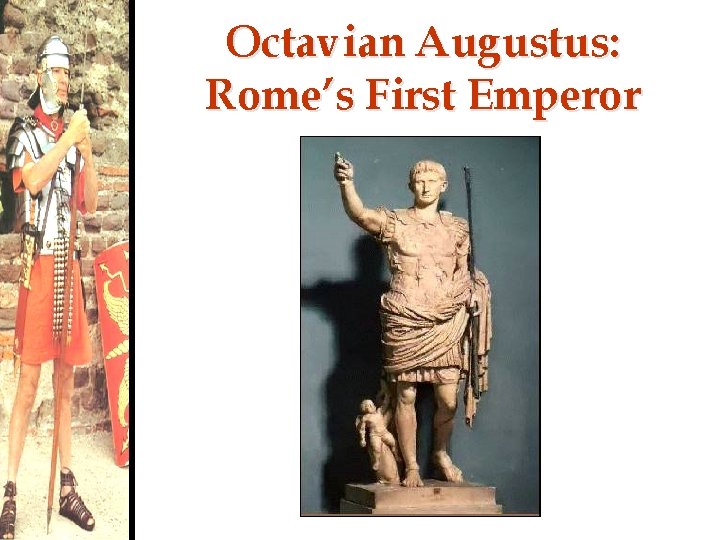
Octavian Augustus: Rome’s First Emperor

Pax Romana: 27 BCE – 180 CE

The Greatest Extent of the Roman Empire – 14 CE
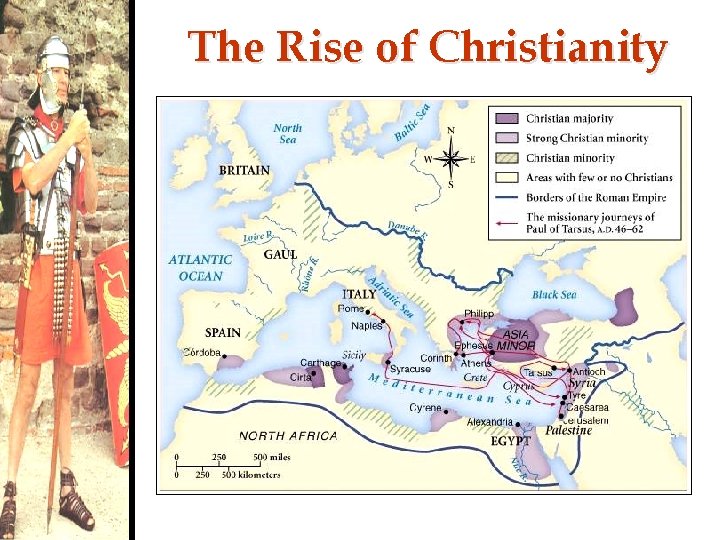
The Rise of Christianity
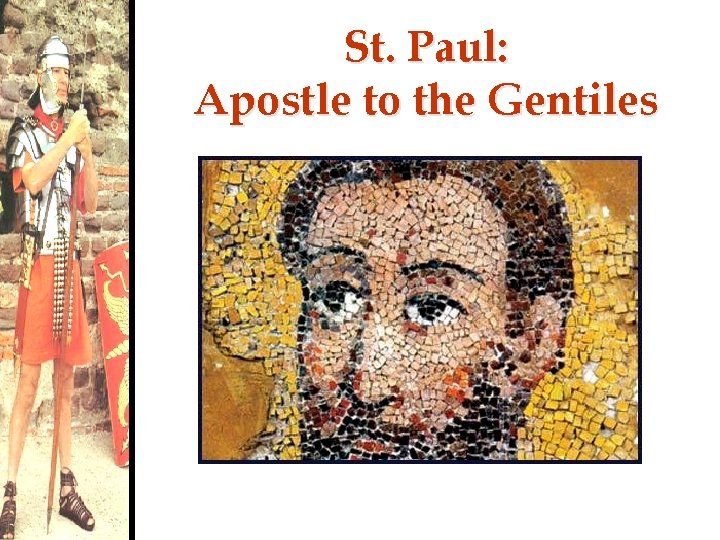
St. Paul: Apostle to the Gentiles
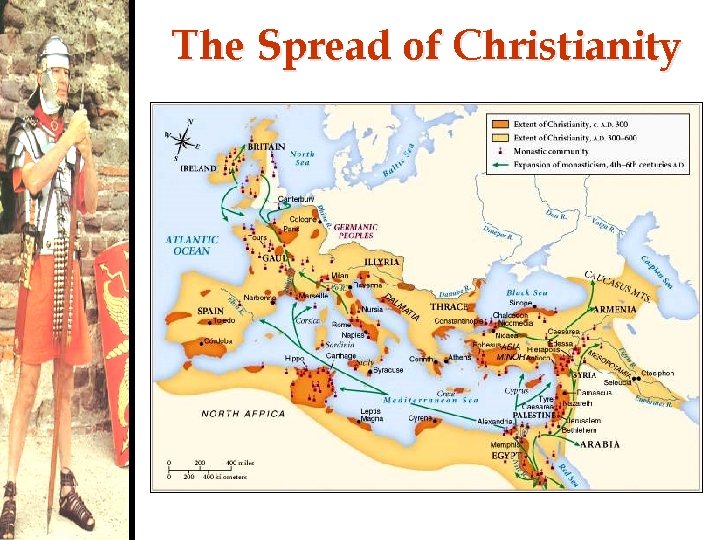
The Spread of Christianity
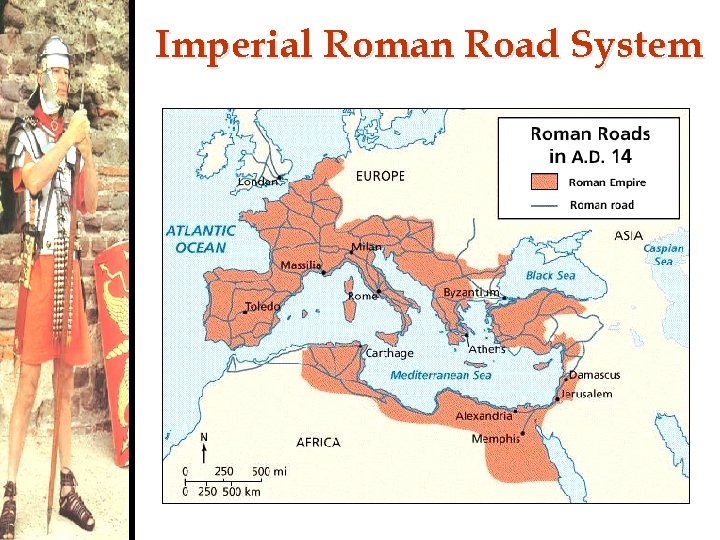
Imperial Roman Road System
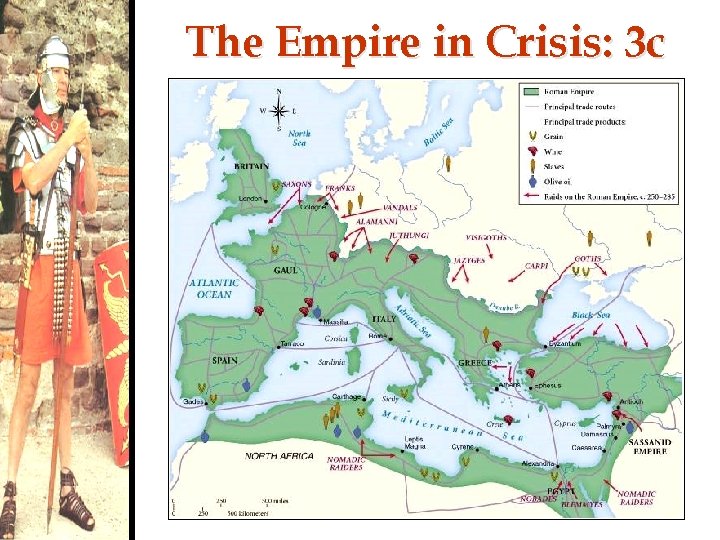
The Empire in Crisis: 3 c
The Empire in Crisis: 3 rd Century • http: //www. youtube. com/watch? v=3 Psz. VWZNWVA • Rome’s Economy Weakens: – Hostile tribes from Asia, Germany, France etc… invade Roman territory disrupting trade – Pirates on the Mediterranean disrupt trade – Gov’t raised taxes – Inflation – decrease in the value of money while prices go up – Over worked soil led to food shortages and famine • Military and Political Turmoil: – Rome could no longer supply enough of their own soldiers and hired mercenaries (foreign soldiers who fought for money) – Loss of patriotism
Emperor’s Attempt Reform • Diocletian r. 284 CE – 305 CE – Claimed to be descended from Roman Gods – Severely limited personal freedoms and restored order – Doubled the size of the Empire – Controlled inflation by setting prices – Divided the Empire in 2 parts: • • • East – Greek speaking West – Latin speaking Purpose was to better administer the large Empire
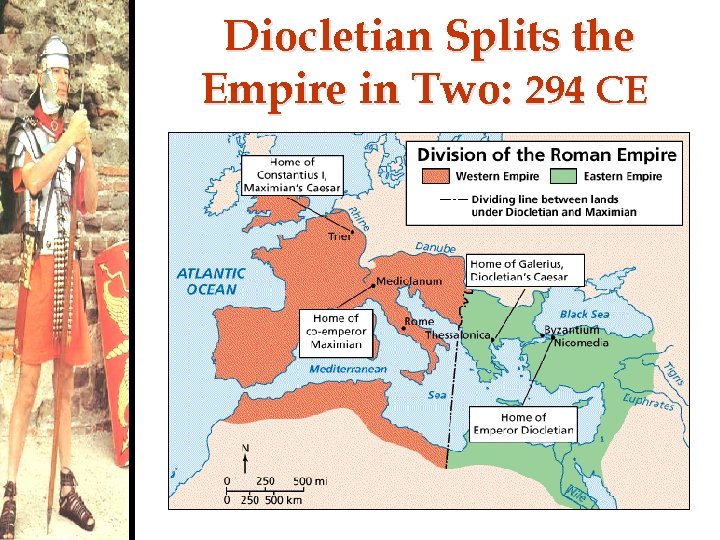
Diocletian Splits the Empire in Two: 294 CE
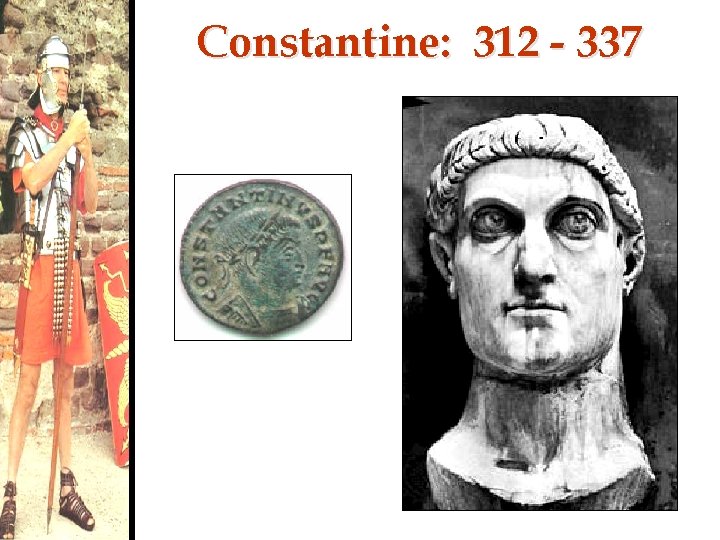
Constantine: 312 - 337
Constantine • Gained control of the western part in 312 CE – – Continued many of Diocletian’s reforms Secured control of the east through military campaigns thus reuniting the Empire – Moved the capital from Rome to Istanbul in the east and renamed it Constantinople • Strategically located for trade and defense • Shifted power from west to east • After his death the empire was again divided and would never recover
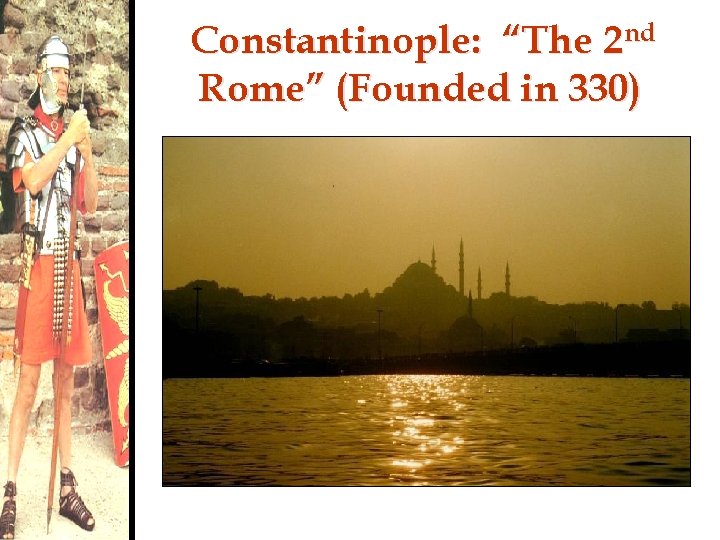
Constantinople: “The 2 nd Rome” (Founded in 330)
The Western Empire Crumbles • Germanic Invasion: 370 CE Mongol nomads, Huns invaded Germanic tribes on Rome’s Northern border. – Causes Germanic tribes to flee their lands into Roman territory – Invaded Roman lands in Italy, Gaul, and Spain – Even attacked and ransacked the city of Rome itself in 410 CE • Attila the Hun: united the Huns into a powerful fighting force – Took an army of 100, 000 and terrorized both the east and western parts of the Empire • Protective walls around Constantinople were successful in keeping the Huns out • Attila’s army went after the city of Rome itself but were unable to control it due to disease, famine and then Attila’s own death
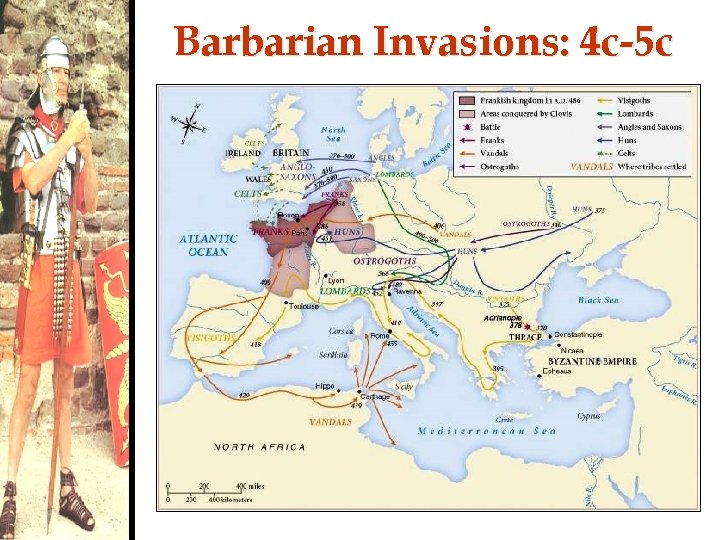
Barbarian Invasions: 4 c-5 c
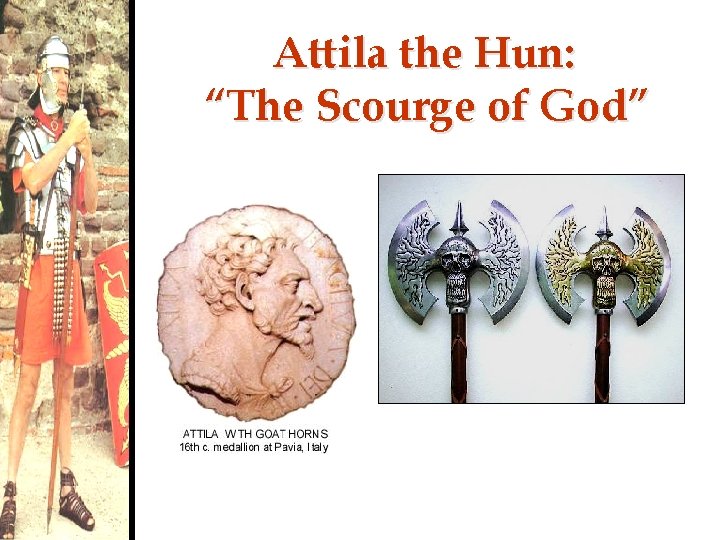
Attila the Hun: “The Scourge of God”
Survival of the Eastern Empire • Eastern Empire Lives On: – Last Roman Emperor – 14 year old boy who fled from power due to continued German attacks in 476 CE • Left the west in disarray and leaderless – Eastern Half Survives: • Came to be known as the Byzantine Empire – Was never taken by the Huns or the Germanic tribes – Emperors continue to rule, trade flourishes, remains an important Mediterranean influence for another 1000 years.
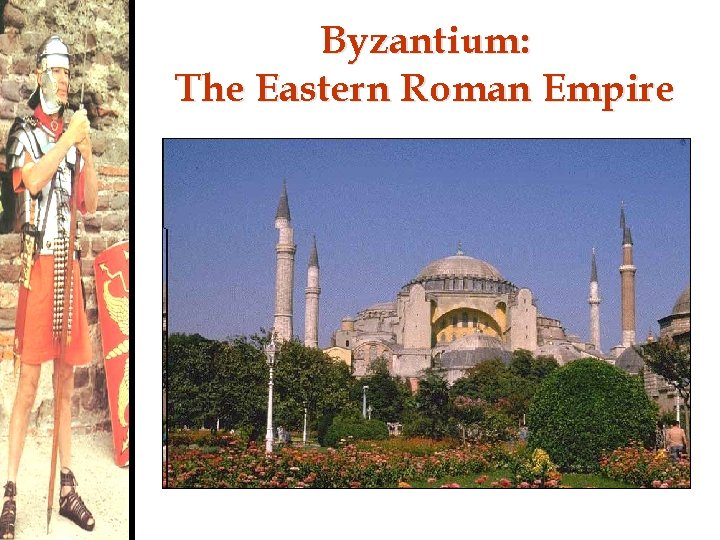
Byzantium: The Eastern Roman Empire
The Legacy of Rome § § § § Republic Government Roman Law Latin Language Roman Catholic Church City Planning Romanesque Architectural Style Roman Engineering • Aqueducts • Sewage systems • Dams • Cement • Arch
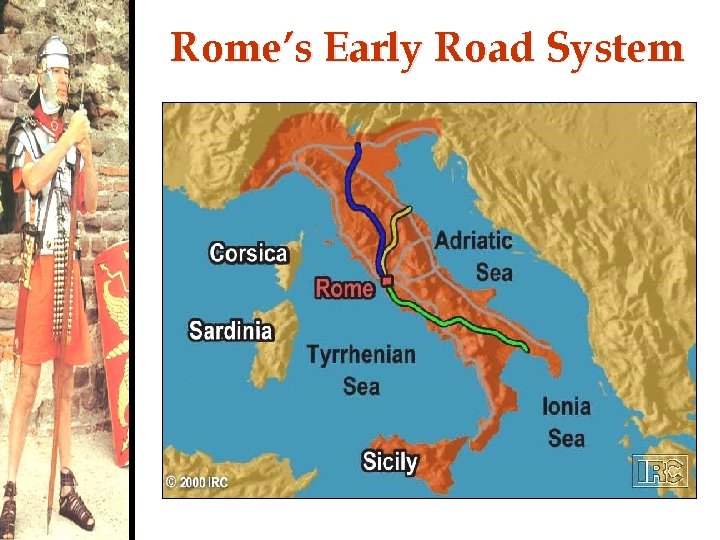
Rome’s Early Road System
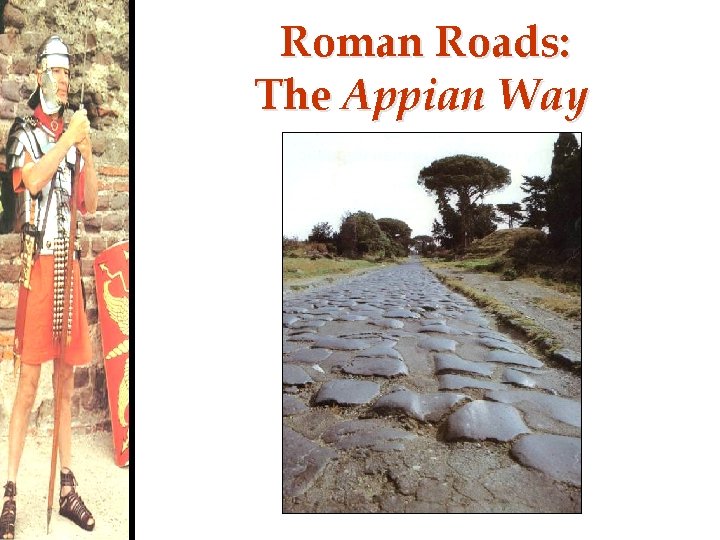
Roman Roads: The Appian Way
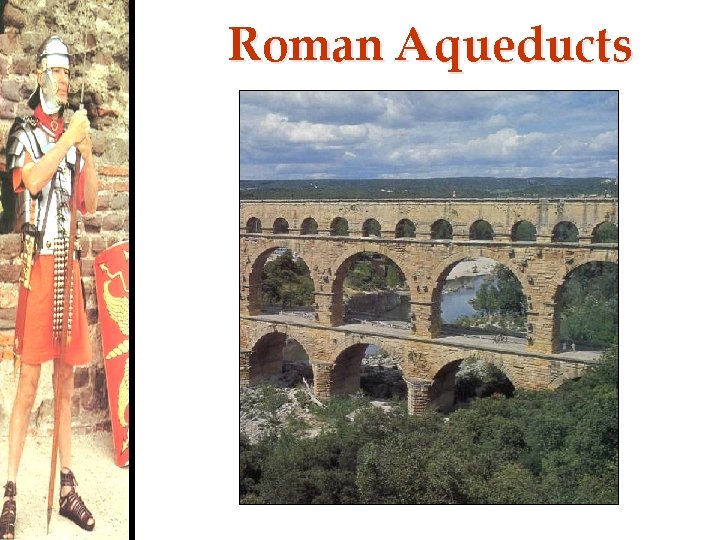
Roman Aqueducts
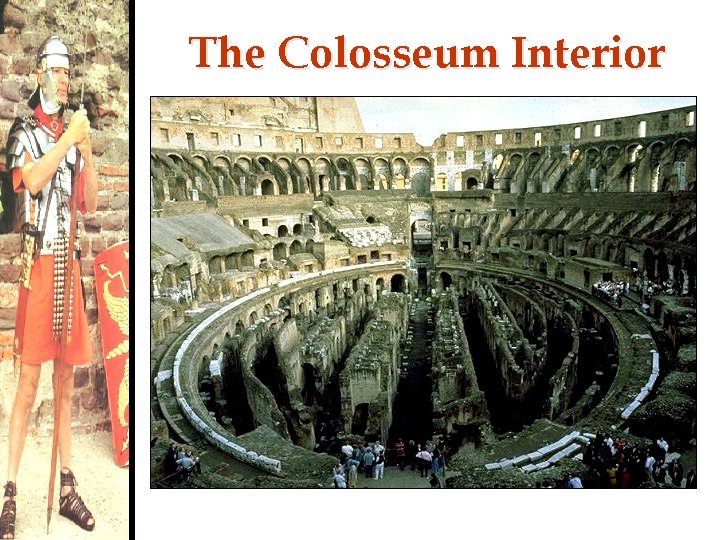
The Colosseum Interior
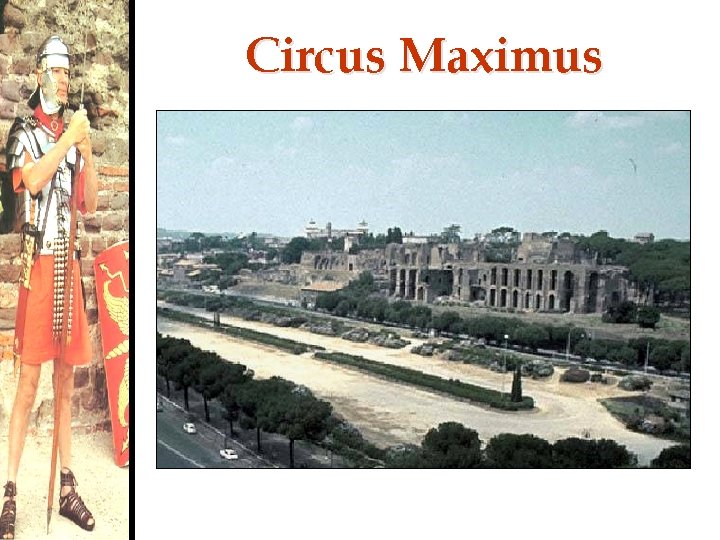
Circus Maximus
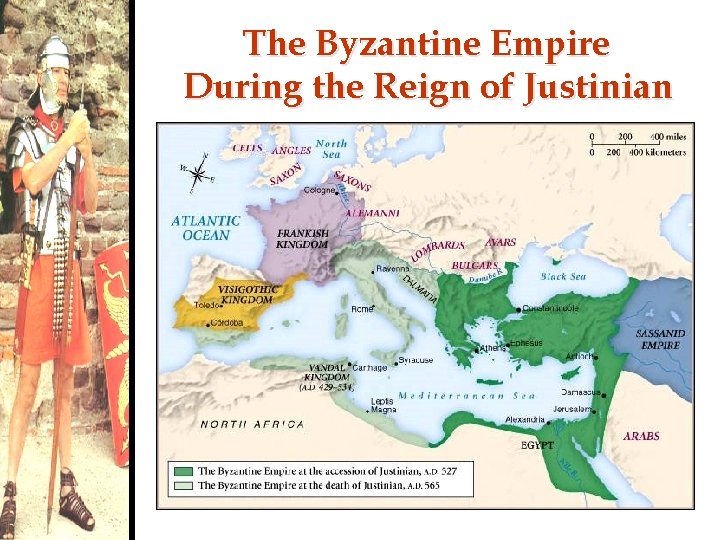
The Byzantine Empire During the Reign of Justinian
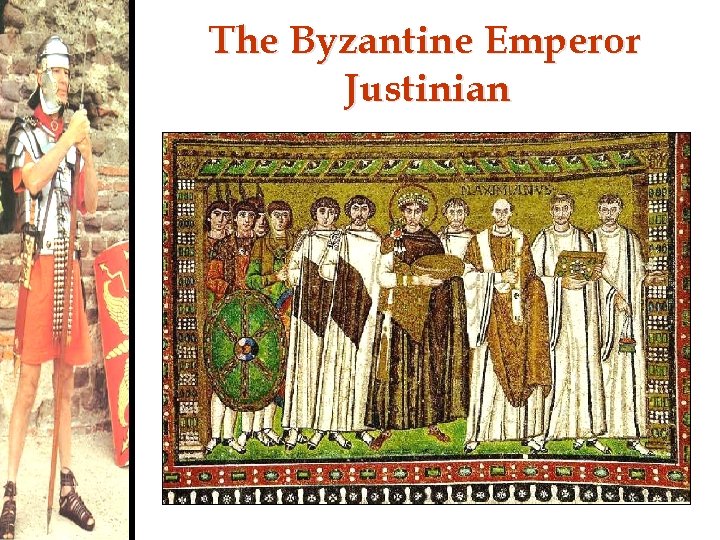
The Byzantine Emperor Justinian
- Slides: 50