
Ancient River Valley Civilizations Aim How did civilizations


- Slides: 20
Ancient River Valley Civilizations • Aim: How did civilizations develop in the Fertile Crescent? • Do Now: Copy the Vocabulary terms from the hand out into your notebook.
Vocabulary terms • • Fertile Crescent Mesopotamia City-state Dynasty Cultural diffusion Polytheism Empire Barter- an exchange of goods (trade)
Class work Students will read the study guide questions and answer the questions that follow
Why River Valleys? • 1. Offered rich soils for agriculture • 2. Tended to be located in places that could offer protection from nomadic invaders
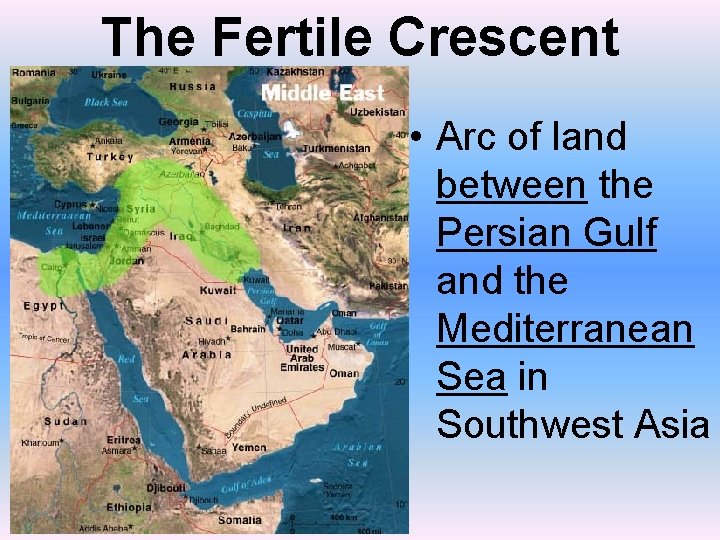
The Fertile Crescent • Arc of land between the Persian Gulf and the Mediterranean Sea in Southwest Asia
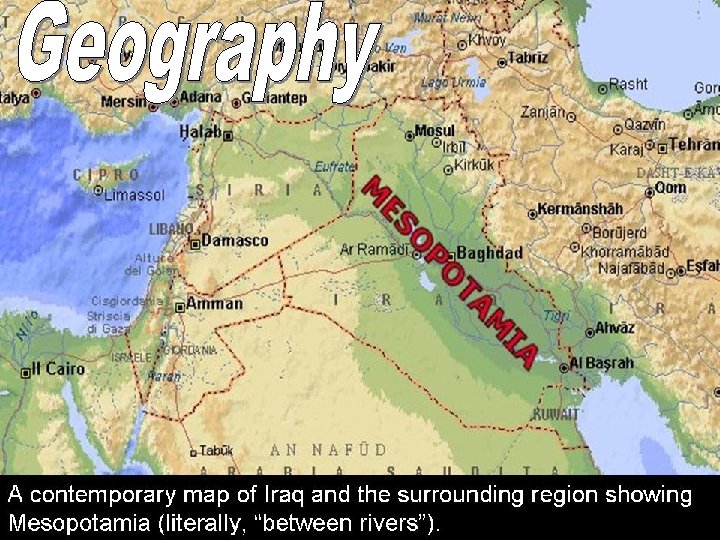
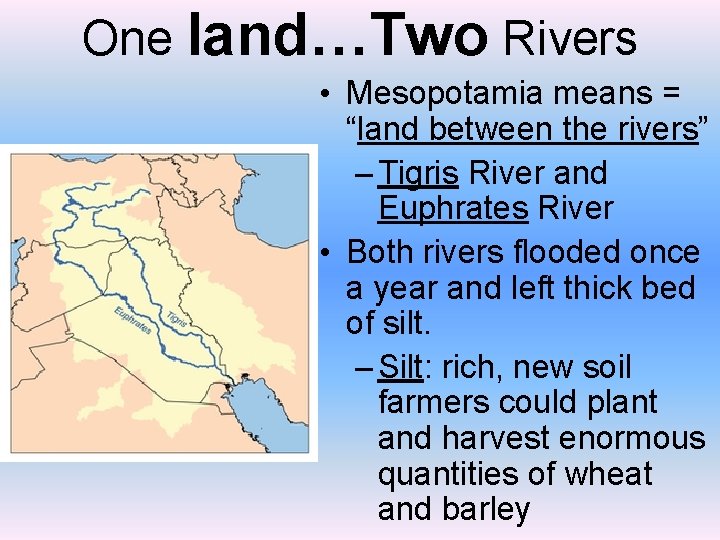
One land…Two Rivers • Mesopotamia means = “land between the rivers” – Tigris River and Euphrates River • Both rivers flooded once a year and left thick bed of silt. – Silt: rich, new soil farmers could plant and harvest enormous quantities of wheat and barley
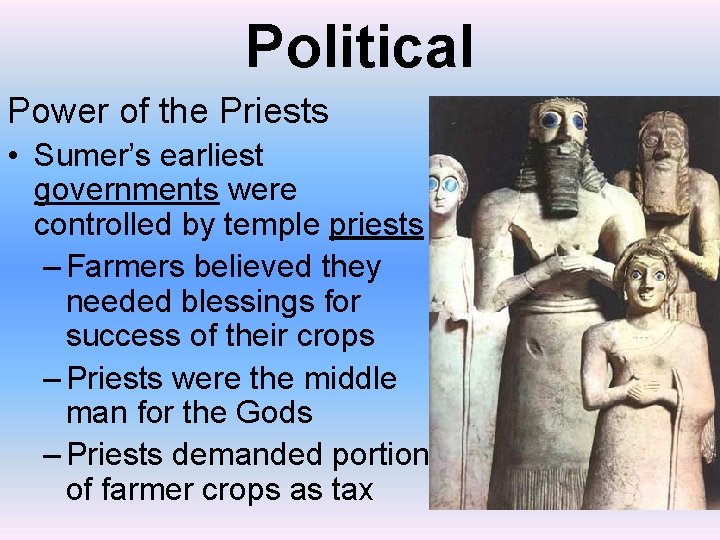
Political Power of the Priests • Sumer’s earliest governments were controlled by temple priests – Farmers believed they needed blessings for success of their crops – Priests were the middle man for the Gods – Priests demanded portion of farmer crops as tax
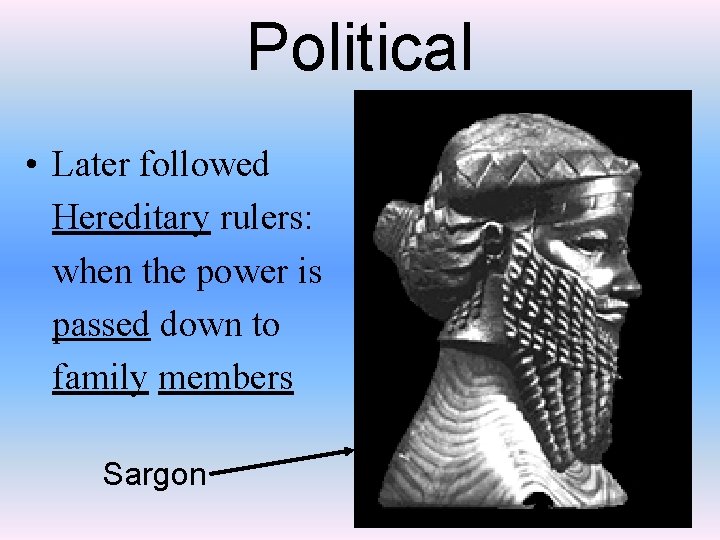
Political • Later followed Hereditary rulers: when the power is passed down to family members Sargon
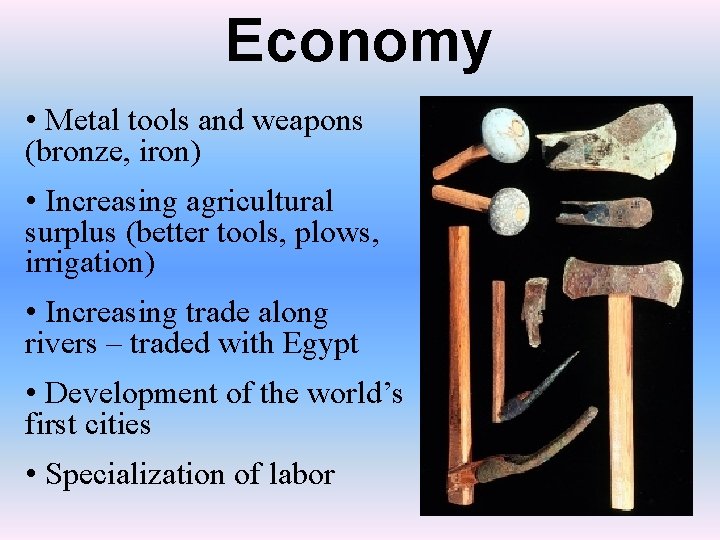
Economy • Metal tools and weapons (bronze, iron) • Increasing agricultural surplus (better tools, plows, irrigation) • Increasing trade along rivers – traded with Egypt • Development of the world’s first cities • Specialization of labor
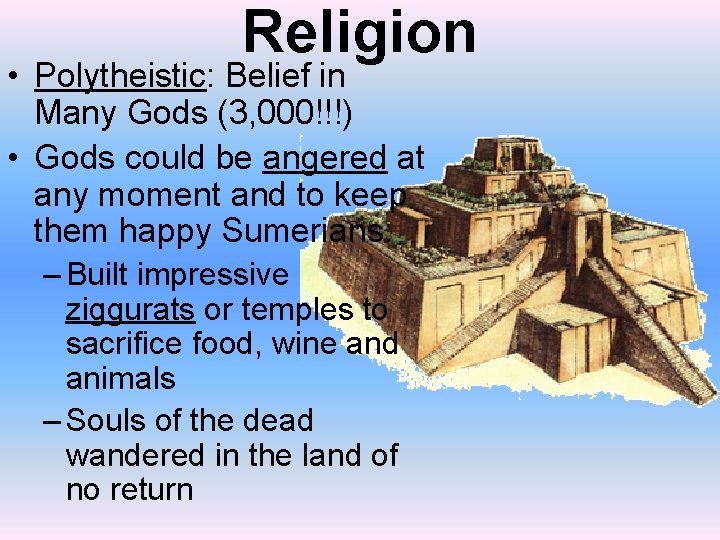
Religion • Polytheistic: Belief in Many Gods (3, 000!!!) • Gods could be angered at any moment and to keep them happy Sumerians: – Built impressive ziggurats or temples to sacrifice food, wine and animals – Souls of the dead wandered in the land of no return
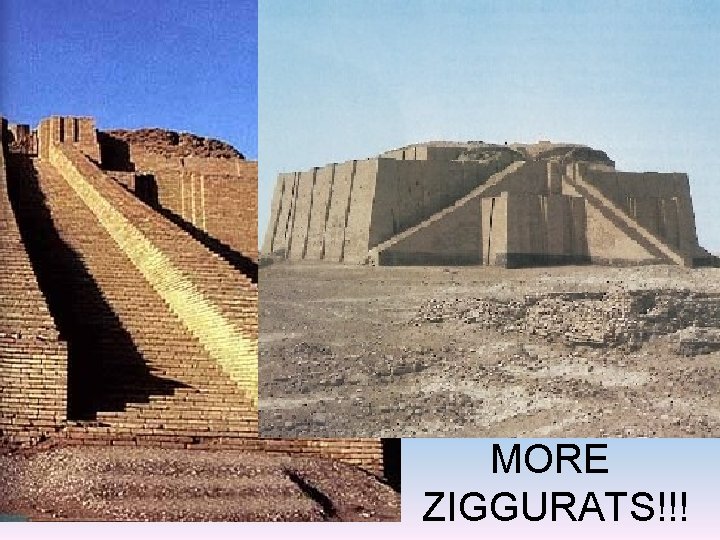
MORE ZIGGURATS!!!
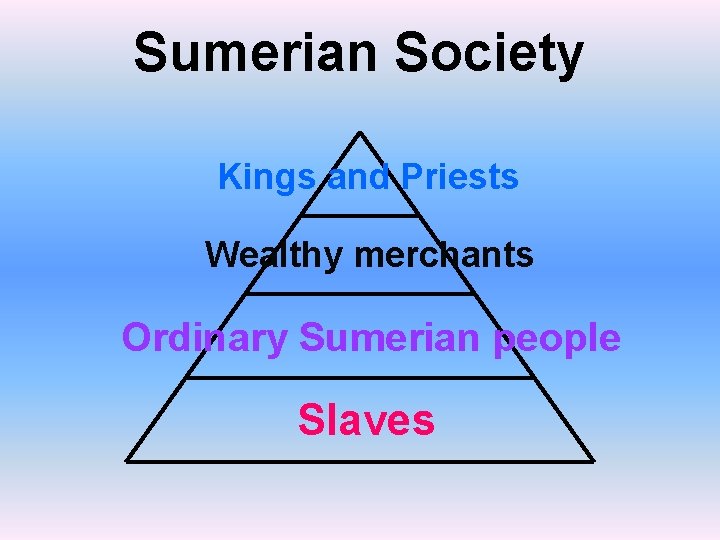
Sumerian Society Kings and Priests Wealthy merchants Ordinary Sumerian people Slaves
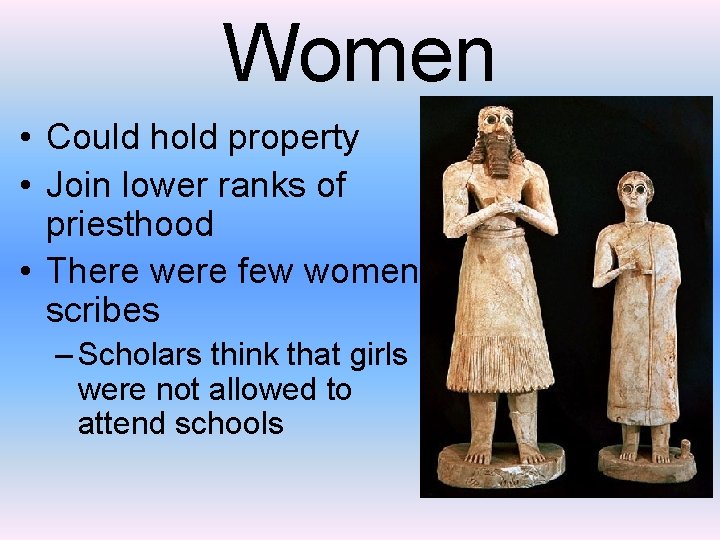
Women • Could hold property • Join lower ranks of priesthood • There were few women scribes – Scholars think that girls were not allowed to attend schools
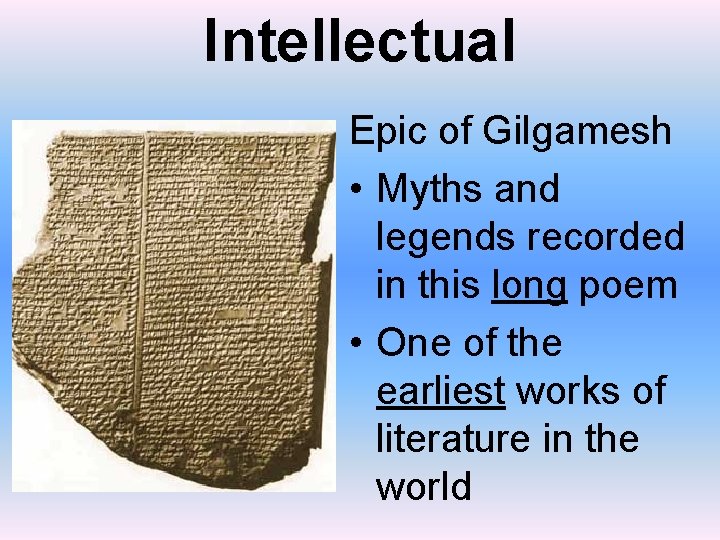
Intellectual Epic of Gilgamesh • Myths and legends recorded in this long poem • One of the earliest works of literature in the world
“Gilgamesh, whither are you wandering? Life, which you look for, you will never find. For when the gods created man, they let Death be his share, and withheld life In their own hands”
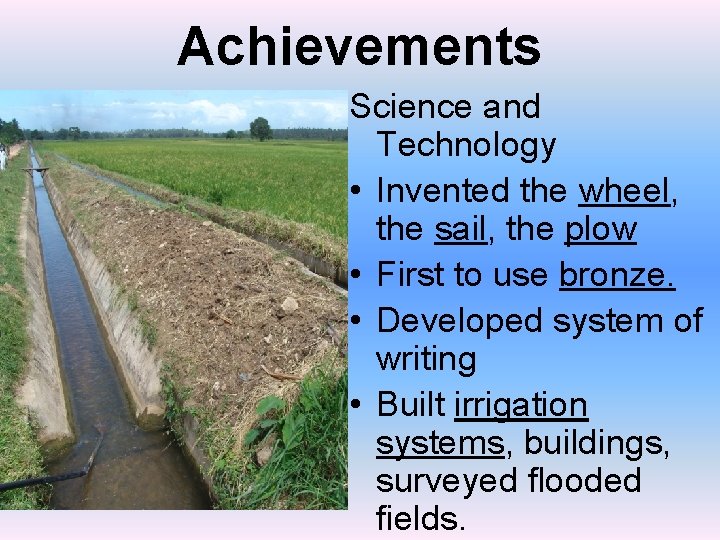
Achievements Science and Technology • Invented the wheel, the sail, the plow • First to use bronze. • Developed system of writing • Built irrigation systems, buildings, surveyed flooded fields.
Final Assessment Students will answer the multiple choice questions to the best of their ability
Pictures Cited • • • • Slide 1 - http: //www. mayfairgames. com/mfg-shop/phalanx/pics/pha 6016 -cl. jpg Slide 3 - http: //www. hawaii. edu/ahead/Iraq%20 General/mesopotamia. jpg Slide 4 – http: //userwww. sfsu. edu/~patters/culinary/media/fertilec. jpg Slide 5 – http: //content. answers. com/main/content/wp/en-commons/thumb/a/a 5/288 px-Tigr-euph. png Slide 6 – http: //individual. utoronto. ca/CLA 160 Y/Images/Tell. Asmar. Fig. jpg Slide 7 – http: //www. mysteriousworld. com/Content/Images/Journal/2003/Autumn/Osiria/Sargon 180. gif Slide 8 – http: //www. cetis. ac. uk/members/accessibility/meetings/2006/sig 14 images/ah 5 jpg Slide 9 – http: //questgarden. com/52/41/5/070613164641/images/ziggurat 1. gif Slide 10 – http: //www. meridianmagazine. com/ideas/images/ur 3. jpg, http: //todoweb 2002. iespana. es/ceramica/mesopotamia/ziggurat. jpg Slide 11 – Made by Clara Kim Slide 12 – http: //www. artlex. com/Art. Lex/m/images/mesopot_sumer_asmarfigs_lg. jpg Slide 13 – http: //www. allaboutarchaeology. org/images/epic-of-gilgamesh. jpg Slide 14 – www. archaeology. org Slide 15 –http: //siteresources. worldbank. org/NEWS/Images/071506 -Mtwango-Irrigation. JPG