
ANCIENT PERSIANS Rise of Persian Empire Geography Irans
- Slides: 12
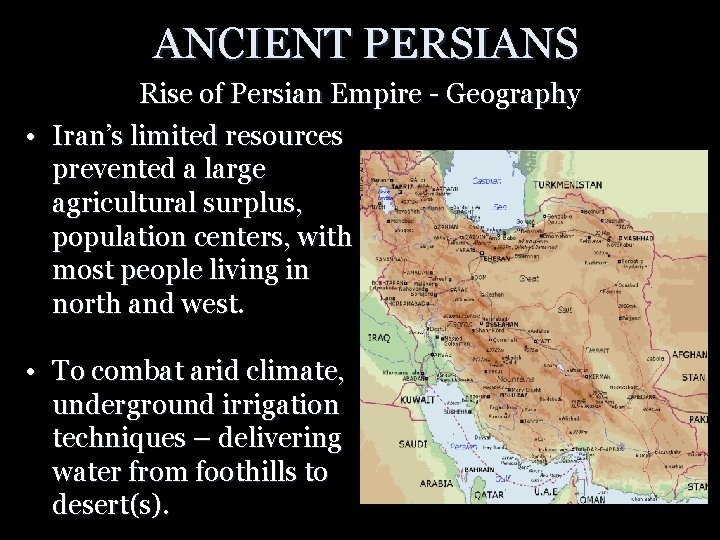
ANCIENT PERSIANS Rise of Persian Empire - Geography • Iran’s limited resources prevented a large agricultural surplus, population centers, with most people living in north and west. • To combat arid climate, underground irrigation techniques – delivering water from foothills to desert(s).
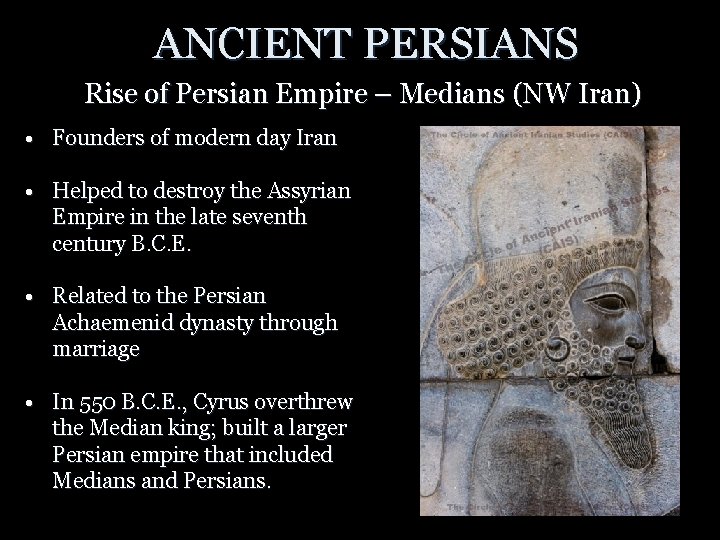
ANCIENT PERSIANS Rise of Persian Empire – Medians (NW Iran) • Founders of modern day Iran • Helped to destroy the Assyrian Empire in the late seventh century B. C. E. • Related to the Persian Achaemenid dynasty through marriage • In 550 B. C. E. , Cyrus overthrew the Median king; built a larger Persian empire that included Medians and Persians.
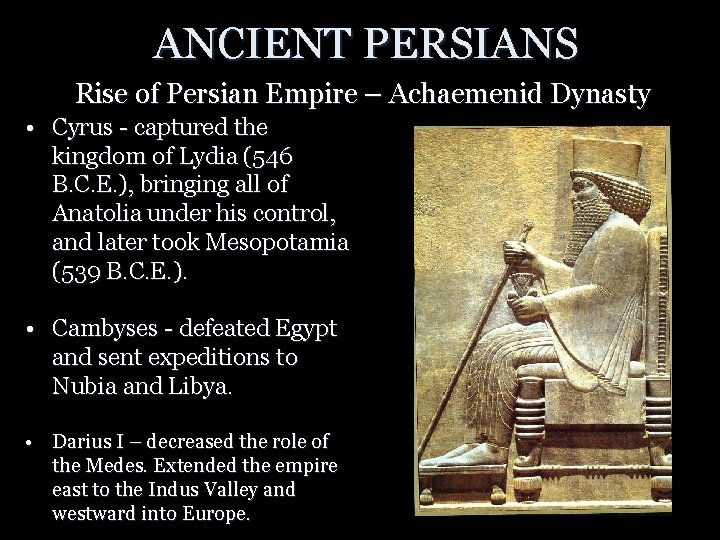
ANCIENT PERSIANS Rise of Persian Empire – Achaemenid Dynasty • Cyrus - captured the kingdom of Lydia (546 B. C. E. ), bringing all of Anatolia under his control, and later took Mesopotamia (539 B. C. E. ). • Cambyses - defeated Egypt and sent expeditions to Nubia and Libya. • Darius I – decreased the role of the Medes. Extended the empire east to the Indus Valley and westward into Europe.
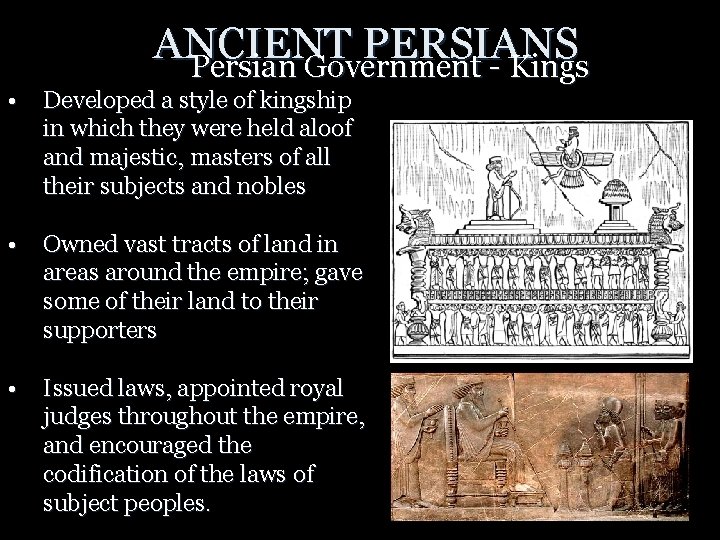
ANCIENT PERSIANS Persian Government - Kings • Developed a style of kingship in which they were held aloof and majestic, masters of all their subjects and nobles • Owned vast tracts of land in areas around the empire; gave some of their land to their supporters • Issued laws, appointed royal judges throughout the empire, and encouraged the codification of the laws of subject peoples.
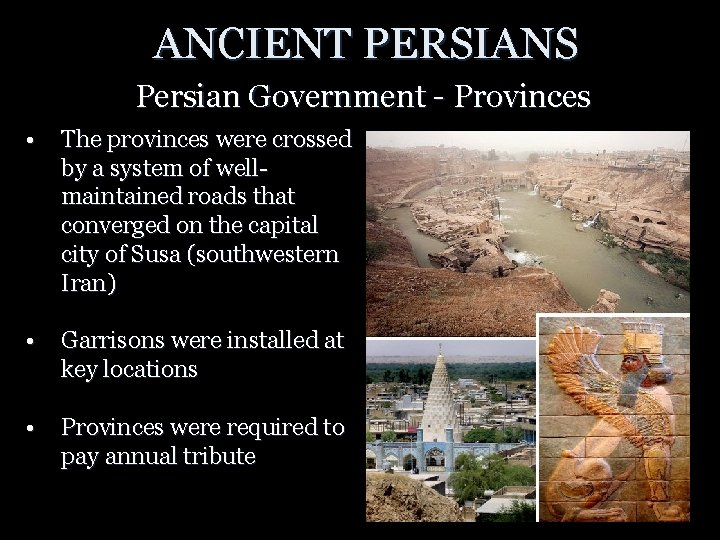
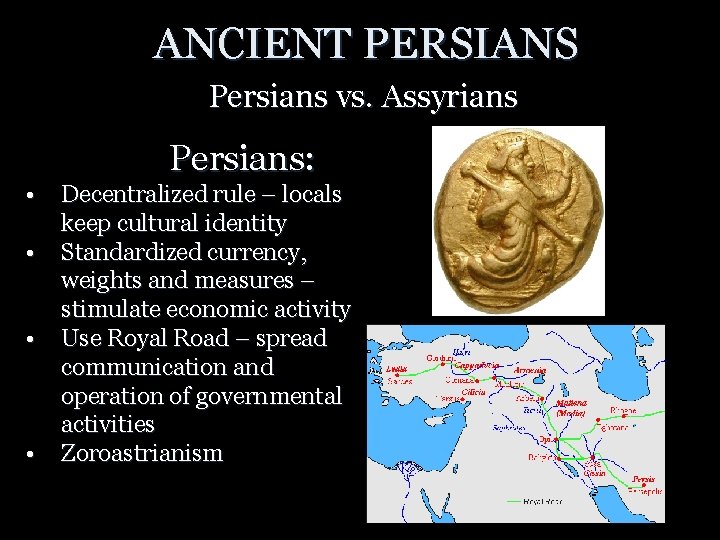
ANCIENT PERSIANS Persian Government - Provinces • The provinces were crossed by a system of wellmaintained roads that converged on the capital city of Susa (southwestern Iran) • Garrisons were installed at key locations • Provinces were required to pay annual tribute
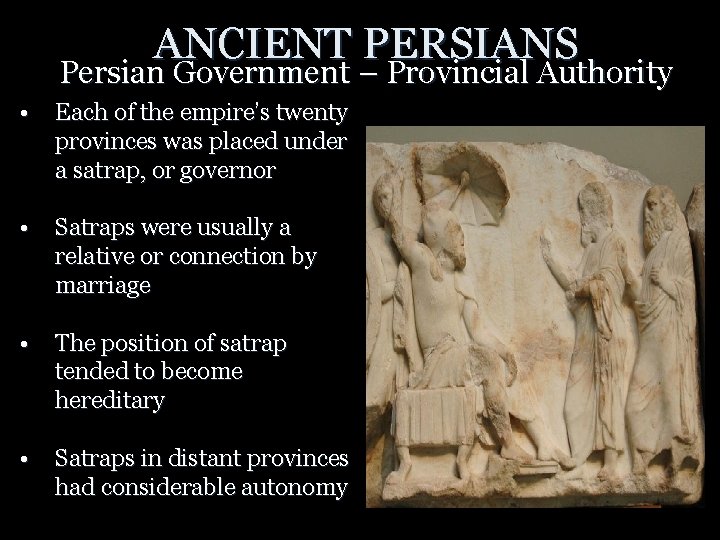
ANCIENT PERSIANS Persian Government – Provincial Authority • Each of the empire’s twenty provinces was placed under a satrap, or governor • Satraps were usually a relative or connection by marriage • The position of satrap tended to become hereditary • Satraps in distant provinces had considerable autonomy
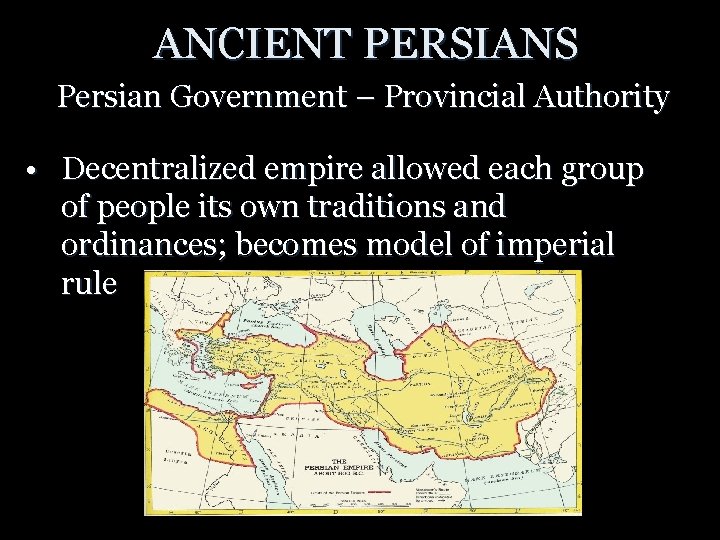
ANCIENT PERSIANS Persian Government – Provincial Authority • Decentralized empire allowed each group of people its own traditions and ordinances; becomes model of imperial rule
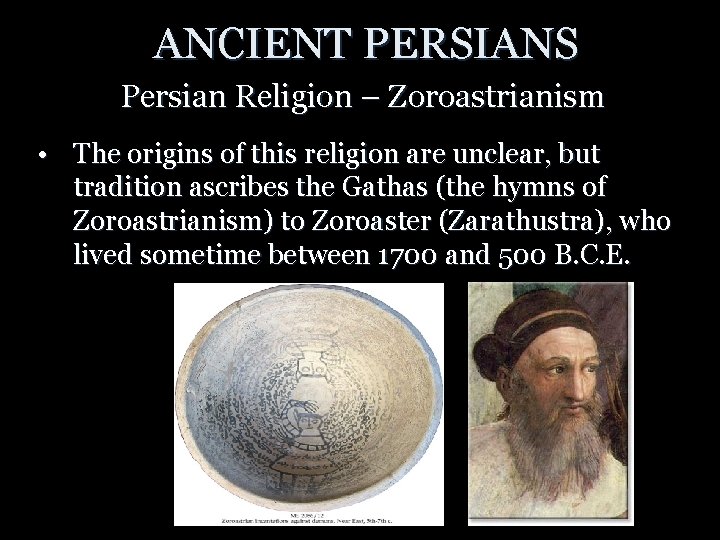
ANCIENT PERSIANS Persian Religion – Zoroastrianism • The origins of this religion are unclear, but tradition ascribes the Gathas (the hymns of Zoroastrianism) to Zoroaster (Zarathustra), who lived sometime between 1700 and 500 B. C. E.
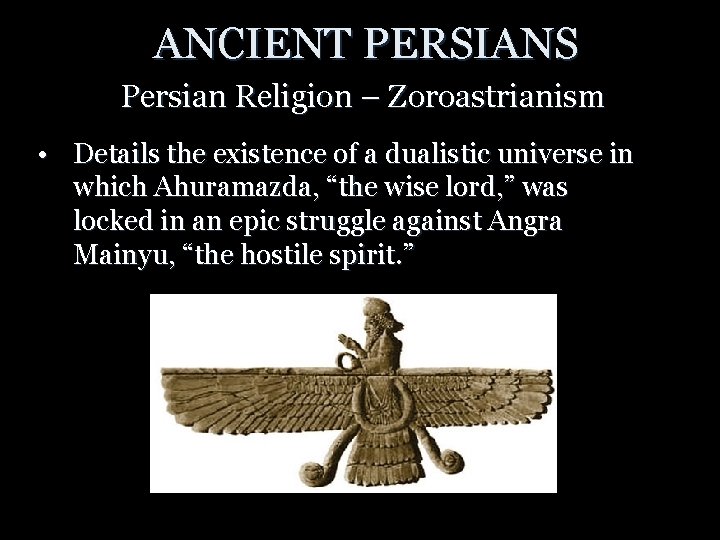
ANCIENT PERSIANS Persian Religion – Zoroastrianism • Details the existence of a dualistic universe in which Ahuramazda, “the wise lord, ” was locked in an epic struggle against Angra Mainyu, “the hostile spirit. ”
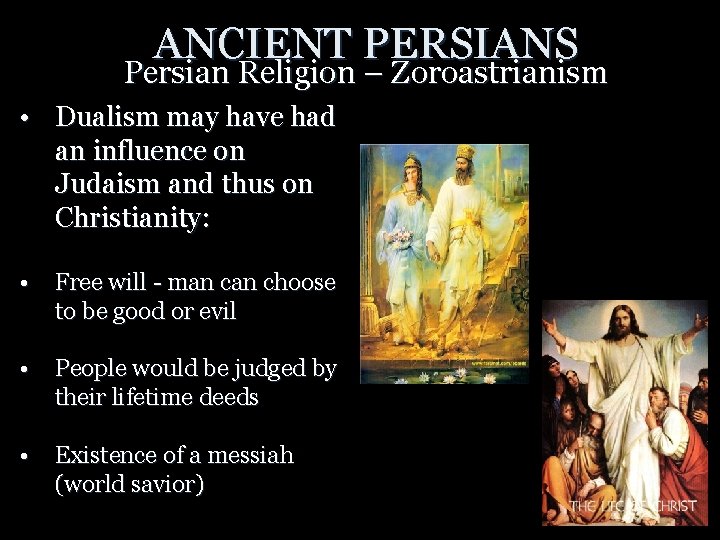
ANCIENT PERSIANS Persian Religion – Zoroastrianism • Dualism may have had an influence on Judaism and thus on Christianity: • Free will - man choose to be good or evil • People would be judged by their lifetime deeds • Existence of a messiah (world savior)
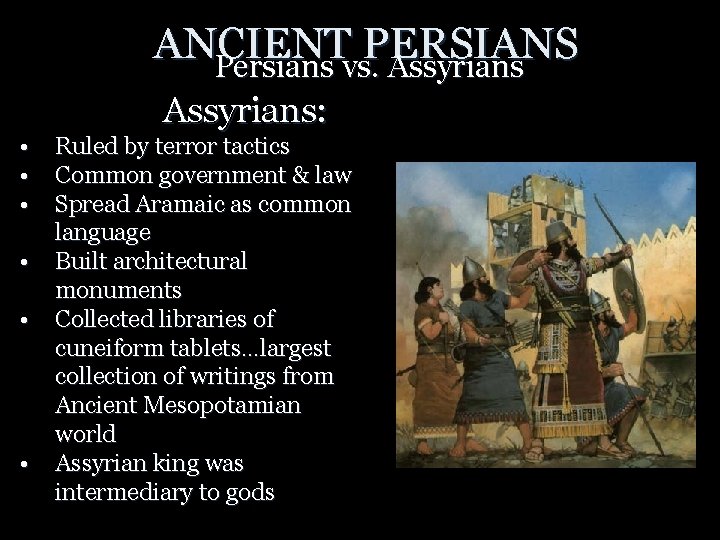
ANCIENT PERSIANS Persians vs. Assyrians • • • Assyrians: Ruled by terror tactics Common government & law Spread Aramaic as common language Built architectural monuments Collected libraries of cuneiform tablets…largest collection of writings from Ancient Mesopotamian world Assyrian king was intermediary to gods
ANCIENT PERSIANS Persians vs. Assyrians • • Persians: Decentralized rule – locals keep cultural identity Standardized currency, weights and measures – stimulate economic activity Use Royal Road – spread communication and operation of governmental activities Zoroastrianism