
ANCIENT MESOPOTAMIA THE LAND BETWEEN TWO RIVERS ANCIENT
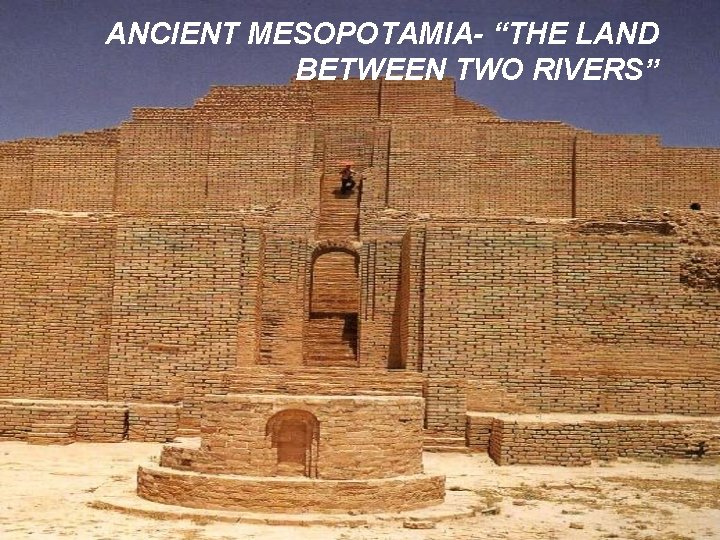
ANCIENT MESOPOTAMIA- “THE LAND BETWEEN TWO RIVERS”
ANCIENT MESOPOTAMIADEFINITIONS l CITY STATES- self-governing unit made up of a city and its surrounding villages and farmland. l Monotheism: worshiping one god. ¡“Mono” – means one l Polytheism: worshiping many gods. ¡“Poly” – means many
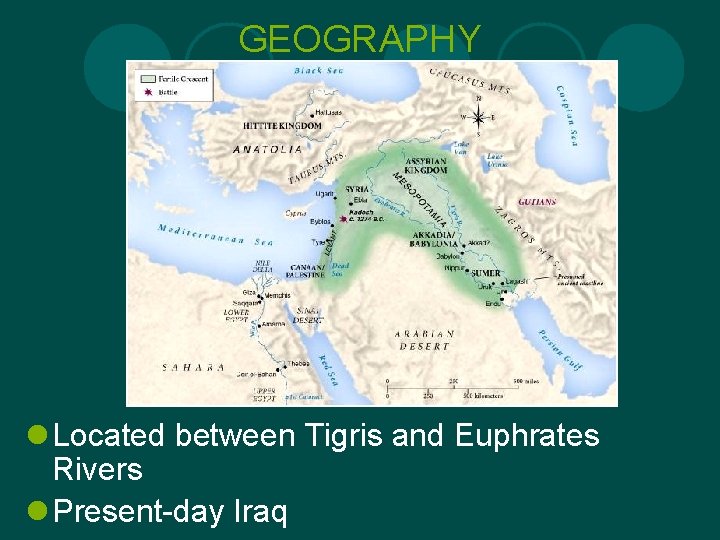
GEOGRAPHY l Located between Tigris and Euphrates Rivers l Present-day Iraq
ANCIENT MESOPOTAMIAGEOGRAPHY POSITIVE l abundant amount of clay l easy tillable soil l water supply from Tigris-Euphrates Rivers NEGATIVE l few natural resources l minimal protection from deserts and mountains
Basic Facts: l Settled around 3500 BCE l Divided into city-states ---WHY? ? l Region developed first forms of poly - and monotheism l Created one of the earliest forms of writing
SOCIAL l What do you know about the social aspects of Mesopotamian society? ¡Social hierarchy: kings, priests, nobility, merchants, farmers, slaves ¡Slaves - POW ¡Women: unequal to men; men own and inherit land
POLITICAL ASPECTS OF MESOPOTAMIA
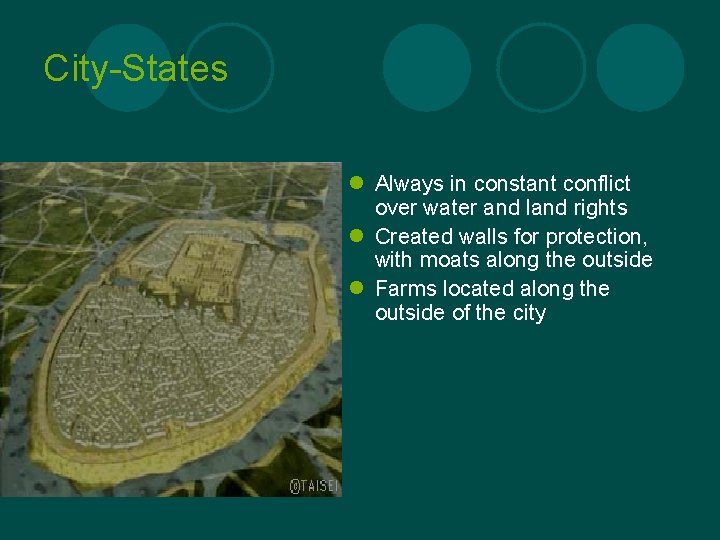
City-States l Always in constant conflict over water and land rights l Created walls for protection, with moats along the outside l Farms located along the outside of the city
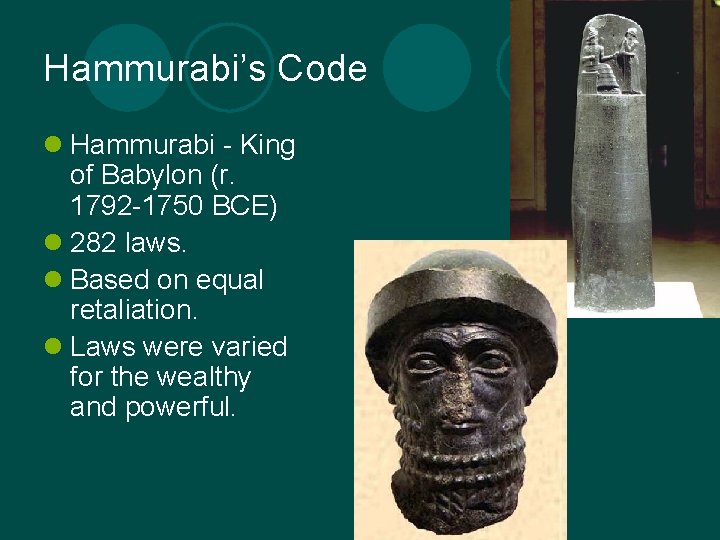
Hammurabi’s Code l Hammurabi - King of Babylon (r. 1792 -1750 BCE) l 282 laws. l Based on equal retaliation. l Laws were varied for the wealthy and powerful.
Intellectual Contributions: l Wheel l Time – 60 minutes in an hour, 60 seconds in a minute l 12 month lunar calendar l arch l ramp
Religion
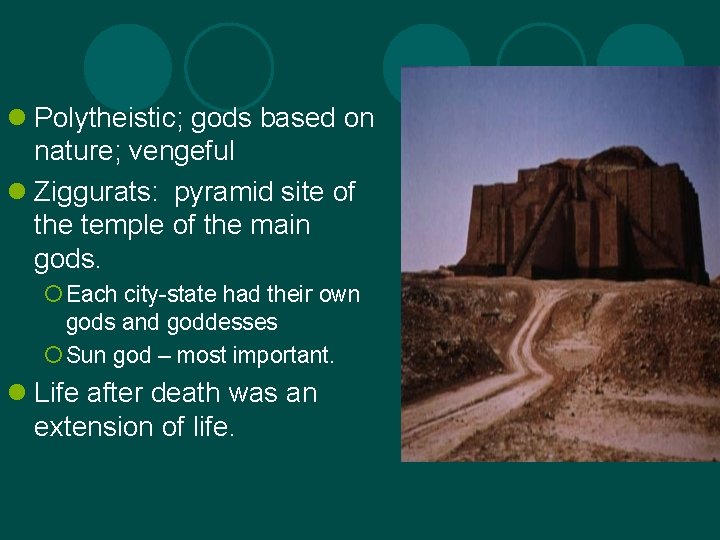
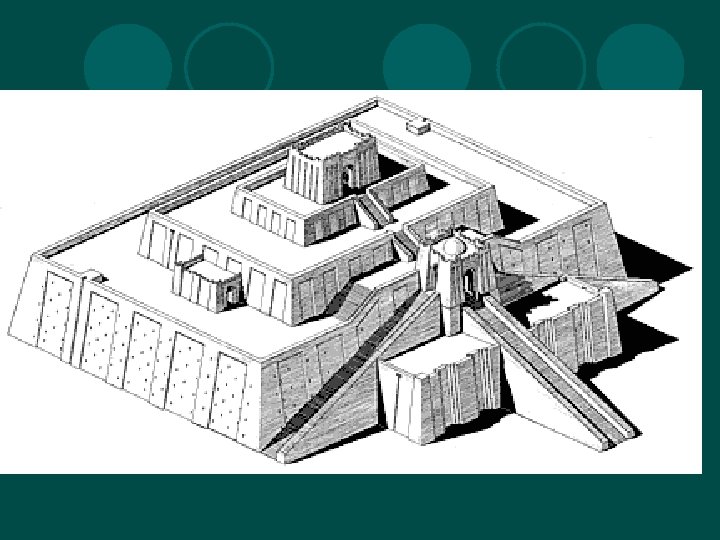
l Polytheistic; gods based on nature; vengeful l Ziggurats: pyramid site of the temple of the main gods. ¡ Each city-state had their own gods and goddesses ¡ Sun god – most important. l Life after death was an extension of life.
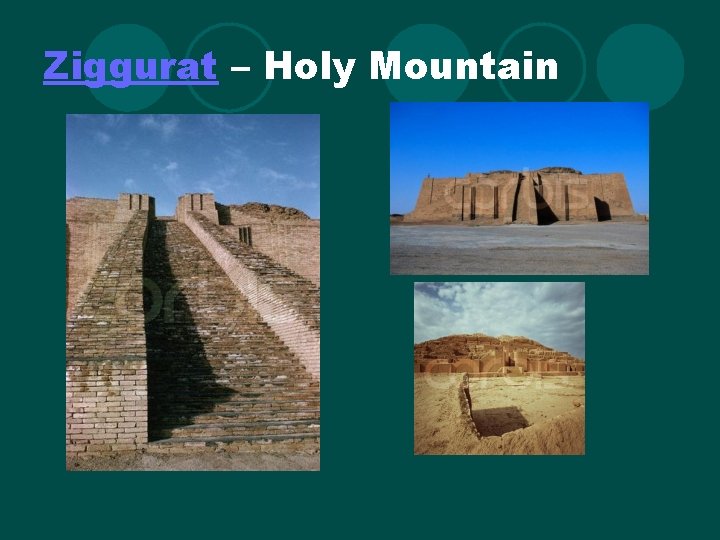
Ziggurat – Holy Mountain
ECONOMY l Make, sell or barter goods. l Trade helped expansion. l Development of money will evolve over time. l RICH l government officials l religious leaders l traders l POOR l Farmers l craftsman
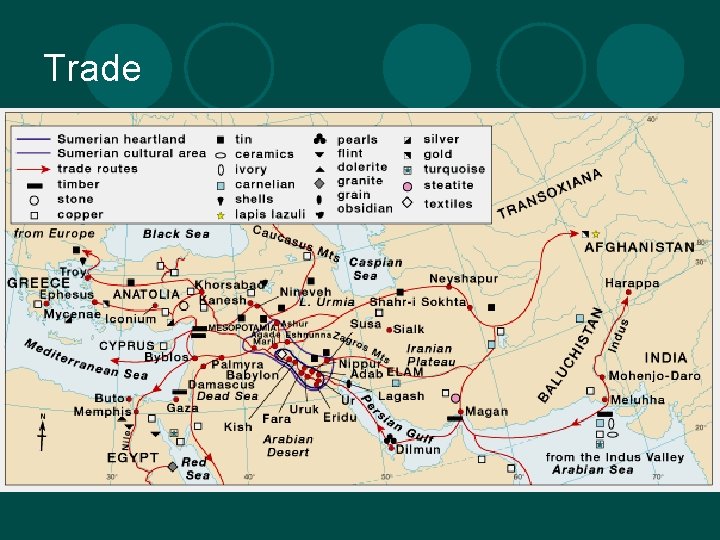
Trade
River Valley Civilizations: Egypt, Indus Valley and Shang China Unit 1 Foundations, 8000 BCE – 600 BCE AP World History
Objective l To identify the major social, political, cultural and economic features of the Egyptian, Indus and Chinese early civilizations l To compare these features to those of all river valley civilizations (Mesopotamia, Egypt, China and India) l To create a foundation upon which to study the Classical Civilizations (China, India, Greece, Rome)
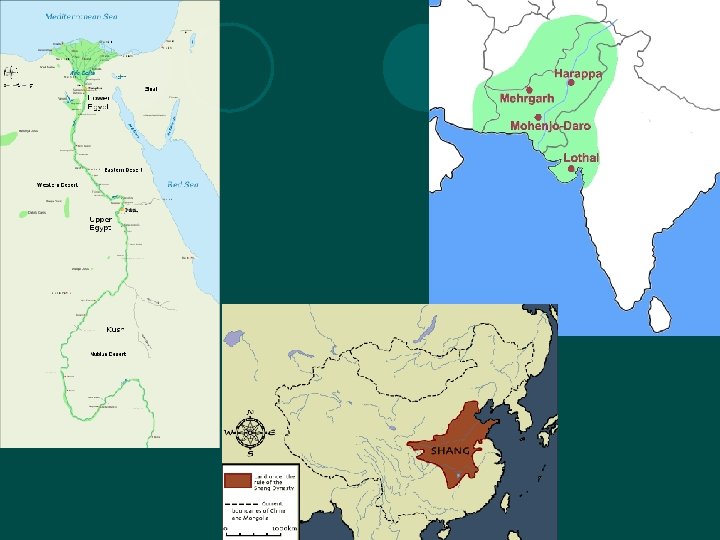
Foundation and Geography l Indus Valley ¡ 2500 -1500 BCE ¡ Current day northern India and Pakistan ¡ Indus River – irregular; had to build flood barriers ¡ Khyber Pass l Shang China ¡ 1750 – 1027 BCE ¡ Yellow River (loess – fertile soil) ¡ Isolated b/c of Gobi desert and Himalayan Mountains and Mongolian Plateau ¡ Very Hot and Dry l Egypt ¡ 3100 BCE – 343 BCE ¡ Unified by King Menes ¡ Nile River ¡ Sahara Desert
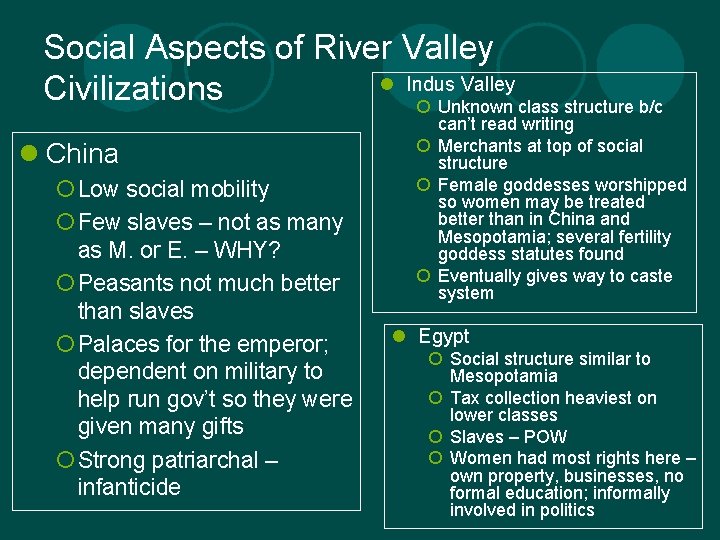
Social Aspects of River Valley l Indus Valley Civilizations ¡ Unknown class structure b/c l China ¡ Low social mobility ¡ Few slaves – not as many as M. or E. – WHY? ¡ Peasants not much better than slaves ¡ Palaces for the emperor; dependent on military to help run gov’t so they were given many gifts ¡ Strong patriarchal – infanticide can’t read writing ¡ Merchants at top of social structure ¡ Female goddesses worshipped so women may be treated better than in China and Mesopotamia; several fertility goddess statutes found ¡ Eventually gives way to caste system l Egypt ¡ Social structure similar to Mesopotamia ¡ Tax collection heaviest on lower classes ¡ Slaves – POW ¡ Women had most rights here – own property, businesses, no formal education; informally involved in politics
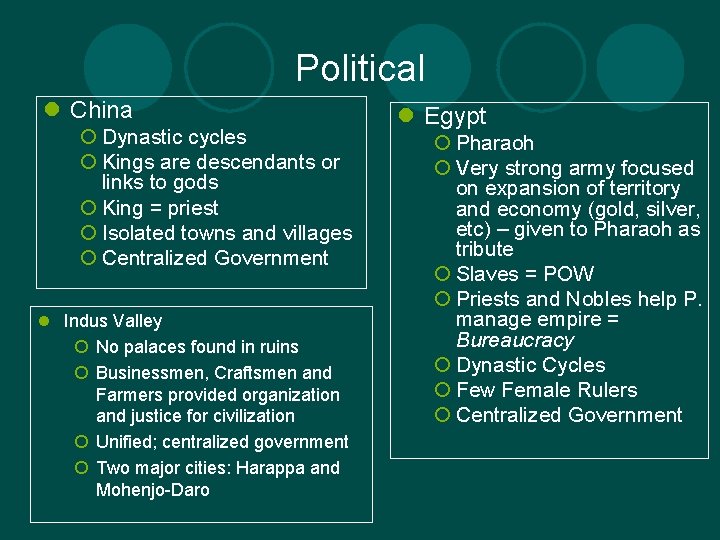
Political l China ¡ Dynastic cycles ¡ Kings are descendants or links to gods ¡ King = priest ¡ Isolated towns and villages ¡ Centralized Government l Indus Valley ¡ No palaces found in ruins ¡ Businessmen, Craftsmen and Farmers provided organization and justice for civilization ¡ Unified; centralized government ¡ Two major cities: Harappa and Mohenjo-Daro l Egypt ¡ Pharaoh ¡ Very strong army focused on expansion of territory and economy (gold, silver, etc) – given to Pharaoh as tribute ¡ Slaves = POW ¡ Priests and Nobles help P. manage empire = Bureaucracy ¡ Dynastic Cycles ¡ Few Female Rulers ¡ Centralized Government
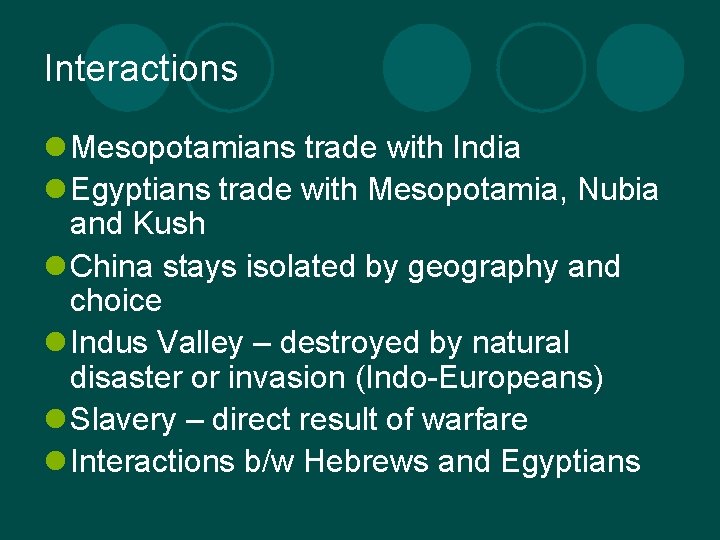
Interactions l Mesopotamians trade with India l Egyptians trade with Mesopotamia, Nubia and Kush l China stays isolated by geography and choice l Indus Valley – destroyed by natural disaster or invasion (Indo-Europeans) l Slavery – direct result of warfare l Interactions b/w Hebrews and Egyptians
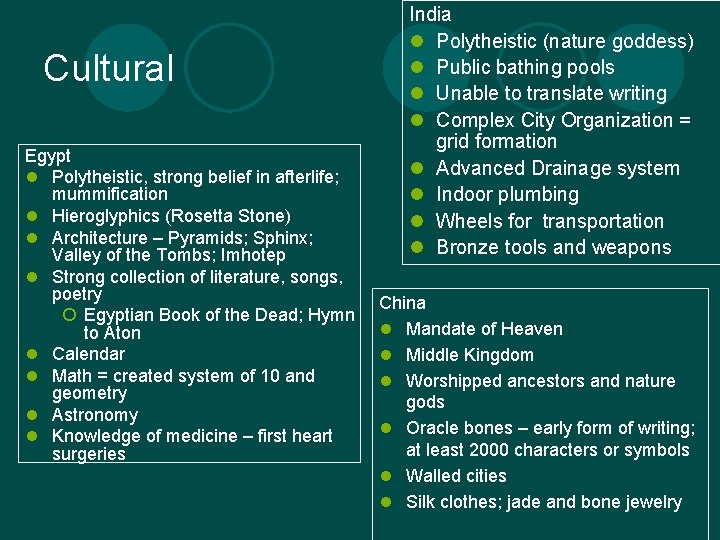
Cultural Egypt l Polytheistic, strong belief in afterlife; mummification l Hieroglyphics (Rosetta Stone) l Architecture – Pyramids; Sphinx; Valley of the Tombs; Imhotep l Strong collection of literature, songs, poetry ¡ Egyptian Book of the Dead; Hymn to Aton l Calendar l Math = created system of 10 and geometry l Astronomy l Knowledge of medicine – first heart surgeries India l Polytheistic (nature goddess) l Public bathing pools l Unable to translate writing l Complex City Organization = grid formation l Advanced Drainage system l Indoor plumbing l Wheels for transportation l Bronze tools and weapons China l Mandate of Heaven l Middle Kingdom l Worshipped ancestors and nature gods l Oracle bones – early form of writing; at least 2000 characters or symbols l Walled cities l Silk clothes; jade and bone jewelry
Economics l All civilizations dependent on agriculture for economic gain l Some specialization of labor b/c of surplus of food ¡ Cloth, pottery, jewelry ¡ Architects – Egypt l Egypt trades a great deal – Mediterranean World; Nubia and Kush (to South) l Merchants – looked down upon by Chinese
Questions –Write a response. Complete Sentences l How does geography play a role in the development of a civilization? Use examples from Egypt, Mesopotamia, India or China to support your response l What are some things that are similar throughout all 4 (or most of the 4)? Why? l List one unique characteristic from each civilization. l Complete a SPICE chart for one River-Valley Civilization
- Slides: 26