
Ancient Mesopotamia Mr Skommesa AP World History Civilization
- Slides: 32
Ancient Mesopotamia Mr. Skommesa -- AP World History
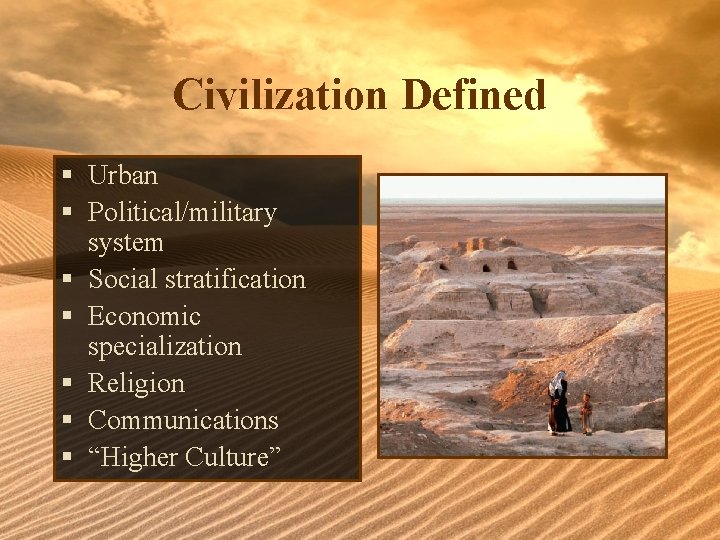
Civilization Defined § Urban § Political/military system § Social stratification § Economic specialization § Religion § Communications § “Higher Culture”
Civilization and the Means of Production § Essential element: concentration of wealth § Agriculture § Control over natural resources § Development of ancient civilization § not hunter-gatherer economics
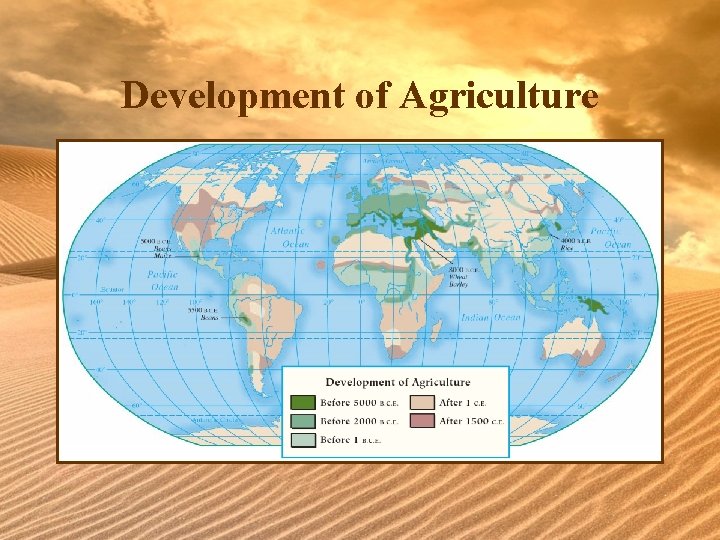
Development of Agriculture
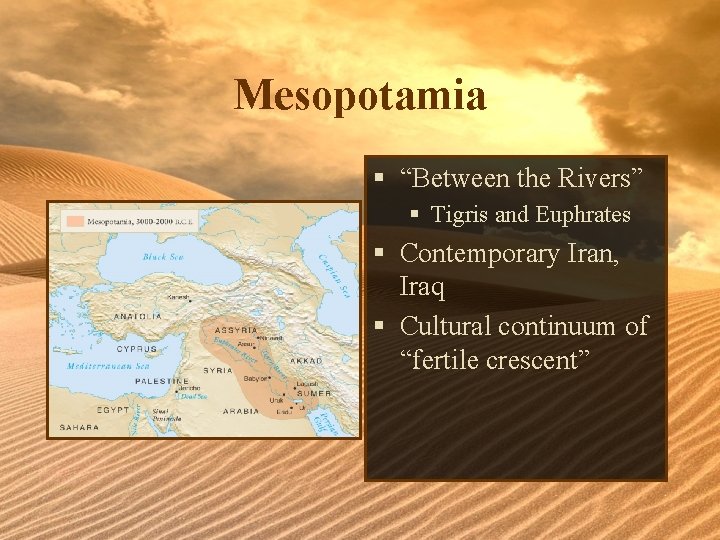
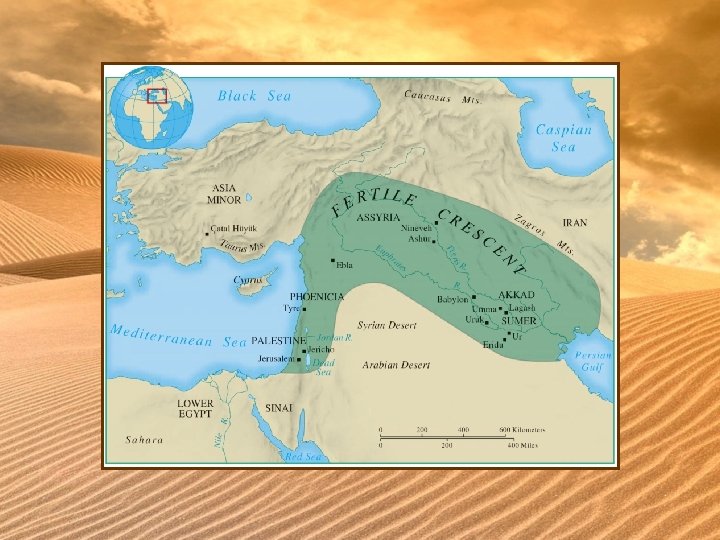
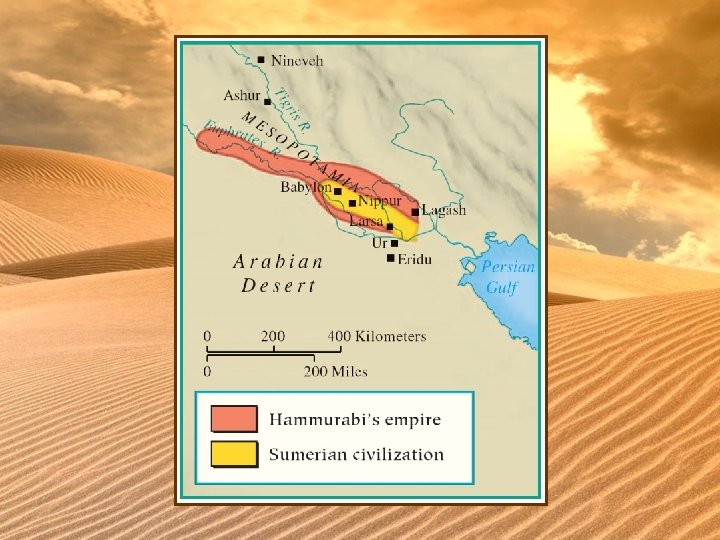
Mesopotamia § “Between the Rivers” § Tigris and Euphrates § Contemporary Iran, Iraq § Cultural continuum of “fertile crescent”
The Wealth of the Rivers § Nutrient-rich silt § Key: irrigation § Necessity of coordinated efforts § Promoted development of local governments § City-states § Sumer begins small-scale irrigation 6000 BCE § By 5000 BCE, complex irrigation networks § Population reaches 100, 000 by 3000 BCE § Attracts Semitic migrants, influences culture
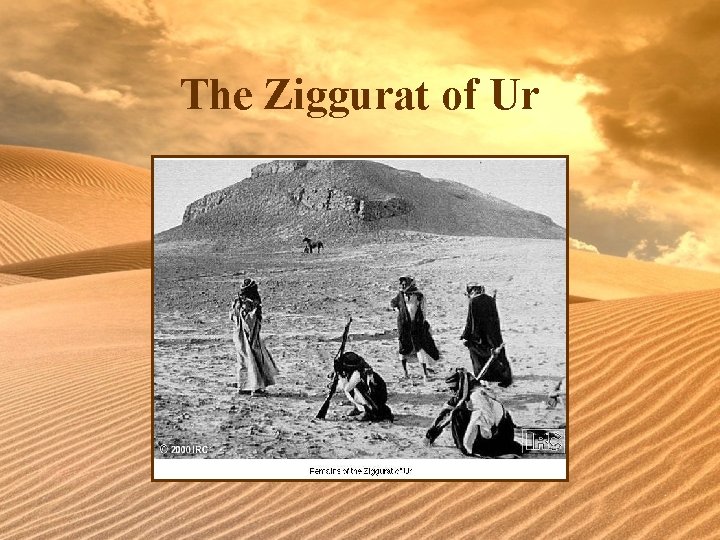
Sumerian City-States § Cities appear 4000 BCE § Dominate region from 3200 -2350 BCE § Ur (home of Abraham, see Genesis 11: 28), Nineveh (see Jonah) § § Ziggurat home of the god Divine mandate to Kings Regulation of Trade Defense from nomadic marauders
The Ziggurat of Ur
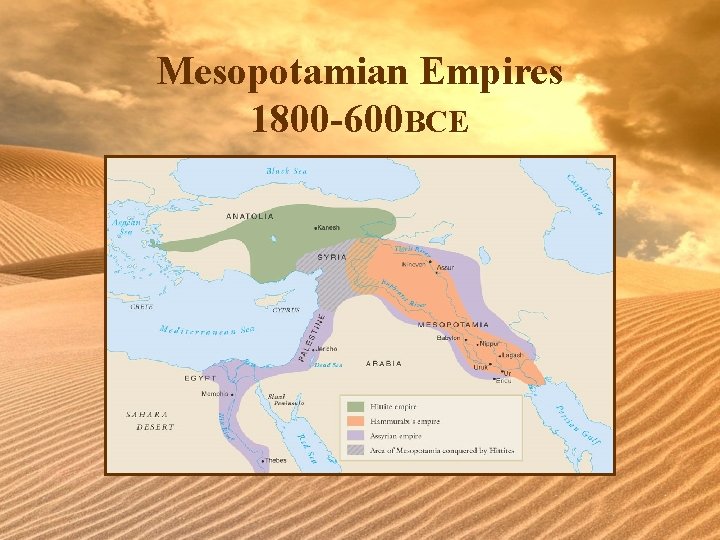
Political Decline of Sumer § Semitic peoples from northern Mesopotamia overshadow Sumer § Sargon of Akkad (2370 -2315 BCE) § Destroyed Sumerian city-states one by one, created empire based in Akkad § Empire unable to maintain chronic rebellions § Hammurabi of Babylon (1792 -1750 BCE) § Improved taxation, legislation § Used local governors to maintain control of city-states § Babylonian Empire later destroyed by Hittites from Anatolia, c. 1595 BCE
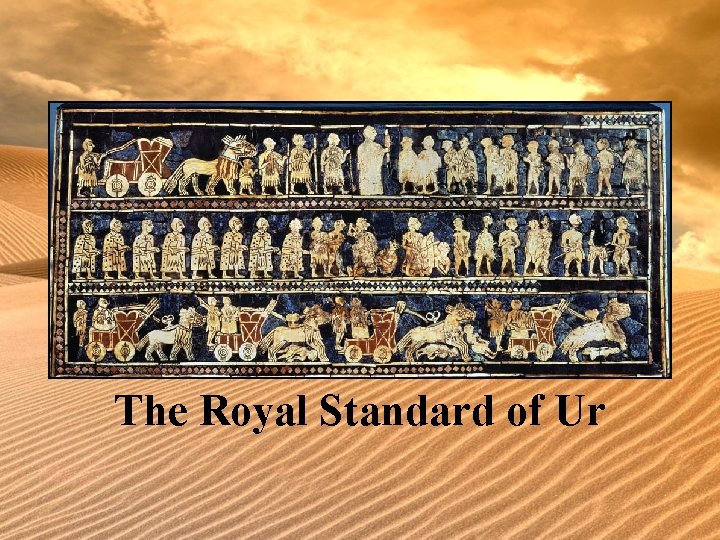
The Royal Standard of Ur
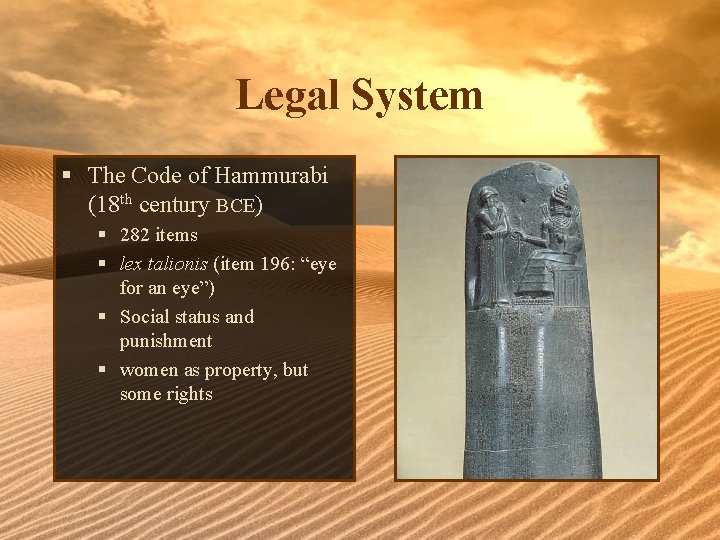
Legal System § The Code of Hammurabi (18 th century BCE) § 282 items § lex talionis (item 196: “eye for an eye”) § Social status and punishment § women as property, but some rights
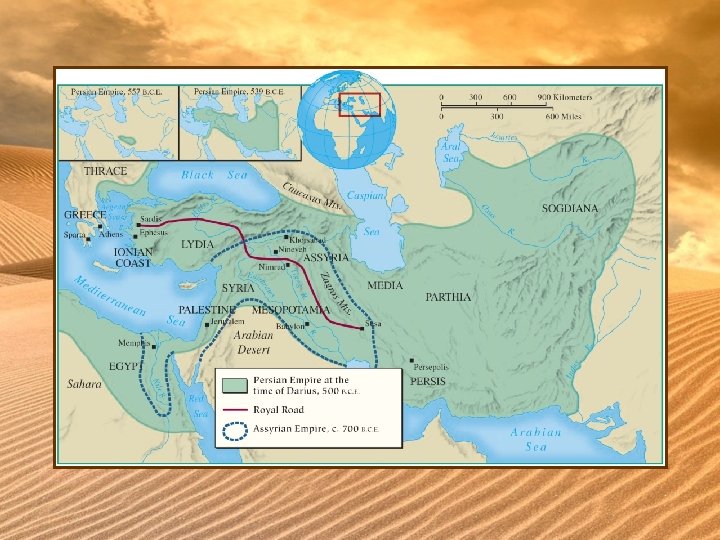
Later Mesopotamian Empires § Weakening of central rule an invitation to foreign invaders § Assyrians use new iron weaponry § Beginning 1300 BCE, by 8 th-7 th centuries BCE control Mesopotamia, Syria, Palestine, most of Egypt § Nebuchadnezzar of Babylon (r. 605 -562) takes advantage of internal dissent to create Chaldean (New Babylonian) Empire § Famously luxurious capital
Mesopotamian Empires 1800 -600 BCE
Technological Development in Mesopotamia § Bronze (copper with tin), c. 4000 BCE § Military, agricultural applications § Iron, c. 1000 BCE § Cheaper than bronze § Wheel, boats, c. 3500 BCE § Shipbuilding increases trade networks
Social Classes § Ruling classes based often on military prowess § Originally elected, later hereditary § Perceived as offspring of gods § Religious classes § Role: intervention with gods to ensure fertility, safety § Considerable landholdings, other economic activities § Free commoners: Peasant cultivators, some urban professionals § Slaves: Prisoners of war, convicted criminals, debtors
Patriarchal Society § Men as landowners, relationship to status § Patriarchy: “rule of the father” § Right to sell wives, children § Double standard of sexual morality § Women drowned for adultery § Relaxed sexual mores for men § Yet some possibilities of social mobility for women § Court advisers, temple priestesses, economic activity § Introduction of the veil at least c. 1500 BCE
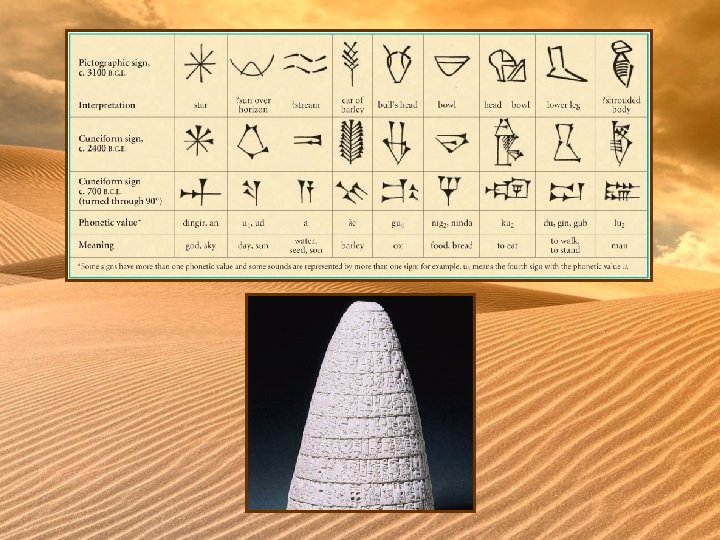
Development of Writing § Sumerian writing systems form 3500 BCE § Pictographs § Cuneiform: “wedge-shaped” § Preservation of documents on clay § Declines from 400 BCE with spread of Greek alphabetic script
Uses for Writing § Trade § Astronomy § Mathematics § Agricultural applications § Calculation of time § 12 -month year § 24 -hour day, 60 -minute hour
Mesopotamian Literature § Epic of Gilgamesh, compiled some time after 2000 BCE § Heroic saga § Search for meaning, esp. afterlife § This-worldly emphasis
The Early Hebrews § Patriarchs and Matriarchs from Babylon, c. 1850 BCE § Parallels between early biblical texts, Code of Hammurabi § Early settlement of Canaan (Israel), c. 1300 BCE § Biblical text: slavery in Egypt, divine redemption § On-going conflict with indigenous populations under King David (1000 -970 BCE) and Solomon (970 -930 BCE)
Moses and Monotheism § Hebrews shared polytheistic beliefs of other Mesopotamian civilizations § Moses introduces monotheism, belief in single god § Denies existence of competing parallel deities § Personal god: reward and punishment for conformity with revealed law § The Torah (“the teaching”)
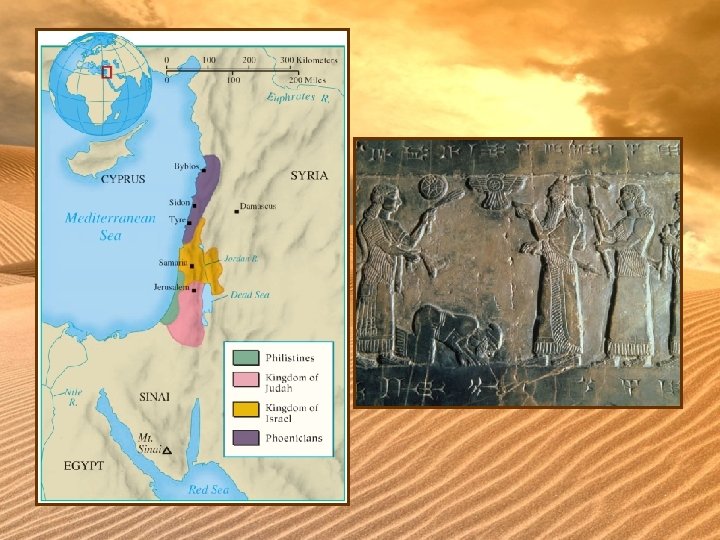
Foreign conquests of Israel § Civil war § Northern tribes: Israel § Southern: Judah § Assyrian conquest, 722 BCE § Exiles Israel: ten lost tribes § Babylonian conquest, 586 BCE § Additional exile of many residents of Judah § Returned later than century
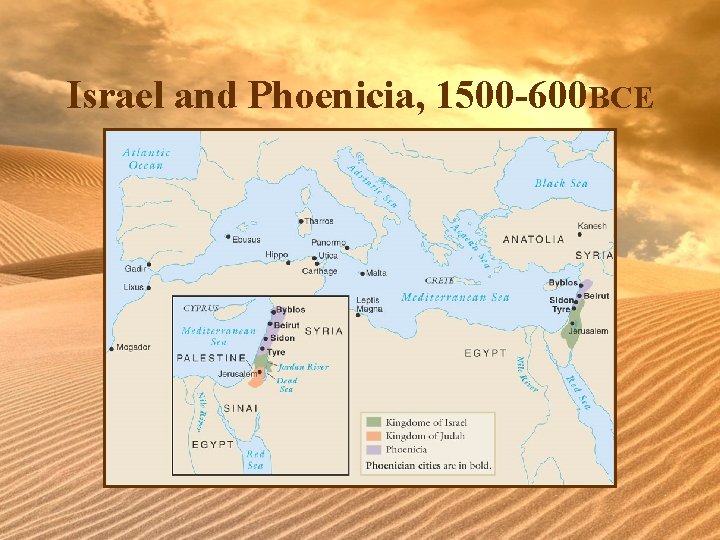
Israel and Phoenicia, 1500 -600 BCE
The Phoenicians § Set-up City-states along Mediterranean coast after 3000 BCE § Extensive maritime trade § Dominated Mediterranean trade, 1200 -800 BCE § Development of alphabet symbols § Simpler alternative to cuneiform § Spread of literacy
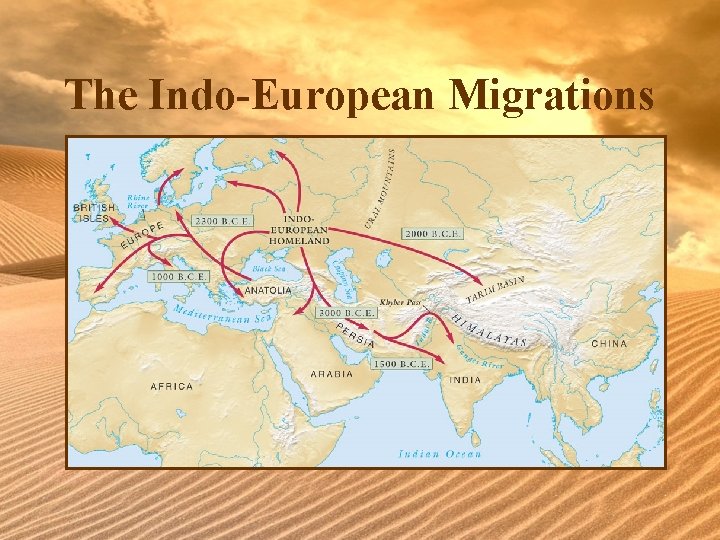
Indo-European Migrations § Common roots of many languages of Europe, southwest Asia, India § Implies influence of a single Indo-European people § Probable original homeland: contemporary Ukraine and Russia, 4500 -2500 BCE § Domestication of horses, use of Sumerian weaponry allowed them to spread widely
The Indo-European Migrations
Implications of Indo-European Migration § Hittites migrate to central Anatolia, c. 1900 BCE, later dominate Babylonia § Influence on trade § Horses, chariots with spoked wheels, use of Iron § Migrations to western China, Greece, Italy also significant § Influence on language and culture § Aryo, “noble, lord” § Aryan, Iranian, Irish § Caste system in India