
Ancient Mesopotamia Map Writing Scribes men and women
Ancient Mesopotamia
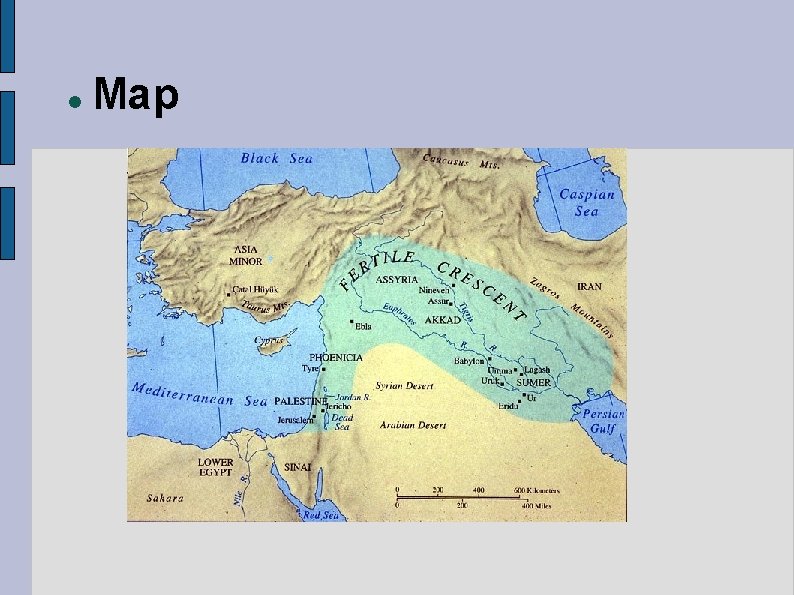
Map

Writing Scribes: men and women / temples Cuneiform: Sumerian, Persian, Akkadian, Hittite Commercial, lawbased society.
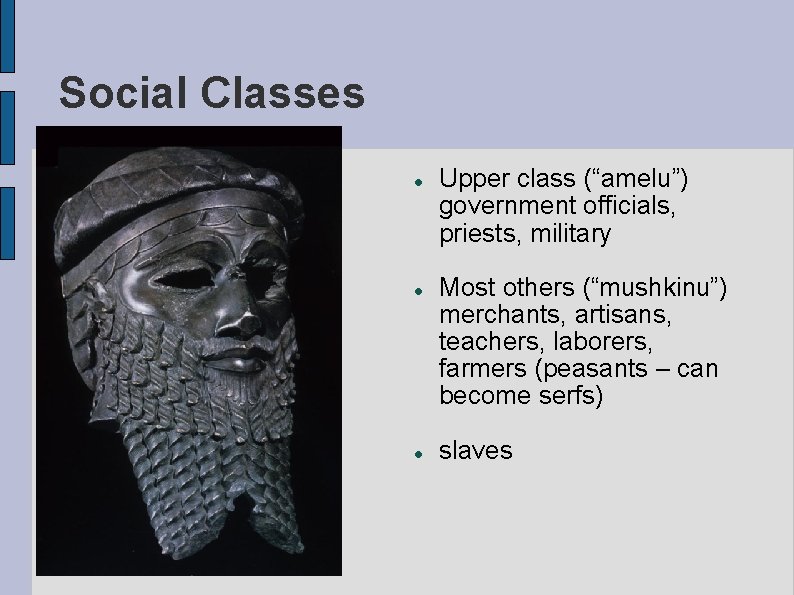
Social Classes Upper class (“amelu”) government officials, priests, military Most others (“mushkinu”) merchants, artisans, teachers, laborers, farmers (peasants – can become serfs) slaves
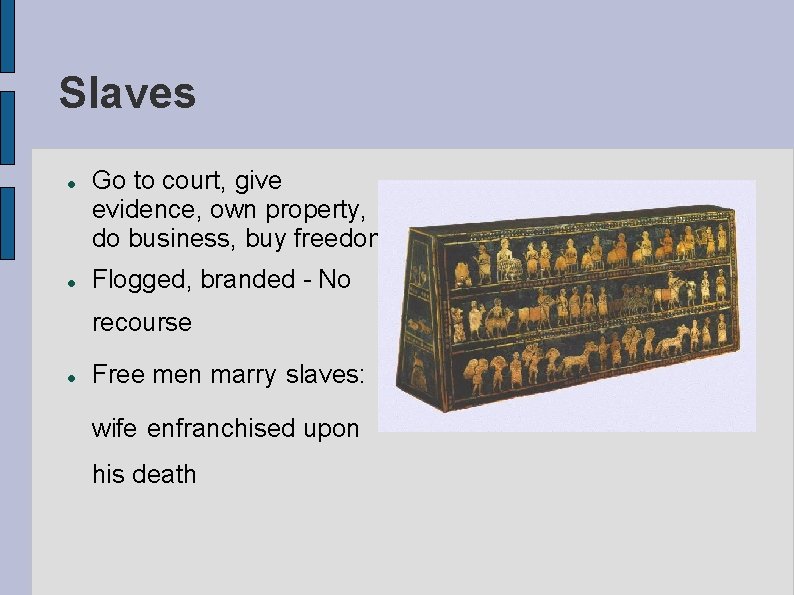
Slaves Go to court, give evidence, own property, do business, buy freedom Flogged, branded - No recourse Free men marry slaves: wife enfranchised upon his death
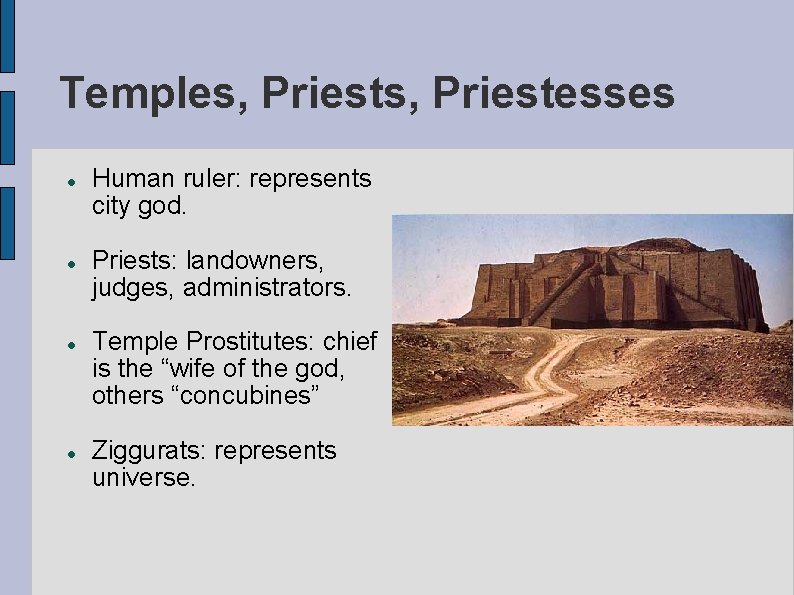
Temples, Priestesses Human ruler: represents city god. Priests: landowners, judges, administrators. Temple Prostitutes: chief is the “wife of the god, others “concubines” Ziggurats: represents universe.
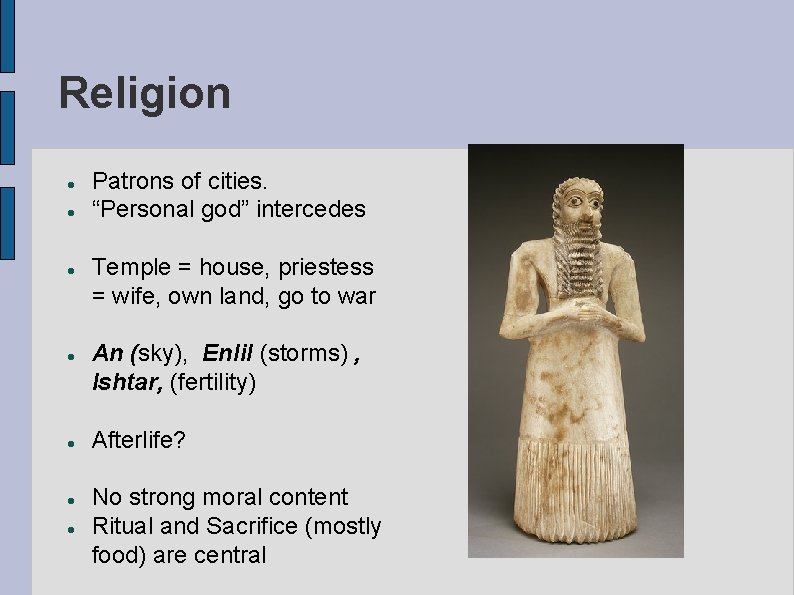
Religion Patrons of cities. “Personal god” intercedes Temple = house, priestess = wife, own land, go to war An (sky), Enlil (storms) , Ishtar, (fertility) Afterlife? No strong moral content Ritual and Sacrifice (mostly food) are central
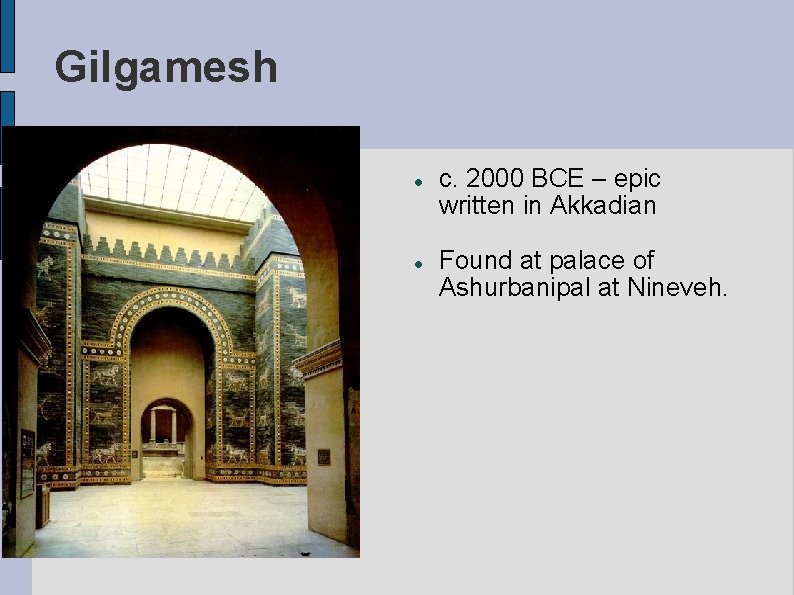
Gilgamesh c. 2000 BCE – epic written in Akkadian Found at palace of Ashurbanipal at Nineveh.
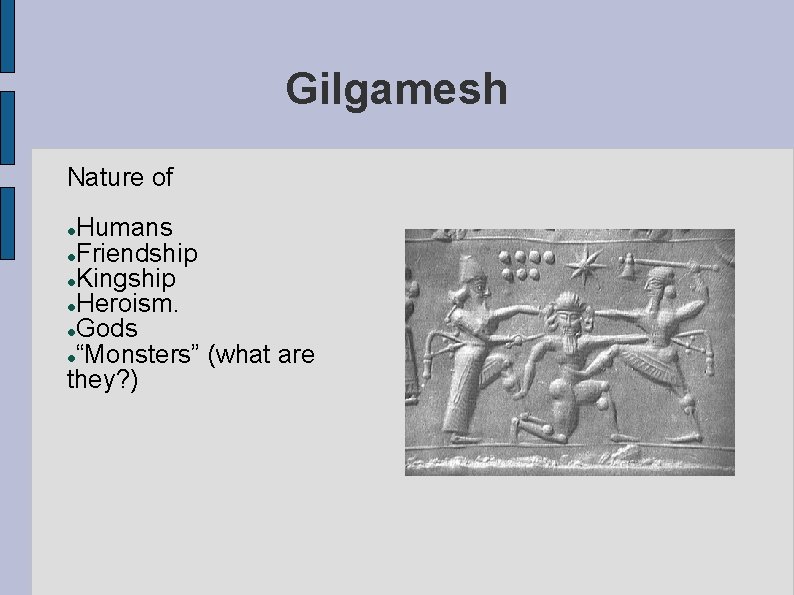
Gilgamesh Nature of Humans Friendship Kingship Heroism. Gods “Monsters” (what are they? )
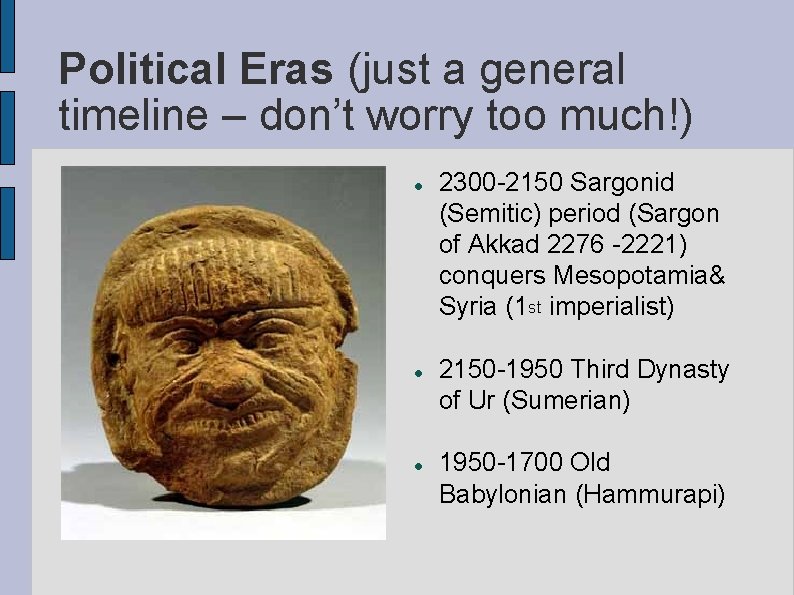
Political Eras (just a general timeline – don’t worry too much!) 2300 -2150 Sargonid (Semitic) period (Sargon of Akkad 2276 -2221) conquers Mesopotamia& Syria (1 st imperialist) 2150 -1950 Third Dynasty of Ur (Sumerian) 1950 -1700 Old Babylonian (Hammurapi)
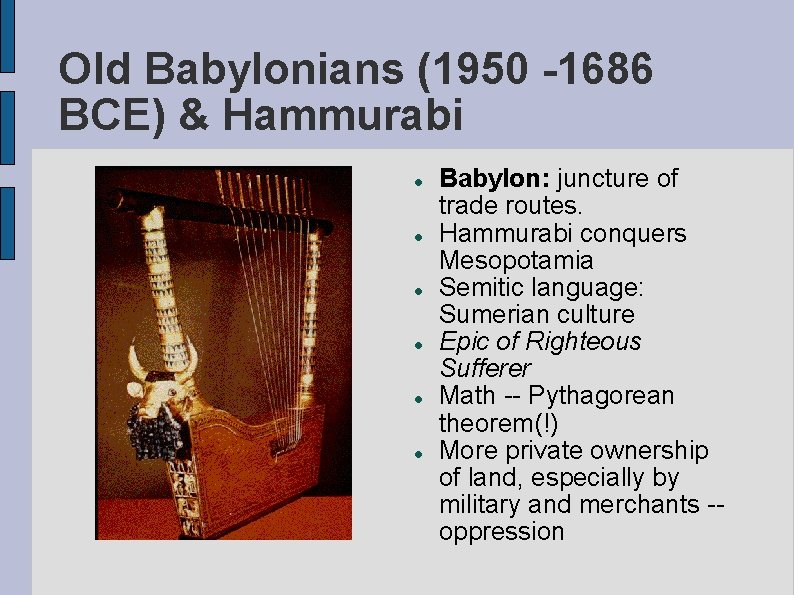
Old Babylonians (1950 -1686 BCE) & Hammurabi Babylon: juncture of trade routes. Hammurabi conquers Mesopotamia Semitic language: Sumerian culture Epic of Righteous Sufferer Math -- Pythagorean theorem(!) More private ownership of land, especially by military and merchants -oppression
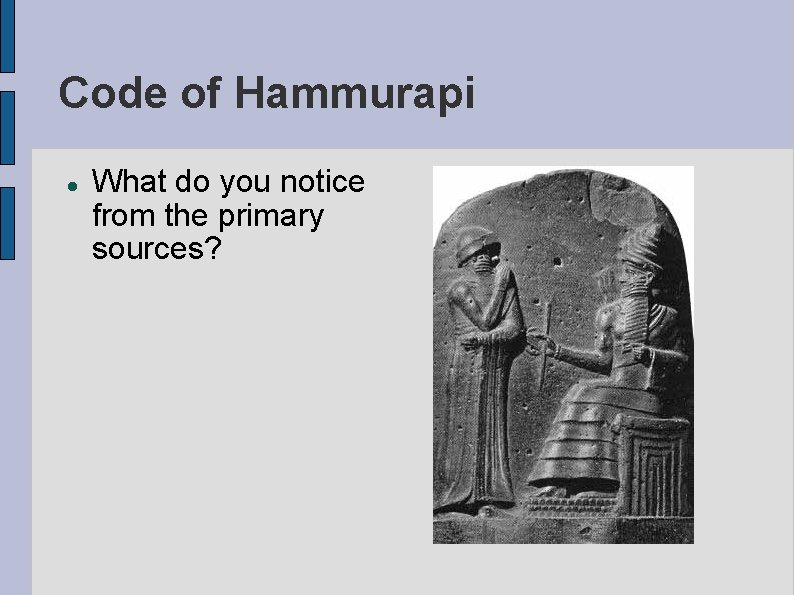
Code of Hammurapi What do you notice from the primary sources?
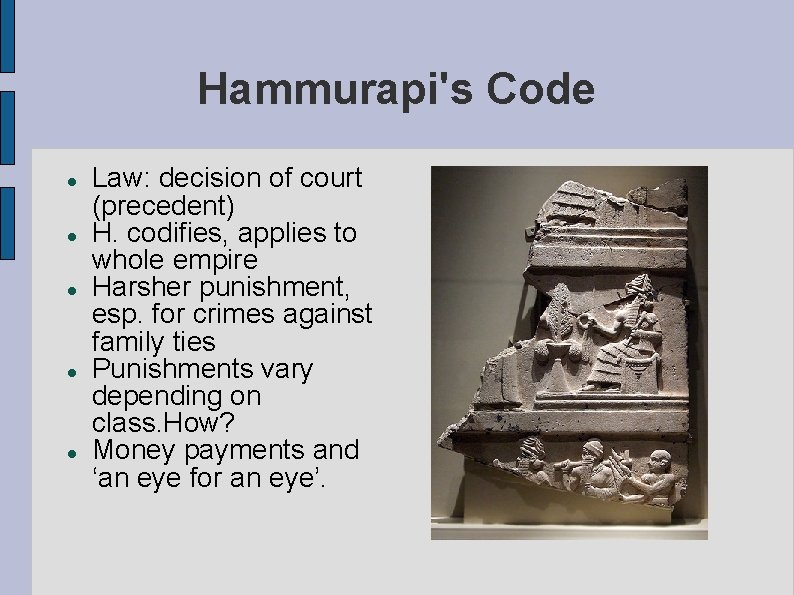
Hammurapi's Code Law: decision of court (precedent) H. codifies, applies to whole empire Harsher punishment, esp. for crimes against family ties Punishments vary depending on class. How? Money payments and ‘an eye for an eye’.
Rights of Women Owns bridal gift and dowry Can bequeath property Can own business Can go to court, administer husband’s estates Equal rights over children Can be sold by husband to pay a debt Can be divorced without strong reason Punished more severely for adultery Husband can take a second wife
Commerce Trade: muslin fabric produced in Mosul Trade through Persian Gulf Timber from Lebanon All trade is barter until Sargon of Akkad introduces shekel of silver Credit available: 20% interest for silver, 33% for grain.
- Slides: 15