
ANCIENT MESOPOTAMIA ARCHITECTURE Dr Wang Qi Department of
- Slides: 23
ANCIENT MESOPOTAMIA ARCHITECTURE Dr. Wang Qi Department of Architecture and Built Environment
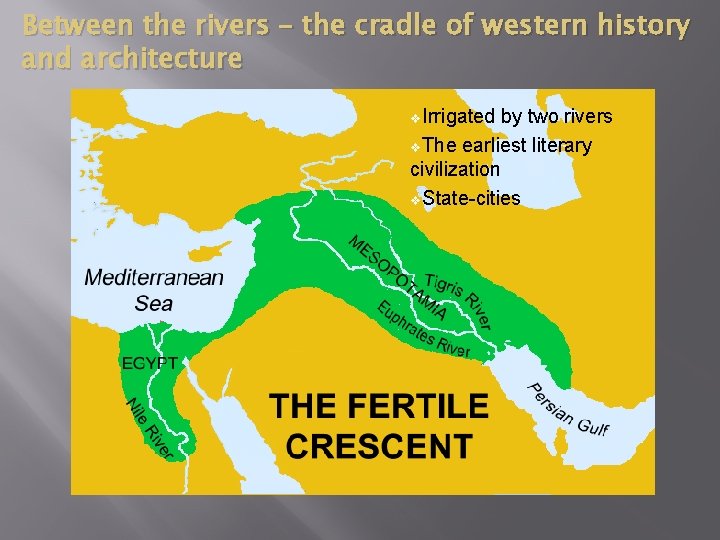
Between the rivers – the cradle of western history and architecture v. Irrigated by two rivers v. The earliest literary civilization v. State-cities
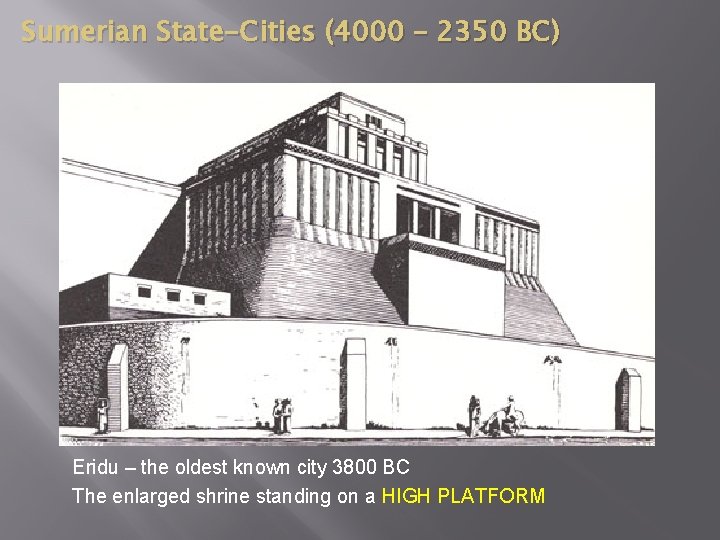
Sumerian State-Cities (4000 – 2350 BC) Eridu – the oldest known city 3800 BC The enlarged shrine standing on a HIGH PLATFORM
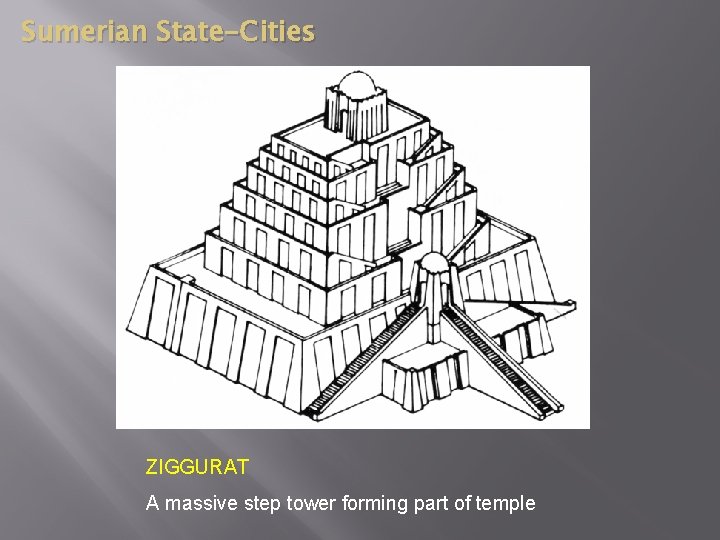
Sumerian State-Cities ZIGGURAT A massive step tower forming part of temple
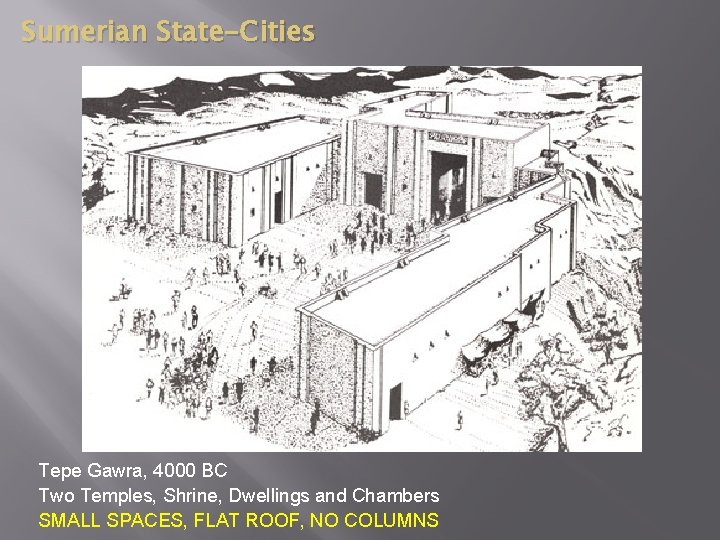
Sumerian State-Cities Tepe Gawra, 4000 BC Two Temples, Shrine, Dwellings and Chambers SMALL SPACES, FLAT ROOF, NO COLUMNS
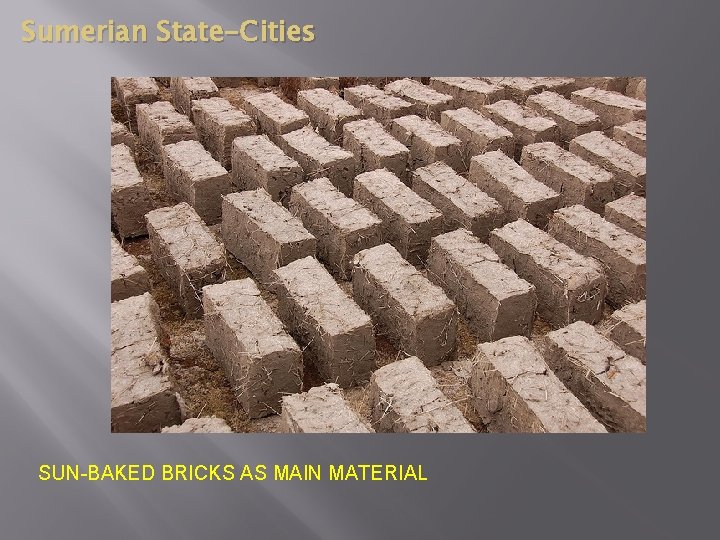
Sumerian State-Cities SUN-BAKED BRICKS AS MAIN MATERIAL
Changing rulers Akkadians, arrived at about 2350 BC, unified kingdom ruled by one warrior-king. Akkadian empire was short-life and was overthrown by Guti at 2150 BC. The Guti didn’t have power and skill to rule the land. Soon after less than one century, the reminiscent allegiances to Sumerian city-states returned – called Neo. Sumerian Period. The most famous city was Ur.
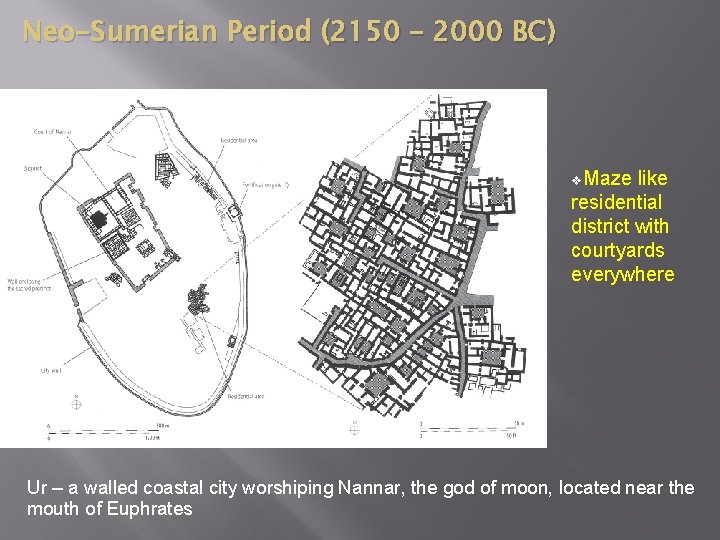
Neo-Sumerian Period (2150 – 2000 BC) v. Maze like residential district with courtyards everywhere Ur – a walled coastal city worshiping Nannar, the god of moon, located near the mouth of Euphrates
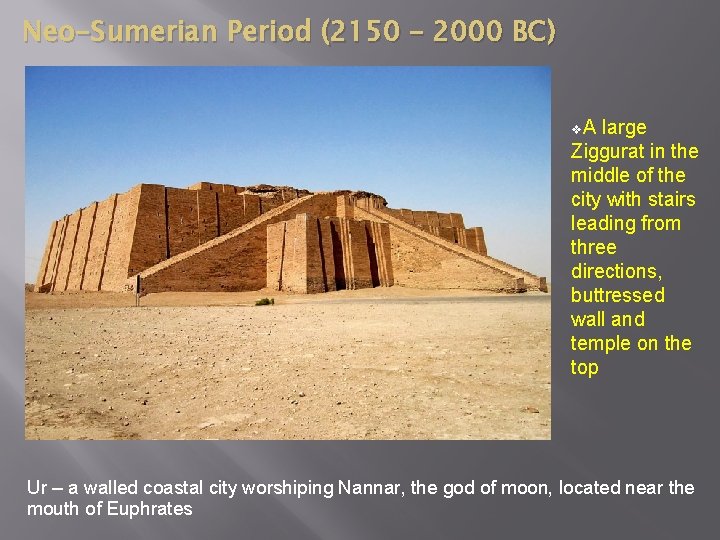
Neo-Sumerian Period (2150 – 2000 BC) v. A large Ziggurat in the middle of the city with stairs leading from three directions, buttressed wall and temple on the top Ur – a walled coastal city worshiping Nannar, the god of moon, located near the mouth of Euphrates
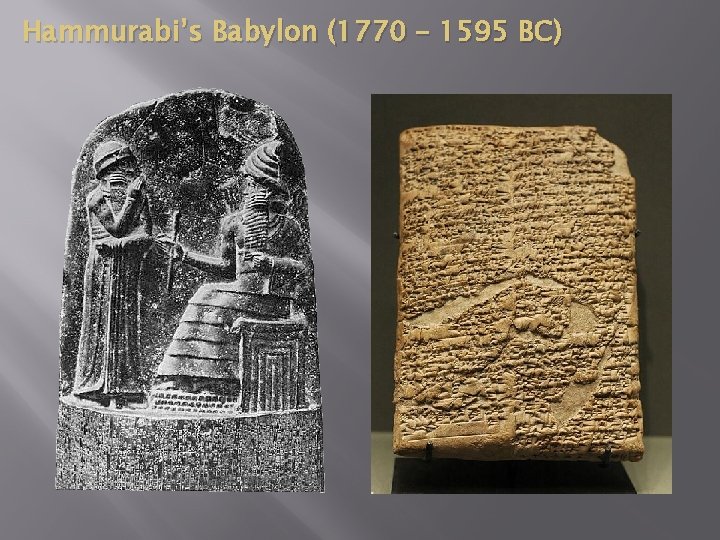
Hammurabi’s Babylon (1770 – 1595 BC)
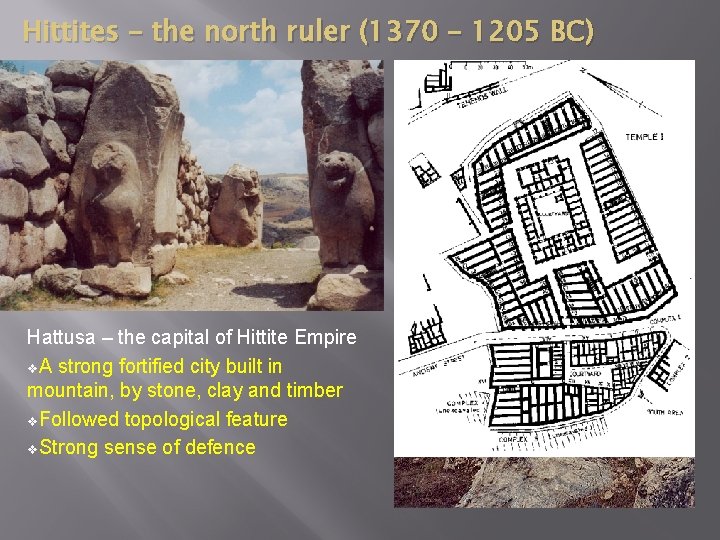
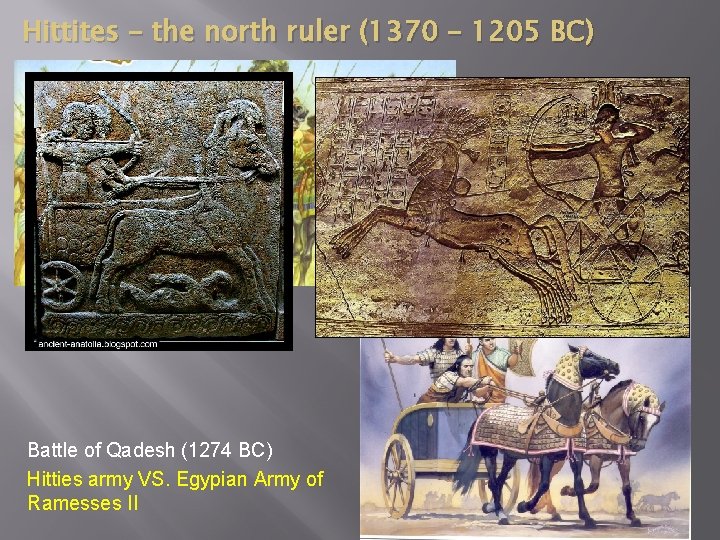
Hittites – the north ruler (1370 – 1205 BC) Hattusa – the capital of Hittite Empire v. A strong fortified city built in mountain, by stone, clay and timber v. Followed topological feature v. Strong sense of defence
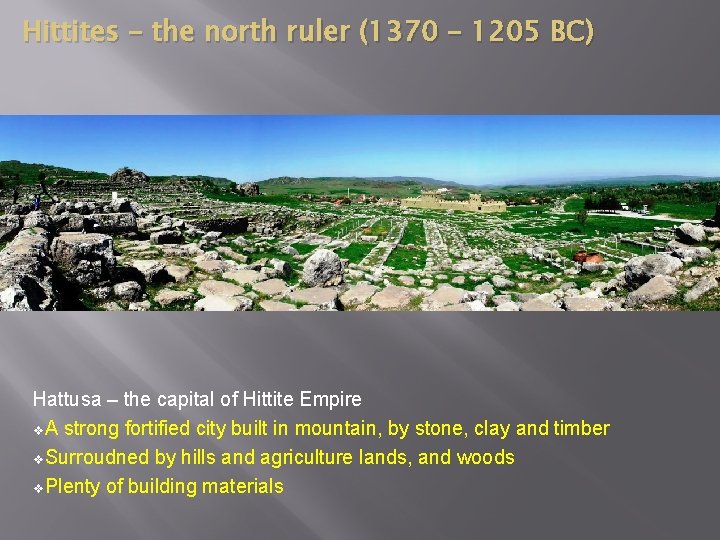
Hittites – the north ruler (1370 – 1205 BC) Hattusa – the capital of Hittite Empire v. A strong fortified city built in mountain, by stone, clay and timber v. Surroudned by hills and agriculture lands, and woods v. Plenty of building materials
Hittites – the north ruler (1370 – 1205 BC) Battle of Qadesh (1274 BC) Hitties army VS. Egypian Army of Ramesses II
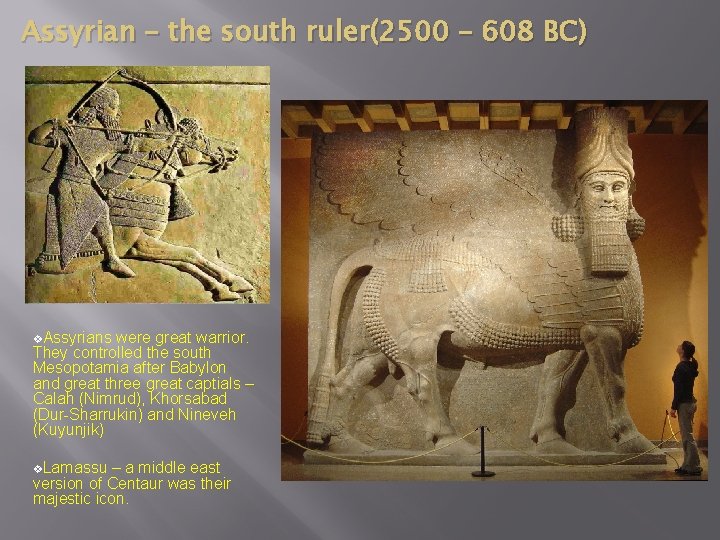
Assyrian – the south ruler(2500 – 608 BC) v. Assyrians were great warrior. They controlled the south Mesopotamia after Babylon and great three great captials – Calah (Nimrud), Khorsabad (Dur-Sharrukin) and Nineveh (Kuyunjik) v. Lamassu – a middle east version of Centaur was their majestic icon.
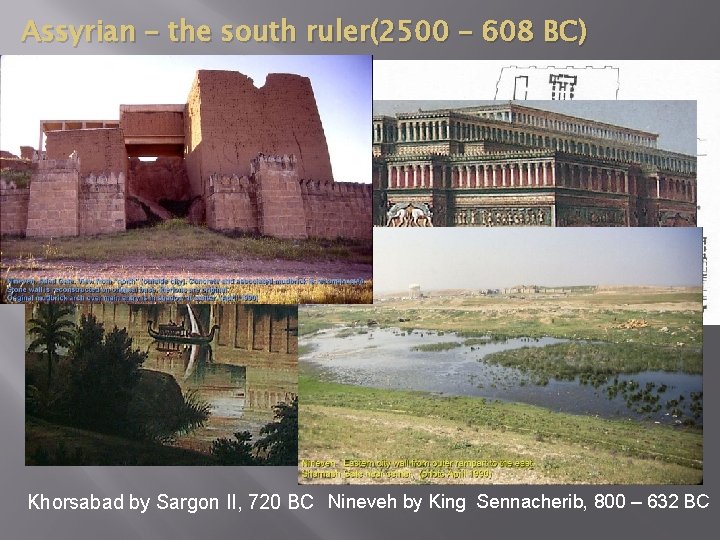
Assyrian – the south ruler(2500 – 608 BC) Khorsabad by Sargon II, 720 BC Nineveh by King Sennacherib, 800 – 632 BC
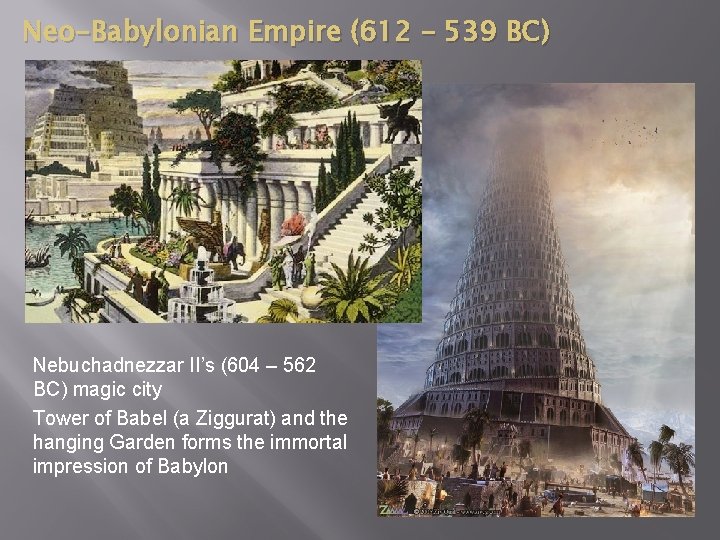
Neo-Babylonian Empire (612 – 539 BC) Nebuchadnezzar II’s (604 – 562 BC) magic city Tower of Babel (a Ziggurat) and the hanging Garden forms the immortal impression of Babylon
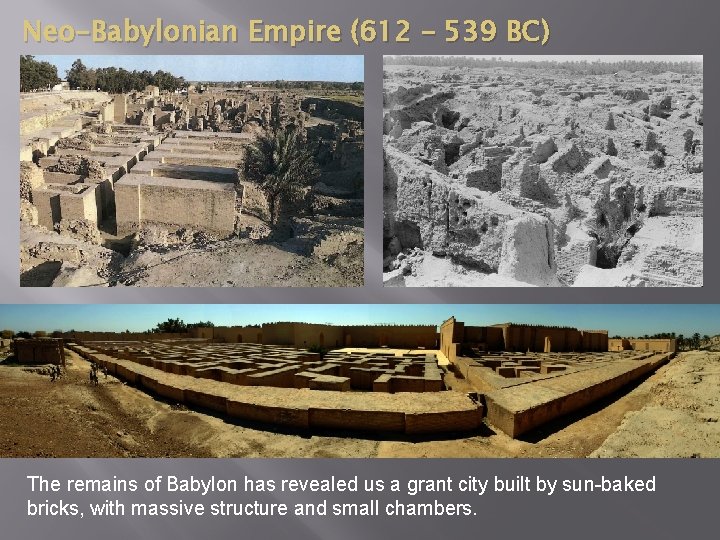
Neo-Babylonian Empire (612 – 539 BC) The remains of Babylon has revealed us a grant city built by sun-baked bricks, with massive structure and small chambers.
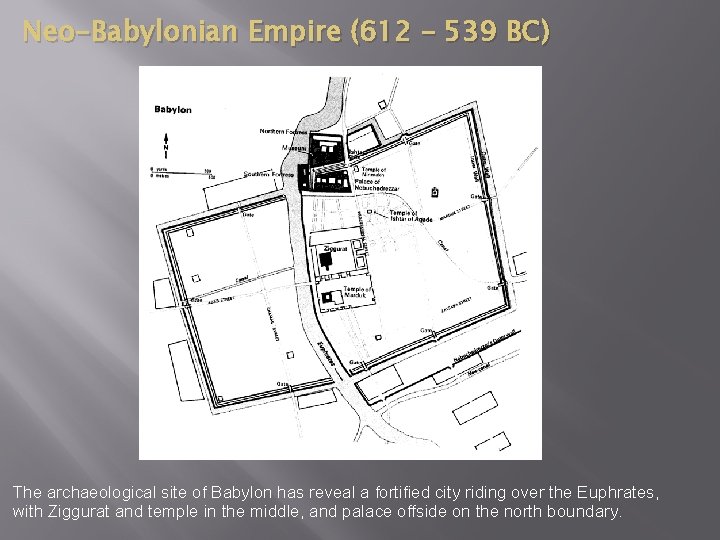
Neo-Babylonian Empire (612 – 539 BC) The archaeological site of Babylon has reveal a fortified city riding over the Euphrates, with Ziggurat and temple in the middle, and palace offside on the north boundary.
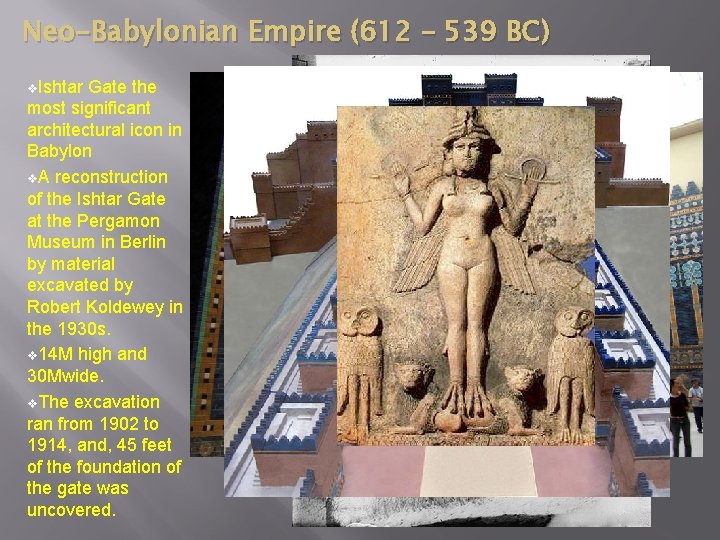
Neo-Babylonian Empire (612 – 539 BC) v. Ishtar Gate the most significant architectural icon in Babylon v. A reconstruction of the Ishtar Gate at the Pergamon Museum in Berlin by material excavated by Robert Koldewey in the 1930 s. v 14 M high and 30 Mwide. v. The excavation ran from 1902 to 1914, and, 45 feet of the foundation of the gate was uncovered.
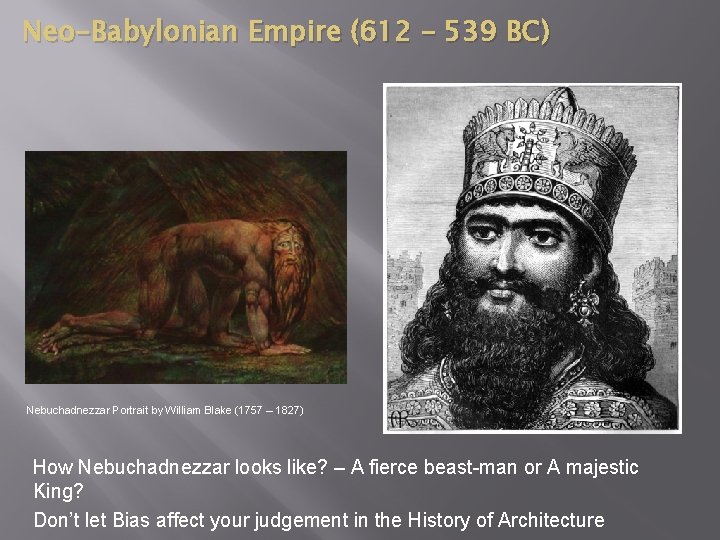
Neo-Babylonian Empire (612 – 539 BC) Nebuchadnezzar Portrait by William Blake (1757 – 1827) How Nebuchadnezzar looks like? – A fierce beast-man or A majestic King? Don’t let Bias affect your judgement in the History of Architecture
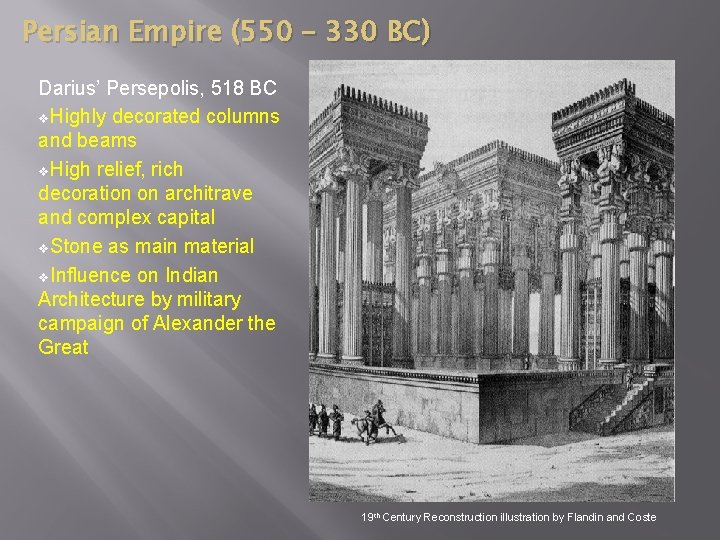
Persian Empire (550 – 330 BC) Darius’ Persepolis, 518 BC v. Highly decorated columns and beams v. High relief, rich decoration on architrave and complex capital v. Stone as main material v. Influence on Indian Architecture by military campaign of Alexander the Great 19 th Century Reconstruction illustration by Flandin and Coste
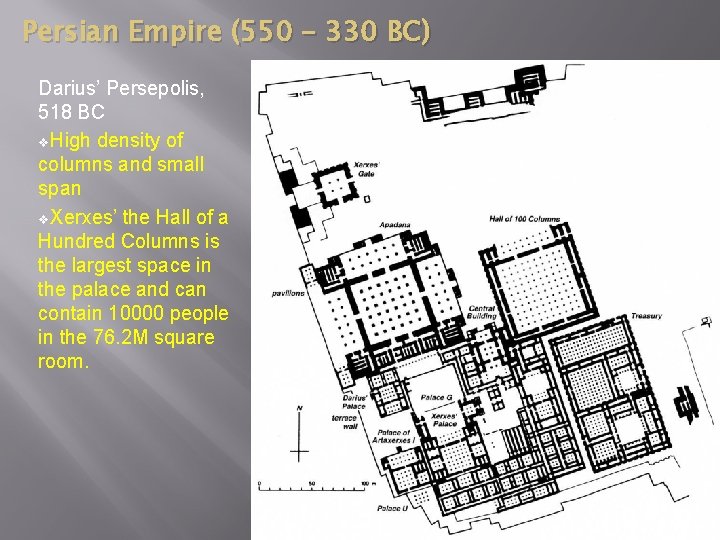
Persian Empire (550 – 330 BC) Darius’ Persepolis, 518 BC v. High density of columns and small span v. Xerxes’ the Hall of a Hundred Columns is the largest space in the palace and can contain 10000 people in the 76. 2 M square room.
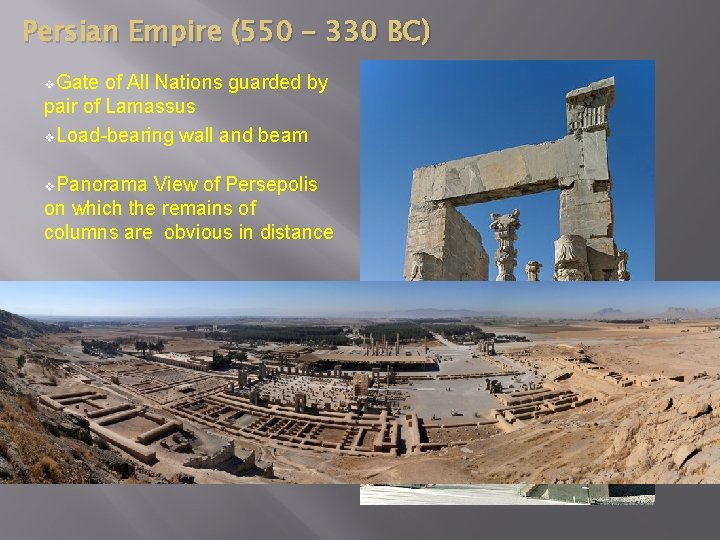
Persian Empire (550 – 330 BC) v. Gate of All Nations guarded by pair of Lamassus v. Load-bearing wall and beam v. Panorama View of Persepolis on which the remains of columns are obvious in distance