
Ancient Mesoamerican Civilizations Olmec 1500 BCE 400 BCE
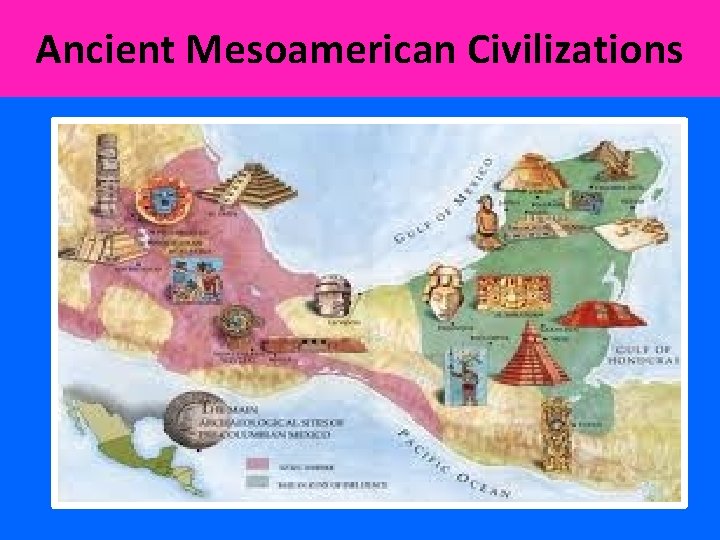
Ancient Mesoamerican Civilizations
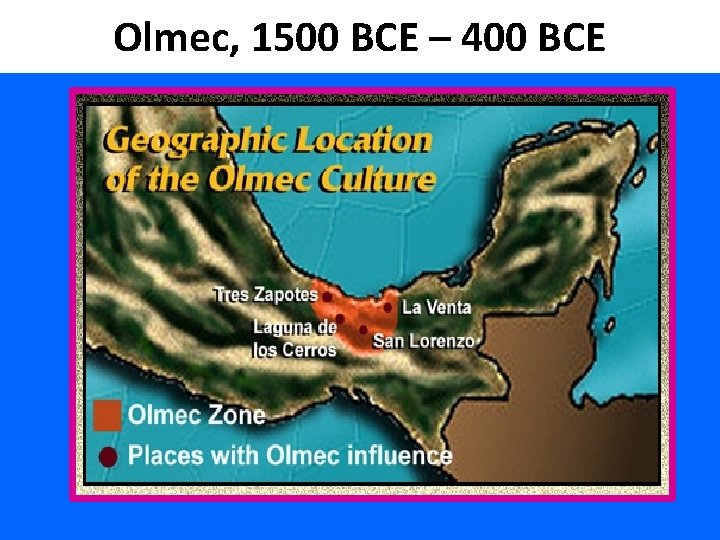
Olmec, 1500 BCE – 400 BCE
What is a “civilization”? • • Dependent upon agriculture Large and dense populations Trade Range of settlements (rural – urban) Central governments Social stratification Specialized occupations
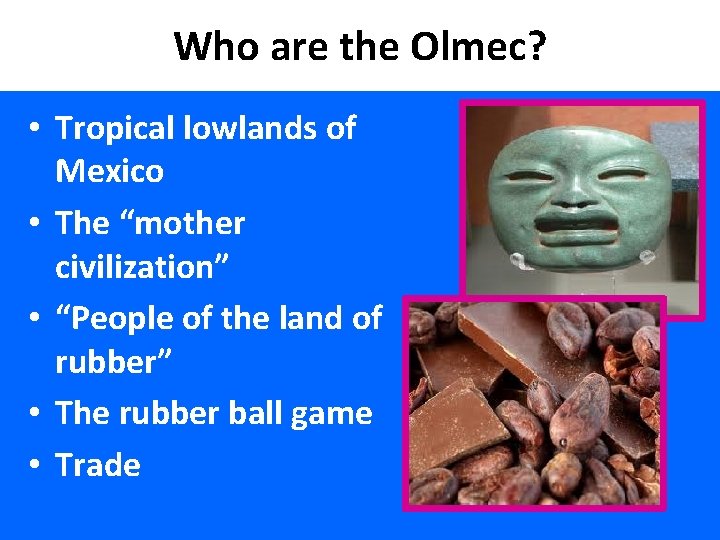
Who are the Olmec? • Tropical lowlands of Mexico • The “mother civilization” • “People of the land of rubber” • The rubber ball game • Trade
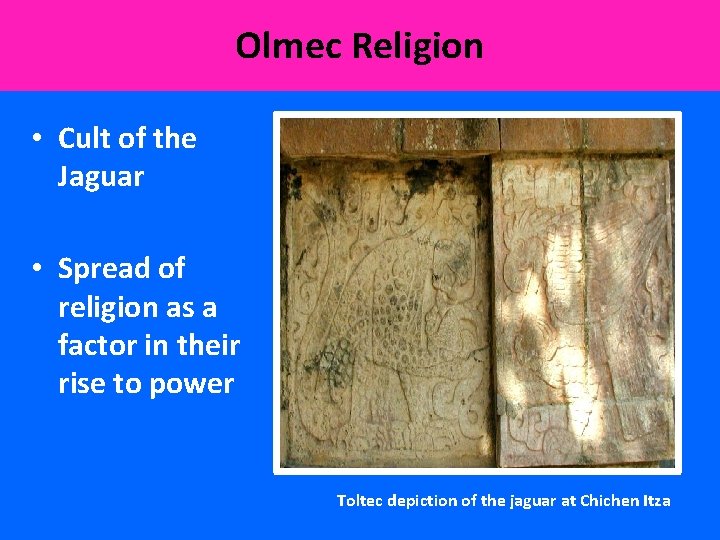
Olmec Religion • Cult of the Jaguar • Spread of religion as a factor in their rise to power Toltec depiction of the jaguar at Chichen Itza
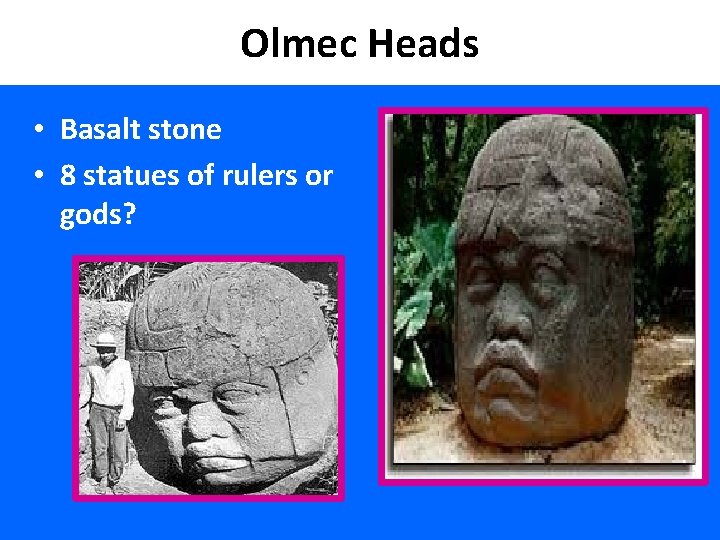
Olmec Heads • Basalt stone • 8 statues of rulers or gods?
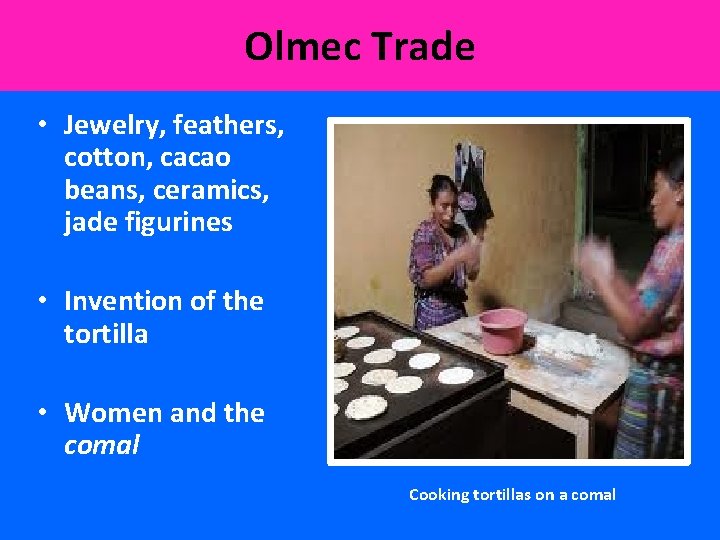
Olmec Trade • Jewelry, feathers, cotton, cacao beans, ceramics, jade figurines • Invention of the tortilla • Women and the comal Cooking tortillas on a comal
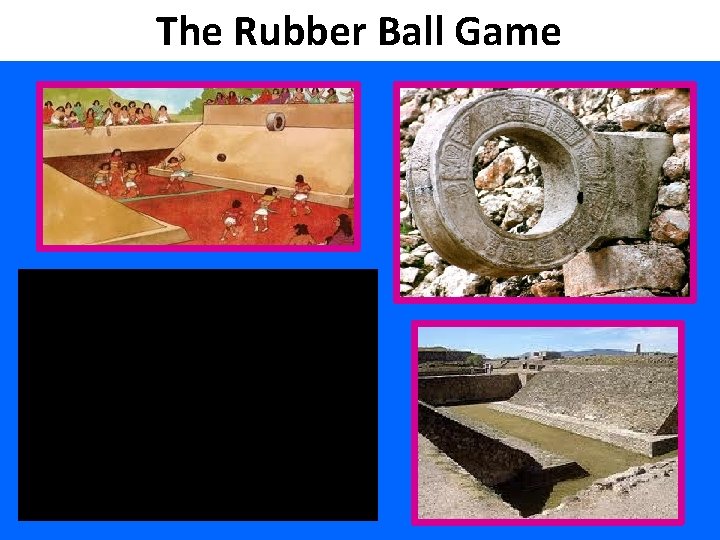
The Rubber Ball Game

Olmec’s Legacy Cult of the jaguar Religious calendar Astronomy Trade Agriculture/Food technologies • Hieroglyphic writing • • • Olmec rain god at A. Oaxaca, Central Mexico, and Maya regions from left to right.
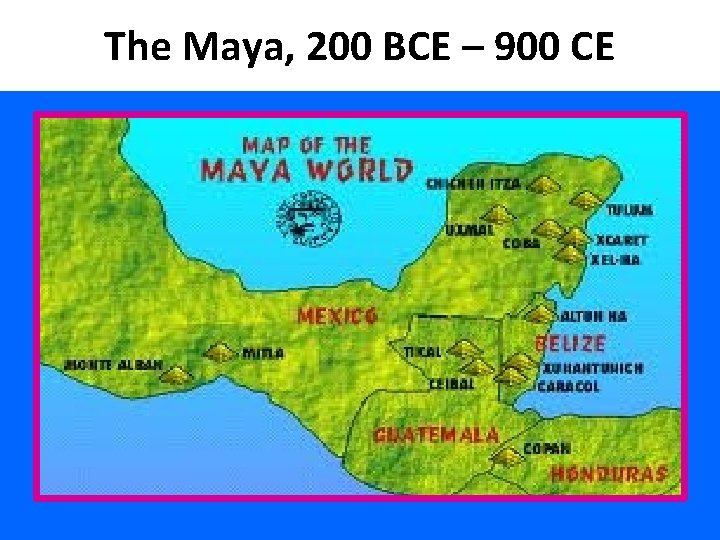
The Maya, 200 BCE – 900 CE
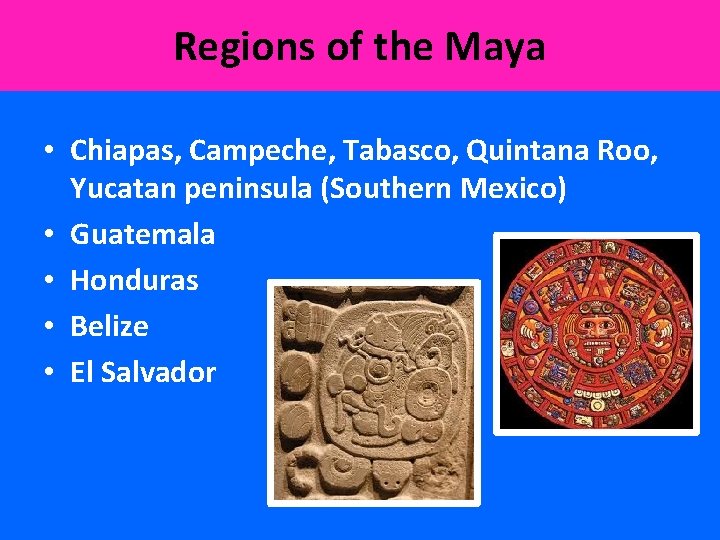
Regions of the Maya • Chiapas, Campeche, Tabasco, Quintana Roo, Yucatan peninsula (Southern Mexico) • Guatemala • Honduras • Belize • El Salvador
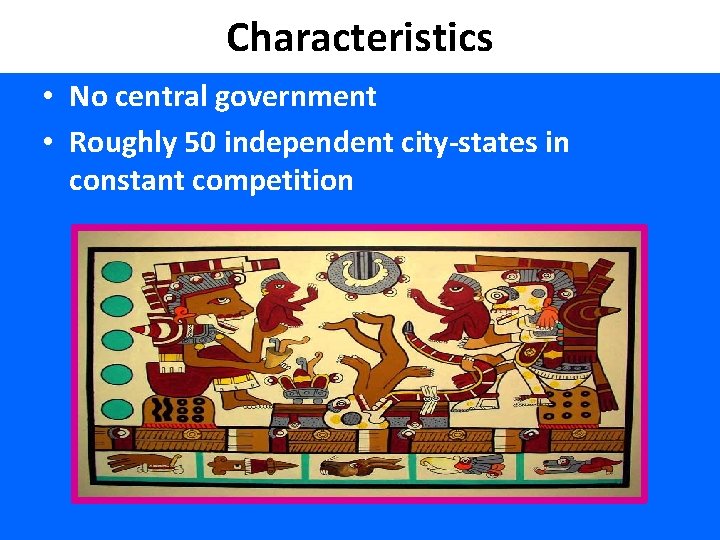
Characteristics • No central government • Roughly 50 independent city-states in constant competition
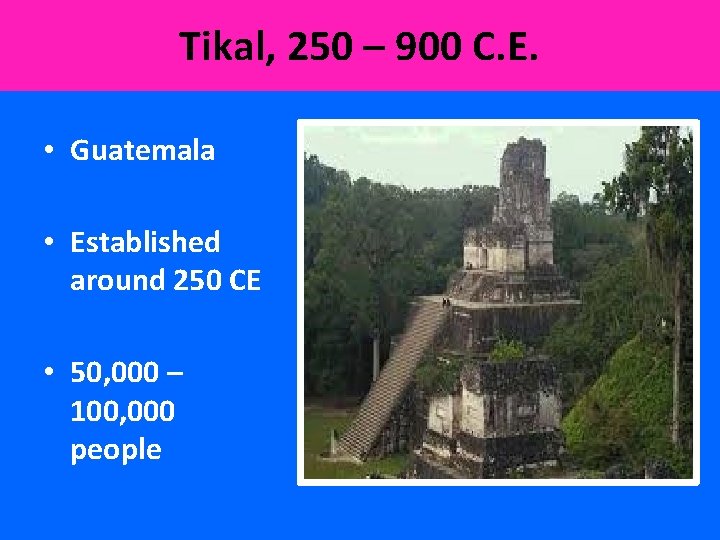
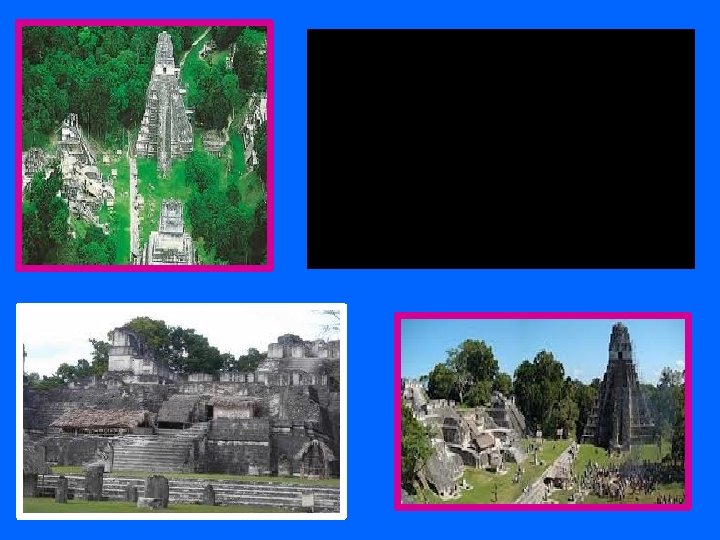
Tikal, 250 – 900 C. E. • Guatemala • Established around 250 CE • 50, 000 – 100, 000 people
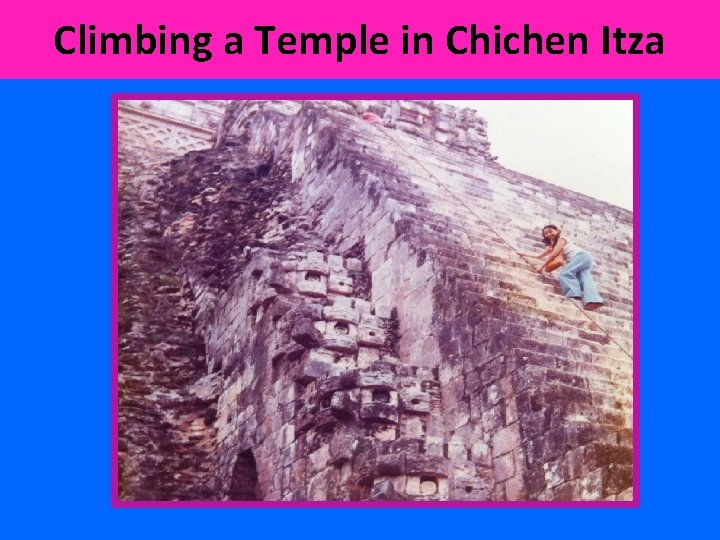
Climbing a Temple in Chichen Itza
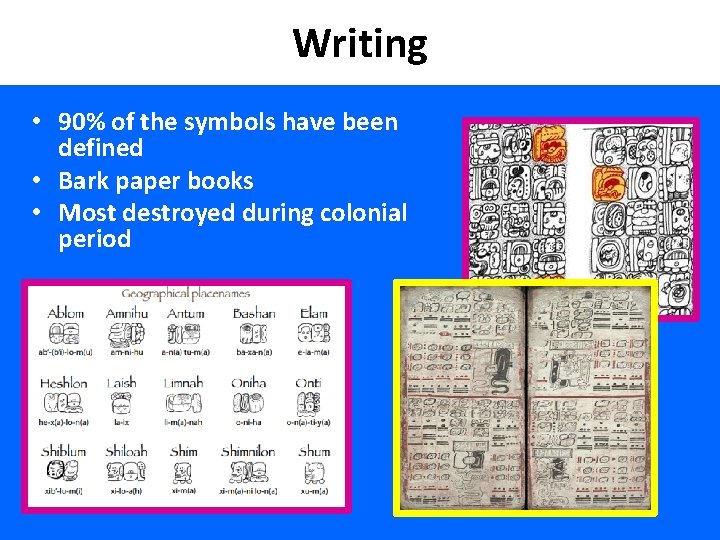
Writing • 90% of the symbols have been defined • Bark paper books • Most destroyed during colonial period
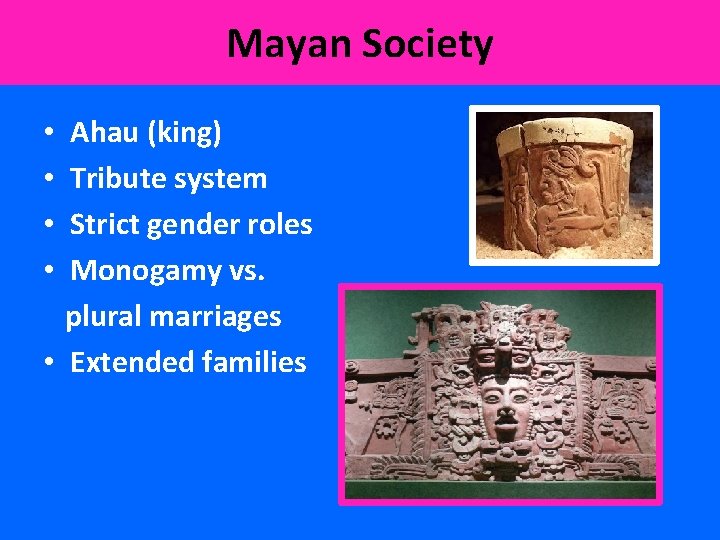
Mayan Society Ahau (king) Tribute system Strict gender roles Monogamy vs. plural marriages • Extended families • •
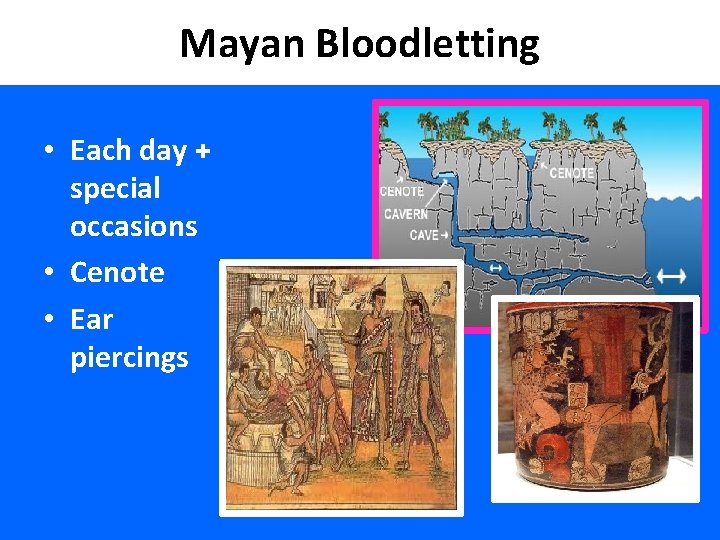
Mayan Bloodletting • Each day + special occasions • Cenote • Ear piercings
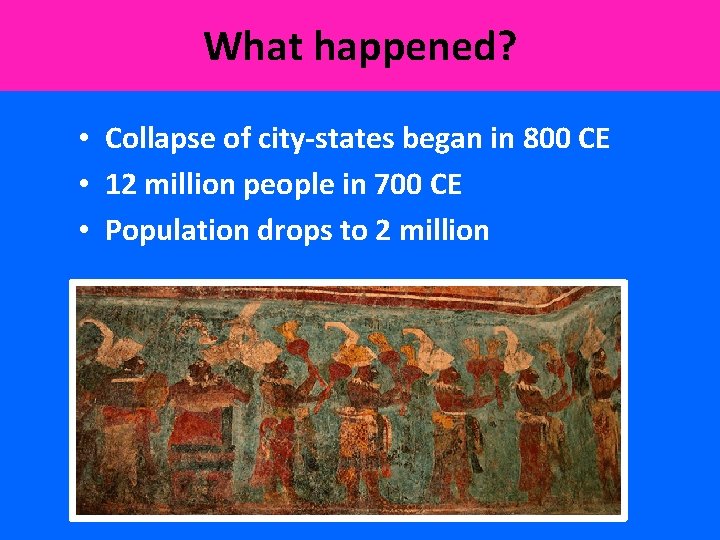
What happened? • Collapse of city-states began in 800 CE • 12 million people in 700 CE • Population drops to 2 million
- Slides: 19