
Ancient Mediterranean Worlds Africa the near East and
- Slides: 68
Ancient Mediterranean Worlds Africa, the near East and Europe where Western Art begins……
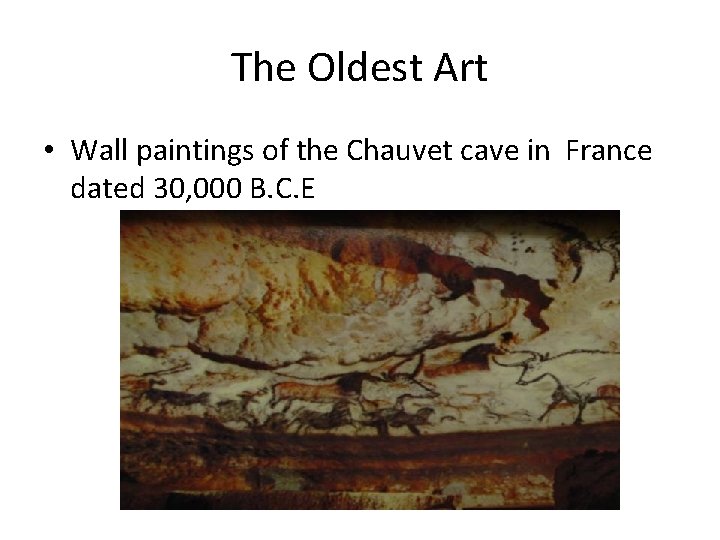
The Oldest Art • Wall paintings of the Chauvet cave in France dated 30, 000 B. C. E
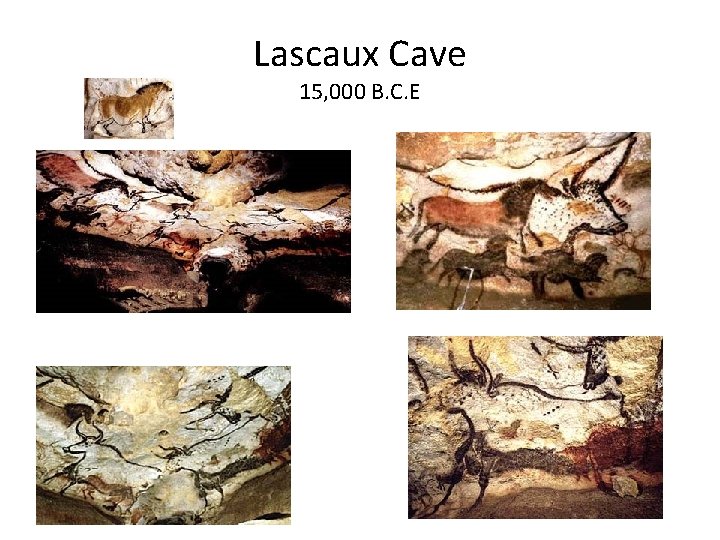
Lascaux Cave 15, 000 B. C. E
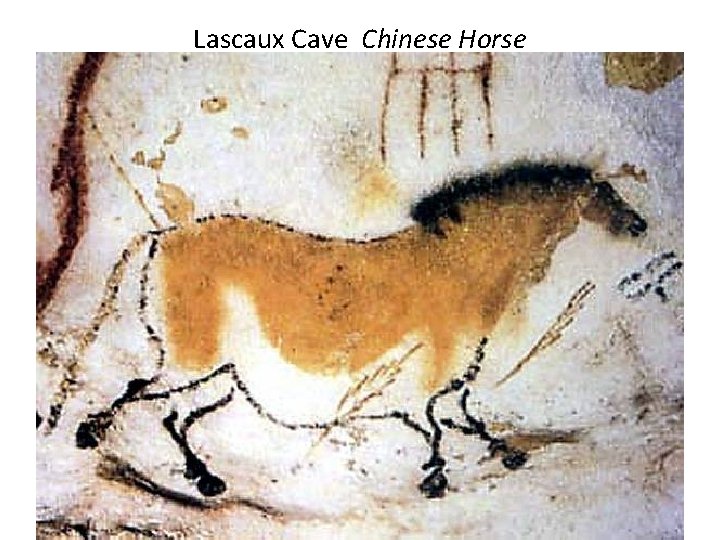
Lascaux Cave Chinese Horse
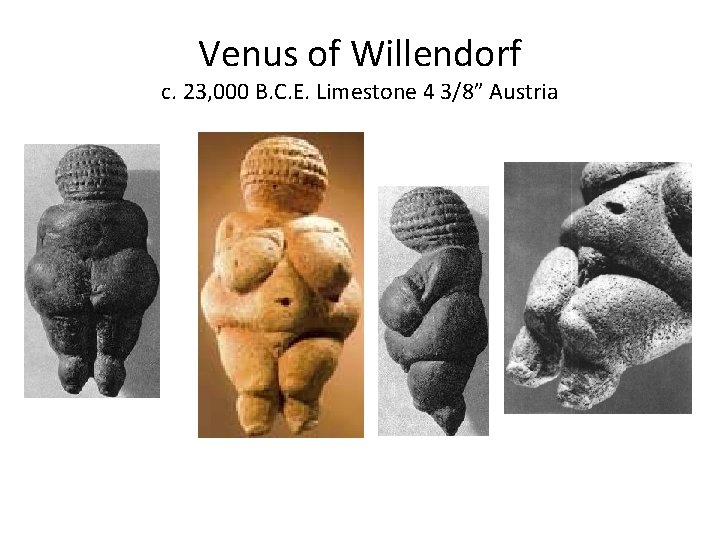
Venus of Willendorf c. 23, 000 B. C. E. Limestone 4 3/8” Austria
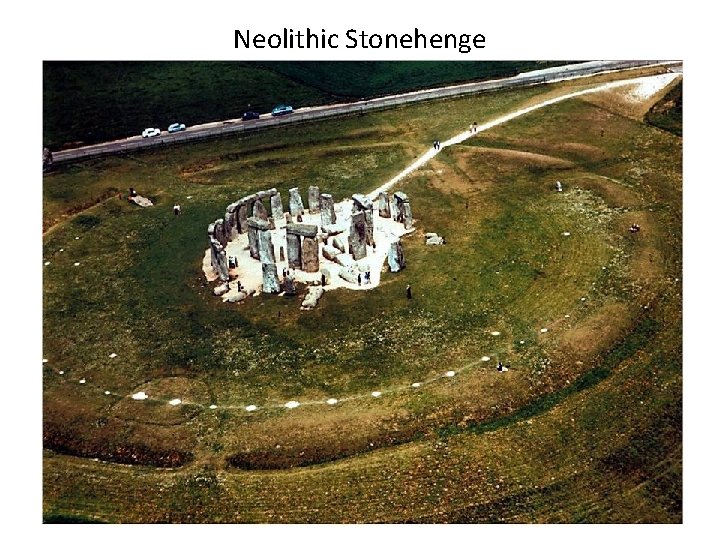
Neolithic Stonehenge
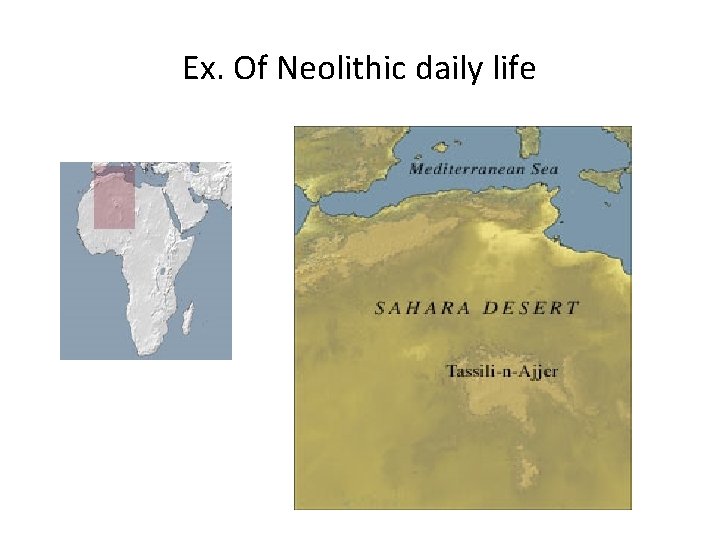
Ex. Of Neolithic daily life
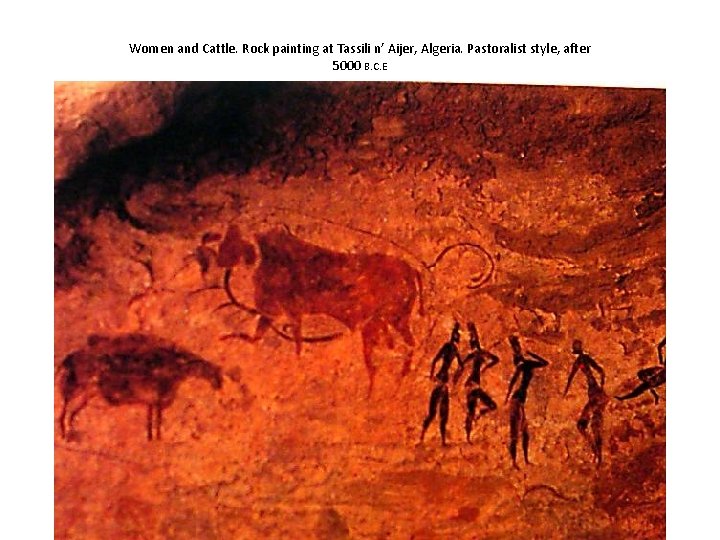
Women and Cattle. Rock painting at Tassili n’ Aijer, Algeria. Pastoralist style, after 5000 B. C. E
Conditions that promote the preservation of artworks for thousands of years • The artists worked in durable materials such as stone, metal, and fired clay. • Local environment is not destructive to artworks. • the culture was highly organized, stable population center. • The culture had a tradition of caching its artworks limited or no accessibility.
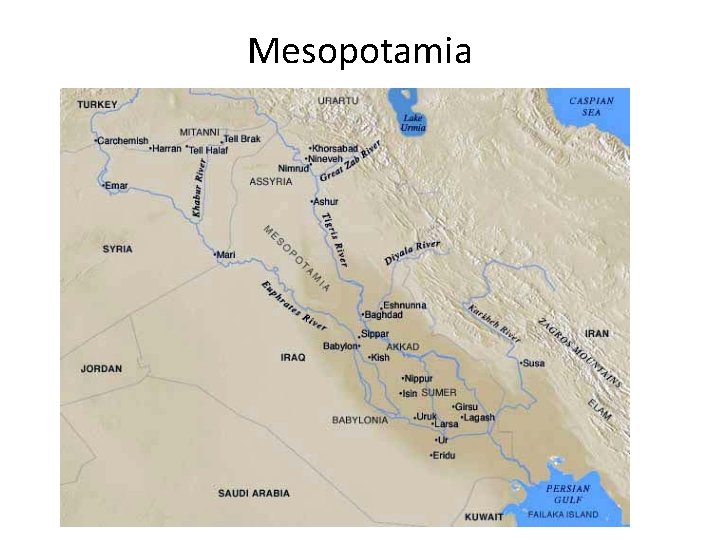
Mesopotamia
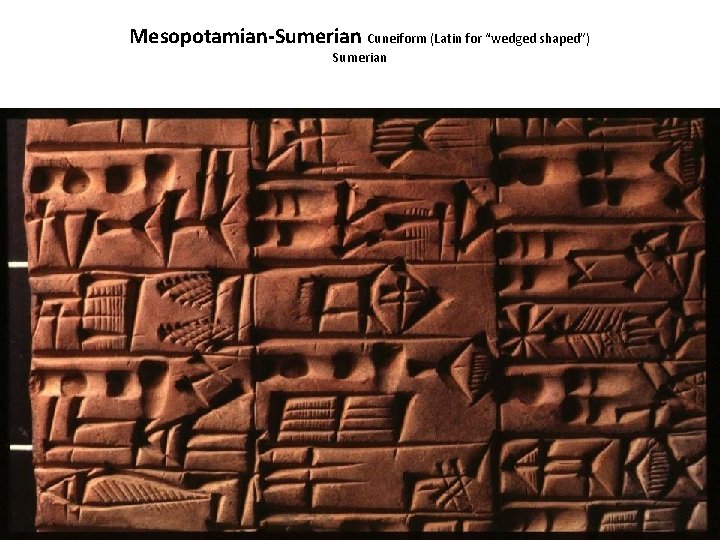
Mesopotamian-Sumerian Cuneiform (Latin for “wedged shaped”) Sumerian
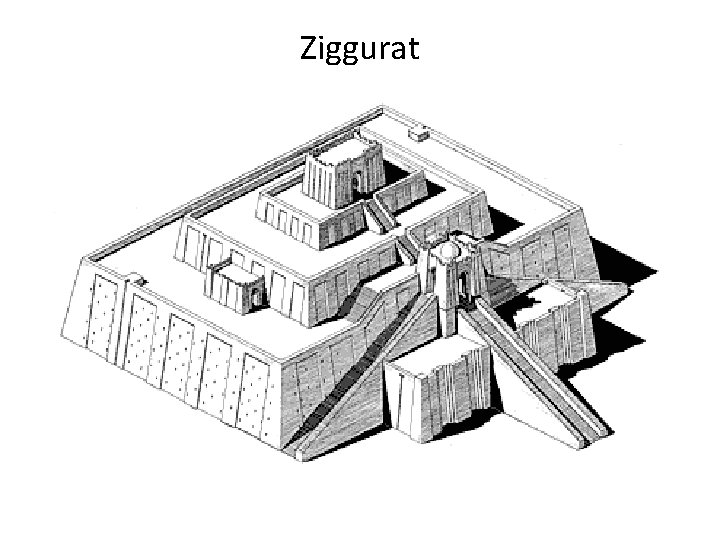
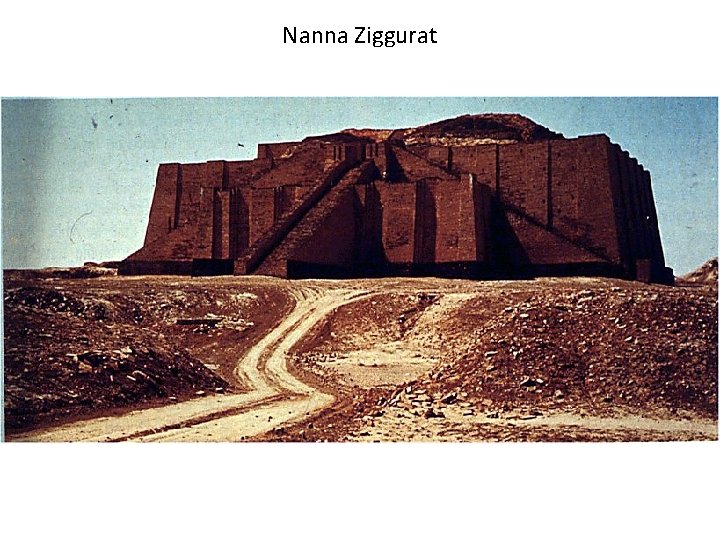
Ziggurat
Nanna Ziggurat
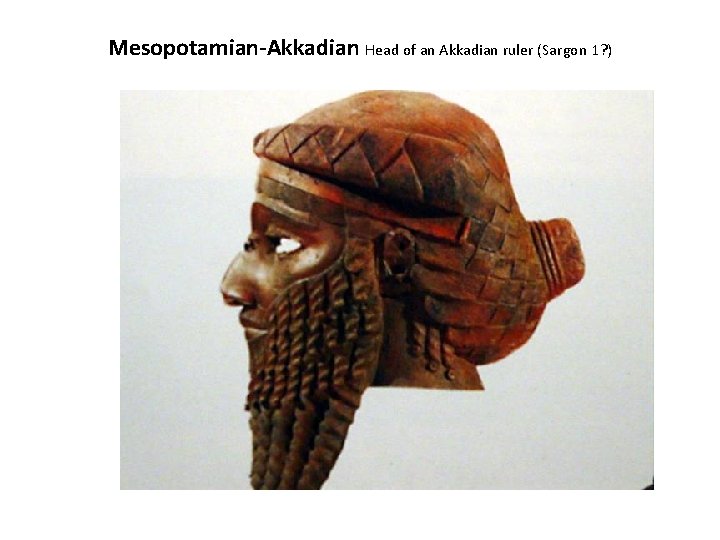
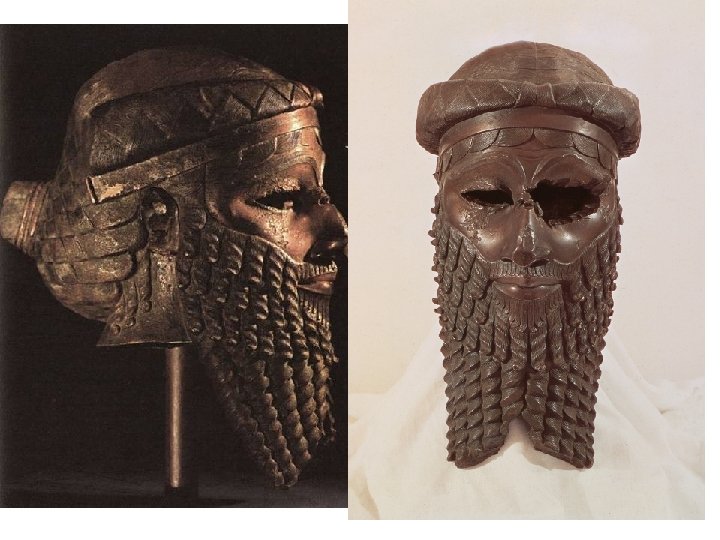
Mesopotamian-Akkadian Head of an Akkadian ruler (Sargon 1? )
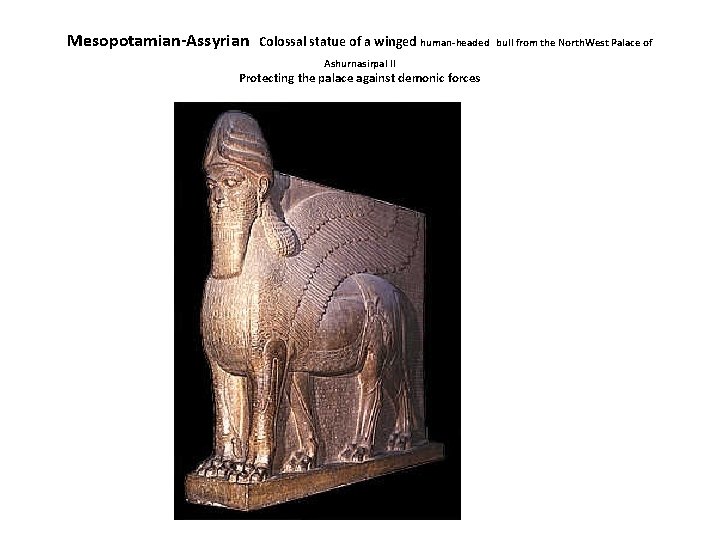
Mesopotamian-Assyrian Colossal statue of a winged human-headed Ashurnasirpal II Protecting the palace against demonic forces bull from the North. West Palace of
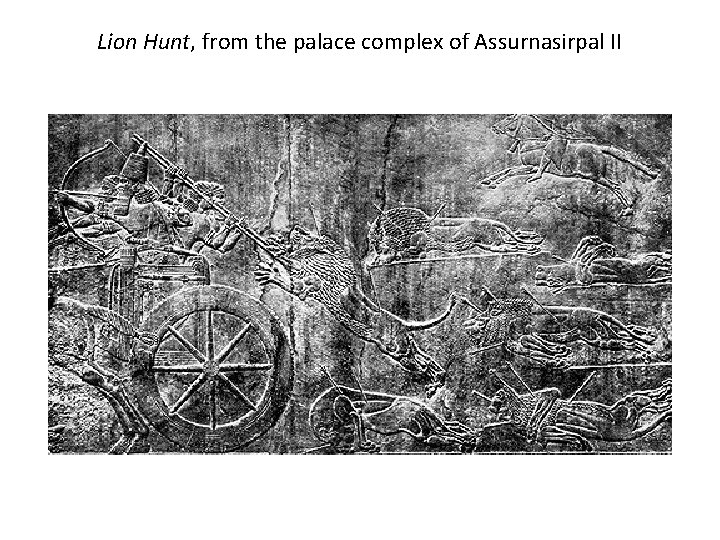
Lion Hunt, from the palace complex of Assurnasirpal II
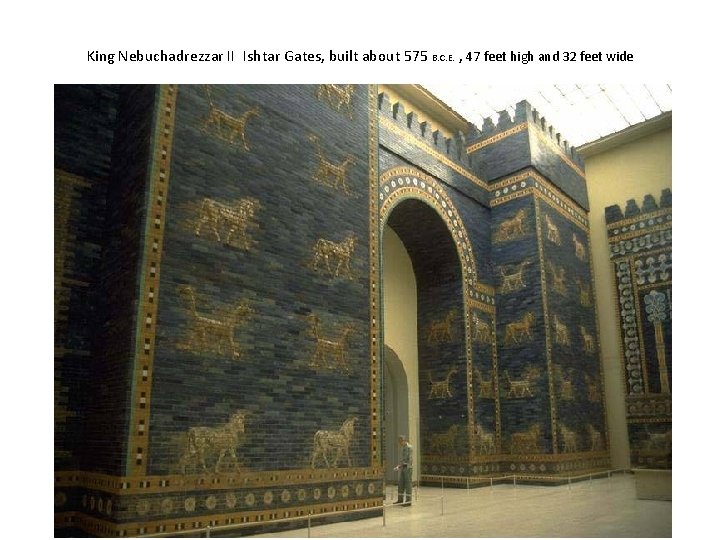
King Nebuchadrezzar II Ishtar Gates, built about 575 B. C. E. , 47 feet high and 32 feet wide
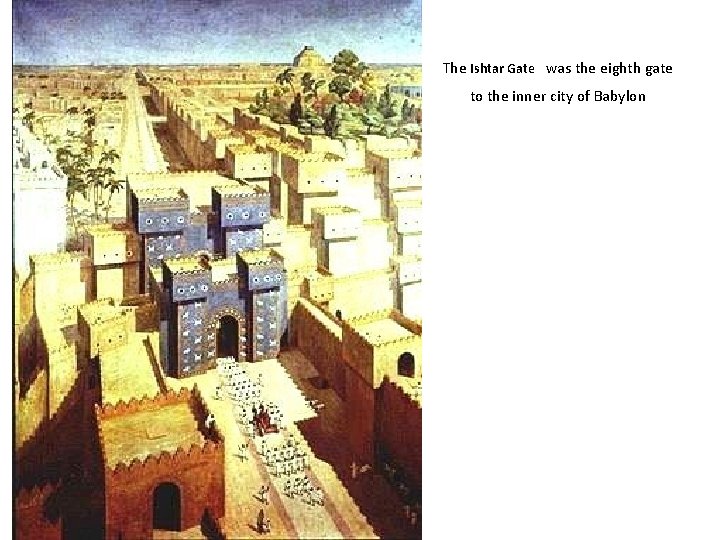
The Ishtar Gate was the eighth gate to the inner city of Babylon
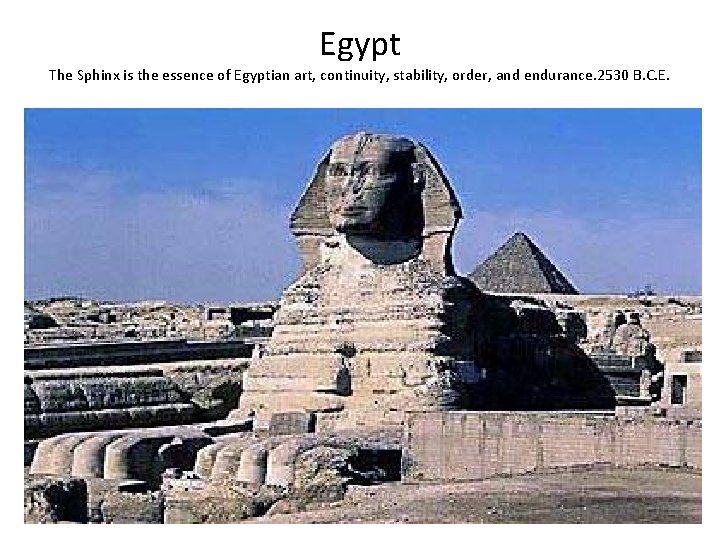
Egypt The Sphinx is the essence of Egyptian art, continuity, stability, order, and endurance. 2530 B. C. E.
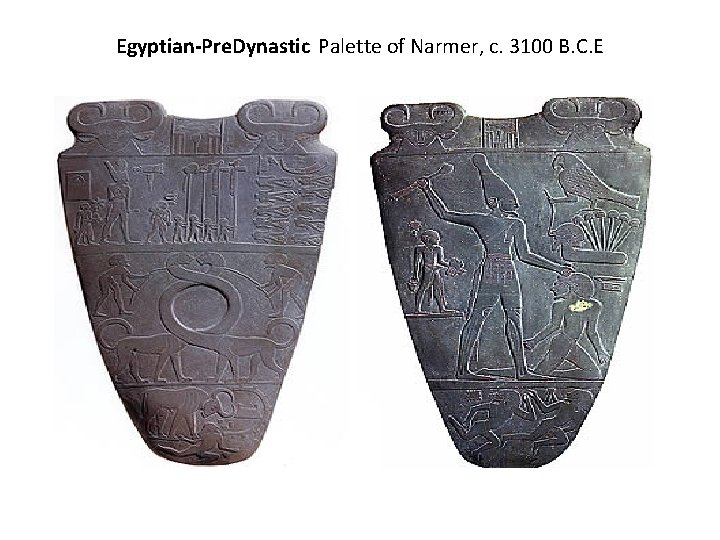
Egyptian-Pre. Dynastic Palette of Narmer, c. 3100 B. C. E
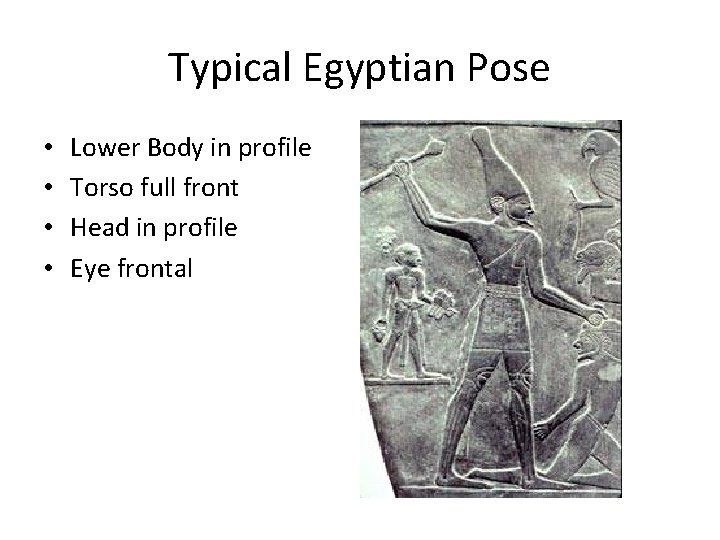
Typical Egyptian Pose • • Lower Body in profile Torso full front Head in profile Eye frontal
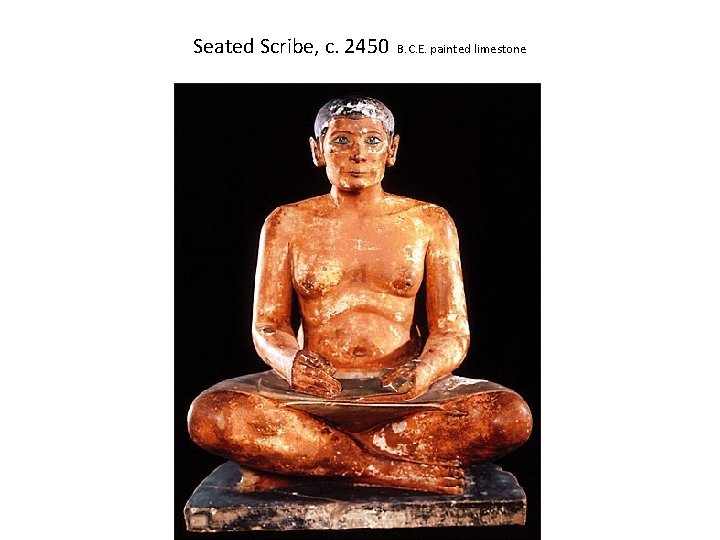
Seated Scribe, c. 2450 B. C. E. painted limestone
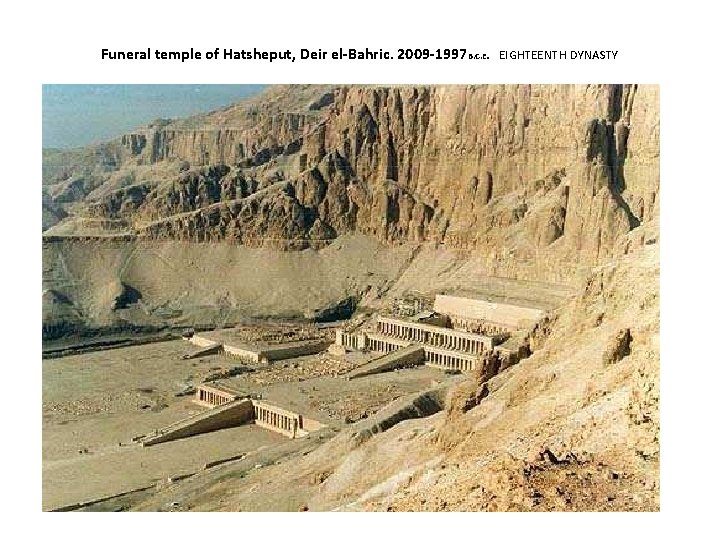
Funeral temple of Hatsheput, Deir el-Bahric. 2009 -1997 B. C. E. EIGHTEENTH DYNASTY
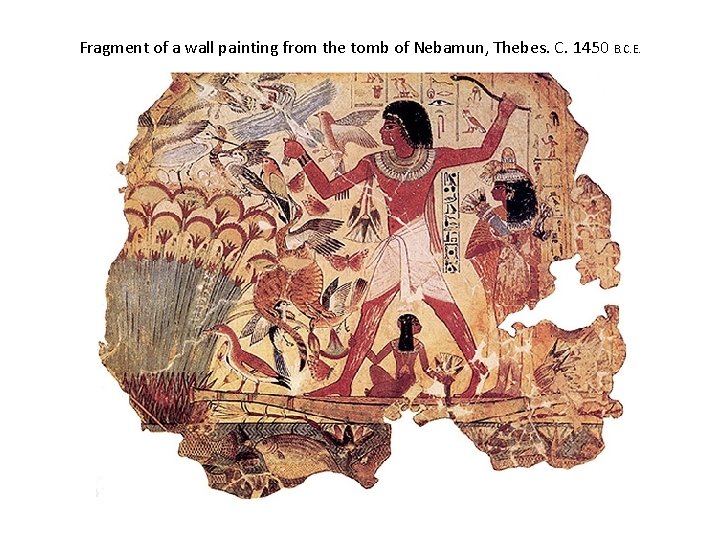
Fragment of a wall painting from the tomb of Nebamun, Thebes. C. 1450 B. C. E.
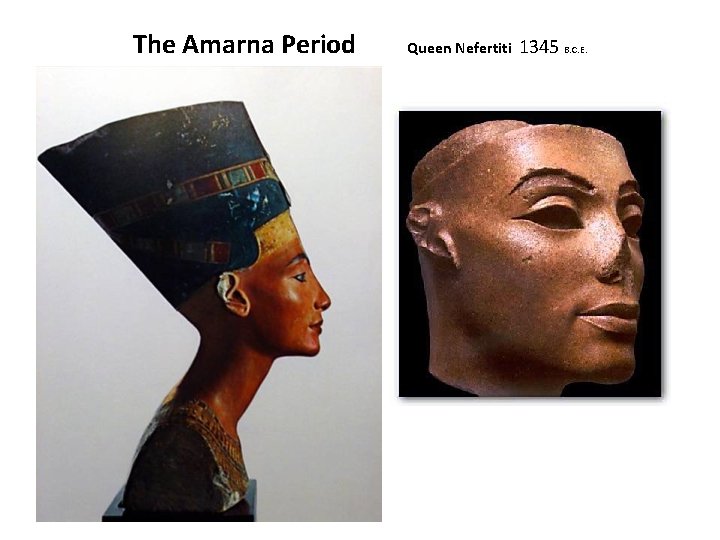
The Amarna Period Queen Nefertiti 1345 B. C. E.
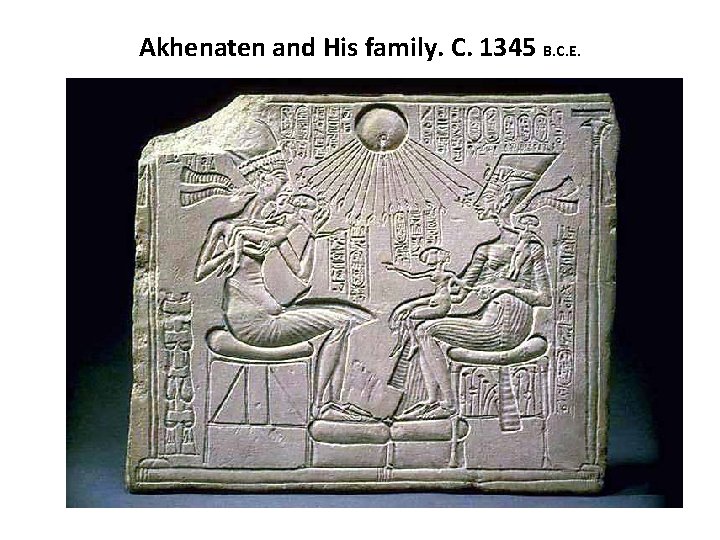
Akhenaten and His family. C. 1345 B. C. E.
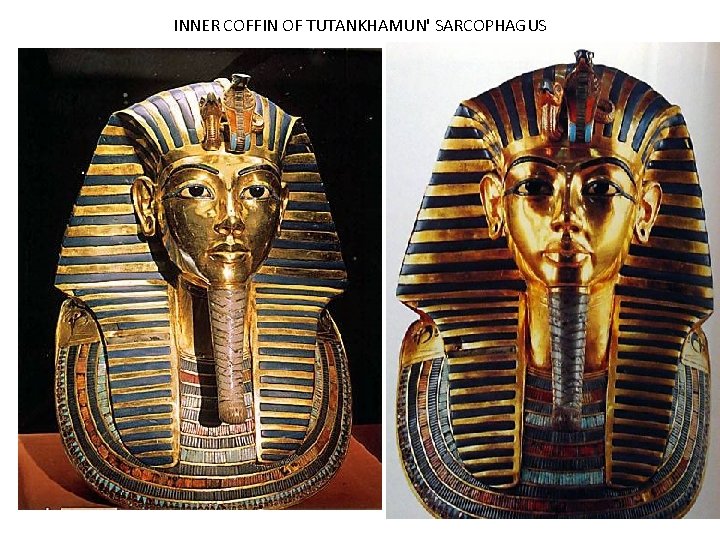
INNER COFFIN OF TUTANKHAMUN' SARCOPHAGUS
Aegean Cultures Cycladic Minoan Mycenaean GREECE ROMAN
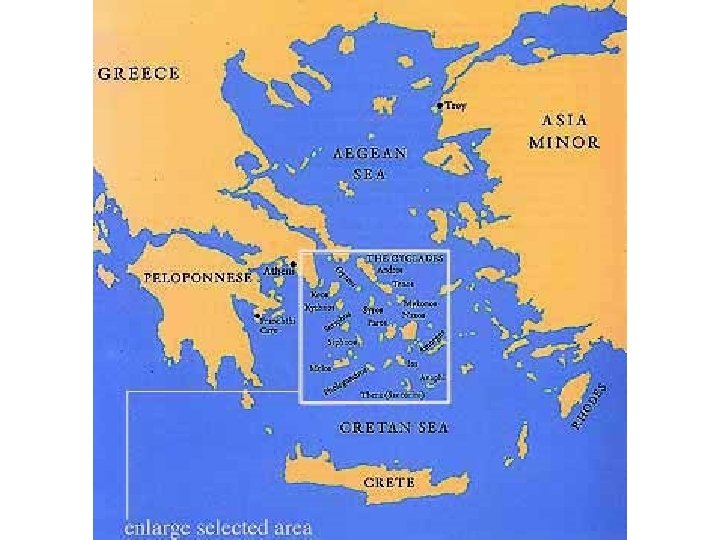
The Aegean • Between Greek peninsula and continent of Asia minor (modern-day Turkey) arm of Mediterranean known as Aegean Sea • Three artistic cultures • Cycladic - group of small islands in Aegean • Minoan - island of Crete • Mycenaean - mainland of Greece • Parallel in time to cultures of Egypt and Mesopotamia beginning around 3, 000 BCE.
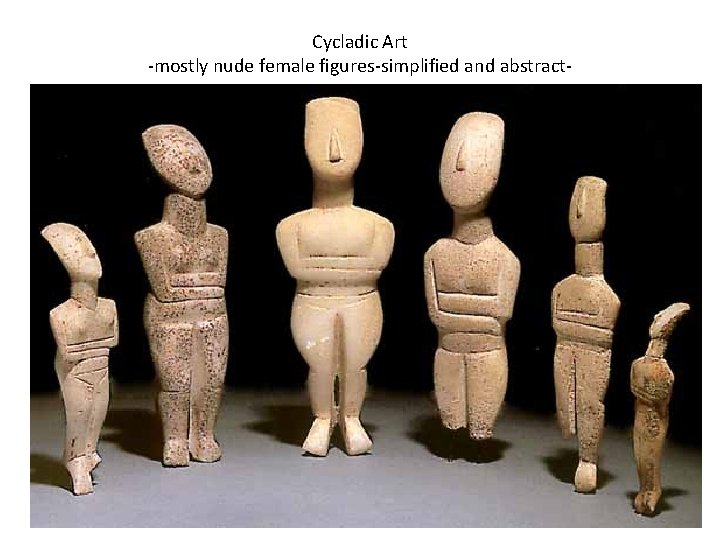
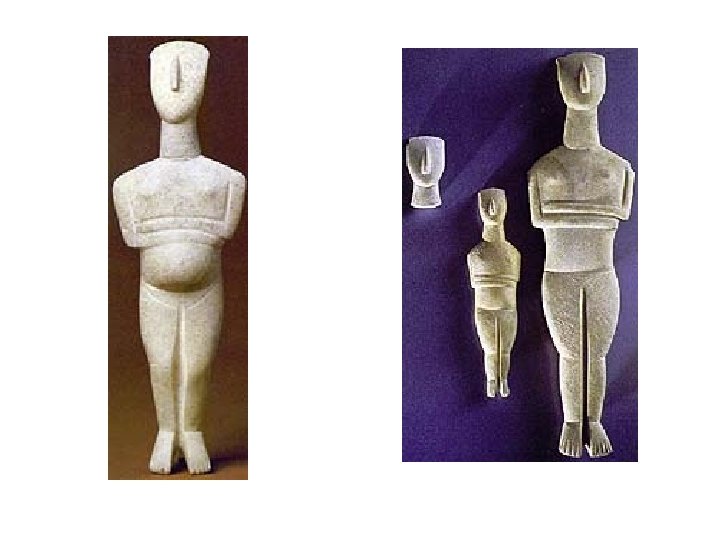
Cycladic Art -mostly nude female figures-simplified and abstract-
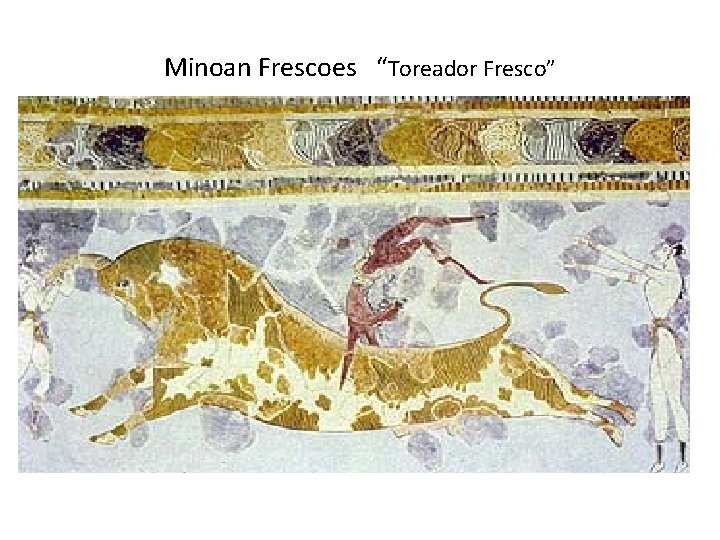
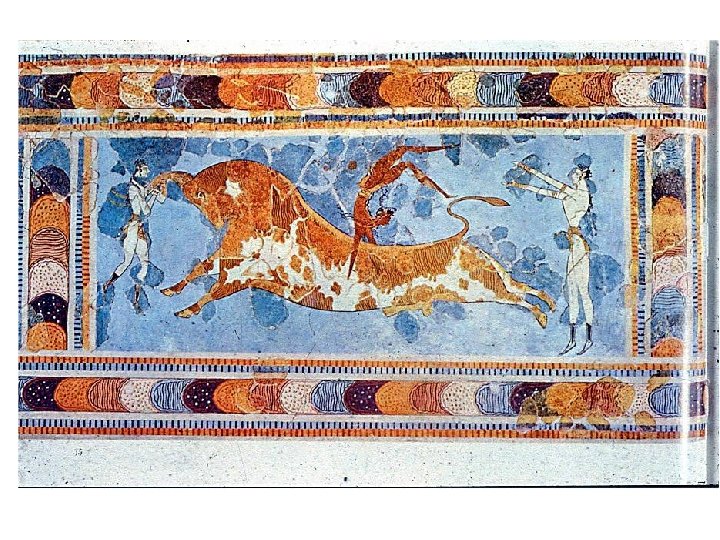
Minoan Culture on Crete • 2000 B. C. E. • City of Knossos • The name was taken from the legendary king Minos, who supposedly ruled at Knossos and his queen, gave birth to the half-human, halfbull, known as the Minotaur. • Frescoes, pottery, jewelry
Minoan Frescoes “Toreador Fresco”
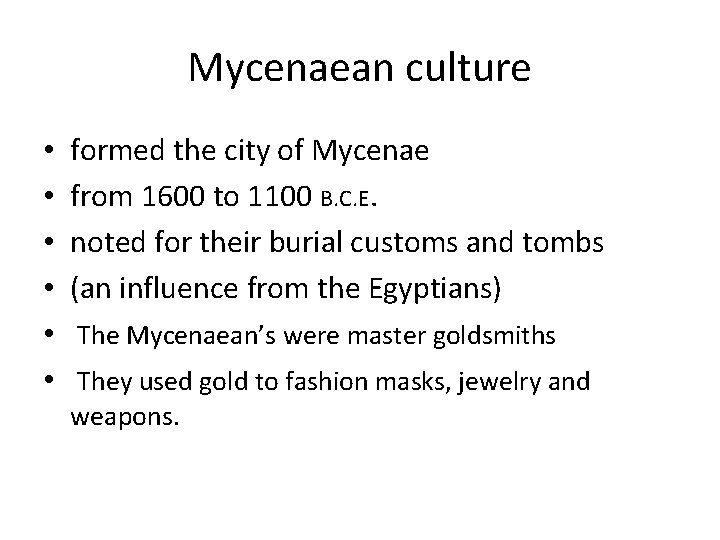
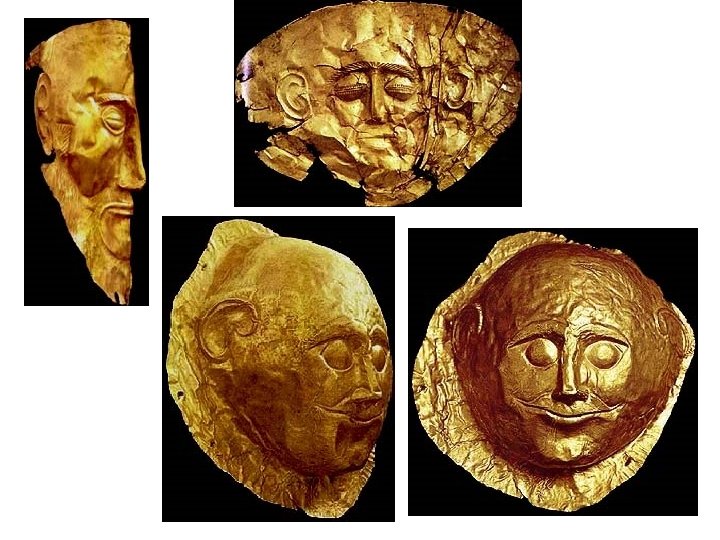
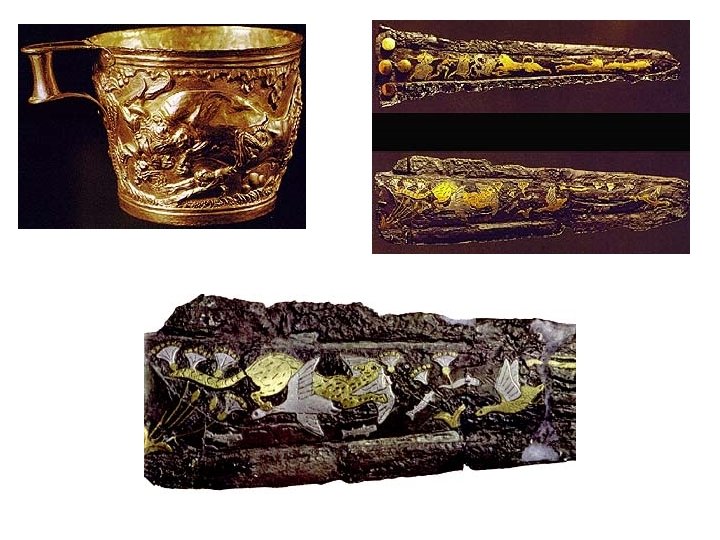
Mycenaean culture • • • formed the city of Mycenae from 1600 to 1100 B. C. E. noted for their burial customs and tombs (an influence from the Egyptians) The Mycenaean’s were master goldsmiths They used gold to fashion masks, jewelry and weapons.
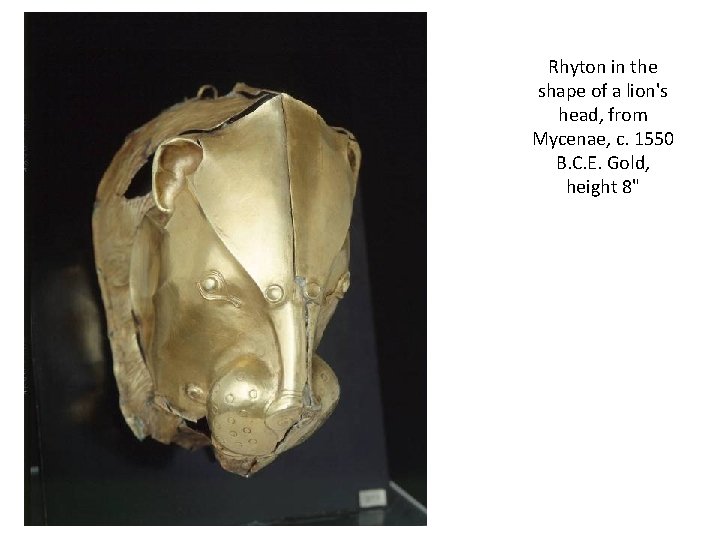
Rhyton in the shape of a lion's head, from Mycenae, c. 1550 B. C. E. Gold, height 8"
GREECE Greeks excelled in many fields Political ideals serve as a model of democracy Poetry, drama, and philosophy live on as classics The first to speculate on the nature and purpose of art • Sculpture, painting, and architecture were as techne, “things requiring a special body of knowledge and skill to make. ”( technology & technique) • •
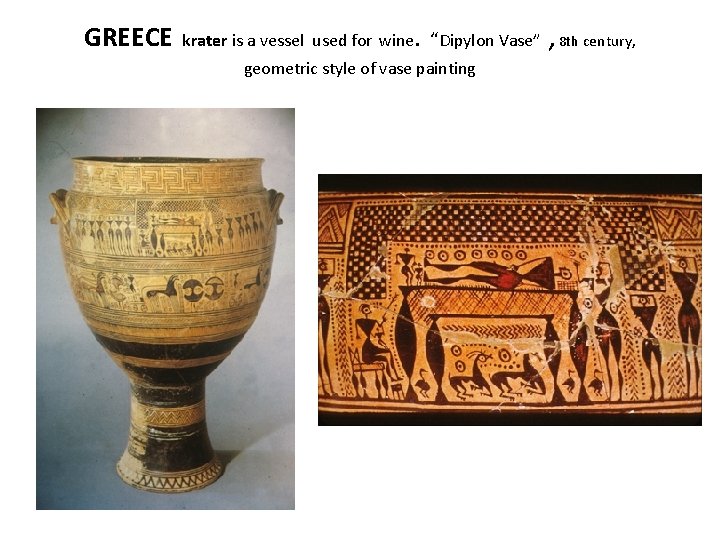
GREECE krater is a vessel used for wine. “Dipylon Vase” geometric style of vase painting , 8 th century,
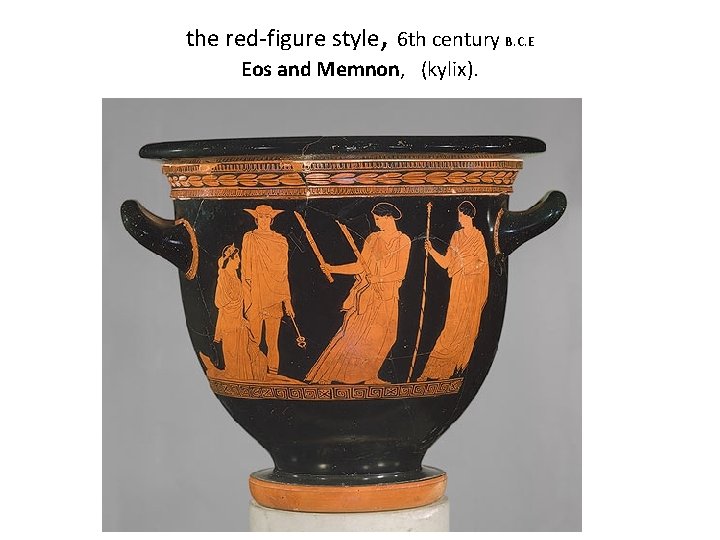
the red-figure style, 6 th century B. C. E Eos and Memnon, (kylix).
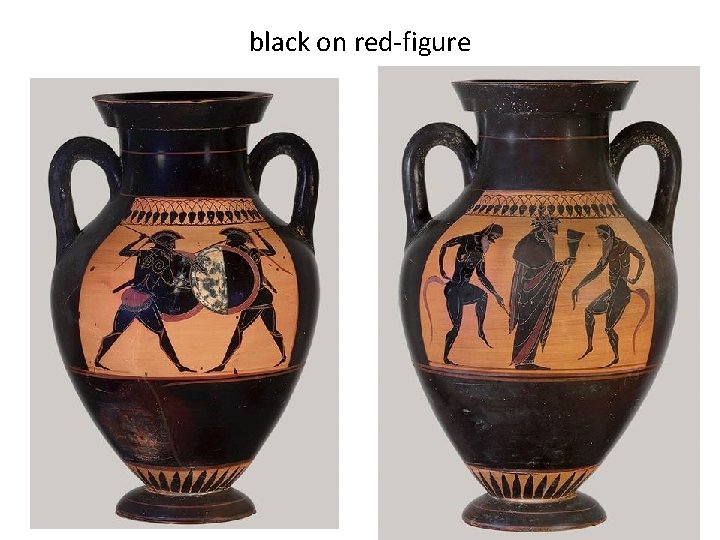
black on red-figure
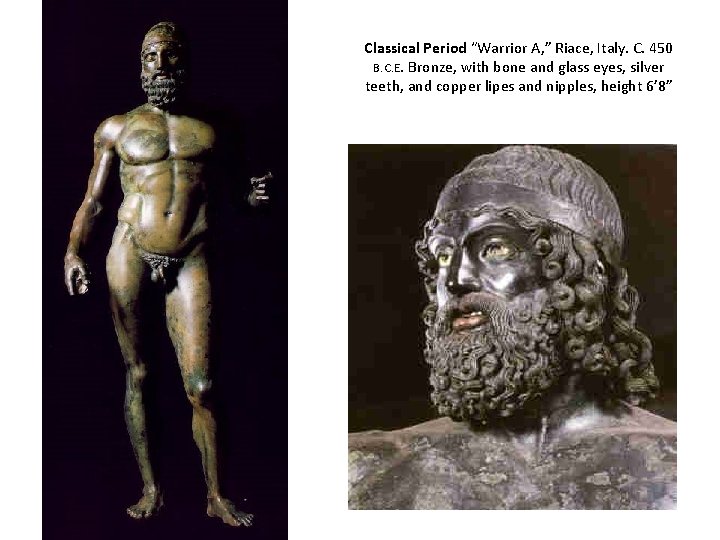
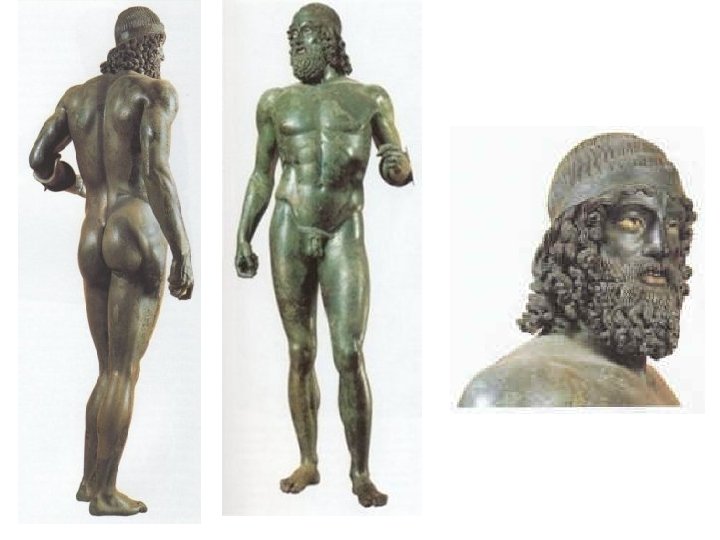
Classical Period “Warrior A, ” Riace, Italy. C. 450 B. C. E. Bronze, with bone and glass eyes, silver teeth, and copper lipes and nipples, height 6’ 8”
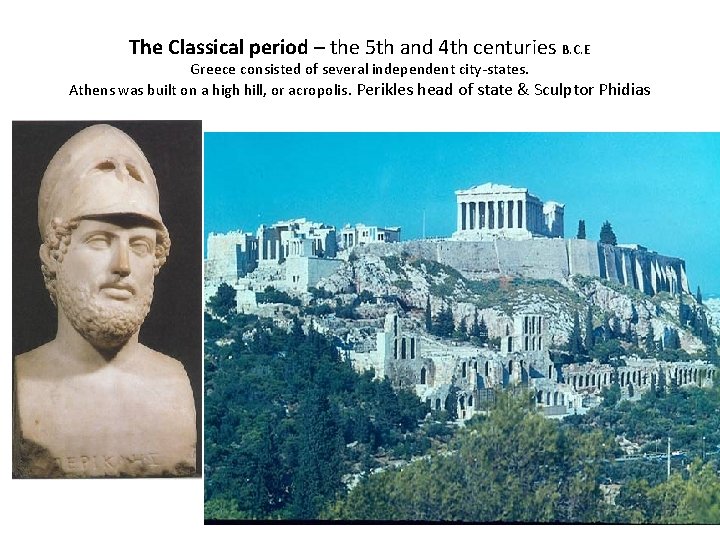
The Classical period – the 5 th and 4 th centuries B. C. E Greece consisted of several independent city-states. Athens was built on a high hill, or acropolis. Perikles head of state & Sculptor Phidias
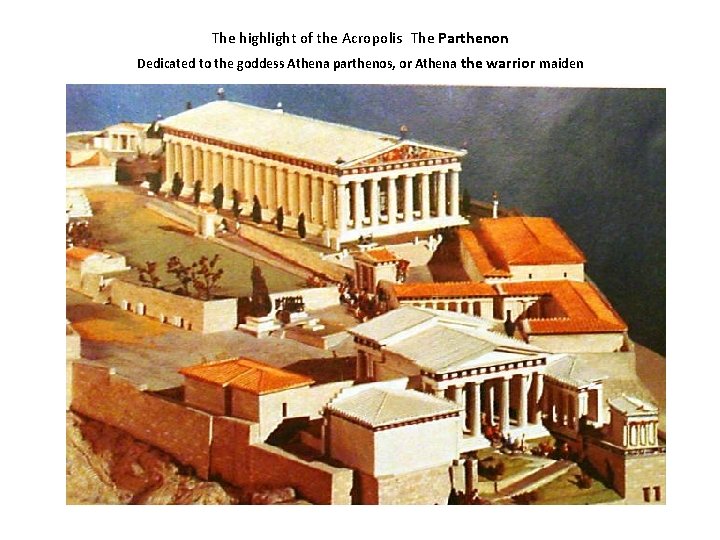
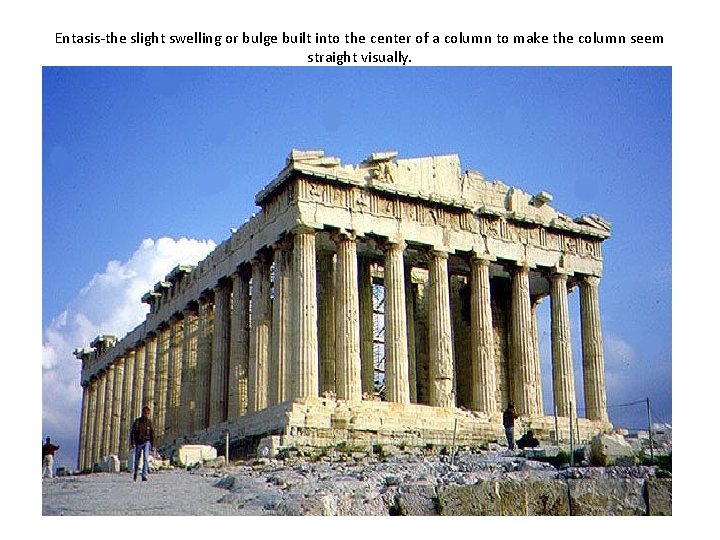
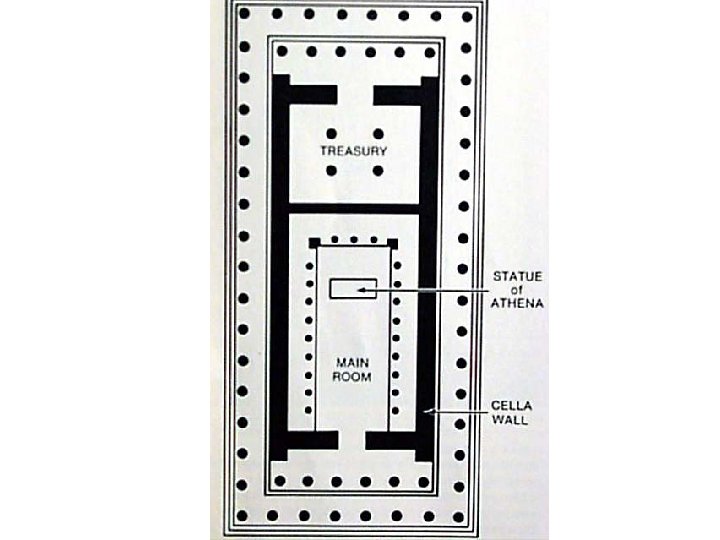
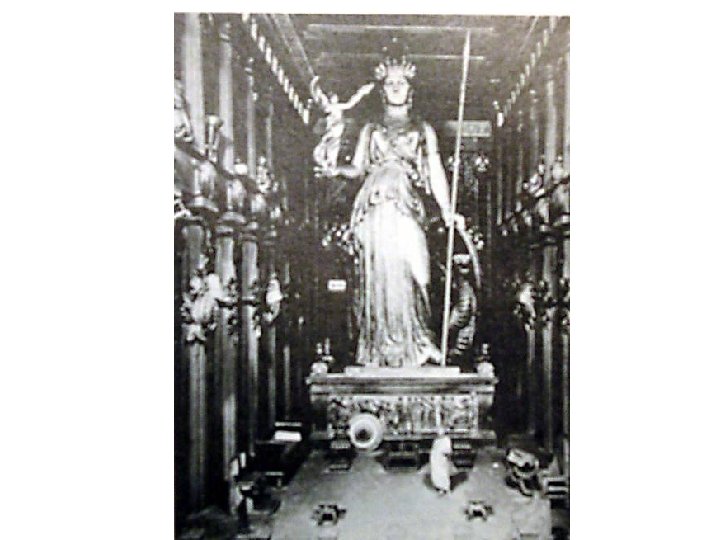
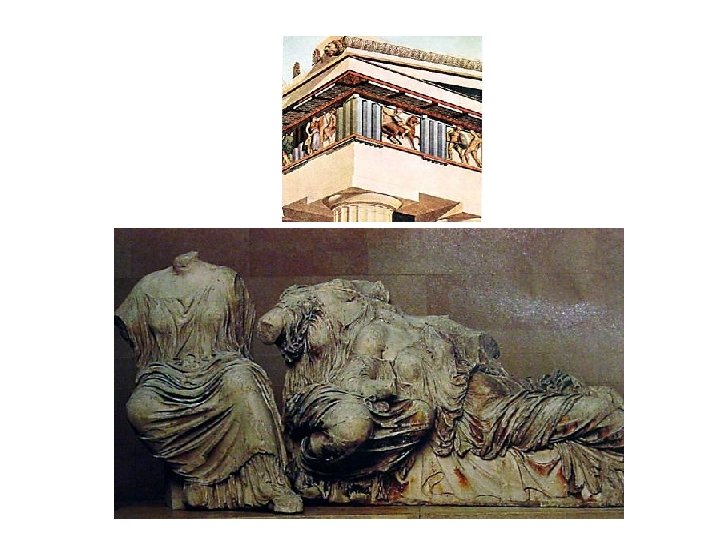
The highlight of the Acropolis The Parthenon Dedicated to the goddess Athena parthenos, or Athena the warrior maiden
Entasis-the slight swelling or bulge built into the center of a column to make the column seem straight visually.
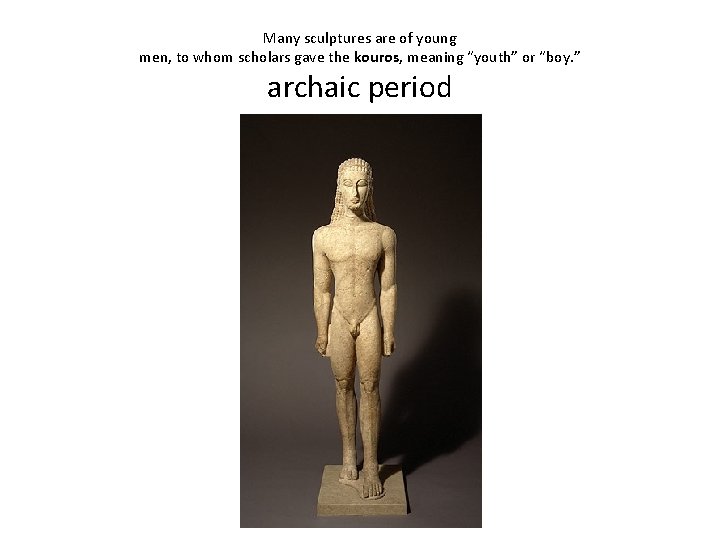
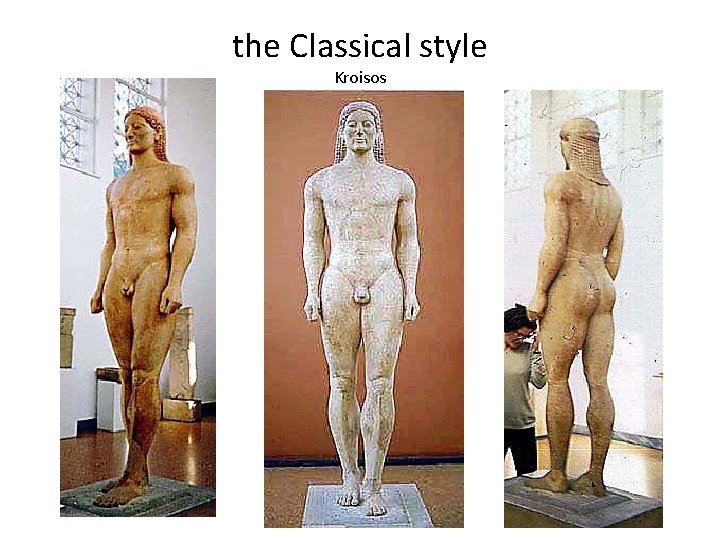
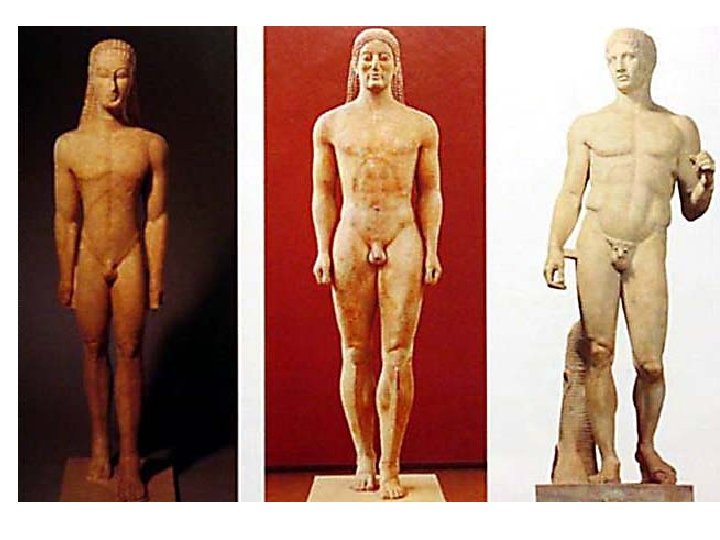
Many sculptures are of young men, to whom scholars gave the kouros, meaning “youth” or “boy. ” archaic period
the Classical style Kroisos
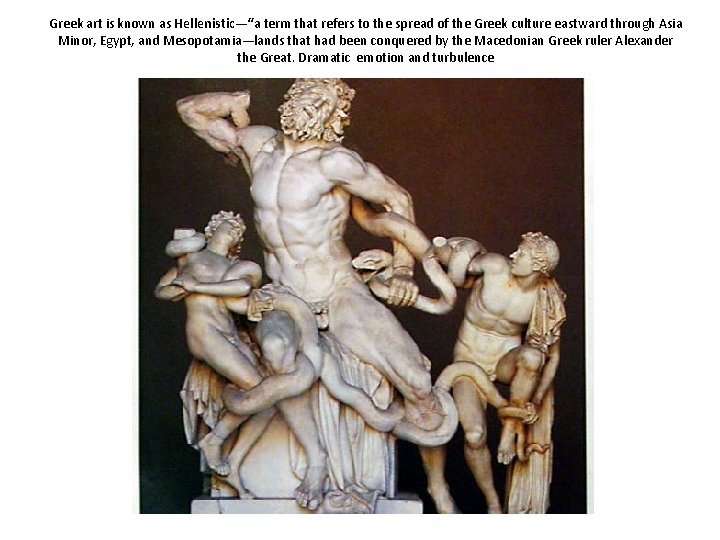
Greek art is known as Hellenistic—“a term that refers to the spread of the Greek culture eastward through Asia Minor, Egypt, and Mesopotamia—lands that had been conquered by the Macedonian Greek ruler Alexander the Great. Dramatic emotion and turbulence
Age of the Conquerors: Roman Art
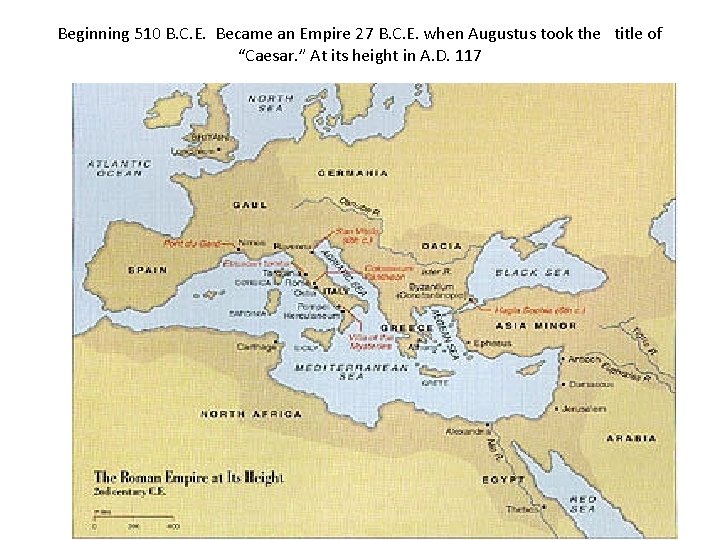
Beginning 510 B. C. E. Became an Empire 27 B. C. E. when Augustus took the title of “Caesar. ” At its height in A. D. 117
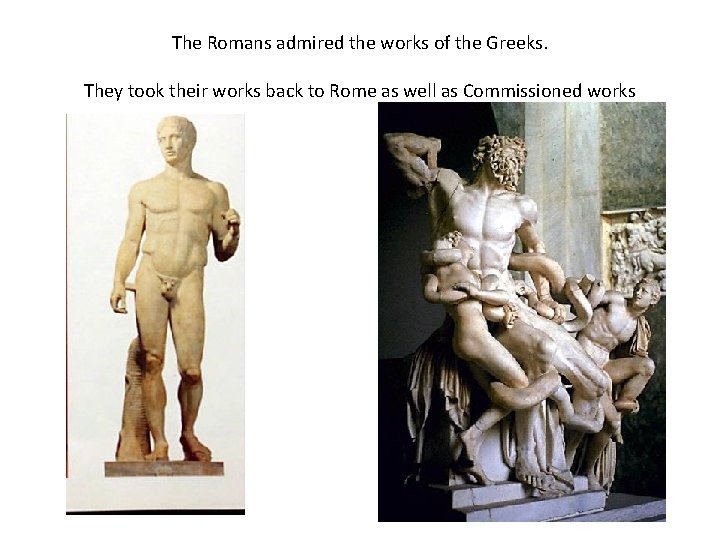
The Romans admired the works of the Greeks. They took their works back to Rome as well as Commissioned works
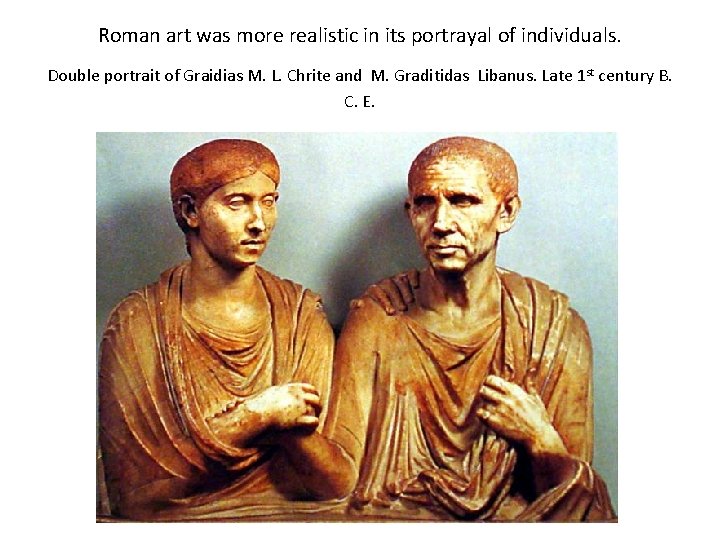
Roman art was more realistic in its portrayal of individuals. Double portrait of Graidias M. L. Chrite and M. Graditidas Libanus. Late 1 st century B. C. E.
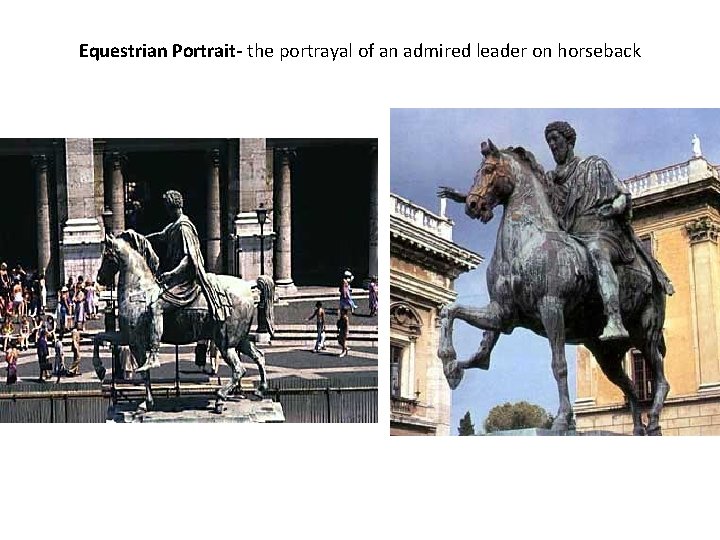
Equestrian Portrait- the portrayal of an admired leader on horseback
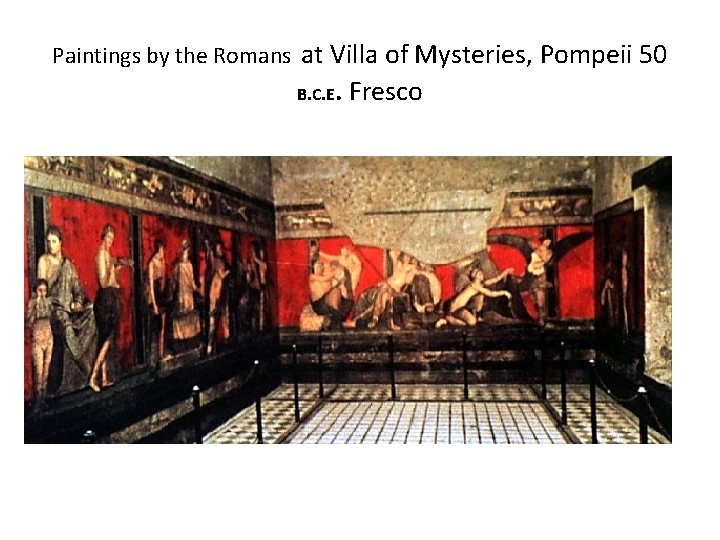
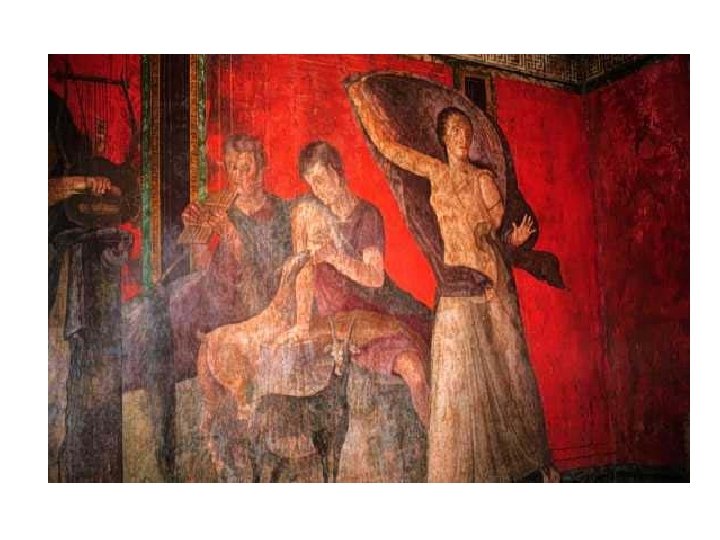
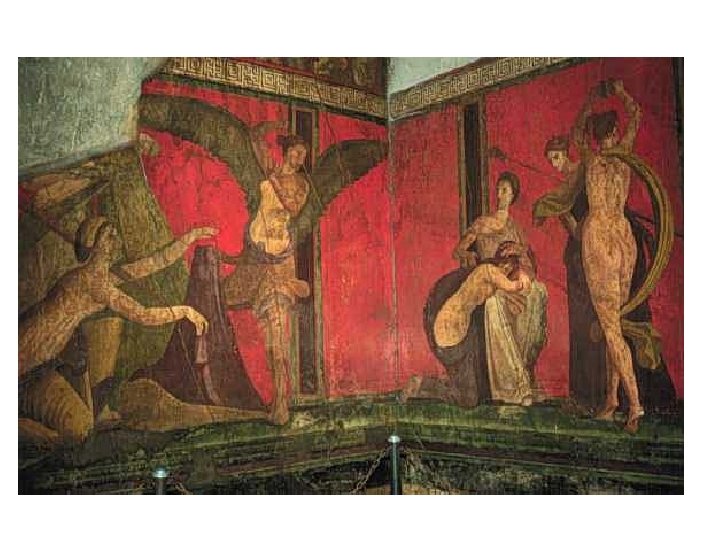
Paintings by the Romans at Villa of Mysteries, Pompeii 50 B. C. E. Fresco
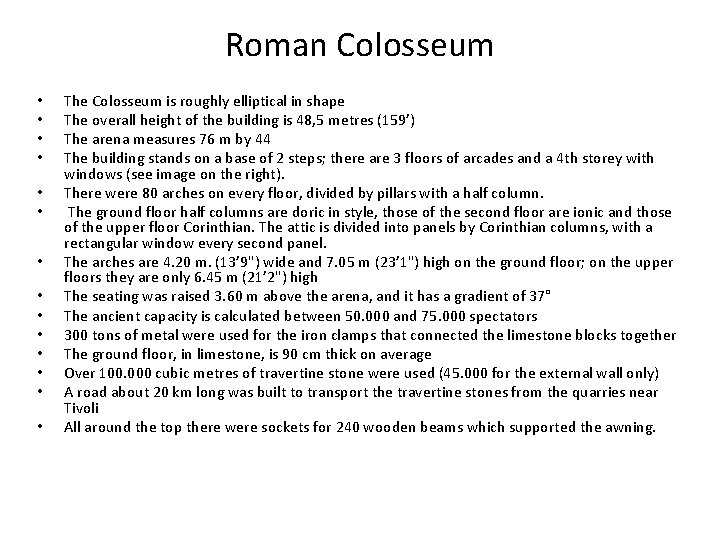
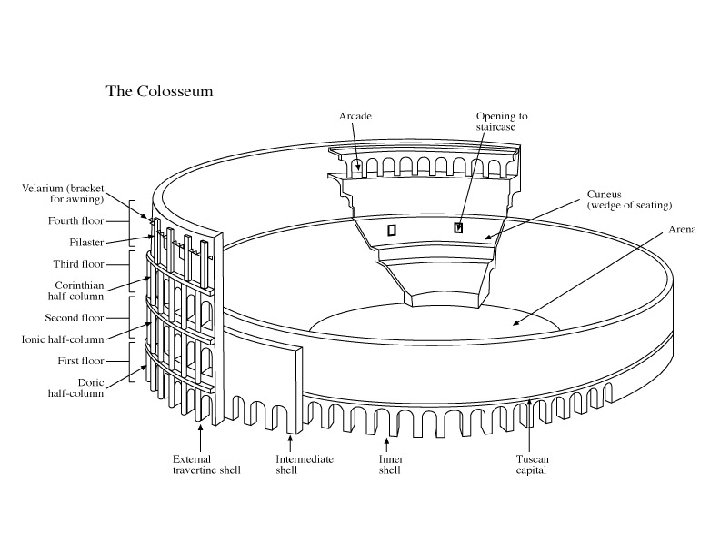
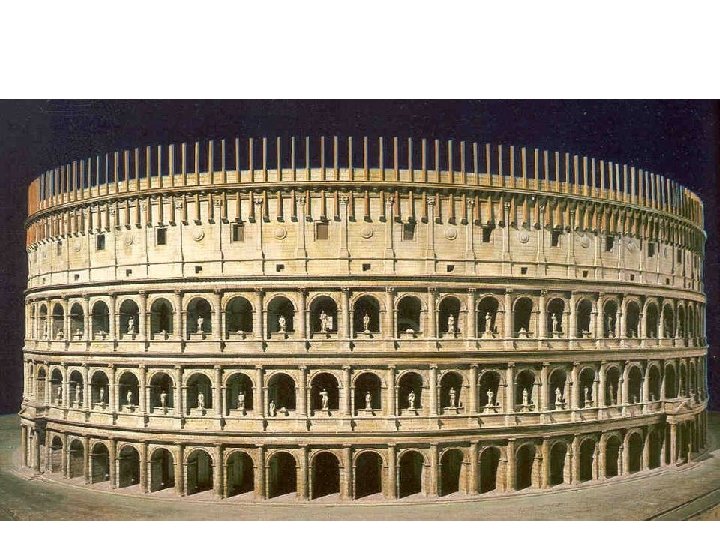
Roman Colosseum • • • • The Colosseum is roughly elliptical in shape The overall height of the building is 48, 5 metres (159’) The arena measures 76 m by 44 The building stands on a base of 2 steps; there are 3 floors of arcades and a 4 th storey with windows (see image on the right). There were 80 arches on every floor, divided by pillars with a half column. The ground floor half columns are doric in style, those of the second floor are ionic and those of the upper floor Corinthian. The attic is divided into panels by Corinthian columns, with a rectangular window every second panel. The arches are 4. 20 m. (13’ 9") wide and 7. 05 m (23’ 1") high on the ground floor; on the upper floors they are only 6. 45 m (21’ 2") high The seating was raised 3. 60 m above the arena, and it has a gradient of 37° The ancient capacity is calculated between 50. 000 and 75. 000 spectators 300 tons of metal were used for the iron clamps that connected the limestone blocks together The ground floor, in limestone, is 90 cm thick on average Over 100. 000 cubic metres of travertine stone were used (45. 000 for the external wall only) A road about 20 km long was built to transport the travertine stones from the quarries near Tivoli All around the top there were sockets for 240 wooden beams which supported the awning.
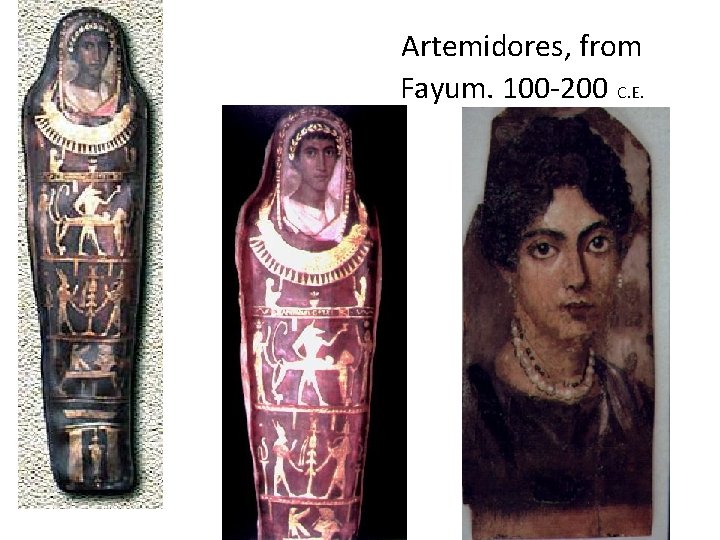
Artemidores, from Fayum. 100 -200 C. E.