
Ancient Indian Caste System Essential Standards 6 C

- Slides: 18
Ancient Indian Caste System
Essential Standards: 6. C. 1 Explain how the behaviors and practices of individuals and groups influenced societies, civilizations and regions.
Clarifying Objectives 6. C. 1. 3 Summarize systems of social structure within various civilizations and societies over time (e. g. , Roman class structure, Indian caste system and feudal, matrilineal and patrilineal societies). 6. C. 1. 2 Explain how religion transformed various societies, civilizations and regions (e. g. , beliefs, practices and spread of Buddhism, Christianity, Confucianism, Hinduism, Islam and Judaism).
Essential Questions • What did the Indian Caste System depend on? • Why is it important to do your Dharma and not somebody else's?
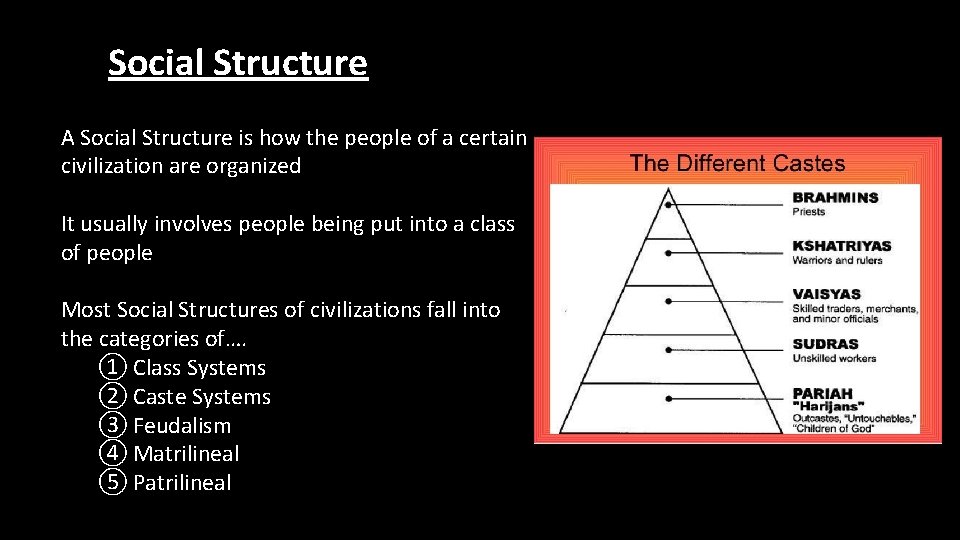
Social Structure A Social Structure is how the people of a certain civilization are organized It usually involves people being put into a class of people Most Social Structures of civilizations fall into the categories of…. ① Class Systems ② Caste Systems ③ Feudalism ④ Matrilineal ⑤ Patrilineal
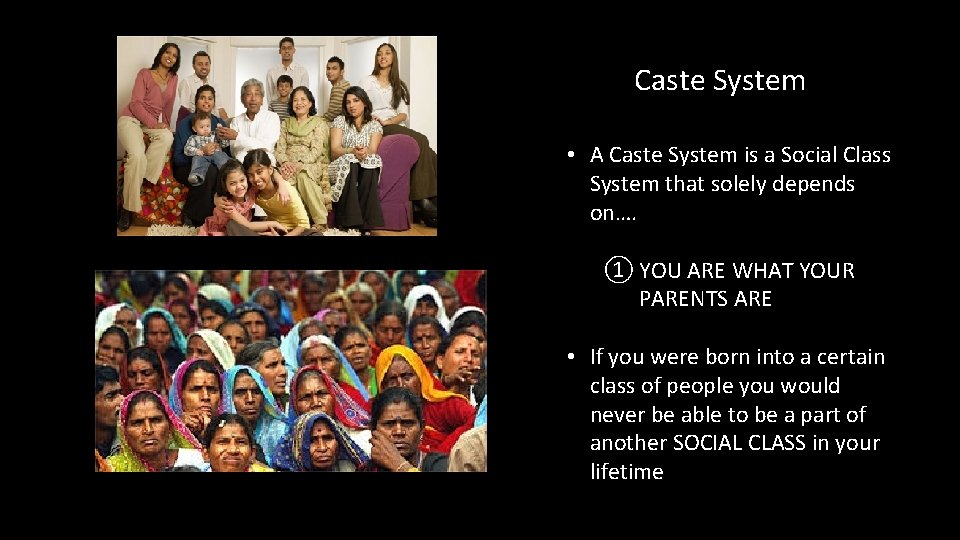
Caste System • A Caste System is a Social Class System that solely depends on…. ① YOU ARE WHAT YOUR PARENTS ARE • If you were born into a certain class of people you would never be able to be a part of another SOCIAL CLASS in your lifetime
Essential Questions Get with a partner and answer…. What did the Indian Caste System depend on?
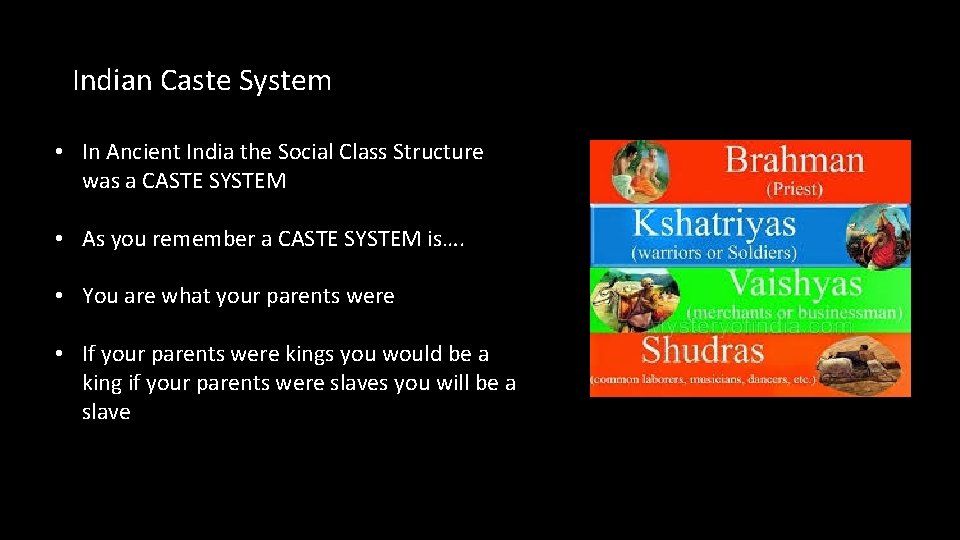
Indian Caste System • In Ancient India the Social Class Structure was a CASTE SYSTEM • As you remember a CASTE SYSTEM is…. • You are what your parents were • If your parents were kings you would be a king if your parents were slaves you will be a slave
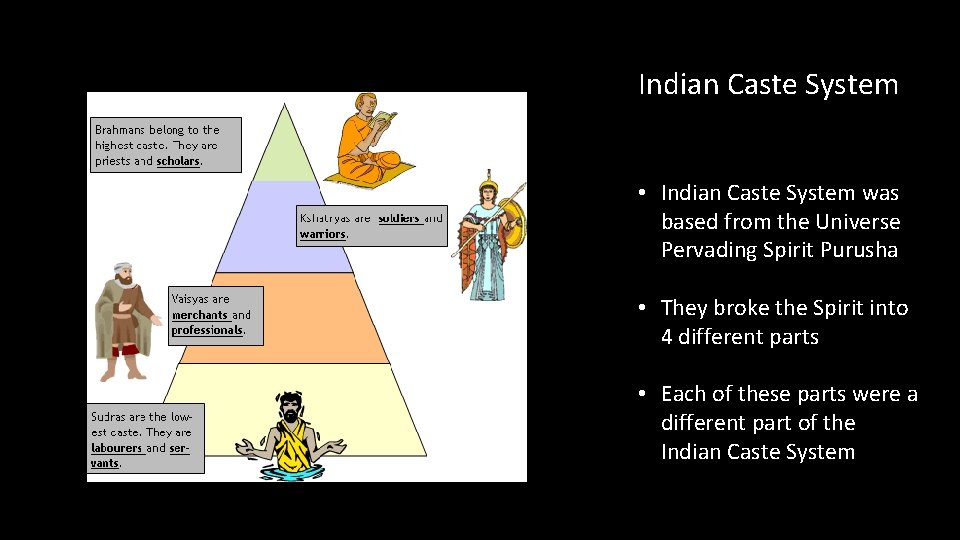
Indian Caste System • Indian Caste System was based from the Universe Pervading Spirit Purusha • They broke the Spirit into 4 different parts • Each of these parts were a different part of the Indian Caste System
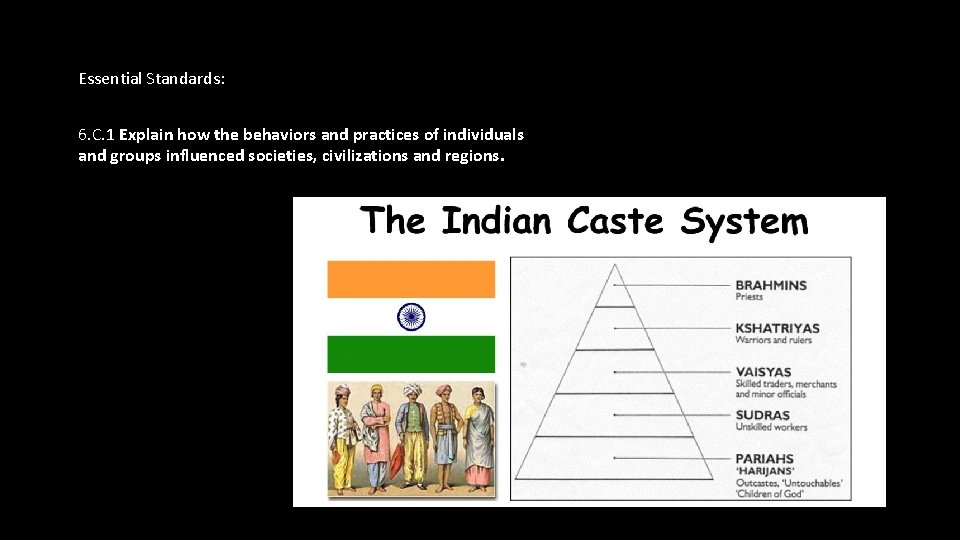
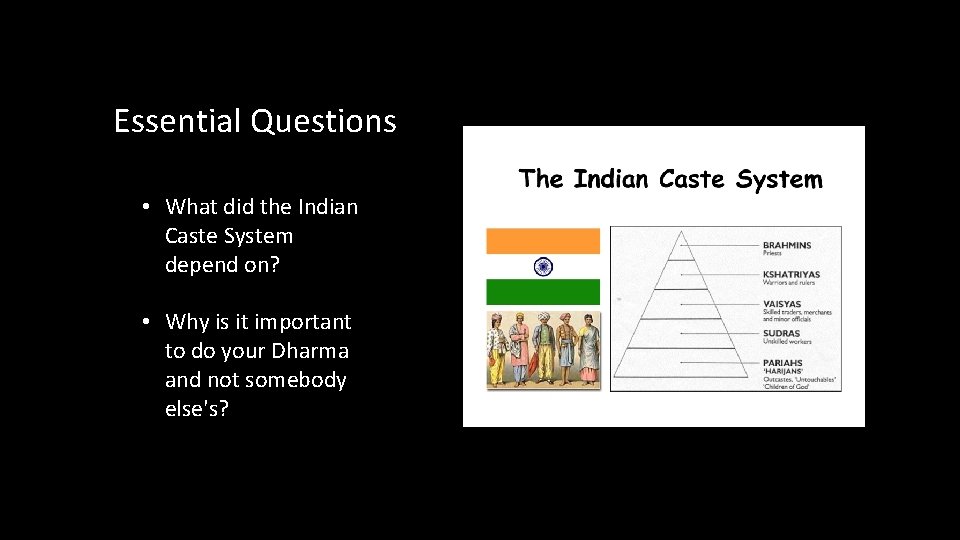
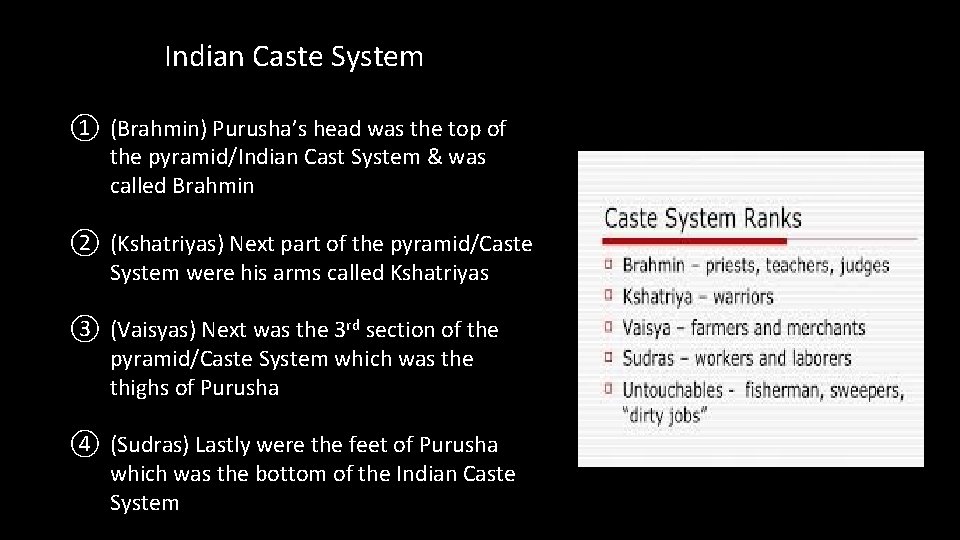
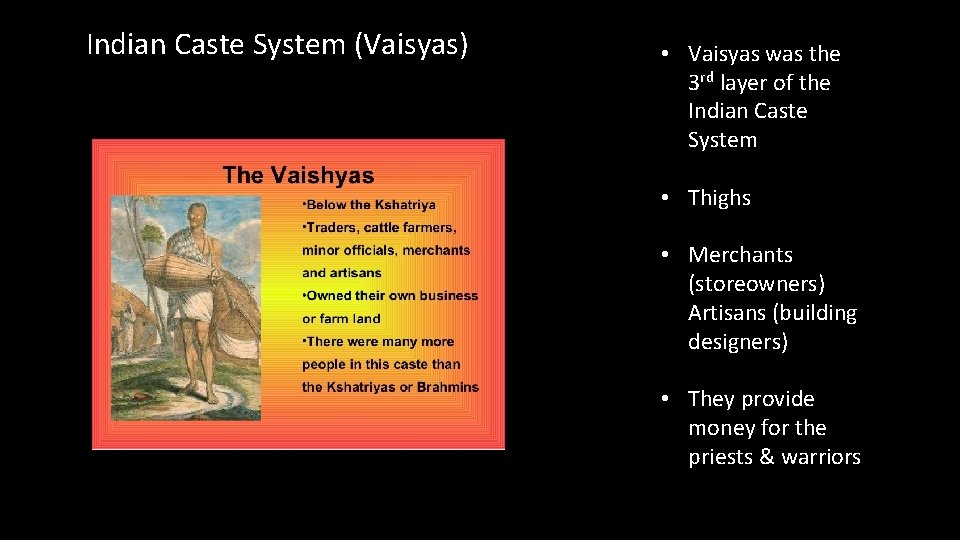
Indian Caste System ① (Brahmin) Purusha’s head was the top of the pyramid/Indian Cast System & was called Brahmin ② (Kshatriyas) Next part of the pyramid/Caste System were his arms called Kshatriyas ③ (Vaisyas) Next was the 3 rd section of the pyramid/Caste System which was the thighs of Purusha ④ (Sudras) Lastly were the feet of Purusha which was the bottom of the Indian Caste System
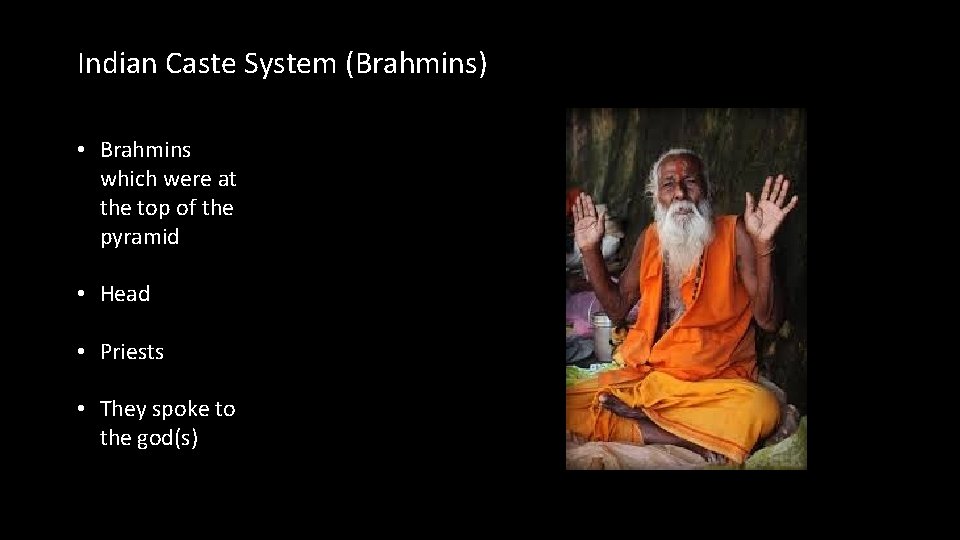
Indian Caste System (Brahmins) • Brahmins which were at the top of the pyramid • Head • Priests • They spoke to the god(s)
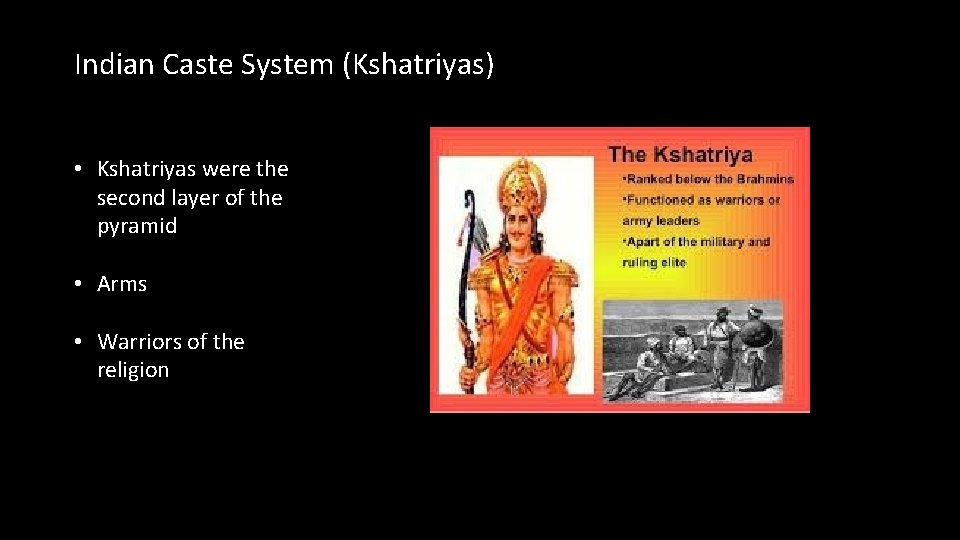
Indian Caste System (Kshatriyas) • Kshatriyas were the second layer of the pyramid • Arms • Warriors of the religion
Indian Caste System (Vaisyas) • Vaisyas was the 3 rd layer of the Indian Caste System • Thighs • Merchants (storeowners) Artisans (building designers) • They provide money for the priests & warriors
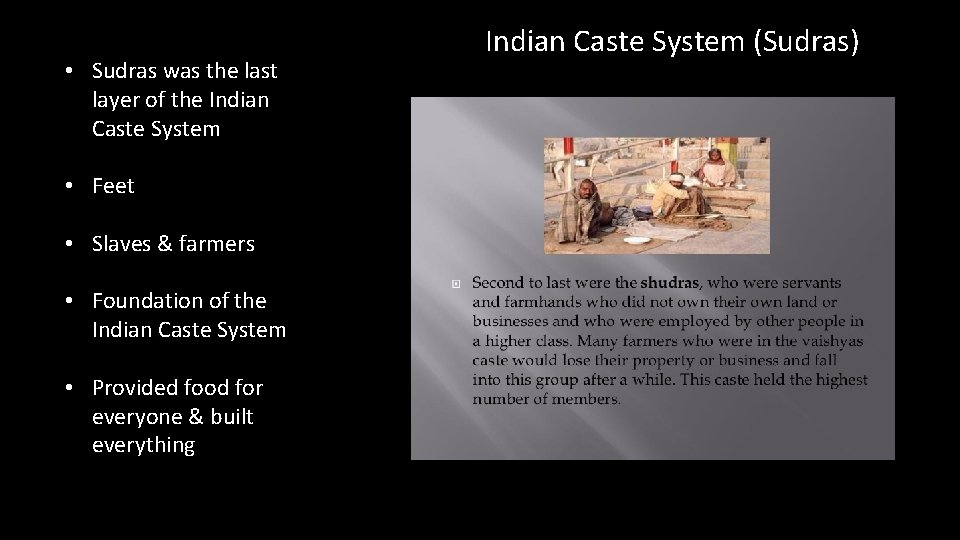
• Sudras was the last layer of the Indian Caste System • Feet • Slaves & farmers • Foundation of the Indian Caste System • Provided food for everyone & built everything Indian Caste System (Sudras)
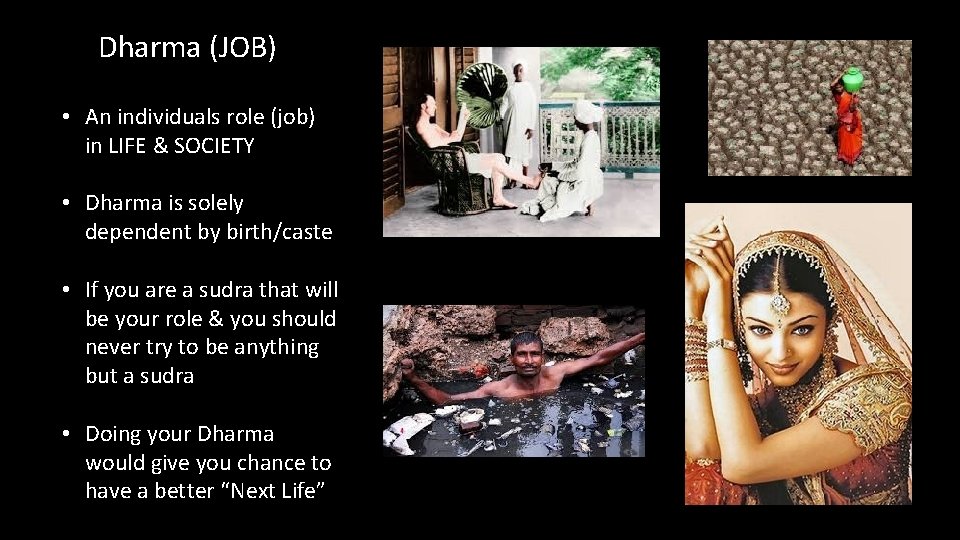
Dharma (JOB) • An individuals role (job) in LIFE & SOCIETY • Dharma is solely dependent by birth/caste • If you are a sudra that will be your role & you should never try to be anything but a sudra • Doing your Dharma would give you chance to have a better “Next Life”
Essential Questions Get with a partner and answer…. Why is it important to do your Dharma and not somebody else's?
EOG Questions
Important Points 6. C. 1. 3 (Social Structure: Indian Caste System) The Indians had a Caste System. Your social status in this system is whatever your parents status was 6. C. 1. 2 (Religion: Hinduism) The Indians believed in Hinduism which utilizes Dharma or one’s job on Earth. You must do YOUR job & not someone else's so you can have a better life next time