
Ancient India LESSON 6 Learning Intention To learn
- Slides: 11
Ancient India LESSON 6
Learning Intention To learn about the monsoons in India. Understand the impact of weather and water on life in Ancient India.
Introduction Today I will be splitting the class in two! One half of the class will do STEM activity 1: Protect the Stupa from the monsoon! The other half of the class will be doing STEM activity 2: Ancient Irrigation Methods These STEM activities are designed to increase your understanding of the issues that were faced in everyday life for the people of Ancient India
Write down these words from the word wall Plateau Stupa Monsoon Irrigation By the end of this lesson, you should all have written down the definitions for these words in your HASS books.
Questions What is a Stupa? What is a monsoon? Why was irrigation important in Ancient India?
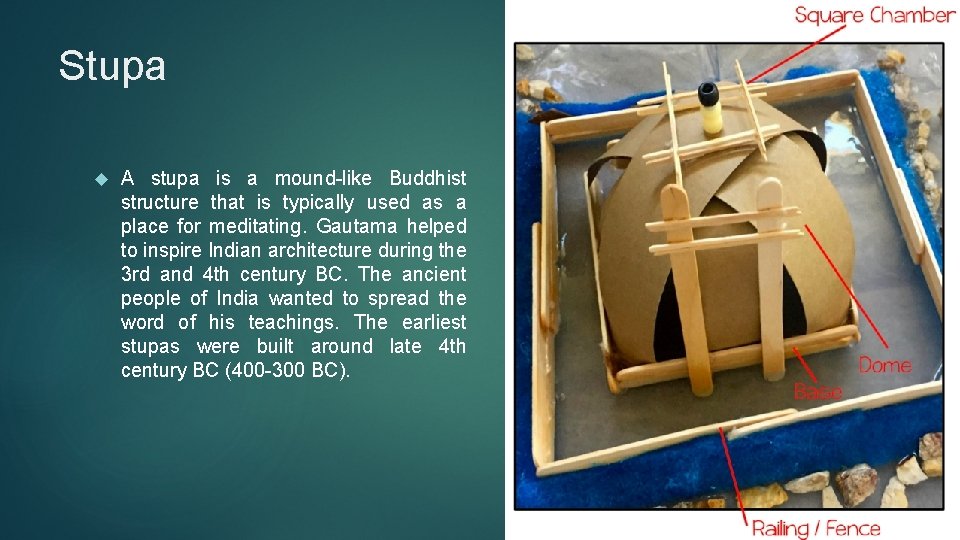
Stupa A stupa is a mound-like Buddhist structure that is typically used as a place for meditating. Gautama helped to inspire Indian architecture during the 3 rd and 4 th century BC. The ancient people of India wanted to spread the word of his teachings. The earliest stupas were built around late 4 th century BC (400 -300 BC).
Monsoons are strong, violent wind storms that change directions based on the season. They have a dramatic impact on India’s climate as they bring rainfall to different parts of the subcontinent based on the time of year. It is important to know that ‘monsoon’ only refers to the changing of wind, not rain. The summer monsoon brings heavy rainfall to India between April and October. Despite being essential to farmers and their crops, the summer monsoon can be very destructive. It often floods streets, causes mudslides that bury whole villages, resulting in the deaths of many people. The winter monsoon lasts from October to April, with the wind going in the complete opposite direction. The winter monsoon is much less powerful than in the summer, mainly as the Himalaya mountains block the wind and moisture from reaching India. During this time of year, India often experiences droughts, that effect a great deal of the subcontinent.
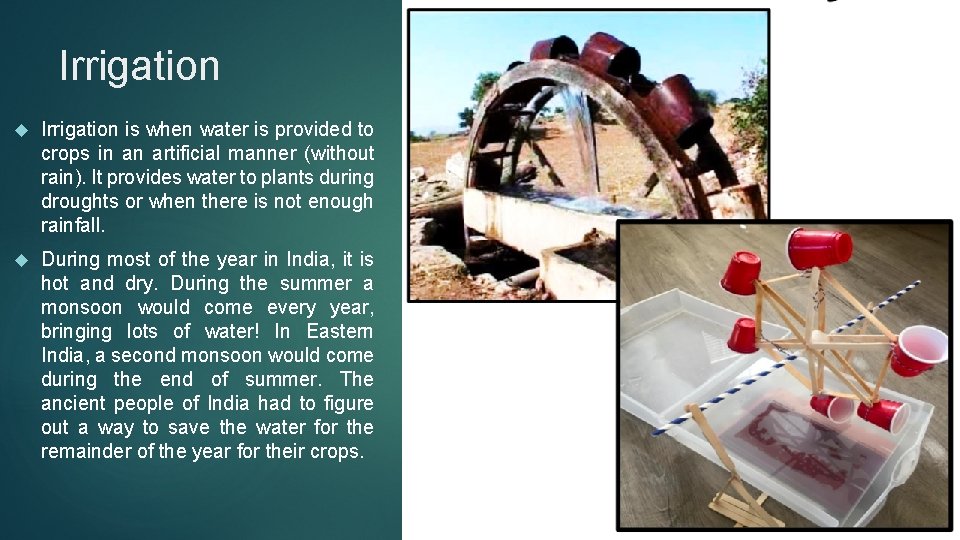
Irrigation is when water is provided to crops in an artificial manner (without rain). It provides water to plants during droughts or when there is not enough rainfall. During most of the year in India, it is hot and dry. During the summer a monsoon would come every year, bringing lots of water! In Eastern India, a second monsoon would come during the end of summer. The ancient people of India had to figure out a way to save the water for the remainder of the year for their crops.
Protect the Stupa from the monsoon!
Ancient Irrigation Methods
Exit Card What is a Stupa? What is a monsoon? Why was irrigation important in Ancient India?