
ANCIENT INDIA INDUS VALLEY CIVILIZATION BASIC CHRONOLOGY 3000
ANCIENT INDIA – INDUS VALLEY CIVILIZATION
BASIC CHRONOLOGY • . 3000 BCE: farming settlements appear along the valley of the river Indus § in what is now Pakistan • . 2500 BCE: high point of the Indus Valley civilization • . 2000 BCE: some Indus sites showing signs of decline • . 1500 BCE: the Aryan invasions
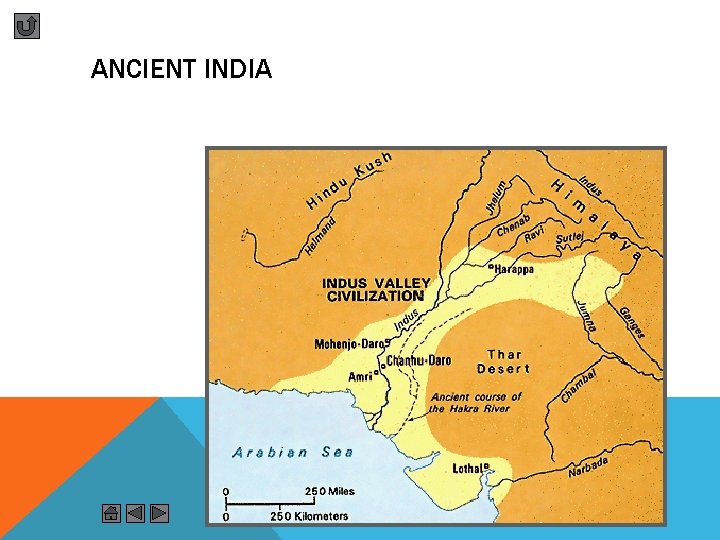
ANCIENT INDIA
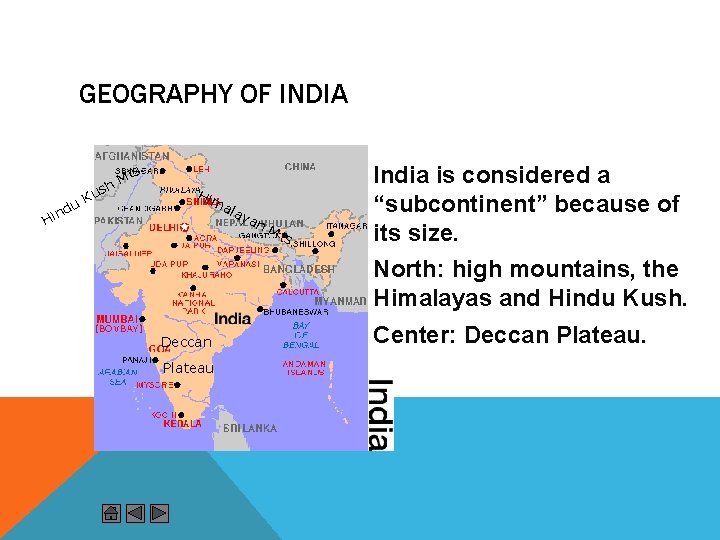
GEOGRAPHY OF INDIA s. Hin du Mt h s Ku Him ala ya n. M ts. India is considered a “subcontinent” because of its size. North: high mountains, the Himalayas and Hindu Kush. Deccan Plateau Center: Deccan Plateau.
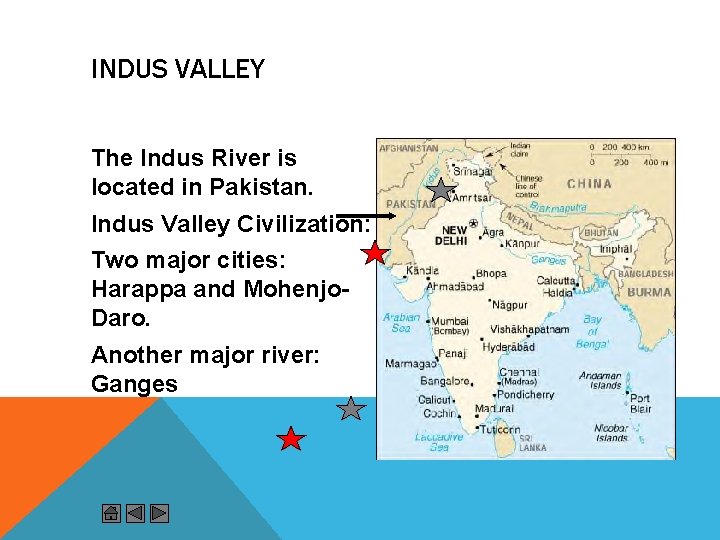
INDUS VALLEY The Indus River is located in Pakistan. Indus Valley Civilization: Two major cities: Harappa and Mohenjo. Daro. Another major river: Ganges
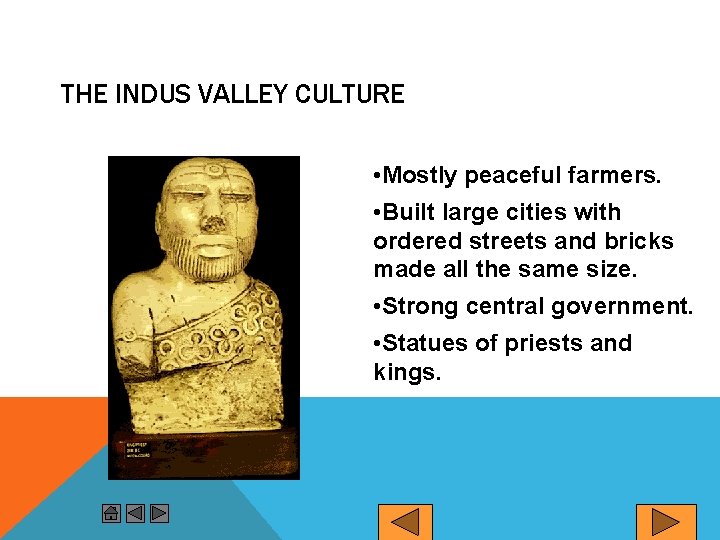
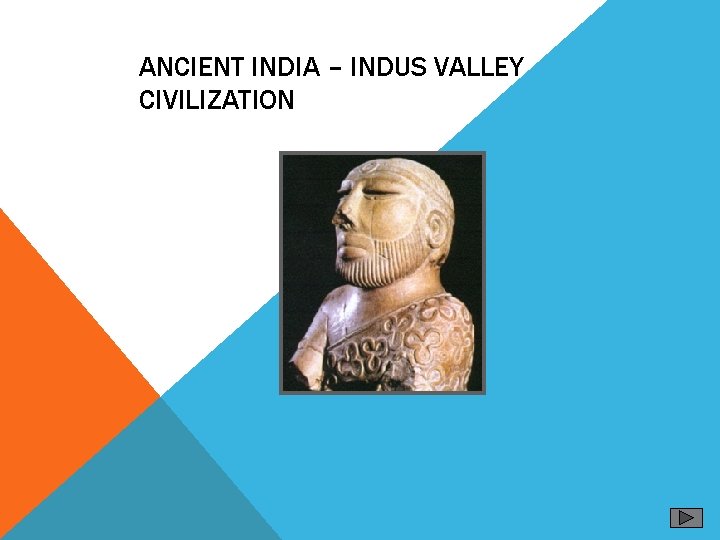
THE INDUS VALLEY CULTURE • Mostly peaceful farmers. • Built large cities with ordered streets and bricks made all the same size. • Strong central government. • Statues of priests and kings.
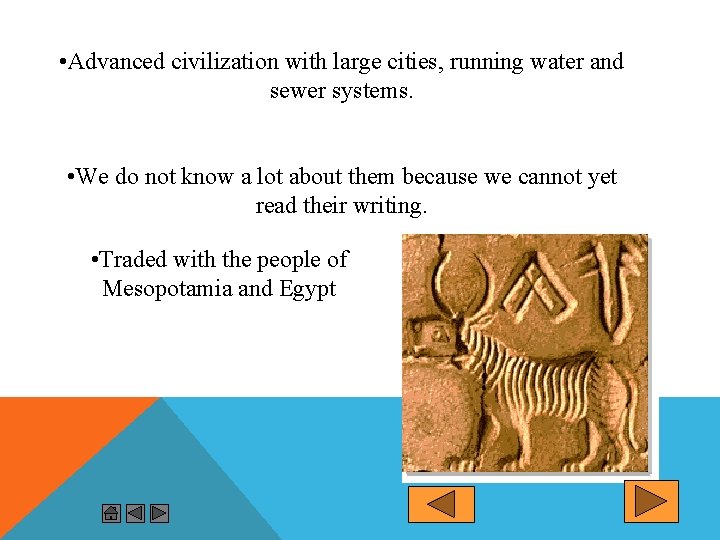
• Advanced civilization with large cities, running water and sewer systems. • We do not know a lot about them because we cannot yet read their writing. • Traded with the people of Mesopotamia and Egypt
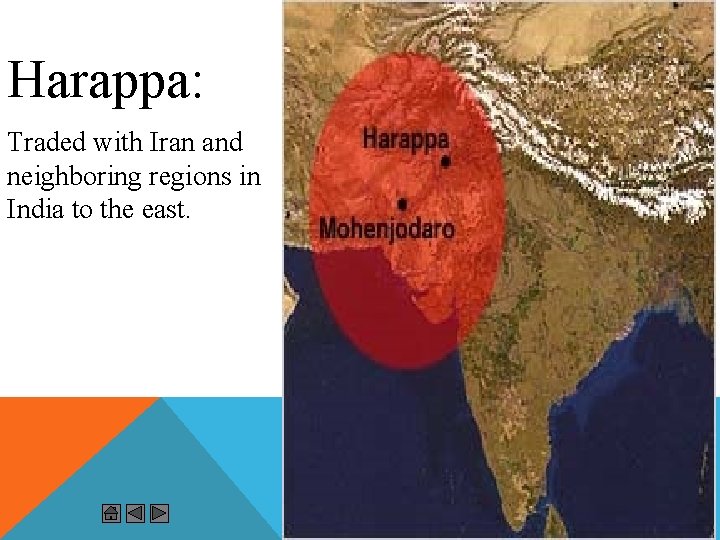
Harappa: Traded with Iran and neighboring regions in India to the east.
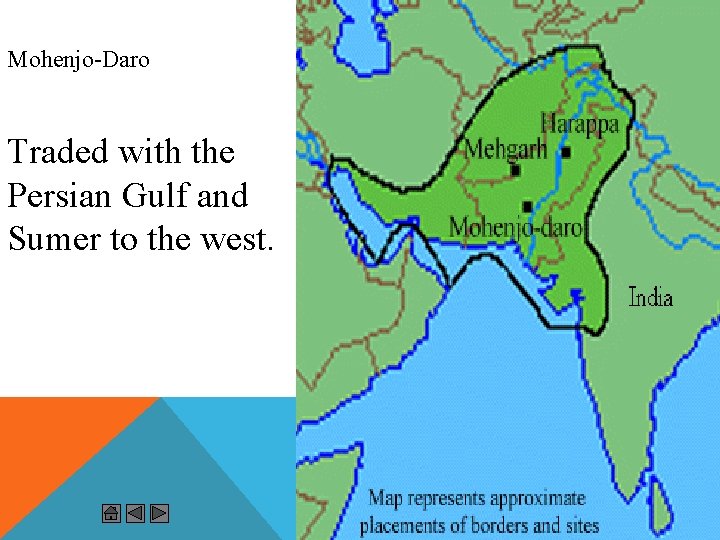
Mohenjo-Daro Traded with the Persian Gulf and Sumer to the west.
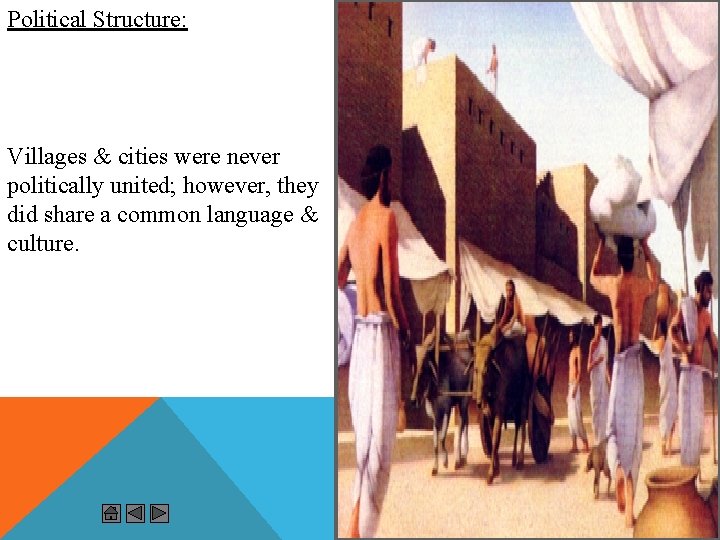
Political Structure: Villages & cities were never politically united; however, they did share a common language & culture.
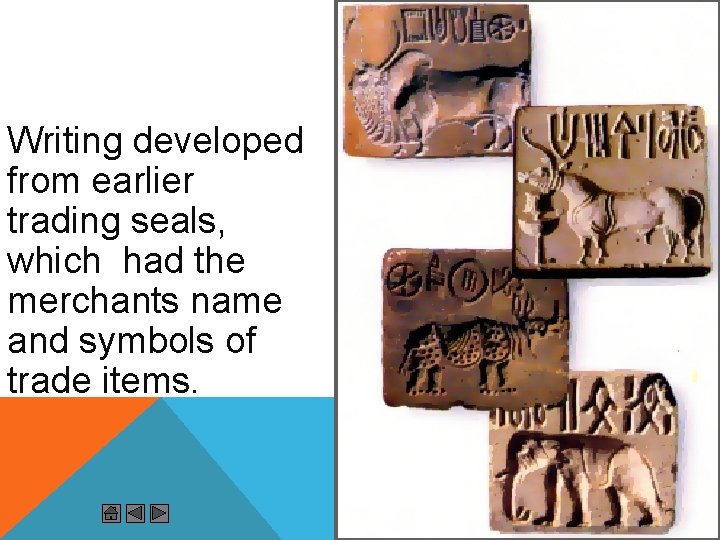
• TRADING SEALS Writing developed from earlier trading seals, which had the merchants name and symbols of trade items.
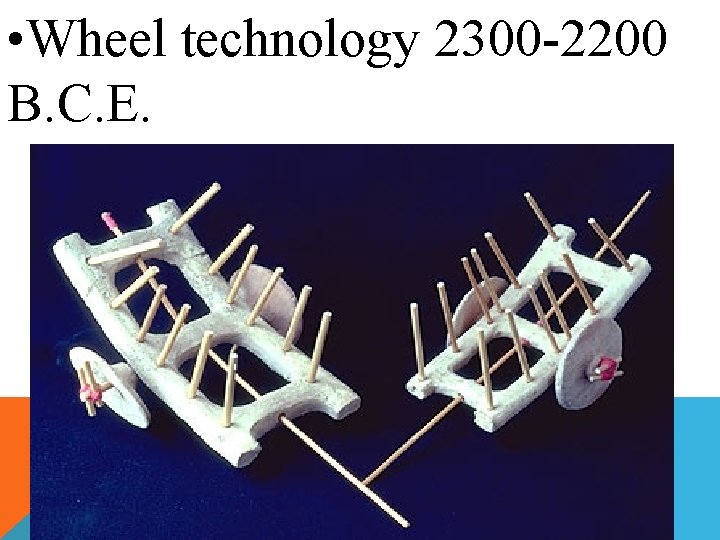
• Wheel technology 2300 -2200 B. C. E.
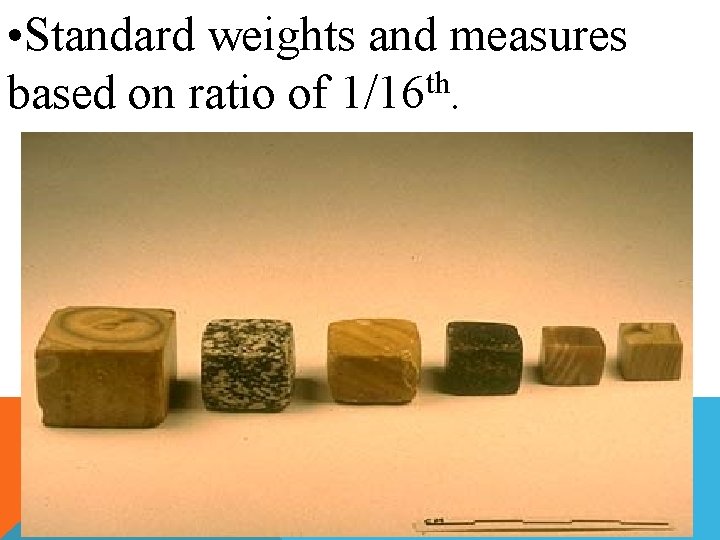
• Standard weights and measures based on ratio of 1/16 th.
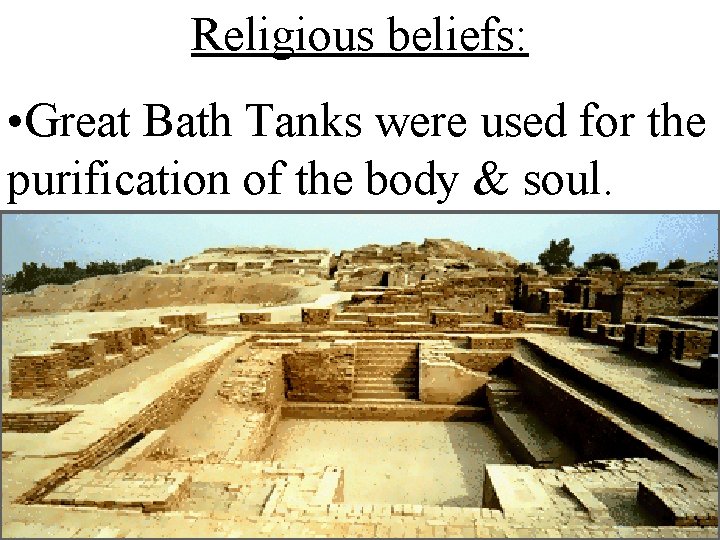
Religious beliefs: • Great Bath Tanks were used for the purification of the body & soul.

• The first civilization to cultivate cotton and make cotton clothing.
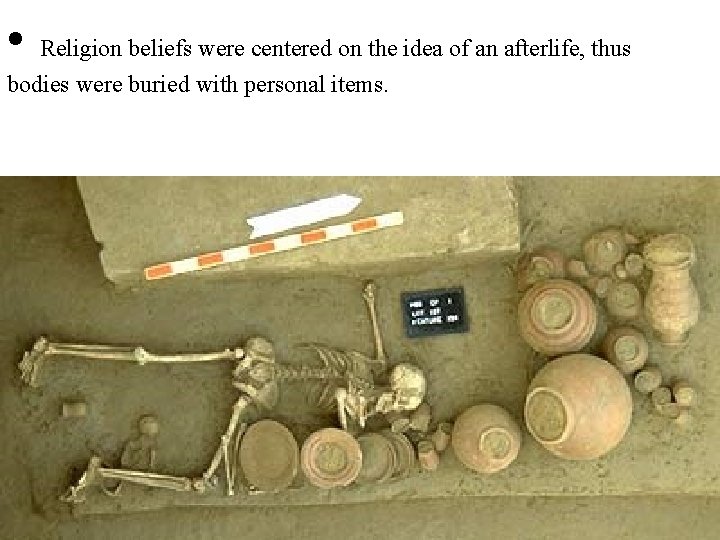
• Religion beliefs were centered on the idea of an afterlife, thus bodies were buried with personal items.
- Slides: 16