
ANCIENT HISTORY Ancient history began with the invention
ANCIENT HISTORY

. Ancient history began with the invention of writing (3. 500 b. C. ). . It ended with the fall of the Roman Empire (476 a. C. )
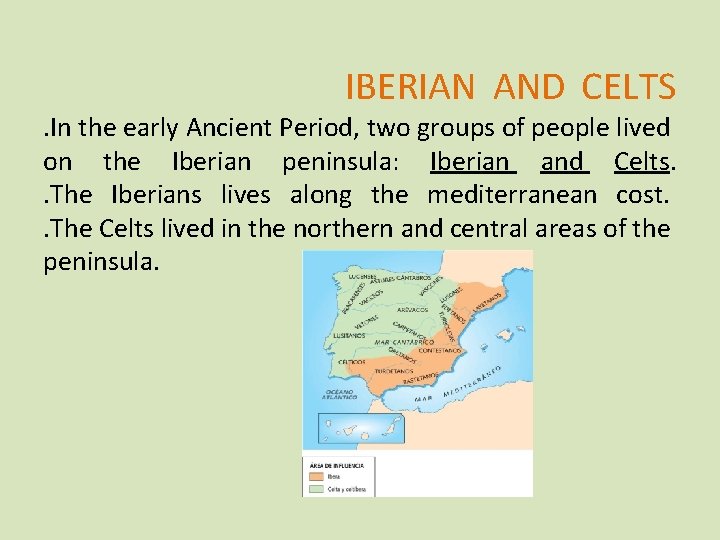
IBERIAN AND CELTS . In the early Ancient Period, two groups of people lived on the Iberian peninsula: Iberian and Celts. . The Iberians lives along the mediterranean cost. . The Celts lived in the northern and central areas of the peninsula.
THE ROMANS

ROMAN HISPANIA. The Romans invaded the Iberian peninsula and conquered the Iberians and Celts. . They named the new territory HISPANIA.
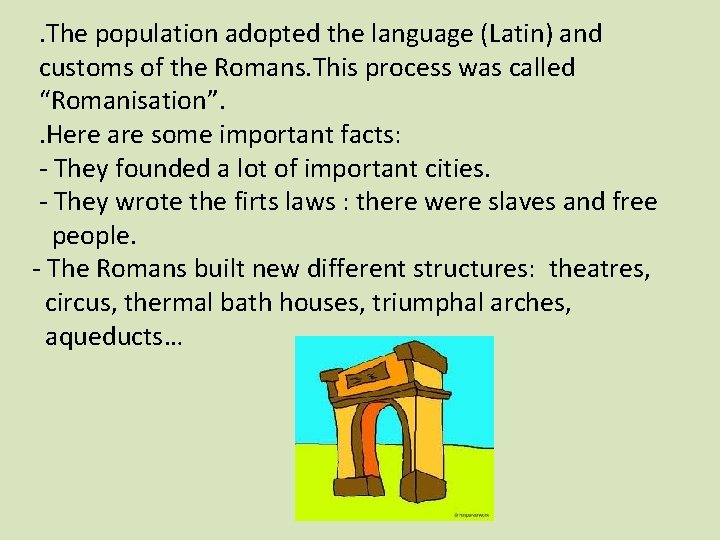
. The population adopted the language (Latin) and customs of the Romans. This process was called “Romanisation”. . Here are some important facts: - They founded a lot of important cities. - They wrote the firts laws : there were slaves and free people. - The Romans built new different structures: theatres, circus, thermal bath houses, triumphal arches, aqueducts…
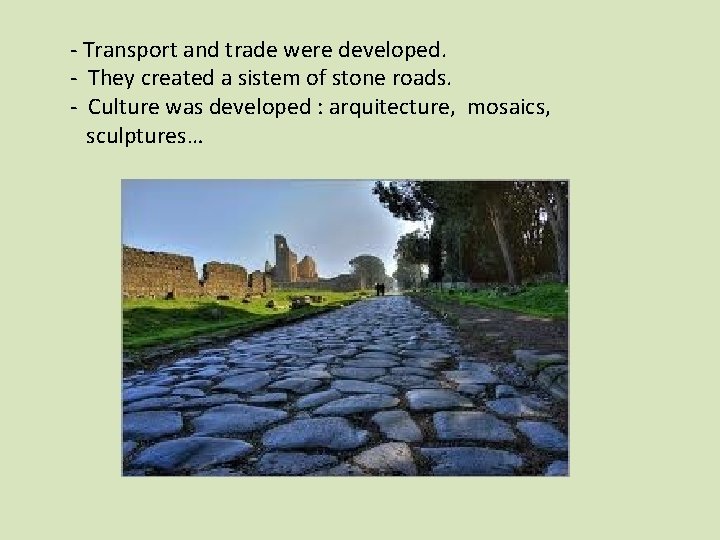
- Transport and trade were developed. - They created a sistem of stone roads. - Culture was developed : arquitecture, mosaics, sculptures…
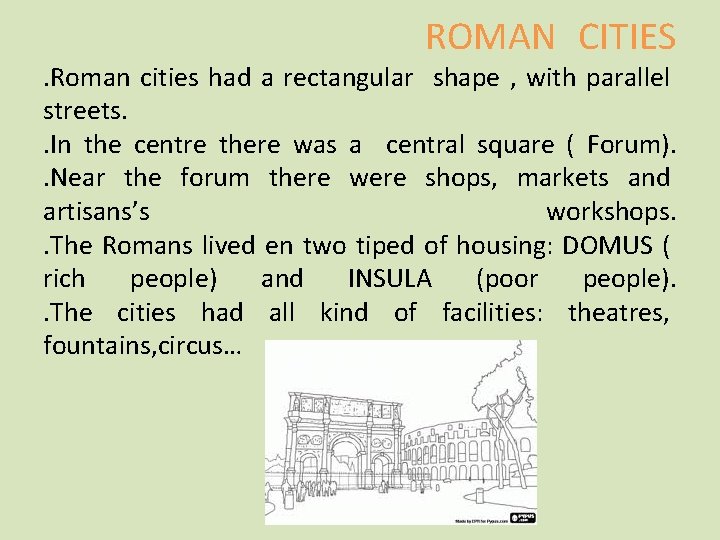
ROMAN CITIES . Roman cities had a rectangular shape , with parallel streets. . In the centre there was a central square ( Forum). . Near the forum there were shops, markets and artisans’s workshops. . The Romans lived en two tiped of housing: DOMUS ( rich people) and INSULA (poor people). . The cities had all kind of facilities: theatres, fountains, circus…
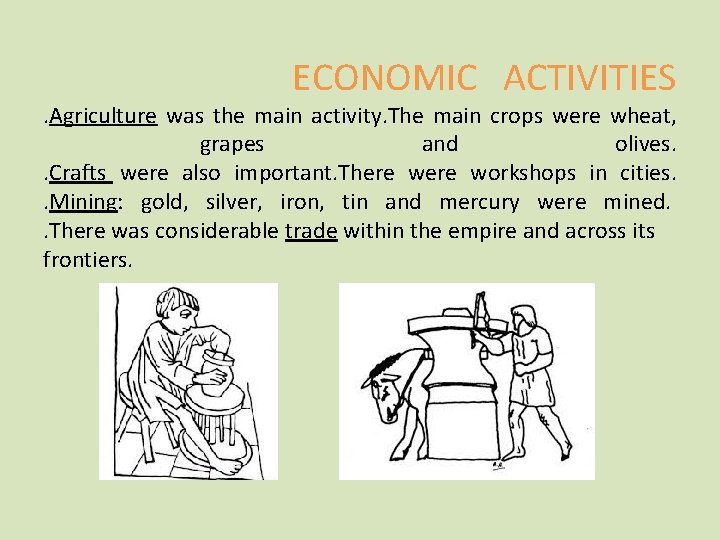
ECONOMIC ACTIVITIES . Agriculture was the main activity. The main crops were wheat, grapes and olives. . Crafts were also important. There workshops in cities. . Mining: gold, silver, iron, tin and mercury were mined. . There was considerable trade within the empire and across its frontiers.
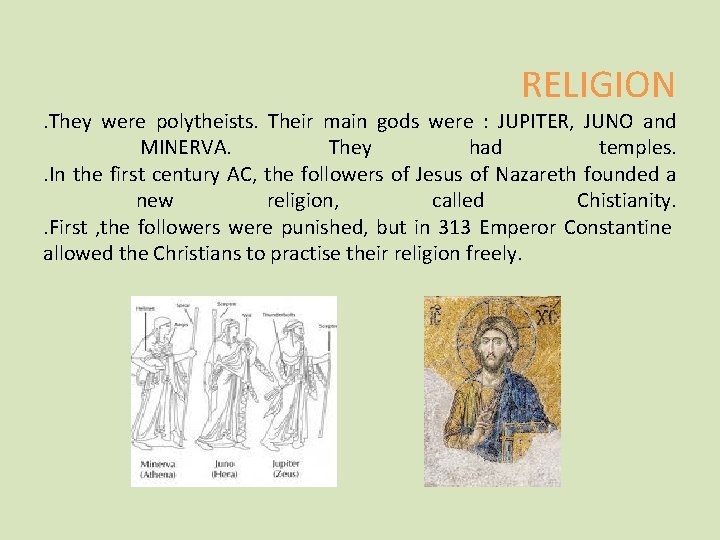
RELIGION . They were polytheists. Their main gods were : JUPITER, JUNO and MINERVA. They had temples. . In the first century AC, the followers of Jesus of Nazareth founded a new religion, called Chistianity. . First , the followers were punished, but in 313 Emperor Constantine allowed the Christians to practise their religion freely.
- Slides: 10