
ANCIENT GREEK INFLUENCES ON PHILOSOPHY OF RELIGION PLATO





- Slides: 22
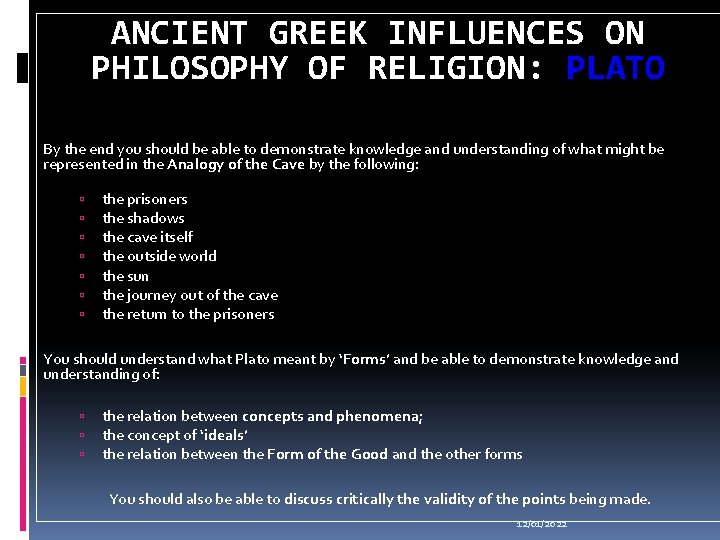
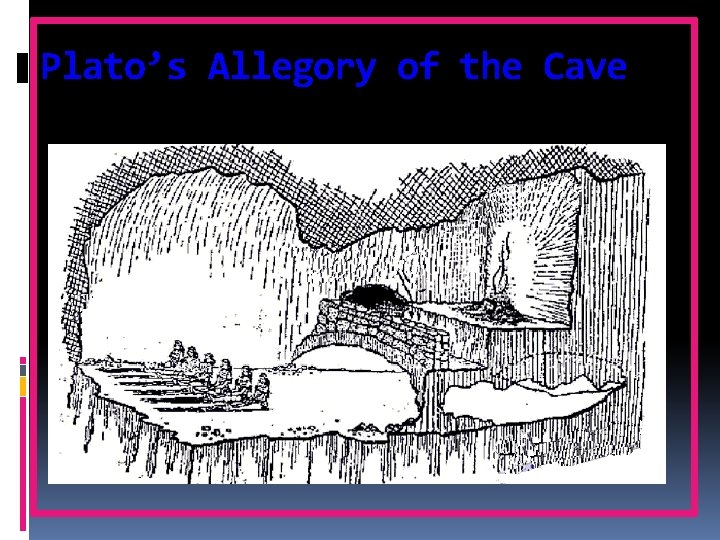
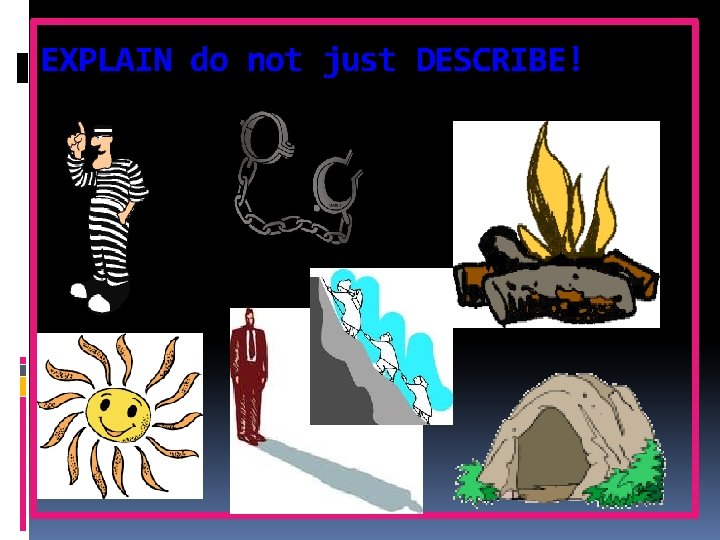
ANCIENT GREEK INFLUENCES ON PHILOSOPHY OF RELIGION: PLATO By the end you should be able to demonstrate knowledge and understanding of what might be represented in the Analogy of the Cave by the following: the prisoners the shadows the cave itself the outside world the sun the journey out of the cave the return to the prisoners You should understand what Plato meant by ‘Forms’ and be able to demonstrate knowledge and understanding of: the relation between concepts and phenomena; the concept of ‘ideals’ the relation between the Form of the Good and the other forms You should also be able to discuss critically the validity of the points being made. 12/01/2022
Homework - Due next week Explain Plato’s Analogy of the Cave. (25 marks) This is an AO 1 question wanting to see your KNOWLEDGE not criticisms. Explain things in detail with examples/evidence. 12/01/2022
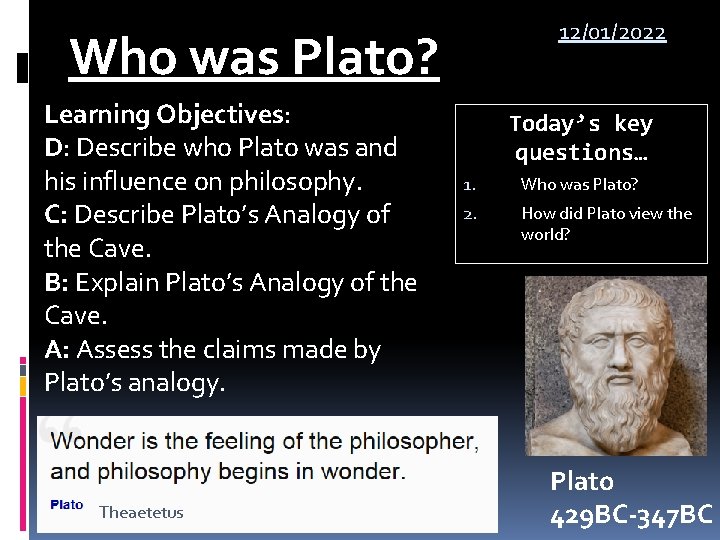
12/01/2022 Who was Plato? Learning Objectives: D: Describe who Plato was and his influence on philosophy. C: Describe Plato’s Analogy of the Cave. B: Explain Plato’s Analogy of the Cave. A: Assess the claims made by Plato’s analogy. Theaetetus Today’s key questions… 1. Who was Plato? 2. How did Plato view the world? Plato 429 BC-347 BC
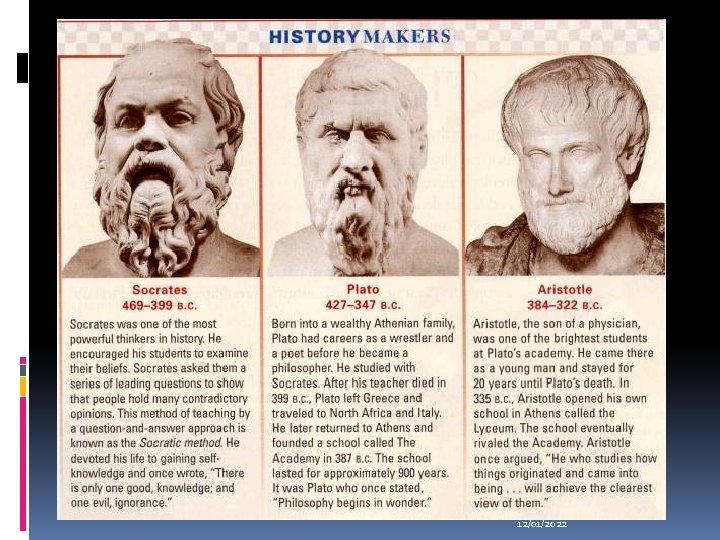
Who’s who of Ancient Greek Philosophy 12/01/2022
12/01/2022
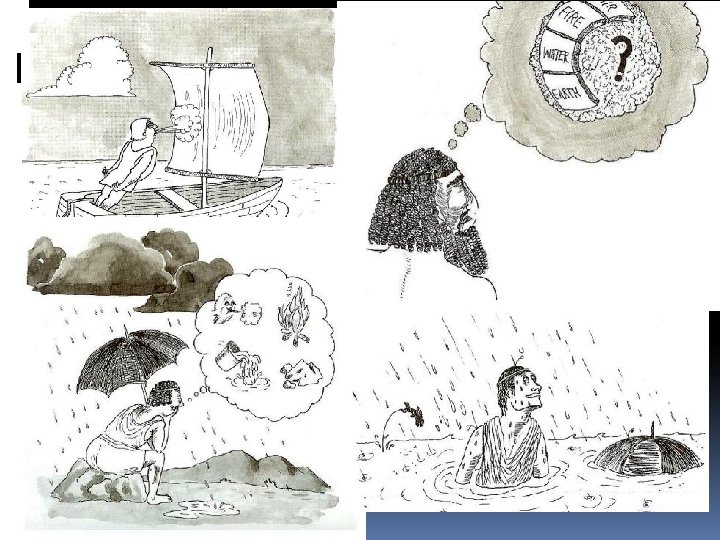
Pre-existing Matter 12/01/2022
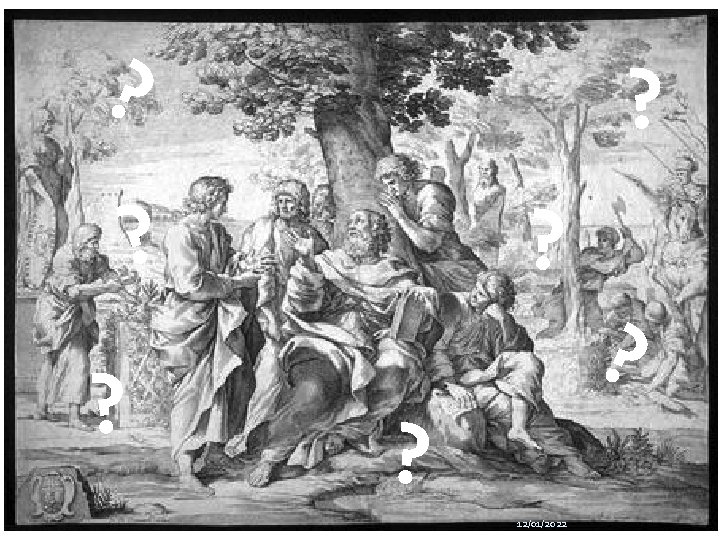
? ? ? ? 12/01/2022 ?
“SOMETHING IS NO MORE ‘X’ THAN IT IS ‘Y’” 12/01/2022
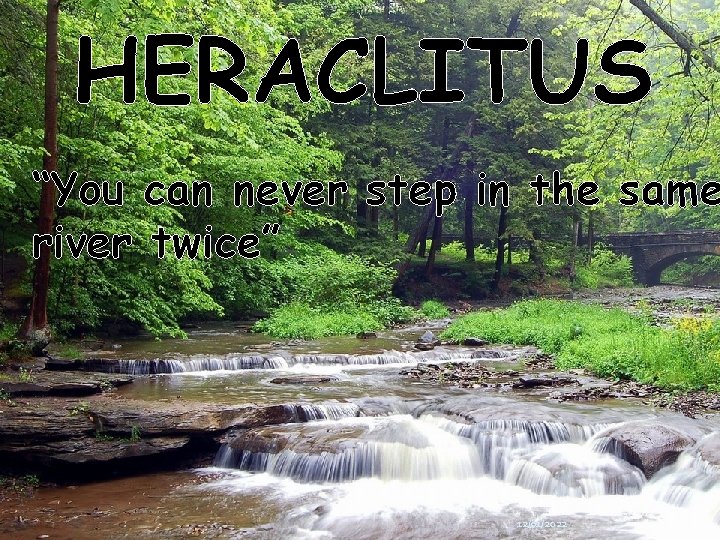
HERACLITUS “You can never step in the same river twice” 12/01/2022
True knowledge cannot exists in a world which is in a state of flux – The world is continually changing. True knowledge can not be found here! 12/01/2022
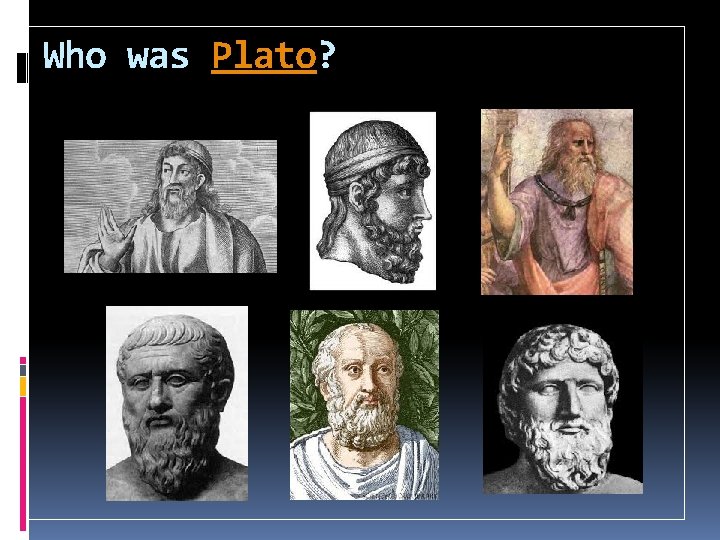
Who was Plato?
A DUALIST… • Plato believed that the soul and the body are two separate entities. • He also believed that there existed a world beyond this one. • Dualism is the belief in two distinct principles/having two parts. AN ABSOLUTIST… • Objective truths exists – universal, unchanging in all circumstances. • Things are either intrinsically right or wrong. A RATIONALIST… • The belief that knowledge is based on the use of REASON. • Reality has a logical structure that we can ‘work out’ using our reason.
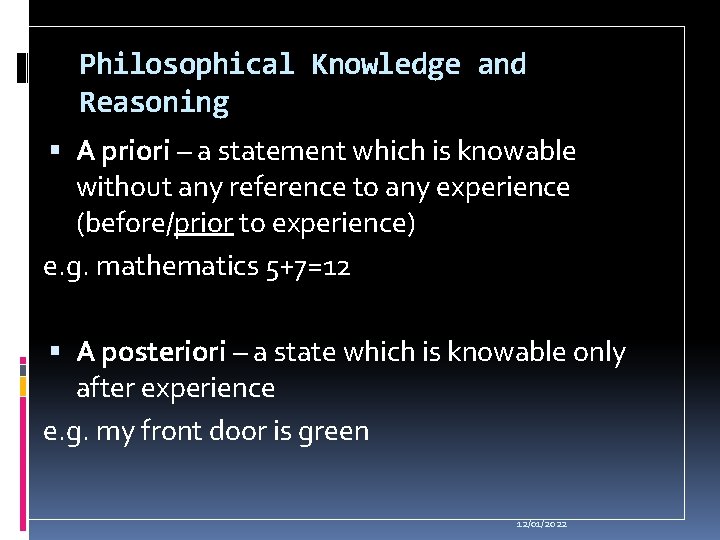
Philosophical Knowledge and Reasoning A priori – a statement which is knowable without any reference to any experience (before/prior to experience) e. g. mathematics 5+7=12 A posteriori – a state which is knowable only after experience e. g. my front door is green 12/01/2022
An Allegory… A story, poem, or picture that can be interpreted to reveal a hidden meaning and can be used to represent or symbolise ideas and concepts Plato’s Allegory of the cave… Symbolises his theory of the Forms. 12/01/2022
Plato’s Allegory of the Cave
EXPLAIN do not just DESCRIBE!
TASK… Two pens, two different colours One = what happened (DESCRIBE) Two = what does it mean (EXPLAIN) 12/01/2022
Plato’s Aims To show the contrast between the Realm of the Forms and the Realm of Appearances To explain a philosophers search for knowledge To show the ignorance of humanity – the reliance on the senses and the feelings of hostilities towards philosophical ideas 12/01/2022
Homework Write the released prisoner’s blog. Points to include are: His fears as he reaches the cave entrance The pain and difficulties he experiences with his eyes His initial observations and thoughts His conclusion a few days later about the sun’s effect on life The reason he decides to return to the cave His reaction to the return 12/01/2022
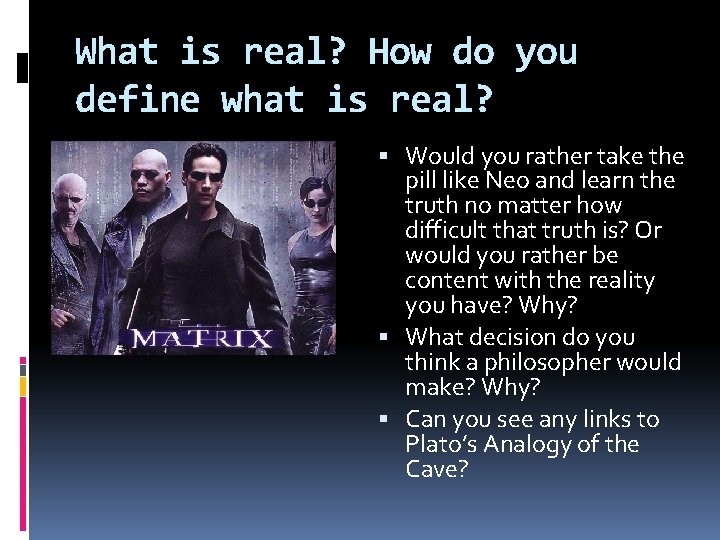
What is real? How do you define what is real? Would you rather take the pill like Neo and learn the truth no matter how difficult that truth is? Or would you rather be content with the reality you have? Why? What decision do you think a philosopher would make? Why? Can you see any links to Plato’s Analogy of the Cave?