
Ancient Greek And Roman art Vocabulary Classicalthe art
Ancient Greek And Roman art

Vocabulary
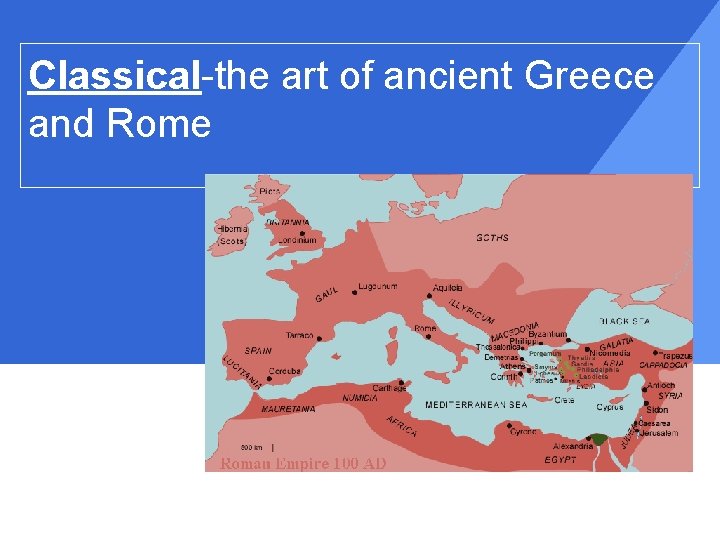
Classical-the art of ancient Greece and Rome
stylized - represented in a nonnaturalistic conventional form. Anatomical - of or relating to bodily structure

Realism - the quality or fact of representing a person, thing, or situation accurately or in a way that is true to life. Idealism - literary or artistic theory or practice that encourages the value of imagination above the faithful copying of nature
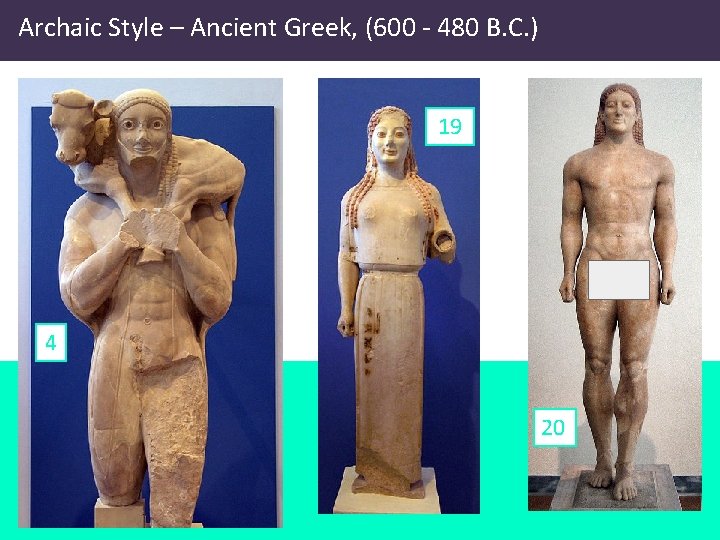
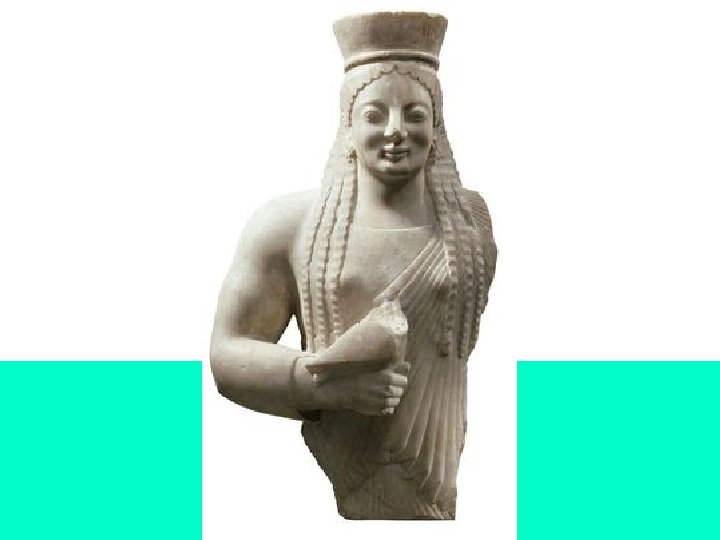
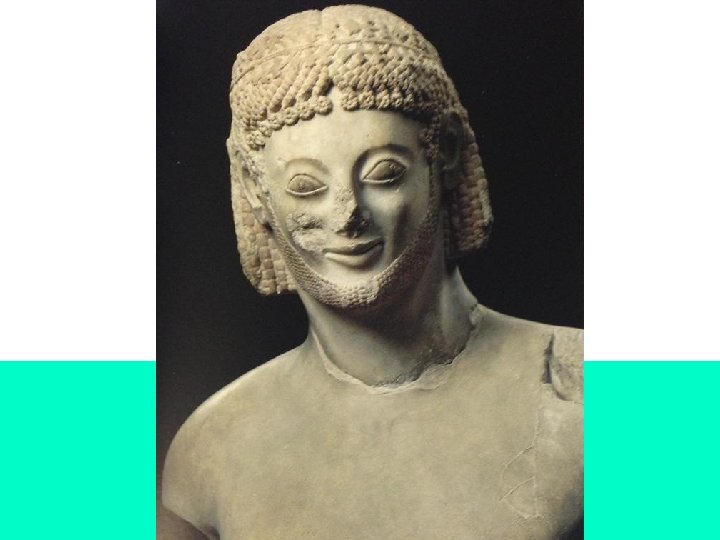
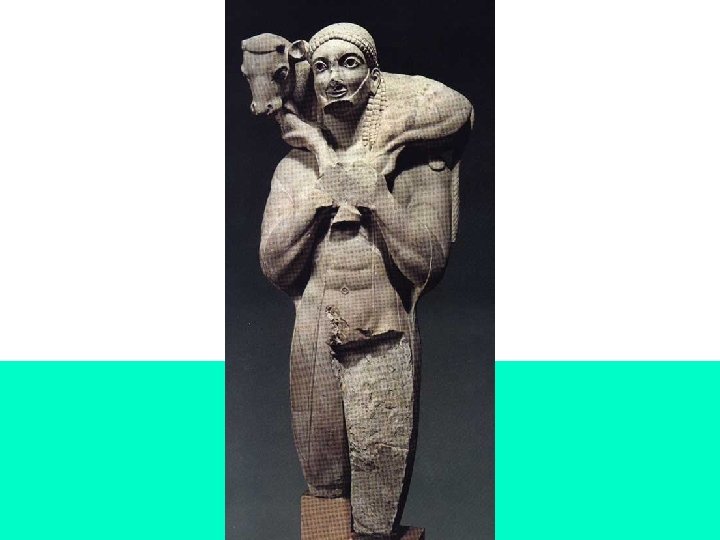
archaic - of an early period of art or culture, especially the 7 th– 6 th centuries BC in Greece Kouros - an archaic Greek statue of a young man, standing and often naked Kore - an archaic Greek statue of a young woman, standing and clothed in long loose robes
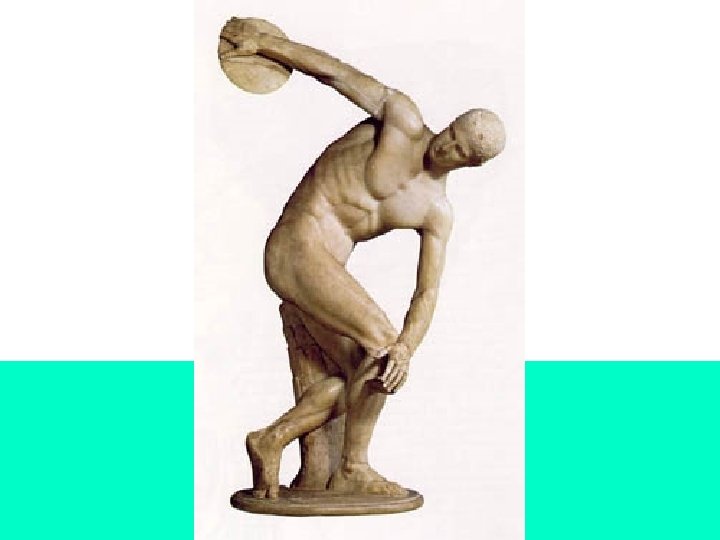
Contrapposto - in the visual arts, the standing human figure is poised so that the weight rests on one leg (called the engaged leg), freeing the other leg, which is bent at the knee. With the weight shift, the hips, shoulders, and head tilt, suggesting relaxation and a natural pose.
Architecture - the art or practice of designing and constructing buildings Aqueduct - an artificial channel for conveying water, typically in the form of a bridge supported by tall columns across a valley.
Mural - a painting or other work of art executed directly on a wall. Fresco - a painting made onto wet or dry plaster Mosaic - Tiles called tesserae placed into wet cement or grout. Roman tiles were usually made of marble, pebbles, and other stones.

Propaganda - information, especially of a biased or misleading nature, used to promote or publicize a particular political cause or point of view
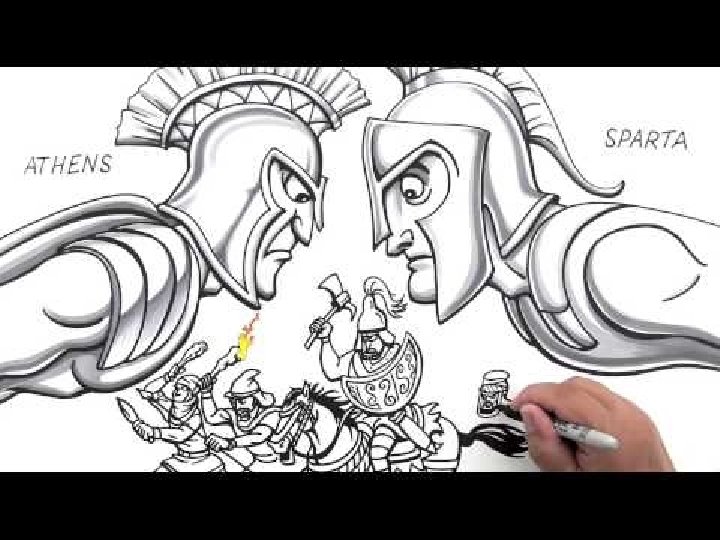
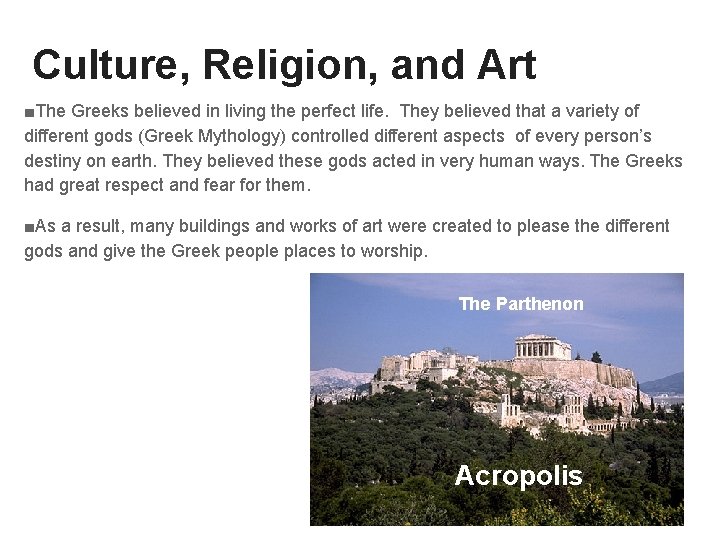
Culture, Religion, and Art ■The Greeks believed in living the perfect life. They believed that a variety of different gods (Greek Mythology) controlled different aspects of every person’s destiny on earth. They believed these gods acted in very human ways. The Greeks had great respect and fear for them. ■As a result, many buildings and works of art were created to please the different gods and give the Greek people places to worship. The Parthenon Acropolis
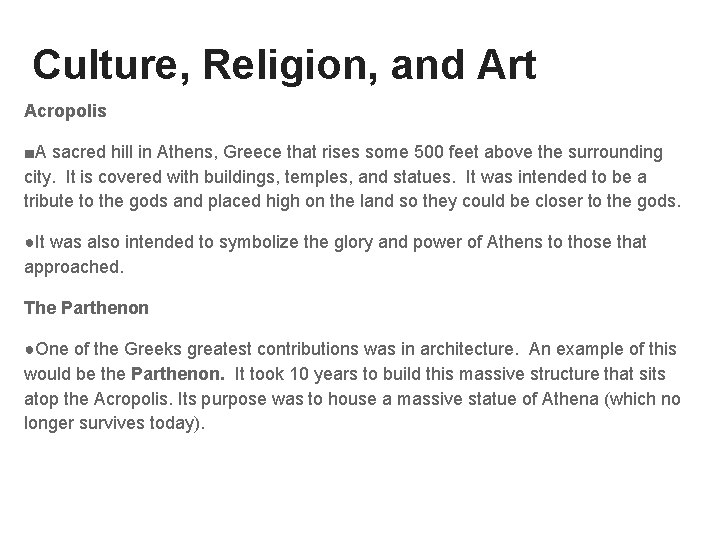
Culture, Religion, and Art Acropolis ■A sacred hill in Athens, Greece that rises some 500 feet above the surrounding city. It is covered with buildings, temples, and statues. It was intended to be a tribute to the gods and placed high on the land so they could be closer to the gods. ●It was also intended to symbolize the glory and power of Athens to those that approached. The Parthenon ●One of the Greeks greatest contributions was in architecture. An example of this would be the Parthenon. It took 10 years to build this massive structure that sits atop the Acropolis. Its purpose was to house a massive statue of Athena (which no longer survives today). Acropolis
Archaic Style – Ancient Greek, (600 - 480 B. C. ) 19 4 20
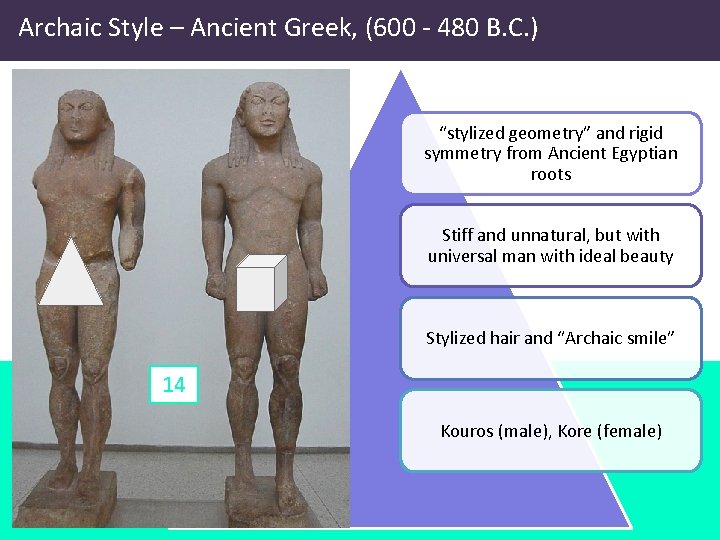
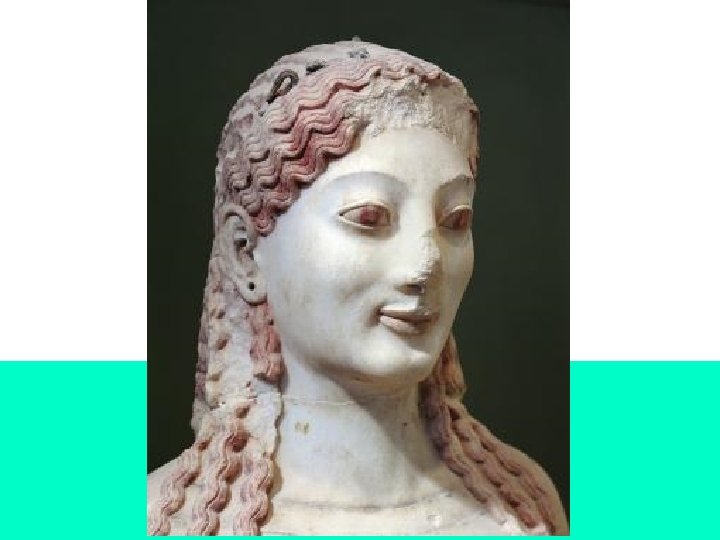
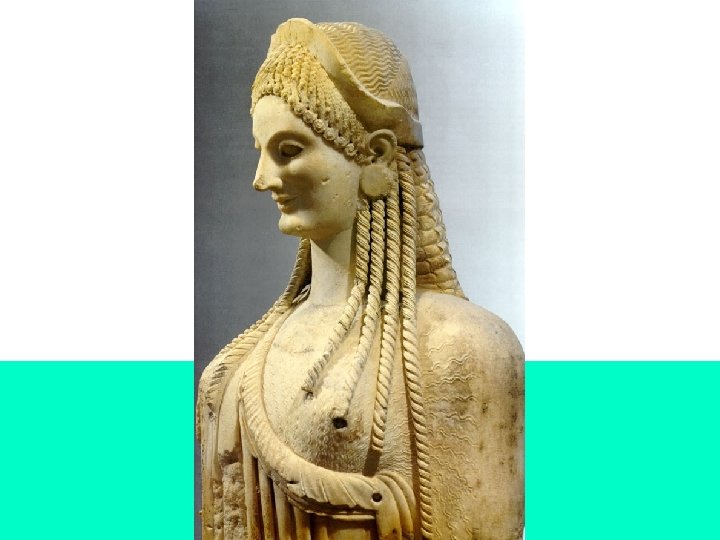
Archaic Style – Ancient (600 -Greek, 480 B. C. ) (600 - 480 B. C. ) Archaic – Greek, Ancient “stylized geometry” and rigid symmetry from Ancient Egyptian roots Stiff and unnatural, but with universal man with ideal beauty Stylized hair and “Archaic smile” 14 Kouros (male), Kore (female)
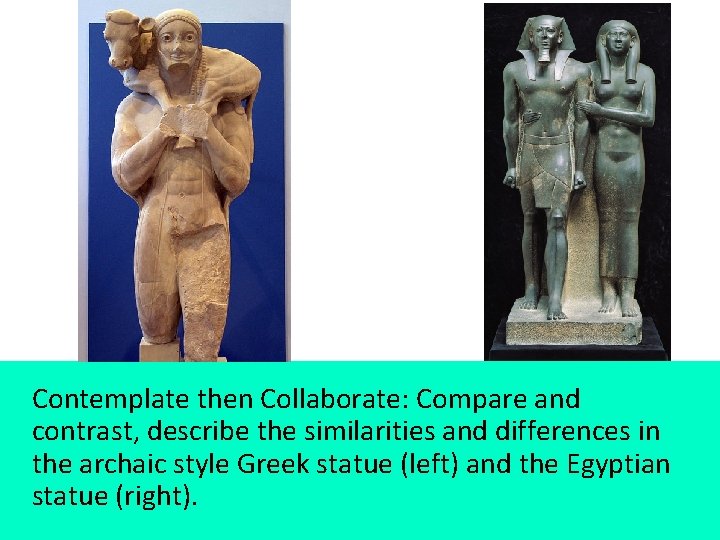
Contemplate then Collaborate: Compare and contrast, describe the similarities and differences in the archaic style Greek statue (left) and the Egyptian statue (right).
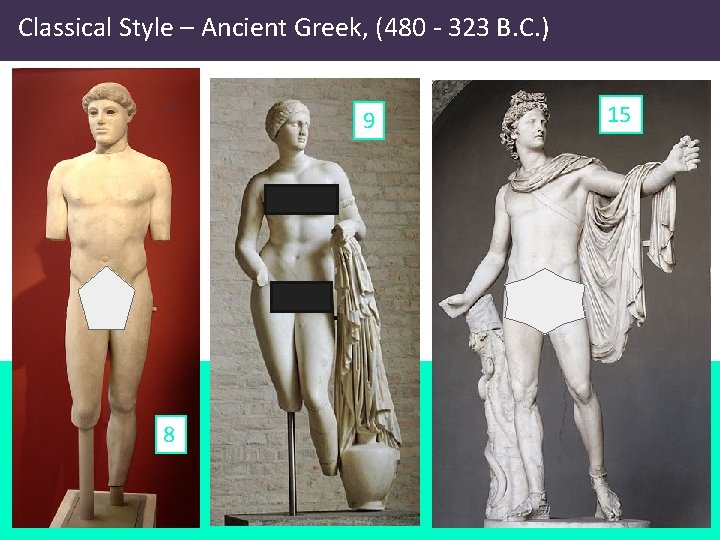
Classical Style – Ancient Greek, (480 - 323 B. C. ) 9 8 15
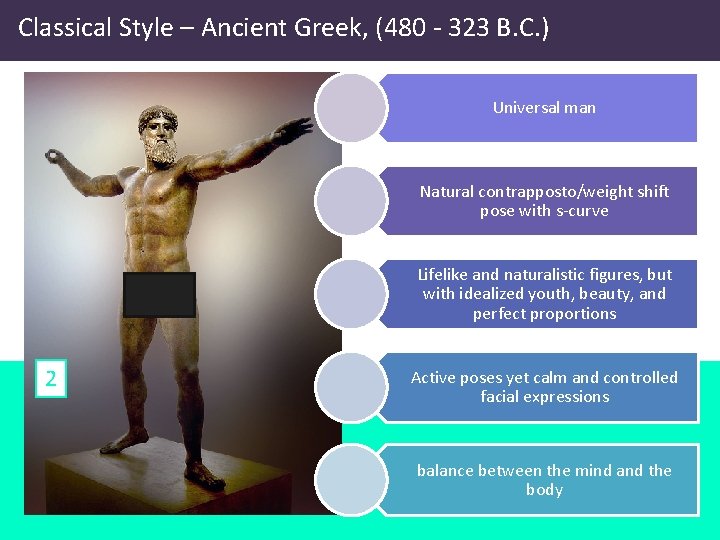
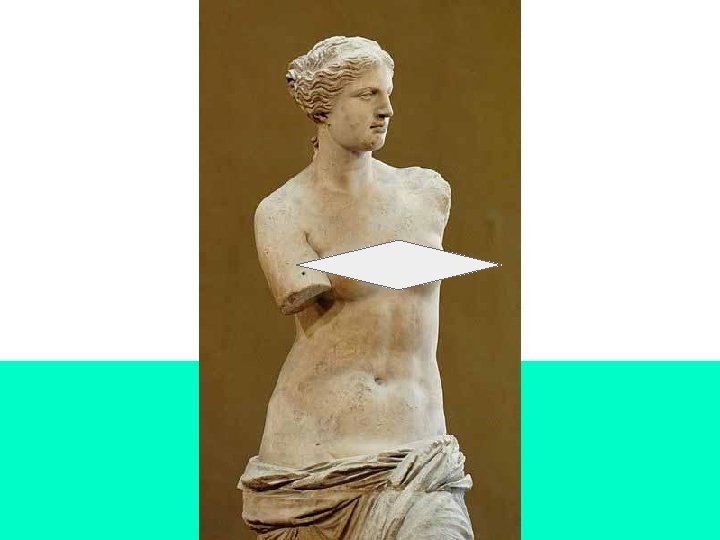
Classical Style – Ancient (480 - Greek, 323 B. C. ) (480 - 323 B. C. ) Classical – Greek, Ancient Universal man Natural contrapposto/weight shift pose with s-curve Lifelike and naturalistic figures, but with idealized youth, beauty, and perfect proportions 2 Active poses yet calm and controlled facial expressions balance between the mind and the body
Contemplate then Collaborate What differences do you notice in the Archaic and the Classical styles?
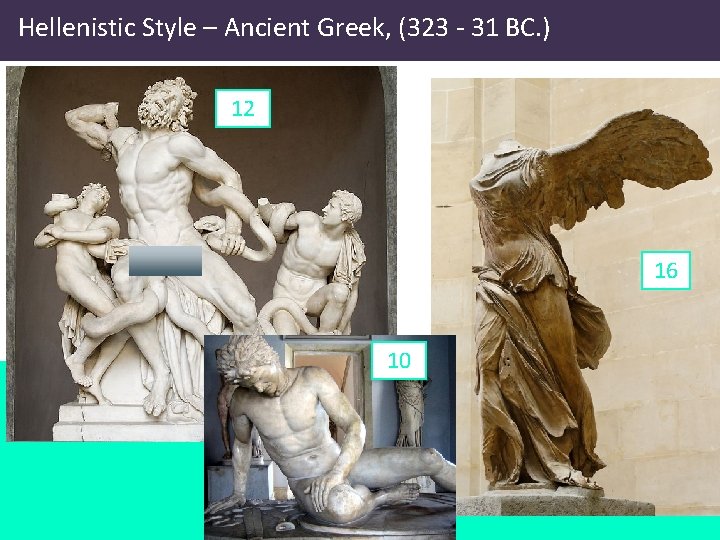
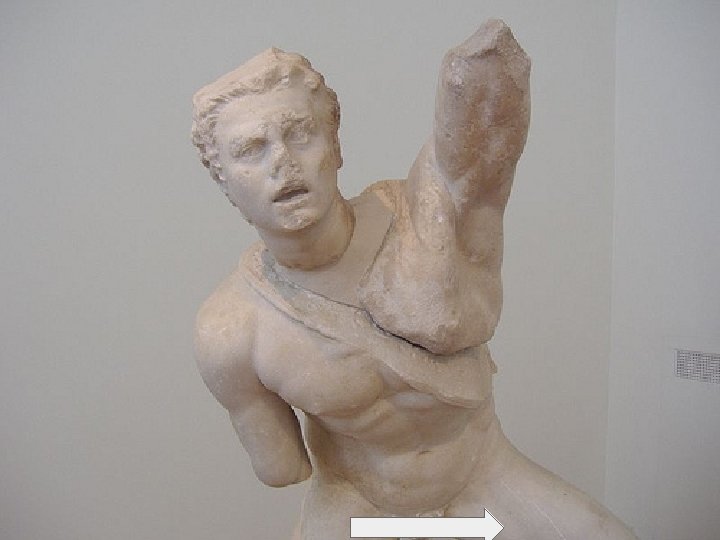
Hellenistic Style – Ancient Greek, (323 - 31 BC. ) 12 16 10
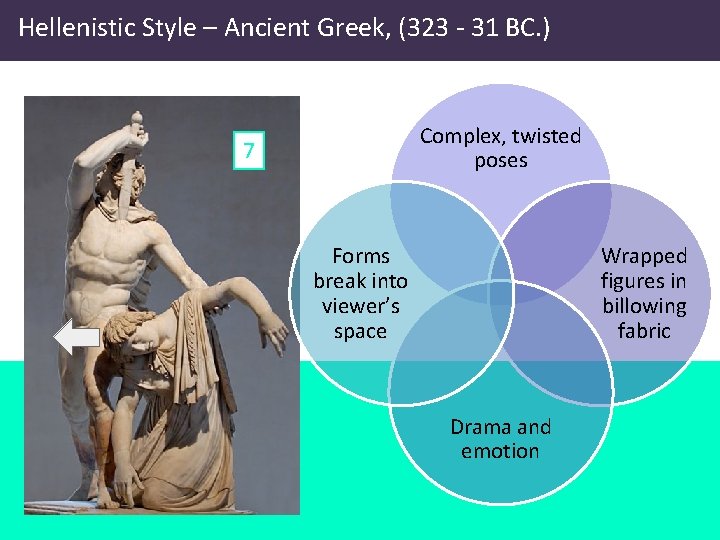
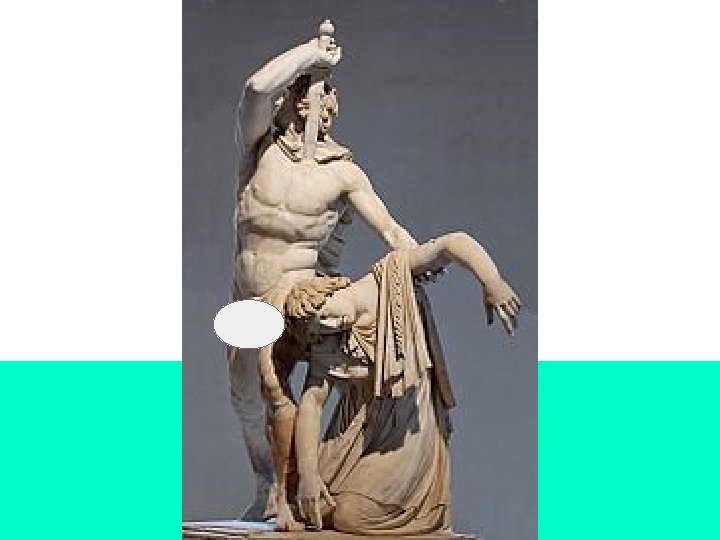
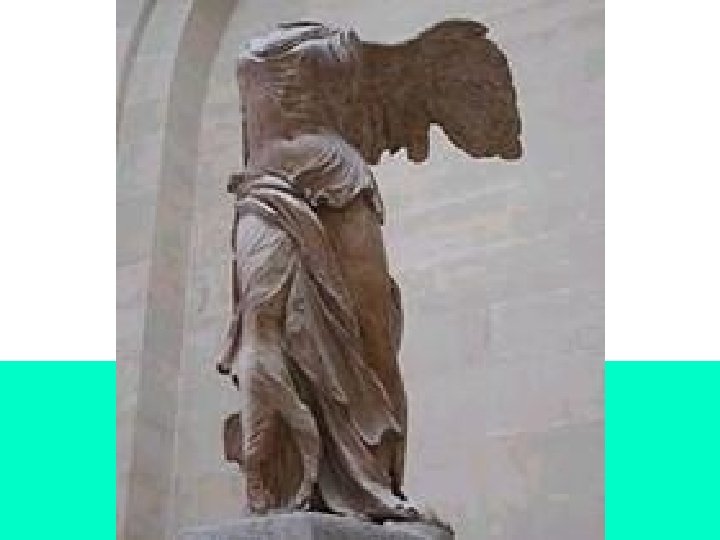
Hellenistic Style –Style Ancient–Greek, (323 - 31 BC. ) Hellenistic Ancient Greek, (323 - 31 BC. ) Complex, twisted poses 7 Forms break into viewer’s space Wrapped figures in billowing fabric Drama and emotion
Contemplate then Collaborate What major difference do you note between the Classical and the Hellenistic periods?
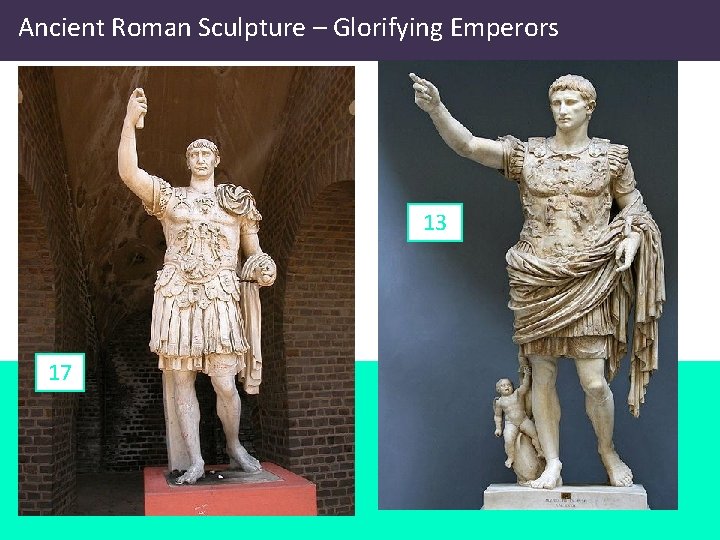
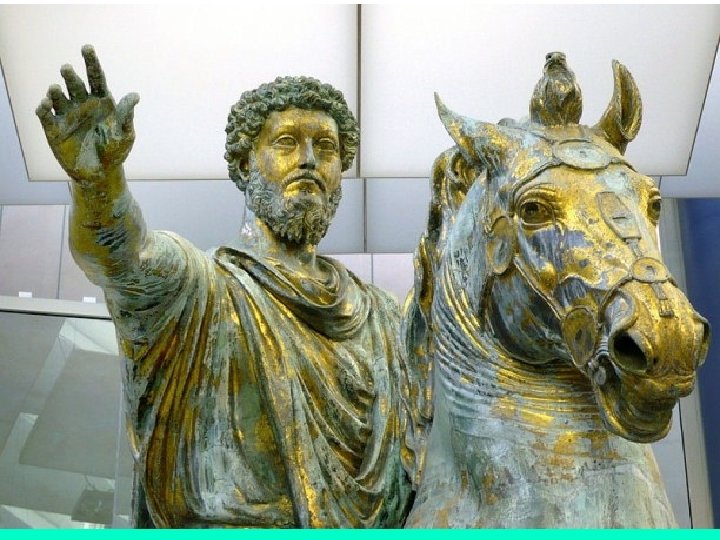
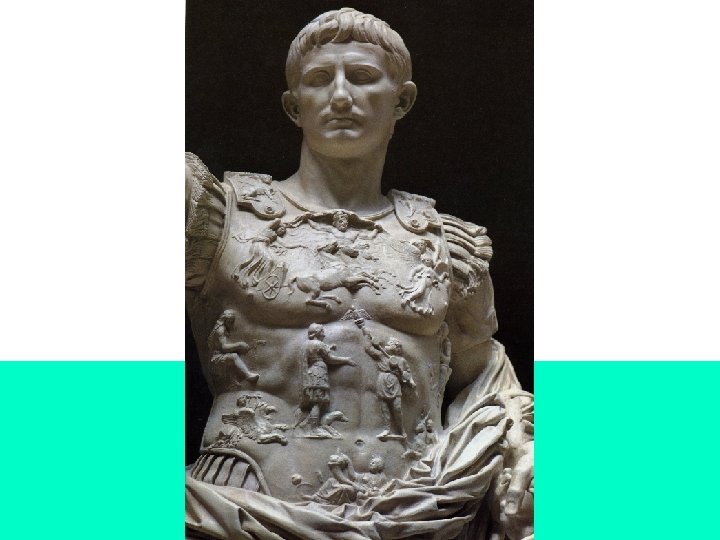
Ancient Roman Sculpture – Glorifying Emperors 13 17
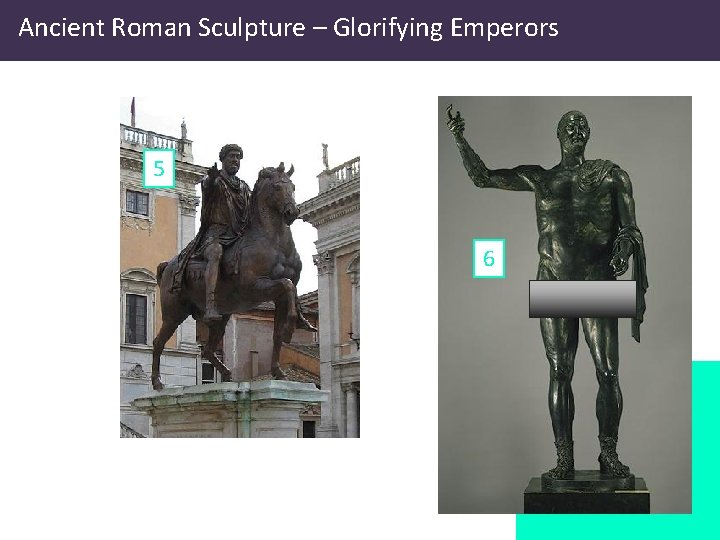
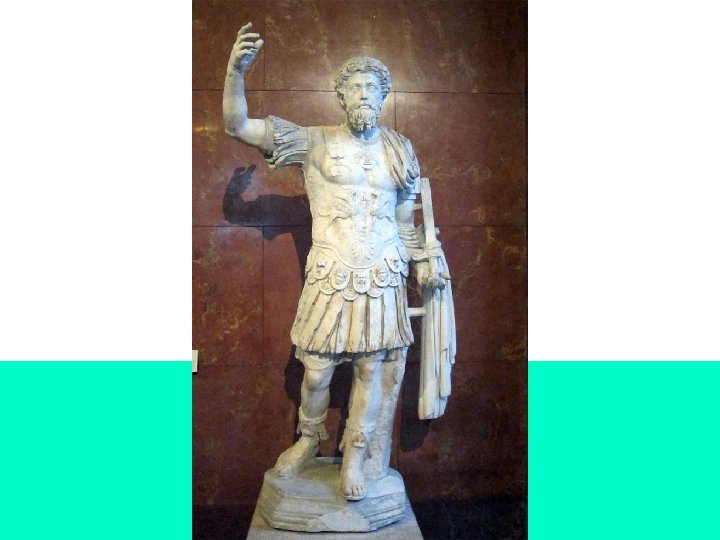
Ancient Roman Sculpture – Glorifying Emperors 5 6
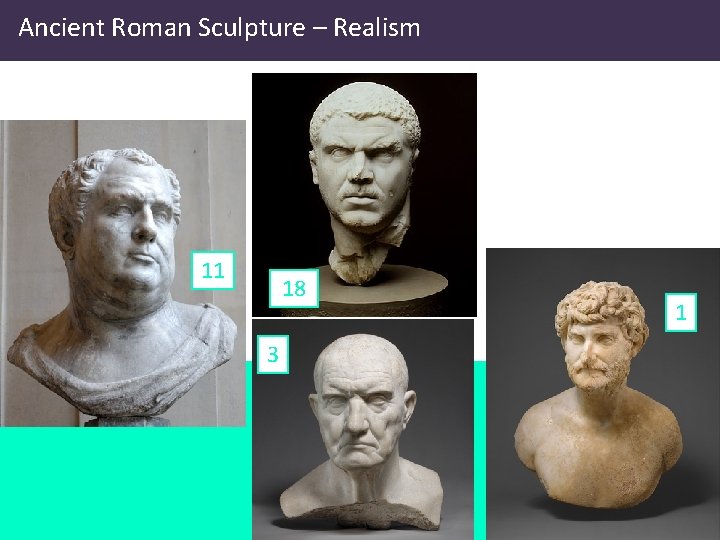
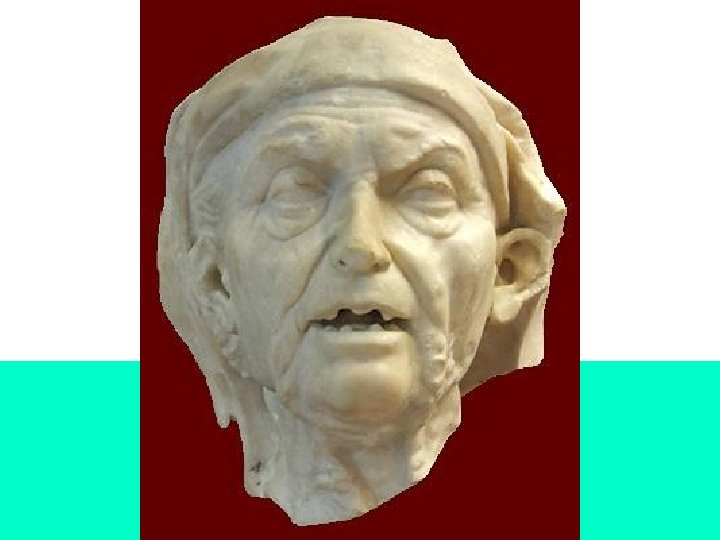
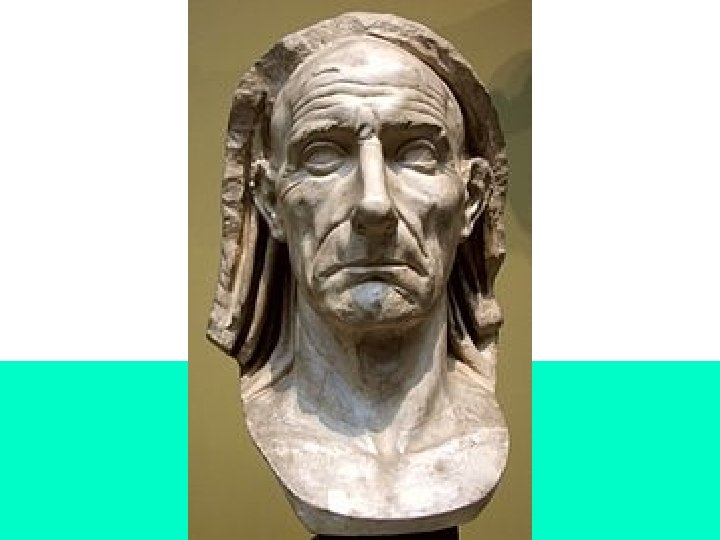
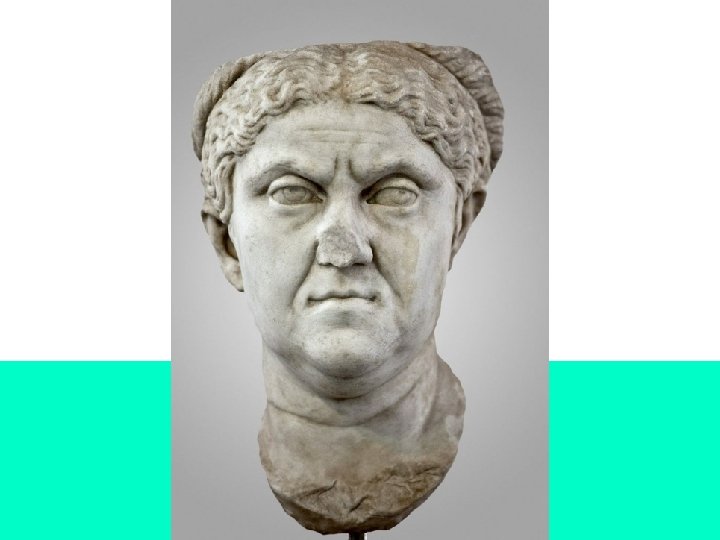
Ancient Roman Sculpture – Realism 11 18 3 1
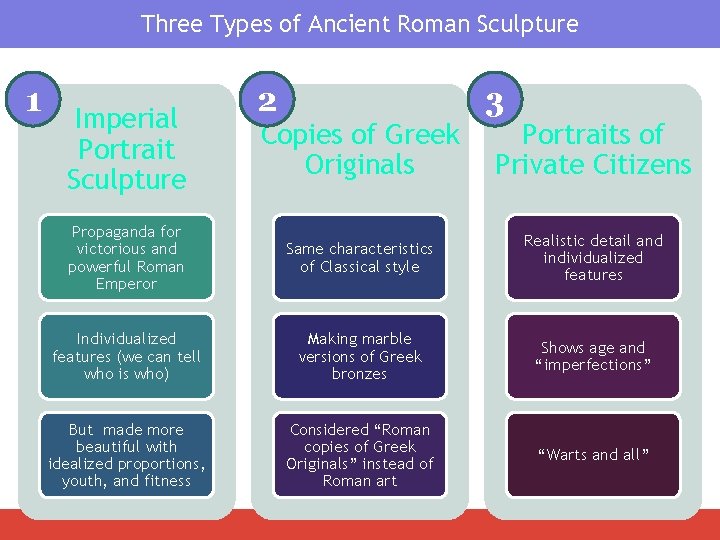
Three Types of Ancient Roman Sculpture 1 Imperial Portrait Sculpture 2 Copies of Greek Originals 3 Portraits of Private Citizens Propaganda for victorious and powerful Roman Emperor Same characteristics of Classical style Realistic detail and individualized features Individualized features (we can tell who is who) Making marble versions of Greek bronzes Shows age and “imperfections” But made more beautiful with idealized proportions, youth, and fitness Considered “Roman copies of Greek Originals” instead of Roman art “Warts and all”
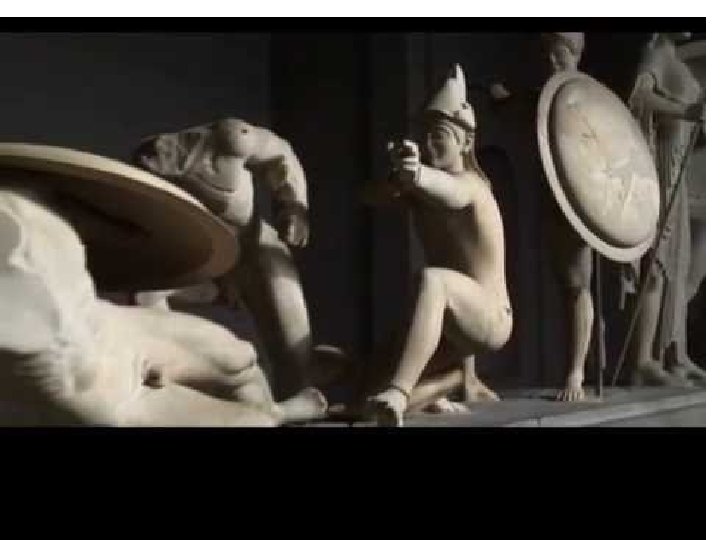
Thought Greek and Roman statues didn’t have color?
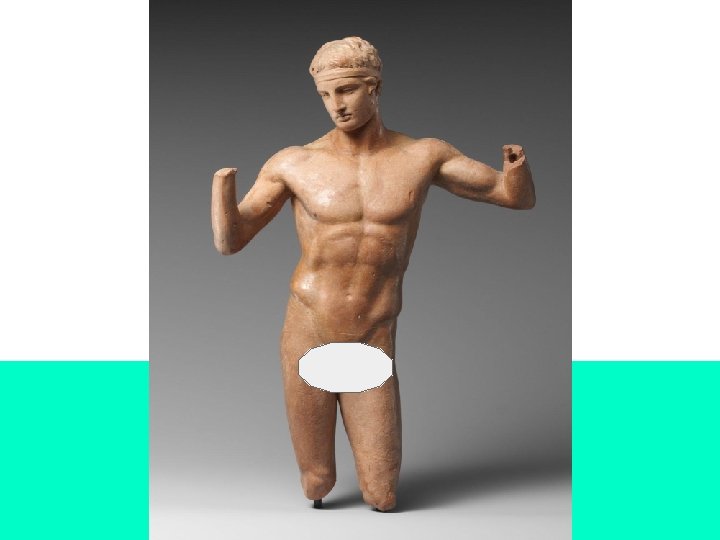
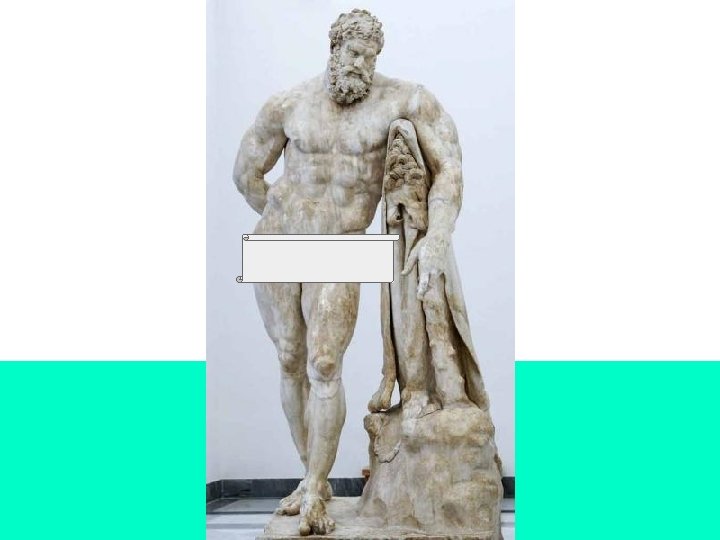
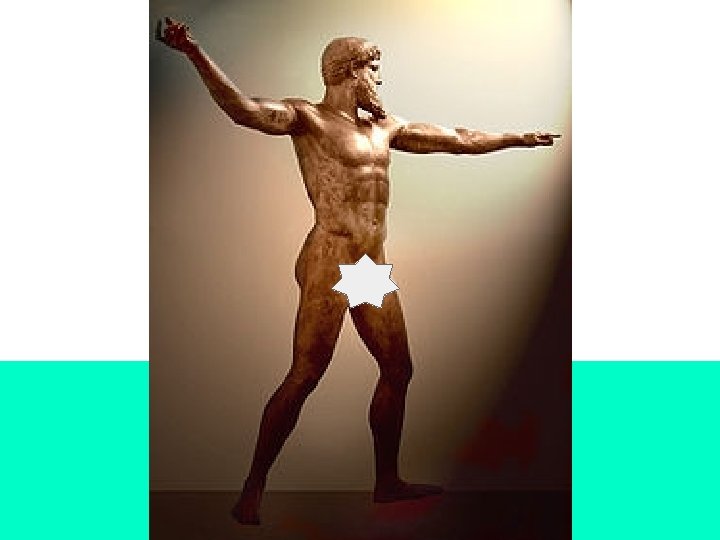
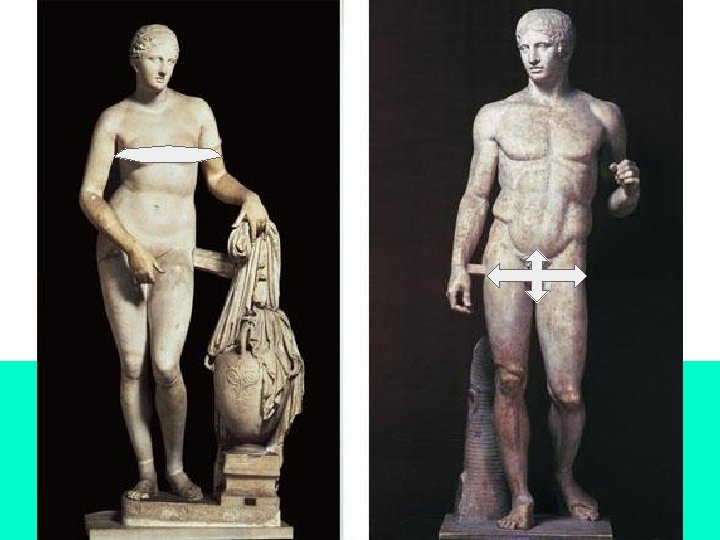
Tell whether the following statues are Greek (which era: Archaic, Classical, or Hellenistic) or Roman. Then tell HOW YOU KNOW.

Ideal Greek Proportions http: //www. fitness. com/tools/greek_proportions/
- Slides: 50