
Ancient Greece Section 4 The Glory That Was
- Slides: 5
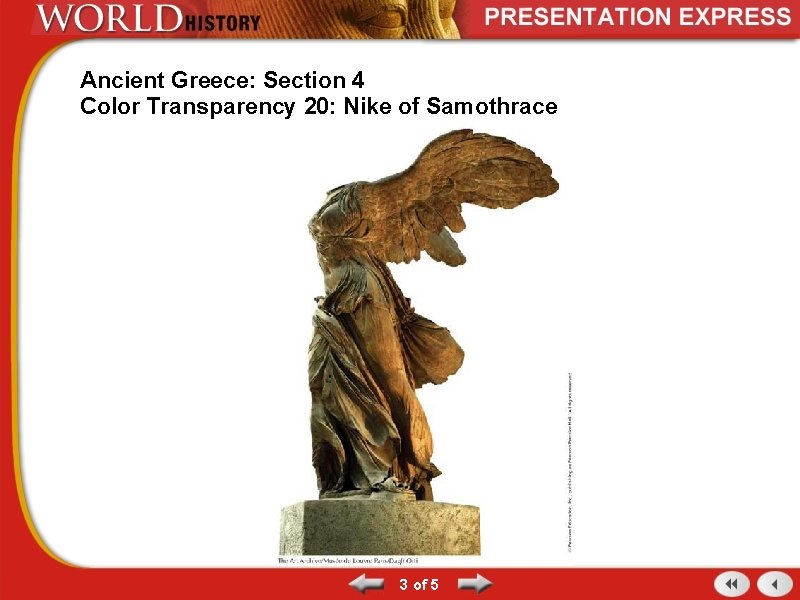
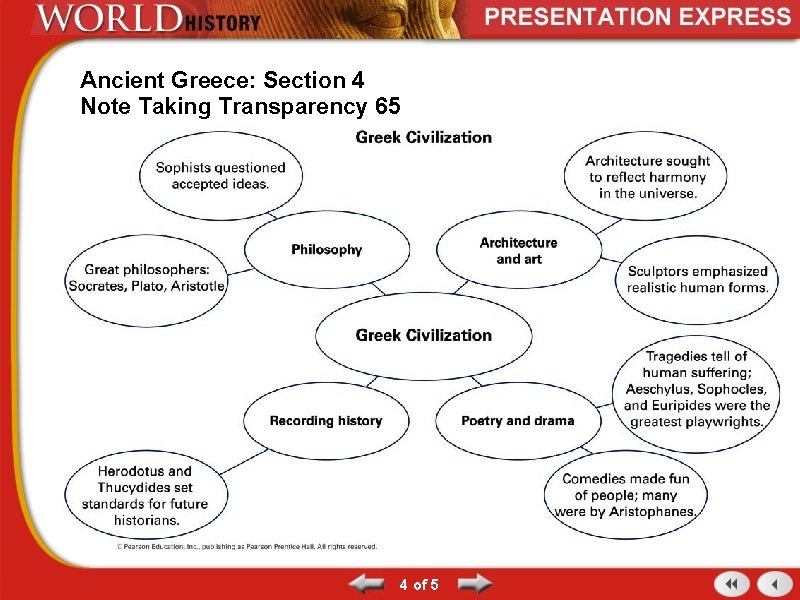
Ancient Greece Section 4: The Glory That Was Greece A. Philosophers Lovers of Wisdom 1. Greek philosophers tried to discover universal truths. These truths would hopefully lead to better government and proper ethics. Among the most influential philosophers were Socrates, Plato, and Aristotle. B. Idealism in Architecture and Art 1. Greek architecture reflects the Greek love of order and balance. The use of columns gave buildings grandeur and is still copied today. Greek sculptures of men and women were more natural looking than previous figures had been. Color Transparency 20: Nike of Samothrace Witness History Audio: Aristotle Meditates on Thought 1 of 5
Ancient Greece Section 4: The Glory That Was Greece C. Greek Literature 1. Greek plays evolved from religious festivals. The tragic plays of Aeschylus, Sophocles, and Euripides elicited pity and fear from the audience and commented on dilemmas existing in Greece at that time. Comedies, also, were social commentaries. D. Recording Events in History 1. Herodotus was an early historian. In his account of The Persian Wars, he collected first-hand accounts and tried to avoid those that were biased. Still, his methods were not as pure as are required of historians today. Quick. Take Section Quiz Progress Monitoring Transparency Note Taking Transparency 65 2 of 5
Ancient Greece: Section 4 Color Transparency 20: Nike of Samothrace 3 of 5
Ancient Greece: Section 4 Note Taking Transparency 65 4 of 5
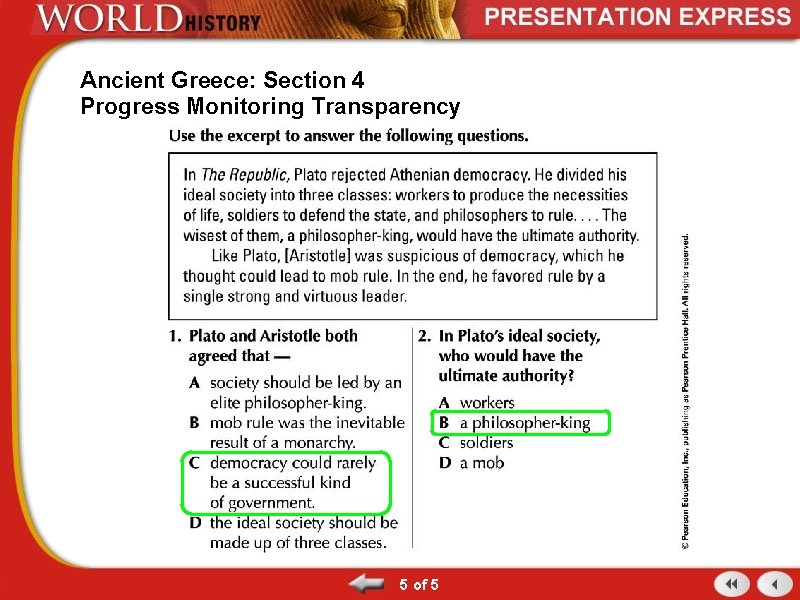
Ancient Greece: Section 4 Progress Monitoring Transparency 5 of 5