
Ancient Greece Lesson 2 The Rise of Greek

- Slides: 16
Ancient Greece Lesson 2 The Rise of Greek Cities
Vocabulary • • Polis Acropolis Agora Citizen Oligarchy Monarchy Democracy Colony • Homer • Athens • Sparta • Mount Olympus
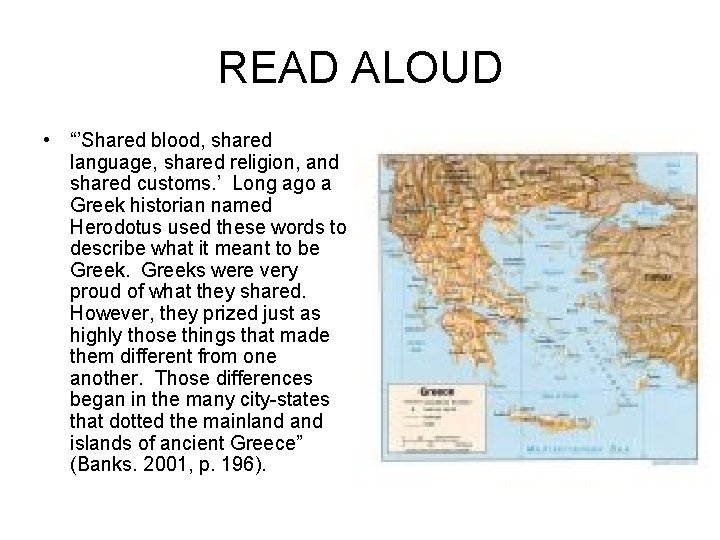
READ ALOUD • “’Shared blood, shared language, shared religion, and shared customs. ’ Long ago a Greek historian named Herodotus used these words to describe what it meant to be Greeks were very proud of what they shared. However, they prized just as highly those things that made them different from one another. Those differences began in the many city-states that dotted the mainland islands of ancient Greece” (Banks. 2001, p. 196).
The Big Picture • 1100 B. C. – Egypt’ New Kingdom and Shang Dynasty were loosing power • 1100 – 800 B. C. – Greece – little known of this time period. • 700 B. C. – Greek artifacts found – Formation of city-states (polis) – Groups of powerful man decision-makers
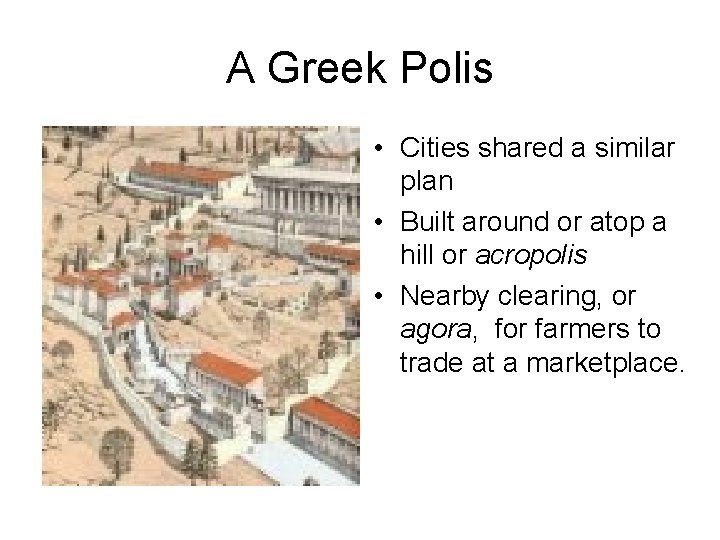
A Greek Polis • Cities shared a similar plan • Built around or atop a hill or acropolis • Nearby clearing, or agora, for farmers to trade at a marketplace.
Developing Governments • Citizenship required of • Athens – leaders with rights – Before 600 B. C. – ruled by king as a and responsibilities to monarchy – rule by country and one community – 600 B. C. – oligarchy – • Only men citizens small group rule – resting on the value of • Women and slaves property giving the rich had no rights power, the poor none
Two Greek Cities • Athens • Boys – worked for their fathers in the fields, pottery, stone working, studied reading and writing if parents could afford it. Practiced wrestling and boxing • Girls – “SEE, HEAR, AND ASK LITTLE, ” WAVING CLOTH, stayed at home • • Sparta 700 BC 30 miles from Med. Sea Farmers –slaves –Helots, who revolted in 600 BC • Boys joined military at 7 • Girls tough military mothers
Government in Athens • Monarchy • Oligarchy • Democracy – rule by the people • City divided into demes • 10 demes • Each had 50 representatives • Selected by lot • Served in the 500 • Building was the tholos (round)
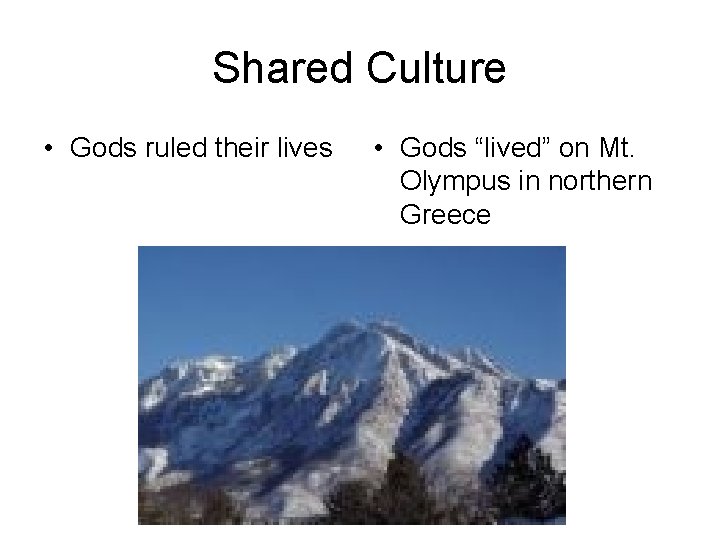
Shared Culture • Gods ruled their lives • Gods “lived” on Mt. Olympus in northern Greece
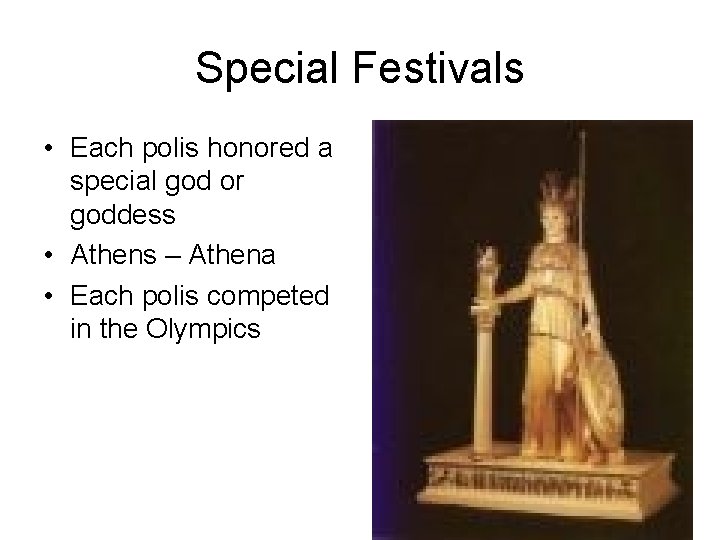
Special Festivals • Each polis honored a special god or goddess • Athens – Athena • Each polis competed in the Olympics
A Greek Poet – Homer • Lived from 800 -7– BC • The Iliad - Trojan War • The Odyssey – Odysseus’ journey home
Beyond Greece • Traveled beyond • 500 BC Greek city-states all around Med. Sea
Why It Matters • United to fight the Persians • Ideas of democracy
Main Ideas • Life is most of the Greek city-states revolved around an agora and an acropolis • Spartans spent much of their time working to strengthen their bodies and their army. In Athens free women nd girls worked at home. Boys and men worked, went to school, or took part in government.
Think About It • What did city-states have in common? What made them different? • Who was allowed to vote in the developing democracy of Athens? • Why was life in Sparta so different from life in Athens? • What effects did slavery have on life in Sparta? • What made the agora a center for cultural interaction?