
Ancient Greece Geography Greece is a peninsula about
Ancient Greece
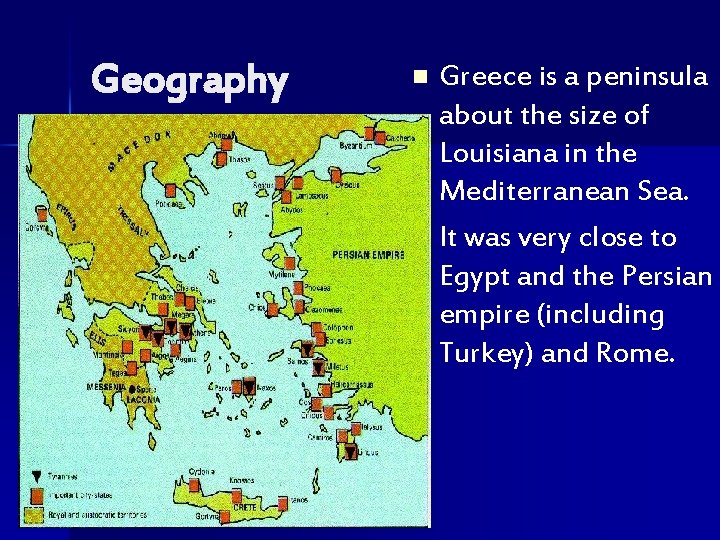
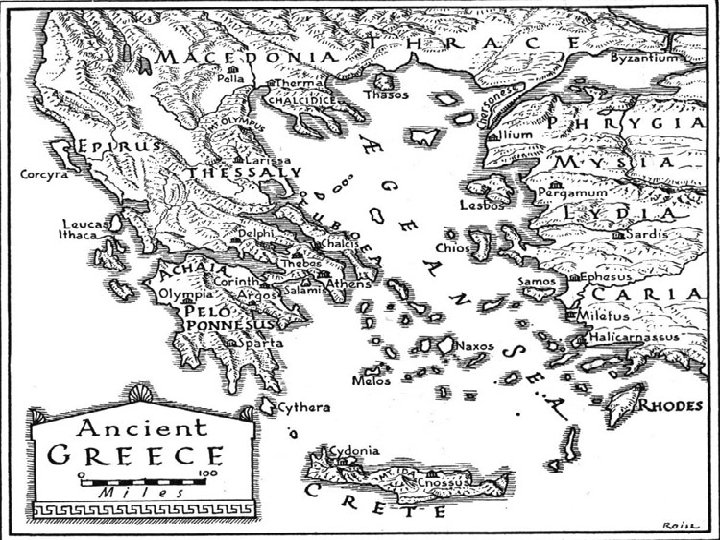
Geography Greece is a peninsula about the size of Louisiana in the Mediterranean Sea. n It was very close to Egypt and the Persian empire (including Turkey) and Rome. n
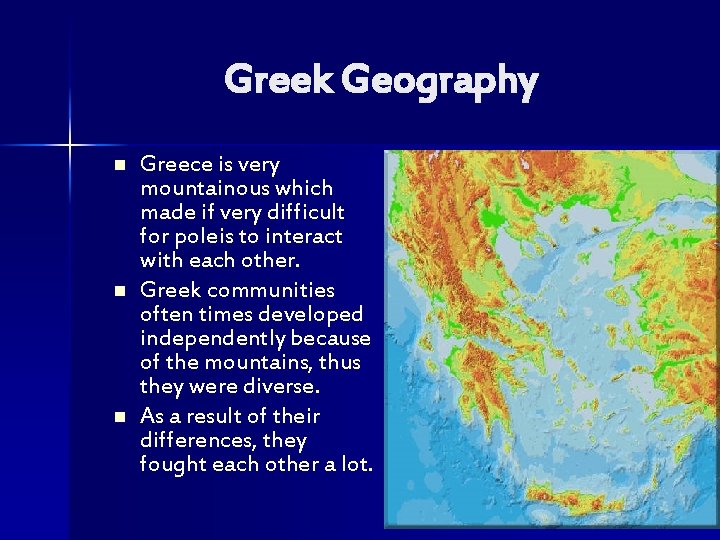
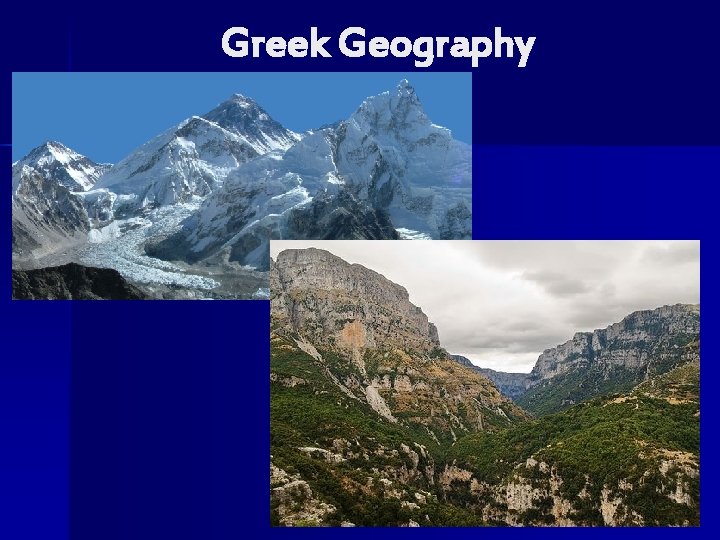
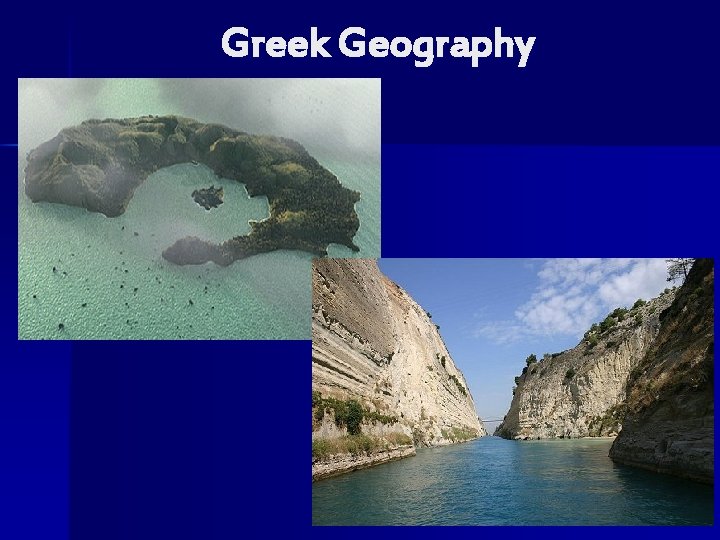
Greek Geography n n n Greece is very mountainous which made if very difficult for poleis to interact with each other. Greek communities often times developed independently because of the mountains, thus they were diverse. As a result of their differences, they fought each other a lot.
Greek Geography
Greek Geography

Traveling – difficult or easy? Why?
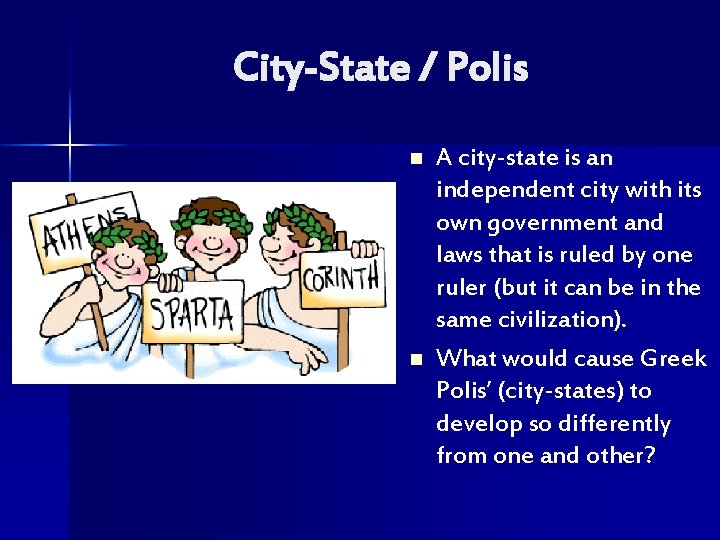
City-State / Polis n n A city-state is an independent city with its own government and laws that is ruled by one ruler (but it can be in the same civilization). What would cause Greek Polis’ (city-states) to develop so differently from one and other?

Isolated and Independent
Time Period?
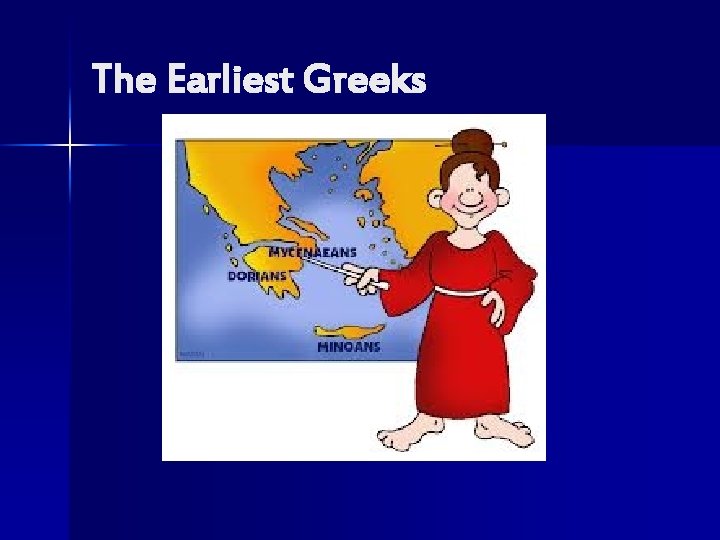
The Earliest Greeks
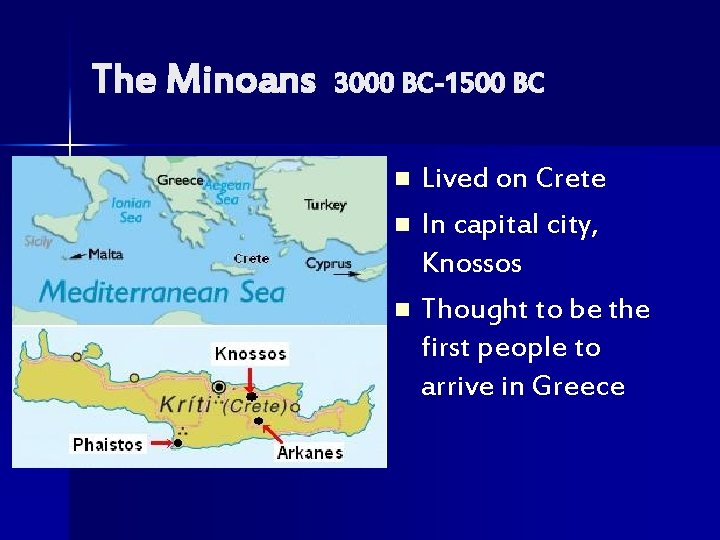
The Minoans 3000 BC-1500 BC Lived on Crete n In capital city, Knossos n Thought to be the first people to arrive in Greece n
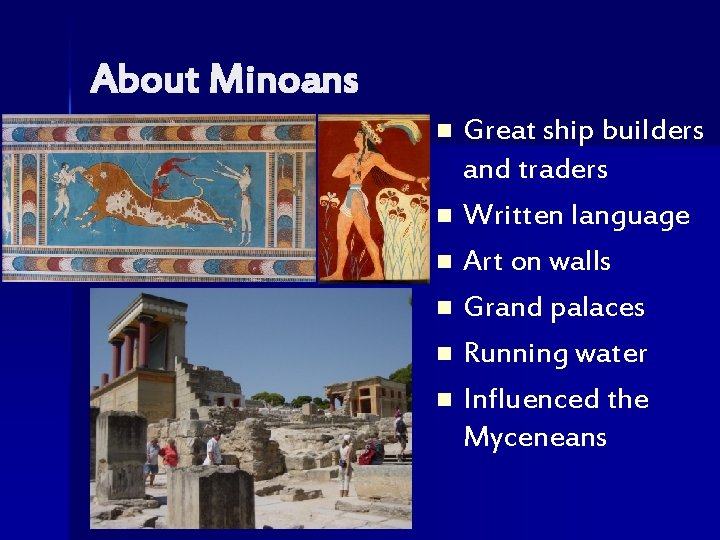
About Minoans Great ship builders and traders n Written language n Art on walls n Grand palaces n Running water n Influenced the Myceneans n
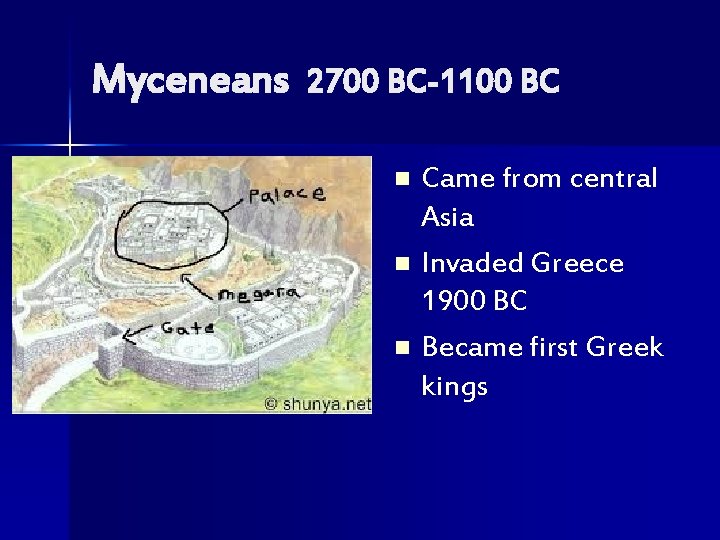
Myceneans 2700 BC-1100 BC Came from central Asia n Invaded Greece 1900 BC n Became first Greek kings n
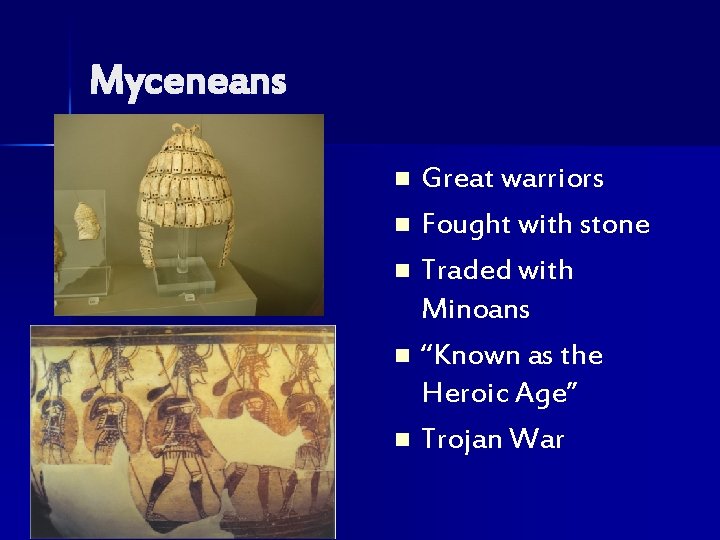
Myceneans Great warriors n Fought with stone n Traded with Minoans n “Known as the Heroic Age” n Trojan War n
Early Greeks Comprehension 1. 2. How were the Myceneans and Minoans similar, why? How were they different? ( Hint: think government, daily life, location, jobs, etc. )
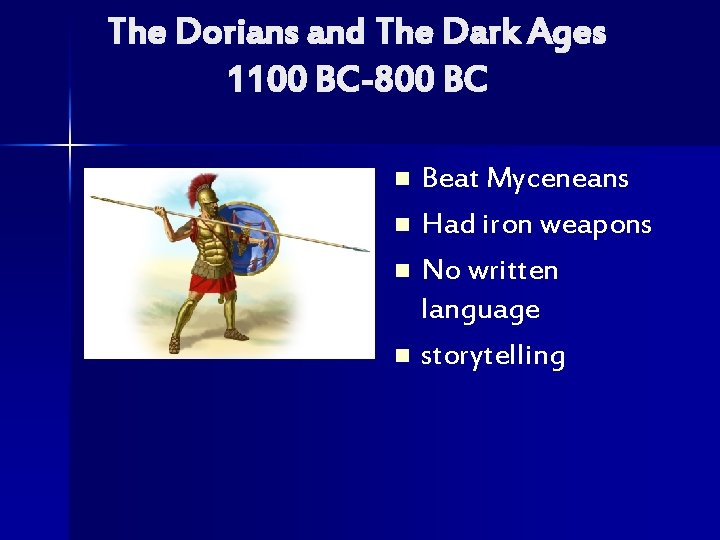
The Dorians and The Dark Ages 1100 BC-800 BC Beat Myceneans n Had iron weapons n No written language n storytelling n
Effects of Dark Ages City States n Common spoken language n Fables, legends, myths n Metal tools n
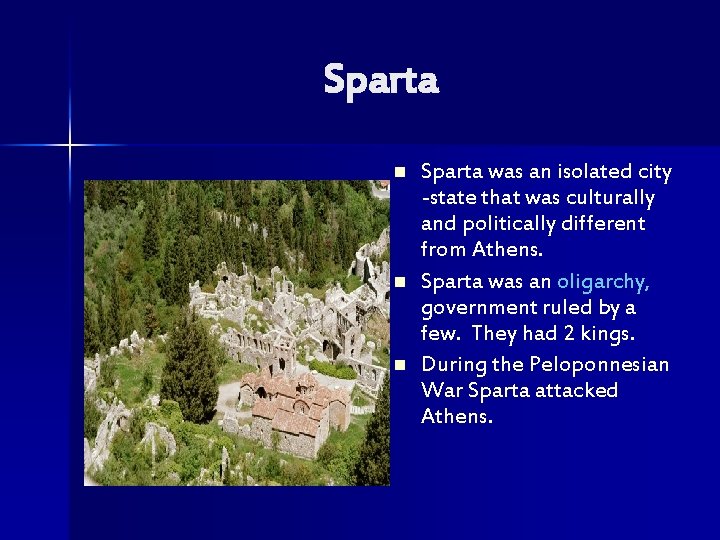
Sparta n n n Sparta was an isolated city -state that was culturally and politically different from Athens. Sparta was an oligarchy, government ruled by a few. They had 2 kings. During the Peloponnesian War Sparta attacked Athens.
Government n Ancient Greece was ruled by many forms of government. – Monarchy – rule by one king/person – Oligarchy – rule is in the hands of a few wealthy people – Tyranny – rule by one person who took control by force – Democracy – rule by all people n Direct Democracy n Representative Democracy
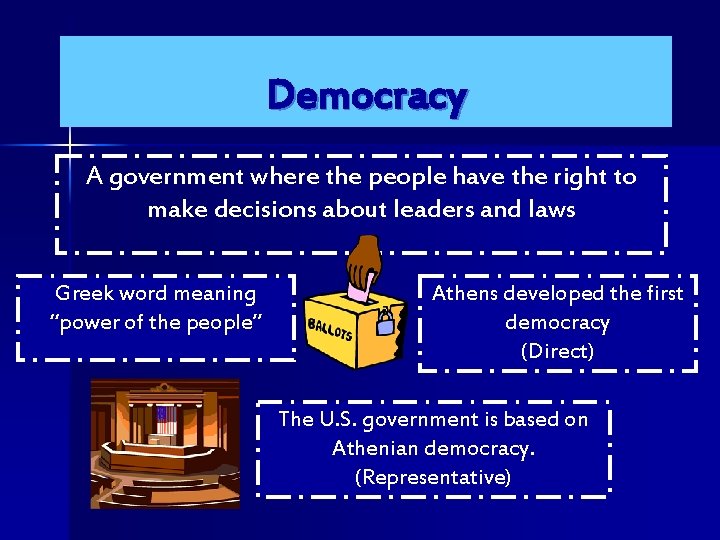
Democracy A government where the people have the right to make decisions about leaders and laws Greek word meaning “power of the people” Athens developed the first democracy (Direct) The U. S. government is based on Athenian democracy. (Representative)
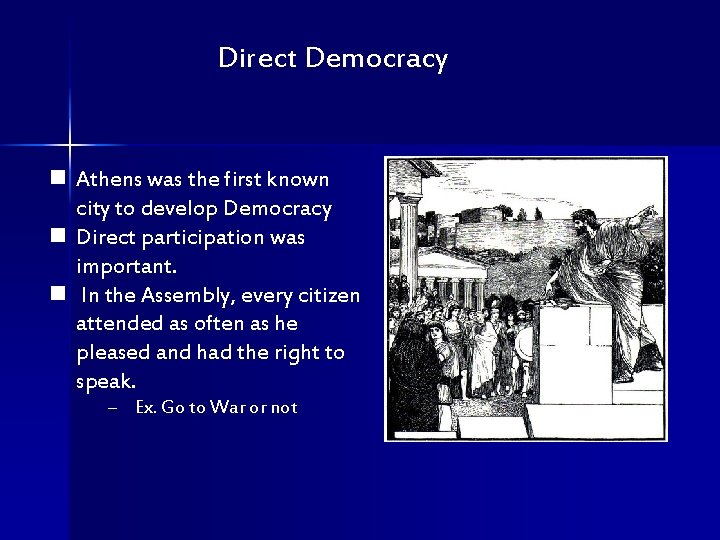
Direct Democracy n Athens was the first known city to develop Democracy n Direct participation was important. n In the Assembly, every citizen attended as often as he pleased and had the right to speak. – Ex. Go to War or not
Representative Democracy The U. S. today is a representative democracy, where we vote for people to make decisions for us. n Ex. U. S. Senate and U. S House of Representatives n
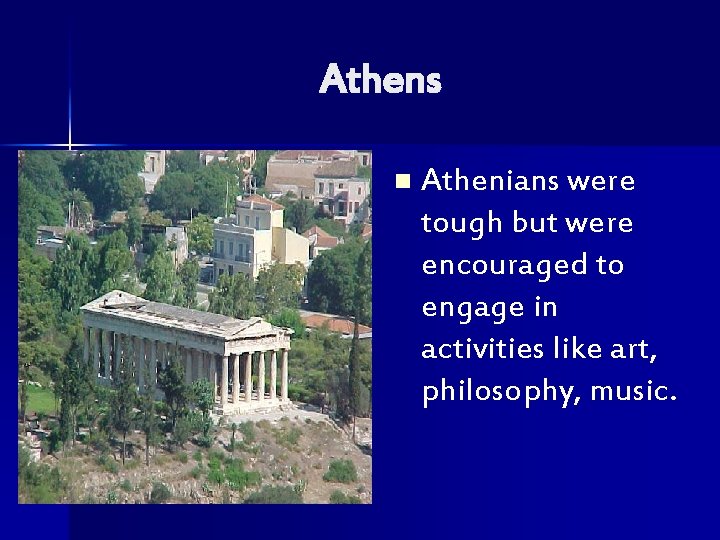
Athens n Athenians were tough but were encouraged to engage in activities like art, philosophy, music.
Athens Versus Sparta • Athens Main focus was on education • Taught at home until the age of 6 or 7 • 7 – 14 went to school to learn reading, writing, math, literature, sports, and music • At 18 military training began. • Sparta Main focus was on military training • Boys left their family at age 7 to begin their military training • Both boys and girls were expected to be physically strong in order to protect Sparta
Values Athenian Values *Individuality * Beauty • Freedom • Citizenship * Education Spartan Values * Strength * Duty *Discipline Simplicity
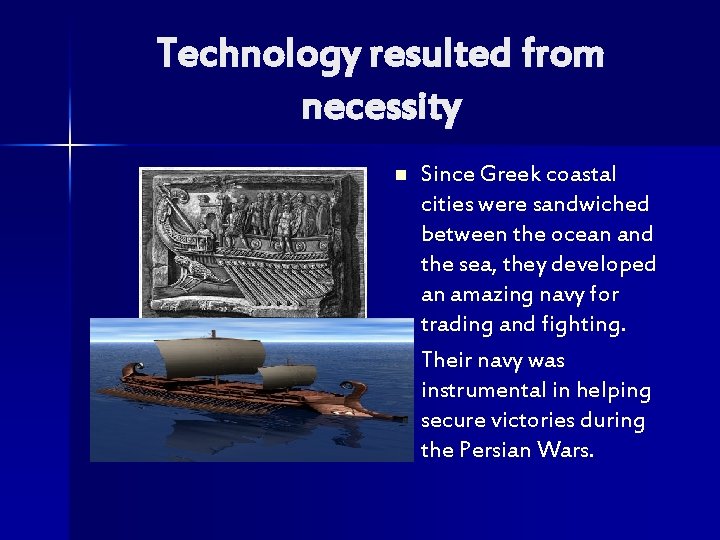
Technology resulted from necessity n n Since Greek coastal cities were sandwiched between the ocean and the sea, they developed an amazing navy for trading and fighting. Their navy was instrumental in helping secure victories during the Persian Wars.
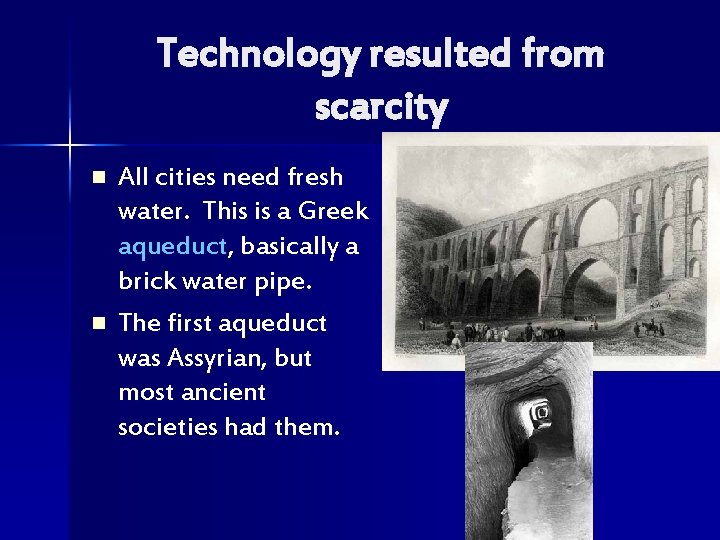
Technology resulted from scarcity n n All cities need fresh water. This is a Greek aqueduct, basically a brick water pipe. The first aqueduct was Assyrian, but most ancient societies had them.
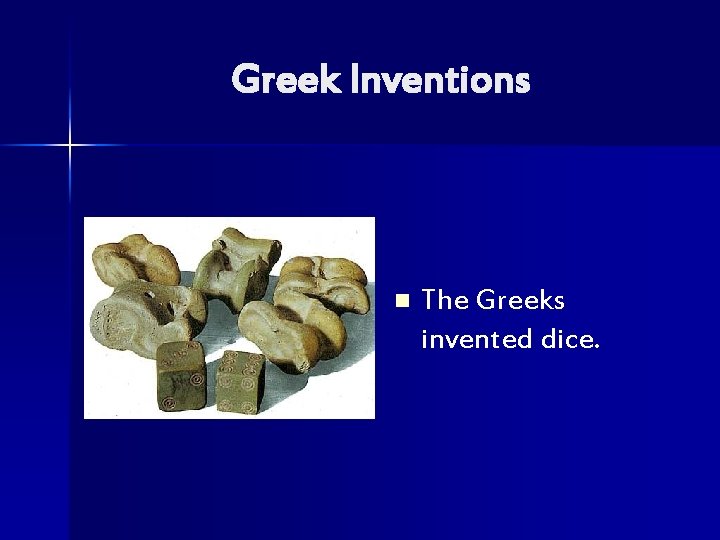
Greek Inventions n The Greeks invented dice.
Golden Age of Athens n A period of great peace, wealth, creativity, and success.
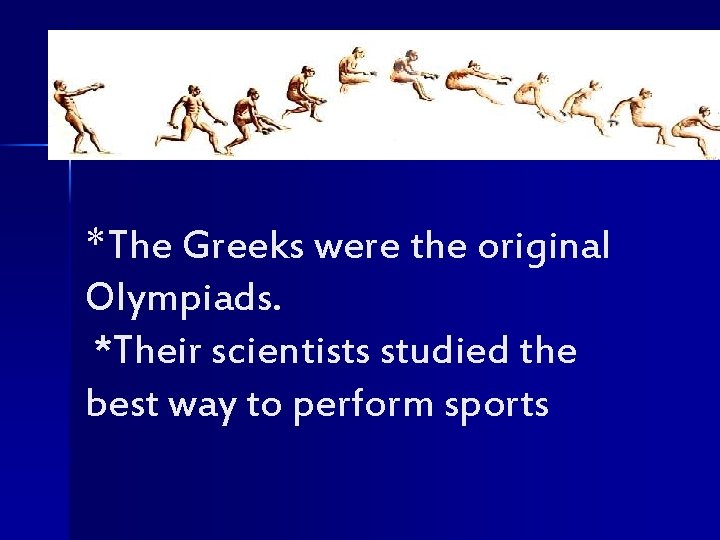
*The Greeks were the original Olympiads. *Their scientists studied the best way to perform sports
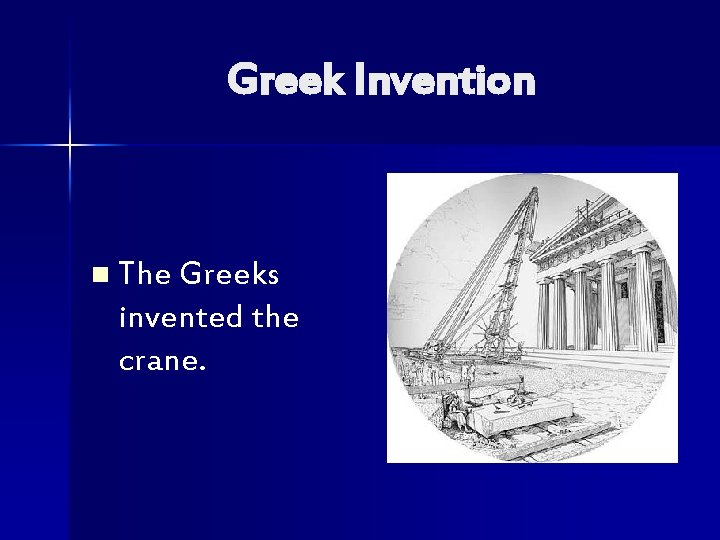
Greek Invention n The Greeks invented the crane.
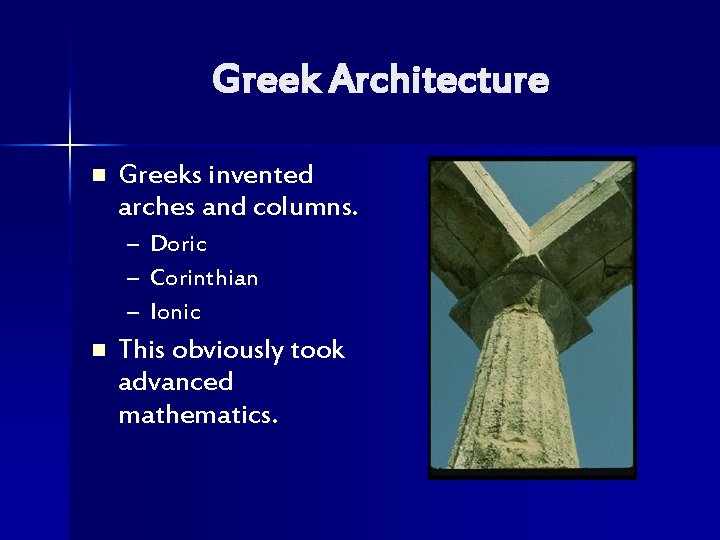
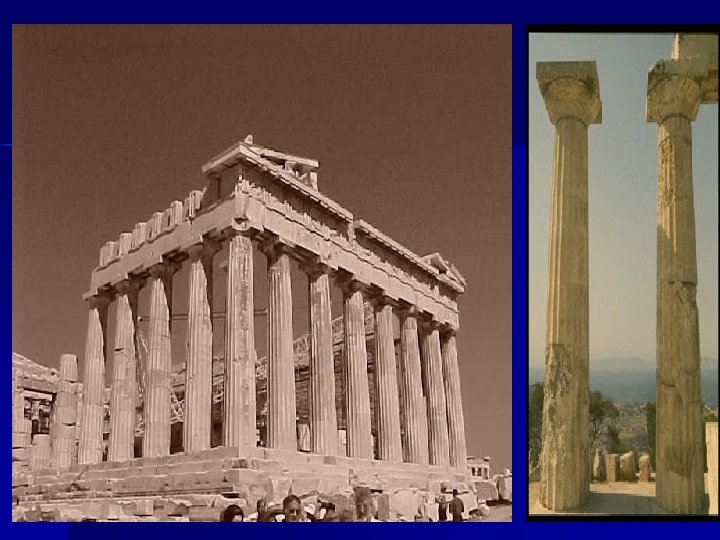
Greek Architecture n Greeks invented arches and columns. – – – n Doric Corinthian Ionic This obviously took advanced mathematics.
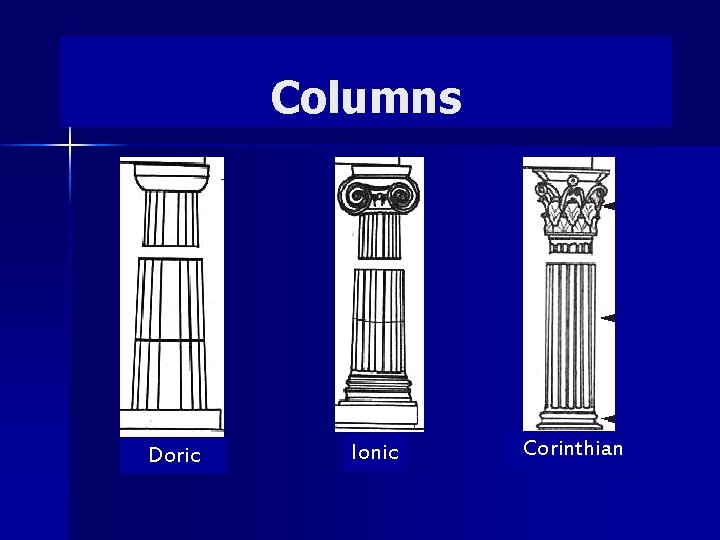
Columns Doric Ionic Corinthian
Mythology
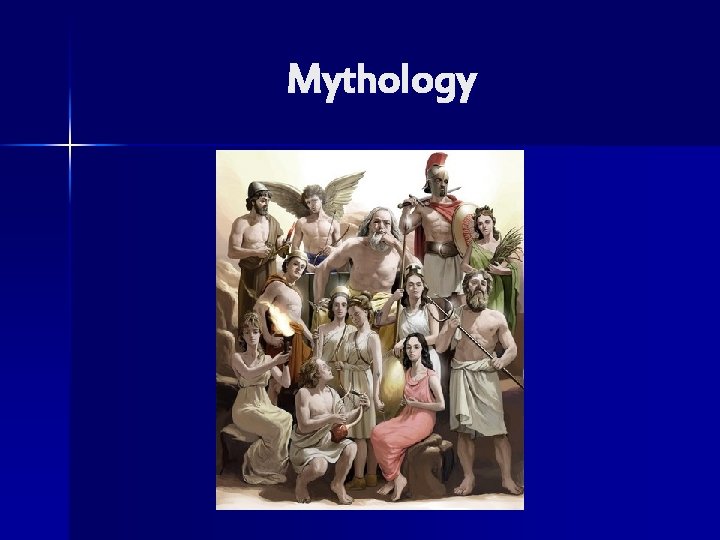
Greek gods and goddesses n n n Zeus – king of the gods, the sky, rain, and lightning Hades- god of the underworld Poseidon- god of the sea Apollo – god of light Hermes – messenger of the gods Ares – god of war n n n Hera – goddess of marriage Hestia – goddess of the home Artemis – goddess of the hunt and wild animals, twin sister of Apollo Aphrodite – goddess of love and beauty Athena – goddess of wisdom and protector of cities
What is a legacy? Traditions, skills and knowledge of a culture that get passed on to people in the future Something a culture is known for A gift from the past Babe Ruth’s legacy was homerun hitting.
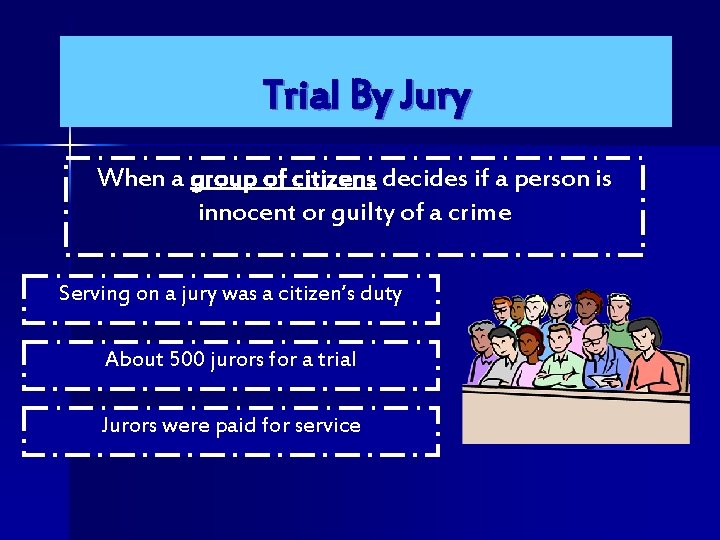
Trial By Jury When a group of citizens decides if a person is innocent or guilty of a crime Serving on a jury was a citizen’s duty About 500 jurors for a trial Jurors were paid for service
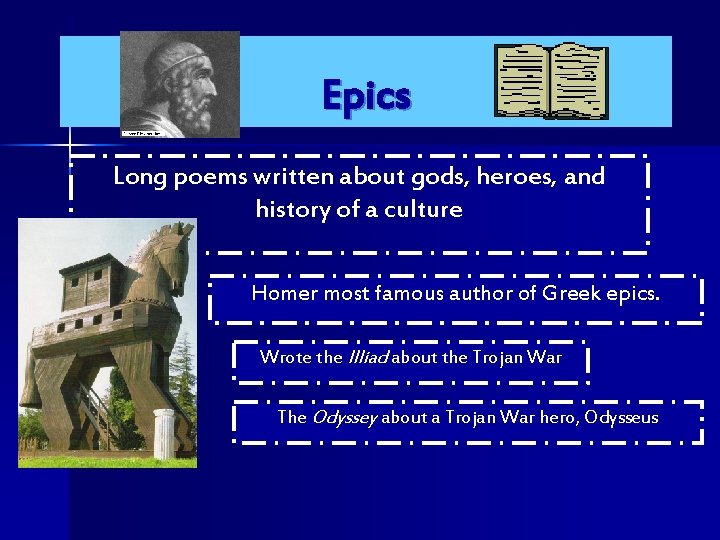
Epics Long poems written about gods, heroes, and history of a culture Homer most famous author of Greek epics. Wrote the Illiad about the Trojan War The Odyssey about a Trojan War hero, Odysseus
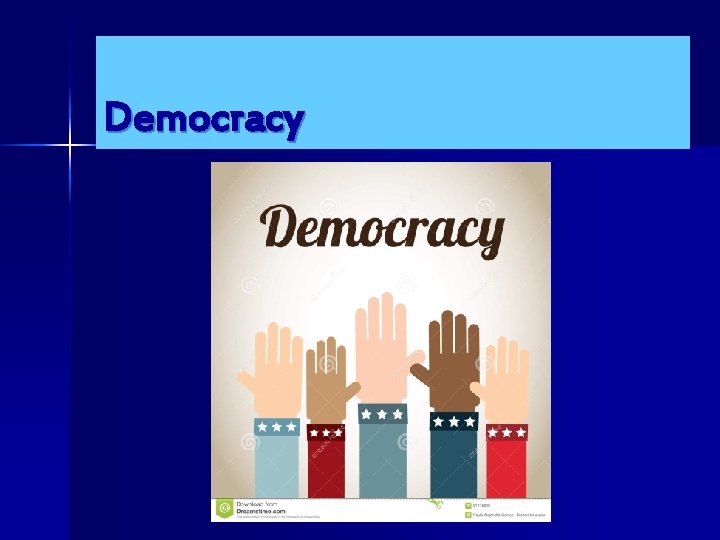
Democracy
Theater Grew out of festivals dedicated to Dionysus and developed into stories that were acted out Plays were performed at festivals and became competitions Only male actors but women could watch Actors wore masks to show gender, age & mood Theater was carved into a hillside
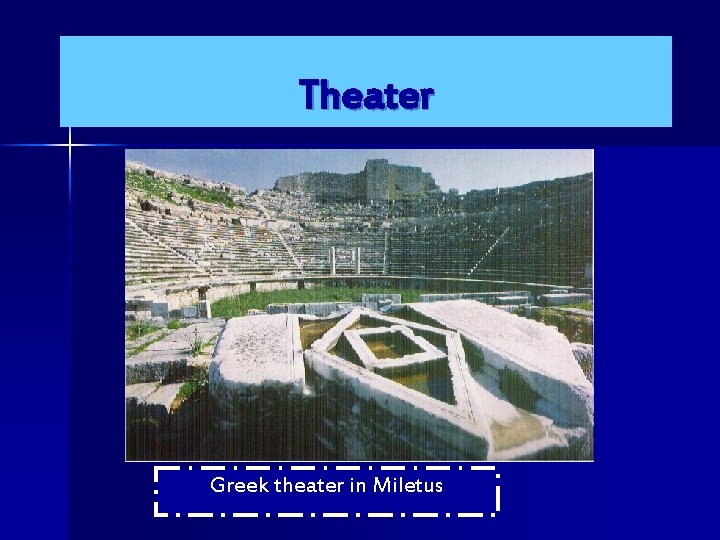
Theater Greek theater in Miletus
Tragedy & Comedy Types of plays first developed by the Greeks Tragedy: plays about suffering Comedy: plays with a happy ending that pokes fun at certain types of people Aeschylus Aristophanes
Olympic Games Festival held in Olympia to honor Zeus Every four years-began 776 B. C. Only men: women couldn’t watch Olympians swore not to cheat Called a truce from war Winners were heroes Won an olive wreath
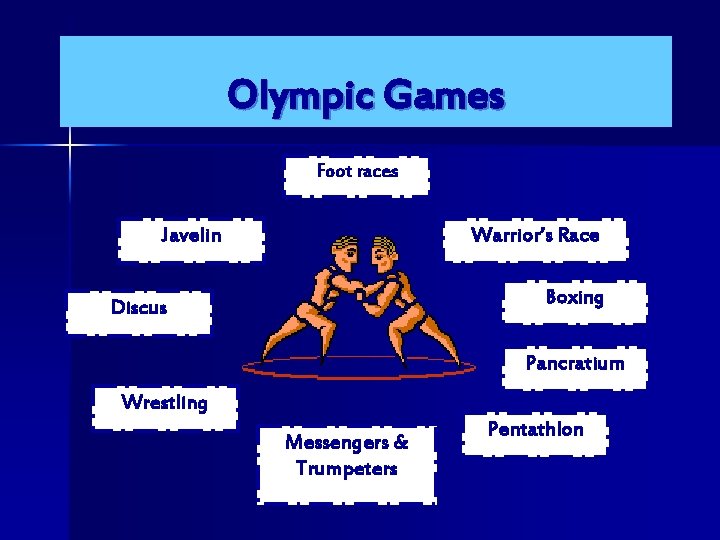
Olympic Games Foot races Javelin Warrior’s Race Boxing Discus Pancratium Wrestling Messengers & Trumpeters Pentathlon
Marathon Footrace that is 26 miles, 385 yards long Greeks defeated the Persians at Marathon Pheidippides ran to Athens (about 26 miles) to announce the victory He reached Athens, cried out Nike! (goddess of victory), and fell over dead.
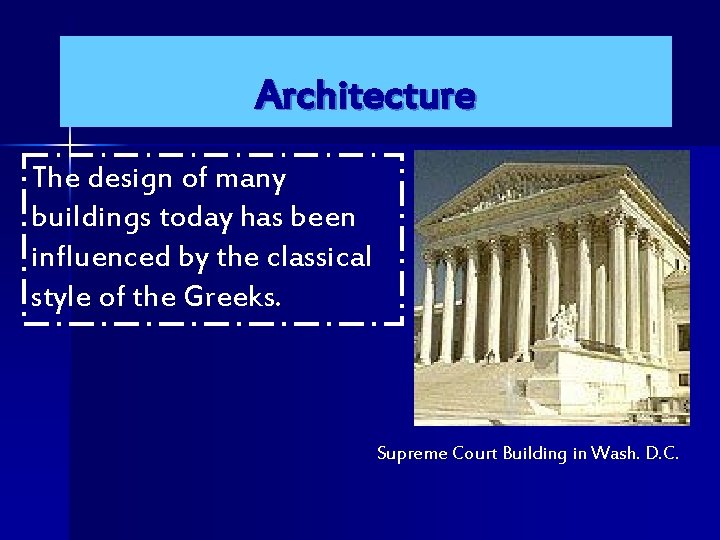
Architecture The design of many buildings today has been influenced by the classical style of the Greeks. Supreme Court Building in Wash. D. C.

Math

Science
Classification of Living Things A system of grouping plants and animals that have similar characteristics Developed by Aristotle Helps scientists to handle a lot of info. Still used today
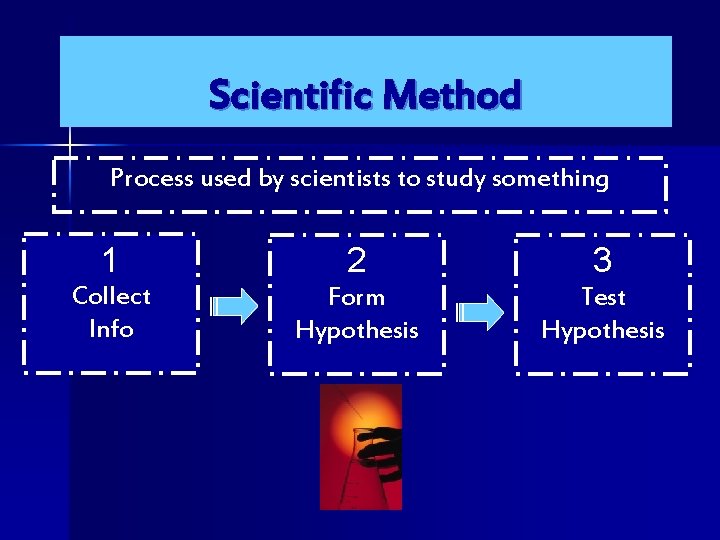
Scientific Method Process used by scientists to study something 1 2 3 Collect Info Form Hypothesis Test Hypothesis
Hippocratic Oath A list of rules about practicing medicine that doctors today still promise to follow Hippocrates was the “Father of Scientific Medicine” 1. Honor their teachers 2. Do their best for the sick 3. Never give poisons 4. Keep the secrets of patients Believed that disease came from natural causes not evil spirits

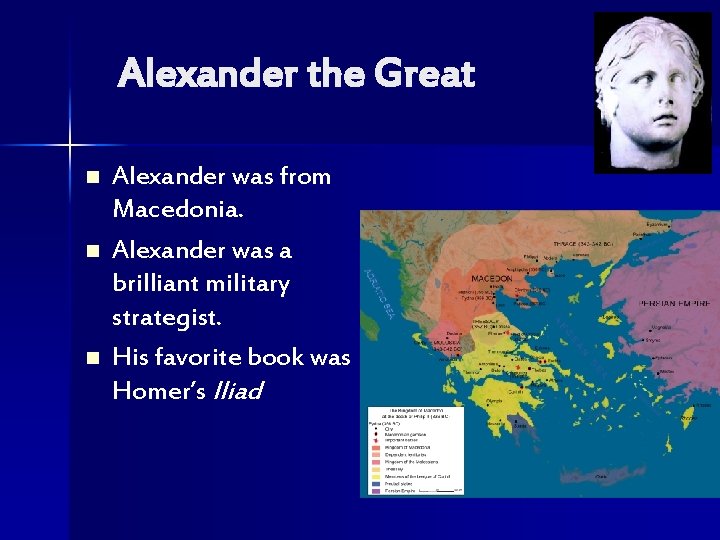
Alexander the Great n n n Alexander was from Macedonia. Alexander was a brilliant military strategist. His favorite book was Homer’s Iliad
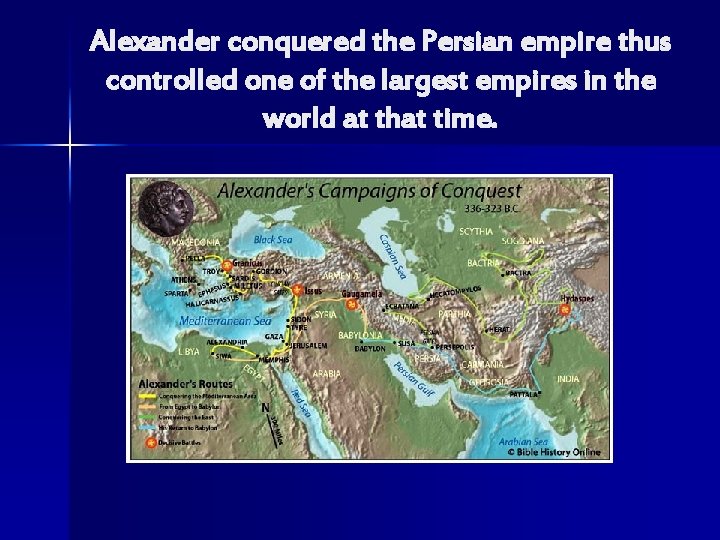
Alexander conquered the Persian empire thus controlled one of the largest empires in the world at that time.

What happens when cultures blend together?
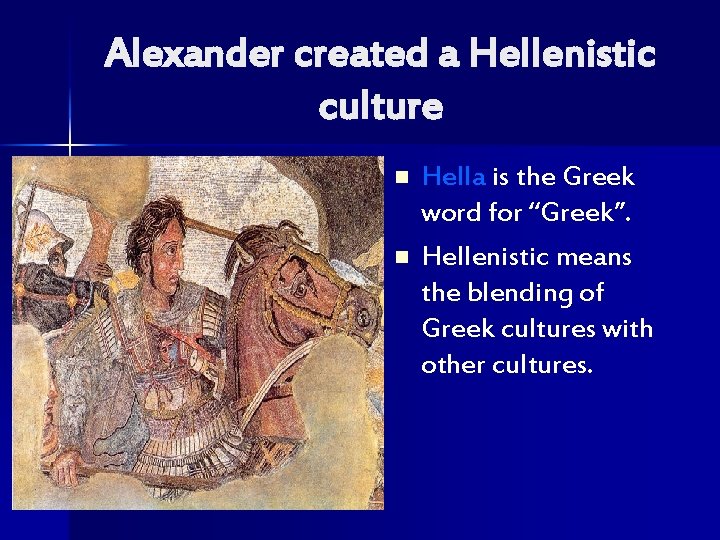
Alexander created a Hellenistic culture n n Hella is the Greek word for “Greek”. Hellenistic means the blending of Greek cultures with other cultures.
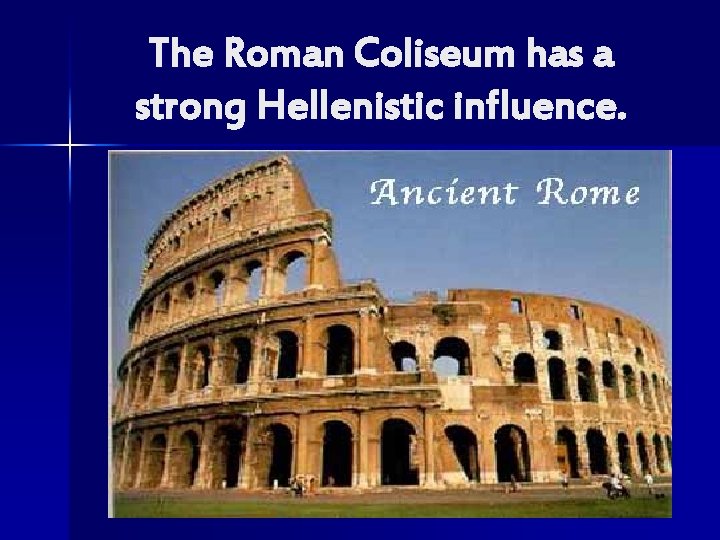
The Roman Coliseum has a strong Hellenistic influence.
- Slides: 59