
Ancient Greece Element Compare the origins and structure

- Slides: 19
Ancient Greece • Element: Compare the origins and structure of the Greek polis, the Roman Republic, and the Roman Empire. • Vocabulary: Greek Polis
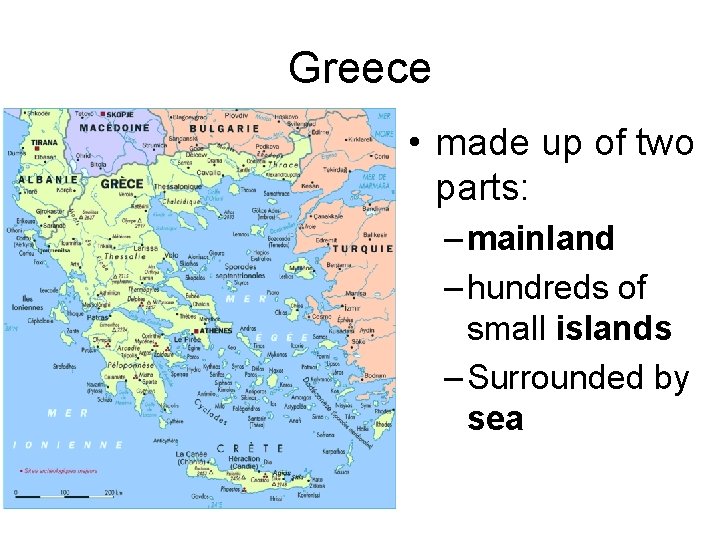
Greece • made up of two parts: – mainland – hundreds of small islands – Surrounded by sea
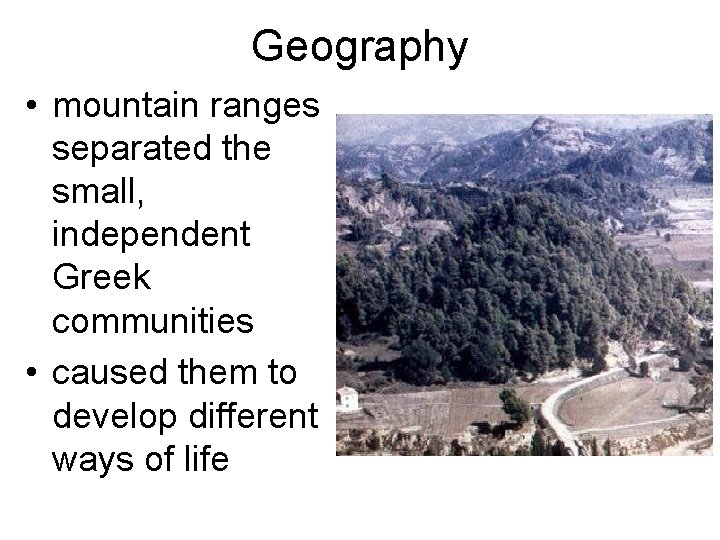
Geography • mountain ranges separated the small, independent Greek communities • caused them to develop different ways of life
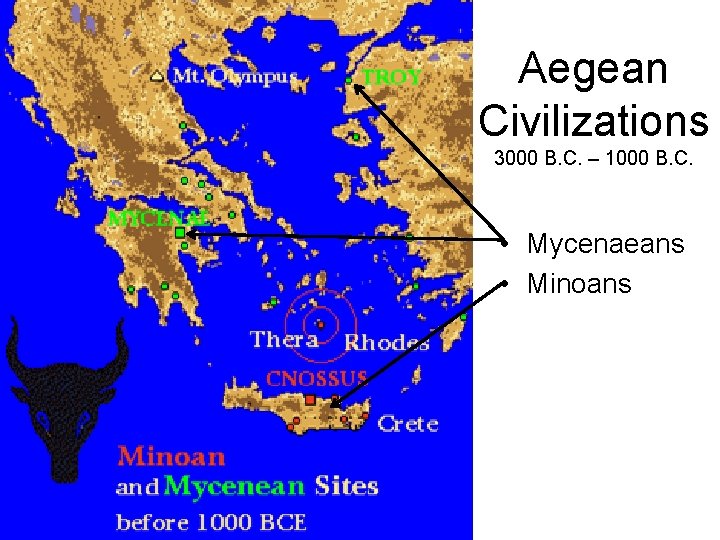
Aegean Civilizations 3000 B. C. – 1000 B. C. • Mycenaeans • Minoans
Minoan Civilization • • earliest known Greek culture 3000 -1450 BCE competed with Phoenicians Traded goods – painted pottery they produced – Swords – Figurines – vessels of precious metals
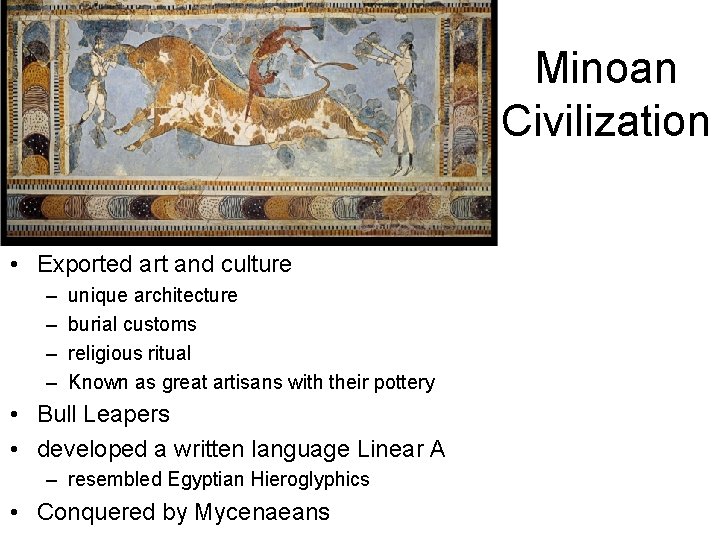
Minoan Civilization • Exported art and culture – – unique architecture burial customs religious ritual Known as great artisans with their pottery • Bull Leapers • developed a written language Linear A – resembled Egyptian Hieroglyphics • Conquered by Mycenaeans
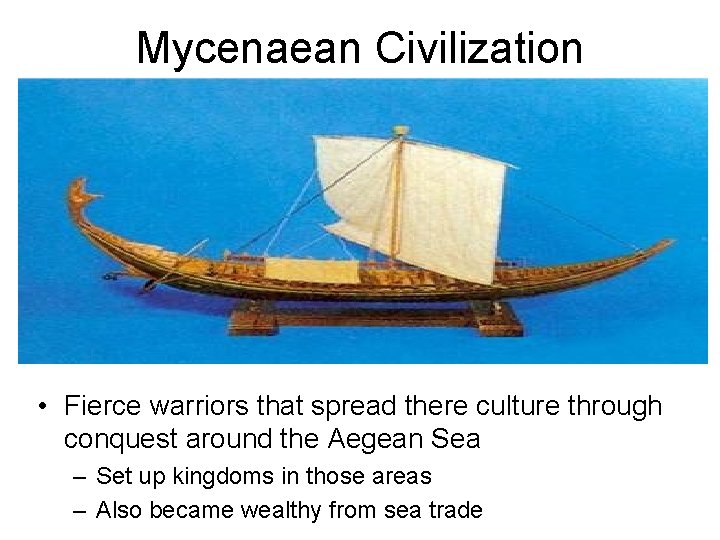
Mycenaean Civilization • Fierce warriors that spread there culture through conquest around the Aegean Sea – Set up kingdoms in those areas – Also became wealthy from sea trade
Mycenaean civilization • • • “Bronze Age” named for the fortified site at Mycenae flourished between 1600 and 1100 B. C. high point was 1400– 1200 B. C. powerful monarchs lived in fortified palaces built on hills and surrounded by stone walls
Mycenaean Civilization • military adventures recorded – hundreds of years later – Homer’s epic poems • the Iliad and Odyssey • Trojan War
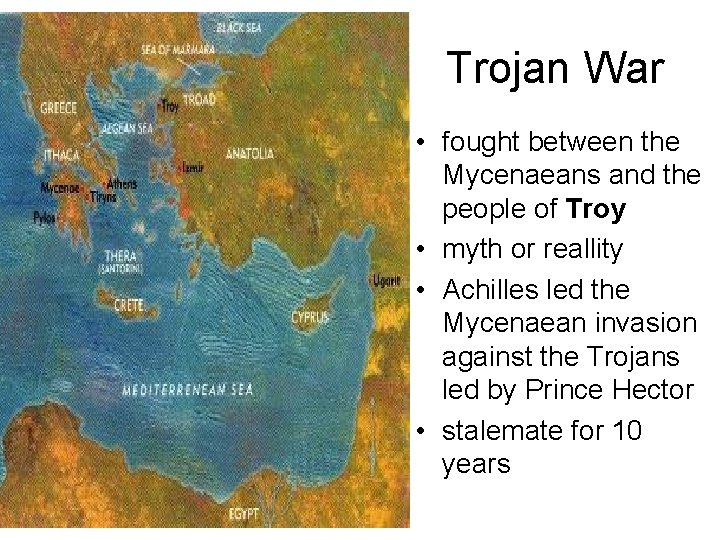
Trojan War • fought between the Mycenaeans and the people of Troy • myth or reallity • Achilles led the Mycenaean invasion against the Trojans led by Prince Hector • stalemate for 10 years
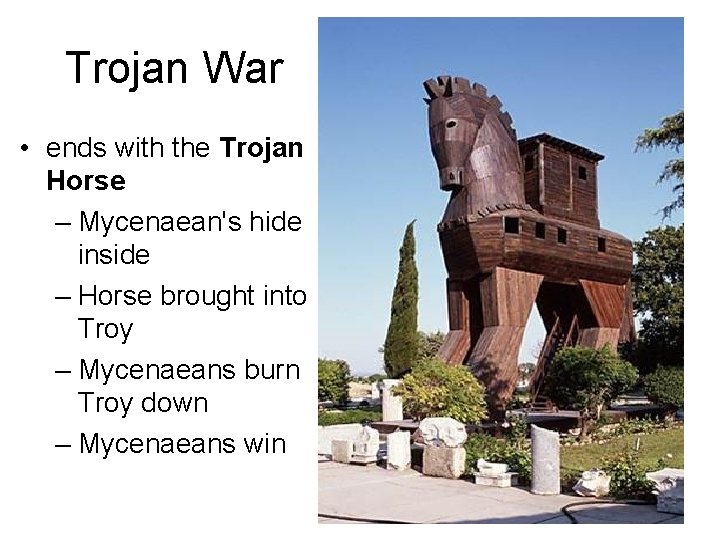
Trojan War • ends with the Trojan Horse – Mycenaean's hide inside – Horse brought into Troy – Mycenaeans burn Troy down – Mycenaeans win
Mycenaean Civilization • collapsed around 1100 B. C. • conquered by the Dorian Civilization • entered into a Dark Age
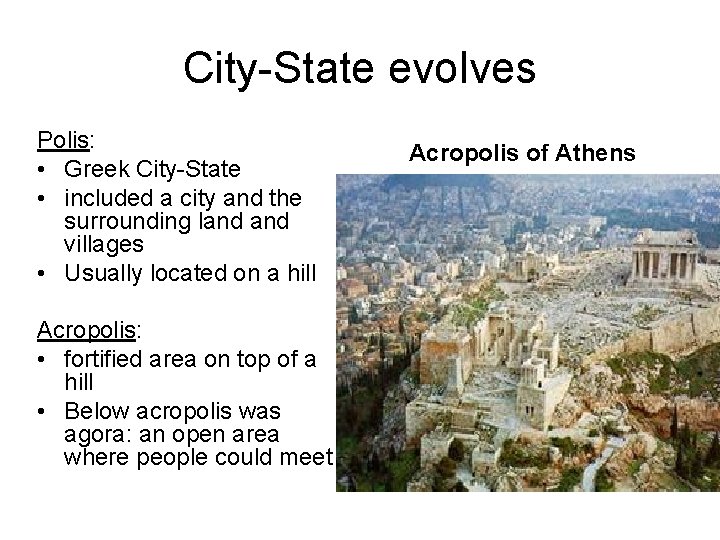
City-State evolves Polis: • Greek City-State • included a city and the surrounding land villages • Usually located on a hill Acropolis: • fortified area on top of a hill • Below acropolis was agora: an open area where people could meet Acropolis of Athens
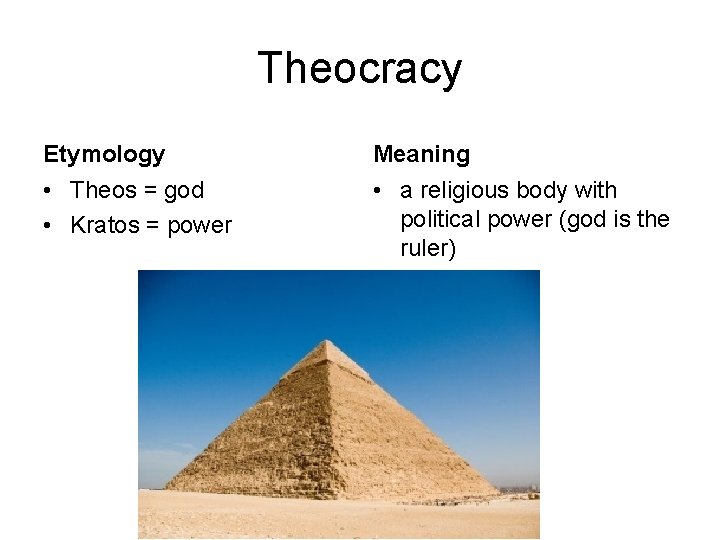
Theocracy Etymology Meaning • Theos = god • Kratos = power • a religious body with political power (god is the ruler)
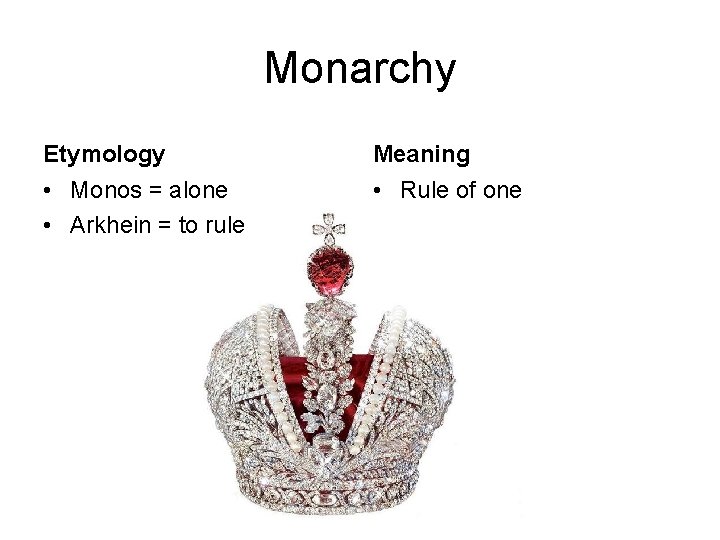
Monarchy Etymology Meaning • Monos = alone • Arkhein = to rule • Rule of one
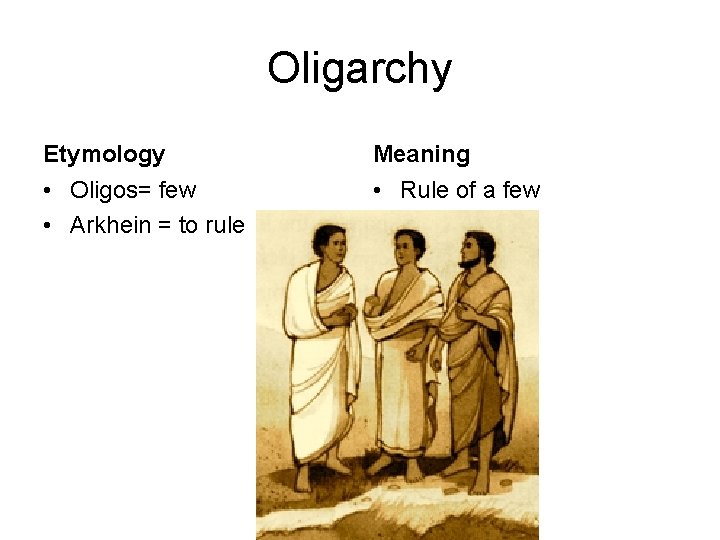
Oligarchy Etymology Meaning • Oligos= few • Arkhein = to rule • Rule of a few
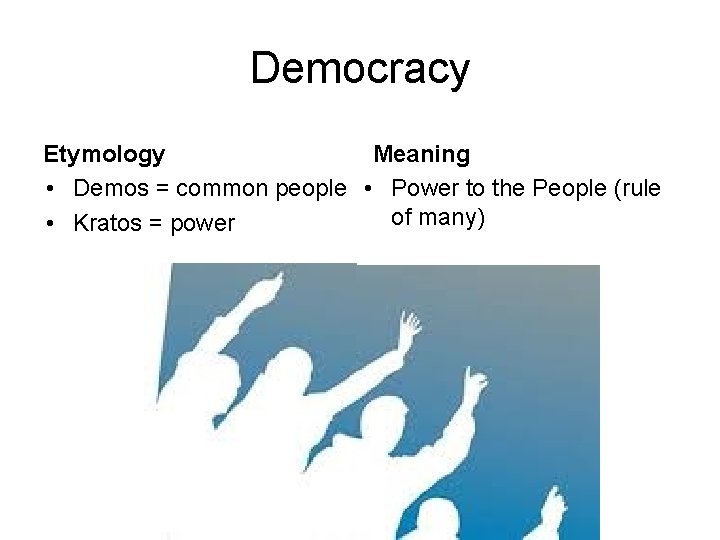
Democracy Etymology Meaning • Demos = common people • Power to the People (rule of many) • Kratos = power
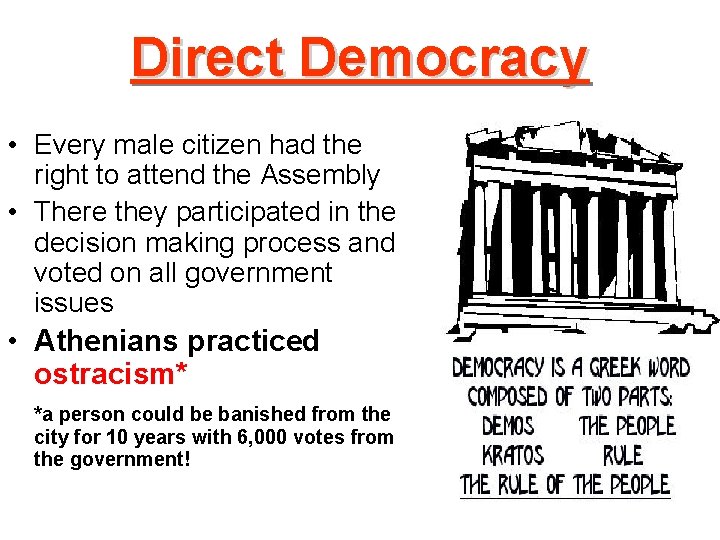
Direct Democracy • Every male citizen had the right to attend the Assembly • There they participated in the decision making process and voted on all government issues • Athenians practiced ostracism* *a person could be banished from the city for 10 years with 6, 000 votes from the government!