
Ancient Greece Ancient Greece Intro 1 Roster 2

- Slides: 30
Ancient Greece
Ancient Greece • Intro – 1. Roster – 2. Introduction – 3. Syllabus (online/onscreen) – 4. Schedule (online/onscreen) – 5. questions; break? – 6. Greece introduction – 7. Geography – 8. Slides: Franchthi etc.
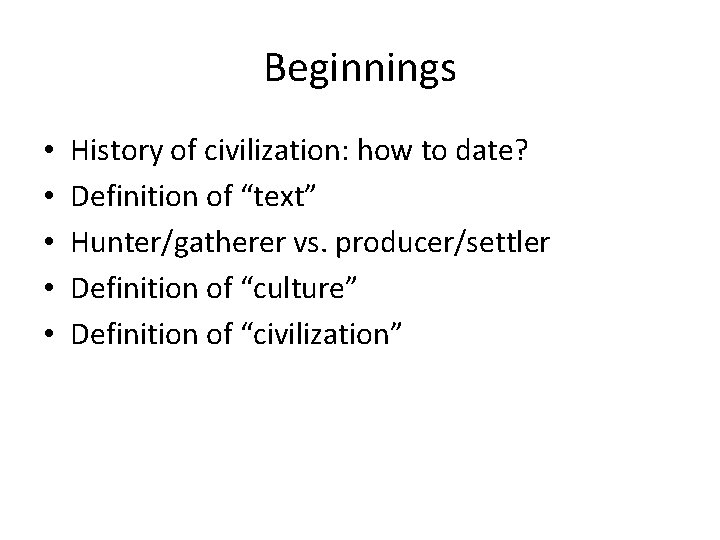
Beginnings • • • History of civilization: how to date? Definition of “text” Hunter/gatherer vs. producer/settler Definition of “culture” Definition of “civilization”
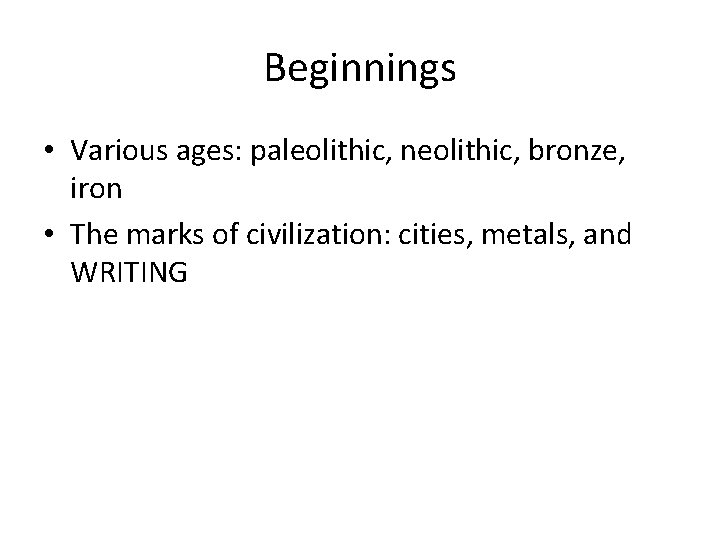
Beginnings • Various ages: paleolithic, neolithic, bronze, iron • The marks of civilization: cities, metals, and WRITING
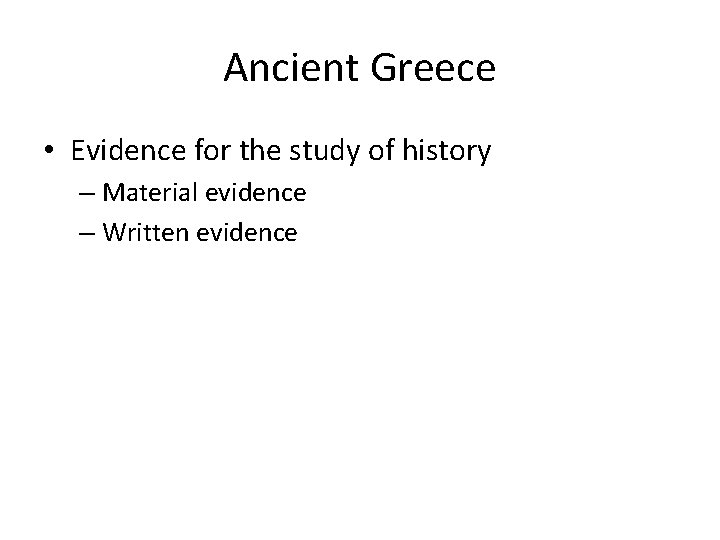
Ancient Greece • Evidence for the study of history – Material evidence – Written evidence
Ancient Greece • Evidence for the study of history – Material evidence • Metal artifacts • Terra cotta artifacts – Written evidence
Ancient Greece • Evidence for the study of history – Material evidence • Metal artifacts • Terra cotta artifacts – Written evidence • Media: clay, stone, metal, papyrus, parchment • Language
Ancient Greece • Evidence for the study of history – Material evidence • Metal artifacts • Terra cotta artifacts – Written evidence • Media: clay, stone, metal, papyrus, parchment • Language – A FRACTION of what once was
Ancient Greece • Evidence for the study of history – Material evidence • Metal artifacts • Terra cotta artifacts – Written evidence • Media: clay, stone, metal, papyrus, parchment • Language – A FRACTION of what once was – Implications?
Ancient Greece • Sources for the study of Ancient Greece – 3000 bc-700 bc • Some Linear B tablets (Late Bronze Age) • Dark Age silence • Oral tradition (cyclic epic) = Homeric literature – 700 bc-480 bc • Homer & Hesiod • Archaic poets • Later writers looking backwards (e. g. classical historiographers, and Xenophon and Plutarch on Sparta)
Ancient Greece • Sources for the study of Ancient Greece – 480 bc-323 bc • • Historiographers Drama Philosophy Oratory – 323 bc-31 bc • Limited historiography • Public record • Literary scholars and academic interest
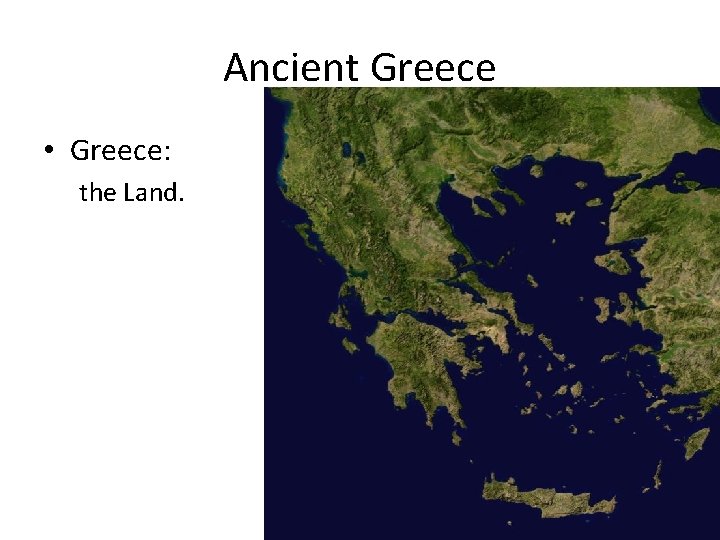
Ancient Greece • Greece: the Land.
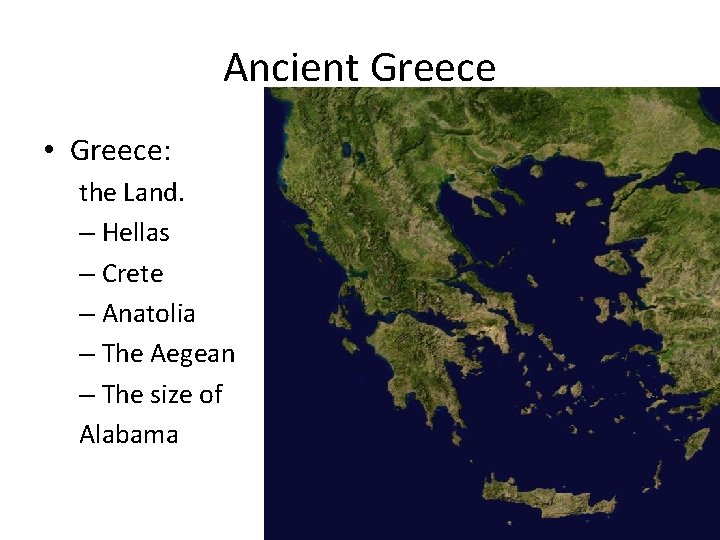
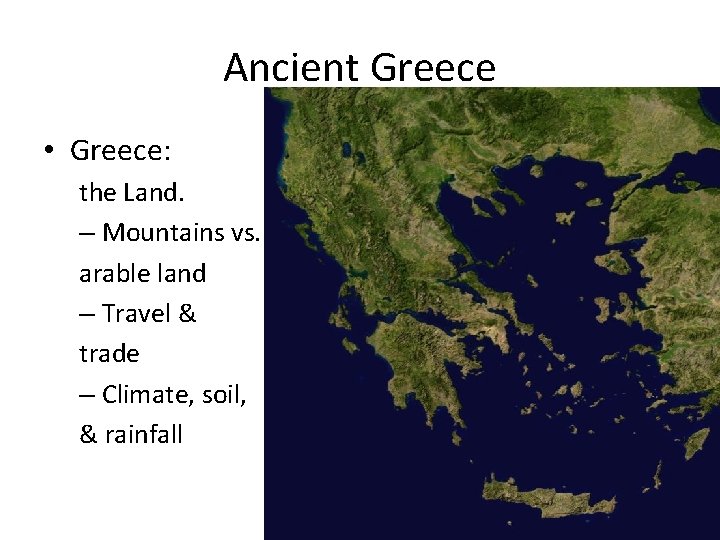
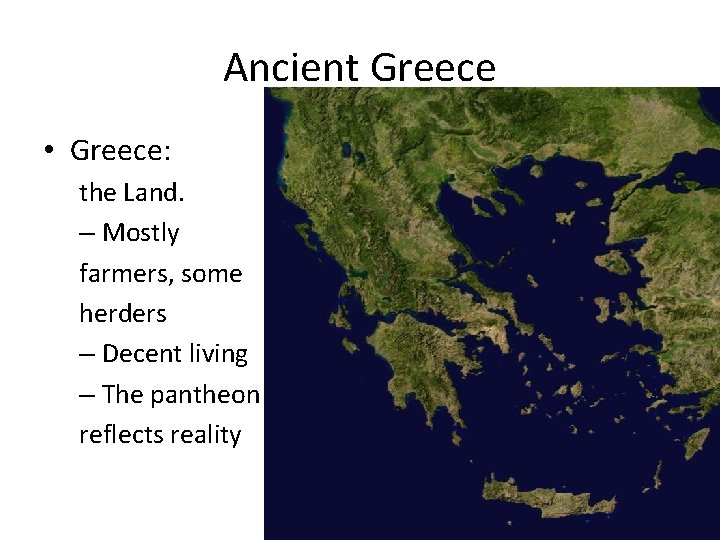
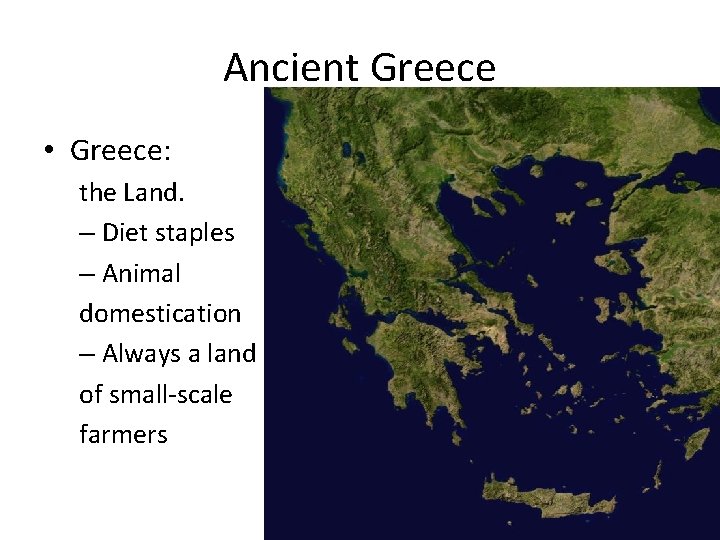
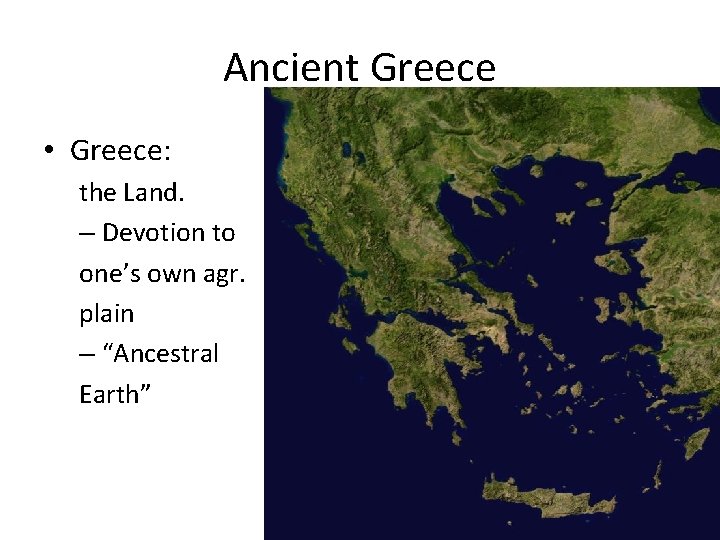
Ancient Greece • Greece: the Land. – Hellas – Crete – Anatolia – The Aegean – The size of Alabama
Ancient Greece • Greece: the Land. – Mountains vs. arable land – Travel & trade – Climate, soil, & rainfall
Ancient Greece • Greece: the Land. – Mostly farmers, some herders – Decent living – The pantheon reflects reality
Ancient Greece • Greece: the Land. – Diet staples – Animal domestication – Always a land of small-scale farmers
Ancient Greece • Greece: the Land. – Devotion to one’s own agr. plain – “Ancestral Earth”
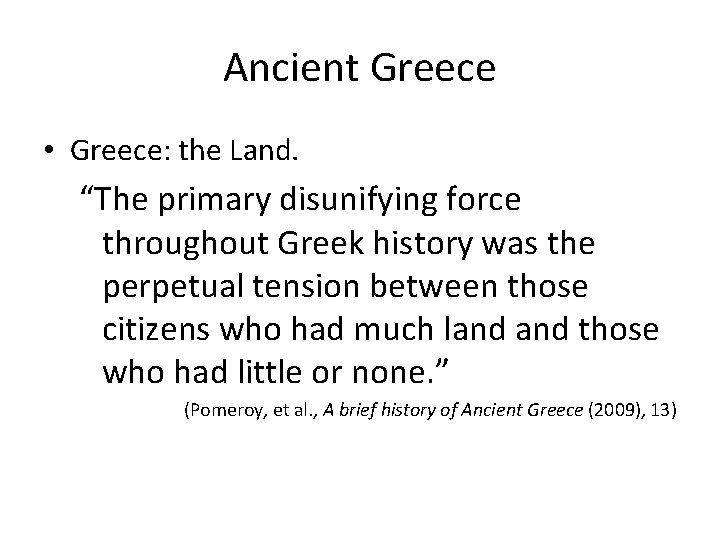
Ancient Greece • Greece: the Land. “The primary disunifying force throughout Greek history was the perpetual tension between those citizens who had much land those who had little or none. ” (Pomeroy, et al. , A brief history of Ancient Greece (2009), 13)
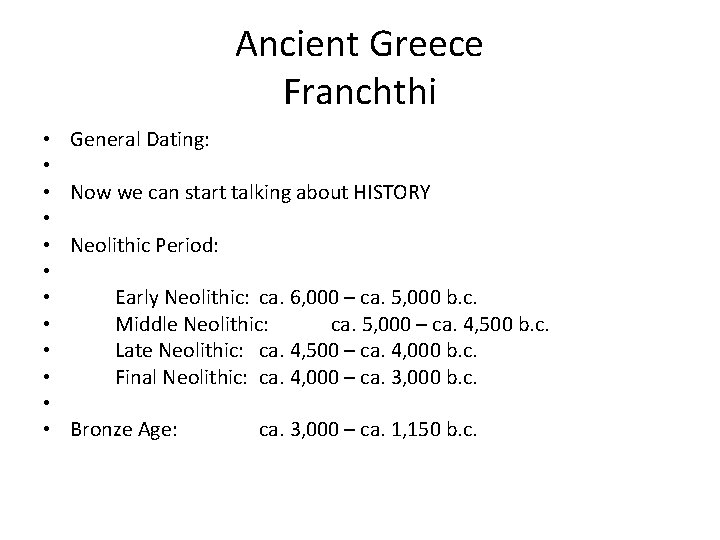
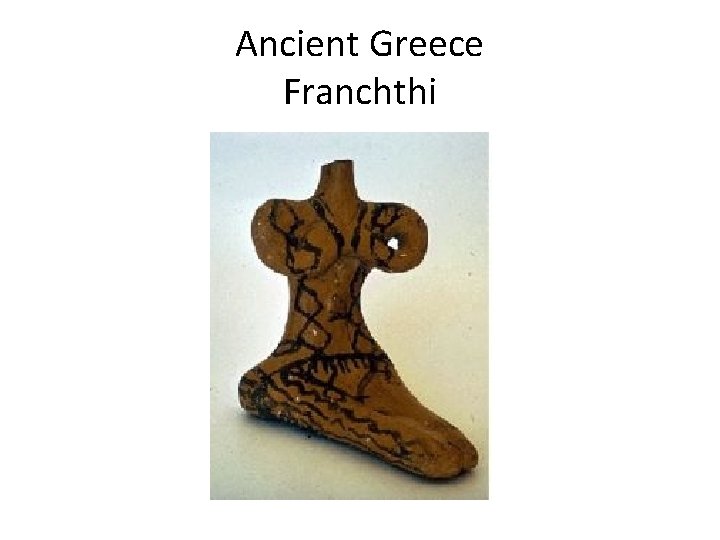
Ancient Greece Franchthi • • • General Dating: Now we can start talking about HISTORY Neolithic Period: Early Neolithic: ca. 6, 000 – ca. 5, 000 b. c. Middle Neolithic: ca. 5, 000 – ca. 4, 500 b. c. Late Neolithic: ca. 4, 500 – ca. 4, 000 b. c. Final Neolithic: ca. 4, 000 – ca. 3, 000 b. c. Bronze Age: ca. 3, 000 – ca. 1, 150 b. c.
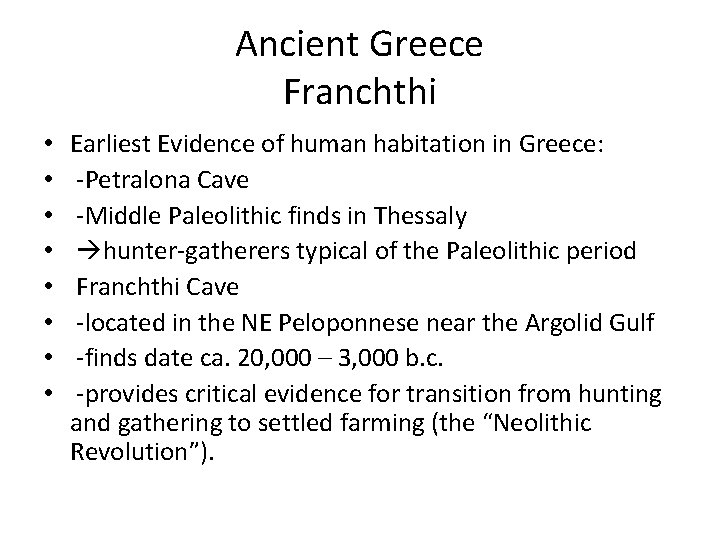
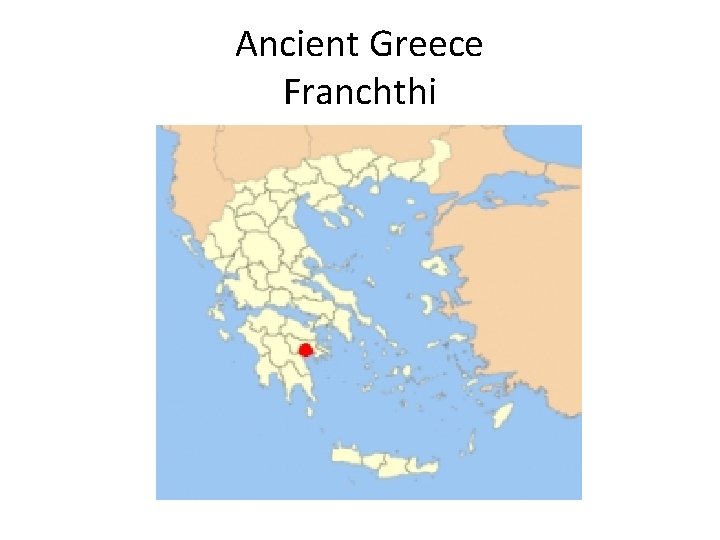
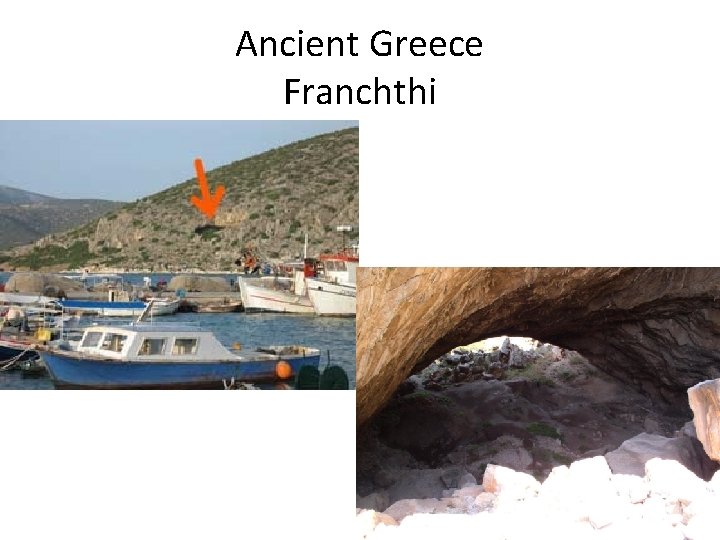
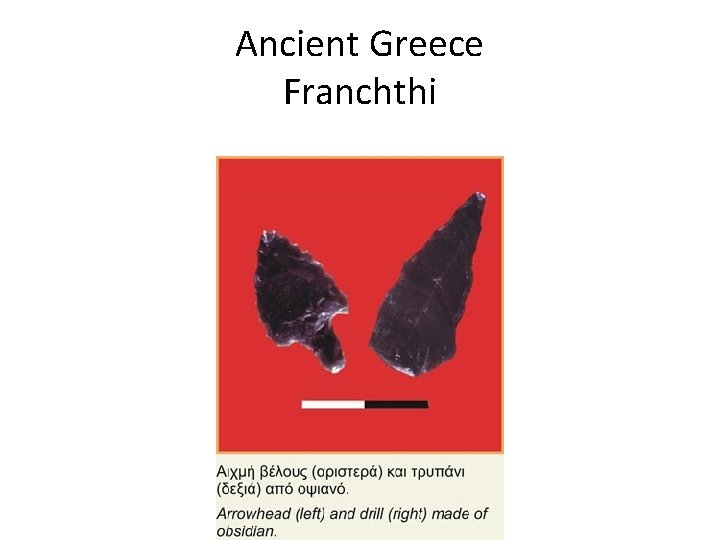
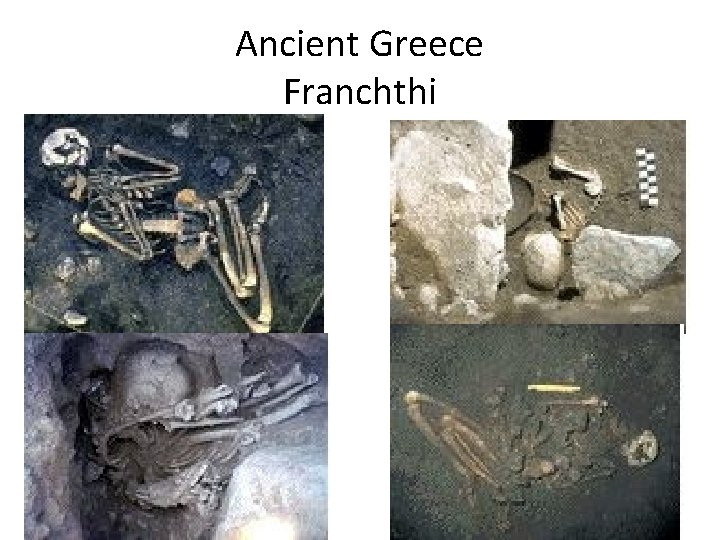
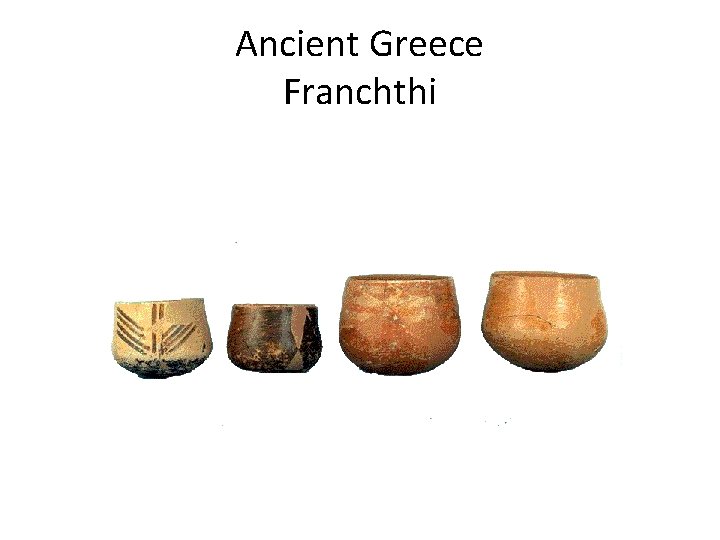
Ancient Greece Franchthi • • Earliest Evidence of human habitation in Greece: -Petralona Cave -Middle Paleolithic finds in Thessaly hunter-gatherers typical of the Paleolithic period Franchthi Cave -located in the NE Peloponnese near the Argolid Gulf -finds date ca. 20, 000 – 3, 000 b. c. -provides critical evidence for transition from hunting and gathering to settled farming (the “Neolithic Revolution”).
Ancient Greece Franchthi
Ancient Greece Franchthi
Ancient Greece Franchthi
Ancient Greece Franchthi
Ancient Greece Franchthi
Ancient Greece Franchthi
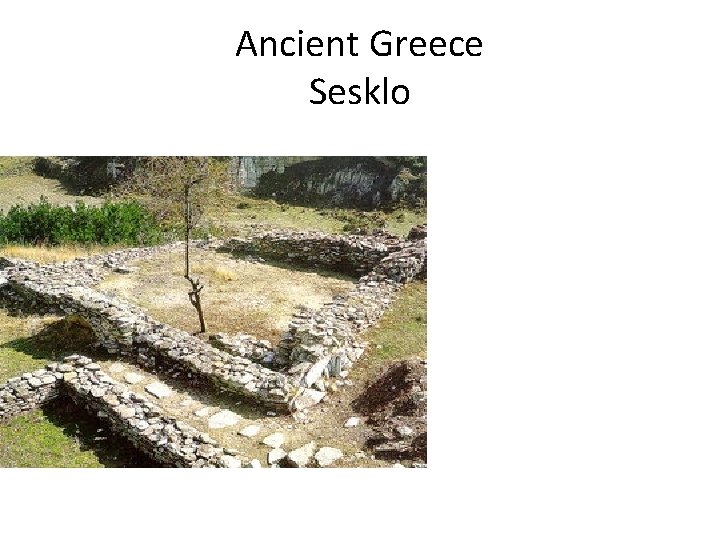
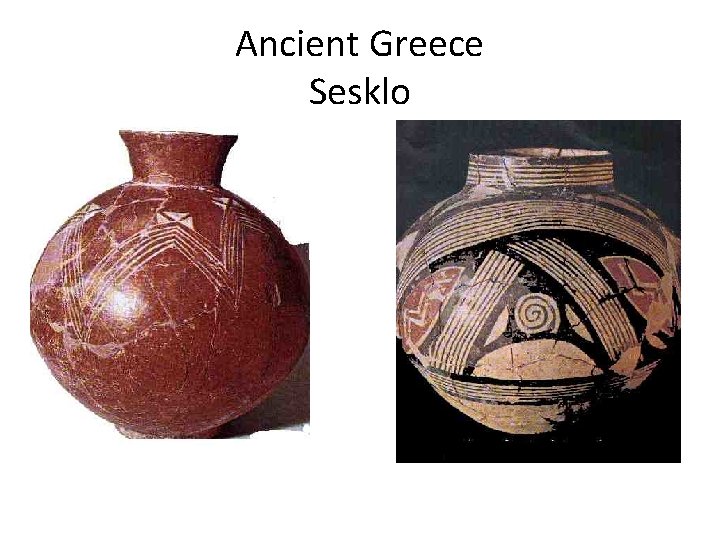
Ancient Greece Sesklo • • • • I. Features of Neolithic Period in Greece: -Appearance of settled communities -Domestication of animals and crops -Permanent buildings -Presence of obsidian at Neolithic site at Knossos and at sites in Thessaly and elsewhere indicate a “network of sea-borne contacts. ” (O. Dickinson, The Aegean Bronze Age. ) II. Features of Neolithic sites -most sites were in open positions -only identifiable permanent site is the farming village -permanence indicated by building materials and plan of buildings
Ancient Greece Sesklo • • III. The Farming Economy -Wheat, barley, lentils, peas and vetch were grown. -Livestock included sheep and goats, sometimes cattle and pigs. IV. Neolithic Sites in Thessaly in Northern Greece -Most intensive development of transition to a more settled way of life occurred in Thessaly and western Macedonia. • -‘Type’ Sites of Sesklo and Dimini are most important examples • -‘type site’ – a typical representative of a group of culturally similar sites
Ancient Greece Sesklo
Ancient Greece Sesklo