
Ancient Greece 700 B C 400 B C
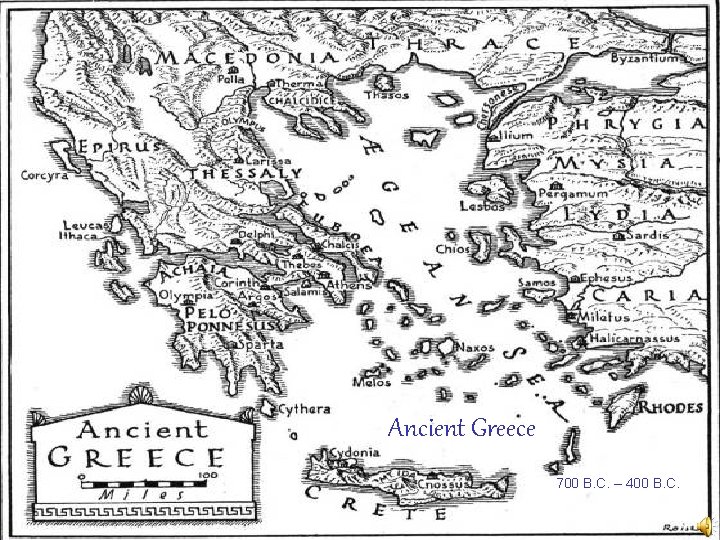
Ancient Greece 700 B. C. – 400 B. C.
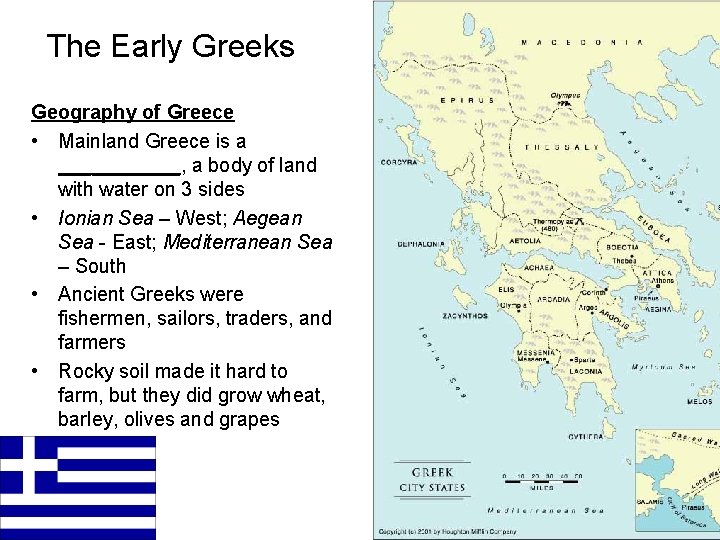
The Early Greeks Geography of Greece • Mainland Greece is a ______, a body of land with water on 3 sides • Ionian Sea – West; Aegean Sea - East; Mediterranean Sea – South • Ancient Greeks were fishermen, sailors, traders, and farmers • Rocky soil made it hard to farm, but they did grow wheat, barley, olives and grapes
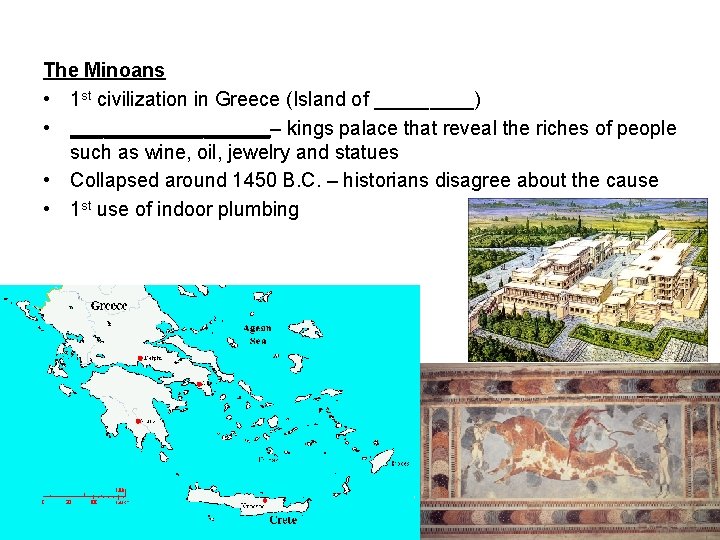
The Minoans • 1 st civilization in Greece (Island of _____) • _________– kings palace that reveal the riches of people such as wine, oil, jewelry and statues • Collapsed around 1450 B. C. – historians disagree about the cause • 1 st use of indoor plumbing
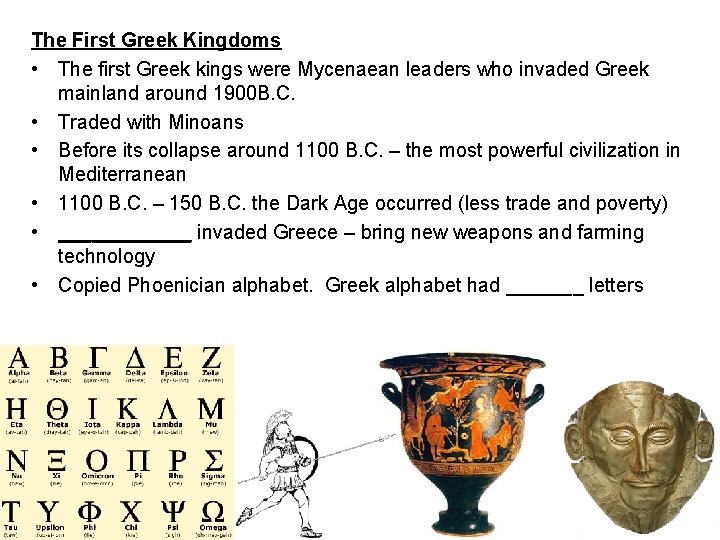
The First Greek Kingdoms • The first Greek kings were Mycenaean leaders who invaded Greek mainland around 1900 B. C. • Traded with Minoans • Before its collapse around 1100 B. C. – the most powerful civilization in Mediterranean • 1100 B. C. – 150 B. C. the Dark Age occurred (less trade and poverty) • ______ invaded Greece – bring new weapons and farming technology • Copied Phoenician alphabet. Greek alphabet had _______ letters
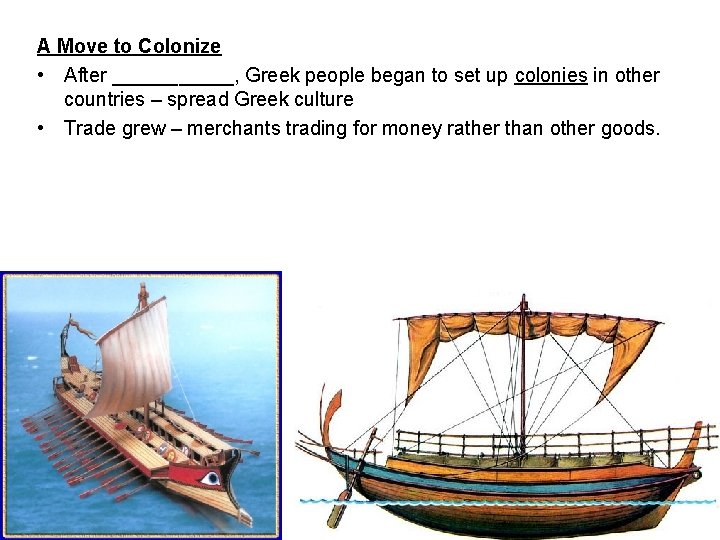
A Move to Colonize • After ______, Greek people began to set up colonies in other countries – spread Greek culture • Trade grew – merchants trading for money rather than other goods.
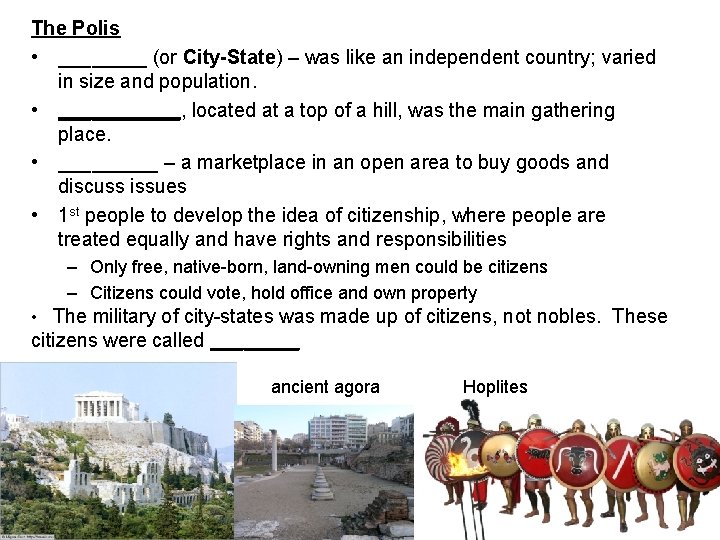
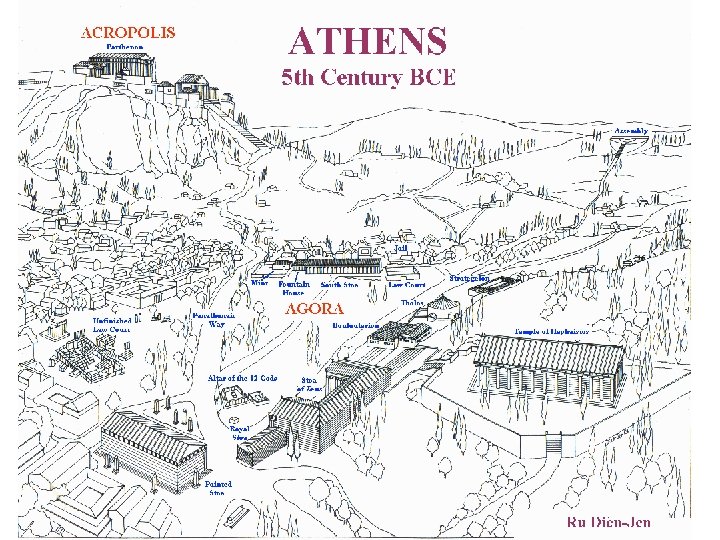
The Polis • ____ (or City-State) – was like an independent country; varied in size and population. • ______, located at a top of a hill, was the main gathering place. • _____ – a marketplace in an open area to buy goods and discuss issues • 1 st people to develop the idea of citizenship, where people are treated equally and have rights and responsibilities – Only free, native-born, land-owning men could be citizens – Citizens could vote, hold office and own property • The military of city-states was made up of citizens, not nobles. These citizens were called ____ ancient agora Hoplites
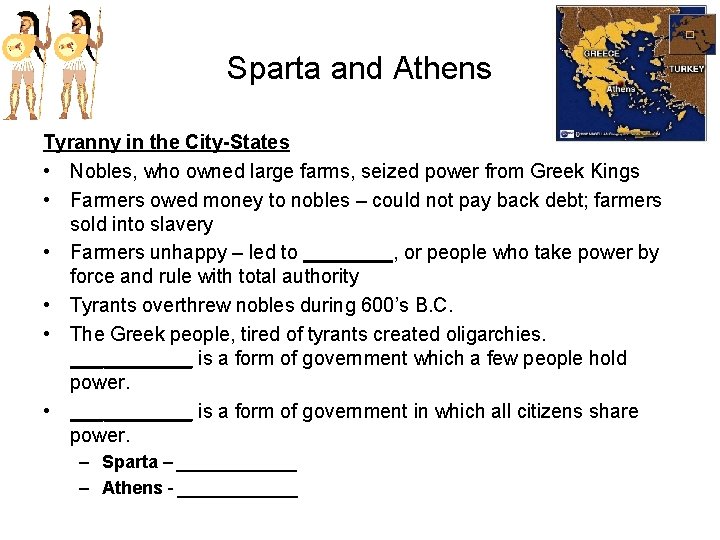
Sparta and Athens Tyranny in the City-States • Nobles, who owned large farms, seized power from Greek Kings • Farmers owed money to nobles – could not pay back debt; farmers sold into slavery • Farmers unhappy – led to ____, or people who take power by force and rule with total authority • Tyrants overthrew nobles during 600’s B. C. • The Greek people, tired of tyrants created oligarchies. ______ is a form of government which a few people hold power. • ______ is a form of government in which all citizens share power. – Sparta – ______ – Athens - ______
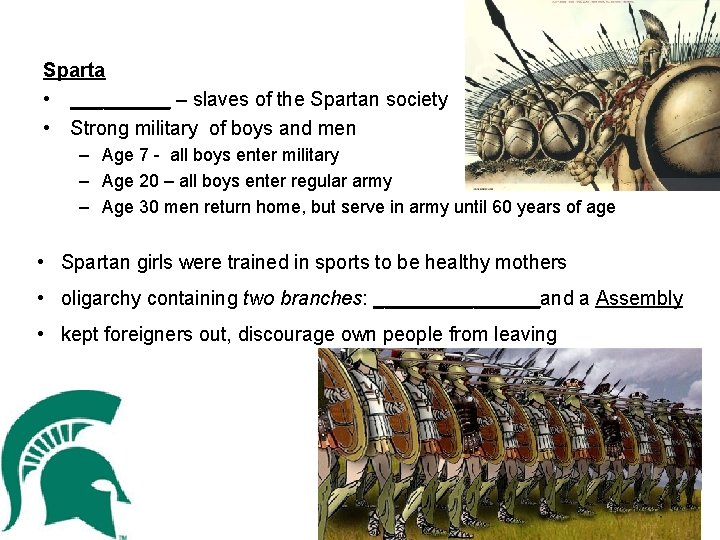
Sparta • _____ – slaves of the Spartan society • Strong military of boys and men – Age 7 - all boys enter military – Age 20 – all boys enter regular army – Age 30 men return home, but serve in army until 60 years of age • Spartan girls were trained in sports to be healthy mothers • oligarchy containing two branches: ________and a Assembly • kept foreigners out, discourage own people from leaving
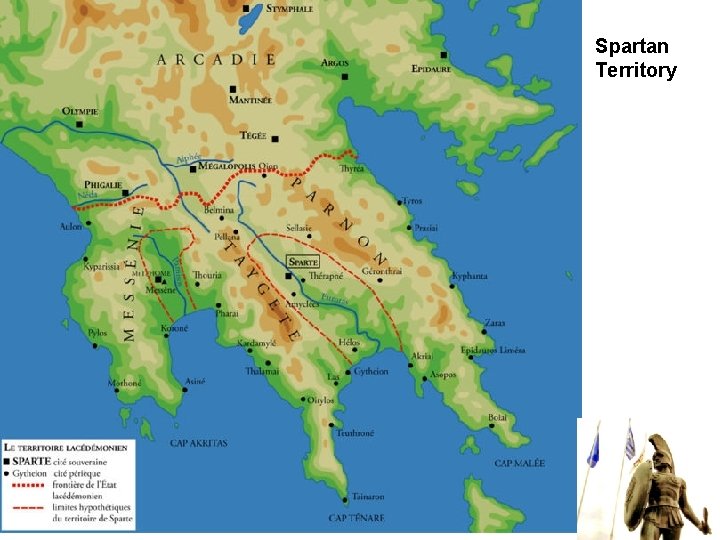
Spartan Territory
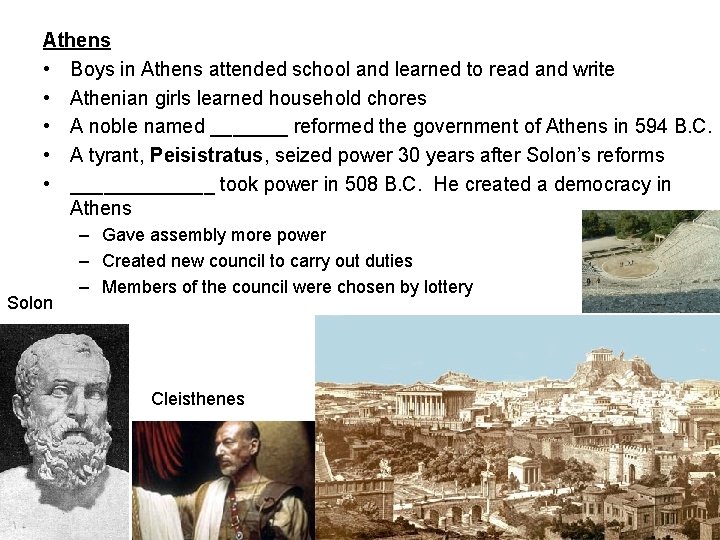
Athens • Boys in Athens attended school and learned to read and write • Athenian girls learned household chores • A noble named _______ reformed the government of Athens in 594 B. C. • A tyrant, Peisistratus, seized power 30 years after Solon’s reforms • _______ took power in 508 B. C. He created a democracy in Athens Solon – Gave assembly more power – Created new council to carry out duties – Members of the council were chosen by lottery Cleisthenes
Greek Gods The Titans, also known as the elder gods, ruled the earth before the Olympians overthrew them. The ruler of the Titans was Cronus who was de-throned by his son Zeus. Most of the Titans fought with Cronus against Zeus and were punished by being banished to Tartarus. During their rule the Titans were associated with the various planets. Gaea Uranus Cronus Rhea Atlas Gaea is the Earth goddess. She mated with her son Uranus to produce the remaining Titans Uranus is the sky god and first ruler His wife was Rhea. There offspring were the first of the Olympians. To insure his safety Cronus ate each of the children as they were born. This worked until Rhea, unhappy at the loss of her children, tricked Cronus into swallowing a rock, instead of Zeus. When he grew up Zeus would revolt against Cronus and the other Titans, defeat them, and banish them to Tartarus in the underworld Rhea was the wife of Cronus Atlas fought with the other Titans supporting Cronus against Zeus. As punishment – must hold the world on his back
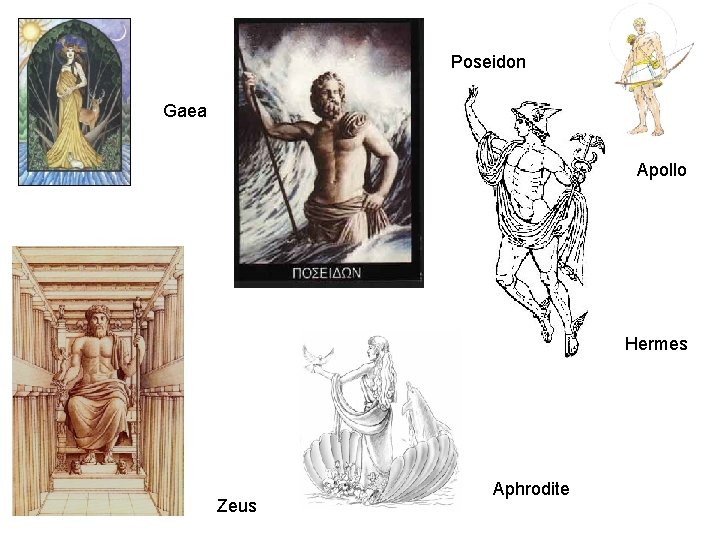
Poseidon Gaea Apollo Hermes Zeus Aphrodite
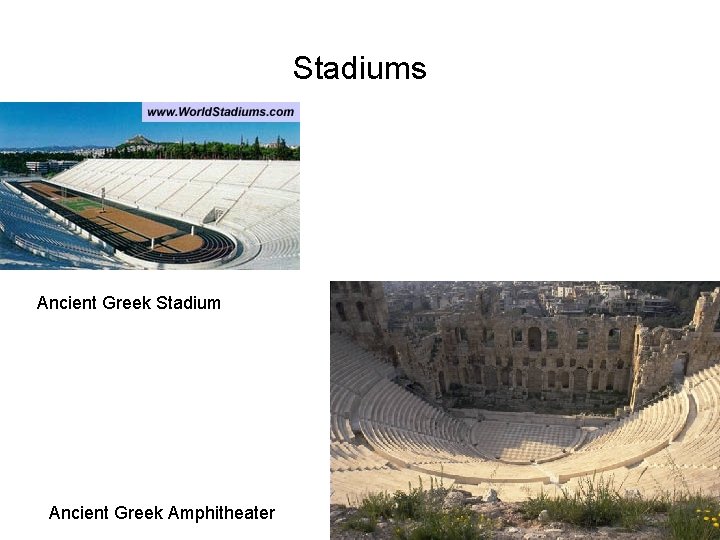
Stadiums Ancient Greek Stadium Ancient Greek Amphitheater
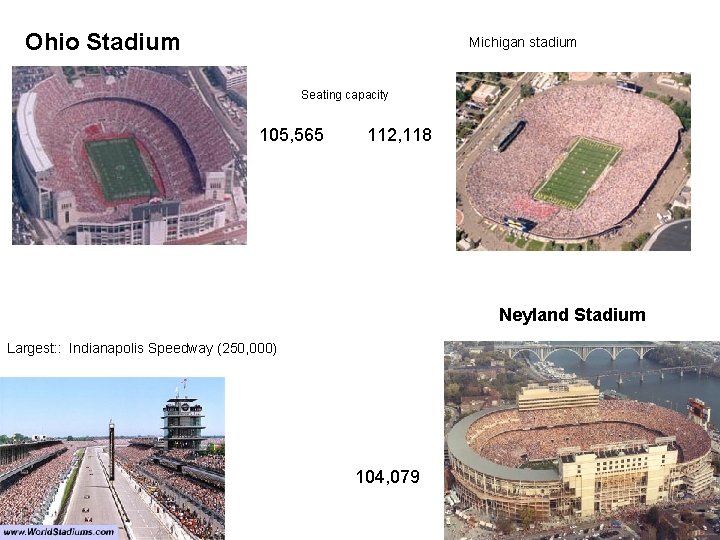
Ohio Stadium Michigan stadium Seating capacity 105, 565 112, 118 Neyland Stadium Largest: : Indianapolis Speedway (250, 000) 104, 079
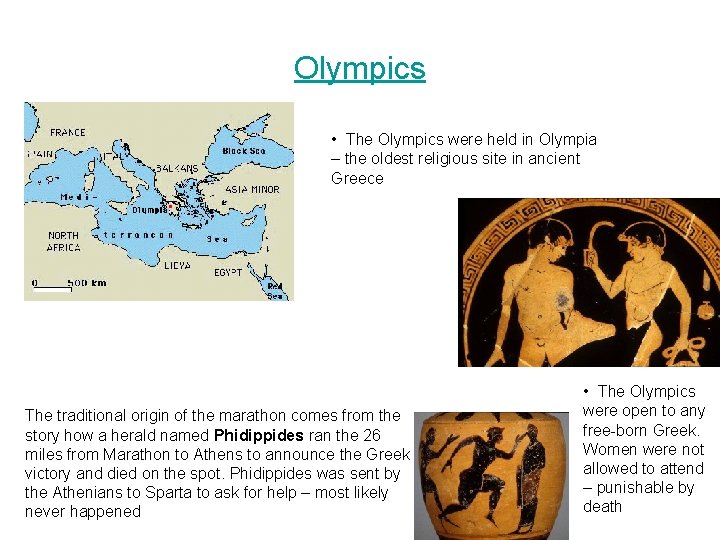
Olympics • The Olympics were held in Olympia – the oldest religious site in ancient Greece The traditional origin of the marathon comes from the story how a herald named Phidippides ran the 26 miles from Marathon to Athens to announce the Greek victory and died on the spot. Phidippides was sent by the Athenians to Sparta to ask for help – most likely never happened • The Olympics were open to any free-born Greek. Women were not allowed to attend – punishable by death
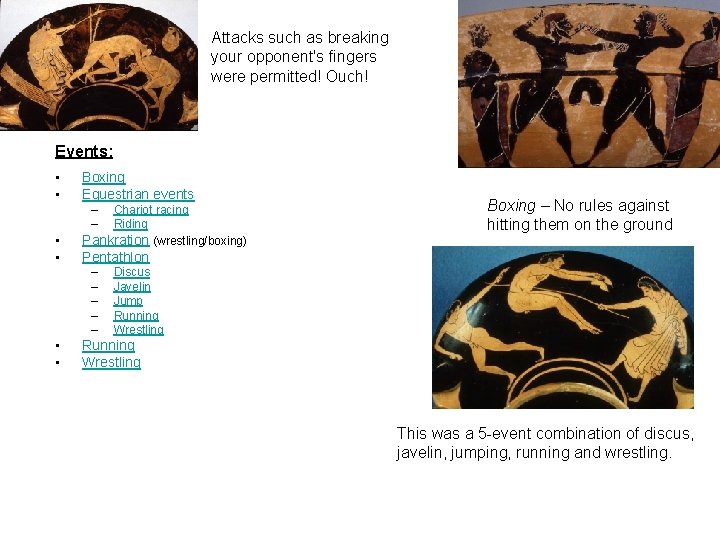
Attacks such as breaking your opponent's fingers were permitted! Ouch! Events: • • Boxing Equestrian events – – • • Chariot racing Riding Pankration (wrestling/boxing) Pentathlon – – – • • Boxing – No rules against hitting them on the ground Discus Javelin Jump Running Wrestling This was a 5 -event combination of discus, javelin, jumping, running and wrestling.
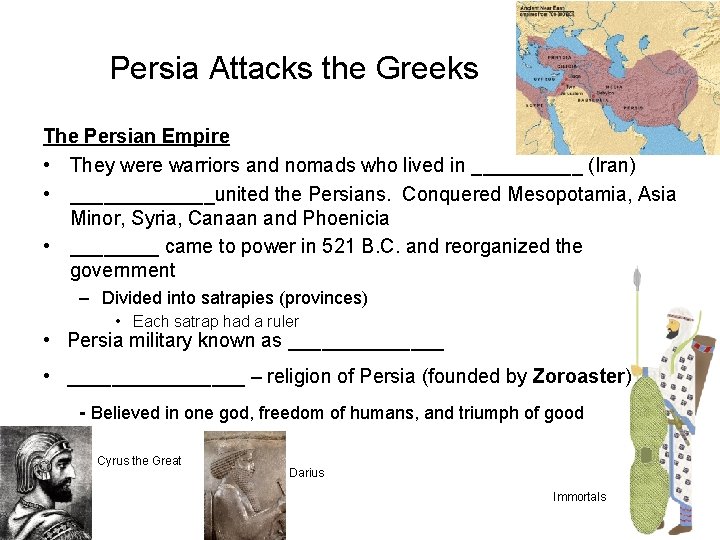
Persia Attacks the Greeks The Persian Empire • They were warriors and nomads who lived in _____ (Iran) • _______united the Persians. Conquered Mesopotamia, Asia Minor, Syria, Canaan and Phoenicia • ____ came to power in 521 B. C. and reorganized the government – Divided into satrapies (provinces) • Each satrap had a ruler • Persia military known as _______ • ________ – religion of Persia (founded by Zoroaster) - Believed in one god, freedom of humans, and triumph of good Cyrus the Great Darius Immortals
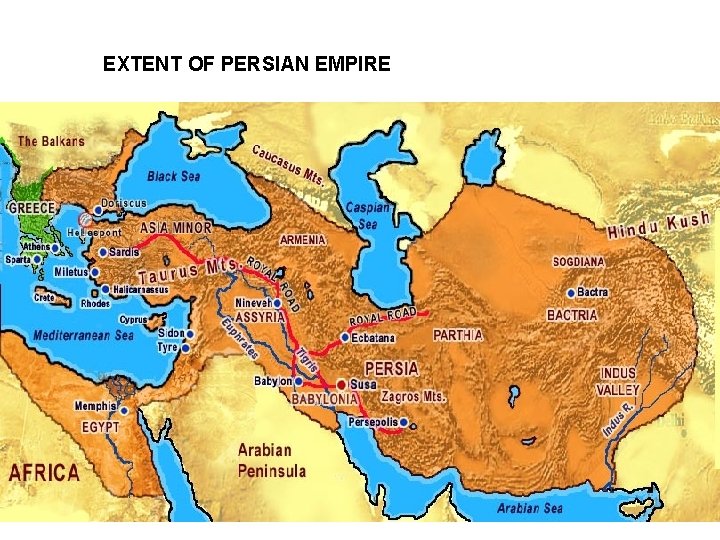
EXTENT OF PERSIAN EMPIRE
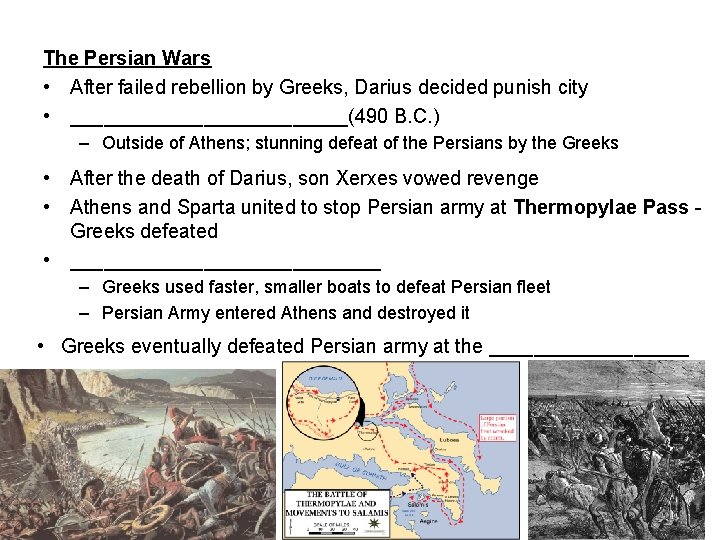
The Persian Wars • After failed rebellion by Greeks, Darius decided punish city • _____________(490 B. C. ) – Outside of Athens; stunning defeat of the Persians by the Greeks • After the death of Darius, son Xerxes vowed revenge • Athens and Sparta united to stop Persian army at Thermopylae Pass Greeks defeated • ______________ – Greeks used faster, smaller boats to defeat Persian fleet – Persian Army entered Athens and destroyed it • Greeks eventually defeated Persian army at the _________
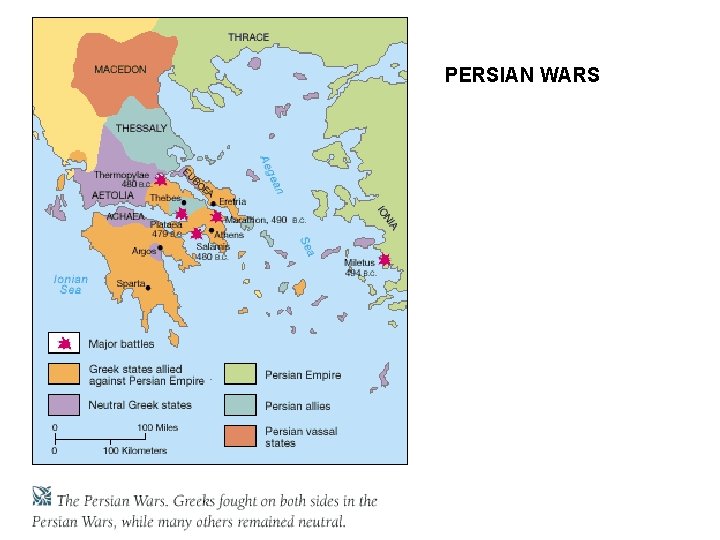
PERSIAN WARS
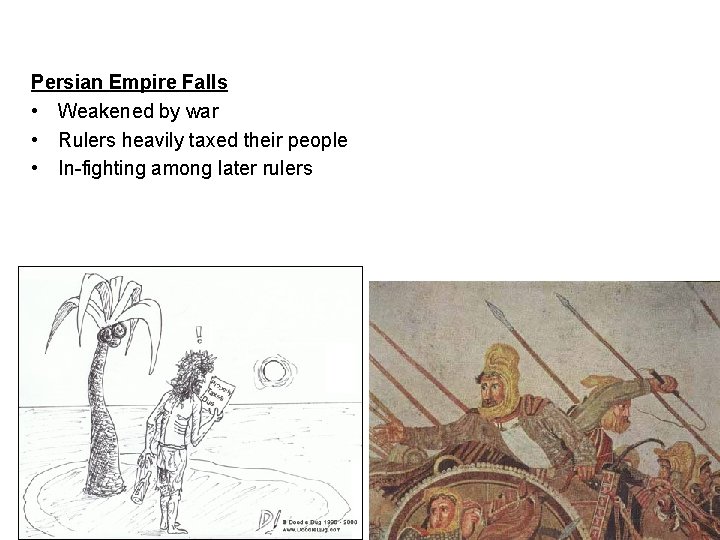
Persian Empire Falls • Weakened by war • Rulers heavily taxed their people • In-fighting among later rulers
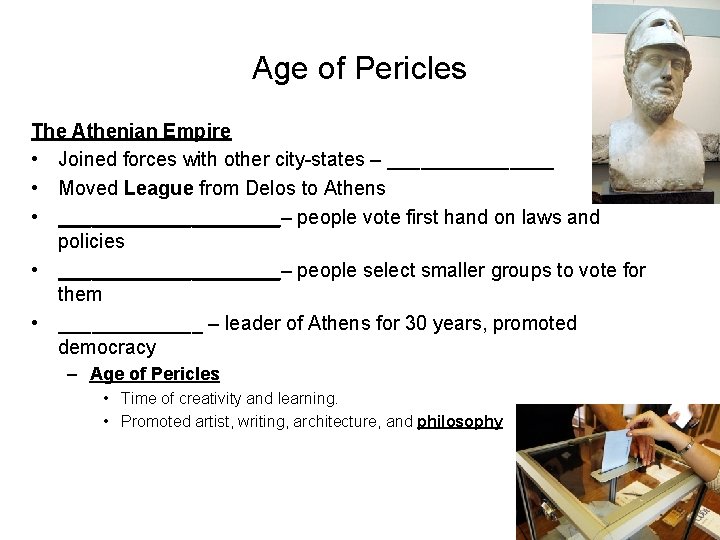
Age of Pericles The Athenian Empire • Joined forces with other city-states – ________ • Moved League from Delos to Athens • __________– people vote first hand on laws and policies • __________– people select smaller groups to vote for them • _______ – leader of Athens for 30 years, promoted democracy – Age of Pericles • Time of creativity and learning. • Promoted artist, writing, architecture, and philosophy
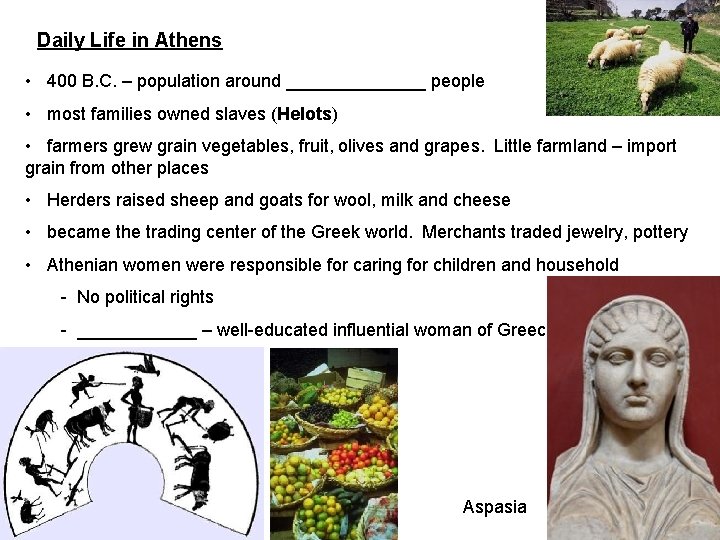
Daily Life in Athens • 400 B. C. – population around _______ people • most families owned slaves (Helots) • farmers grew grain vegetables, fruit, olives and grapes. Little farmland – import grain from other places • Herders raised sheep and goats for wool, milk and cheese • became the trading center of the Greek world. Merchants traded jewelry, pottery • Athenian women were responsible for caring for children and household - No political rights - ______ – well-educated influential woman of Greece Aspasia
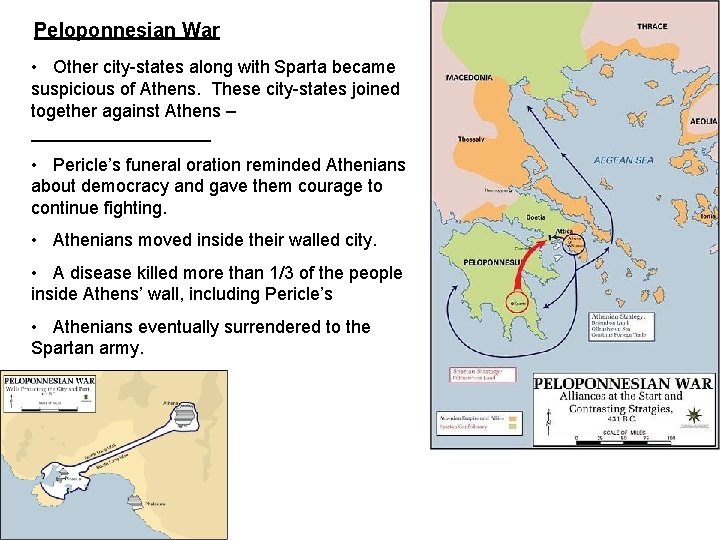
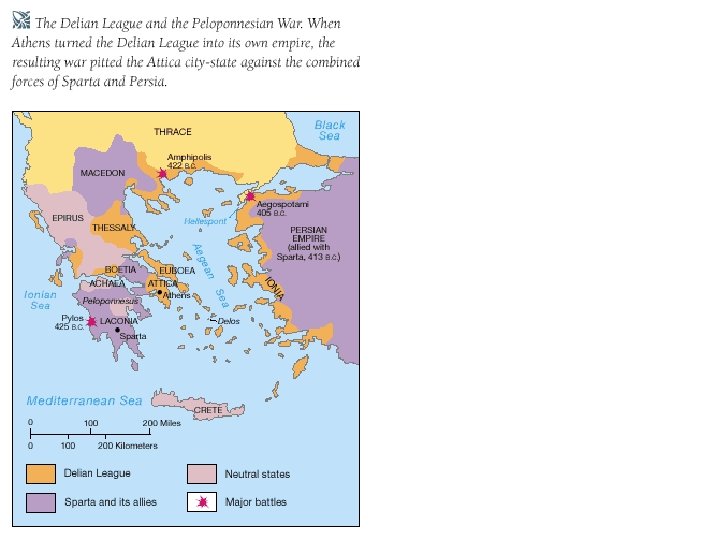
Peloponnesian War • Other city-states along with Sparta became suspicious of Athens. These city-states joined together against Athens – _________ • Pericle’s funeral oration reminded Athenians about democracy and gave them courage to continue fighting. • Athenians moved inside their walled city. • A disease killed more than 1/3 of the people inside Athens’ wall, including Pericle’s • Athenians eventually surrendered to the Spartan army.
- Slides: 26